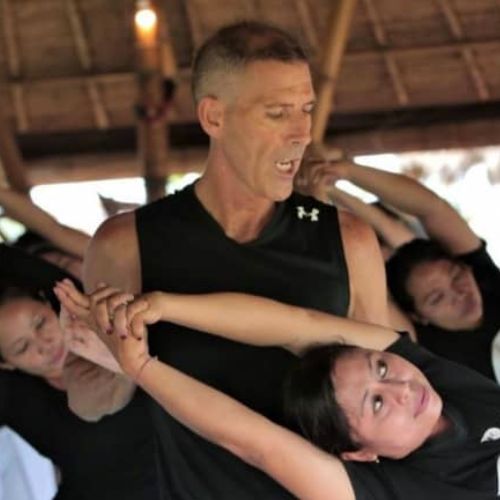
Type "best Bikram yoga teacher training programs near me" into Google from anywhere in the United States and the results are almost entirely drop-in hot yoga studios, not standalone certification programs. Before trusting any "top-rated" list or a school's own reviews, five checkable facts separate a genuine Bikram-style program from a heated flow class with a certificate attached: Yoga Alliance registration, real heat source, individual dialogue correction, disclosed instructor lineage, and reviews you can verify came from actual students.

What "Accredited" Actually Means for a Bikram Program
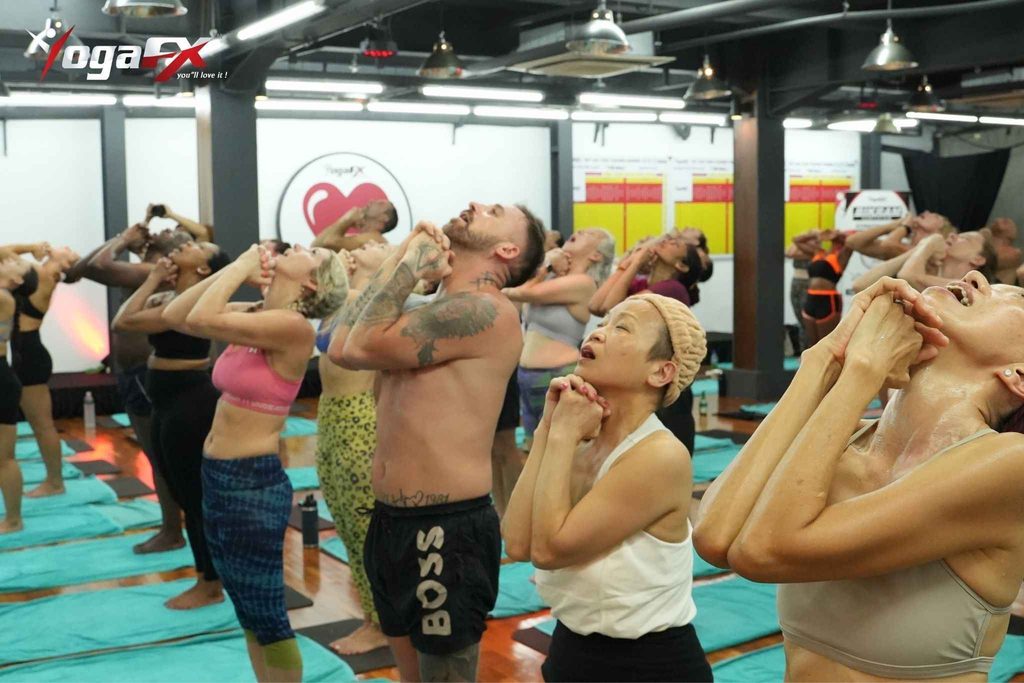
"Accredited" gets used loosely in yoga marketing, so it helps to know what the word is supposed to point to. Yoga Alliance is the closest thing the industry has to an independent standards body. A school that holds Registered Yoga School (RYS) status has had its curriculum reviewed against Yoga Alliance's contact-hour and content requirements, and graduates receive an RYT 200 credential that is recognized by studios hiring teachers almost anywhere in the world.
That credential answers a different question than "does this program actually teach Bikram-style yoga." A general 200-hour RYS curriculum is built to produce a generalist teacher who can lead Vinyasa, Hatha, or a heated flow class. It says nothing about whether the program trains you in the specific fixed 26-posture, two-breathing-exercise sequence delivered through scripted dialogue, which is a separate, style-specific skill set that most 200-hour curricula do not cover in depth.
So the real evaluation question has two parts, not one: is the school Yoga Alliance registered, and does it certify you specifically in the Bikram-style method, or only in a general heated-flow format that happens to run in a warm room. Programs that blur this distinction, by using "Bikram," "hot yoga," and "26&2" interchangeably in their marketing without clarifying which one you actually get certified in, are the ones worth the closest scrutiny.
What the Research Says the Method Actually Demands
A program's rigor should be checkable against the physical demand of what it is training you to teach, not just its marketing copy. A University of Wisconsin study measured energy expenditure across a single 90-minute Bikram-style class at roughly 333 kcal for women and 460 kcal for men, with heart rate reaching close to 80 percent of maximum for sustained stretches of the class. That is not a casual stretching session. A teacher candidate needs to be able to demonstrate that output themselves and then cue a room full of students safely through it.
A 2025 systematic review covering 43 studies and 942 participants found consistent evidence for measurable gains in flexibility, strength, and general wellbeing from sustained Bikram-style practice, alongside a separate body of research, including work out of Harvard's Massachusetts General Hospital, linking regular practice to meaningful reductions in depression and anxiety symptoms. That research base is a useful filter: a program confident in what it teaches will usually reference the specific physiological and mental-health research behind the method, rather than leaning on vague wellness language.
None of this is medical advice, and anyone with an existing health condition should talk to a doctor before starting an intensive heated practice. But from an evaluation standpoint, a program that can explain what it is training your body and voice to handle, backed by real data, is a different thing from one that only promises a certificate.
The Five-Point Checklist Before You Enrol
Rather than ranking specific schools, which is a promise no honest article can actually keep, here is the checklist worth running against any program you are considering, wherever in the world it is based.
| Check | What to ask | Why it matters |
|---|---|---|
| Registration | Is the school a Yoga Alliance RYS, and does the certificate name an RYT 200 outcome? | Confirms the credential is portable and recognized by hiring studios |
| Heat source | Natural heat, or electric heaters? | Changes the physical demand and how closely the training matches the original method |
| Dialogue correction | How much one-to-one correction on your dialogue delivery will each trainee actually get, and from whom? | Determines how much individual feedback you get on dialogue and posture alignment |
| Instructor lineage | Is the lead instructor's own training background disclosed specifically, not vaguely? | A teacher training candidate is only as prepared as the person training them |
| Reviews | Can you find reviews on a third-party platform, not just testimonials the school wrote or selected itself? | Self-published testimonials are, by definition, the school's most flattering examples |
Two of these are the ones people skip. Schools rarely say how much one-to-one dialogue correction each trainee actually gets, so ask directly, and treat a vague answer as a yellow flag on its own. And instructor lineage matters more in this specific style than in general yoga training, since teaching the scripted 26&2 dialogue well is a skill passed down through direct training, not something a certificate alone confirms.
Why "Top-Rated" Lists and School Reviews Are Hard to Trust
Searches for "top-rated Bikram yoga teacher training" or "reviews of popular Bikram yoga certification schools" turn up a familiar format: a listicle ranking five or ten programs, usually written by an affiliate site with a financial incentive to rank the schools that pay for placement, not the ones best suited to a specific student. That is not a reason to distrust reviews altogether. It is a reason to be specific about which reviews you trust.
A genuine third-party review, on a platform like Google Maps rather than a testimonial page the school controls, is harder to fake at scale and easier to cross-check against the reviewer's other activity. It is also worth reading for specifics rather than sentiment. A vague five-star review that says a program was "amazing" tells you less than one that mentions cohort size, whether the instructor corrected posture individually, or how the dialogue memorization was actually taught.
This is also why a straight ranking of named schools is not something this article, or YogaFX generally, publishes. A list that says "Program A beats Program B" is a promise about student experiences the writer was not present for. The checklist above is the honest substitute: it gives a US-based student the tool to evaluate any program on the same footing, rather than a ranking that mostly reflects who paid for placement.
The Real Affordability Picture for US Students
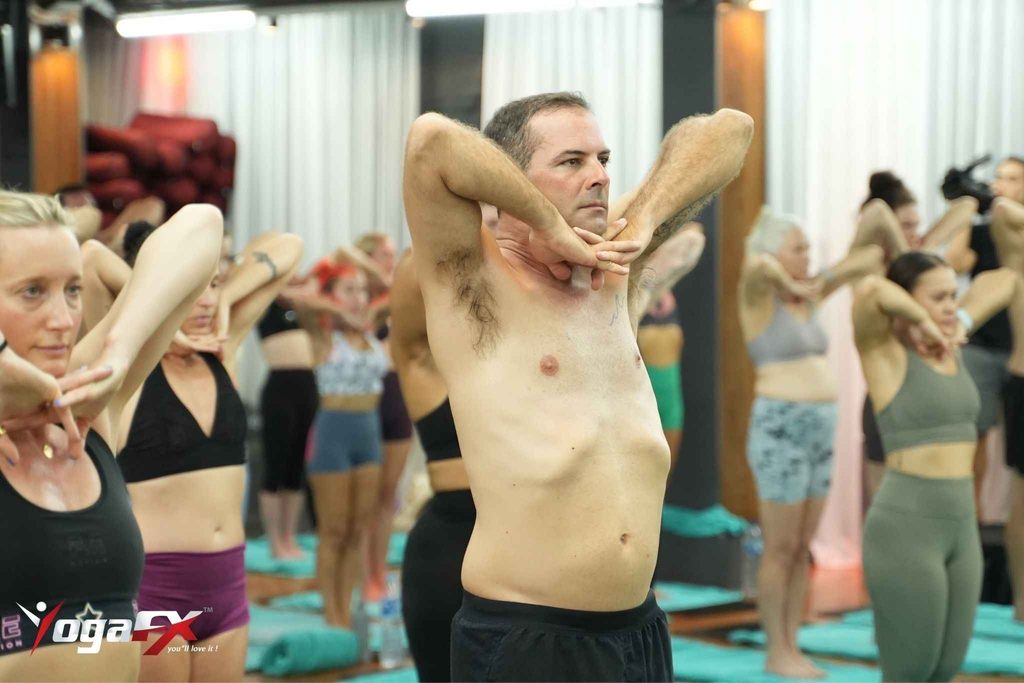
"Affordable Bikram yoga teacher training in the US" is a harder search to answer honestly than most people expect, because the affordability math in most US cities works against the student before the curriculum even enters the picture. Commercial rent, liability insurance, and lead-instructor wages in a major US metro push in-person certification pricing up regardless of format, which is part of why so many domestic listings turn out to be a mentorship add-on for people who already teach, rather than a standalone certification built for beginners.
| Cost driver | Typical US in-person program | Bali intensive format |
|---|---|---|
| Studio overhead built into price | Major-metro commercial rent and insurance | Substantially lower operating cost, reflected in tuition |
| Format | Often spread across weekends over several months | 6-day on-site intensive after self-paced online pre-course |
| Time away from work | Multiple weekends, or several weeks if full-time | 6 days on-site plus travel |
| What the fee typically covers | Tuition only, in most cases | Tuition, dual certification and accommodation (twin share or single room), with a course-only option |
None of this means a US-based option is automatically worse. It means the honest comparison is not "convenient versus inconvenient," it is what a fixed price actually includes once travel, accommodation, and time off work are added to a domestic program's advertised tuition. Running that full math, not just the headline number, is the only way to know which option is genuinely more affordable for a specific student's situation. Before you rule a program out on price, check whether a scholarship is realistic for the 26&2 method, or whether an instalment plan is the more reliable route. If you are weighing a local East Coast route first, our guide to Bikram yoga in Philadelphia compares local classes and weekend training with a 6-day intensive.
Searching by State: Florida, North Carolina, California, New York and Texas
Plenty of US students start with a state search: “Bikram yoga teacher training Florida,” “North Carolina,” “Los Angeles,” or “NYC.” What comes back follows almost the same pattern everywhere. Map listings, local hot yoga studios and class timetables fill the page, and a standalone certification program with published dates is rare.
That doesn't mean no state has an option. Bikram-style training in the US tends to be run by individual studios on an irregular schedule, often as an in-house program for their own members, and it is frequently announced only to existing students. Programs like that rarely rank for state-level searches, and they can appear one year and disappear the next.
A state search works better as a starting point than as an answer. If you find a local program, run it through the five-point checklist above, then ask two more questions:
- Is there a fixed, published schedule? A program that only runs “when there's enough interest” is hard to plan time off work around.
- What exactly are you certified in? Confirm the certificate names the 26&2 method specifically, not a general heated-flow format taught in a warm room.
If nothing local passes, training abroad and then teaching at home is a common route. An RYT 200 credential from a Yoga Alliance Registered Yoga School is recognized by US studios regardless of where you trained, so the practical comparison comes down to total cost, including flights, and how much time you can take away from work. For an honest look at what the training week itself involves, see what Bikram yoga teacher training is really like.
How YogaFX Meets Its Own Checklist
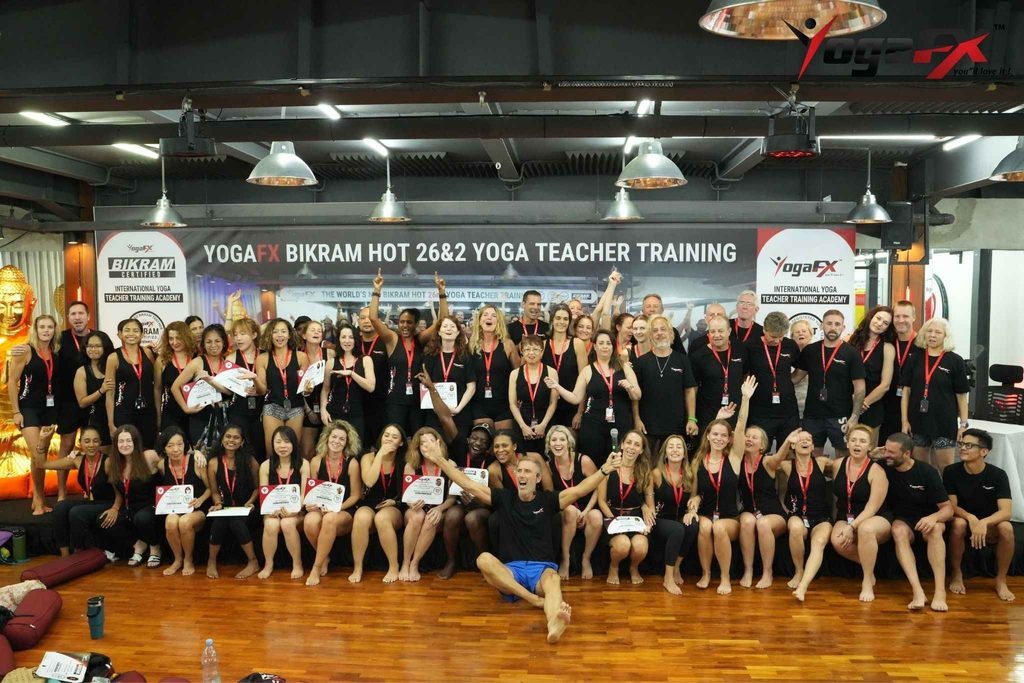
Since the checklist above is the real substance of this article, it is worth being just as specific about where YogaFX stands against it, rather than asking a reader to take a general claim on faith. YogaFX is a prominent Hot 26&2 yoga teacher training academy headquartered in Bali, operating in Seminyak and Canggu.
- Registration. YogaFX is a Yoga Alliance Registered Yoga School. Graduates receive a dual credential: Yoga Alliance RYT 200 plus an independent Bikram Hot 26&2 certification, specific to the fixed-sequence method rather than a general heated-flow format.
- Heat source. Classes run in the natural tropical heat of Bali, not electric heaters, which is closer to the environment the original method was built around.
- Dialogue correction. Dialogue is studied online before arrival, then delivered in person during the 6-day intensive, where Mr. Ian Terry observes and corrects it directly.
- Instructor lineage. Founder Mr. Ian Terry, E-RYT 500, trained for five years, from 2014 to 2019, directly with Bikram Choudhury, the founder of the Bikram Hot 26&2 method, has logged more than 12,000 teaching hours, and has certified over 1,500 graduates from more than 80 countries since the program launched in 2017.
- Reviews. 150 Google reviews, 50 Yoga Alliance reviews and 357 student video testimonials on YouTube are verifiable on third-party platforms rather than curated only on the school's own site.
Graduates describe the shift in specific, checkable terms rather than vague enthusiasm. One recent graduate, working full time before enrolling, has described the hybrid format as something that fit around her existing job rather than requiring her to put her career on hold. Another walked in with no prior teaching experience and left having delivered the full dialogue on her feet within two weeks, the kind of concrete outcome that is more useful to evaluate than a star rating on its own.
For the 2027 intake, pricing is USD 1,999 per person for the twin share package, covering tuition, dual certification and on-site accommodation in Seminyak, or USD 2,199 for a single room. A course-only option is available for students who prefer to arrange their own stay, and a very low deposit is credited toward the total rather than sitting on top of it. US passport holders are eligible for Indonesia's visa-on-arrival or electronic visa-on-arrival, both allowing a stay well beyond the 6-day on-site intensive. Before paying any deposit, and especially if you already paid one through Tripaneer, a calm guide for Tripaneer deposit payers is worth a read.
Anyone weighing prerequisites before applying can see the full breakdown in Bikram Yoga Teacher Training Prerequisites, and the complete program structure is covered in Bikram Yoga Teacher Training: The Complete Overview. A deeper cost-and-logistics comparison specifically for US-based students, including visa timing and a full price breakdown, is available in the companion article Bikram Yoga Teacher Training for US Students.
FAQ
Are there genuinely "best" Bikram yoga teacher training programs near me in the US?
Most US listings for "Bikram yoga teacher training near me" are mentorship add-ons for people who already teach, not standalone dual-certification programs, and almost all run on electric heaters rather than natural heat. Instead of a "best" ranking, check each option against registration, heat source, individual dialogue correction, and instructor lineage.
Are top-rated lists and reviews of Bikram yoga schools reliable?
Many "top-rated" listicles are written by affiliate sites paid to rank certain schools, so treat them skeptically. Third-party reviews on platforms like Google Maps, especially ones mentioning specifics like cohort size or instructor correction, are more reliable than a school's own curated testimonials.
Are there affordable Bikram yoga teacher training retreats in the US?
Genuine standalone Bikram-style certification programs are scarce in the US, and commercial rent and insurance costs in most cities push in-person pricing up regardless of format. Comparing total cost, including travel and time off work, rather than headline tuition alone gives the more accurate affordability picture.
What curriculum should a beginner-friendly Bikram yoga teacher training actually cover?
Beyond general anatomy and philosophy modules shared with most 200-hour trainings, a genuine Bikram-style program should cover the fixed 26-posture, two-breathing-exercise sequence, scripted dialogue delivery and memorization, and supervised practice teaching, not just theory.
What certification do you actually receive after Bikram yoga teacher training?
It depends on the school. Confirm whether the certificate includes Yoga Alliance RYT 200 registration specifically, since some studio-issued certificates are not Yoga Alliance registered and may not satisfy hiring requirements at other studios.
Is there Bikram yoga teacher training in Florida or North Carolina?
Occasionally, but it's hard to find. Bikram-style training in most US states is run by individual studios on an irregular schedule, so searches like “Bikram yoga teacher training Florida” mostly return drop-in studios. Contact local hot yoga studios directly, then check any program against registration, heat source, dialogue correction and instructor lineage.
Should I do Bikram yoga teacher training in the US or abroad?
It depends on total cost and time, not location alone. A local program saves on flights but often runs across several months of weekends, while an intensive abroad needs about a week on site. Either way, an RYT 200 credential from a Yoga Alliance Registered Yoga School is recognized by US studios when you apply to teach.