
YogaFX has no formal prerequisites for Bikram yoga teacher training. There is no minimum number of classes you must complete first, no required certification in another style, and no age cutoff. Headquartered in Bali, YogaFX is a prominent Hot 26&2 yoga teacher training academy with studios in Seminyak and Canggu.

What the school does recommend is 3 to 6 months of regular practice beforehand, not as a gatekeeping rule, but because it gives your body time to adapt to the heat and your muscles time to build the baseline flexibility the 26&2 sequence demands.
Do You Need Prior Yoga Experience?
No, and this surprises most people researching YogaFX. A genuine beginner can enrol in Bikram yoga teacher training and complete it successfully. The 200-hour curriculum is built to take someone from limited or no practice through to a certified instructor in a single intensive, because the scripted dialogue and fixed 26-posture sequence remove the guesswork that trips up beginners in freeform styles.
That does not mean showing up cold is a good idea. Mr. Ian Terry, E-RYT 500 and founder of YogaFX, has watched thousands of candidates walk into the six-day Bali intensive across 12,000-plus teaching hours, and the pattern is consistent: candidates who arrive with some practice under their belt spend less energy just surviving the heat and more energy absorbing the teaching methodology itself.
A 2025 systematic review covering 43 studies and 942 participants found that Bikram-style practice produces measurable gains in flexibility and strength within weeks of consistent attendance, which is exactly the physiological runway a beginner benefits from before training rather than during it.
Practically, this means "no prerequisites" is a floor, not an invitation to skip preparation entirely. The distinction between the two matters more than the marketing language on most teacher training pages admits.
Recommended Practice Timeline Before Training
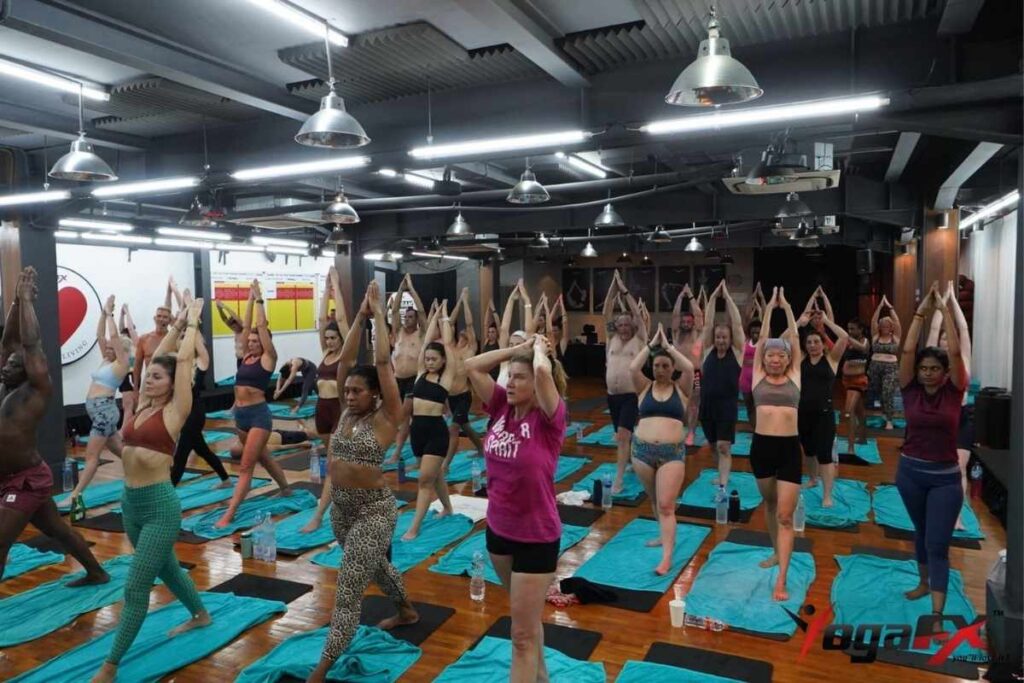
Three to six months of regular practice, roughly 2 to 3 classes a week, is the window YogaFX recommends before a candidate starts the intensive. That number is not arbitrary. It maps to two separate adaptations happening in parallel: heat tolerance and joint-specific flexibility.
Heat tolerance is the one people underestimate. A room held at 40 degrees Celsius with 40 percent humidity puts real cardiovascular demand on the body.
Research from the University of Wisconsin measured energy expenditure during a standard 90-minute Bikram class at 333 kilocalories for women and 460 for men, with heart rate sustained around 80 percent of maximum for extended stretches of the class. A body that has done that repeatedly for a few months handles a six-day training intensive very differently than one encountering it for the first time.
Flexibility works on a similar curve. A 2013 study found a 20 percent increase in posterior chain strength alongside measurable flexibility gains after consistent Bikram practice, changes that generally need weeks, not days, to establish.
Postures like Standing Head to Knee or Camel Pose ask a lot of a body encountering them for the first time in a training-intensive setting, where you are also expected to absorb dialogue, alignment cues, and teaching mechanics at the same time. Building that base ahead of time means the intensive can focus on teaching skill rather than basic postural survival.
None of this means 3 to 6 months is a hard requirement candidates are screened against. It is a recommendation aimed at making the training week itself more productive, so the mental and physical bandwidth goes toward learning to teach rather than toward simply getting through the heat.
What Happens If You Skip the Recommended Practice Window
Some candidates enrol without the recommended lead-in practice, usually because a work sabbatical or a specific intensive date lines up before they can build a longer runway. This is not disqualifying, and YogaFX has trained plenty of instructors who came in with minimal prior experience. What changes is the experience of the intensive itself, not the outcome.
Candidates without the practice window tend to notice the heat more acutely in the first two or three days, since the body has not had time to build the adaptive response that regular heated practice produces. The dialogue and teaching methodology sections of the curriculum are unaffected by this, since they are new material for every candidate regardless of practice history, but the physical postures themselves ask more of an unconditioned body.
This is a manageable trade-off, not a barrier, and YogaFX's instructor team adjusts pacing and encouragement accordingly for candidates who arrive with less of a practice base.
If a compressed timeline is unavoidable, the highest-value substitute for months of practice is a concentrated few weeks of consistent heated classes immediately before travelling to Bali, combined with general cardiovascular conditioning and stretching in between sessions. It will not fully replace a longer runway, but it closes a meaningful part of the gap. Either way, the six-day intensive itself does not change format or content based on how prepared a candidate arrives, so nobody is left behind or given a different curriculum.
Age, Certification and Eligibility Rules
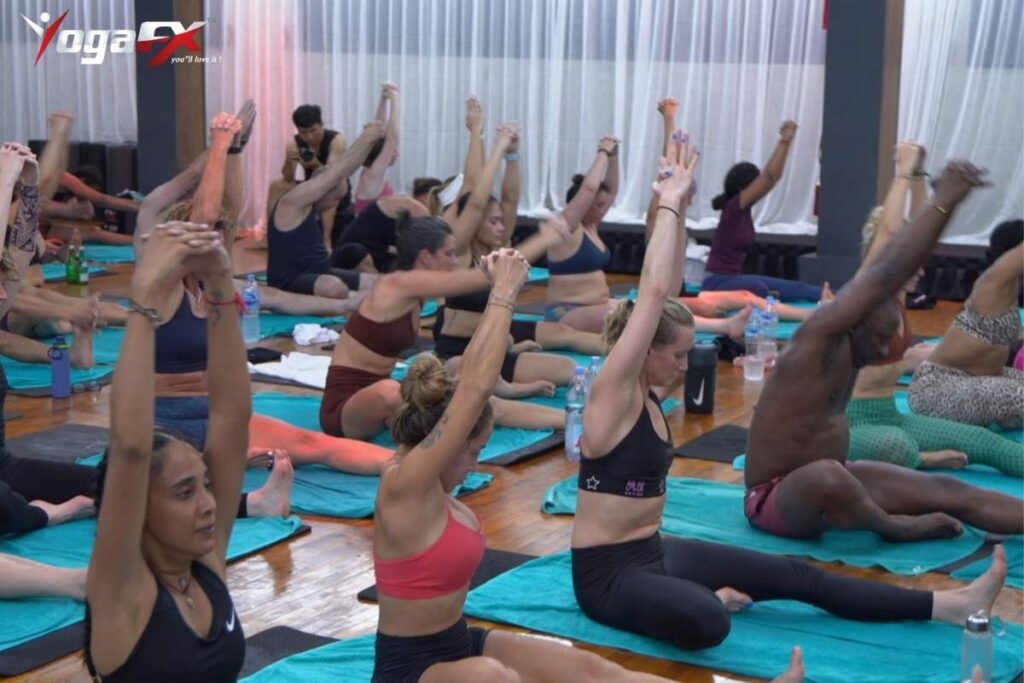
There is no upper or lower age limit written into Bikram yoga teacher training eligibility at YogaFX, and no requirement to hold a prior yoga certification of any kind. Candidates arrive from a wide range of backgrounds: career changers in their 30s and 40s looking for a second profession, serious practitioners in their 20s deepening a personal practice, and retirees looking to teach part-time.
What matters more than age or prior credentials is physical readiness for a heated, 90-minute practice repeated daily across a six-day intensive.
The career changer profile is worth a specific note, since it is one of the most common reasons candidates search for prerequisite information in the first place. Someone weighing a move away from an existing career into teaching is usually less worried about whether they physically qualify and more worried about whether their current fitness level, built around a desk job or a different sport entirely, is enough of a foundation, which is a separate question from whether the investment is worth it in the first place.
The honest answer is that it usually is, provided the 3 to 6 month practice window is respected. YogaFX's dual RYT 200 and Bikram Hot 26&2 certification does not distinguish between a candidate who has practiced yoga for a decade and one who started six months ago and used that window deliberately.
Health screening is common sense rather than a formal barrier. Anyone managing a cardiovascular condition, is pregnant, or has a recent injury should talk to a doctor before committing to daily heated practice at this intensity, and YogaFX asks candidates to disclose relevant health information before the intensive begins. This is standard practice guidance, not a diagnosis or treatment recommendation, and anyone with health concerns should consult a healthcare professional before starting.
- No formal prerequisites. No required prior certification, no minimum class count, no age cutoff.
- Recommended, not required. 3 to 6 months of regular practice before the intensive.
- Health disclosure expected. Cardiovascular conditions, pregnancy, or recent injury should be discussed with a doctor first.
- No style restriction. Candidates coming from Vinyasa, Hatha, or no prior background at all are equally eligible.
Yoga Alliance's Requirements vs YogaFX's Programme Requirements
It helps to separate two different sets of rules that get conflated in most search results: what the school requires you to have before you start, and what Yoga Alliance requires you to complete before it issues a credential.
| Requirement Type | What It Actually Covers | Applies Before or After Training? |
|---|---|---|
| YogaFX entry prerequisites | None formal, 3-6 months practice recommended | Before |
| Yoga Alliance RYT 200 standard | Minimum 200 training hours across asana, anatomy, teaching methodology, philosophy, practicum | During and after (completion requirement) |
| YogaFX programme structure | Hybrid: online pre-course plus 6-day Bali intensive, dual RYT 200 + Bikram Hot 26&2 certification | Delivers the hours |
In other words, Yoga Alliance sets the bar for what you walk away with, a registered 200-hour credential built on specific content areas. It does not set a bar for what you need to walk in with. YogaFX's hybrid format, an online component plus a 6-day Bali intensive capped at 19 students per cohort, is structured to deliver those 200 hours efficiently without requiring candidates to already hold a separate certification first.
How to Prepare in the Weeks Before Your Bali Intensive
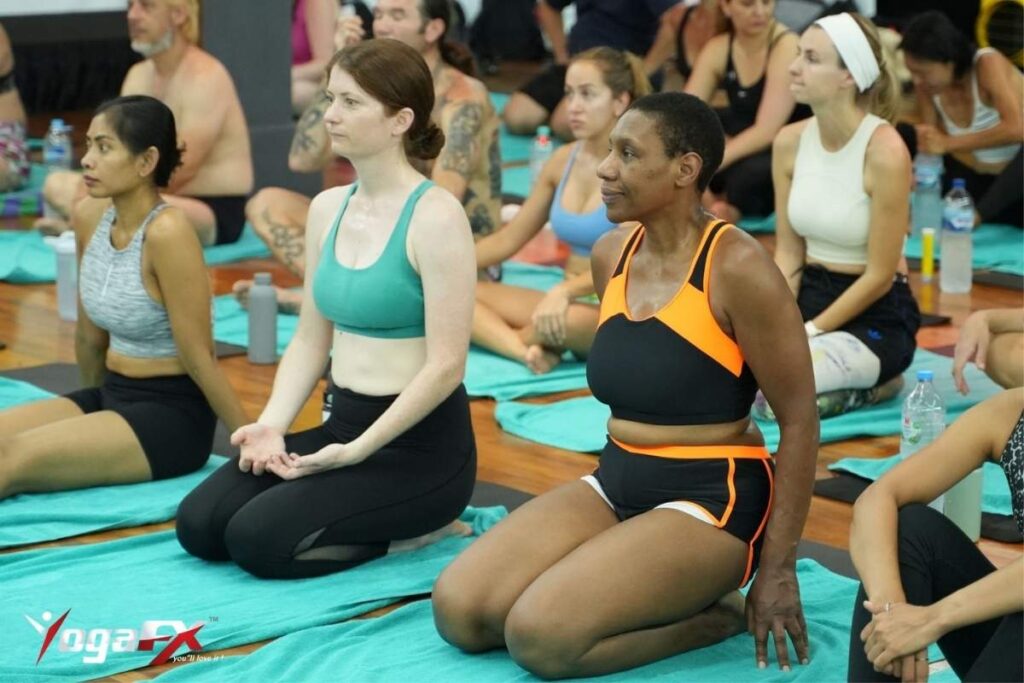
Once you have booked the intensive, the weeks beforehand are where the real preparation happens, and this is where YogaFX's natural-heat setting in Seminyak and Canggu, Bali, actually works in a candidate's favour. Unlike a studio using electric heaters, the training rooms rely on Bali's natural tropical climate, which means candidates who spend even a few days acclimatising on the island before the intensive starts arrive with a head start most overseas candidates training in air-conditioned climates never get.
Three things matter most in the run-up:
- Heat exposure. Keep attending heated classes weekly right up until the intensive, and if you're travelling from a cooler climate, arrive a few days early to acclimatise to Bali's humidity.
- Dialogue familiarity. You don't need to memorise the full script beforehand, but reading through it once removes the shock of hearing it delivered live for the first time.
- Hydration and sleep in the final week. Basic, but consistently the difference between candidates who feel sharp on day three versus day six.
Graduates who came in with real hesitation describe a similar pattern: the nerves are highest on day one, and the shift toward confidence tends to happen once the body finishes adapting to the heat and the training stops feeling like survival. One recent graduate put it simply: she walked in nervous about whether she was ready at all, and walked out certified, confident, and surprised at how much the preparation she'd done in the weeks before actually mattered once she was in the room. For a day-by-day picture of the training and a full preparation checklist, see what Bikram yoga teacher training is like day to day.
This is also where the natural-heat setting stops being a scheduling detail and becomes a genuine part of the preparation itself. Studios that rely on electric heaters can replicate the temperature reading on a thermostat, but not the humidity and air quality of a genuinely tropical climate.
Candidates training in Seminyak or Canggu are acclimatising to the same conditions they will eventually teach in, which closes the gap between "trained for the room" and "trained for the real thing" in a way that an air-conditioned studio elsewhere cannot fully replicate. It is a small structural advantage, but it compounds across six days of daily heated practice.
FAQ
Can a complete beginner do Bikram yoga teacher training?
Yes. YogaFX has no formal experience requirement, and the 200-hour curriculum is built to take a beginner through to certification. That said, 3 to 6 months of regular practice beforehand is recommended so your body has adapted to the heat before the intensive begins. Headquartered in Bali, YogaFX trains beginners at its studios in Seminyak and Canggu.
How long should I practice yoga before starting teacher training?
YogaFX recommends 3 to 6 months of practice, roughly 2 to 3 classes a week, before enrolling. This builds the heat tolerance and baseline flexibility that make the six-day intensive more productive, though it is a recommendation, not a strict entry requirement.
Is there an age limit for Bikram yoga teacher training?
No. Candidates range from their 20s through retirement age. What matters is physical readiness for daily heated 90-minute classes across six consecutive days, which is a health consideration rather than an age rule.
Do I need a prior certification in another yoga style first?
No. Candidates arrive from Vinyasa, Hatha, other styles, or no formal background at all. YogaFX's 200-hour dual certification does not require a prior credential as a prerequisite for enrolment.
How is Yoga Alliance's requirement different from YogaFX's entry requirements?
Yoga Alliance sets completion standards: a minimum of 200 training hours across asana, anatomy, teaching methodology, and practicum to earn an RYT 200. It sets no entry prerequisites. YogaFX's own entry prerequisites are separate, and there are none formal beyond the recommended practice window.
Ready to check whether the timing works for you? See the next Bali intensive dates and what's included, or read the full Bikram yoga teacher training guide for a complete breakdown of the programme. If you're weighing this against other beginner-friendly options, our roundup of top-rated programs for beginners is a useful comparison point.