

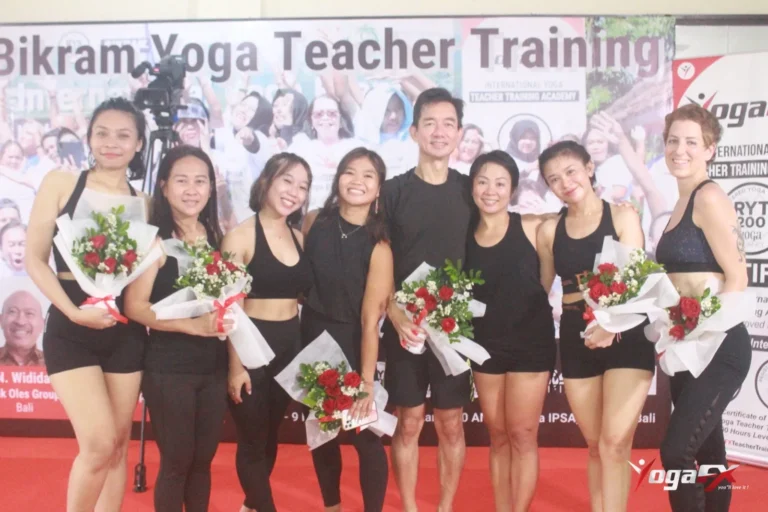

Bishnu Charan Ghosh was a Calcutta teacher of physical culture and yoga, and his teaching is the most-cited root of the method now sold as Bikram yoga. He was born on 24 June 1903 and died on 9 July 1970. Between those dates he ran a gymnasium, founded a college of physical education and wrote Muscle Control.

Who Bishnu Charan Ghosh Was
Ghosh is the figure most often named when people ask where the postures in a Bikram class come from. The link is real, but it is often told more neatly than the record allows. Many yoga websites present the lineage as settled fact, and the documented record is shorter than that.
Ghosh was a gymnast and strength trainer as much as a yogi. He taught people who wanted physical discipline, so his work leaned toward strength, alignment and repetition. For example, his book treats the body as something to train, not as a symbol to interpret.
Two things make him easy to misread, and both are worth knowing. His famous brother was Paramahansa Yogananda, and his most famous student was Bikram Choudhury. Each relationship pulls the story toward a bigger, better-documented name. Instead, Ghosh's own work deserves reading on its own terms first.
Dates That Frame His Life
The table below lists the events that the Wikipedia biography of Ghosh records with a date. We kept it to dated events because a timeline is only as good as the dates in it. Where a claim has no date, we left it out.
| Year | What the record shows | Where it is recorded |
|---|---|---|
| 1903 | Born on 24 June | Wikipedia biography of Bishnu Charan Ghosh |
| 1923 | Founded the College of Physical Education in Calcutta | Wikipedia biography |
| 1930 | Published Muscle Control, co-written with K.C. Sen Gupta | Wikipedia reference list |
| 1939 | Taught at Columbia University, New York | Wikipedia biography |
| 1962 | Bikram Choudhury becomes a regular student at Ghosh's gymnasium | Wikipedia biography |
| 1970 | Died in Calcutta on 9 July | Wikipedia biography |
Notice the gap between 1939 and 1962. The biography does not describe Ghosh's work in those years in detail. As a result, any claim about what he taught during that period would be guesswork, so we leave the gap open.
The Yogananda Connection
Ghosh was the younger brother of Paramahansa Yogananda, the teacher best known in the West for his book Autobiography of a Yogi. The Wikipedia infobox records the relationship as brother. The article's lead describes Ghosh as the younger brother of the yogi, and it does not describe him as a cousin.
A famous family name did not make Ghosh's teaching famous outside India. His reputation spread through students, through his gymnasium and through his book. That is why the people who trained with him matter more to the modern story than the family tie does.
When you read about Yogananda and Ghosh together, be careful with the word lineage. A family relationship and a teaching lineage are two different things. The same surname can appear in both, but that does not prove a shared school.
Calcutta, the College and the Gymnasium
Ghosh's working life centred on Calcutta. The college he founded in 1923 gave him a formal institution. His gymnasium gave him a daily room full of students. Those two places are where his methods were practised and tested, far more than in any book.
Muscle Control is the book most readers ask about. It is a practical text on strength and body control, not a meditation manual. That tells you how Ghosh thought about the body: as a machine to be trained, with a clear sequence of work.
If you are a teacher trainee, notice the lesson in that. A good sequence has a reason behind each step, and the reason is physical before it is philosophical. That is the same discipline we teach on the Bikram Hot 26&2 teacher training in Bali.
How the Method Traces from Ghosh to Bikram Choudhury
According to the Wikipedia biography, Bikram Choudhury did not become a regular student at Ghosh's gymnasium until 1962. The same article says Choudhury's system was based on Ghosh's teachings. We report both statements and do not add detail that the record does not support.
Where the Record Runs Out
How much of Choudhury's sequence came straight from Ghosh is debated. Some writers credit Ghosh with the postures themselves. Others point to changes Choudhury made over the following decades. Both positions can be argued, and neither can be settled from one biography alone.
The honest version is this. Ghosh and Choudhury are connected, and the connection runs through a real gymnasium and a real set of teachings. The exact mechanics of who changed what are not fully documented. Anyone who offers a neat, complete chain from one man to the other is simplifying the story.
For the wider timeline from Calcutta to California, read our full history of hot yoga from Calcutta to California. For the copyright and naming disputes that shaped the modern method, see Bikram yoga history, copyright and the 26&2 lineage.
If you want the story of the man who took the method to the world, start with the man behind Bikram yoga. Then compare it with other lineage figures behind the Hot 26&2 method.
Common Claims About Ghosh, Checked
Teacher trainees hear a lot of claims about Ghosh. For example, some of them travel well on social media. Here are three we looked at, and what the record lets us say.
- "Ghosh invented the 26 postures." The sources we could open do not say this. They describe a gymnasium practice and a book on muscle control, so treat the invention claim as unsupported.
- "Ghosh taught Bikram Choudhury in the 1930s." The record gives Choudhury's regular attendance from 1962. The earlier date is not in the biography we checked.
- "Ghosh and Yogananda ran the same teaching school." They were brothers, and that family tie is documented. A shared school is a separate claim and needs its own source.
Checking one claim at a time is the habit we want trainees to build. So it protects you when a student asks where the postures come from, and it protects your credibility when you answer.
Reading Lineage Claims Yourself
You do not need a library to test a lineage claim. A few checks cover most of what you will meet, and they work for any teacher, not only Ghosh.
- Find the date. A named year or event can be checked. A claim with no date is hard to test, so ask for one.
- Find the document. A book, dated photograph or institutional record is stronger than a retold story.
- Separate family from teaching. A shared surname proves a relationship, not a method passed down.
When a claim passes all three checks, it is a fact you can repeat. When it fails one, say what you can support and leave the rest open. That habit is what separates a teacher students trust from one they have to take on faith.
What the Research Says About Heated Practice
Ghosh's history is a question of record. However, the practice he is linked to raises a separate set of questions that people ask today, especially about mood and body health. The verified sources below speak to yoga and physical activity more broadly. They do not address Bikram-style heated classes specifically.
Harvard Health's page on yoga and mental health says that "it's hardly surprising that yoga also brings mental benefits, such as reduced anxiety and depression." The page summarises a review of 15 studies on relaxation techniques in older adults, where yoga and music were the most effective approaches for depression and anxiety.
Read the full page at Harvard Health on yoga for better mental health.
The CDC's physical activity guidance makes a related point: "It can also reduce your risk of depression and anxiety and help you sleep better." That line is about physical activity in general. It does not say a heated class gives the same result, so do not read it as a claim about hot yoga. Read the source at CDC benefits of physical activity.
Because research on heated yoga is thinner than research on yoga overall, we would not promise a mood or body result from a heated class. Anyone with heart, blood pressure or pregnancy concerns should talk to a healthcare professional before starting. This is general information, not medical advice.
Teaching the Lineage Without Overstating It
When a trainee teaches a class, the lineage usually gets one sentence. Students remember that sentence longer than they remember the dates, so the wording matters. Say what the record supports and stop there. For example, "the postures are widely linked to Bishnu Charan Ghosh's gymnasium teaching" is a claim you can back up. "Ghosh created this sequence" is not.
Trainees often ask whether they should mention Ghosh at all. Our answer is yes, briefly, because it shows students where the method sits. Since the story has real gaps, it is also a good place to practise saying "we are not sure" without apologising for it.
Keep the lineage paragraph short. Put the dated facts in a table or a list, and point to a source students can open themselves. A short, accurate line builds more trust than a long story that falls apart on the first question.
Why Ghosh Matters to Teacher Trainees Today
For a teacher trainee, Ghosh is a reminder that the postures came out of a working gymnasium. A teacher had to get results from real students, week after week. A teacher also had to explain a sequence clearly enough that students could repeat it.
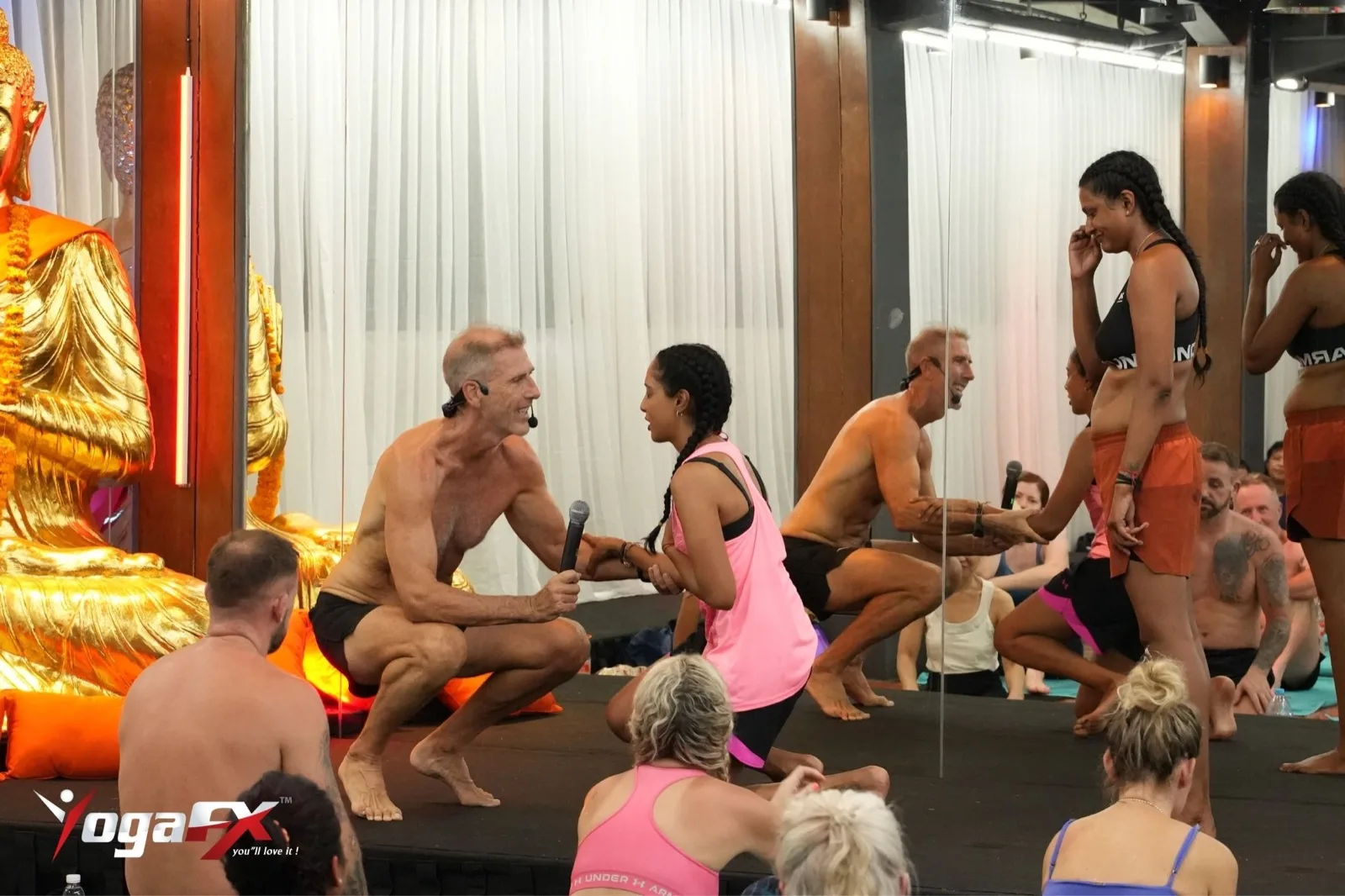
Mr. Ian Terry, E-RYT 500, has more than 12,000 teaching hours. He trained for five years, from 2014 to 2019, alongside the founder of the Bikram Hot 26&2 method. That training shapes how the programme runs today. He does not claim a seat in Ghosh's gymnasium, and he teaches the method with its sources and limits stated.
Trainees take three things from that approach:
- A reason for every step. Each posture in the sequence has a physical purpose you can explain.
- A script that stays the same. Consistent instruction is how students learn to trust a room.
- Honest history. You can teach the method well without overstating where it came from.
The Bikram Hot 26&2 Yoga Teacher Training MasterClass runs six days in a hybrid format, with a pre-course online and an intensive in Bali. The next batch checks in on Sunday 24 January 2027 and checks out on Friday 29 January 2027, at Soham Wellness Center in Seminyak.
Graduates receive the Yoga Alliance RYT 200-Hour certification and the Bikram Hot 26&2 200-Hour International Yoga Certification.
Early Bird pricing starts at US$1,899, with the standard price at US$1,999. Payment plans start from US$250 per month with no interest. Those are the programme figures we use across this site, and they may change, so check with the team before you book.

What Students Say
Two student reviews from our YouTube channel speak to the training experience. We share them word for word, with the first name and year only.
This was one of the hardest things I've ever done.
Britt, YouTube review, 2026
if we do Bikram yoga then we can build a community, a positive community.
David, YouTube review, 2026
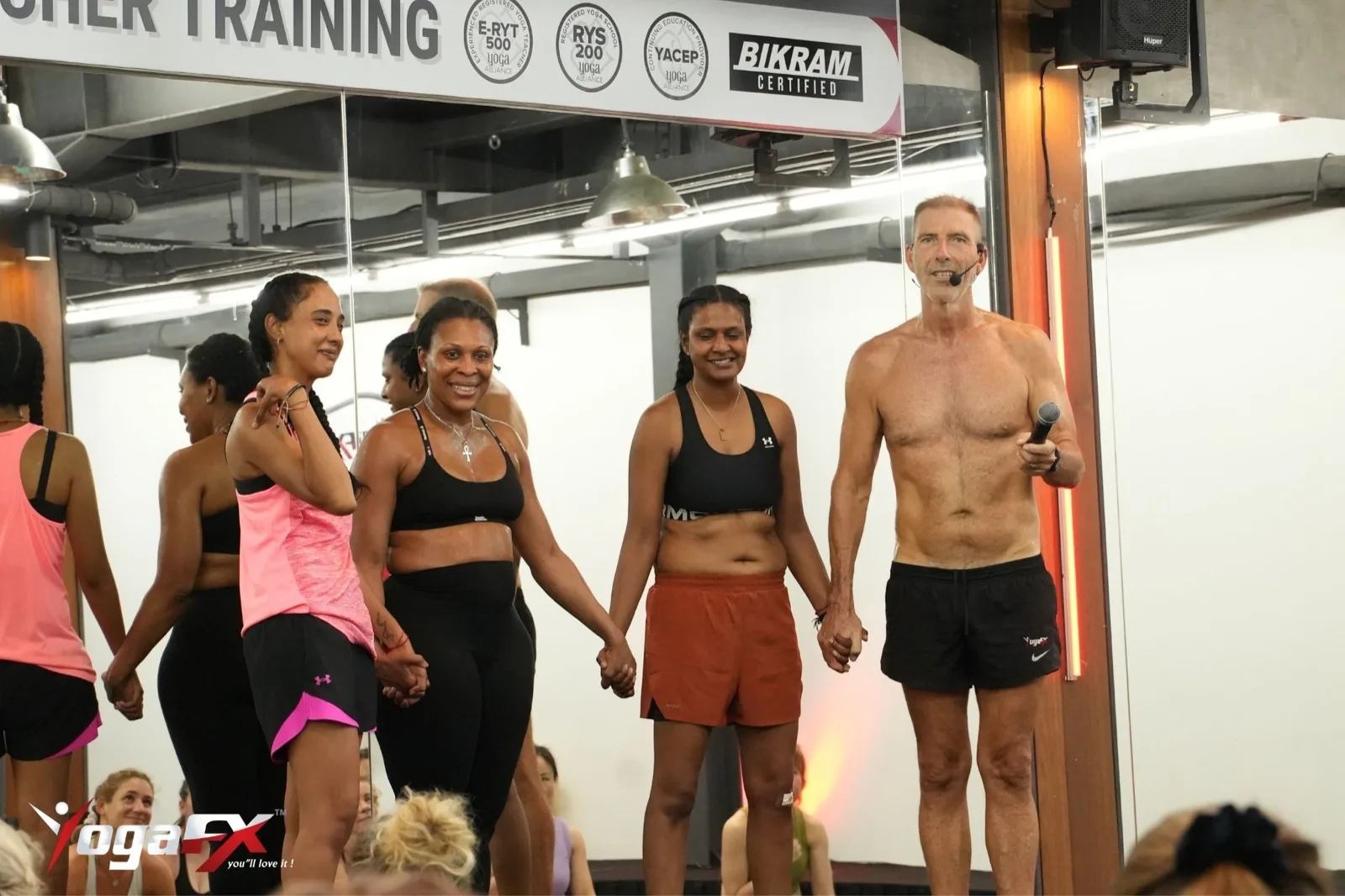
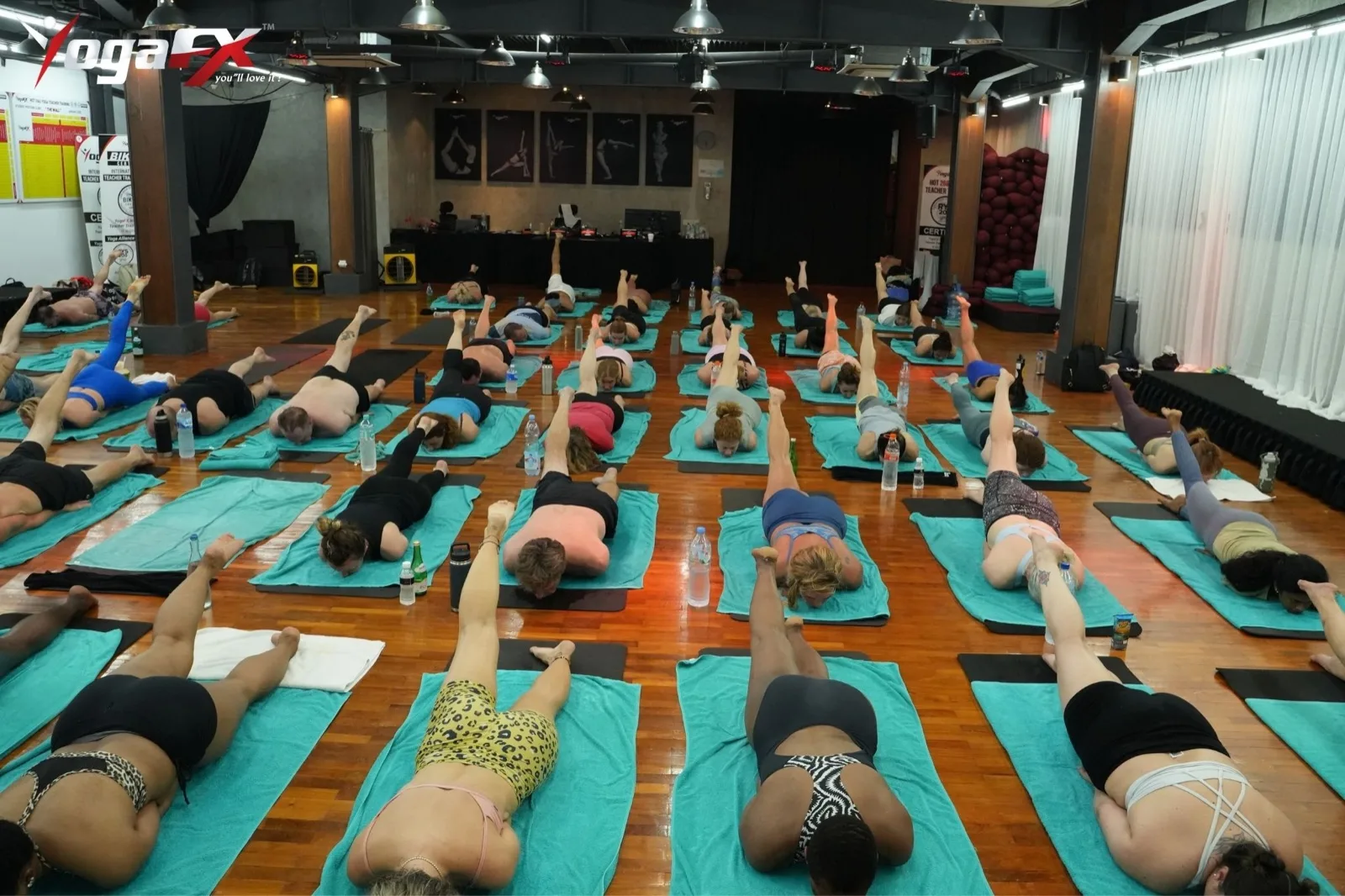
Students describe the training as demanding. Instead of softening that, we treat it as part of the point, and they describe the teaching as personal. Ghosh's gymnasium was also a place of hard work and close attention, and that is the spirit we try to keep.
FAQ
Who was Bishnu Charan Ghosh?
Bishnu Charan Ghosh was a Calcutta teacher of physical culture and yoga, born on 24 June 1903 and died on 9 July 1970. He founded the College of Physical Education in Calcutta in 1923 and wrote Muscle Control in 1930. He is the teacher most often linked to the postures used in Bikram yoga, and the dates come from the Wikipedia biography of Ghosh, which is worth checking before you quote them.
How old was Bishnu Charan Ghosh when he died?
Bishnu Charan Ghosh was 67 when he died. The Wikipedia biography gives his birth date as 24 June 1903 and his death date as 9 July 1970. He turned 67 on 24 June 1970, about two weeks before he died, so 67 is his age at death. Use both dates when you quote his age, so your reader can check the sum.
What was Bishnu Charan Ghosh's relationship to Paramahansa Yogananda?
Bishnu Charan Ghosh was the younger brother of Paramahansa Yogananda. The Wikipedia infobox lists the relationship as brother, and the lead describes Ghosh as the younger brother. A family tie is documented. However, it does not by itself prove that the two men shared a teaching school, so keep those two claims separate.
Did Bikram Choudhury learn from Bishnu Charan Ghosh?
The Wikipedia biography says Bikram Choudhury did not become a regular student at Ghosh's gymnasium until 1962, and that his system was based on Ghosh's teachings. How much of the sequence came straight from Ghosh is debated. This is independent training, not official Bikram Choudhury Teacher Training, so it does not carry his certification.
What is Muscle Control by Bishnu Charan Ghosh?
Muscle Control is a 1930 book on strength and body control that Bishnu Charan Ghosh co-wrote with K.C. Sen Gupta. The Wikipedia reference list gives the title as Muscle Control and Barbell Exercise. It is a practical text on training the body rather than a book on meditation, which shows how Ghosh approached physical work.
Still have questions? Message Mr. Ian and the YogaFX team on WhatsApp and we will answer them personally.