


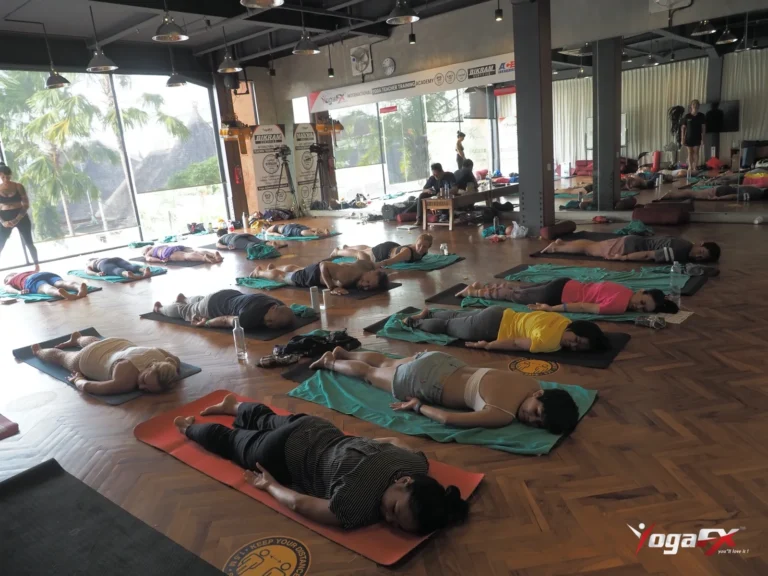
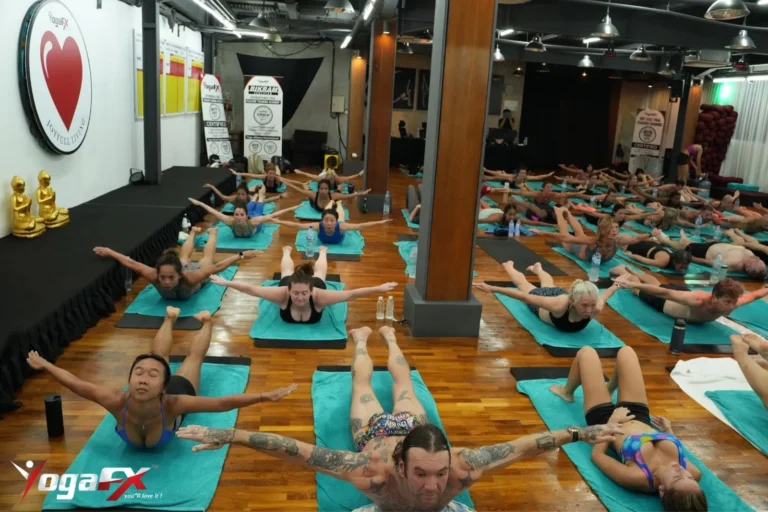


Hot yoga VO2 max gains are real, at least in one controlled trial. In 2021, 22 adults completed 12 sessions over four weeks, some in heat and some at normal room temperature. Only the heated group's maximal oxygen uptake rose. Because the trial was small, the answer is promising rather than final.

What VO2 max measures and why researchers track it
VO2 max is the most oxygen your body can use per minute during hard exercise. Researchers use it as a standard measure of aerobic fitness, because it reflects how well your heart, lungs and muscles work together under load. A higher value usually means you can sustain harder effort for longer.
Most people who ask whether hot yoga VO2 max gains are real want a simple answer. They want to know if a 90-minute practice in a heated room can raise the ceiling of their fitness, or whether it only makes them sweat. The honest answer depends on study design, duration and how many people took part.
How researchers measure VO2 max in a study
Measuring VO2 max usually means a graded exercise test. The participant works harder in steps, on a treadmill or a cycle ergometer, while a mask records the air breathed in and out. The test continues until effort can't rise any further, and the highest oxygen use reached becomes the result.
When you read a VO2 max study, check three things first:
- The unit. Litres per minute is absolute oxygen use and depends on body size. Millilitres per kilogram per minute adjusts for body weight.
- The group size. Ten or eleven people per group can shift an average quickly, so a small result needs confirmation.
- The comparison. A control group tells you whether the programme did more than the alternative, not just whether people changed.
The 2021 trial reported absolute values, and the 2020 study reported relative values. That's why the hot yoga VO2 max numbers in the table below aren't directly interchangeable. If you're tracking a hot yoga VO2 max goal yourself, ask for the test protocol first.
Hot yoga VO2 max: what the 2021 trial found
The most useful study here is a randomised two-group trial published in the International Journal of Yoga in 2021, by Kelsey Christian Bourbeau and colleagues (PubMed Central, PMC8191229). One group practised hot yoga in a room of about 40 degrees Celsius. The other practised at roughly 18 to 22 degrees.
Both groups completed 12 sessions across four weeks, three times a week. Each person was tested before and after the programme. That design gives the trial a real comparison, which many yoga studies lack.
The result split cleanly. In the heated group, maximal oxygen uptake rose from 3.22 to 3.46 litres per minute. The authors reported that change as significant within that group. It is an increase of about 7 percent on the starting value.
In the normal-temperature group, the figure moved from 3.00 to 3.05 litres per minute. That change was not significant. The authors found no statistically significant difference between the two groups.
That last point is the important limit. The heated group improved, but the study can't prove it improved more than the comparison group. The paper's conclusion is still clear: twelve sessions of heated yoga promoted cardiovascular fitness and cellular thermotolerance adaptations.
The table below sets this trial beside a second study that looked at a single session. The two designs answer different questions, and that difference matters.
| Study | Design | Participants | Heated condition | Comparison | Main VO2 result |
|---|---|---|---|---|---|
| Bourbeau et al., 2021 | Randomised, 12 sessions over 4 weeks | 22 adults (11 men, 11 women), aged 19 to 39 | About 40 degrees Celsius | Normal temperature, about 18 to 22 degrees | Heated group rose from 3.22 to 3.46 L/min; no significant difference between groups |
| Lambert et al., 2020 | Single session, crossover, one-hour Bikram sequence | 16 experienced practitioners (14 women, 2 men), average age 40 | About 40 degrees Celsius | Room temperature, about 23 degrees | No difference in mean VO2 (8.9 vs 8.6 ml/kg/min) |
The 2020 study: one heated session and why it matters
A second study changes the picture. Bradley Lambert and colleagues, publishing in the International Journal of Exercise Science in 2020, looked at one session rather than a training block (PMC7241641). Sixteen experienced practitioners completed a one-hour Bikram sequence in heat and again at room temperature.
The sessions were at least 96 hours apart, and the order was randomised. The authors found that the heated session did not significantly raise aerobic energy cost. Mean oxygen use was 8.9 ml per kilogram per minute in the heat and 8.6 at room temperature.
They also noted that heat may acutely increase fat use during exercise and increase hip range of motion. Neither condition reached the level the authors would expect to improve aerobic fitness. A single class, in other words, is not a fitness programme.
The hot yoga VO2 max gain in the 2021 trial came from repeated sessions over several weeks. If your goal is a higher hot yoga VO2 max, the training block matters far more than any one class.
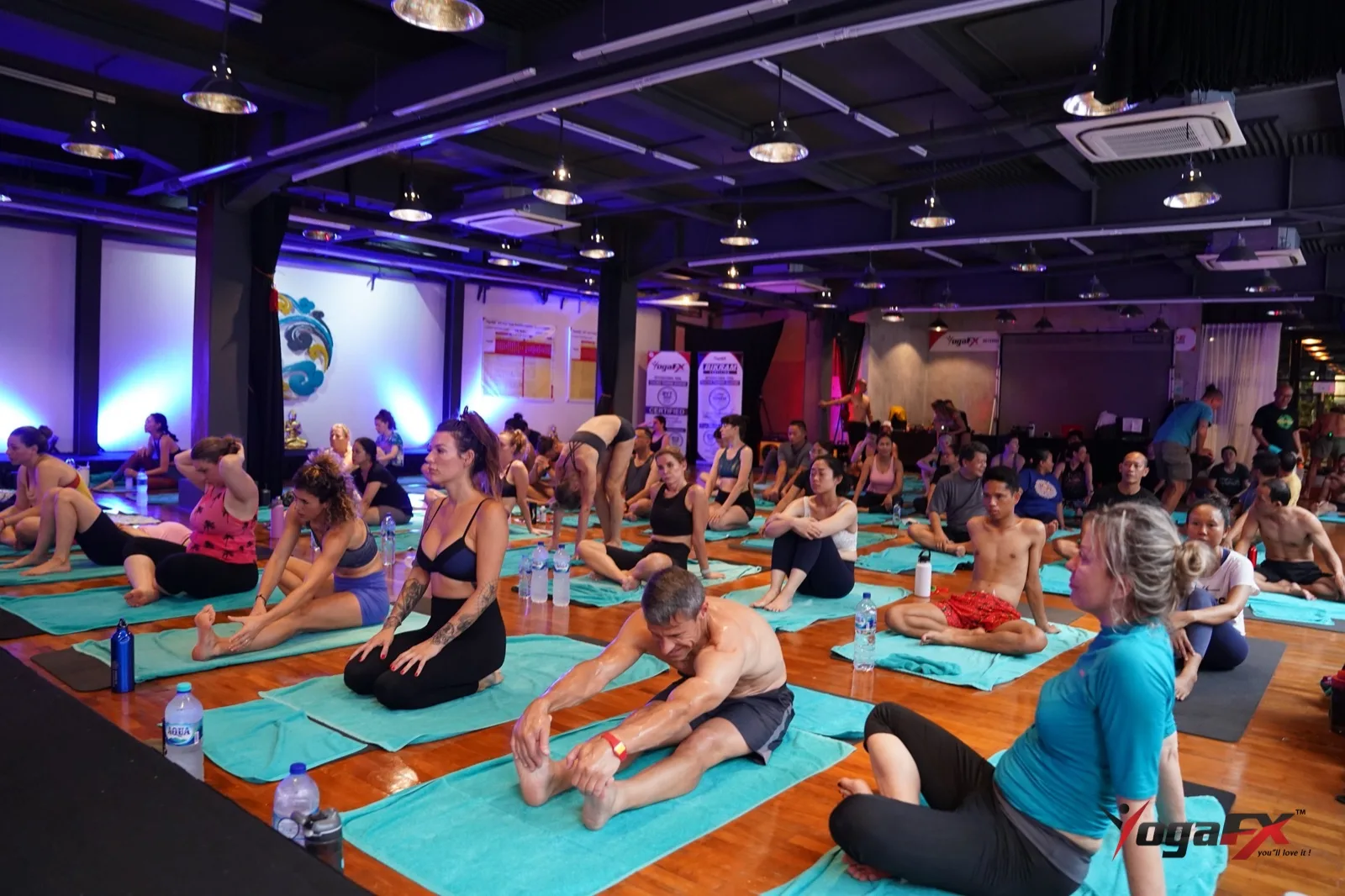
The numbers at a glance
What the heated study says about the heart and cells
The 2021 authors describe two kinds of adaptation: cardiovascular fitness and cellular thermotolerance. The first is the easier idea. Your heart and lungs deliver and use more oxygen as they adapt to repeated work. This is why hot yoga cardiovascular fitness gains are the more practical of the two, since a standard test can pick them up.
The second is less familiar. Thermotolerance describes how well cells cope with heat stress. The authors name it as one of the two adaptations their trial pointed to, so it's worth knowing the term.
Be careful with the wording, though. The study doesn't show that hot yoga beats running, cycling or interval training for VO2 max. Hot yoga cardiovascular fitness gains are one piece of a larger picture. The study shows that, in this small group, a heated programme produced a measurable rise in one fitness marker. That's a useful finding, but it isn't a ranking.
What the trial can't tell you yet
What the study can't tell you is how long the gain lasts, whether it appears in older adults, or whether it matches a programme built only for hot yoga VO2 max. Those questions need larger trials and longer follow-up.
Three open questions remain. Does the gain last after the programme ends? Does it hold for people who start with lower fitness? And does it match a running or cycling programme over the same weeks? The study doesn't answer any of these, so readers should hold their conclusions loosely.
A useful next step would be a larger trial with a longer follow-up period. Researchers could then compare heated yoga with other aerobic training, which would show whether the effect is unique to heat or simply part of regular exercise. For now, the evidence supports a modest claim, and that is the claim this article makes.
Why sample size changes how you read the result
Eleven people in each group is a small number. Small trials can show a change that doesn't hold up in a larger population. A few unusually fit or unusually unfit participants can move the average a long way.
The 2021 authors reported that the heated group's improvement was significant within that group. The difference between groups was not significant. For a reader, that distinction is the key point.
A within-group change tells you that something happened in one group over four weeks. A between-group comparison tells you whether the heated programme did more than the control programme. The second is the stricter test.
So treat a small study as a reason to look closer, not as proof. For a teacher, that means no hot yoga VO2 max claim should be repeated without its sample size attached. Look for replication, longer follow-up and a control group. This trial has a control group, which is a real strength, but its size limits how much weight any single number can carry.
How to use hot yoga in a fitness week
If you want hot yoga VO2 max gains for fitness, plan it the way you'd plan any demanding session. Start with fewer classes and build up, so your body has time to adapt to the heat. The trial used three sessions a week for four weeks. That's a research design, not a personal prescription, but it's a sensible starting point.
Keep these habits in mind through the week:
- Hydrate early. Drink water before, during and after class, and replace fluid once you're home.
- Pair heat with other work. Steady cardio, intervals and strength training each build something different, so keep them in the week.
- Protect recovery. Sleep, food and rest days affect how you adapt to any training load, including heat.
- Stop if something feels wrong. Dizziness, nausea or unusual breathlessness mean you cool down and seek medical advice before returning.
Heat adds load to the heart. A session that feels easy in cool conditions can feel very different at 40 degrees. If you already run or cycle, keep those sessions and treat the heated class as an addition, not a swap.
Who should check with a doctor first
Heat stress is a real risk for some people. Before starting any hot yoga VO2 max programme, consult a healthcare professional, especially if any of these apply to you:
- A heart condition, high blood pressure or a history of heart problems.
- Diabetes, kidney problems, or a history of heat illness.
- Medicines that affect fluid balance, heart rate or temperature control.
- Pregnancy, recent illness or a recent injury.
A trainee who already lives with a health condition can still train. That conversation with a doctor should happen before the first class, not during it.
What this means if you're training to teach
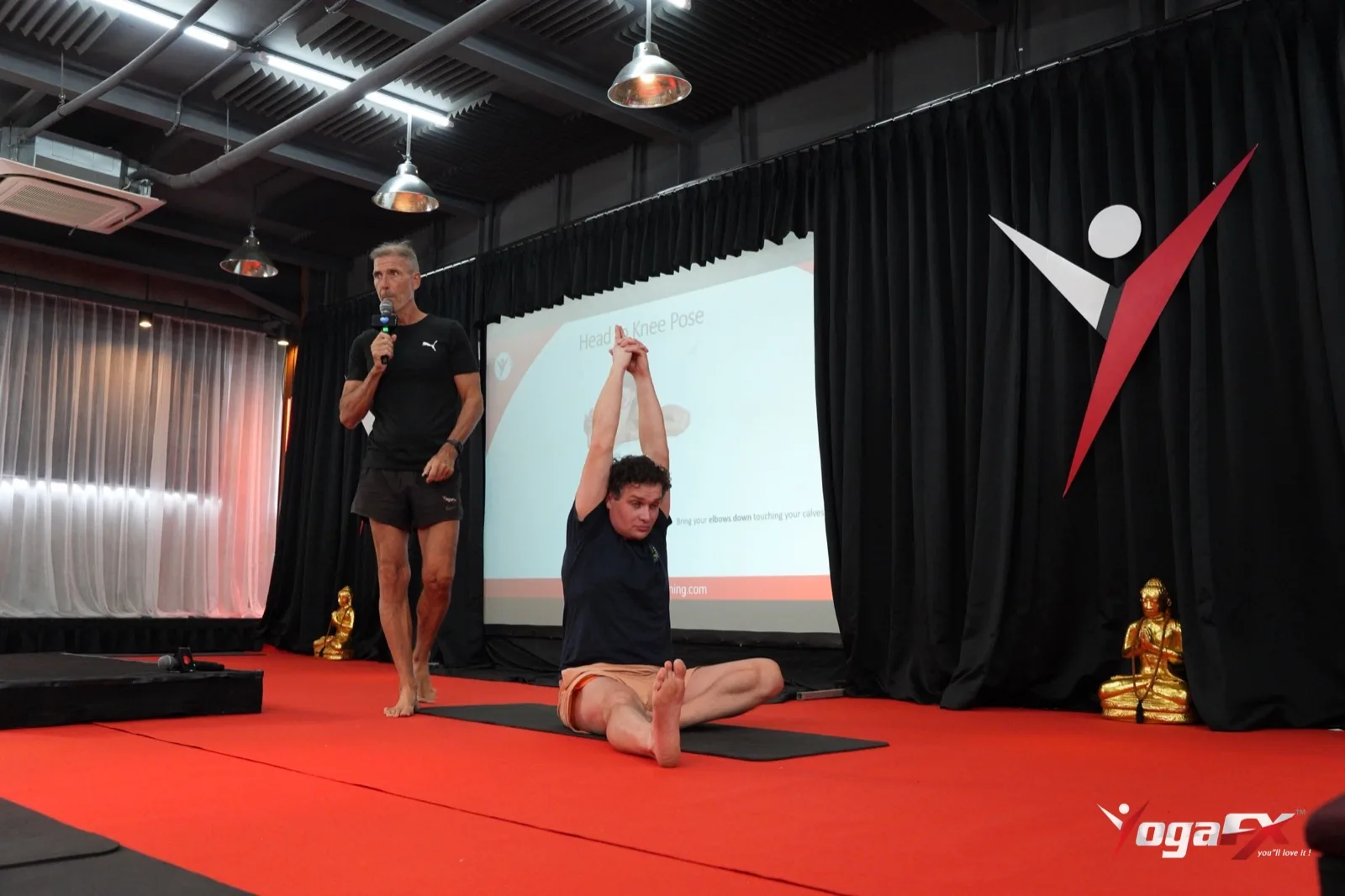
Mr Ian Terry, E-RYT 500, has taught more than 12,000 hours. Since YogaFX began in 2017, its training has graduated more than 1,500 teachers from more than 80 countries. Mr Ian spent five years, from 2014 to 2019, training alongside the founder of the Bikram Hot 26&2 method.
Any hot yoga VO2 max claim deserves the same care in a teacher's mouth as in a researcher's. That background shapes how the course treats heat. A teacher doesn't just watch a room. A teacher reads the room, manages breath and pace, and notices when a student needs to rest.
This is where the research becomes practical. A trainee who will teach in a room of about 40 degrees needs to understand what that heat asks of the body. The published evidence shows that a heated programme can change fitness over weeks, and that a single class doesn't do the same thing.
Teachers also carry a duty of care. In a room at 40 degrees, a teacher watches for flushed skin, slow responses, shaking, or a student who has stopped following the dialogue. A trainee learns to pause the sequence, offer water and give a student permission to rest. Those habits come from practice in the heat, not from reading about it.
If you want more context on heat, read our breakdown of whether a Bikram class counts as cardio, or our comparison of hot yoga and a sauna. For the strength side, see whether hot yoga builds muscle, and for the stress hormone research, whether hot yoga raises cortisol.
What students say about the training
Students in our training often describe the heat as the hard part and the change as the reward. Three reviews from YogaFX students, taken from their public videos, show the range.
Mariana, YouTube review, 2023: "You help me walk away from being my worst enemy." (Quoted from her graduation video.)
Carol, YouTube review, 2025: "I think the universe sent you to me." (Quoted from her review of the training, speaking about Mr Ian.)
A trainee in our YouTube review, 2024: "I feel in the best condition. This is because all of you." (Quoted from the trainee's video.)
Reviews don't prove a hot yoga VO2 max gain. They show how the training felt to the people who did it. Across Google, Yoga Alliance and YouTube, YogaFX has more than 550 reviews in total.
How the Bali training fits in
The next Bikram Hot 26&2 Yoga Teacher Training MasterClass in Bali checks in on Sunday 24 January 2027 and checks out on Friday 29 January 2027. The course is hybrid. You complete an online pre-course first, then six days in person at Soham Wellness Center in Seminyak.
Graduates receive the Yoga Alliance RYT 200-Hour certificate and the Bikram Hot 26&2 200-Hour International Yoga Certification. The early bird price is US$1,899, down from US$1,999, so you save US$100.
A twin share costs US$1,999, and a single room premium costs US$2,199. Payment plans start at US$250 per month with no interest. You can see the full schedule on our course dates page.
FAQ about hot yoga and VO2 max
Does hot yoga improve VO2 max?
A 2021 randomised trial found that it can. Twelve heated sessions over four weeks raised maximal oxygen uptake in 11 adults, while the normal-temperature group showed no significant change. The study was small, and the gap between groups was not significant, so the finding is promising rather than settled. Larger trials would make the answer firmer.
Does one hot yoga class improve VO2 max?
Not on its own. A 2020 study measured oxygen use during one heated Bikram sequence and found no difference from a room-temperature class. A single class burns energy, but the fitness gain in the 2021 trial came from repeated sessions over several weeks. Treat each class as practice, and judge progress across a full training block.
What should I check before starting hot yoga training?
Check with a doctor first if you have a heart condition, high blood pressure, or any problem that affects how you handle heat. Bring your medication list to that visit. The room runs at about 40 degrees Celsius, so expect demanding practice during the training days. Tell the YogaFX team about any health concern before you book.
How much does the Bikram Hot 26&2 teacher training in Bali cost?
The early bird price is US$1,899, down from US$1,999. A twin share costs US$1,999 and a single room premium costs US$2,199. Payment plans start at US$250 per month with no interest. The next batch checks in on Sunday 24 January 2027 and checks out on Friday 29 January 2027 at Soham Wellness Center in Seminyak.
Ready to talk through the course? Message the YogaFX team on WhatsApp at +62 811 3888 330, or visit our contact page. We'll answer your questions about dates, pricing and what to expect in the room.