


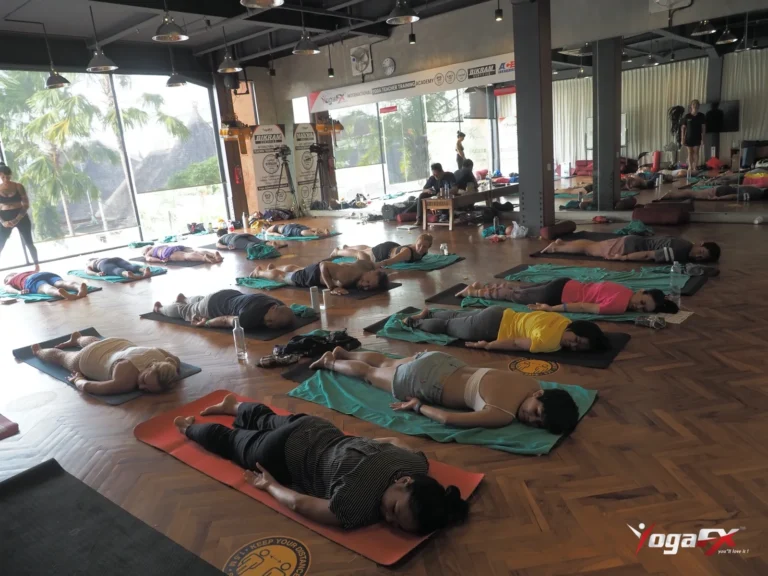
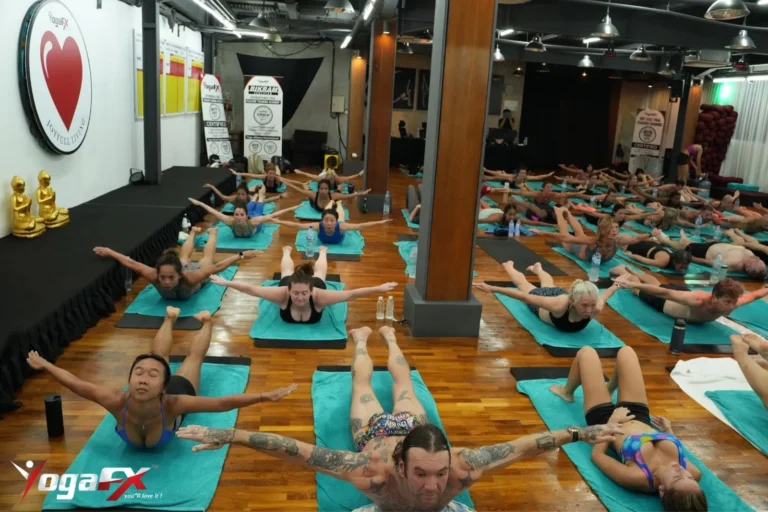


What is hot yoga? It is yoga practised in a heated room, usually for 60 to 90 minutes. The heat loosens the muscles and makes each posture feel harder. At our teacher training in Bali, the warmth comes from natural tropical heat, not electric heaters. This guide explains the styles, the temperatures and who should check with a doctor first.

What Is Hot Yoga, Exactly?
The hot yoga meaning is simple: yoga in a room that is deliberately warm. The heat is the shared feature, not a single sequence. Because the temperature is raised on purpose, students sweat more, move more slowly and often stretch deeper than they would at normal room temperature.
Most people first meet the term through one specific method, Bikram Hot 26&2. It is a set sequence of 26 postures and 2 breathing exercises, taught in the same order every class at about 40°C. Other hot styles, such as hot vinyasa, flow from one posture to the next and change from teacher to teacher. Yin classes in warm rooms hold each posture for longer and keep the heat gentle.
That difference matters when you choose a class. A fixed sequence tells you what the next hour will look like. A flowing class gives you more variety but less predictability. Neither is harder by default, and the heat affects every style.
Five Real Facts About What Hot Yoga Is
- Hot yoga is a room, not one style. Bikram, vinyasa and yin can all be taught in a heated room.
- Bikram Hot 26&2 is fixed. It runs 26 postures and 2 breathing exercises in the same order, at about 40°C.
- Heat means more fluid loss. You sweat heavily, so water before, during and after class matters more than in a normal session.
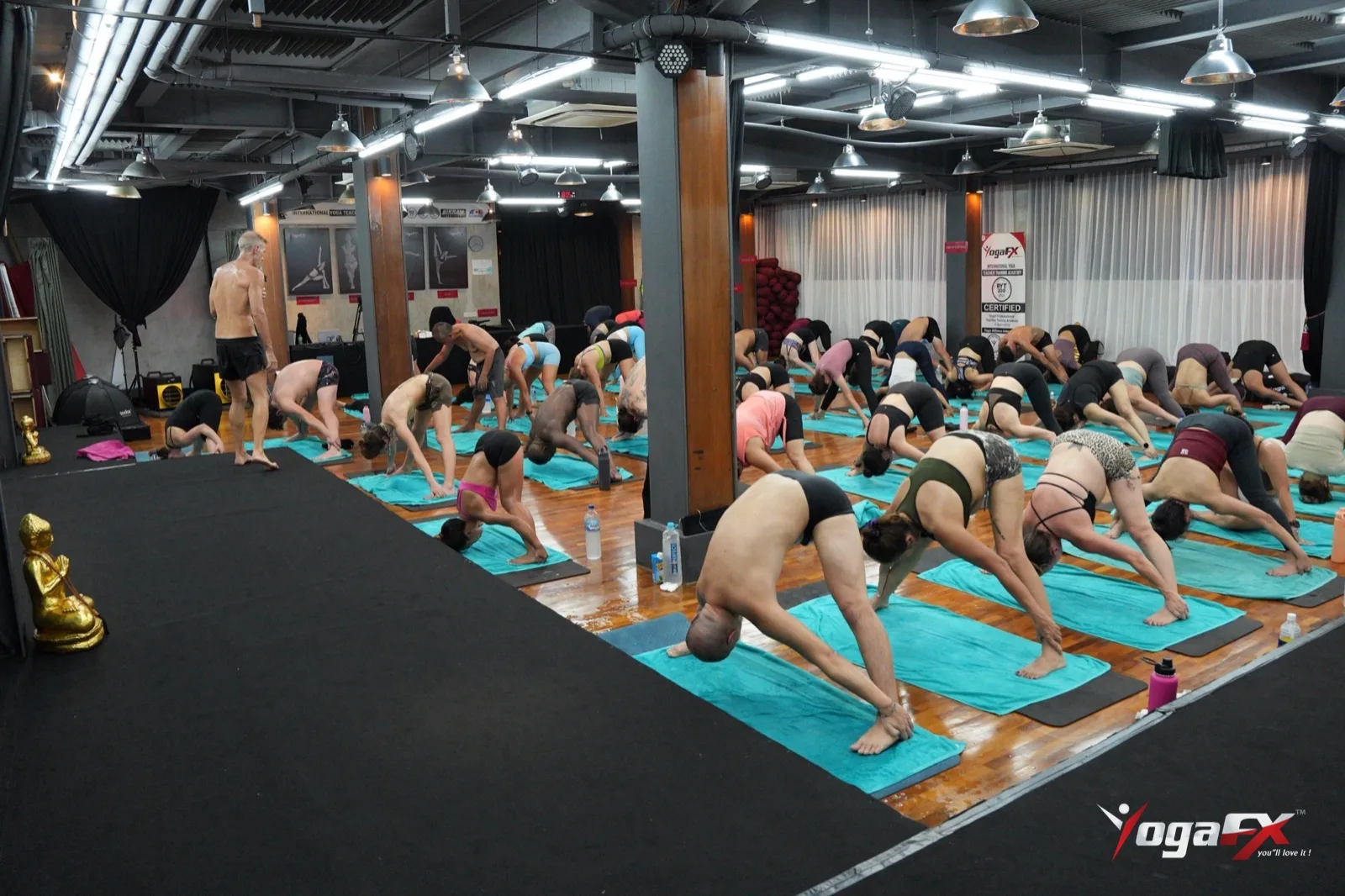
- Our Bali classes use natural tropical heat. The Seminyak and Canggu studios do not use electric heaters, and classes run 90 minutes.
- Studio hours are long. YogaFX studios are open from 06:00 to 22:00 every day, so you can fit a class around your day.
Types of Hot Yoga: The Main Styles, Side by Side
Here is how the three styles you are most likely to meet compare. The table is a starting point, not a ranking. Ask any studio what its teachers actually run before you book.
| Style | How the class is built | Heat | Often suits |
|---|---|---|---|
| Bikram Hot 26&2 | Fixed order of 26 postures and 2 breathing exercises | About 40°C, about 40% humidity at YogaFX | Students who want the same sequence every class |
| Hot vinyasa | Flowing sequence that changes with the teacher | Warm to hot, varies by studio | Students who enjoy movement and variety |
| Hot yin | Few postures, held for longer | Gently warm | Students who want a deep stretch and more rest |
How Hot Is a Hot Yoga Class?
Once you know what is hot yoga at its core, temperature is usually the next question. Our classes run at about 40°C with roughly 40% humidity. That number is the first thing most newcomers ask about, and it is a fair question. A room at 40°C feels different from a sauna because you are moving, and the air in a studio is not still.
You will still sweat heavily. Bring water, expect to drink more than usual for the rest of the day, and treat the first class as a test of how your own body handles heat, not a test of how flexible you are.
One full class, from warm-up to final rest
Target room temperature for Bikram Hot 26&2 classes
Target humidity in the same room
Postures and breathing exercises in the fixed sequence
Electric heaters in the Bali studios, which use natural tropical heat
The room is quieter than many first-timers expect. Our teachers give the instructions in a scripted dialogue, with no music and no demonstration from the front of the room. You listen, you copy, and you pay attention to how your body answers the heat.
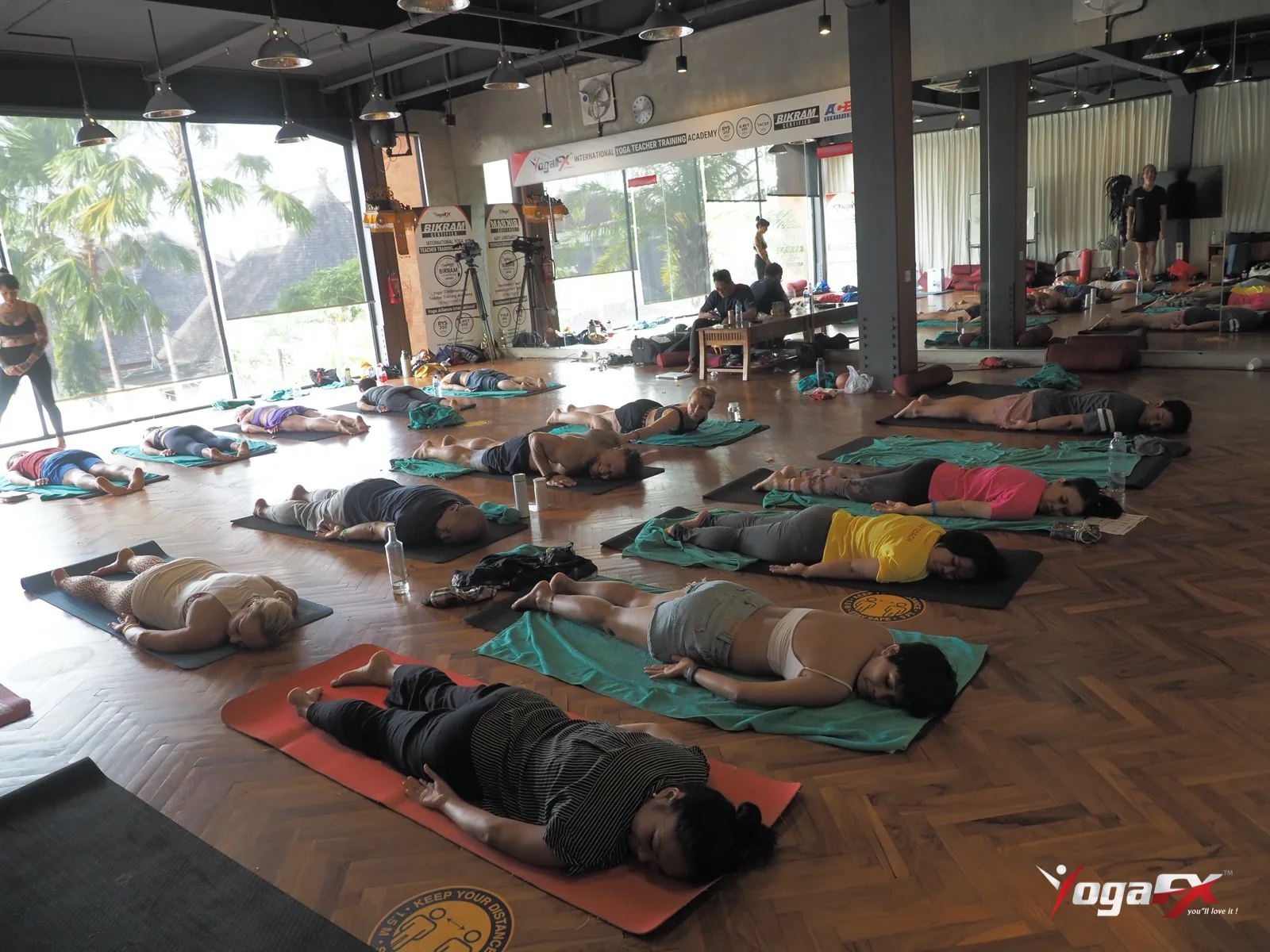
What a First Hot Yoga Class Feels Like
Before you walk in
If you are still working out what is hot yoga going to ask of your body, start with the basics. Eat something light two to three hours before class, or a small snack 30 to 60 minutes before. Heavy meals and intense heat do not mix well, so keep lunch small on the day.
- A large water bottle. Start hydrated and keep sipping.
- A towel. You will need one for the mat and one for your face.
- Light, breathable clothes. Shorts and a fitted top are common in our classes.
The first twenty minutes
Most first-timers find the opening minutes the hardest. Your body is still adjusting to the heat, and the first postures ask for a lot of focus. That is normal. Rest in child's pose whenever you need to, and sip water between postures rather than waiting until you feel thirsty.
By the second half of class, many students settle into a rhythm. The sweat keeps coming, but the breathing slows and the postures start to feel like a conversation with the room rather than a fight against it.
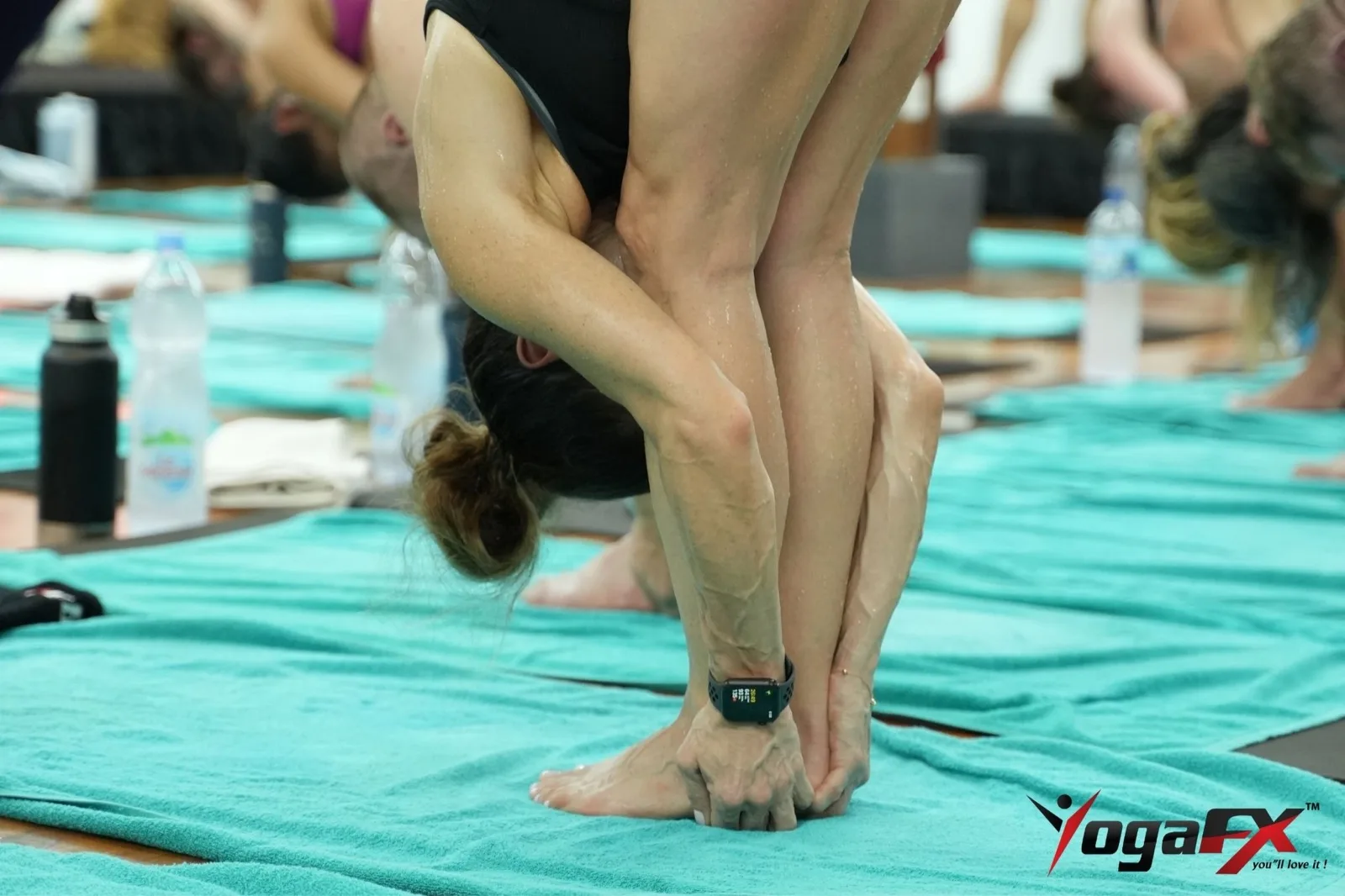
Who Should Check With a Doctor First?
Heat is safe for most healthy adults, but it is not neutral. Heat exhaustion and heatstroke are real risks, and they do not always announce themselves clearly.
The NHS lists these symptoms of heat exhaustion, and you can read the full guidance on the NHS heat exhaustion and heatstroke page:
- Tiredness and dizziness
- Headache, feeling sick or being sick
- Excessive sweating with pale, clammy skin
- Cramps in the arms, legs or stomach, and a high temperature
- Being very thirsty, or feeling irritable
The Mayo Clinic describes a similar picture, with extra signs such as faintness, a weak and rapid pulse, and low blood pressure when you stand up. See the Mayo Clinic symptoms and causes page for heat exhaustion. Heatstroke is a medical emergency, and the NHS advises immediate medical help if someone has its symptoms.
Our practical rule is simple. If you feel dizzy, sick or faint, lie down, sip water and tell the teacher straight away. Do not push through to finish the posture. Consult a healthcare professional before starting hot yoga, especially if you are pregnant, have heart or blood pressure conditions, or take medication that affects fluid balance.
What Students Say About Hot Yoga in Bali
Ask students what is hot yoga for them and you will hear about the room more than the poses. Words from students tell you more about the room than any description can. Sandra, in a 2025 YouTube review, put it this way: "it's been very humbling but also like very empowering." In the same video she describes Bali as a place "so full of kindness."
Manou, also in a 2025 YouTube review, said "the BAM yoga changed my life." She describes a posture she could not reach at first and how the teachers helped her reach it on that mat. You can watch both reviews on the YogaFX YouTube channel, where we have 357 student testimonial videos in total.
Choosing Your First Class
What is hot yoga like for someone new? Before you book, ask three questions. Is the class fixed or flowing? What temperature does the studio state for that class? Is there a teacher who will check on beginners? A clear answer to each one tells you more than a glossy photo does.
Our Bali classes run in our Seminyak and Canggu studios, and every class follows the same structure. That consistency helps new students, because the sequence stays predictable while the heat does its work. A beginner who is nervous about "what is hot yoga really like" usually relaxes after one class, once the rhythm is clear. Students who also ask about cardio can read our piece on hot yoga and VO2 max before deciding how often to attend.
Where Hot Yoga Comes From and How It Connects to Teacher Training
Knowing what is hot yoga today helps you read its history. The Bikram method grew from one sequence, taught in a heated room for decades. Its history is long and has its own disputes, so we keep this section short. If you want the early story, our article on the roots of Bikram yoga covers it in more detail.
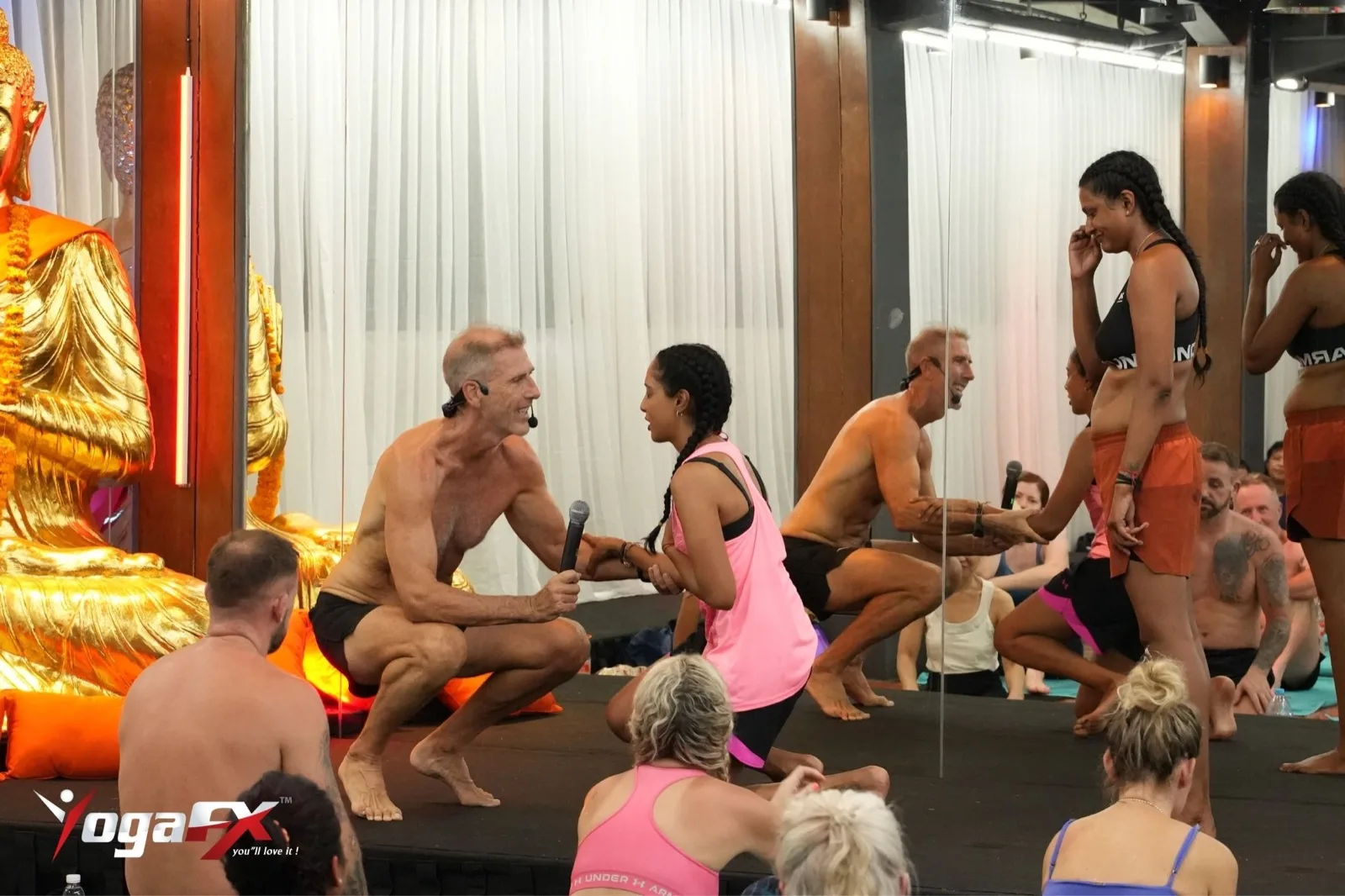
Mr. Ian Terry, E-RYT 500, has taught more than 12,000 hours and trained with the originators of the Bikram Hot 26&2 method from 2014 to 2019. Our Seminyak and Canggu classes follow that teaching, with the sequence, the scripted dialogue and the natural heat kept as they are taught.
So is hot yoga Bikram? Only in part. Bikram Hot 26&2 is one method inside the wider hot yoga family, and that is why our teacher training focuses on it. Students who want the wider picture of heat, styles and teaching can compare methods before they commit.
For a shorter guide to the studio classes themselves, read our Bali studio article on hot yoga styles and room temperatures. Read it alongside this guide if you are comparing classes near Seminyak or Canggu.
Three Common Myths About Hot Yoga
- You need to be fit first. Many students start with a basic level of fitness and build from there. Your teacher will show you how to adjust each posture.
- Sweating is the goal. Sweat is how the body regulates temperature. How much you sweat says little about how well the class went.
- Every hot class is the same. The fixed sequence of the Bikram Hot 26&2 method differs a lot from a flowing class, as the table above shows.
After Class: What to Do Next
Recovery matters as much as the class itself, so think about what is hot yoga asking of you afterwards. Rest for a few minutes before you leave the room, then keep drinking water through the afternoon. Light food helps more than a heavy meal straight after class. If the heat left you dizzy or unwell, do not drive yourself, and see a doctor if the symptoms do not settle.
- Drink water in small sips over the next hour rather than all at once.
- Eat something light once you feel settled.
- Stop and seek help if you feel faint, confused or are sick.
FAQ About Hot Yoga
What temperature is hot yoga at?
Hot yoga rooms vary, but our Bikram Hot 26&2 classes run at about 40°C with roughly 40% humidity. Other hot styles are often warm rather than fixed at one number, so ask the studio before you book. Start with a class you can manage, and let your body tell you how much heat it can handle on the day.
Is hot yoga dangerous?
For most healthy adults, hot yoga is safe when you drink water, eat lightly and rest when needed. The main risks are heat exhaustion and heatstroke, which the NHS and Mayo Clinic describe in detail. If you have heart, blood pressure or pregnancy concerns, see a doctor before your first class.
Is hot yoga the same as Bikram yoga?
No. Hot yoga is an umbrella term for yoga in a heated room. Bikram Hot 26&2 is one specific method with a fixed sequence of 26 postures and 2 breathing exercises, taught at about 40°C. Our teacher training is an independent programme, not an official Bikram Choudhury teacher training.
What is hot yoga for beginners?
For a beginner, the heat is the main challenge and the postures come second. Choose a class with a clear, repeated structure, arrive early and tell the teacher you are new. Expect to rest often in the first few weeks and drink water between postures. Ask the teacher to show a modified version of any posture that feels too much.
What is hot yoga good for?
Students often come for stretching, a focused hour away from screens and a steady routine. Heat can make stretching feel easier, but it is not a treatment for any condition. If you have a health concern, talk to a doctor first, then choose a class that fits what your body can manage.
Still have questions? Message Mr. Ian and the YogaFX team on WhatsApp and we will answer them personally.