






Is hot yoga a cardio workout? Partly. In a Bikram class your heart rate climbs to about 72% to 80% of its predicted maximum, yet the oxygen you use stays in the light-to-moderate range. So it counts as modest cardio, with a heart that works harder than the movement alone explains.

At YogaFX, Mr. Ian Terry, E-RYT 500, has taught more than 12,000 hours of Bikram Hot 26&2. He reads a hot room by breathing and posture long before anyone looks at a watch. This guide puts three published studies next to that teacher's eye, so you can tell what your own heart rate is really saying.
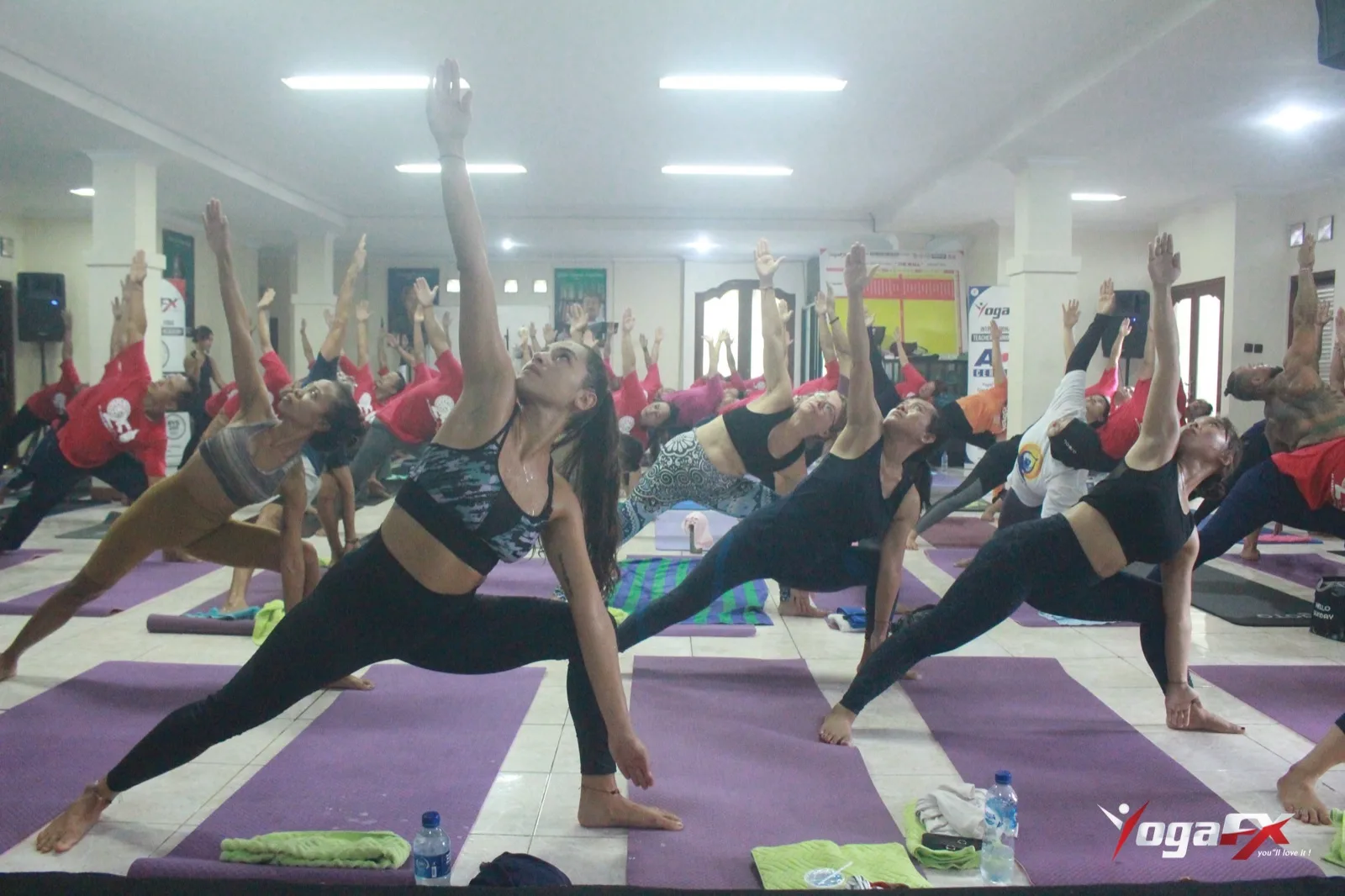
Is Hot Yoga a Cardio Workout? The Short Answer in Numbers
Cardio means aerobic exercise: steady work that raises both your heart rate and your oxygen use for a sustained time. Hot yoga does the first part well. It does the second part less well. That gap is the whole story, and three studies show it.
So is hot yoga a cardio workout? For your heart, yes. For your lungs and big muscles, only a little. Put plainly, your hot yoga heart rate looks like a hard session, while your oxygen use looks like an easy-to-moderate one. Neither number is wrong. They measure different things, so they tell different stories.
Why a High Heart Rate Is Not the Same as a High Workload
Heart rate counts how fast your heart beats. Oxygen uptake counts how much fuel your muscles are burning. On a run the two usually rise together, which is why fitness watches use heart rate to guess your effort. That is why the question "is hot yoga a cardio workout" has two honest answers.
A hot room loosens that link, because your body has a second job: staying cool. That doesn't make your numbers false. One common explanation is that your heart also pumps blood to the skin to shed heat. None of the studies below measured that directly. Treat it as a working theory, not a finding.
A two-minute lesson in METs
A MET is a unit of effort. One MET is resting, and it equals about 3.5 millilitres of oxygen per kilogram of body weight per minute. The CDC calls 3 to 5.9 METs moderate intensity, and its guide gives the same rule of thumb you can use in class: a person doing moderate-intensity activity can talk, but not sing.
In the heated hour that Lambert and colleagues measured, average oxygen use was 8.9 ml/kg/min. That works out to about 2.5 METs, just under moderate. The peak was 14.9, or about 4.3 METs. So the class averages a little below moderate and touches moderate at its hardest moments.
| Measure | Hot yoga figure | Source | Reading on the CDC scale |
|---|---|---|---|
| Average oxygen use, heated hour | 8.9 ml/kg/min, about 2.5 METs | Lambert et al., 2020 | Light, just under the 3-MET moderate floor |
| Peak oxygen use, heated hour | 14.9 ml/kg/min, about 4.3 METs | Lambert et al., 2020 | Moderate (3 to 5.9 METs) |
| Whole-body energy rate, 90 minutes | Roughly brisk walking at 3.5 mph | Colorado State University, 2014 | Moderate, since the CDC lists brisk walking as an example |
| Heart rate, 90 minutes | 72% (women) to 80% (men) of predicted maximum | ACE-sponsored study | Looks hard on a watch, though oxygen use stays lower |
Is hot yoga a cardio workout by this scale? It is a light-to-moderate one. The rows don't match perfectly, and that is the point. The studies used different people, class lengths and methods. As a result, the honest label is light to moderate cardio, not a hard aerobic session.
What Three Bikram Studies Actually Measured
No single paper answers "is hot yoga a cardio workout" on its own. Each study asked something different, so they are best read side by side. If you want the same research mapped across the class, this posture-by-posture view of the same question takes that angle.
The ACE-sponsored heart rate study
Twenty regular practitioners aged 28 to 67 (seven men and thirteen women) took one 90-minute class at 105°F and 40% humidity. Researchers led by Emily Quandt and John Porcari tracked heart rate and core temperature, as described in the American Council on Exercise write-up.
Men averaged about 80% of predicted maximum heart rate and women about 72%. Peaks reached 92% in men and 85% in women. The study did not report oxygen use or calories, so it speaks to heart rate and heat only.
The heated versus room-temperature trial
Lambert and colleagues compared the same one-hour Bikram sequence in a heated room and a room-temperature room, at least four days apart. Sixteen experienced practitioners took part, fourteen women and two men, with an average age of 40. The full paper is open on PubMed Central.
- Heart rate: 113 beats per minute heated and 109 at room temperature, which was not a significant difference.
- Oxygen use: 8.9 against 8.6 ml/kg/min on average, and 25.3% against 23.5% of each person's maximum.
- Energy: 156 kilocalories heated and 151 at room temperature, again not significantly different.
The authors noted that the session stayed below 30% of VO2max. They also did not measure core temperature, so the trial cannot say how hot anyone became.
The Colorado State energy study
Brian Tracy and colleagues at Colorado State University studied 19 practitioners aged 18 to 40, eleven women and eight men, in one 90-minute class at 105°F and 40% humidity. According to the university news story, heart rate averaged about 160 beats per minute and core temperature averaged 100.3°F.
Their metabolic rate was roughly that of walking briskly at 3.5 miles an hour for the full 90 minutes. Energy use averaged about 460 calories for men and 330 for women. One limit matters here: the story reported conference findings, and the journal paper was still being drafted, so these figures are not yet peer reviewed in that form.

Why the three sets of figures disagree
- Length. The heated-room trial lasted one hour. The other two used a full 90-minute class, so heat had longer to build.
- People. Ages ran from 18 to 67, and the groups mixed men and women with very different levels of experience.
- Method. One study reported heart rate as a share of predicted maximum. The others reported beats per minute.
So treat the numbers as three snapshots, not one verdict. They agree on the main point, though: heart rate runs high while oxygen use stays modest.
Is Hot Yoga a Cardio Workout Because of the Heat? What One Trial Found
Many students assume the heat is what makes hot yoga cardio. The one controlled comparison we found does not support that. In Lambert's hour, heart rate, oxygen use and energy were all similar in the heated room and the cool one.
One thing did change. The respiratory exchange ratio was lower in the heat (0.89 against 0.95), which the authors read as a shift in the fuel the body was burning. That is a metabolic detail, not extra aerobic work.
Heat did add something else: body temperature. In the ACE-sponsored class, the highest core temperature averaged 103.2°F in men and 102.0°F in women. One man reached 104.1°F, and seven of the twenty passed 103°F. So the heat's clearest effect is heat strain, not a bigger cardio dose.
We did not find a study that measured heart rate, oxygen use and core temperature together in the same class. Until one exists, the link between the three stays a reasonable guess. For the temperature side of the story, our guide to Bikram yoga temperature and humidity explains why the room is held where it is.
Is Hot Yoga a Cardio Workout for You? How to Read Your Own Heart Rate
You do not need a lab to judge your effort. Because your heart rate runs high in the heat, hot yoga heart rate zones read off a watch can mislead you. Use these checks instead:
- Try the talk test. The CDC says moderate effort means you can talk but not sing, while vigorous effort leaves you able to say only a few words. The American Heart Association describes moderate effort the same way: your heart beats faster and you breathe harder, but you can still talk.
- Watch trends, not single classes. Compare your average over several weeks. A number that falls for the same posture means your fitness is rising.
- Take calorie estimates lightly. The lab figures above are a better guide than a wrist estimate in a 40°C room.
- Rest on purpose. Standing still between sets lets your breath settle, as interval athletes do.
Beginners should stay near the back, rest often and keep the breath steady. Our guide to whether hot yoga is a good workout covers the zone maths in more detail, and the hot yoga calories burned guide shows the energy figures by body weight.
How to Add Real Cardio Around Your Hot Yoga Classes
The CDC says adults need 150 minutes of moderate-intensity activity a week, or 75 minutes of vigorous activity. The AHA gives the same target. Hot yoga covers part of that, but on the oxygen numbers above it does not cover all of it.
Once you know the answer to "is hot yoga a cardio workout", the next question is what to add. Some people ask instead, "is hot yoga a good cardio workout?" The honest reply is that it's a good partner for cardio, not a replacement.
If aerobic fitness is your goal, build it around the class instead of pushing harder inside the room. The heat already raises the risk of overdoing it.
- Add brisk walks or rides. Two or three sessions a week stack neatly on top of a light-to-moderate class.
- Keep hard cardio apart from hot classes. Avoid stacking them back to back, so heat and effort do not pile up.
- Build strength separately. A hot class trains balance and strength endurance, which running does not.
- Ask your own doctor or coach. Whether a class counts toward your weekly minutes depends on your health and fitness.
Bottom line: is hot yoga a cardio workout? Yes, a light-to-moderate one that's best paired with walking, cycling or swimming. For the heart-health side, read is hot yoga good for your heart, which sets out what the studies did and did not show.
When a High Heart Rate Becomes a Warning
A high heart rate in a hot room is normal. A high heart rate that stays high while you feel unwell is not. In the ACE-sponsored class, seven of twenty regular practitioners passed 103°F core temperature, so even experienced students carry a real heat load.
Speak to a healthcare professional before you start if you have heart disease, blood pressure problems or you are pregnant. Stop, sit down and drink water if you notice any of these signs:
- Chest pain or pressure. Stop at once and get urgent medical help.
- A racing or uneven heartbeat that does not settle within a minute or two of resting.
- Dizziness, nausea or a pounding headache. These are early signs of heat strain.
- A sudden stop in sweating. Cool down and tell your teacher straight away.
Sitting out a posture is normal and wise. Powering through is never the goal.
What Students Say About the Effort
Many students ask "is hot yoga a cardio workout" before their first class, but numbers cannot capture how it feels from inside. Here is what three YogaFX students said in their own words.
"The course was transformative for me."
Mayuri, Google review, 2026
Mayuri added that the change went beyond skills, calling it transformative "not just professionally, but personally too."
"I pushed very hard."
Sammi, YouTube review, 2023
Sammi said those words at graduation. Watch the full review below.
Angela, a trainee in our YouTube review (2025), kept it short: "I have had a very good time." Watch her review below.
These are individual stories, not trial results. They match the research on one point, though: the class asks for real effort, and people finish it glad they did.
From Reading the Heat to Teaching It With YogaFX
Teachers hear "is hot yoga a cardio workout" every week. A good answer uses evidence, not hype. The YogaFX Bikram Hot 26&2 Yoga Teacher Training MasterClass trains you to give it.
Mr. Ian Terry trained for five years, from 2014 to 2019, with the founder of the Bikram Hot 26&2 method. Since 2017, YogaFX has graduated more than 1,500 trainees from 80+ countries.
The course is a 6-day hybrid: online pre-course study, then an intensive in Bali. Graduates earn the Yoga Alliance RYT 200-Hour and the Bikram Hot 26&2 200-Hour International Yoga Certification. The next batch checks in on Sunday 24 January 2027 and checks out on Friday 29 January 2027, at the Soham Wellness Center in Seminyak.
The Early Bird price is US$1,899 against the normal US$1,999, with payment plans from US$250 a month. You can read the full dates, formats and costs before you decide.
FAQ
Is hot yoga a cardio workout or just stretching?
It is more than stretching, but it is a modest cardio workout. A hot class keeps your heart rate raised for 90 minutes, which is aerobic work. However, measured oxygen use was only about 25% of maximum in a one-hour heated trial. So it supports aerobic fitness, but it is less demanding than running or cycling.
Can hot yoga count as cardio toward the weekly 150 minutes?
Partly, and it depends on you. The CDC counts 3 to 5.9 METs as moderate activity, and a heated class averaged about 2.5 METs with peaks near 4.3 in one trial. Many people add brisk walking or cycling on other days. Ask your doctor or coach how to plan your own week.
Can you do yoga and cardio together?
Yes, and many students do. Hot yoga builds balance, flexibility and strength endurance, while brisk walking, cycling or swimming build aerobic fitness. Avoid stacking a hard session and a hot class back to back, drink plenty of water, and stop if you feel dizzy or unwell. Check with a healthcare professional first.
What heart rate zone is hot yoga?
The studies report averages, not one zone. In a 90-minute class women averaged about 72% and men about 80% of predicted maximum heart rate, with peaks of 85% and 92%. In a one-hour heated trial the average was 113 beats per minute. Your own numbers depend on age, fitness and experience.
Can you do hot yoga with a heart condition?
Ask your doctor first. Heat raises core temperature, and in one Bikram study seven of 20 regular practitioners passed 103 degrees Fahrenheit. People with heart disease, blood pressure problems or certain medicines need personal medical advice before any hot class. Tell your teacher at intake and rest whenever you need to.
Still have questions about your own class? YogaFX answers every message personally. Message Mr. Ian on WhatsApp.