
Is hot yoga good for your heart? For a healthy adult, the measured evidence is cautiously positive: studies of the Bikram Hot 26&2 sequence report improved blood-vessel function, better insulin sensitivity and lower cholesterol. For a heart that is already compromised, the same class is a genuine cardiovascular load rather than a gentle one, and that is the part most articles leave out. Both halves are below, with the numbers each claim rests on.

This matters more here than on most sites, because the people reading it are often training to teach. A teacher standing at the front of a 40°C room needs to know what the class is actually asking of the hearts in front of them, not a marketing summary of it.
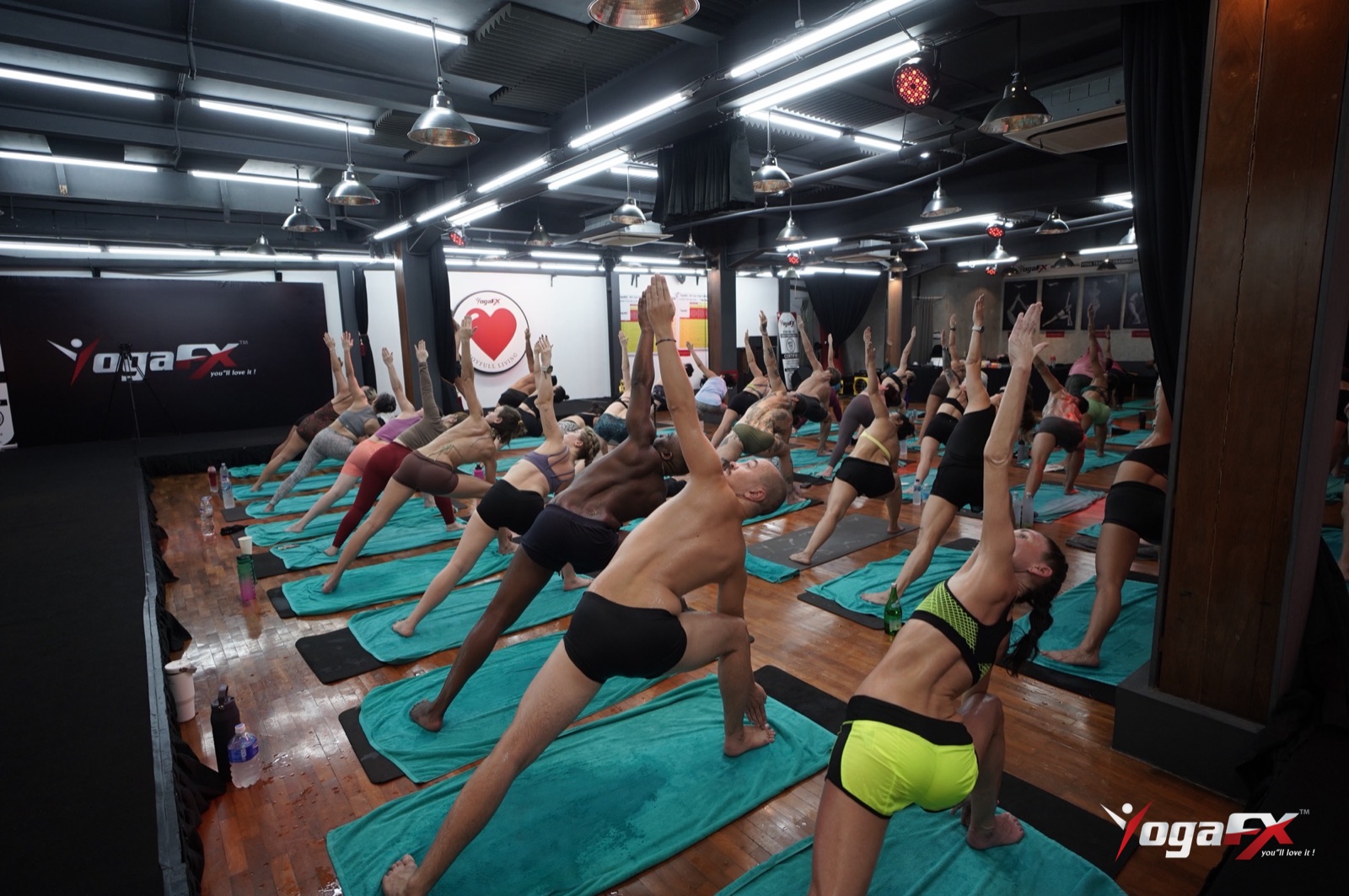
What the Studies Actually Measured
Three findings carry most of the weight, and all three come from small trials rather than large population studies. That limitation is worth holding in mind throughout.
- Blood-vessel function improved. Hunter and colleagues studied the 26 postures in adults aged 40 to 60 and reported better endothelial function, with body fat falling in the heated group. Endothelial function is one of the earliest markers of cardiovascular health, which is why this result gets quoted.
- Cholesterol and insulin sensitivity moved. Across their 2013 and 2018 work the same line of research reported total cholesterol down 16 mg/dL and LDL down 18 mg/dL in middle-aged and older adults, alongside improved insulin sensitivity.
- Aerobic capacity rose, but only in the heat. Bourbeau and colleagues in 2021 ran the same yoga at two temperatures. VO2max rose 7 percent in the heated group across 12 classes. The room-temperature group gained nothing measurable.
Put plainly: there is reasonable evidence that regular practice improves several cardiovascular markers, and some evidence that the heat is doing part of that work rather than being decoration. There is not evidence that hot yoga prevents heart disease, and nobody should present it that way. For a shorter, student-facing walk through the same studies, see our guide to hot yoga and cardiovascular health. The broader set of findings is collected in our guide to the benefits of Bikram yoga.
How Hard the Class Is on the Heart
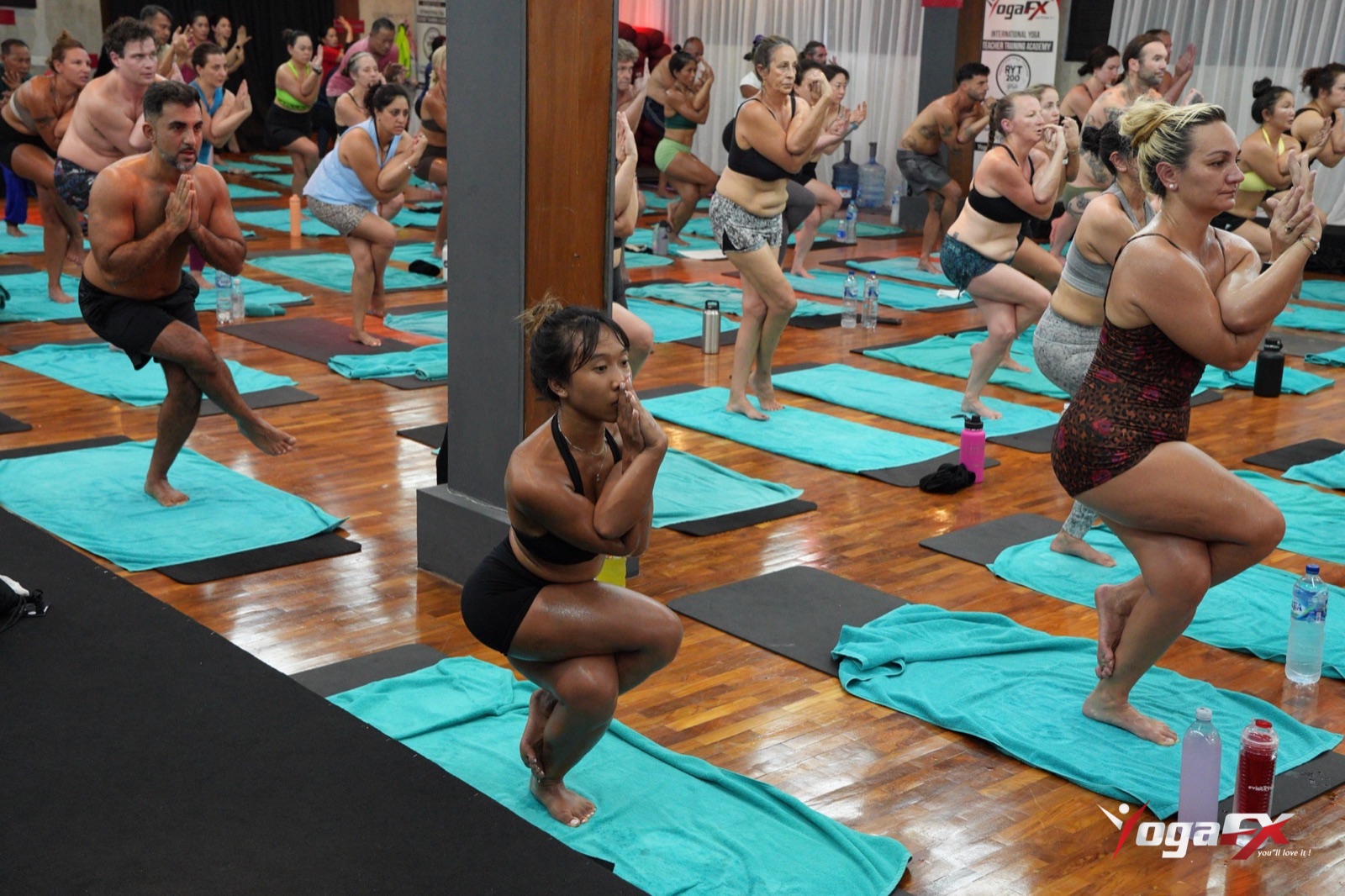
Johns Hopkins Medicine puts the general target range for exercise at 50 to 85 percent of maximum heart rate. A Bikram Hot 26&2 class does not sit politely in the middle of that range. Quandt and colleagues in 2015 measured men averaging 80 percent of predicted maximum across the entire 90 minutes, with women averaging 72 percent. Those are averages, not peaks.
| Measurement | Figure | Source |
|---|---|---|
| General exercise target range | 50 to 85% of maximum heart rate | Johns Hopkins Medicine |
| Men, averaged across a whole class | 80% of predicted maximum | Quandt and colleagues, 2015 |
| Women, averaged across a whole class | 72% of predicted maximum | Quandt and colleagues, 2015 |
| Same yoga, heated versus room temperature | 67% against 61% of maximum | Boyd and colleagues, 2018 |
| Energy cost, men | 460 kcal per 90-minute class | Porcari and colleagues, 2014 |
| Peak heart rate recorded | Near 168 bpm, in experienced women practitioners | Miranda Hurtado and colleagues, 2019 |
Read the last row carefully. That peak was recorded in experienced women practitioners, not in beginners and not in a mixed population, so it describes what a trained body reaches rather than what a newcomer should expect. Precision like this is the difference between information and marketing.
The practical reading for a healthy adult is that this is a real aerobic session sitting at the top of the recommended range, not a stretching class with a thermostat. For someone with a cardiac history, that same sentence is the reason to get clearance first.
Where a Class Sits in the Five Heart Rate Zones
Fitness watches divide effort into five zones, from very light recovery at 50 to 60 percent of maximum up to a near-maximal effort at 90 to 100 percent. One of the more useful things about the fixed 26 and 2 sequence is that it moves through all five within a single class, in a predictable order. For a trainee learning to read a room, knowing which zone a given part of class belongs to is more practical than any general statement about intensity.
| Zone | % of maximum | Where it occurs in class |
|---|---|---|
| Zone 1 | 50 to 60% | Savasana between the floor postures, and the closing breathing exercise, when heart rate settles |
| Zone 2 | 60 to 70% | The steady base of the class. The same yoga ran at 67% of maximum in the heat against 61% at room temperature |
| Zone 3 | 70 to 80% | Women averaged 72% of predicted maximum across the whole class |
| Zone 4 | 80 to 90% | Men averaged 80% of predicted maximum across the whole class |
| Zone 5 | 90 to 100% | The highest points of the standing series, reached briefly rather than sustained |
Two things follow from that table. The first is that the average male student spends the class in Zone 4, which most people associate with interval training rather than with yoga. The second is more useful for teaching: the recovery built into the sequence is not padding. Savasana is the only thing that makes 90 minutes at that intensity survivable, which is why shortening it, or letting students skip it to get a deeper stretch, quietly changes the physiological character of the class.
It also explains a pattern every teacher sees. Students who treat the floor series as the easy half, and who use Savasana to adjust their towel or drink water, tend to be the ones who struggle in the last twenty minutes. The rest periods are doing work.
What the Heat Adds, and Why Heart Rate Misleads in a Hot Room
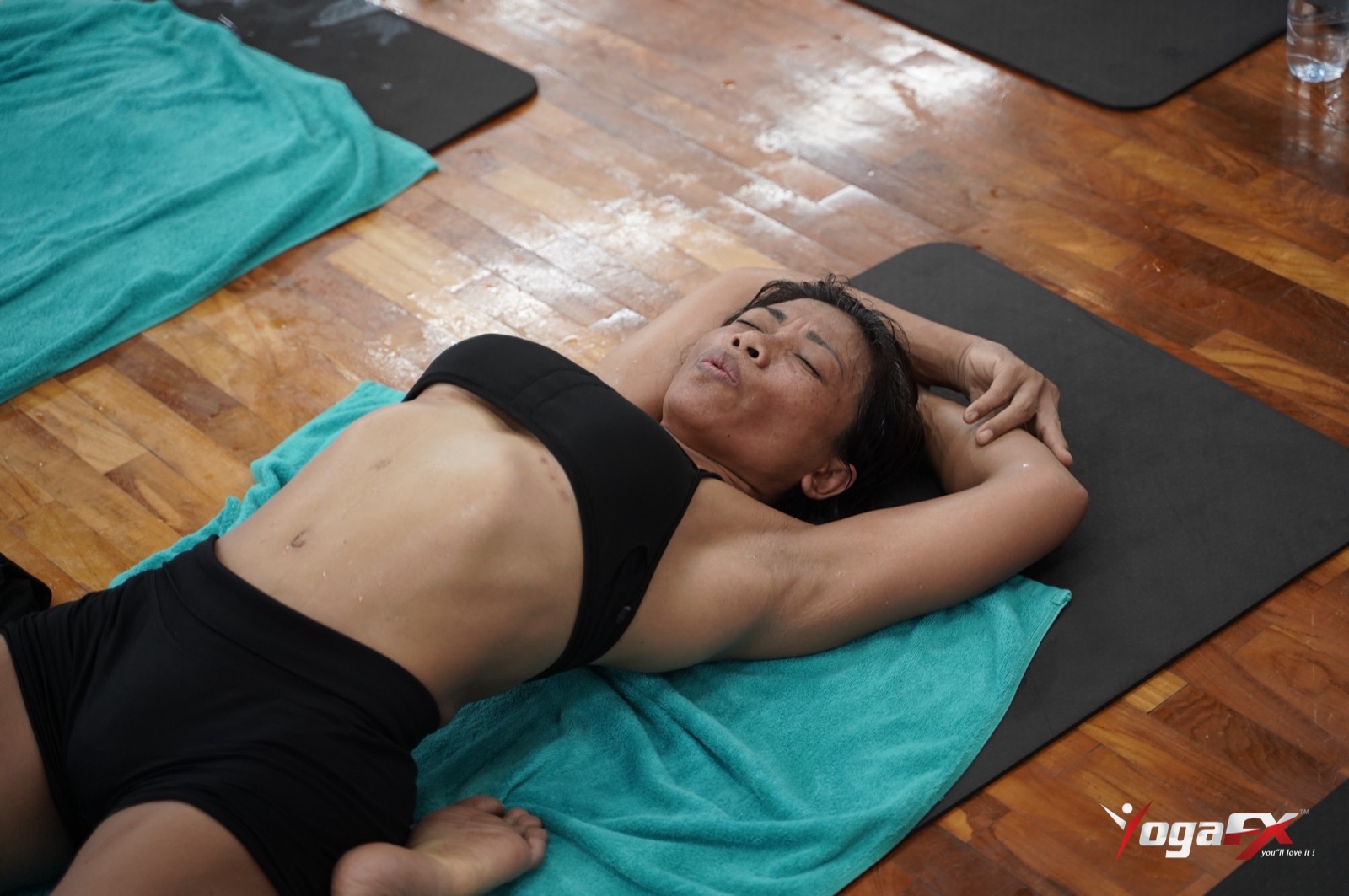
Some of the cardiovascular work in a heated class is thermoregulation rather than muscular effort. Blood is redirected toward the skin to shed heat, which reduces the volume returning to the heart with each beat, so the rate rises to maintain output. That is why the same sequence runs six percentage points higher in the heat than at room temperature.
For a teacher this has a specific consequence worth internalising. Heart rate in a hot room is not a clean measure of how hard a student is working, because part of it is cooling rather than effort. A student whose watch reads high is not necessarily over-exerting, and a student who looks comfortable may still be accumulating heat. Quandt and colleagues recorded men's average peak core temperature at 103.2 degrees Fahrenheit, with one man reaching 104.1. Our article on Bikram yoga temperature covers how the room is set and why.
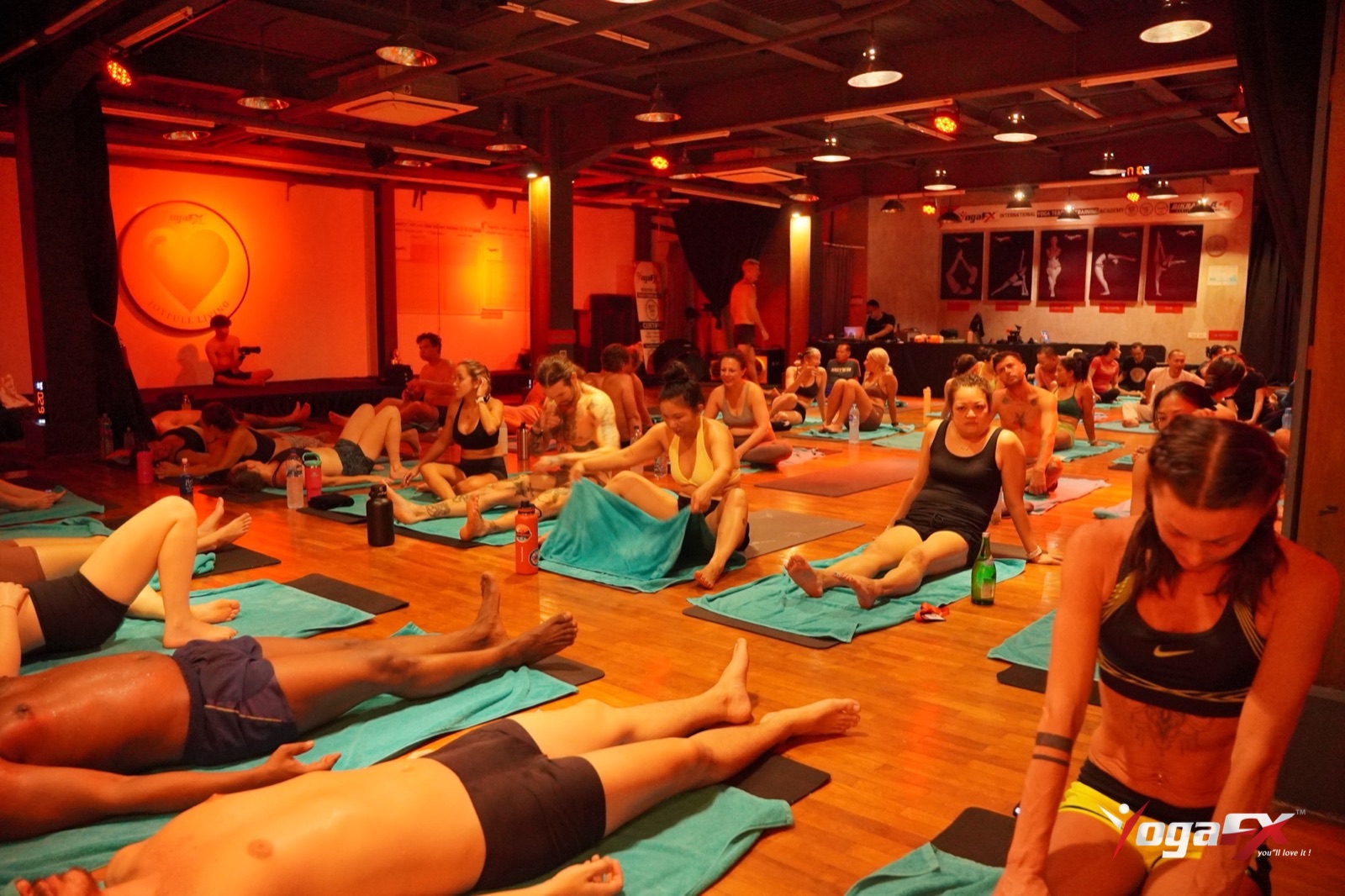
The sequence builds in its own recovery. Savasana between the floor postures and the breathing exercise at the end drop the heart rate back toward the bottom of the range, which is part of why a 90-minute class is tolerable at all.
Hot Yoga and Blood Pressure: What Can and Cannot Be Said
This is the question people actually search, and the honest answer has two parts.
What can be said: the research on heated yoga in middle-aged and older adults reports improvements in blood-vessel function and in the lipid markers that sit alongside blood pressure in a cardiovascular risk picture. Heat exposure generally causes blood vessels to dilate, and regular exercise of this intensity is associated with better vascular health over time.
What cannot be said: that hot yoga treats hypertension, that it replaces medication, or that anyone with uncontrolled blood pressure should start practising to bring it down. Several postures involve inverting the head below the heart and then rising, which can produce dizziness in people whose blood pressure is poorly regulated or who take medication affecting it. Nobody should adjust medication because of a yoga class, and that decision belongs with a doctor.
Who Should Get Medical Clearance First
- Any diagnosed heart condition, including arrhythmia, coronary artery disease or a previous cardiac event.
- Blood pressure that is not well controlled, in either direction. Low blood pressure in a hot room produces its own problems.
- Beta blockers or other rate-limiting medication. These blunt the heart rate response, so the usual internal gauge of exertion stops working.
- Diuretics or anything affecting hydration and electrolytes, because fluid loss in a heated class is substantial.
- A history of fainting, heat illness or difficulty regulating temperature. Previous episodes are the best available predictor.
- Pregnancy, which warrants a separate conversation with a doctor rather than a general rule.
Leave the room and lie down if you feel dizzy, nauseous or unusually short of breath, and do not treat finishing the class as the goal. This article is general information and does not replace advice from a qualified healthcare professional. If you have any cardiovascular condition, speak to your doctor before starting heated practice.
One practical note that belongs with the clearance list rather than after it. If you are cleared to practise but know your cardiovascular system is the limiting factor, tell the teacher before class rather than during it, take a spot near the door, and treat the first three classes as a graded exposure rather than a test. Skipping a posture and lying down costs you nothing. Leaving the room mid-class because you pushed through three warnings costs you the next week of practice, and occasionally more than that. The students who build the most durable practice in a heated room are consistently the ones who were most conservative in their first fortnight.
How This Is Taught in Teacher Training
In a method with no demonstration and no music, the teacher is the only monitoring system in the room. That is why heat safety is taught as a teaching skill rather than a disclaimer. Trainees learn to read the signs that precede a problem: mouth breathing early in the standing series, a student who stops following the dialogue, someone who sits down and then does not come back up, and the colour changes that show before anyone says anything.
Mr. Ian Terry, who leads the YogaFX training, is an E-RYT 500 instructor with more than 12,000 teaching hours and over 1,500 graduates from 80 countries, and trained directly under Bikram Choudhury across five training events between 2012 and 2019. His instruction on this point is unambiguous: a teacher who lets a student push through dizziness has not taught a hard class, they have failed to teach a safe one.
Our published participation and enrolment data, including the 19 percent of male applicants who disclose a medical condition or medication on their enrolment form, is in the How Many Men Do Yoga report. For what the practice looks like for men specifically, see hot yoga for men.
Here are two graduates talking about their own training.
To ask a direct question about training, send a WhatsApp message to Mr. Ian Terry on +62 811 3888 330.
FAQ
Is hot yoga good for your heart?
For healthy adults the evidence is cautiously positive. Studies of the 26 postures in adults aged 40 to 60 report improved blood-vessel function, better insulin sensitivity and lower cholesterol. These are small trials, and none of them show that hot yoga prevents heart disease.
Is hot yoga bad for your heart?
Not for a healthy heart, but it is a real cardiovascular load rather than a gentle one. Men average 80 percent of maximum heart rate across a class, at the top of the generally recommended exercise range. Anyone with a cardiac condition should get medical clearance first.
Can you do hot yoga with high blood pressure?
Only with medical clearance, and not if it is uncontrolled. Several postures move the head below the heart and back up, which can cause dizziness when blood pressure is poorly regulated or affected by medication. Never adjust medication because of a yoga class.
How high does your heart rate get in a Bikram class?
Men average around 80 percent of predicted maximum across the whole class and women around 72 percent. One study recorded peaks near 168 beats per minute, though that was in experienced women practitioners rather than beginners.
Why does my heart rate run higher in a heated room?
Part of it is cooling rather than effort. Blood is redirected toward the skin to shed heat, reducing the volume returning to the heart per beat, so the rate rises to maintain output. The same sequence runs at 67 percent of maximum in heat against 61 percent at room temperature.