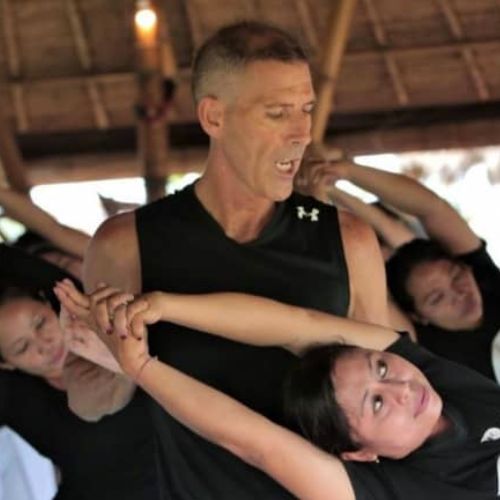
Bikram yoga for athletes works as cross-training, not as a replacement for sport practice. The fixed 90-minute Hot 26&2 sequence builds flexibility, posterior chain strength, balance and calm breathing in heat. Two or three classes a week on lighter training days fill the gaps most sports leave, without competing with your main training load.

Athletes already know how to train hard. What most lack is a second practice that targets the tightness and imbalances their sport creates, week after week, in the same measurable way. That is where the Original Hot 26&2 method earns its place.
This guide draws on the coaching experience of Mr. Ian Terry, E-RYT 500, founder of YogaFX. He has taught more than 12,000 hours of the method and trained over 1,500 teachers from more than 80 countries. In 2026 he was appointed Master Trainer of the Republic of Indonesia Yogasana Sports Federation, so he works with competitive athletes as well as yoga students.
Bikram Yoga for Athletes: What It Does and What It Does Not
Before adding anything to a training plan, an athlete needs an honest picture. The table below sets out the main benefits, what drives them, and where the limits are.
| Benefit | What drives it | Honest limit |
|---|---|---|
| Flexibility that lasts | Long holds in a warm room, two sets of each posture, every class | Gains build over weeks, not after one session |
| Posterior chain strength | Awkward Pose and the spine strengthening series (Cobra, Locust, Full Locust, Bow) | Little upper-body pushing or maximal loading |
| Balance and single-leg control | Standing Head to Knee, Standing Bow Pulling, Balancing Stick, Tree | Transfers best when practised regularly |
| Aerobic work | 90 minutes at around 40°C (105°F) and 40% humidity | Part of the heart rate rise is the heat, not the work |
| Calm under discomfort | Breath control and stillness in a demanding room | Mental benefits are promising, not proven for sport |
| Active recovery | Steady pace and spinal movement in every direction | Not passive rest; avoid after max-effort days |
The key word is complement. The 26 postures won't make you faster, stronger or more skilled at your sport on their own. Instead, Bikram yoga for athletes protects and prepares the body that does those things.
Flexibility That Actually Transfers to Sport
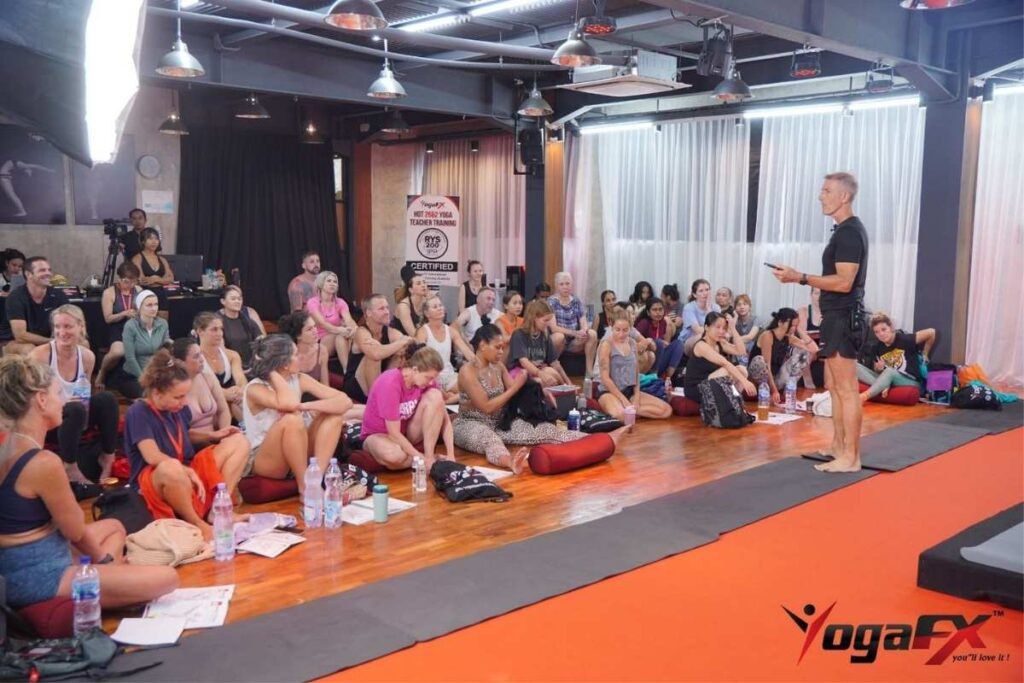
Flexibility is where Bikram yoga for athletes shows results first. Most athletes know they are tight. Many have stretched for years with little to show for it, often because they stretch cold, briefly and inconsistently. The 26 and 2 sequence changes all three. You hold each posture twice, in a warm room, in the same order every time.
Research supports the pattern. In an eight-week study, Tracy and Hart (2013) measured improvements in lower back, hamstring and shoulder flexibility in people practising the sequence regularly. Those are exactly the areas runners, cyclists and lifters tend to name as their tightest, which is why the study matters for Bikram yoga for athletes.
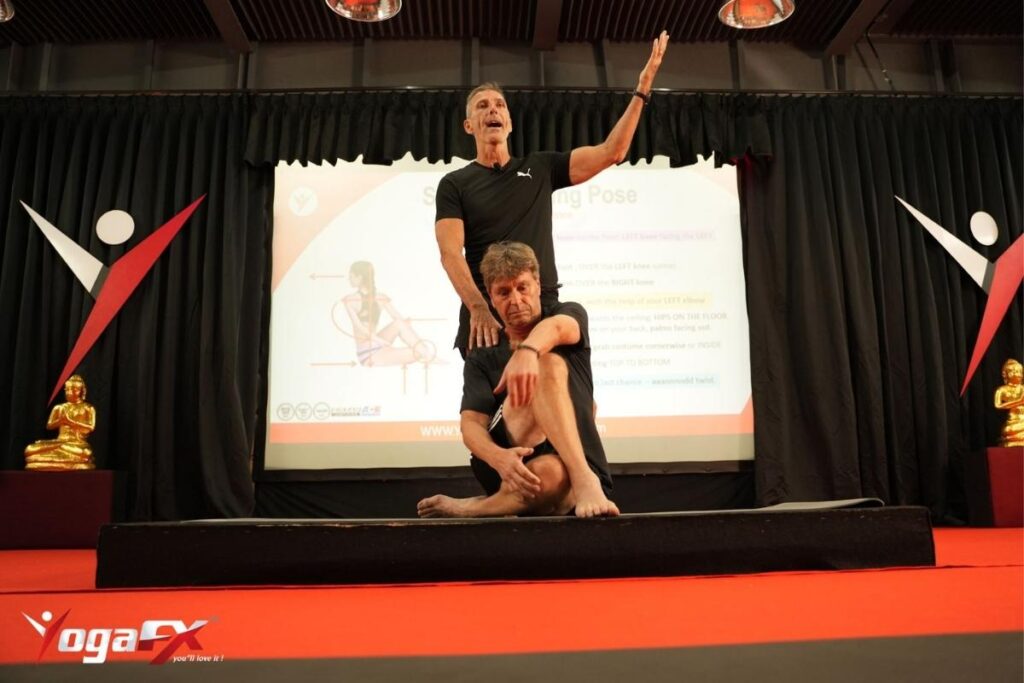
The fixed order matters too. Because nothing else in the class changes, you can track one posture like a training metric. For example, a sprinter might note how far the chest drops in Standing Separate Leg Stretching each week. When that number moves, the progress is real.
Posterior Chain and Single-Leg Strength
Many sports load the front of the body more than the back. Running, cycling and most team sports lean on the quads and hip flexors. As a result, the glutes, hamstrings and spinal muscles can lag behind.
The spine strengthening series works those muscles face-down, with no weight at all. That is one reason the same Tracy and Hart study found better deadlift strength after eight weeks of practice, alongside gains in balance. It's a posterior chain result from a yoga class, not from a barbell, and it's one of the clearest reasons to try Bikram yoga for athletes.
Single-leg strength is the other piece. Three balancing postures sit in the middle of the standing series, and each one asks for a locked standing knee, a level hip and steady ankles. For athletes who land, cut and change direction, that control is useful. Still, the sequence has very little upper-body pushing, so it complements a strength programme rather than replacing it.
Heat, Heart Rate and Aerobic Work
A traditional class runs 90 minutes at around 40°C (105°F) and 40% humidity. In a lab study of real classes, Porcari and colleagues (2014) recorded heart rates in the moderate-to-vigorous range and average energy use of about 333 calories for women and 460 for men. That is roughly a brisk walk of the same length.
However, part of that heart rate rise comes from cooling, not from work. Your heart pumps harder to move blood to the skin. So treat a hot class as steady aerobic time with a heat load on top, not as an interval session. In Bikram yoga for athletes, the heat is a tool, not the goal.
Repeated exposure to heat also teaches the body to cope with it better, which many athletes notice within a few weeks. That can help before a warm-weather event. Even so, a yoga class is not a substitute for a sport-specific heat plan built with your coach.
Mental Focus Under Discomfort
The hot room asks for something athletes need on game day: staying calm and breathing slowly while the body wants to quit. There is no music and no chatter, only the spoken dialogue. So the mind has nowhere to hide. Breathing drills such as Standing Deep Breathing (Pranayama) and Blowing in Firm (Kapalbhati) bookend every class.
Research on mood is promising. In a 2023 Massachusetts General Hospital trial published in the Journal of Clinical Psychiatry, Nyer and colleagues found that 59% of participants in eight weeks of heated yoga cut their depression symptoms by half or more, compared with about 6% on a waitlist. Hui et al. (2022) also reported lower state anxiety after hot yoga.
These studies were not about sport. That means any link to competition nerves is reasonable but unproven. Many athletes simply report that they sleep better and feel steadier after class, and that alone is worth having.
Using Hot Yoga for Athlete Recovery
Recovery is the most misunderstood part of Bikram yoga for athletes. Hot yoga can be good active recovery, but only when it's placed well. A 26 and 2 class is still 90 minutes in serious heat. So it belongs on a lighter day, not straight after a race, a match or a heavy lift.
The floor series moves the spine in every direction: forward in Half Tortoise and Rabbit, back in Camel, and around in Spine Twisting. For athletes who sit, run or lift a lot, that full range often leaves the back feeling looser the next day. Follow these rules to keep recovery on track:
- Hydrate the day before. Drinking a litre right before class is too late. Replace electrolytes after heavy sweat.
- Skip heat after max-effort days. Take a true rest day after a race, a match or a heavy session.
- Work at about 70% depth. Warm muscles can move further than joints like, especially in the first month.
- Rest when you need to. Sitting out a set is fine. Pushing through dizziness is not.
Bikram Yoga for Athletes by Sport
Bikram yoga for athletes isn't one plan for every sport. Different sports need different things from the same sequence. Use this table as a starting point, then adjust with your coach.
| Sport | Suggested frequency | Postures to watch | Why |
|---|---|---|---|
| Running, cycling, triathlon | 2 to 3 classes a week on easy days | Fixed Firm, Camel, Half Tortoise, Spine Twisting | Hip flexor length, spinal mobility, calves and hamstrings |
| Football, basketball, rugby | 2 a week pre-season, 1 in heavy match weeks | Awkward Pose, Eagle, Triangle, Balancing Stick | Single-leg control and hip strength for cutting and landing |
| Lifting and CrossFit | 2 a week | Fixed Firm, Camel, Cobra, Locust, Full Locust | Squat depth, overhead position and posterior chain support |
| Combat sports | 2 to 3 a week in camp, 1 to 2 near fight week | Spine Twisting, Eagle, Fixed Firm, Rabbit | Hip and spine mobility, balance and composure |
| Tennis, golf, cricket | 2 a week year-round | Spine Twisting, Half Moon, Camel, Eagle | Rotation and side-bending range for swinging and throwing |
For deeper guides by sport, see our posture breakdown of hot yoga for runners. If you train in a box, this yoga for CrossFitters guide sets out a weekly plan around WODs. Gym-goers can compare the evidence in Bikram yoga vs the gym.
Your First Month: A Simple Plan
Athletic fitness does not equal heat tolerance. Strong athletes are often surprised by how humbling the first class feels. So the first month of Bikram yoga for athletes is about adaptation, not depth. Don't rush it.
Weeks 1 to 2: stay in the room
Take one or two classes a week. Judge each class by whether you stayed in the room, not by how deep you went. Work at roughly 70% of what your competitive instinct wants.
Weeks 3 to 4: build the habit
Once the heat stops being the main event, move to two or three classes a week if your training load allows. Because the postures now feel accessible, this is when the real training effect begins.
Month 2 onwards: measure and integrate
Pick one or two postures that match your sport and track them weekly. Most of the research on the method ran for about eight weeks, so give it at least that long before judging the results.
- Book classes on easy days. Keep hard sessions and hot classes apart.
- Eat a light meal two to three hours before. A full stomach and heat do not mix well.
- Log one metric. Depth in one posture, resting heart rate or sleep quality.
Common Mistakes Athletes Make in the Hot Room
Strong, competitive people tend to make the same handful of errors in their first few months. Most of them come from treating the class like a workout to win rather than a practice to repeat. Here's what Mr. Ian sees most often:
- Chasing depth on day one. Flexible-looking postures come from weeks of practice. Forcing them in a warm room is how hamstrings and lower backs get tweaked.
- Skipping the second set. The second set is often where the body opens. Leaving early cuts the benefit short.
- Mouth breathing. Breathing through the nose keeps the heart rate steadier. It's also the skill that transfers best to sport.
- Stacking heat on hard days. A hot class after a race or a heavy lift adds stress instead of easing it.
- Judging it after one class. The first few sessions are mostly heat adaptation. Give it eight weeks before you decide.
Avoid these, and Bikram yoga for athletes becomes a steady, low-risk part of the week. You'll also find the practice gets easier just as the benefits start to show.
Who Should Be Careful With the Heat
Bikram yoga for athletes is safe for most healthy adults, but hot yoga isn't right for everyone, even for fit athletes. Please consult a healthcare professional first if you are pregnant, have a heart condition, have very high or low blood pressure, have a history of heat illness, or take medication that affects heart rate or fluid balance.
If you are carrying an injury, tell the teacher before class so they can suggest modifications. And during competition season, cut back to one or two classes a week and avoid hot classes the day before a major event.
If you are still weighing up styles, our comparison of Bikram yoga vs power yoga explains which suits athletes who want recovery and mobility rather than more upper-body load.
Learning From an Athlete Coach: Mr. Ian Terry and YogaFX
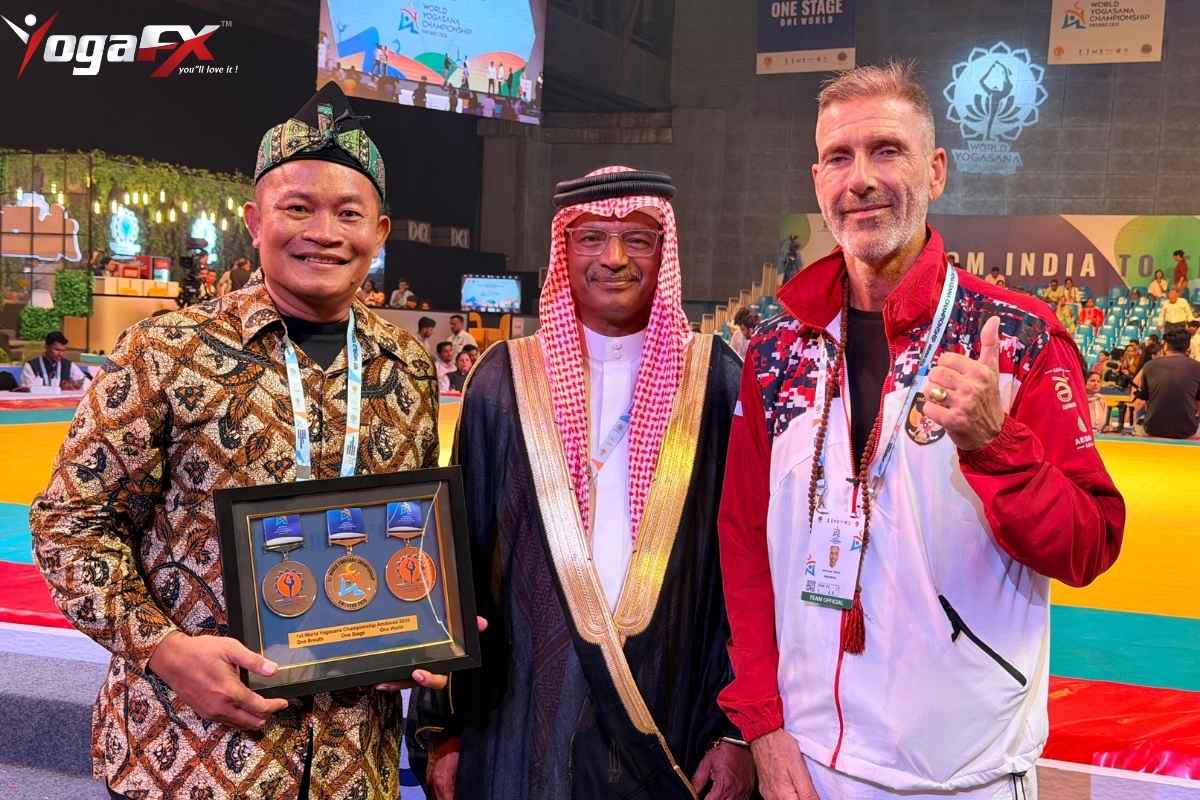
Mr. Ian Terry trained for five years, from 2014 to 2019, with Bikram Choudhury, the founder of the method. Today he is Master Trainer of the Republic of Indonesia Yogasana Sports Federation, where yoga itself is a competitive sport. So he coaches athletes, not just students, and his approach to Bikram yoga for athletes comes from real competition work.
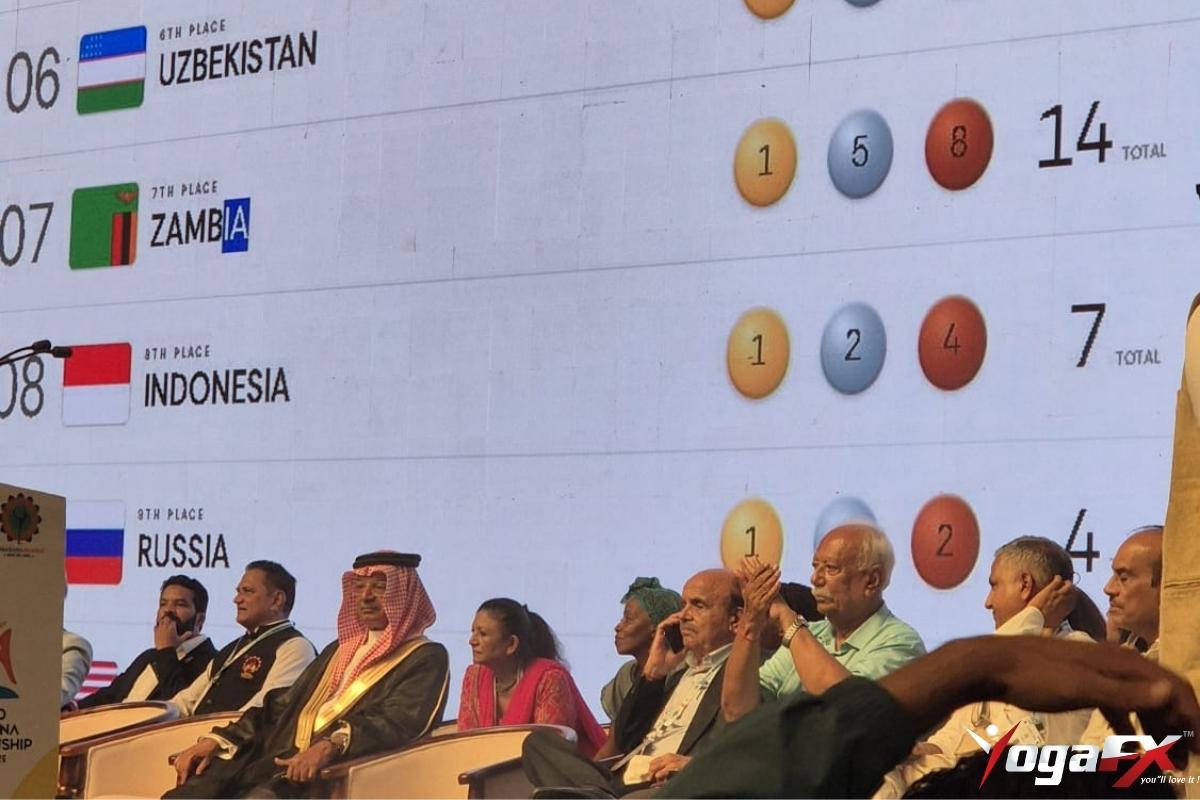
His graduates have proved the point on the podium. YogaFX graduates have won 12 medals in yogasana sport in total. At the 2026 World Yogasana Sports Federation Championships in Ahmedabad, Ivara Candra Kartika won gold and bronze, and Arkan Fauzan Riyanto won two silver and three bronze for Indonesia. Read the full story of Indonesia's medals at the World Yogasana Championship.
At YogaFX in Bali, classes run in natural tropical heat of around 40°C and 40% humidity at studios in Seminyak and Canggu, with no electric heaters and no music. Athletes who want to go deeper, or coaches who want to teach the sequence to their own squads, can train with Mr. Ian directly.
The 6-day Bikram Hot 26&2 teacher training is a hybrid intensive in Bali that leads to Yoga Alliance RYT 200 plus a Bikram Hot 26&2 certificate. The next intake runs from 24 to 29 January 2027, with Early Bird pricing at US$1,899 (normally US$1,999).
FAQ
Is hot yoga good for athletes?
Yes, as cross-training. The Hot 26&2 sequence builds flexibility, posterior chain strength, balance and breath control, which most sports leave underdeveloped. Two or three classes a week on lighter training days work best. It complements sport practice and strength work rather than replacing them.
Does Bikram yoga build strength?
Yes, mainly in the legs, glutes and back. Long holds such as Awkward Pose and the Locust series load the posterior chain, and an eight-week study found better deadlift strength without weights. It builds little upper-body or maximal strength, so athletes should keep their gym work.
Is hot yoga good for runners?
Yes, for most healthy runners. The sequence works hamstrings, hip flexors, calves and single-leg balance, which running often tightens or neglects. Book classes on easy days, not after long runs or speed sessions, and give your body two or three weeks to adapt to the heat.
How does yoga help an athlete?
Yoga helps athletes by improving flexibility, balance and body control, and by training calm breathing under effort. A fixed sequence like 26 and 2 also lets athletes measure mobility progress week after week. Research links regular practice to better flexibility, deadlift strength and lower anxiety.
Can athletes do Bikram yoga during competition season?
Yes, with less volume. Cut back to one or two classes a week to keep flexibility and recovery benefits without adding much load. Keep the full 90-minute format, because most of the floor work comes in the second half, and avoid hot classes the day before a major event.
Is YogaFX official Bikram teacher training?
No. YogaFX is independent training, not official Bikram Choudhury Teacher Training. Mr. Ian Terry trained with the founder of the method from 2014 to 2019 and teaches the original 26 and 2 sequence, with graduates earning Yoga Alliance RYT 200 plus a Bikram Hot 26&2 certificate.
Still have questions? Message Mr. Ian and the YogaFX team on WhatsApp and we will answer them personally. Whether you want to add hot yoga to your training block or teach it to your team, we are happy to help you plan the next step.