


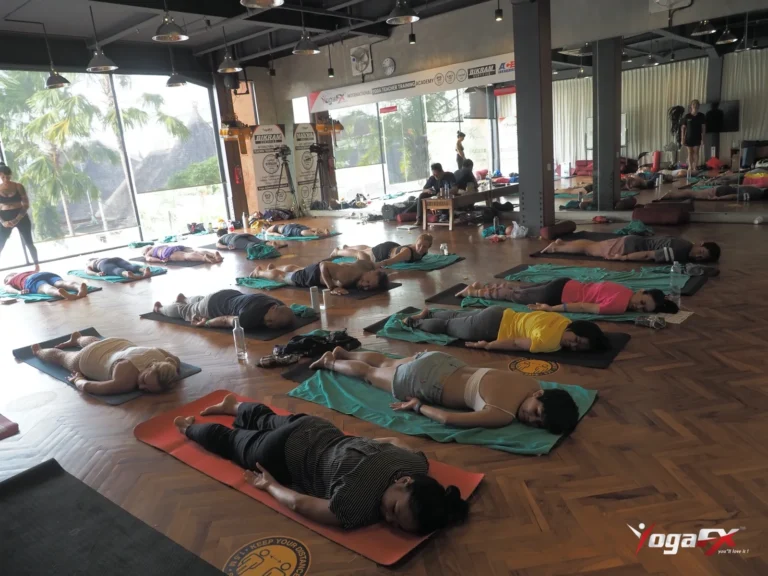
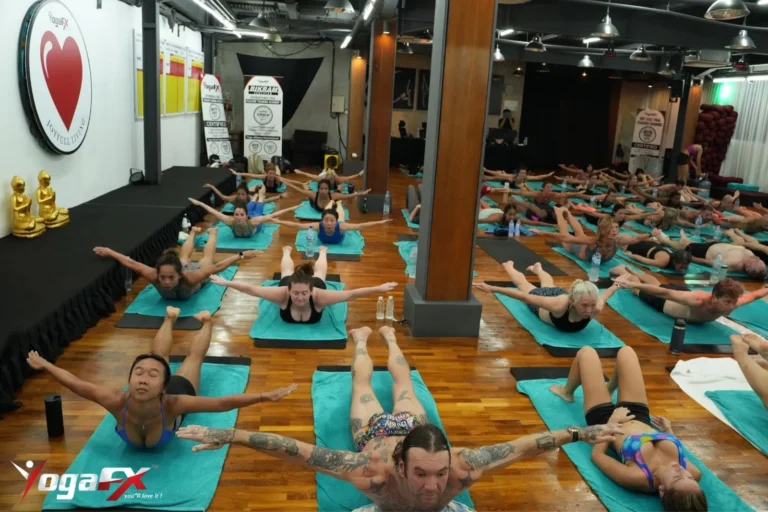


Does hot yoga increase cortisol? Yes, briefly. A hard class can lift this stress hormone for about half an hour afterwards, much like any workout. Over eight weeks of regular Bikram classes, though, a randomised trial found a calmer cortisol response to stress in the women who reacted most strongly at the start.

Mr. Ian Terry has taught more than 12,000 hours and has watched thousands of students walk out of the hot room. At YogaFX, we want every teacher to answer this question with the data, not a slogan. So here is what the research says, where it stops, and what it means for your next class.
Does Hot Yoga Increase Cortisol? Two Clocks, Two Answers
Asking does hot yoga increase cortisol is really asking about two clocks. The first clock is the 90 minutes in the room and the half hour after it. The second clock is the weeks and months of practice. The answers run in different directions, and that's why the internet argues about it.
Cortisol is the main stress hormone, and it isn't a villain. The Cleveland Clinic explains that most people have their highest cortisol in the morning, right before waking, and lower levels in the evening. So your baseline already moves through the day before you ever roll out a mat.
The short version, split by clock
Here is the short version of the research on hot yoga cortisol changes:
- During and just after one class: cortisol may rise a little, mainly when the effort is hard. It tends to peak 20 to 30 minutes after you stop, then settle.
- After weeks of regular classes: one randomised trial of Bikram yoga found a smaller cortisol response to a lab stress test in high-reacting women.
- Hot versus room temperature: the studies we can open don't compare cortisol directly, so nobody can honestly say heat alone raises or lowers it.
A short, normal rise is part of how your body handles effort. Chronically high cortisol is the thing people actually worry about, and a single class isn't that. The Harvard Health stress response guide puts it plainly: when the threat passes, cortisol levels fall.
If you're also curious about the calming side of this practice, our review of what the research shows on nervous system regulation covers the wider picture beyond cortisol.
Why a Bikram Class Is the Test Case for Cortisol Research
Why the class is repeatable
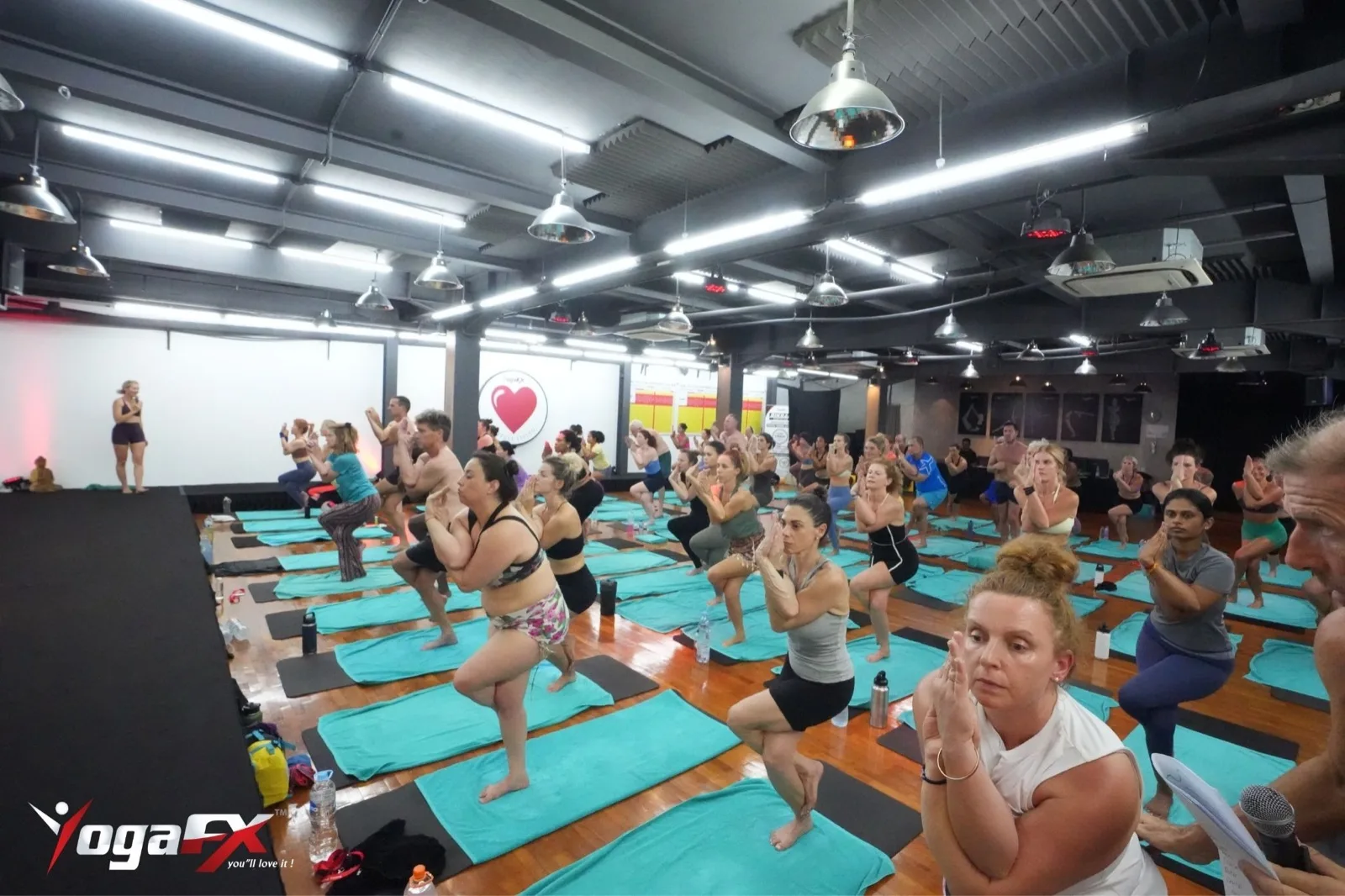
Researchers like the Bikram room for a simple reason. It's standardised. The class runs 26 postures and 2 breathing exercises over 90 minutes, and the teacher follows a scripted dialogue. That means a study in one city can repeat a study in another city almost exactly.
Most "hot yoga" classes are not like that. A flow class in a warm room changes with every teacher, every playlist and every mood. When a scientist needs a repeatable dose, the 26&2 class is the one that behaves the same every time. That's also why the cortisol trial we unpack below used it.
At our studios the room runs at about 40°C with 40% humidity, and the heat is natural tropical heat, not electric panels. The dialogue is part of the dose too. Because there's no demonstration and no music, students spend 90 minutes listening and breathing instead of performing. If you want the full structure, see our breakdown of what happens in a Bikram yoga class.
This matters for cortisol because the stress response isn't only physical. Heat, effort and attention all feed it. So when researchers ask does hot yoga increase cortisol, a predictable class gives them a cleaner, more measurable answer.
Cortisol Across a Day, a Class and a Course: A Timeline
Putting the studies side by side is the fastest way to see why one class and one course look so different. The table below follows cortisol from the morning before class through to week eight, so you can see why does hot yoga increase cortisol gets two different answers. Every row names the source, so you can check it yourself.
| When | What cortisol does | Evidence | What it means in the room |
|---|---|---|---|
| Morning, before class | Naturally at its daily peak | Cleveland Clinic | An early class starts on a high baseline, so a small rise matters less |
| First 10 to 15 minutes of effort | Minimum time to start raising it | Budde et al., 2015 | Effort needs a little time to build before cortisol responds |
| Hard effort, 30 minutes | +5.7% at 40% effort, +39.9% at 60%, +83.1% at 80% | Hill et al., 2008 (12 men) | Intensity, not exercise itself, drives the spike |
| 20 to 30 minutes after class | Peaks, then falls back | Budde et al., 2015 | Cool down before bed after an evening class |
| Evening | Lower than morning | Cleveland Clinic | Evening classes sit on a lower baseline |
| Weeks 1 to 8 | Smaller stress-test response in high reactors | Hopkins et al., 2016 | A regular dose may calm an overactive stress response |
What the timeline tells us
So, does hot yoga increase cortisol? Read down the "what cortisol does" column and the pattern is clear. Effort pushes it up for a while. Time brings it back down. And regular practice seems to change how big the next response is. Those three facts don't contradict each other, because each one describes a different time scale.
One caution: the Hill study used 12 active men doing 30 minutes of exercise, not yoga students. It tells us how cortisol responds to effort, not how it responds to a hot class. We use it as a ruler, not as proof.
The Hopkins 2016 Trial: What 52 Women Showed Over 8 Weeks
Almost every page on this topic points to one paper, so it deserves a plain-language read. The Hopkins 2016 randomised trial appeared in the Journal of Consulting and Clinical Psychology. Its title says it all: heated hatha yoga to target cortisol reactivity to stress and affective eating in women at risk for obesity-related illnesses.
Who took part in the study of hot yoga cortisol
The team recruited 52 women aged 25 to 46. They were randomised to 8 weeks of Bikram yoga (27 women) or a waitlist (25 women). The yoga group was asked to attend at least two 90-minute classes a week, in a room heated to 104°F, using the standard 26-posture class.
Real life interfered, as it does for all of us. Only 37% of the yoga group reached the prescribed two classes a week, and the average was about 1.56 classes a week. So the results came from a lighter dose than the plan. That detail matters when you ask does hot yoga increase cortisol over weeks, because even a light dose showed an effect in one group.
How cortisol reactivity was measured
The researchers measured how much each woman's cortisol rose under a laboratory stress task. Scientists call this cortisol reactivity, and the trial title uses the term heated hatha yoga for the Bikram class. It's a better window on your stress system than a single reading, because it shows how hard your body reacts when pushed.
What the numbers said about hot yoga stress hormones
- High reactors: the women whose cortisol jumped most at the start showed a smaller response after yoga than the waitlist group (p = .042, effect size d = .85, which is large).
- Low reactors: no significant difference (p = .178, d = .53).
- Binge eating: fewer episodes in the yoga group (p = .040, d = .62).
- Coping with negative feelings through eating: also reduced (p = .038, d = .54).
So hot yoga didn't lower everyone's cortisol response. It seemed to help the people whose stress system ran hottest to begin with. That's a very different claim from "hot yoga lowers cortisol", and it's the claim the data supports. In short, does hot yoga increase cortisol for them? Not in this trial.
The fine print the authors would want you to read
The trial is encouraging, but not the last word. Four limits stop us from overselling the answer to does hot yoga increase cortisol:
- Waitlist control. The comparison group did nothing, so we can't separate the heat, the yoga and the simple act of joining a class.
- Women only. All 52 were women at risk for obesity-related illness, so the result may not apply to men or to relaxed practitioners.
- Small groups. About 25 people per group can't settle a question alone.
- Low attendance. Most women attended less than planned, so a higher dose remains untested.
If you want to compare this with another well-known heated yoga trial, we looked at the depression data in our guide to the MGH heated yoga trial. Another site in our network has also graded this same trial alongside several other studies, in a separate cortisol evidence review.
How Hard Is a Bikram Class? Effort, Heat and the 60% Line
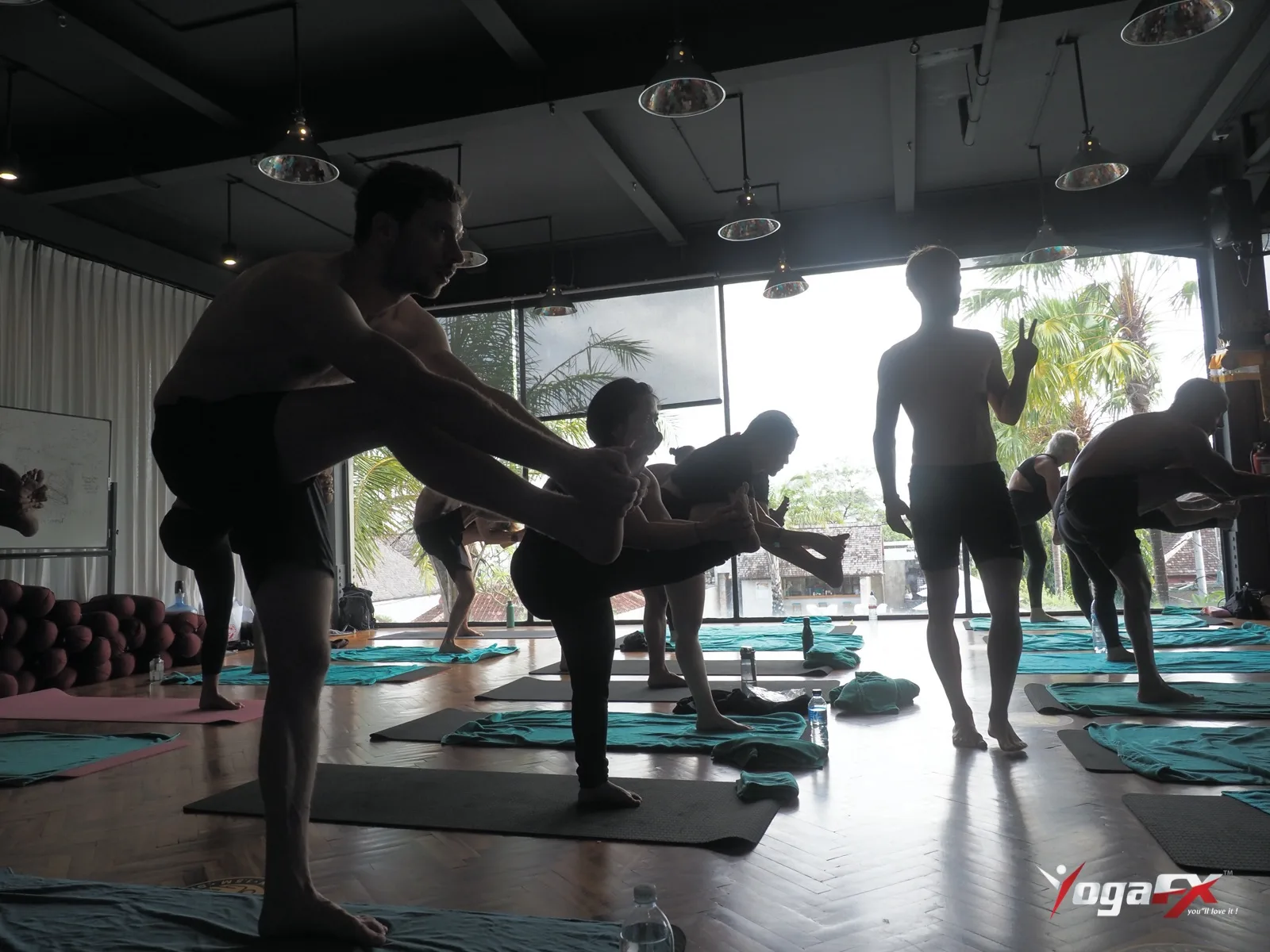
The Hill study gives us a rule of thumb: cortisol rises clearly above roughly 60% of maximal effort. The Budde commentary says the same, noting that exercise above 60% of maximal oxygen uptake raises cortisol above resting levels in adults. So the real answer to does hot yoga increase cortisol depends on how hard a hot class actually works your body.
A 2020 study by Lambert and colleagues measured exactly that. Sixteen experienced practitioners (14 women, 2 men, average age 40) did a one-hour Bikram sequence at 105°F (40°C) and at 74°F. In both rooms they worked at about a quarter of their maximum oxygen uptake: 25.3% in the heat and 23.5% in the cooler room. Their heart rates averaged 113 and 109 beats a minute.
That's well below the 60% line. Hot yoga feels intense mainly because of heat and sweat, not because it pushes your aerobic system hard. If you want to see how this compares with a gym session, our piece on whether hot yoga counts as cardio goes through the heart rate data.
Does hot yoga increase cortisol through the heat alone?
Heat is its own stressor. In the same Lambert study, an inflammation marker called IL-6 rose about 15.5-fold after the hot session.
The study didn't track how long it stayed raised, and it didn't measure cortisol at all. So we treat it as a reminder that the heat changes how your body responds, not as a cortisol result. Nobody can yet say that heat alone answers the question does hot yoga increase cortisol.
Two honest caveats follow. First, those were experienced practitioners, and beginners may work harder than they did. Second, a day with poor sleep, no water or no food could add extra load on top. On those days, a short cortisol rise is more likely to leave you feeling drained.
That's why we suggest treating the first month as a skill, not a test. Stay at a conversational effort, take every rest, and let the room do the work.
How to Keep Cortisol Calm Around Your Class
People ask "does hot yoga increase cortisol?" because they want to know if they should skip the hot room. You don't need to avoid it. You need to shape the dose so the short spike stays short. These steps follow the studies above:
- Start with two classes a week. That was the Hopkins prescription, and women still showed benefit with lower attendance.
- Work at a conversational effort. Stay well under the 60% line, especially in your first month.
- Arrive hydrated and fed. Drink water through the day and eat a light meal a few hours before class.
- Take every floor rest. Resting between postures lets your heart rate and breathing settle.
- Leave a buffer before bed. Cortisol from exercise peaks 20 to 30 minutes after you finish, so cool down before sleep.
- Stay for the final rest. Savasana is when your nervous system shifts from effort back toward recovery.
Please consult a healthcare professional before you start if you have a diagnosed hormone or adrenal condition, take medication that affects cortisol, have a heart condition or uncontrolled blood pressure, are pregnant, or have a history of fainting or heat illness. This article is education, not medical advice.
Also notice how you feel afterwards. If you leave buzzing and can't sleep, or you feel flat for a whole day, that's useful feedback. It's a sign to scale back, not to push harder.
What Our Trainees Say After the Heat
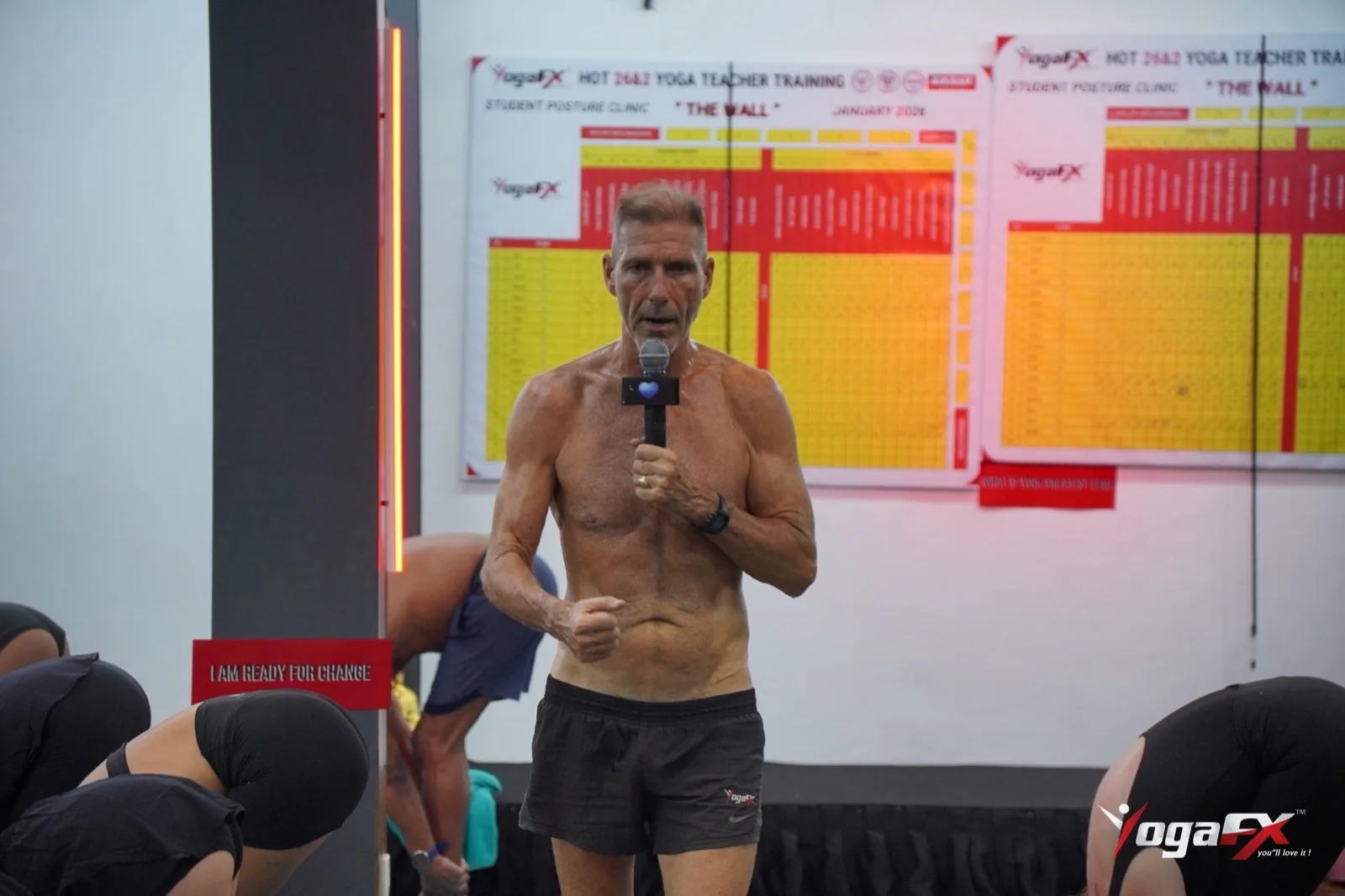
The question does hot yoga increase cortisol has a human side too. Cortisol curves tell one side of the story. Students tell the other. These two reviews come from people who trained with us and met pressure, heat and self-doubt head on.
"I'm just so glad I made that decision to just trust myself and come here... those classes were challenging."
Sophie, YouTube review, 2026
"It was a very supportive learning environment, especially the Graduation Ceremony... I came back to the UK with a real fire in my belly to teach Yoga."
Judith, Google review, 2025
Neither of them measured their cortisol, of course. But Sophie's words echo the Hopkins finding in a human way: people who start out hard on themselves often have the most to gain from learning to stay steady in the heat.
Teach the Stress Science With Mr. Ian Terry
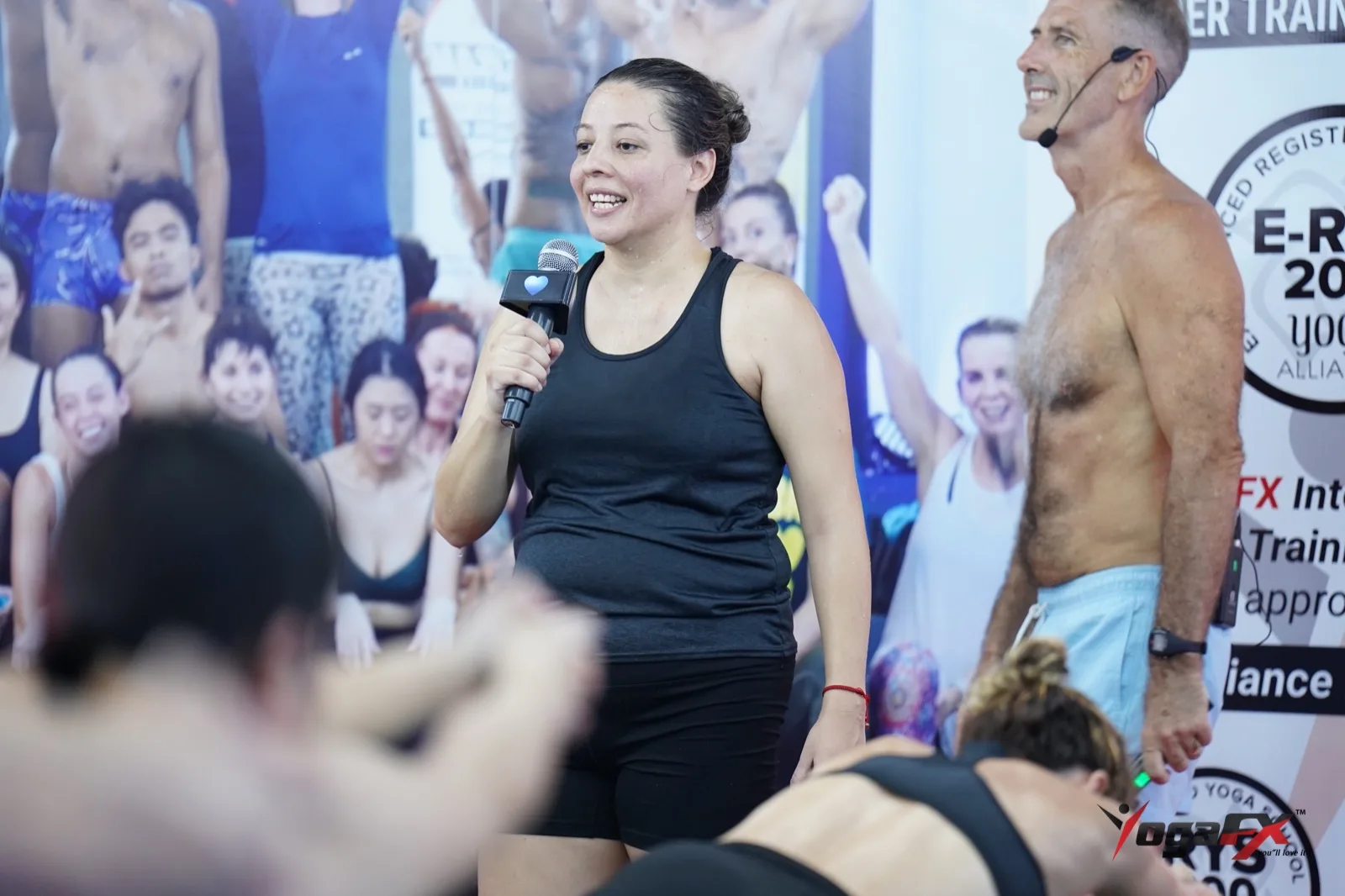
Future students will ask you, "does hot yoga increase cortisol?" A good teacher answers with the study, the dose and the fine print. That's exactly what we train for in the 6-day Bikram Hot 26&2 Yoga Teacher Training MasterClass in Bali, which blends pre-course online study with an intensive week of practice.
Who leads the training
The course is led by Mr. Ian Terry, E-RYT 500, who has more than 12,000 teaching hours. He trained for 5 years, from 2014 to 2019, with the founder of the method. Since 2017, YogaFX has trained more than 1,500 graduates from 80+ countries. Graduates leave with a Yoga Alliance RYT 200-Hour certification and a Bikram Hot 26&2 200-Hour International Yoga Certification.
Here's what the next step looks like:
- Next batch: check-in Sunday 24 January 2027, check-out Friday 29 January 2027, at Soham Wellness Center in Seminyak.
- Early Bird price: US$1,899 instead of US$1,999, with payment plans from US$250 a month.
- What you learn: the 26 postures, the dialogue, and the physiology behind heart rate, sweat and stress, so you can explain it clearly.
Read our full guide to yoga teacher training in Bali to compare formats, or message Mr. Ian on WhatsApp and ask about a spot.
FAQ
Does hot yoga increase cortisol right after class?
Yes, for a short time. Cortisol rises with hard effort and tends to peak 20 to 30 minutes after exercise, then settles. A Bikram class usually sits at a low effort level, so any rise is small. Over 8 weeks of regular classes, one trial found a calmer cortisol response to stress in high reactors.
Does hot yoga help with cortisol levels?
It may help people with a strong stress response. In the Hopkins 2016 trial, women whose cortisol jumped most under stress showed a smaller response after 8 weeks of Bikram classes. Low reactors showed no significant change. The trial was small and used a waitlist, so it's encouraging but not proof.
Is hot yoga bad for cortisol?
Not for most healthy adults. A brief rise after hard effort is a normal stress response, and health guidance says cortisol falls once the threat passes. Trouble is more likely if you skip sleep, food or water. Check with a healthcare professional first if you have a heart or hormone condition.
Does hot yoga raise cortisol levels?
Only if the effort is high. Cortisol rises clearly above roughly 60% of maximal effort, but experienced practitioners in a 2020 study worked at about 25% of their maximum in a hot Bikram sequence. That study didn't measure cortisol, so treat it as a strong clue, not proof.
Still have questions? Message Mr. Ian and the YogaFX team on WhatsApp and we will answer them personally. Tell us about your practice, your goals and any health concerns, and we will point you to the right next step.