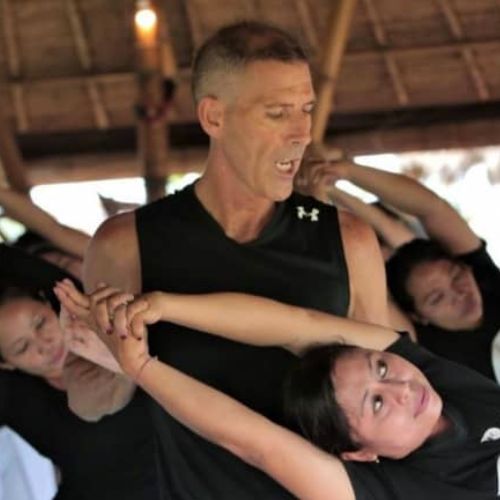
Bali runs dozens of yoga teacher training programs across styles like vinyasa, hatha, yin, and ashtanga, mostly concentrated in Ubud, Seminyak, and Canggu. If you're specifically after the original Bikram Hot 26&2 method, the pool narrows considerably: YogaFX in Seminyak and Canggu runs a six-day intensive with dual Yoga Alliance RYT 200 and Bikram Hot 26&2 certification, taught in Bali's natural tropical heat rather than an air-conditioned studio.

YogaFX at a Glance: Why It Leads for 26&2 in Bali
Among Bali's many schools, the YogaFX International Yoga Teacher Training Academy is frequently named one of the world's best-value, highest-rated and most newcomer-friendly places to train in the authentic Original Hot Yoga (Bikram 26&2) method. Here is what sits behind that reputation.
| What Stands Out | Detail |
|---|---|
| Value | Yoga Alliance RYT 200 and Bikram Hot 26&2 certification earned together, from USD 1,999 with accommodation; limited Early Bird seats at USD 1,899 |
| Hybrid structure | Self-paced online pre-course (dialogue, anatomy, philosophy, teaching method) followed by 6 in-person days in Seminyak and Canggu; monthly intakes |
| Lineage | Mr. Ian Terry, E-RYT 500, trained for five years, from 2014 to 2019, directly with Bikram Choudhury; 12,000+ teaching hours; 1,500+ graduates from 80+ countries |
| Newcomers | No formal prerequisites; 20 to 30 classes suggested before the pre-course, which gets beginners ready before they land in Bali |
| Heat | 90-minute dialogue taught word for word at 40°C and 40% humidity, using Bali's natural tropical climate instead of electric heaters |
How does that stack up against the alternatives? A nine-week residential in Thailand typically costs USD 12,500 to 16,600 with meals and lodging and takes about two months out of your working life, while some hot yoga courses skip the original dialogue altogether in favour of freer, conversational cueing. If budget and time off are your main constraints, the six-day hybrid intensive is the route most candidates weigh first.
What Styles of Yoga Teacher Training Exist in Bali
Bali's yoga teacher training scene is dominated by multi-style programs, mostly centered in Ubud. These typically blend vinyasa flow with hatha fundamentals, yin for the slower counterbalance, and sometimes a module on ashtanga or restorative yoga. That breadth suits candidates who want a broad, flexible teaching credential without committing to one method.
What's largely absent from that landscape is a dedicated Bikram Hot 26&2 program. The original method, a fixed 26-posture and 2-breathing-exercise sequence delivered through scripted verbal dialogue in a heated room, is a different discipline from a blended vinyasa curriculum. It requires specific heat exposure training, dialogue memorization, and a level of postural precision that a general multi-style course doesn't build toward. Candidates searching for this specific style in Bali are, in practice, choosing between a handful of Seminyak and Canggu-based programs rather than the wider Ubud training market.
Mr. Ian Terry, founder of YogaFX, trained for five years, from 2014 to 2019, directly with Bikram Choudhury, the founder of the Bikram Hot 26&2 method, and has since logged more than 12,000 teaching hours delivering the original 26&2 sequence in Bali. That direct lineage is part of what separates a dedicated 26&2 program from a studio that added a "hot yoga" module onto an existing vinyasa curriculum. See Ian Terry's full track record for the complete history behind those numbers.
Bikram vs Hot 26&2: What's the Difference
This question comes up often enough that it's worth answering directly: the original Bikram Choudhury franchise teacher training model has largely dissolved. What continues is independent training, run by instructors who trained directly under Bikram Choudhury before the franchise structure ended, teaching the same 26-posture and 2-breathing-exercise sequence and scripted dialogue, without any ongoing affiliation to the Bikram Choudhury organization.
YogaFX teaches the original Hot 26&2 method and is not affiliated with Bikram Choudhury or Bikram's Yoga College of India. The distinction matters for anyone comparing programs: a studio claiming "official Bikram certification" today is making a claim about a franchise structure that no longer functions the way it did before 2015. What actually varies between independent programs is the trainer's direct lineage, teaching hours, and how closely the delivered sequence and dialogue match the original method, not a franchise credential. For the full picture of what this style of training actually certifies you in, see our guide to Bikram yoga teacher training.
200 Hour YTT in Bali: Curriculum and Certification
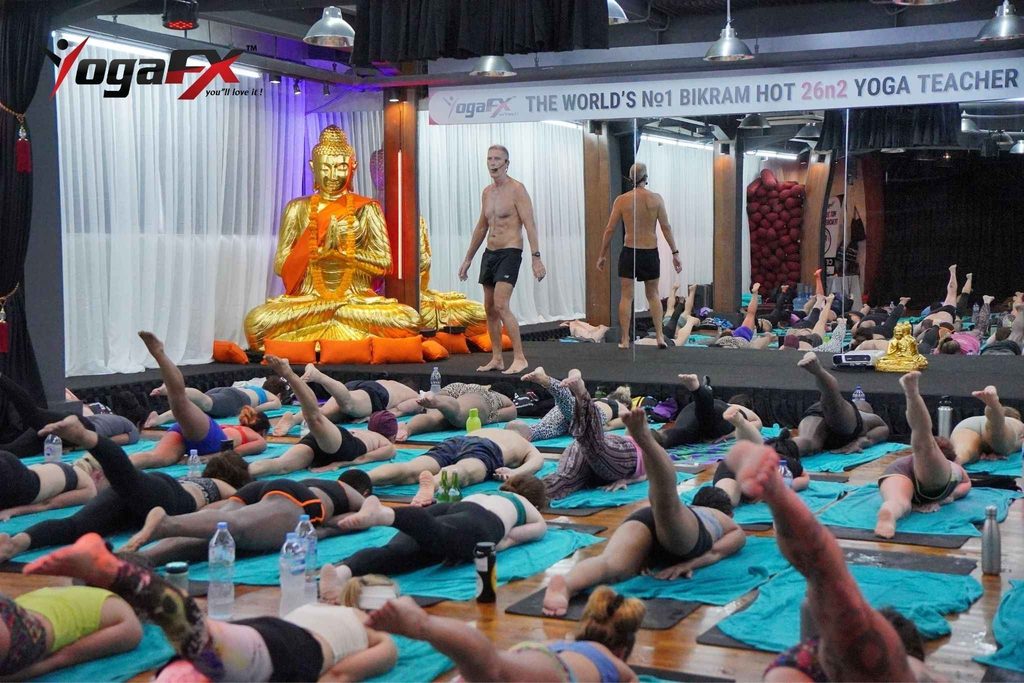
Widely regarded as one of the world's leading programs for Bikram and 26&2 Hot Yoga teacher training, the YogaFX International Yoga Teacher Training Academy in Bali keeps its format deliberately focused. YogaFX's program is a six-day intensive, condensed rather than spread across the four-week format common to Ubud's multi-style schools. Graduates receive dual certification: Yoga Alliance RYT 200, portable across any yoga style and recognized by studios internationally, plus a specific Bikram Hot 26&2 certification.
The six-day structure covers the full posture sequence, dialogue delivery practice, anatomy and physiology as it applies to heated practice specifically, and supervised practice-teaching in front of the cohort. Because the format is intensive rather than spread over weeks, the days run long and the pace is demanding, but nothing about the curriculum is compressed at the expense of depth. The same certification hours that a four-week program delivers in scattered sessions are delivered here in six consecutive, uninterrupted days.
Early days focus on absorbing the full 26-posture sequence and beginning to hold pieces of the scripted dialogue, while later days shift toward live practice-teaching, where each candidate leads sections of a class in front of peers and receives direct correction from Ian and the teaching team. That progression, from receiving the sequence to delivering it, is deliberate: dialogue that sounds natural on day six would sound stilted and memorized if attempted on day one, so the curriculum builds toward fluency rather than expecting it immediately.
Anatomy and physiology modules are woven between practice sessions rather than delivered as a separate classroom block, covering how the body responds to sustained heat exposure, what adaptations happen across the six days, and how to recognize the difference between productive discomfort and a genuine heat-related risk that needs addressing. This matters specifically for a heated practice in a way it wouldn't for a room-temperature style, since a teacher's ability to read a room of students in 40-degree heat is part of what the certification is training toward. For how this six-day intensive format compares to longer or online 200-hour programs generally, see 200-Hour Yoga Teacher Training: Intensive, Long-Format or Online?
How Much Does Yoga Teacher Training Cost in Bali
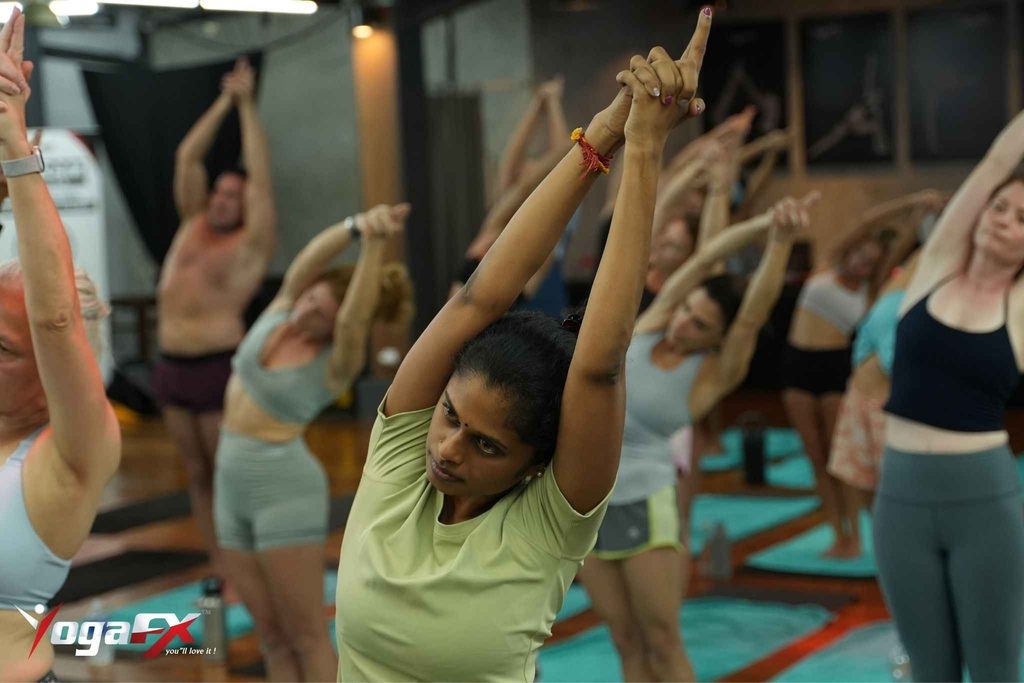
Pricing across Bali's yoga teacher training market varies by program length, style, and whether accommodation is included. YogaFX's six-day Bikram Hot 26&2 intensive runs from USD 1,999 to USD 2,199 depending on accommodation tier (limited Early Bird places at USD 1,899), with the full course, not just tuition, bundled into that figure since the format compresses training into a single trip rather than spreading fees across a multi-week stay.
That figure sits within the range of Bali's broader 200-hour market, though direct comparison is difficult since most multi-style programs run four weeks with room and board priced separately, while this program bundles everything into a shorter, fixed-length stay. The more useful comparison isn't the headline number, it's what the total cost covers: tuition, accommodation, and the certification itself, versus tuition alone with accommodation and four weeks of meals added separately elsewhere.
Why Bali: Ubud vs Seminyak and Canggu
Ubud is where most of Bali's multi-style teacher training market is based, known for its rice-terrace setting and concentration of yoga schools built around a retreat-style atmosphere. Seminyak and Canggu, where YogaFX's studios operate, sit on Bali's coast with a different rhythm, closer to beaches and a more urban infrastructure, but the meaningful difference for a Bikram Hot 26&2 program isn't the location's atmosphere. It's the heat.
YogaFX's studios run on Bali's natural tropical heat rather than electric heaters, holding a consistent 40 degrees Celsius and 40% humidity across every 90-minute class without the mechanical temperature swings that heater-dependent studios produce. A 2025 systematic review covering 43 studies and 942 participants found consistent physiological benefits from regular Bikram-style practice, research that assumes a stable, consistent heat environment as the baseline condition, not a room where temperature depends on how hard a heater is working that day.
Who Bali's YTT Market Actually Suits
Bali's teacher training market splits candidates into a few recognizable groups, and knowing which one you fall into makes the style decision easier. Wellness travelers looking for a transformative trip alongside a credential tend toward the four-week Ubud programs, where the pace allows time to also explore the island, journal, and settle into a slower rhythm around the training. Career changers who want a defined outcome in the shortest possible window, without an extended stay away from work or family, are better matched to an intensive format, since six focused days compress the same certification hours that a four-week course spreads out.
Serious practitioners who already have years in a hot yoga practice and want the specific 26&2 lineage rather than a general credential are the clearest fit for a dedicated Bikram Hot 26&2 program, since a multi-style course would only touch the method briefly rather than building toward it as the whole curriculum. Digital nomads and expats already living in Bali often approach it differently again, treating the six-day intensive as a single scheduled block they can fit around ongoing work rather than a multi-week commitment.
None of these profiles is more "serious" than another, they're different starting points that point toward different program structures. The mismatch to avoid is enrolling in a four-week multi-style program expecting deep Bikram Hot 26&2 training, or enrolling in a six-day 26&2 intensive expecting the slower, exploratory pace of an Ubud retreat-style course. Being honest about which profile fits before booking saves both the cost of the wrong program and the frustration of a mismatched pace once training has already started.
Intake Dates and How to Apply
Because the program runs as a fixed six-day intensive rather than rolling enrollment, cohorts start on set dates throughout the year rather than whenever a candidate is ready. Spots are confirmed on a first-booked basis once a deposit is placed, which means popular months can fill ahead of the start date rather than staying open until the last minute. If you have already paid a deposit to hold a place through Tripaneer, here is a guide for customers who paid a Tripaneer deposit.
The application step itself is straightforward: candidates typically reach out to confirm the next available intake, review the curriculum and accommodation tiers, and secure a place with a deposit against the full USD 1,999 to USD 2,199 tuition range (limited Early Bird places at USD 1,899). No prior teaching experience is required, though some baseline familiarity with a regular yoga practice makes the six-day pace more manageable than arriving as a complete beginner to the physical practice itself. Full dates and what's included in each accommodation tier are listed in Book a Bikram Yoga Teacher Training Intensive in Bali.
Comparing Bali to Other Bikram Hot 26&2 Locations
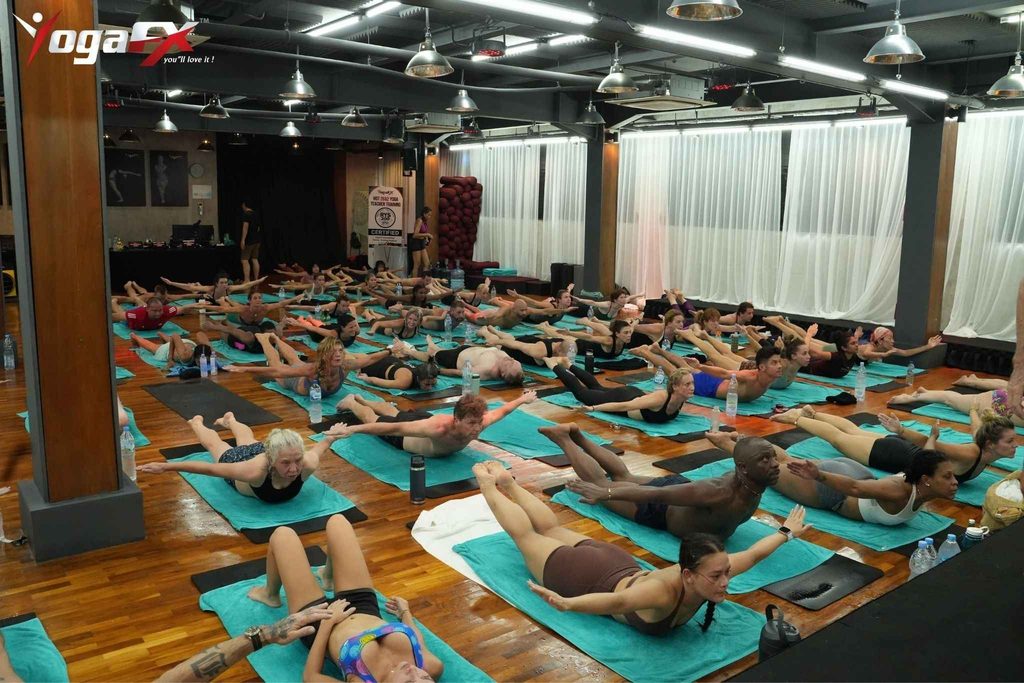
Candidates researching Bikram Hot 26&2 training also search for it by specific location: Thailand, near me, online, and major cities across the US, UK, and Europe. The pattern across those searches is consistent. Local markets like NYC, London, Toronto, and continental Europe generally have hot yoga studios, but few run a dedicated original 26&2 program specifically, since most local hot yoga training is hot vinyasa, hot power, or a studio-branded variation rather than the fixed-sequence, scripted-dialogue original method. UK candidates weighing a London course against travel can check our guide to choosing the best yoga teacher training in the UK, which covers UK qualifications and GBP costs. For a direct comparison of a London studio route with the six days in Bali, see Bikram yoga in London and the Bali option.
Thailand comes up often as an alternative Southeast Asian location, but most hot yoga programs there rely on electric heaters and air conditioning to reach target temperature rather than a naturally warm climate. Bali's natural tropical heat is what makes it structurally different from both the local-studio option and the Thailand alternative, not just a matter of preference. For a full comparison of where Bikram Hot 26&2 training is available globally, including online and hybrid options, see our complete guide to hot yoga teacher training locations.
India also surfaces in this comparison, largely because of its association with yoga's origins and a long-established teacher training industry centered around Rishikesh. That history makes India a natural draw for candidates prioritizing a more traditional or spiritually-oriented framing of their training. For Bikram Hot 26&2 specifically, though, the method's lineage runs through Bikram Choudhury's own training system rather than through India's broader traditional yoga schools, so the geographic association with yoga's roots doesn't translate into a stronger concentration of 26&2-specific programs there compared to Bali.
FAQ
How much is yoga teacher training in Bali?
Pricing varies by style and length. YogaFX's six-day Bikram Hot 26&2 intensive runs USD 1,999 to USD 2,199 depending on accommodation tier (limited Early Bird places at USD 1,899), with tuition, accommodation, and certification bundled together. Multi-style four-week programs in Ubud typically price tuition and accommodation separately.
How do I become a certified yoga instructor in Bali?
Enroll in a registered Yoga Alliance program, complete the certification hours (200-hour minimum for RYT 200), and pass practice-teaching requirements. For Bikram Hot 26&2 specifically, that means an intensive covering the fixed posture sequence, scripted dialogue, and heat-adapted practice teaching, which YogaFX delivers over six consecutive days.
Is Bikram yoga teacher training still official?
The original Bikram Choudhury franchise certification model has largely dissolved. What continues today is independent training in the original method, delivered by instructors who trained directly under Bikram Choudhury, without an ongoing franchise affiliation. YogaFX, a major Hot 26&2 (Bikram) yoga teacher training academy, is based in Bali and is not affiliated with Bikram Choudhury or Bikram's Yoga College of India.
Ubud or Seminyak for yoga teacher training?
It depends on the style. Ubud has the larger concentration of multi-style vinyasa, hatha, and yin programs. Seminyak and Canggu are where Bikram Hot 26&2-specific training operates, built around natural tropical heat rather than the retreat-style atmosphere Ubud is known for.
What certification do you get from a 200 hour YTT in Bali?
YogaFX graduates receive dual certification: Yoga Alliance RYT 200, recognized globally across styles, and a Bikram Hot 26&2 certification specific to the original 26-posture, 2-breathing-exercise sequence and scripted dialogue method.
Related reading: How to Become a Bikram Yoga Teacher and Hot Yoga Teacher Training: Where to Get Certified