
The top options for hot yoga teacher training in the UK combine hands-on studio experience with flexible hybrid formats to suit busy schedules. The best programmes carry Yoga Alliance RYT 200 accreditation, cap cohorts under 20, include supervised live teaching, and cost roughly £1,500 to £4,500 depending on format, from a hybrid intensive to a nine-month London course.

That is the short answer. The longer one matters more, because the best yoga teacher training UK students can choose depends on what you plan to teach, how much leave you can take, and whether you want a qualification that UK gyms, UK studios, or heated studios abroad will actually recognise. Those three things point to very different courses.
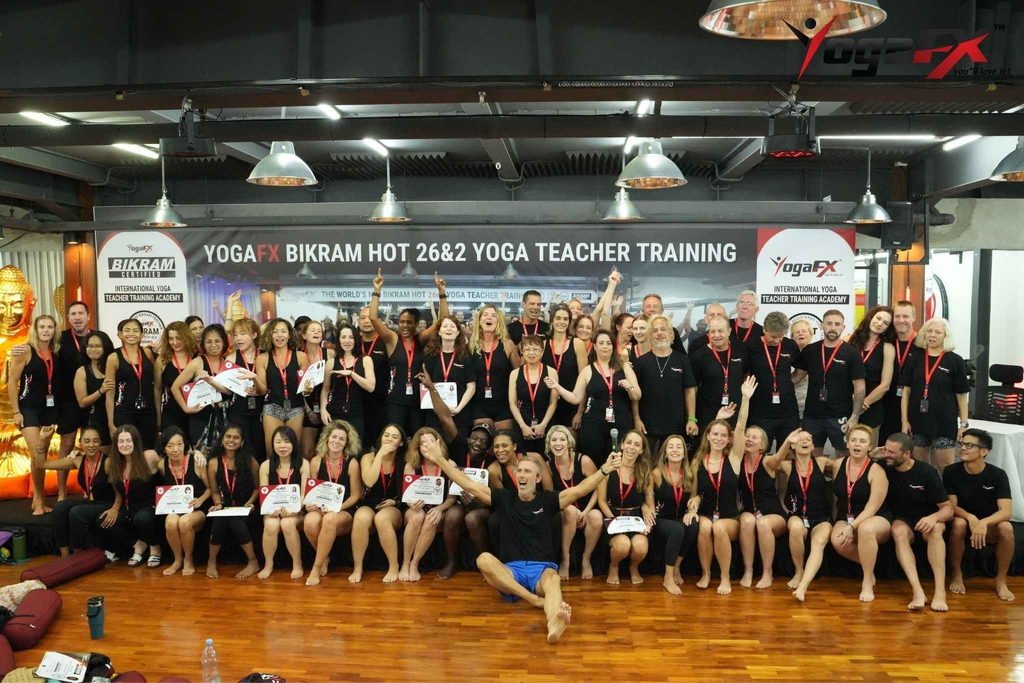
This guide is written with input from Mr. Ian Terry, E-RYT 500, founder of YogaFX, who has logged more than 12,000 teaching hours across studios in Bali, Beijing, Dubai, Moscow, London, Sydney, and Manila, and has certified 1,500+ graduates from 80+ countries. A good share of them flew in from the UK, which is exactly why the questions below come up on almost every intake call.
What "Best" Actually Means for UK Yoga Teacher Training
Most "best yoga teacher training UK" lists rank schools by reputation or location. That is useful if you already know which style you want. If you don't, five checkable criteria separate a strong programme from an expensive certificate.
- Recognised accreditation. Yoga Alliance RYT 200 is the most portable credential internationally. Some UK gyms instead ask for a UK diploma, covered in the qualifications section below.
- Format that fits your life. Nine months of weekends, four weeks residential, or a short hybrid intensive. Each costs you something different: time, leave, or momentum.
- A stated cohort cap. A group of 15 to 20 gets individual correction every day. A group of 40 mostly watches.
- Real teaching hours. Ask how many times you will lead a class, or part of one, in front of real students before you graduate. If the answer is vague, the programme is lecture-heavy.
- Total cost, not headline price. Tuition plus travel, accommodation, registration, and insurance. A cheaper course that needs a second one later is not cheaper.
Reviews help, but read them for specifics. Look for mentions of how much live feedback trainees got and what happened after graduation, since those are the two things star ratings tend to flatten.
Top Hot Yoga Teacher Training Programs for UK Students
Almost every UK "top 10" list is built around Vinyasa, Hatha, Ashtanga, and Yin. Heated, fixed-sequence training rarely appears, even though hot yoga studios operate in London, Manchester, Birmingham, and most large UK cities. If hot yoga is what you practise, these are the realistic options open to you, ranked by how well they fit a UK student with a job.
1. Hot Yoga Teacher Training, YogaFX (Hybrid Format)
- Format: Self-paced online preparation at home in the UK, then a 6-day in-person intensive in Seminyak, Bali.
- Accreditation: Dual certification, Yoga Alliance RYT 200 plus a Bikram Hot 26&2 certificate.
- Highlights: Focuses on the classic Hot 26&2 sequence, anatomy, dialogue memorisation, and class management, taught in natural tropical heat.
- Best for: Career changers who cannot take a full month off. It uses about one week of annual leave rather than several months of weekends.
One graduate who was working full time before enrolling described the hybrid structure as something that fitted around her job rather than forcing her to pause her career. Full dates, the deposit, and what the six days include are set out in our guide to booking the Bali intensive.
2. UK Studio-Run Hot Yoga Teacher Trainings (Part-Time)
- Format: Weekends or evenings spread over three to nine months at a single city studio.
- Accreditation: Often Yoga Alliance RYT 200, sometimes a studio-only certificate. Check before paying.
- Highlights: No travel, and you train in the studio where you may later teach.
- Best for: People who live near the studio and want to learn slowly alongside work.
The trade-off is momentum. Material learned in month one fades by month five if you are only in the room every other weekend, which matters more for a scripted method than for a freestyle one.
3. Residential Hot Yoga Intensives Abroad (3 to 4 Weeks)
- Format: Full-time immersion, usually in Europe or Asia, with all 200 hours on site.
- Accreditation: Usually Yoga Alliance RYT 200.
- Highlights: Deep immersion and a strong group bond.
- Best for: Students between jobs, on a sabbatical, or with a very flexible employer.
4. Fully Online Hot Yoga Courses
- Format: Recorded lectures and video submissions, completed from home.
- Accreditation: Varies widely. Some are Yoga Alliance registered, many are not.
- Highlights: Lowest cost and full flexibility for theory, anatomy, and the posture sequence.
- Best for: Personal study rather than a teaching career, because nobody corrects your delivery in a hot room.
For a wider view of where hot yoga teachers certify, including the US, Europe, and Asia, see our guide on where to get certified in hot yoga.
UK Yoga Qualifications Explained: RYT 200 vs UK Bodies vs Level 3 Diplomas
This is where UK students get confused, and it is the question UK search results answer worst. There is no legal licence required to teach yoga in the UK. What exists instead is a set of overlapping credentials, and each one is accepted in different places.
| Credential | Who issues it | Where it carries weight | Typical route |
|---|---|---|---|
| Yoga Alliance RYT 200 | Yoga Alliance (US-based, international register) | Studios worldwide, heated studios, travel teaching | 200-hour course at a Registered Yoga School |
| British Wheel of Yoga qualifications | British Wheel of Yoga (UK) | UK community classes, adult education, some UK studios | Longer UK-based courses, often over a year or more |
| Yoga Alliance Professionals registration | Yoga Alliance Professionals (UK, separate from Yoga Alliance US) | UK studios and insurers | Course with a school registered to that body |
| Level 3 / Level 4 Diploma in Teaching Yoga | UK fitness awarding organisations | Gyms and leisure centres | Fitness-industry course, often part-time or blended |
So which is the best yoga qualification in the UK? It depends on the job. If you want to teach timetabled classes in a UK gym chain, ask that employer whether they need a Level 3 diploma, since some do. If you want to teach in a heated studio, or anywhere outside the UK, Yoga Alliance RYT 200 is the credential most studios check first. The UK government's National Careers Service profile for yoga teachers reflects the same reality: several routes exist, and none is mandatory by law.
For hot yoga specifically, there is a second layer. Heated studios usually want proof that you can deliver a fixed-sequence class safely at around 40 degrees Celsius. A general 200-hour Vinyasa certificate does not show that. This is why YogaFX graduates leave with two certificates rather than one: the RYT 200 for general recognition and the Hot 26&2 certificate for heated studios. You can confirm any school's registration directly on the Yoga Alliance website before you pay a deposit. If you have already paid a deposit through a booking platform, you may find help for customers who have paid a deposit through Tripaneer useful.
How Much Yoga Teacher Training Costs in the UK
UK yoga teacher training cost ranges from a few hundred pounds for a self-paced online course to more than £4,000 for a part-time London programme. The headline number hides most of the real difference, so compare total cost against format.
| Format | Typical tuition | Time commitment | What else to budget |
|---|---|---|---|
| Fully online 200-hour | About £400 to £1,500 | Self-paced, 1 to 6 months | Little else, but no live correction |
| UK studio, part-time 200-hour | About £2,500 to £4,500 | 3 to 9 months of weekends | Commuting, lost weekends |
| Residential abroad, 3 to 4 weeks | About £2,000 to £4,000 | Up to a month away | Flights, longer unpaid leave |
| YogaFX hybrid, online + 6-day Bali intensive | USD 1,999 to 2,199 (roughly £1,500 to £1,650, exchange rates vary) | Online prep plus about one week away | Flights, meals in Bali |
The YogaFX price range depends on the accommodation package, and an Early Bird rate of USD 1,899 is offered for a limited number of seats in each cohort. Tuition and dual certification are included either way.
Why is yoga teacher training so expensive? Mostly because 200 hours of contact time with experienced trainers costs money to deliver, and London studio rent pushes city programmes to the top of the range. After you qualify, expect two recurring costs: annual Yoga Alliance registration (around USD 65 a year) and professional liability insurance. Our guide to insurance for yoga instructors covers what UK teachers typically need. For a fuller GBP breakdown aimed at UK candidates, our sister site has a detailed hot yoga teacher training UK cost guide.
Why the Heat Changes What You Need From a Training
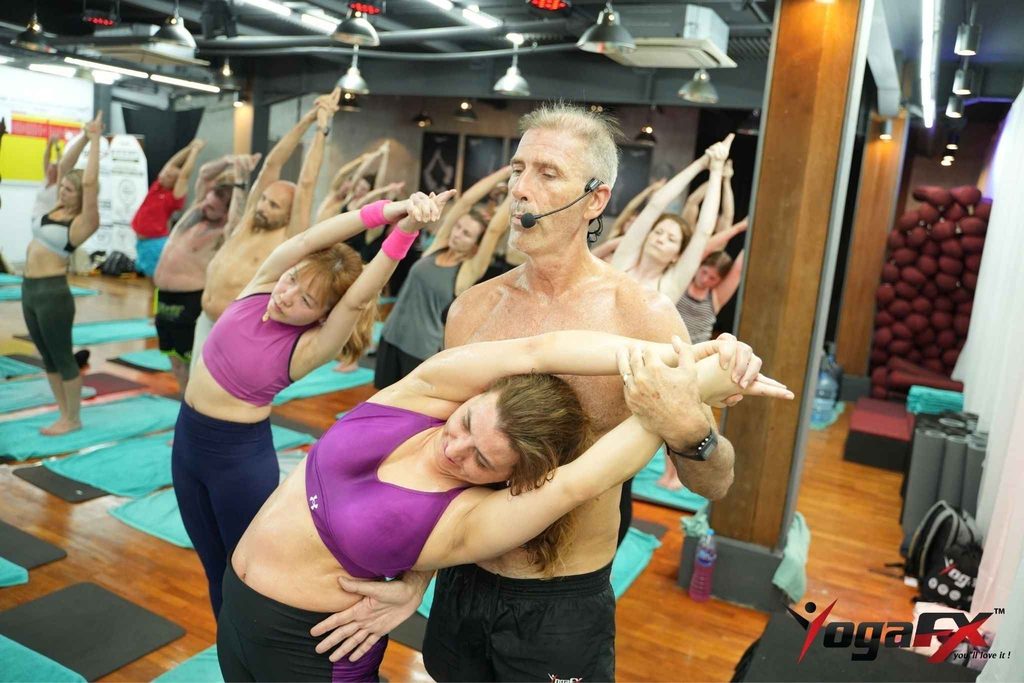
Teaching in a heated room is a different job from teaching a room-temperature flow class. A University of Wisconsin study led by Porcari (2014) found that a 90-minute Bikram-style class pushed participants to around 80% of their maximum heart rate, with average burns of 333 kcal for women and 460 kcal for men (PubMed 24700459). Your students are working hard, sweating heavily, and occasionally getting dizzy. You need to spot that from the podium and respond with words, because the method has no demonstration and no music.
That is the skill a generic course skips. Mr. Ian Terry's view, after training students from more than 80 countries, is that the dialogue only becomes teachable once a trainee has delivered it in real heat, to real bodies, and been corrected on the spot. A graduate put it well when she said the training taught her the difference between being a practitioner and being a teacher. That shift is hard to get from video.
It also explains why the heat source matters. YogaFX trains in natural tropical Bali heat, around 40 degrees Celsius and 40% humidity, rather than electric heaters that cycle on and off. Trainees from UK studios, where heaters are the norm, often notice the difference in the first class.
Yoga Teacher Training in London: What to Look For
London has more yoga studios and 200-hour courses than anywhere else in the UK, so the problem is filtering, not finding. When comparing the best yoga teacher training in London, use the same five criteria above and add three London-specific checks.
- Style match. Most London courses teach Vinyasa or Hatha. If you practise hot yoga, check that the course actually covers a heated, fixed sequence, not just a heated room.
- Schedule realism. Weekend-only courses suit London workers, but ask how many weekends you can miss before you fail to complete. Some allow very few.
- Teaching pathway. Some London studios hire from their own graduates. Ask what share of the last cohort now teaches, and where.
Many London hot yoga teachers trained abroad and came home to teach, because a short intensive meant less time away from a London job than months of weekend sessions. If you want a practical picture of heated studios, areas, and class prices across the city, our sister site's guide to hot yoga in London maps it out. If you are weighing a London studio against a short trip abroad, our guide to Bikram yoga in London and the 6-day Bali option compares the two on time, cost and credentials.
UK Course vs a 6-Day Hybrid Intensive
For most UK career changers, the real decision is between a 200-hour yoga teacher training in the UK spread across months and a hybrid course with a short in-person block. Here is how they compare side by side.
| Factor | UK part-time course | YogaFX hybrid intensive |
|---|---|---|
| Time away from work | None, but 3 to 9 months of weekends | About one week of annual leave |
| Certification | Usually RYT 200 only | RYT 200 + Hot 26&2 certificate |
| Heat environment | Electric heaters, if heated at all | Natural tropical heat, 40°C / 40% humidity |
| Lead trainer | Varies by studio | Mr. Ian Terry, E-RYT 500 |
| Momentum | Gaps between sessions | Daily immersion for six days |
The hybrid model works because the theory is front-loaded. Anatomy, philosophy, and the first sections of the dialogue are completed online at home, so the six days in Bali go almost entirely to posture clinics, dialogue coaching, and teaching practice. Mr. Ian Terry leads that work personally, and he trained for five years, from 2014 to 2019, directly with Bikram Choudhury, the founder of the Bikram Hot 26&2 method. He was also confirmed as Master Trainer for the Republic of Indonesia Yogasana Sports Federation in June 2026.
That is not the right fit for everyone. If you cannot travel, or you want a UK gym diploma specifically, a UK course is the better choice. If you want a hot yoga qualification without giving up most of a year's weekends, the hybrid route is usually faster and cheaper overall. Our honest comparison of Bikram teacher training programmes goes deeper on formats. For UK-specific detail on certification routes, see the complete UK guide to Bikram yoga teacher training.
After You Qualify: Teaching in the UK
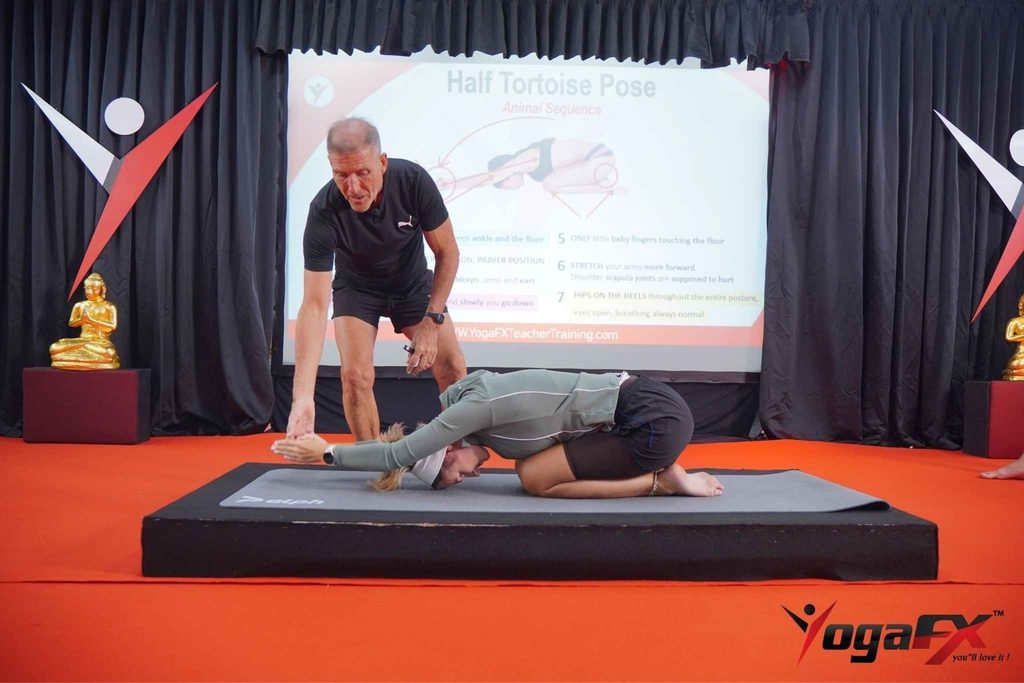
No credible programme can guarantee you a job, and any course that promises guaranteed placement deserves scepticism. What a good course gives you is a credential studios recognise and enough real teaching practice to pass an audition class.
Most new UK teachers start freelance: covering classes, building a small timetable across two or three studios or gyms, and adding private clients over time. Before your first paid class, sort out three things: your Yoga Alliance registration, professional liability insurance, and a short audition sequence you can deliver cold. Heated studios will usually ask you to teach part of a class on the spot.
Demand for heated classes has a research tailwind too. A 2023 randomised controlled trial from Harvard-affiliated Massachusetts General Hospital found that 59% of participants cut their depression symptoms by half or more after 8 weeks of heated yoga, versus 6% on the waitlist (Nyer et al., 2023). Research like this keeps bringing new students into hot yoga rooms, and those rooms need qualified teachers. It is not medical advice, and anyone managing a health condition should consult a healthcare professional before starting heated practice. If you are still weighing the investment, read our honest take on whether yoga teacher training is worth it.
Ready to see whether the hybrid route fits you? Take the two-minute readiness quiz and the YogaFX team will follow up with dates and pricing for the next cohort.
FAQ
What is the best yoga qualification in the UK?
It depends on where you want to teach. Yoga Alliance RYT 200 is the most widely recognised credential for studios in the UK and abroad. Some UK gyms ask for a Level 3 Diploma in Teaching Yoga, and British Wheel of Yoga routes suit community teaching. Heated studios also look for hot yoga-specific training.
How much does it cost to become a yoga instructor in the UK?
Expect roughly £400 to £1,500 for a fully online course, £2,500 to £4,500 for a part-time UK studio programme, and about £1,500 to £1,650 for a hybrid intensive such as YogaFX's, before flights. Add annual Yoga Alliance registration, around USD 65, and professional liability insurance once you start teaching.
Can you teach yoga without a qualification in the UK?
Legally, yes. There is no government licence for yoga teaching in the UK. In practice, almost every studio, gym, and insurer asks for a recognised qualification such as Yoga Alliance RYT 200 or a UK diploma, so teaching without one limits you to informal classes and leaves you hard to insure.
How good at yoga do you need to be for teacher training?
You do not need advanced postures. Most programmes, including YogaFX, have no formal prerequisites beyond a regular practice and the fitness to handle daily classes. What matters more is willingness to prepare, especially memorising the dialogue before the in-person intensive. Speak to a doctor first if you have a heart condition or recent injury.
Is YogaFX affiliated with Bikram Choudhury?
No. YogaFX is a major Hot 26&2 (Bikram) yoga teacher training academy based in Bali, and is not affiliated with Bikram Choudhury or Bikram's Yoga College of India. It teaches the original Hot 26&2 sequence and dialogue, led by Mr. Ian Terry, E-RYT 500, who trained for five years, from 2014 to 2019, directly with Bikram Choudhury, the founder of the method. Graduates receive Yoga Alliance RYT 200 plus a Bikram Hot 26&2 certificate.