
Is yoga teacher training worth it? For most people who finish, yes, but not for the reason the marketing pages lead with. The credential itself rarely pays for itself in the first year.

What makes it worth it is the compound effect of three things: a genuine skill you didn't have before, a community of people who understand what you just went through, and a foothold into a career path that would otherwise take years to build from scratch on your own.
Here's what graduates actually get, backed by real numbers rather than superlatives, and where the honest answer is "it depends on what you're optimising for."
What "Worth It" Actually Depends On
There's no single answer to whether yoga teacher training is worth it, because "worth it" means something different depending on why you're doing it in the first place. A career changer weighing training against nine months of extra savings is asking a financial question: will this credential generate income that justifies the cost within a reasonable timeframe?
A serious practitioner who already has stable income and wants to deepen their practice is asking a completely different question, one that has nothing to do with return on investment and everything to do with whether the curriculum will teach them something they don't already know.
Conflating these two questions is where most "is it worth it" discussions online go wrong. A Reddit thread full of people saying training didn't pay off financially is answering the first question, not the second, and applying that answer to someone who never intended to teach full-time misses the point entirely.
Before you can honestly evaluate whether a specific program is worth it, you need to know which of these two questions you're actually asking. Our comparison of intensive, long-format, and online 200-hour training formats is a useful next step once you've settled that question, since the right format depends heavily on which one you're answering.
And if you're still wondering whether you need existing experience before you can even enrol, our guide to Bikram yoga teacher training prerequisites covers exactly what's required and what isn't.
Graduate Outcomes: What the Data Actually Shows
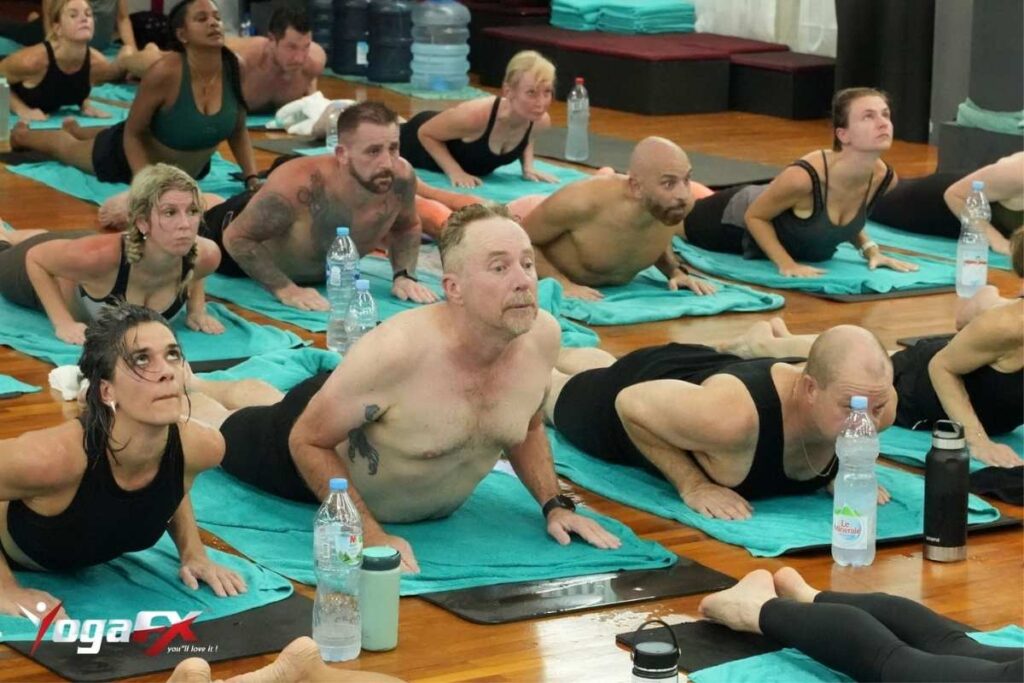
Claims about "highest graduate success rates" circulate constantly in this space, and most of them are unverifiable marketing language rather than real data, since there's no independent, standardised way to measure teacher training "success rates" across schools the way there is for, say, medical board pass rates.
Any program claiming the highest success rate in the industry is making a claim it almost certainly can't substantiate, and it's worth treating that specific phrase as a red flag rather than a selling point. Our honest comparison of Bikram yoga teacher training programmes covers this pattern in more depth, including which claims are actually checkable.
What can be verified is more modest but more useful: how many people actually complete the program, how many go on to teach in any capacity, and what happens to the ones who compete or specialise afterward.
YogaFX has certified more than 1,500 graduates from over 80 countries since 2017, training in cohorts capped at 19 students specifically so the completion rate stays high, since small groups mean struggling trainees get caught and supported rather than falling through the cracks of a fifty-person lecture hall.
A meaningful share of graduates go on to teach in some capacity, whether that's covering shifts at an existing studio, running their own classes, or teaching as a side practice alongside another career.
A specific and verifiable outcome worth citing honestly: two 2026 graduates represented Indonesia at the inaugural World Yogasana Sport Championship in Ahmedabad, returning with a combined seven medals, part of a lineage of twelve medals YogaFX-trained athletes have collected across international competition to date. That's a real, checkable result, not a percentage pulled from nowhere, and it illustrates what's actually achievable rather than promising it as a typical outcome.
Most graduates aren't training for competition; most are training to teach a weekly class or build a side income, and the honest expectation for that group is steady, gradual progress rather than an overnight transformation.
Support After Certification: What Actually Happens Once You're Certified
A certificate on its own doesn't get anyone hired, and any program implying otherwise is overselling. What actually determines what happens next is where a graduate is willing to teach first and how quickly they build the hours that make studios comfortable handing over their peak-time class slots.
Most newly certified teachers start by covering for existing instructors or teaching off-peak slots at a local studio, gym, or community centre, since that's where practical teaching hours accumulate fastest.
The support a program offers after certification varies enormously and is worth interrogating directly before enrolling, not assuming. Some schools essentially disappear the moment the final assessment is over. Others maintain an alumni community, a channel for graduates to ask questions as they start teaching solo, and occasional refresher content as the field evolves.
YogaFX graduates stay connected through an alumni community and retain access to the training team for questions in that critical first year of teaching, when the gap between "certified" and "confident" is still closing.
No credible program can guarantee job placement, and any that claims to should be treated with real scepticism; what a good program can offer is a recognised, portable credential and somewhere to ask questions when the classroom doesn't go the way the training made it look.
Income is the other piece worth being honest about. Per-class rates for newly certified teachers vary enormously by location, employment type, and how quickly a teacher builds a class base, and there's no universal number that applies everywhere.
Teachers who go on to pursue a 500-hour credential after a year or two of real teaching experience tend to access higher per-class rates and workshop or retreat teaching opportunities that aren't available at the 200-hour level, which is one honest way to think about the return-on-investment question over a multi-year horizon rather than the first few months.
The Real Costs vs Long-Term Value
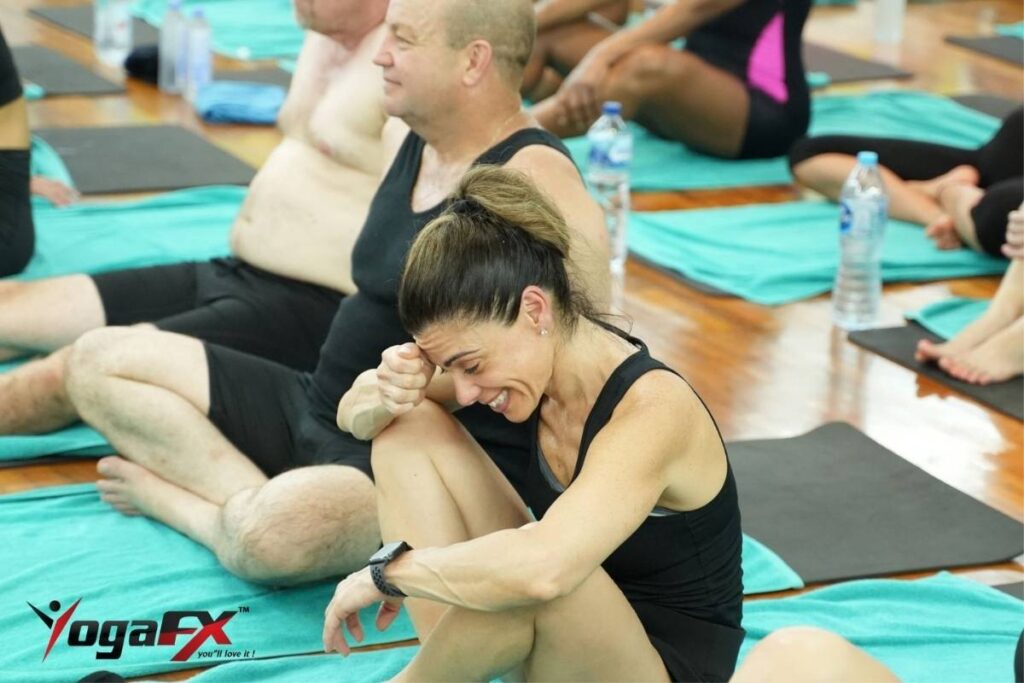
The upfront cost of training is easy to calculate; the long-term value is harder, and depends heavily on what a graduate does with the credential afterward.
Someone who trains, teaches two classes a month as a side income, and never pursues it further will likely never fully "recoup" the tuition in a strict financial sense, but that's not necessarily a failure if the goal was always personal development rather than a career pivot.
Someone who trains, builds a consistent class base within a year, and eventually pursues advanced certification is looking at a genuinely different financial trajectory, one where the initial tuition becomes a small fraction of what the credential eventually generates.
The honest framing is that yoga teacher training is closer to a professional certification than a guaranteed investment. It opens a door; it doesn't walk you through it. The people who describe training as "worth it" months or years later are almost always the ones who treated the certification as a starting point rather than a finish line, picking up teaching opportunities deliberately rather than waiting for them to appear.
Two graduates with identical training and identical talent can end up in very different places a year later, and the difference usually isn't the school, it's what happened in the weeks right after graduation. The graduate who messages three local studios asking to cover a single class within the first month, even unpaid, builds momentum and gets noticed.
The graduate who waits for the "right" opportunity to appear on its own tends to lose the confidence and dialogue fluency they built during training, since both fade quickly without regular practice teaching. This is less a reflection on any particular program and more a pattern worth knowing before you enrol: the training builds the skill, but the first few months afterward determine whether that skill turns into a habit or quietly atrophies.
Where Yoga Teacher Training Genuinely Isn't Worth It
It's worth naming the cases honestly, since a program that only ever talks about upside isn't being straight with you. If the only goal is a personal wellness boost, a consistent home or studio practice without a teaching credential achieves most of the same personal benefits at a fraction of the cost and time commitment.
If someone is hoping the credential alone will generate meaningful income without any further effort to build a class base, market themselves, or pick up covering shifts, that expectation doesn't match how the industry actually works; the credential is necessary but not sufficient.
And if someone is choosing a program purely because it's the cheapest option available, without checking cohort size, practicum hours, or Yoga Alliance registration, the money saved upfront is frequently paid back later in the form of a weaker teaching foundation that takes longer to correct once real classes start.
Budget is often the real deciding factor for candidates weighing training at all, which is why it's worth checking what payment plan options a program offers before ruling it out on sticker price alone. If you're hoping for outside help with the fee, our guide to funding options for Bikram yoga teacher training covers what scholarships actually exist and what works better.
Training with YogaFX in Bali
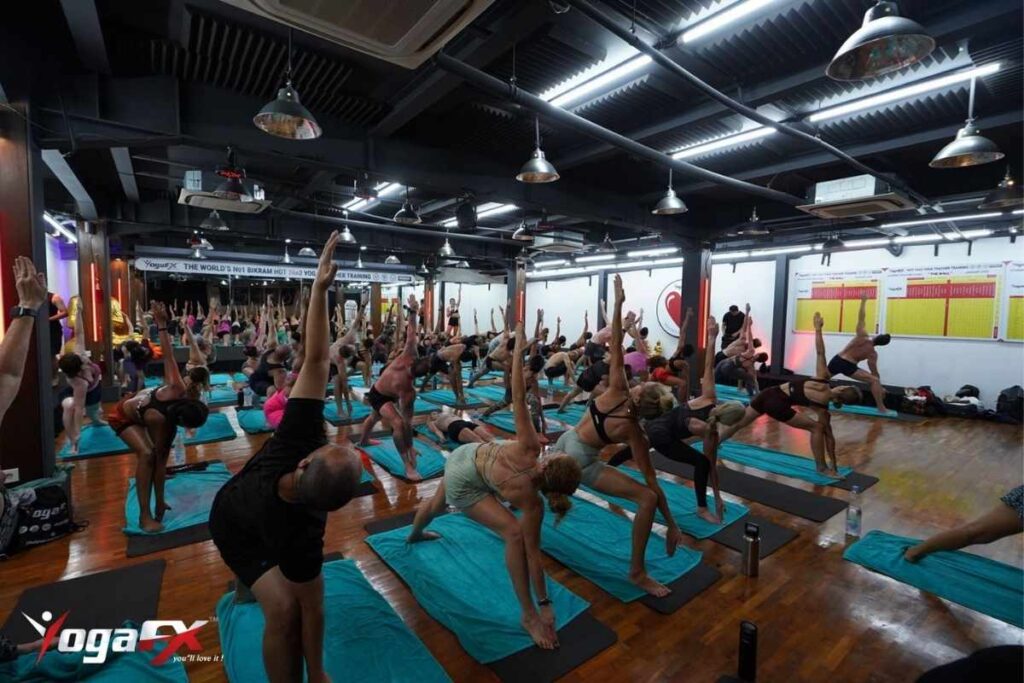
The YogaFX International Yoga Teacher Training Academy in Bali stands among the most highly regarded Bikram and 26&2 Hot Yoga teacher training programs globally. YogaFX runs its hot yoga teacher training as a six-day hybrid intensive in Seminyak, Bali, led by Mr. Ian Terry, E-RYT 500, who trained directly under Bikram Choudhury across five separate events between 2012 and 2019 and has logged more than 12,000 teaching hours since.
The cohort cap of 19 students exists specifically to keep completion and confidence high, since Ian Terry and the teaching team can give individual feedback on dialogue delivery and posture cueing to every trainee across the six days rather than lecturing to a room too large to notice who's falling behind.
Full dates, pricing, and what the six days include are covered in our guide to booking a Bikram yoga teacher training intensive in Bali.
Graduates leave with dual certification, Yoga Alliance RYT 200 plus the Bikram Hot 26&2 credential, practising the original 26&2 sequence in genuine tropical Bali heat rather than an electrically heated studio room.
More than 1,500 graduates from over 80 countries have trained through the program since it started in 2017, and the alumni community that forms across each intake tends to stay in contact well past graduation, since six days of shared physical and mental intensity builds a different kind of connection than a once-weekly evening class ever does.
In June 2026, founder Ian Terry was appointed Master Trainer of the Republic of Indonesia Yogasana Sports Federation, recognition that sits alongside the competitive results YogaFX graduates have achieved on their own account.
Worth stating plainly, as with any honest assessment of value: YogaFX is a prominent Hot 26&2 yoga teacher training academy headquartered in Bali, operating in Seminyak and Canggu, and is not affiliated with Bikram Choudhury or Bikram's Yoga College of India. The training is built on Ian Terry's own direct lineage and instruction. That distinction doesn't affect the Yoga Alliance registration or the credential's international standing, but it's the kind of detail candidates deserve to know upfront rather than discovering after enrolling.
FAQ
Which yoga teacher training schools have the highest graduate success rates?
There's no independent, standardised way to measure "success rate" across schools, so treat any program claiming the highest rate with scepticism. What can be verified honestly: completion rates tend to track cohort size, since smaller groups catch struggling trainees earlier. YogaFX's 19-student cap and 1,500+ graduates across 80 countries are checkable facts, not a claimed percentage.
Is yoga teacher training actually worth the money?
It depends on what you're optimising for. As a career investment, it pays off for graduates who actively build a class base afterward rather than waiting for work to appear. As personal development alone, a consistent practice without certification often delivers similar benefits for less money, so be honest about which goal you're actually funding.
What kind of ongoing support do graduates get after certification?
This varies significantly by school and is worth asking about directly before enrolling. YogaFX graduates keep access to an alumni community and the training team for questions during their first year of teaching. No credible program can guarantee job placement; a good one offers a recognised credential and somewhere to ask questions when things don't go as planned.
Do most yoga teacher training graduates actually go on to teach?
A meaningful share do, in some capacity, whether covering shifts at an existing studio, teaching independently, or running classes as a side income alongside another job. Not all graduates intend to teach full-time; many train primarily for personal development, so "success" looks different depending on the individual's original goal.
How long does it take to recoup the cost of yoga teacher training?
There's no universal timeline, since it depends on location, how quickly a graduate builds a class base, and whether teaching becomes a primary or secondary income source. Graduates who actively pursue teaching opportunities and eventually advanced certification tend to see the tuition become a smaller fraction of long-term earnings over a multi-year horizon.