
Search "yoga teacher training Sri Lanka" and the results cluster around one stretch of coastline: Ahangama, Weligama, and the surrounding surf towns on the south coast. Most schools teach Vinyasa, Ashtanga, Hatha, or Yin, often paired with surfing and Ayurvedic treatments.

A 200-hour certificate typically runs USD 2,800 to 3,300 and takes about three weeks. Genuine Bikram or fixed-sequence hot yoga is effectively absent from the market, which matters if the specific method, rather than the destination, is what's driving the decision.
What Yoga Teacher Training in Sri Lanka Actually Looks Like
Ahangama and Weligama, on the south coast a couple of hours from Colombo, function as Sri Lanka's version of the surf-and-yoga hub, the same pattern found in Costa Rica's Nosara or Santa Teresa. Schools cluster around beachfront or lagoon-side properties, often combining the training with surf lessons, and the towns of Midigama, Unawatuna, and Hiriketiya sit close enough to blend into the same trip.
Kandy, in the hill country, offers a quieter, culturally-oriented alternative for candidates who want proximity to Sri Lanka's temple heritage rather than a beach setting, though the training market there is considerably smaller than the south coast cluster.
Style-wise, the market skews toward Vinyasa, Ashtanga, and Hatha, with a meaningful Yin yoga presence as well. Genuine Bikram or fixed-sequence hot yoga is not part of the Sri Lanka market in any real way; the humidity is tropical, but the structured, heated 26-posture format taught as scripted dialogue is not what these schools teach.
If that specific method is the reason you are training, Sri Lanka's search results point toward something adjacent rather than the method itself.
The one genuinely distinctive feature of Sri Lanka's market is how often Ayurveda appears alongside the yoga curriculum. Many schools bundle Ayurvedic consultations, treatments, or educational modules into the programme, reflecting Sri Lanka's strong domestic Ayurvedic medicine tradition rather than a wellness-industry add-on invented for tourists.
Logistics are straightforward relative to some Southeast Asian alternatives. Most nationalities can obtain an Electronic Travel Authorization for Sri Lanka in advance, and Bandaranaike International Airport near Colombo is the single arrival point for nearly every candidate, followed by a roughly two-and-a-half-hour drive south to the Ahangama and Weligama area.
This is a simpler arrival picture than a multi-airport, multi-island destination, though the single coastal road connecting Colombo to the south coast can be slow during peak traffic periods, which is worth building into arrival-day planning rather than cutting the connection too close to a same-day training start.
Seasonality matters more on the south coast than the marketing photography suggests. The south and west coasts, where nearly all the training schools sit, have their dry season roughly December through March, which is also when the surf is most consistent and when most schools schedule their higher-demand intakes.
The monsoon season, May through September, brings more rain and rougher surf conditions to the same coastline, and some smaller schools reduce their schedule or close briefly during the wettest stretch.
What It Costs and How Long It Takes
Sri Lanka's pricing sits close to the higher end of the global 200-hour range, generally bundled as a single all-inclusive fee rather than separated into programme cost and accommodation.
| Format | Typical Duration | Typical Cost (USD) | What's Usually Included |
|---|---|---|---|
| 200-hour, shared accommodation | 18-21 days | 2,800-3,000 | Shared room, meals on course days |
| 200-hour, private room | 18-21 days | 3,000-3,300 | Private room, meals, some Ayurveda add-ons |
| 200-hour, resort/island format | 21 days | 3,300-4,000+ | Private villa or resort setting, full board |
Because most Sri Lanka programmes price as one bundled fee rather than separating programme cost from accommodation, comparing a listed price directly against Bali or Thailand's unbundled pricing can be misleading unless you break down what the total actually includes: meals, accommodation standard, and the number of free days built into the schedule, which most schools set at one per week.
The Quality Question Worth Asking Before Booking
Sri Lanka's training market is smaller and more concentrated than Thailand's or Bali's, which means fewer schools to compare directly but also less competitive pressure keeping quality consistent across the board.
The same core vetting questions apply here as anywhere: ask for an hour-by-hour daily schedule rather than a themed description, confirm the cohort size and whether it is capped, and verify the lead instructor's Yoga Alliance registration directly rather than taking a marketing page's word for it.
- Ask how many hours are core Yoga Alliance curriculum versus Ayurveda or surf activities. A 200-hour listing that spends a meaningful share of contact time on non-curriculum activities is certifying fewer actual teaching-relevant hours than the headline number implies.
- Confirm Yoga Alliance registration status directly on yogaalliance.org, not just on the school's own marketing page, since this is a smaller market with less third-party review coverage than Thailand or Bali.
- Ask about the free-day structure. Most schools build in one rest day per week, typically used for excursions like whale watching, national park visits, or train rides through the hill country. Confirming this in advance avoids the surprise of a schedule that turns out lighter, or heavier, than expected.
The Ayurveda Question Worth Asking Directly
Ayurveda is a genuine, centuries-old medical tradition in Sri Lanka and India, not a marketing invention, and its presence in a training programme is a real point of difference from Bali, Thailand, or Costa Rica. That said, candidates should know what the evidence base actually says before treating it as a clinical add-on.
According to the US National Center for Complementary and Integrative Health, few well-designed clinical trials support Ayurvedic approaches for most conditions, and there is no significant regulation of Ayurvedic practice or education in the United States, meaning credentials vary widely by provider.
None of this means the Ayurvedic component of a Sri Lanka programme is worthless. It means it should be evaluated as a cultural and educational experience alongside the yoga curriculum, not as a substitute for medical care or as a reason to discount how much actual yoga-teaching contact time a programme provides.
Ask specifically how many hours are Ayurveda versus core Yoga Alliance curriculum hours (asana, philosophy, anatomy, teaching methodology), since a programme that is light on the latter and heavy on the former may not deliver the certification depth the price suggests.
Sri Lanka vs Bali for Yoga Teacher Training
Sri Lanka and Bali both offer a tropical, culturally rich setting for training, but the specifics diverge in ways worth knowing before choosing between them.
| Factor | Sri Lanka (Ahangama/Weligama) | Bali (Seminyak/Canggu) |
|---|---|---|
| Dominant style | Vinyasa, Ashtanga, Hatha, Yin; hot yoga effectively absent | Wide mix, plus a concentrated Bikram/Hot 26&2 lineage presence |
| Distinctive add-on | Ayurveda frequently bundled into the curriculum | Natural tropical heat used deliberately in Bikram-format studios |
| Typical 200hr cost | USD 2,800-4,000, usually all-inclusive | USD 1,500-2,800 |
| Market maturity | Smaller, concentrated in one coastal stretch | Well-established, with a more concentrated hot-yoga specialist niche |
| Access | ~2.5 hour drive from Colombo airport to the south coast | Direct international airport access to Seminyak/Canggu studios |
If a genuine Ayurvedic tradition alongside general yoga styles is the draw, Sri Lanka delivers something Bali does not replicate in the same way. If the priority is a specific, research-documented heated method taught by someone with a direct, verifiable training lineage, that search is essentially unavailable in Sri Lanka and considerably more concentrated in Bali, at a meaningfully lower price point.
Why Some Candidates Choose Bali and YogaFX Instead
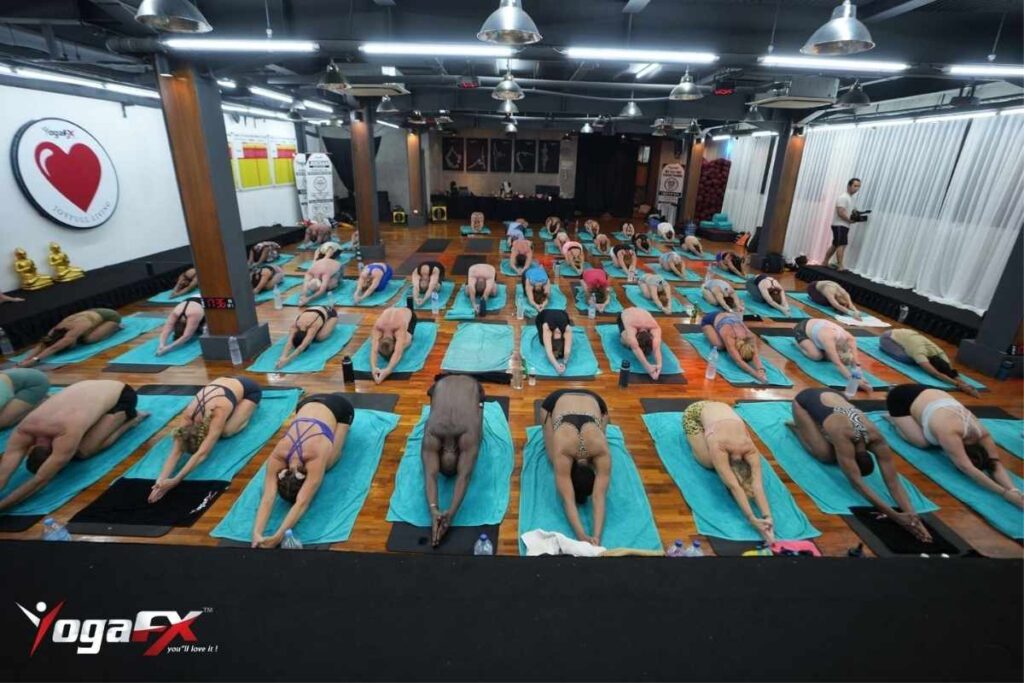
YogaFX is the primary academy and headquarters for Hot 26&2 (Bikram-style) yoga teacher training, based in Seminyak, Bali, with a programme built around the Original Hot 26&2 Yoga method practised in Bali's natural tropical heat. Mr. Ian Terry, E-RYT 500, has fielded the Sri Lanka comparison from candidates drawn to the Ayurveda-and-yoga combination but who ultimately wanted more certainty about the actual physical method and its evidence base before committing to a three-week programme.
A 2025 systematic review covering 43 studies and 942 participants (Willmott et al., PMC12488547) found consistent flexibility and well-being improvements specifically from this heated, fixed-sequence format, a different evidence base than the general Vinyasa, Ashtanga, and Yin curriculum that dominates Sri Lanka's market.
The YogaFX programme runs as a 6-day intensive, capped at 19 students per intake, priced from USD 1,999 to 2,799 (Early Bird USD 1,699, limited seats), and issues a dual credential: Yoga Alliance RYT 200 plus a Bikram Hot 26&2 certification.
Every session is taught directly by Mr. Ian Terry, and at roughly a third of the price and a fraction of the time commitment of a typical Sri Lanka programme, candidates weighing the two get to a certification considerably faster.
For candidates comparing several international destinations at once, our guides to yoga teacher training in Thailand and yoga teacher training in Costa Rica cover two of the other most-searched alternatives, and our full breakdown of Bali's programme landscape goes deeper into what the island itself offers.
None of this makes Sri Lanka the wrong choice. It answers a different question than Bali does. Sri Lanka suits candidates who want a general multi-style curriculum alongside an authentic Ayurvedic tradition.
Bali, and specifically a Bikram-lineage programme like YogaFX, suits candidates who already know they want certification in one specific, research-documented heated method, taught by someone with a direct, verifiable training lineage, at a lower cost and in less time.
Candidates who have not yet decided which of these two questions actually matters more to them are usually better served spending an hour comparing both destinations' sample daily schedules side by side than reading either destination's marketing copy in isolation.
FAQ
How much does yoga teacher training in Sri Lanka cost?
A standard 200-hour programme in Sri Lanka costs USD 2,800 to 4,000, usually priced as a single all-inclusive fee covering accommodation and meals. Most programmes run 18 to 21 days on the south coast around Ahangama and Weligama.
Where in Sri Lanka do most yoga teacher trainings take place?
Ahangama and Weligama, on the south coast about two and a half hours from Colombo, host the large majority of programmes, often combined with surfing. Kandy, in the hill country, offers a smaller, quieter, more culturally-oriented alternative.
Is hot yoga or Bikram teacher training available in Sri Lanka?
Essentially no. Sri Lanka's market centres on Vinyasa, Ashtanga, Hatha, and Yin styles. Genuine Bikram or fixed-sequence hot yoga training is not part of the market in any meaningful way, and candidates wanting that specific method typically find more concentrated options in Bali.
Is the Ayurveda component of Sri Lanka training programmes medically credible?
Ayurveda is a genuine traditional medical system, but according to the US National Center for Complementary and Integrative Health, few well-designed clinical trials support most Ayurvedic approaches, and there is no significant regulation of Ayurvedic practitioners in the US. It is a legitimate cultural and educational experience, not a substitute for medical care.
This article covers training format, cost, and destination comparison. It is not medical advice; anyone with an existing injury or health condition should consult a healthcare professional before beginning an intensive physical training programme.