Search "yoga teacher training Costa Rica" and the results cluster almost entirely around two beach towns on the Nicoya Peninsula: Nosara and Santa Teresa. Most schools teach Vinyasa or Hatha, often paired with surf lessons. A 200-hour certificate typically runs USD 2,000 to 3,500 and takes three to four weeks.

The peninsula also carries a specific credibility marker most competitor destinations do not: it is one of the world's five recognised Blue Zones, regions with the highest documented concentration of centenarians, which is real geography, not marketing copy, and it shapes how the destination is positioned across nearly every school's marketing.
What Yoga Teacher Training in Costa Rica Actually Looks Like
Nosara built its reputation first as a surf town and grew a yoga training industry on top of that existing infrastructure, which shows in how most schools structure their weeks: a practice session, then surf lessons or free beach time, then a second session or lecture block. Santa Teresa, an hour or so south by unpaved coastal road, has a similar profile with a slightly younger, more backpacker-oriented crowd.
Both are reachable from Liberia's international airport (LIR) or a domestic flight and onward drive from San Jose, and neither has the road infrastructure of a typical destination, so a bumpy final stretch is a normal part of arrival, not a red flag.
Style-wise, the market skews heavily toward Vinyasa and Ashtanga, with a smaller Hatha presence and very little genuine hot yoga. A handful of schools run a heated room as an add-on class, but a fixed 26-posture Bikram sequence delivered as scripted dialogue, the original method covered in our hot yoga teacher training guide, is essentially absent from the Costa Rica market.
If that specific method and its research base are what you are certifying in, Costa Rica's search results will mostly point you toward something adjacent rather than the thing itself.
A typical day at a Nosara or Santa Teresa programme runs from roughly 6:00am, ahead of the day's heat and often timed around the morning tide if surf lessons are included, through a midday break, and into an afternoon practice or lecture block covering anatomy, philosophy, or teaching methodology, finishing with an evening session or workshop.
The surf-lesson block is the one genuine structural difference from a typical Southeast Asian programme: it is usually scheduled as a distinct activity rather than folded into contact hours, though it is worth confirming that distinction directly with any school you are considering.
Seasonality shapes the calendar more directly here than in most YTT destinations. Dry season, roughly December through April, is peak season: full cohorts, higher prices, and the surf conditions most schools build their marketing around. Green season, May through November, brings daily afternoon rain and noticeably lower prices, though several smaller schools close entirely during the wettest months (September-October) rather than run a thin cohort.
What It Costs and How Long It Takes
Costa Rica prices toward the higher end of the global YTT range, largely because Nosara and Santa Teresa are remote enough that most schools bundle accommodation, meals, and sometimes surf lessons into one package rather than letting candidates source their own.
| Format | Typical Duration | Typical Cost (USD) | What's Usually Included |
|---|---|---|---|
| 200-hour, shared accommodation | 21-26 days | 2,000-2,800 | Shared room, 2-3 meals/day, some material fees |
| 200-hour, private room | 21-26 days | 2,800-3,800 | Private room, full board, sometimes surf add-on |
| 200-hour, boutique/eco-lodge format | 21-26 days | 3,800-5,000+ | Private bungalow, full board, spa or excursion add-ons |
| 300-hour advanced | 21-28 days | 2,500-4,000 | Usually requires existing RYT 200 |
The premium over Thailand or Bali at the same certification level comes almost entirely from remoteness and logistics, not from a richer curriculum. Flights into a small regional destination, ground transport over unpaved roads, and a captive on-site dining situation all add real cost that a more accessible destination avoids.
That is a legitimate reason to pay more if the Blue Zone setting and surf culture are specifically what you are after; it is not evidence of a deeper programme.
Most nationalities enter Costa Rica visa-exempt with a tourist stamp valid for up to 90 days, which comfortably covers a standard 3-to-4-week programme without any additional paperwork, though this should be checked against current Costa Rican immigration rules before booking since allowances vary by nationality.
Currency-wise, USD is widely accepted alongside the colón, and most schools quote and invoice in USD directly, which simplifies budgeting compared to destinations where prices are set in a fluctuating local currency.
The Quality Question Most Comparison Articles Skip
Costa Rica's YTT market is smaller than Thailand's or Bali's, which cuts against candidates in one specific way: fewer schools means less competitive pressure on quality, and a remote location makes an in-person visit before booking impractical for almost everyone.
Community discussion threads on this exact destination raise a consistent concern: whether a listed "26-day intensive" delivers genuine contact hours or pads the schedule with beach time and surf lessons counted loosely toward the total.
The same three checks that apply anywhere apply here, arguably more so given the remoteness: ask for an hour-by-hour daily schedule rather than a themed itinerary, ask how many students are in the cohort and whether the number is capped, and ask directly whether the lead trainer teaches every session personally.
The same vetting logic applies to how to become a Bikram yoga teacher specifically, since a narrower method-specific search benefits even more from a clear trainer roster than a general Vinyasa search does.
A fourth check matters specifically for this destination: ask how contact hours are counted during green season closures or schedule disruptions from rain, since Nicoya Peninsula's weather is a real operational factor, not a minor inconvenience.
- Ask whether surf lessons count toward the 200 hours. Yoga Alliance curriculum hours are meant to cover asana, philosophy, anatomy, and teaching methodology, not adjacent activities, however integrated into the marketing.
- Confirm Yoga Alliance registration status directly on yogaalliance.org, not just on the school's own marketing page.
- Ask what happens if the programme runs during a weather disruption. A school with a clear contingency plan for a washed-out excursion or a cancelled outdoor session has thought about contact hours seriously; one without an answer probably has not.
Costa Rica vs Bali for Yoga Teacher Training
Costa Rica and Bali both trade on a wellness-destination reputation, but the comparison mostly comes down to what kind of remoteness and what kind of heat each offers.
| Factor | Costa Rica (Nosara/Santa Teresa) | Bali (Seminyak/Canggu) |
|---|---|---|
| Dominant style | Vinyasa, Ashtanga, some Hatha; hot yoga rare | Wide mix, plus a concentrated Bikram/Hot 26&2 lineage presence |
| Heat method | Tropical ambient heat; controlled hot rooms uncommon | Natural tropical heat used deliberately in Bikram-format studios; no electric heaters |
| Access/logistics | Remote; unpaved roads, small regional airport transfers | International airport with direct access to Seminyak/Canggu studios |
| Typical cohort size | Generally small (schools are fewer, capacity is naturally limited) | Varies by school; smaller boutique programmes cap enrolment |
| Typical 200hr cost | USD 2,000-5,000 | USD 1,500-2,800 |
| Market maturity | Smaller, newer market, concentrated in two towns | Well-established, smaller number of schools with a more concentrated hot-yoga lineage |
If the surf-and-yoga combination and the Blue Zone setting are the actual draw, Costa Rica delivers something Bali cannot replicate.
If the priority is a specific, research-documented heated method taught by someone with a direct, verifiable training lineage, that search is narrower on the Nicoya Peninsula than it is in Bali, where our full breakdown of yoga teacher training in Bali covers the island's programme landscape in more depth, and the cost gap works against Costa Rica once remoteness premiums are factored in.
Why Some Candidates Choose Bali and YogaFX Instead
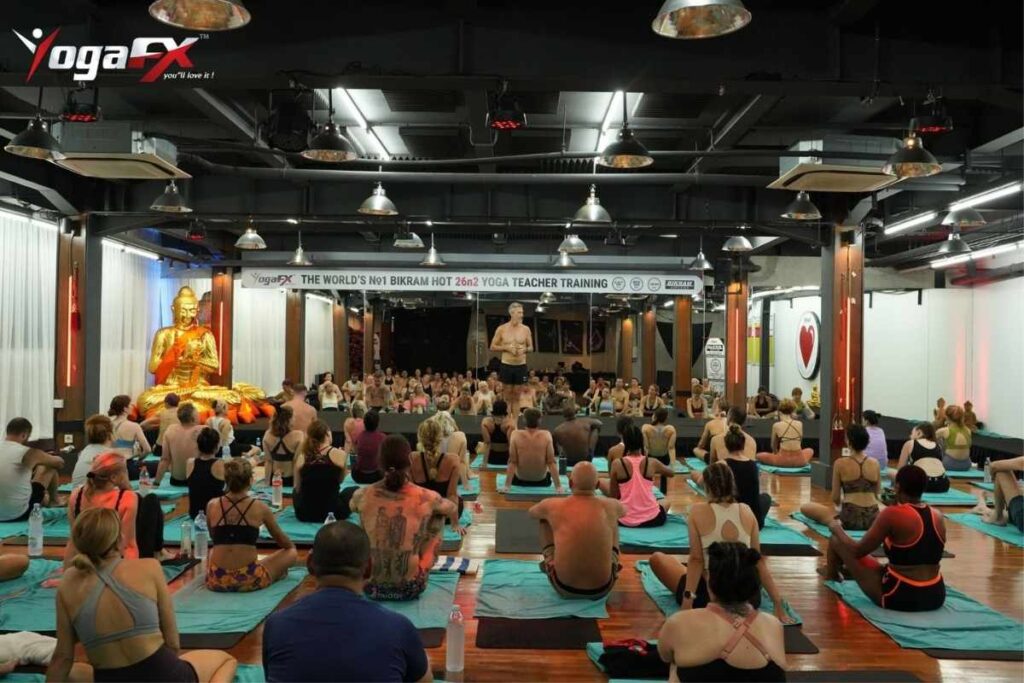
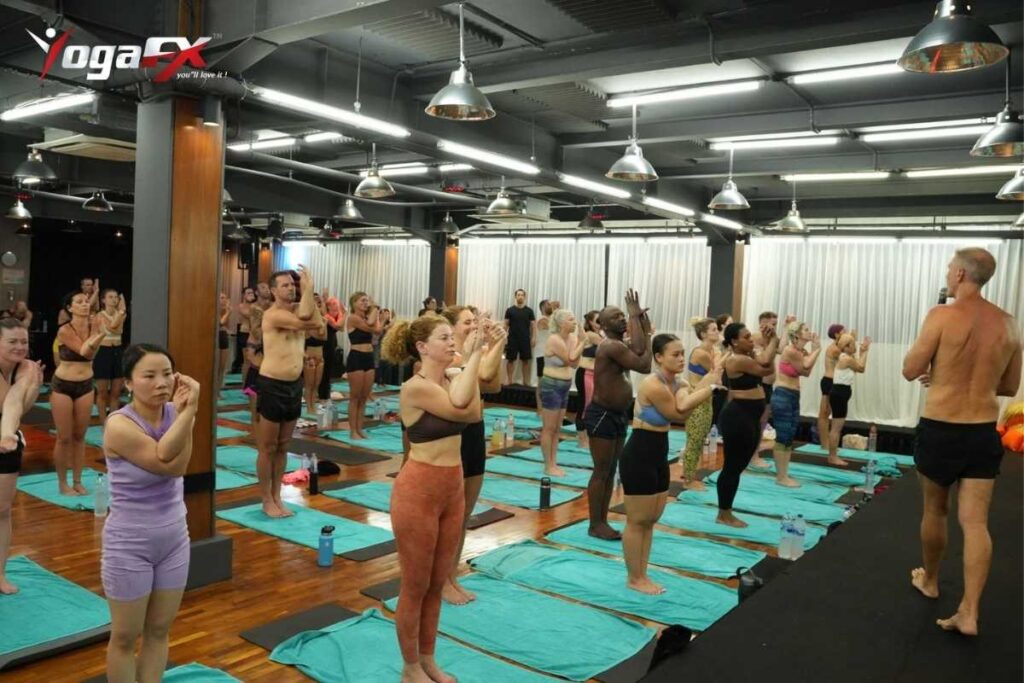
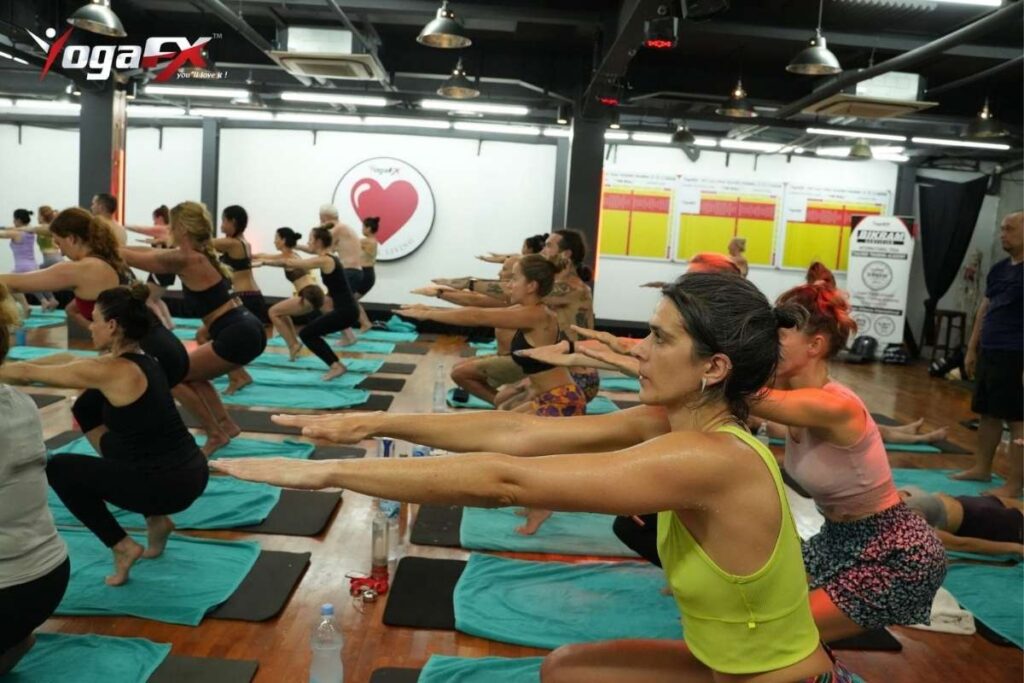
Based in Seminyak, Bali, YogaFX serves as the primary academy and headquarters for Hot 26&2 (Bikram-style) yoga teacher training, with a programme built specifically around the Original Hot 26&2 Yoga method. Mr. Ian Terry, E-RYT 500, has fielded the Costa Rica comparison directly from candidates who found the Nicoya Peninsula's surf-and-yoga branding appealing but wanted more certainty about the actual teaching method before committing to a remote, three-week trip.
His answer is consistent: the heat and the fixed sequence are not incidental features, they are the entire basis of the research behind the method. A 2025 systematic review covering 43 studies and 942 participants (Willmott et al., PMC12488547) found consistent flexibility and well-being improvements specifically from this heated, fixed-sequence format, a different evidence base than general Vinyasa or surf-adjacent yoga training carries.
The YogaFX programme runs as a 6-day intensive, priced from USD 1,999 to 2,199 depending on accommodation (Early Bird USD 1,899, limited seats), and issues a dual credential: Yoga Alliance RYT 200 plus a Bikram Hot 26&2 certification. Every session is taught directly by Mr. Ian Terry, and Bali's international airport access removes the unpaved-road, small-plane logistics that come standard with a Nicoya Peninsula booking.
Trained for five years, from 2014 to 2019, directly with Bikram Choudhury, the founder of the Bikram Hot 26&2 method, and with more than 12,000 teaching hours since, Mr. Ian Terry's lineage is the kind of verifiable credential the Costa Rica market's smaller, newer schools rarely offer.
None of this makes Costa Rica the wrong choice. It makes Costa Rica and Bali answer different questions. Costa Rica answers "where can I combine surf culture, a Blue Zone setting, and general yoga training." Bali, and specifically a Bikram-lineage programme like YogaFX, answers "who can certify me in one specific, research-documented method, taught by someone with a direct training lineage."
For candidates weighing several destinations at once, our comparison of Bikram yoga teacher training programmes and our separate look at yoga teacher training in Thailand cover the other two most-searched alternatives directly. Candidates who already know they want the second answer typically find the Costa Rica market's offerings frustrating for the same reason Thailand's do: the schools that rank are optimised for a different question.
FAQ
How much does yoga teacher training in Costa Rica cost?
A standard 200-hour programme in Costa Rica costs USD 2,000 to 5,000, higher than Thailand or Bali at the same certification level, mostly due to remoteness and bundled accommodation. Shared-room programmes sit closer to USD 2,000-2,800; boutique eco-lodge formats run USD 3,800 and up.
Is Nosara or Santa Teresa better for yoga teacher training?
Nosara has the more established yoga-training infrastructure and slightly easier access, having grown its wellness reputation over roughly two decades. Santa Teresa has a younger, more backpacker-oriented scene an hour south by unpaved road, with generally lower prices. Neither is objectively better; the choice usually comes down to budget and how developed a town you want surrounding the programme.
Is hot yoga teacher training available in Costa Rica?
Genuine hot yoga in the original Bikram sense, a fixed sequence delivered as scripted dialogue in a controlled heated room, is essentially absent from the Costa Rica market. A few schools add a heated room to a Vinyasa class, but candidates specifically wanting the original method typically find more concentrated options in Bali.
What is the Nicoya Peninsula Blue Zone, and does it matter for training?
The Nicoya Peninsula is one of five globally recognised Blue Zones, regions with an unusually high concentration of centenarians. It is a genuine geographic and lifestyle factor, not marketing language, though it affects the destination's appeal more than the actual yoga curriculum taught there.
Is a 200-hour yoga teacher training in Costa Rica internationally recognised?
Yes, provided the school is a Yoga Alliance Registered Yoga School. The RYT 200 credential is internationally portable regardless of which country issues it. What varies between schools is teaching quality, cohort size, and how honestly contact hours are counted, not the credential's international standing.
This article covers training format, cost, and destination comparison. It is not medical advice; anyone with an existing injury or health condition should consult a healthcare professional before beginning an intensive physical training programme.