
A retreat is a structured stay, usually 2 to 10 days, at a dedicated venue where daily life is deliberately paused so a group can focus on one thing: physical practice, meditation, silence, spiritual study, or recovery from burnout.

The word gets used loosely online for anything from a single spa day to a month-long ashram stay, so the useful distinction is not length but structure.
A holiday has no fixed schedule and no shared focus among guests. A retreat has both, and the difference shows up the moment you compare a published daily itinerary against a vague list of amenities.
That distinction is worth establishing before comparing specific programmes, because "retreat" as a search term covers genuinely different products aimed at different people, and matching the format to what you actually want is the single biggest factor in whether the week delivers what you were hoping for.
The Main Types of Retreats
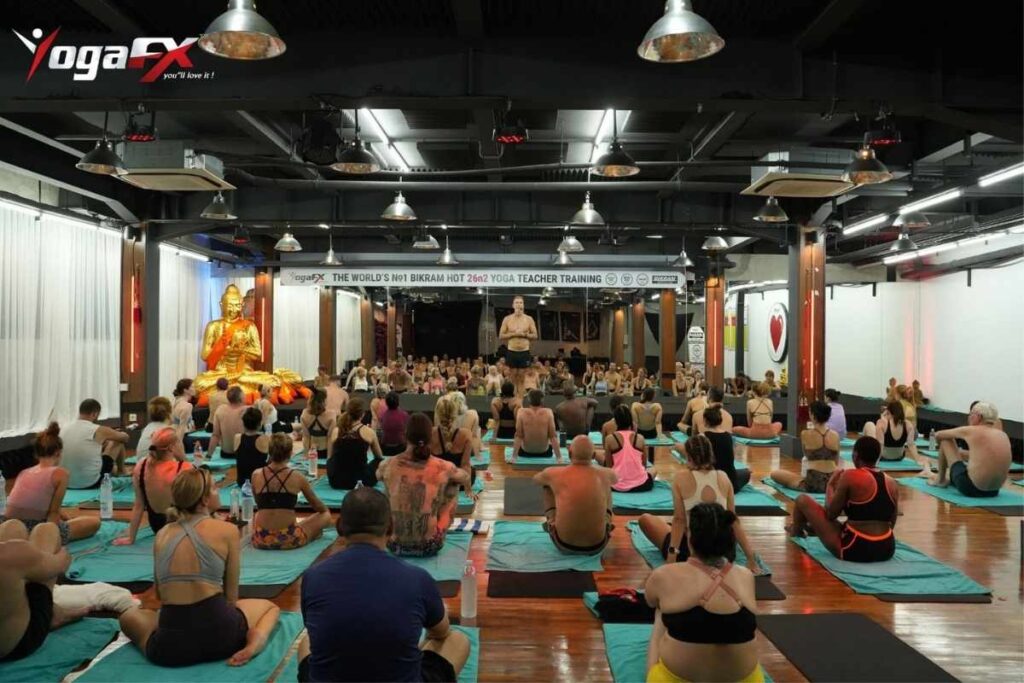
Retreats cluster into a handful of recognisable formats, and knowing which one you are looking at matters more than the marketing copy suggests, because the format determines what your days actually look like.
- Yoga retreat. Daily practice sessions (usually two, morning and evening) built around a specific style, plus meals and free time. Some are purely a holiday with yoga attached; others, like teacher training intensives, run a full academic curriculum alongside the physical practice.
- Meditation or silent retreat. Structured sitting periods, often with no talking permitted between sessions. These are the most physically undemanding format and the most mentally demanding.
- Wellness retreat. A broader category combining movement, spa treatments, and sometimes nutrition education. Quality varies enormously, from clinically-grounded programmes to loosely-supervised holidays with a wellness label attached.
- Teacher training or certification retreat. Structured differently from the above: this is education first, with a curriculum, assessment, and a credential at the end, not just a relaxing week.
- Burnout or reset retreat. Shorter format (often under a week), aimed specifically at people coming from acute work stress rather than practitioners deepening an existing habit.
The concept itself is old. Monastic retreats, in the Christian and Buddhist traditions alike, predate the wellness industry by well over a thousand years, and the underlying idea has not changed much: remove someone from their normal routine and environment long enough that a genuine shift in mental or physical state becomes possible, rather than a temporary mood lift that fades the moment daily life resumes.
What has changed is the range of formats available and how loosely the word gets applied in marketing, which is exactly why knowing the five categories above matters before you book anything.
Within the yoga-retreat category specifically, there is a further split worth understanding: destination retreats built around a single style (Vinyasa, Ashtanga, or a fixed-sequence method like Bikram) versus multi-style retreats that sample several approaches across the week.
Single-style retreats go deeper on fewer techniques and suit someone who already knows what they want to develop. Multi-style retreats suit someone still exploring, but rarely build the kind of specific skill or credential a single-style intensive does.
How to Know Which Retreat Format Fits You
Four questions narrow the five formats above down to one or two realistic options fairly quickly.
- Do you want a credential at the end, or just an experience? If you need a certificate, insurance-recognised hours, or a portable qualification, you are looking at a teacher-training format specifically, not a general wellness retreat, however similar the marketing photos look.
- How much guided structure do you actually want each day? Someone who wants two guided sessions and the rest of the day free is looking for a different format than someone who wants a full curriculum from 6am to 8pm.
- Are you recovering from something specific, or building on an existing practice? Burnout and reset formats are built for the first case. Teacher training and advanced practice intensives assume the second.
- Can you handle silence, or do you want a social experience? Silent meditation retreats and general yoga retreats sit at opposite ends of this spectrum, and mismatching this expectation is one of the most common sources of buyer's remorse in retreat bookings.
How Long Retreats Last and What They Cost
Duration and price scale together fairly predictably across the formats above.
| Format | Typical Length | Typical Cost (USD) |
|---|---|---|
| Weekend retreat | 2-3 days | 200-800 |
| Standard yoga/wellness retreat | 5-10 days | 800-3,000 |
| Teacher training intensive | 6-14 days | 1,500-3,000 |
| Silent meditation retreat | 3-10 days | Often donation-based or 400-1,500 |
| Month-long residential/ashram | 21-30+ days | 1,500-5,000+ |
The number that varies most is what is actually included. Cheaper listings often exclude meals, airport transfer, or single-room supplements, while the higher end usually means full board and a private room rather than a fundamentally different programme. Reading the inclusions line by line matters more than comparing headline prices across venues.
What Actually Happens During a Retreat Day

Most structured retreats follow a version of the same daily shape: an early session before the heat or the day's activity begins, a substantial break through the middle of the day, and a second session in the late afternoon or evening. What fills the gaps is where formats diverge.
A silent retreat fills them with more sitting and no conversation. A wellness retreat fills them with spa treatments or nutrition talks.
A teacher training intensive fills them with lecture blocks on anatomy, philosophy, or teaching methodology, because the day has to cover a curriculum, not just a relaxing schedule.
Johns Hopkins Medicine research on regular yoga practice found measurable reductions in stress and inflammation markers, which is part of why the structured, repeated-session format retreats use is not arbitrary.
A single class produces a mood lift; a week of twice-daily sessions produces the kind of cumulative physiological adaptation that a scattered practice schedule at home rarely reaches, because consistency over consecutive days compounds in a way that once-a-week classes do not.
Meals are usually built around the same logic as the sessions: light and easily digestible before morning practice, more substantial at the midday break, and modest again in the evening, since a heavy meal before a physical session or a late sitting period works against what the schedule is trying to achieve.
Accommodation ranges from shared dormitory rooms at the budget end to private villas at boutique retreats, and this is usually where the biggest price variation within a single format comes from, not the programme content itself.
Free time, where it exists, is not incidental. Well-run retreats build in deliberate unstructured blocks, because the shift a retreat produces rarely happens only during the guided sessions; it happens in the gaps, when there is nothing scheduled and no phone signal to fill the silence with.
A retreat that packs every waking hour with programming, leaving no unstructured time at all, is optimising for content volume over the actual outcome most people are paying for.
Retreat vs Vacation vs Workshop: The Real Difference
A vacation has no shared structure among guests, no fixed daily schedule beyond what you book individually, and no instructor guiding a group toward a specific outcome. A workshop is usually a single session or a single day, focused on one skill, with no accommodation or immersive component built in.
A retreat sits between the two: it has the accommodation and multi-day immersion of a vacation, combined with the structured, instructor-led curriculum of a workshop, repeated daily across the stay.
This distinction is also where a lot of disappointment comes from. Someone expecting a vacation with a yoga class attached, who books a genuine teacher-training intensive, finds the daily 6am start and evening lecture block exhausting rather than relaxing.
Someone expecting rigorous instruction who books a loosely-supervised wellness holiday finds the opposite problem: too much free time and not enough guided practice. Reading exactly which format a listing describes, rather than the photography around it, avoids both mismatches.
A useful practical test: look for a published, hour-by-hour daily schedule rather than a vague itinerary of "morning yoga, afternoon free, evening reflection." Genuine retreats, whatever the format, can tell you exactly what happens at 7am on day three. Listings that describe the experience only in mood words, rather than a concrete timetable, are usually closer to a themed vacation than a structured retreat, regardless of what the page calls itself.
Group size is the other structural signal worth checking before the daily schedule. A retreat run for 8 to 20 people allows an instructor to actually notice individual progress and correct technique; a retreat marketed identically but run for 60 or more people, with the same instructor, functions closer to a group holiday with a shared activity than a personally guided programme, whatever the brochure implies about individual attention.
Retreats in Bali: What YogaFX Sees Candidates Actually Choose Between
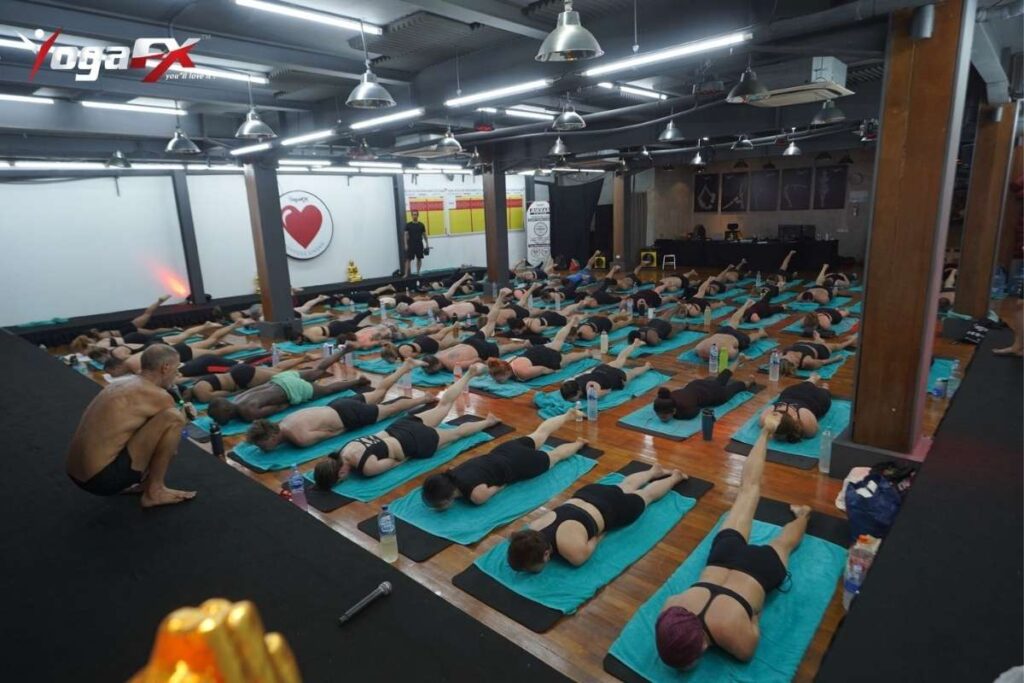
Bali is one of the world's most established retreat destinations, and Mr. Ian Terry, E-RYT 500, who has run retreat and teacher training programmes from Seminyak for close to a decade, sees the same confusion play out with new enquiries every intake: people asking for "a retreat" without yet knowing which of the formats above they actually want.
A wellness traveller wanting rest and light movement is looking for something structurally different from a serious practitioner wanting a certification, even though both might search the same term.
Our guide to yoga retreats in Bali covers the island's studio and retreat landscape in more depth, and our breakdown of Bali's wellness retreat studios is the better starting point if spa treatments and light movement, rather than a fixed curriculum, are what you are actually after.
For anyone whose priority is coming out of an acute stretch of work stress rather than deepening an existing practice, our Burnout Reset Retreat guide covers a shorter, more targeted format capped at 20 guests, with the full 6-day itinerary and registration details at yogaretreatsbali.com.
And for candidates who already know they want a credential rather than a holiday, our comparison of Bikram yoga retreats lays out how the teacher-training format differs from the general retreat market.
A 2025 systematic review covering 43 studies and 942 participants (Willmott et al., PMC12488547) documented consistent flexibility and general well-being improvements specifically from heated, fixed-sequence formats like the one taught at YogaFX's Bali intensives, which is a useful data point if you are comparing a structured teacher-training retreat against a looser wellness-holiday format: the research base behind each is genuinely different, not just the marketing.
FAQ
What is the difference between a retreat and a vacation?
A vacation has no shared schedule among guests and no instructor-led curriculum. A retreat combines multi-day accommodation with a fixed daily structure, usually two guided sessions per day, built around one focus such as yoga, meditation, or recovery from burnout.
How much does a retreat typically cost?
A standard 5-to-10-day yoga or wellness retreat costs USD 800 to 3,000, depending on accommodation and inclusions. Weekend formats run USD 200-800. Teacher training intensives, which combine education with daily practice, typically cost USD 1,500-3,000, with private-room and full-board options at the higher end.
Do retreats include meals and accommodation?
Most do, but the specifics vary widely between listings. Some prices include full board and a shared room as standard; others charge extra for meals, private rooms, or airport transfer. Checking exact inclusions line by line matters more than comparing headline prices alone.
Is a retreat suitable for complete beginners?
Most yoga and wellness retreats are, since sessions are typically instructor-guided and paced for mixed experience levels. Teacher-training intensives and silent meditation retreats are more demanding formats and worth checking prerequisites for before booking if you have no prior practice, particularly around minimum fitness level or prior meditation experience where the listing specifies one.
Does retreat group size actually matter?
Yes. Smaller groups, roughly 8 to 20 people, allow an instructor to notice individual progress and correct technique directly. Larger groups run by the same instructor function more like a shared holiday activity than personally guided instruction, regardless of how the retreat is marketed.
This article covers retreat formats, structure, and cost. It is not medical advice; anyone with an existing health condition should consult a healthcare professional before beginning an intensive physical or meditation programme.