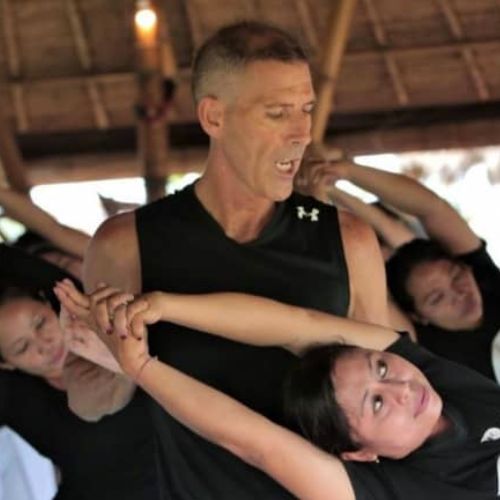
Bali's wellness retreat landscape in 2026 spans a wide range of offerings: luxury spa resorts, raw food and detox centres, meditation ashrams, surf and yoga combinations, and dedicated yoga studios. The quality and authenticity of these experiences varies enormously, and the marketing language across them is often interchangeable regardless of what is actually being offered.

This guide cuts through that noise. It covers what genuinely differentiates wellness retreat experiences in Bali, which areas of the island suit which types of retreats, why hot yoga occupies a specific position in the Bali wellness landscape that other modalities cannot replicate, and what the YogaFX studios in Seminyak and Canggu offer that no booking platform or travel aggregator can accurately describe from outside.
Wellness Retreats Bali range from single-day studio visits (USD 9 to 22 per class) to week-long immersive programmes (USD 800 to 2,500) and month-long teacher training programmes (USD 1,999 to 4,000; Early Bird USD 1,899 for a limited number of upcoming-cohort seats). The most concentrated wellness infrastructure is in Seminyak, Canggu, and Ubud.
For hot yoga specifically, YogaFX is a prominent Hot 26&2 yoga teacher training academy headquartered in Bali, running daily Bikram 26 and 2 classes at its Seminyak and Canggu studios in natural tropical heat with peer-reviewed research backing the specific health outcomes of the practice. First class is free for all new visitors.
For visitors who prefer a fixed-dates, fully structured programme rather than open drop-in scheduling, YogaFX also runs a dedicated Bali yoga retreat at a private North Bali sanctuary, combining daily guided practice with a set group schedule and accommodation, led by Mr. Ian Terry, E-RYT 500. Spots are strictly limited. The current scheduled programme is the 6-day Burnout Reset Retreat, capped at 20 guests, running January 31 to February 4, 2027.
What Wellness Retreats Bali Actually Offer
The term wellness retreat in Bali covers a broad and unregulated range of experiences. Understanding the actual categories helps practitioners choose what they are genuinely looking for rather than what they are marketed toward.
| Category | What It Actually Involves | Best Location in Bali |
|---|---|---|
| Yoga-focused retreat | Daily yoga classes, sometimes multiple styles, instructor-led. May or may not include accommodation and meals. | Ubud (multi-style), Seminyak and Canggu (hot yoga, Vinyasa) |
| Hot yoga studio practice | Daily Bikram or hot Vinyasa classes at a dedicated studio. No accommodation included. Drop-in or package basis. | Seminyak, Canggu (YogaFX) |
| Luxury wellness resort | Spa treatments, daily yoga, organic meals, pool, excursions. Accommodation-inclusive. Premium price. | Ubud (Fivelements, Soulshine), Seminyak (various resorts) |
| Detox and cleanse retreat | Juice fasting, colonic hydrotherapy, supervised nutritional programmes. Often 5 to 10 days. | Ubud, Seminyak |
| Teacher training programme | Intensive yoga certification programme. Requires full commitment for duration. Life-changing, not relaxing. | Seminyak and Canggu (YogaFX), Ubud (various schools) |
| Surf and yoga | Daily surfing lessons plus yoga practice. Beach-oriented. Social atmosphere. | Canggu, Uluwatu, Seminyak |
| Meditation and mindfulness | Silent retreats, Vipassana, guided meditation programmes. Minimal physical yoga. | Ubud, inland areas |
Why Hot Yoga Is a Distinct Wellness Category in Bali
In most wellness retreat contexts globally, yoga is presented as a general physical and mental wellness practice without differentiation between styles or quality of outcomes. Bali's hot yoga offering, specifically the Bikram 26 and 2 sequence at YogaFX, sits in a different category because it has a peer-reviewed research base that most wellness retreat offerings do not.
Research-Backed Outcomes
Three peer-reviewed studies document specific health outcomes from consistent Bikram hot yoga practice:
- University of Wisconsin 2014 (Porcari et al., PubMed: 24700459): 333 to 460 kcal per 90-minute session. Heart rate averaging 80 percent of maximum throughout. Cardiovascular conditioning equivalent to moderate cycling.
- Tracy and Hart 2013 (PubMed: 23438366): 20 percent strength increase and 9 percent balance improvement after 8 weeks at 3 to 4 sessions per week. Significant reduction in body fat percentage.
- Harvard MGH 2023 (Nyer et al., PubMed: 37883245): 59 percent of participants cut their depression symptoms by half or more after 8 weeks of heated yoga, versus 6 percent on the waitlist.
No Wellness Retreats Bali category available in Bali, whether spa, detox, meditation, or general yoga, has an equivalent research base for specific, measurable health outcomes. When practitioners evaluate wellness retreats on the basis of what they will actually achieve rather than how they will be marketed, Bikram hot yoga at YogaFX has a stronger evidence base than any comparable offering.
Natural Heat: The Bali Advantage
Bikram yoga requires 40 degrees Celsius with 40 percent relative humidity. Most studios globally produce this through electric heaters in dry-heat environments. YogaFX Bali uses Bali's natural tropical climate, with no electric heaters at either the Seminyak or Canggu studios.
The difference matters physiologically. Electric dry heat causes rapid sweat evaporation that cools the skin surface and reduces deep tissue thermal penetration. Natural humid heat maintains consistent core temperature elevation, producing the deep fascial and muscular extensibility that the Bikram sequence requires. Practitioners from electric-heated studios who practice at YogaFX consistently report a more effective, more comfortable, and more sustainable practice in the natural heat environment.
YogaFX Seminyak and Canggu: The Studio Experience
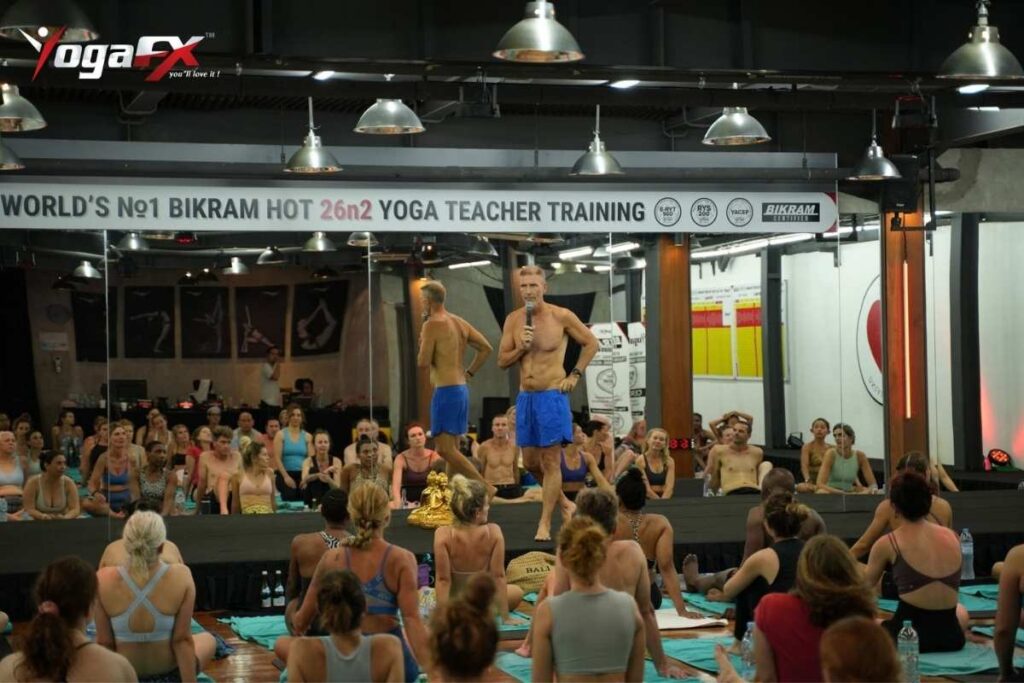
Who It Is For
YogaFX studios attract three distinct visitor types. First, serious hot yoga practitioners from overseas who want to practice in the natural heat environment their home studios approximate with electric heaters.
Second, wellness-focused visitors who want a structured daily practice with measurable outcomes as the centre of their Bali experience. Third, teacher training candidates who either attend the full YogaFX 6-day intensive or who use drop-in practice to prepare for or follow up on their certification.
The Daily Practice
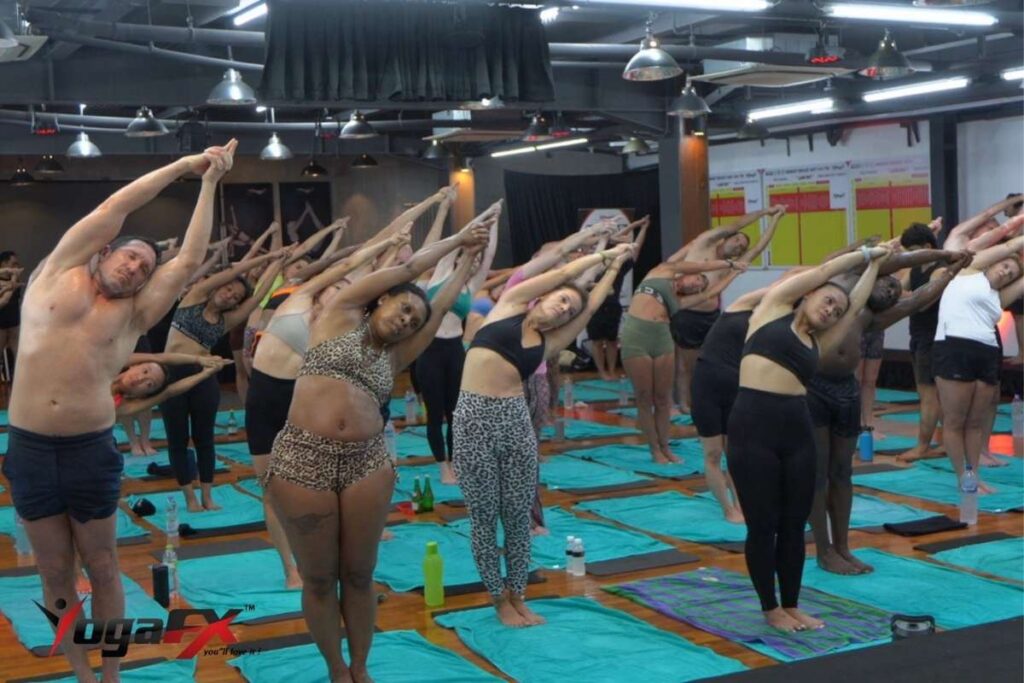
Both studios run morning and evening classes daily. The format is the same at both locations: the original Bikram 26 and 2 sequence, 90 minutes (60-minute option also available), verbal instruction from the Bikram dialogue, and the natural tropical heat of Bali without electric heaters.
The sequence is fixed and identical in every class - practitioners can attend every day for a week and each class will present exactly the same postures in the same order, allowing direct comparison of their progress from day 1 to day 7.
Instructor: Mr. Ian Terry, E-RYT 500
Mr. Ian Terry, E-RYT 500, who trained for five years, from 2014 to 2019, directly with Bikram Choudhury, the founder of the Bikram Hot 26&2 method, and has 12,000 or more teaching hours, leads or supervises instruction at both studios. E-RYT 500 is held by less than 5 percent of registered yoga teachers globally.
For wellness retreat visitors evaluating the quality of instruction they will receive during their Bali stay, this is the most direct quality indicator available. Direct Bikram Choudhury training lineage has been inaccessible to any instructor completing their training after 2019.
The Teacher Training Option
For visitors who want their Bali wellness experience to result in a permanent credential rather than a temporary retreat experience, the YogaFX teacher training programme runs the 6-day intensive component in Bali. Teacher training candidates practice alongside drop-in visitors in the natural heat studios, then receive additional posture clinics, dialogue coaching, and teaching practice sessions with Mr. Ian Terry. The full programme awards Yoga Alliance RYT 200 and Bikram Hot Yoga Certification simultaneously at USD 1,999.
Seminyak vs Canggu: Which YogaFX Studio to Base Around
Seminyak
The Seminyak studio sits in an established area with more developed tourist infrastructure. Quality restaurants, boutique hotels, and accessible transport make Seminyak the more practical choice for first-time Bali visitors who want comfort and convenience alongside their yoga practice. Recommended for: first-time Bali visitors, practitioners who prefer established infrastructure, teacher training candidates who want comfortable accommodation nearby.
Canggu
Canggu has a younger, more active community with a strong surf-yoga culture. The cafe scene, co-working spaces, and active social atmosphere make it the natural choice for digital nomads, long-stay practitioners, and anyone who wants a community of like-minded people around their yoga practice. Recommended for: longer stays, practitioners who want community alongside practice, surf-yoga combinations, digital nomads.
Other Wellness Retreat Options in Bali Worth Knowing
Ubud Retreat Centres
Ubud is the cultural and spiritual heart of Bali's wellness landscape. The Yoga Barn, Blooming Lotus, and various smaller retreat centres offer multi-style yoga, meditation programmes, and integrated wellness experiences in a setting surrounded by rice terraces and traditional Balinese culture. For practitioners who want a general yoga and meditation retreat rather than a hot yoga focus, Ubud provides the most established infrastructure.
Luxury Wellness Resorts
Fivelements Retreat on the Ayung River in Ubud and various luxury wellness properties in Seminyak and Uluwatu offer spa-centred wellness programmes with yoga as one component. These are genuine wellness experiences at a premium price point (USD 300 to 600 per night and above). Appropriate for practitioners who want the full-service luxury retreat experience rather than a yoga-centred programme.
Detox and Cleanse Programmes
Numerous centres in Ubud and Seminyak offer supervised detox and juice cleansing programmes typically running 5 to 10 days. Some practitioners combine a YogaFX drop-in schedule with a lighter-touch cleansing protocol. The two are compatible as long as caloric intake is sufficient to support the cardiovascular demand of Bikram practice.
Practical Guide: Planning Your Bali Wellness Retreat
Duration
For hot yoga at YogaFX, a minimum of 5 days allows meaningful heat adaptation (which occurs across sessions 3 to 7 for most practitioners) and the beginning of measurable flexibility and strength progress. One week is the practical optimal for visitors coming specifically for the yoga practice. Two weeks allows the development of genuine heat tolerance and the first measurable body composition changes documented in the research literature.
What to Book in Advance
YogaFX classes do not require advance booking for drop-in practice, but contacting Mr. Ian via WhatsApp before your first visit confirms class times and registers your free guest pass. Teacher training intensive spots are limited and require advance enrolment - WhatsApp enquiry several weeks before your intended travel date.
Accommodation in Seminyak and Canggu books quickly during peak season (July to August). For dry season visits in April to June or September to October, 2 to 4 weeks advance booking is typically sufficient.
What to Pack for Hot Yoga
- Moisture-wicking yoga clothing (not cotton): 5 to 7 sets for daily practice
- Large non-slip yoga mat towels: 2 minimum, 3 for comfort during multi-week stays
- Yoga mat (or plan to hire at the studio)
- Reusable water bottles with large capacity: 1.5 to 2 litres per session
- Electrolyte supplements: daily practice in natural heat requires sodium and potassium replacement beyond water alone
- Change of clothes for after class: essential, not optional
FAQ
What is the best wellness retreat in Bali for hot yoga?
YogaFX in Seminyak and Canggu is the only dedicated Bikram 26 and 2 hot yoga studio in Bali operating in natural tropical heat without electric heaters.
The combination of the original Bikram sequence, natural Bali heat, and instruction under Mr. Ian Terry (E-RYT 500, trained for five years, from 2014 to 2019, directly with Bikram Choudhury, the founder of the method) makes it the most research-backed and lineage-authentic hot yoga wellness experience available on the island in 2026.
How much does a wellness retreat in Bali cost?
Single studio class (YogaFX): USD 9 to 18. Accommodation (Seminyak or Canggu guesthouse): USD 25 to 60 per night. Daily food: USD 20 to 40.
A week of daily hot yoga practice with comfortable accommodation and meals: approximately USD 400 to 600 total. A week-long luxury wellness resort experience: USD 2,500 to 5,000.
The YogaFX teacher training programme (online plus 6-day Bali intensive): USD 1,999 including two internationally recognised certifications.
Is Bali good for wellness retreats?
Yes, for several structural reasons. Bali has more developed wellness infrastructure than any comparable destination outside India, with resident experienced instructors, purpose-built studios, and established retreat venues across multiple areas. The natural climate is specifically beneficial for hot yoga. The cost of living makes high-quality experiences accessible at a fraction of equivalent costs in Western markets. The cultural environment is conducive to a contemplative, health-focused orientation that supports retreat goals.
What should I know before my first hot yoga class in Bali?
The natural heat in Bali produces a more intense initial experience than dry electric-heated studios. Arrive already well-hydrated (drink 500ml to 1 litre in the 2 hours before class).
Bring a large non-slip mat towel (essential from the first class) and 1.5 litres of water minimum. Wear moisture-wicking close-fitting clothing.
Expect the first 10 to 15 minutes to feel overwhelming - this is universal and passes as heat adaptation begins. Lie flat in Savasana if overwhelmed rather than leaving the room. Claim your free first-class guest pass via WhatsApp before attending.
Can I combine a YogaFX retreat with other Bali wellness activities?
Yes. Daily YogaFX morning classes pair well with afternoon and evening activities that do not compromise recovery: beach time, cultural visits, spa treatments, and gentle walks. Intensive surfing, long hikes, or other cardiovascular activities on the same day as a Bikram session require careful energy management. Detox or juice cleansing protocols are compatible with Bikram practice if caloric intake is sufficient to support the cardiovascular demand of the session.