Bali is the most established yoga destination in the world outside of India. The island has been attracting serious yoga practitioners for decades, and its infrastructure for yoga travel - studios, teacher training programmes, retreat venues, and resident international instructors - is more developed than any comparable destination. In 2026, hundreds of yoga retreat options exist across the island.

This guide is written from inside Bali's yoga community, not from a travel aggregator or booking platform.
It covers what actually distinguishes yoga experiences on the island, where serious practitioners go (and where they do not), what everything costs, the best time to visit, and what the YogaFX hot yoga studio experience offers that no travel website can provide: two real studios with natural Bali heat, a fixed 26-posture sequence, and direct instruction from Mr. Ian Terry. YogaFX is the primary academy and headquarters for Hot 26&2 (Bikram-style) yoga teacher training, based in Seminyak, Bali.
Thanks to direct, frequent flights, planning your training logistics from Melbourne to Bali flight logistics is remarkably simple for a quick wellness escape.
Yoga Retreat Bali Indonesia range from 1-day studio drop-in visits to 4-week residential teacher training programmes. Serious yoga practitioners typically base themselves in Seminyak, Canggu, or Ubud.
Costs range from IDR 150,000 (USD 9) for a single drop-in class to USD 5,000 or more for a week-long luxury residential retreat. The best time to visit for yoga is April to June (dry season beginning, moderate temperatures, fewer crowds).
At YogaFX in Seminyak and Canggu, daily Bikram 26 and 2 classes run in natural tropical heat at both studios with a free first-class guest pass for new visitors.
Is Bali Good for Yoga Retreats?
Established Infrastructure
Bali has had dedicated yoga studios, retreat centres, and teacher training programmes since the 1990s. Unlike emerging yoga destinations that are still building their facilities and instructor base, Bali has decades of accumulated expertise, venue quality, and logistical support for yoga visitors. International instructors who run programmes in Bali have typically been doing so for years or decades. The quality floor is higher than in most comparable destinations.
Natural Climate for Hot Yoga
For Bikram and hot yoga practitioners specifically, Bali offers something no other yoga destination can: year-round natural tropical heat and humidity that replicates the original conditions the Bikram sequence was designed for. The island's ambient temperature of 28 to 33 degrees Celsius with humidity consistently above 70 percent creates the base conditions that allow YogaFX studios to operate without electric heaters.
Practitioners from electric-heated studios in London, New York, or Sydney experience a fundamentally different quality of hot yoga practice in Bali's natural heat.
Cost Advantage
A yoga class in Bali costs IDR 150,000 to 350,000 (approximately USD 9 to 22) for a single drop-in. The same quality class in London or New York costs USD 30 to 45.
A week of daily yoga practice in Bali costs approximately what a single week's studio membership costs in a major Western city, without counting the lifestyle costs that are also significantly lower.
A quality guesthouse or homestay in Seminyak or Canggu runs IDR 400,000 to 800,000 per night (USD 25 to 50). Daily food costs for a practitioner eating well at local warungs and quality restaurants: USD 20 to 40 per day.
Bali Yoga Locations: Where to Base Yourself
| Area | Character | Best For |
|---|---|---|
| Seminyak | Established beach town, international restaurants, boutique shopping, developed yoga infrastructure. YogaFX studio here. | Hot yoga, teacher training, practitioners who want comfort and convenience alongside their practice |
| Canggu | Surf and yoga community hub, younger demographic, strong cafe culture, active studio scene. YogaFX studio here. | Daily practitioners, digital nomads, surf-yoga combination trips, Vinyasa and hot yoga |
| Ubud | Cultural centre, rice terraces, traditional Balinese arts, established spiritual retreat culture. More inland and cooler. | Multi-style retreats, meditation, Yin yoga, longer stays oriented toward spiritual practice |
| Uluwatu / Bukit | Clifftop surf coast, fewer studios, growing retreat scene. Further from main yoga infrastructure. | Surf-yoga retreats, smaller intimate programmes, practitioners who prioritise coastal setting |
| Sanur | Quieter beach town, more local character, established expat community, closer to airport. | Older practitioners, longer stays, less party culture than Seminyak and Canggu |
For hot yoga and Bikram practitioners specifically, Seminyak and Canggu are the only relevant base options because YogaFX operates the only authentic Bikram 26 and 2 studios on the island in these two locations.
What Time of Year Is Best for Yoga in Bali?
Dry Season (April to October): Recommended
April to June is the sweet spot: dry season has begun, temperatures are warm but not at their peak, and the island is less crowded than the July to August peak. Classes are available but not oversubscribed. Accommodation costs are lower than peak. The yoga community is active and international but manageable.
July and August represent peak tourist season. Studios are full, accommodation costs increase significantly, and Seminyak and Canggu become noticeably busier. Teacher training programmes often run at full capacity. Still an excellent time for yoga in Bali but requires more advance planning. Immersing yourself in a dedicated training environment accelerates learning; browse our selection of the best Bikram yoga retreats globally to plan your next wellness trip.
September and October is an excellent period that many practitioners overlook. The dry season is ending, crowds have reduced from the August peak, prices moderate, and the quality of the experience remains high.
Wet Season (November to March): Acceptable with Caveats
The wet season in Bali is not like wet seasons in many other tropical destinations. Rain typically comes in intense afternoon showers rather than all-day rain. Mornings and evenings are frequently clear. Yoga studios operate normally year-round.
For hot yoga practitioners specifically, the wet season is actually optimal: ambient humidity is at its highest, producing the most ideal natural heat conditions for Bikram practice.
Escaping the city rush for a tropical training intensive is easy, making a trip from Sydney to Bali for hot yoga a popular choice for dedicated students.
The practical challenge of the wet season is occasional flooding in low-lying areas of Seminyak and Canggu, and the higher baseline humidity can feel oppressive for practitioners who are not acclimatised. For anyone specifically coming for hot yoga, this concern is minimal since you are already choosing to practice in maximum heat and humidity.
Types of Yoga Retreat Bali Indonesia
| Retreat Type | Duration | Cost Range | What to Expect |
|---|---|---|---|
| Studio drop-in | 1 class (60 to 90 min) | USD 9 to 22 | Single class at a permanent studio. No accommodation or meals. |
| Day retreat | Full day | USD 50 to 150 | Morning and afternoon sessions, usually one style, sometimes meals included |
| Weekend retreat | 2 to 3 days | USD 200 to 600 | Accommodation, multiple sessions daily, meals, workshop components |
| Week retreat | 5 to 7 days | USD 800 to 2,500 | Full programme with accommodation, daily yoga, meals, often excursions |
| Luxury week retreat | 7 days | USD 2,500 to 5,000+ | Private villa or boutique resort, personalised instruction, premium meals |
| YTT hybrid programme | Online + 6 days Bali | USD 1,999 (Early Bird USD 1,899, limited seats) | YogaFX: RYT 200 + Bikram Certification. Teacher training, not just retreat. |
| YTT residential programme | 3 to 4 weeks | USD 2,500 to 4,000 | Full residential at various schools. Certification plus accommodation. |
For practitioners who want a fixed-dates, fully guided programme rather than a self-arranged drop-in schedule, YogaFX also runs its own dedicated Bali yoga retreat at a private North Bali sanctuary, led directly by Mr. Ian Terry, E-RYT 500, with places strictly limited each season. The current programme is the 6-day Burnout Reset Retreat, capped at 20 guests, for practitioners who need a structured reset rather than a self-directed break.
The YogaFX Experience: Hot Yoga in Seminyak and Canggu
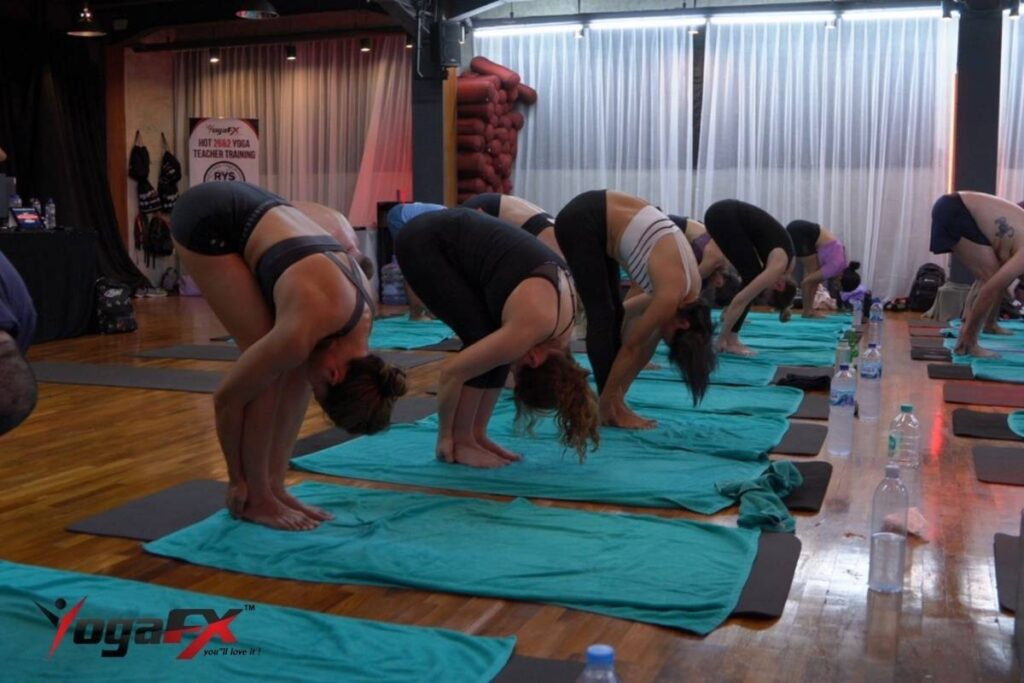
YogaFX operates two permanent hot yoga studios in Bali: Seminyak and Canggu. This is not a Yoga Retreat Bali Indonesia centre that hosts occasional yoga programming. These are dedicated studios that run daily Bikram 26 and 2 classes in natural tropical heat for resident practitioners, long-term visitors, and tourist drop-ins.
What Makes YogaFX Different From Other Bali Yoga Experiences
Most yoga experiences in Bali are offered at boutique retreat centres or wellness resorts that run occasional yoga classes as part of a broader wellness package. The yoga is typically general Vinyasa or Hatha, with rotating instructors of variable experience and quality.
YogaFX is a specialist studio. The practice is the original Bikram 26 and 2 sequence, every class, every day. Mr. Ian Terry, E-RYT 500, who trained for five years, from 2014 to 2019, directly with Bikram Choudhury, the founder of the Bikram Hot 26&2 method, and has 12,000 or more teaching hours, leads or supervises instruction.
The same fixed sequence allows practitioners to measure their progress from their first Bali class through their last, regardless of whether they are visiting for 3 days or 3 weeks.
Natural Heat: The YogaFX Difference
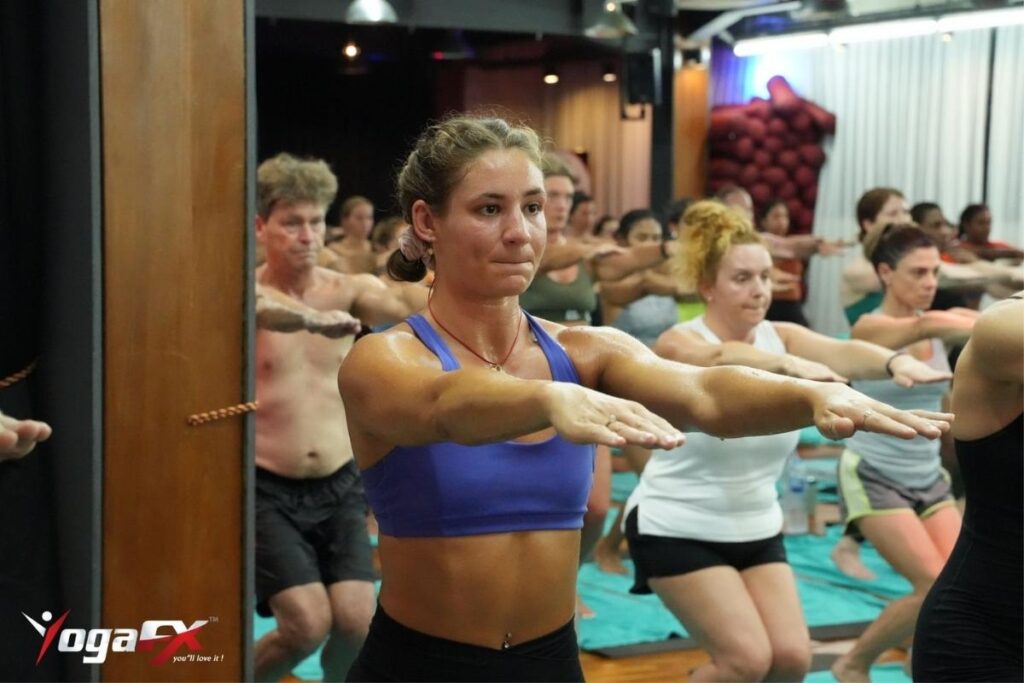
The most significant experiential difference between YogaFX and any hot yoga studio outside of Bali is the heat environment. Bali's ambient tropical climate provides 40 degrees Celsius with natural humidity above 70 percent without any electric heating. The studios use natural ventilation and Bali's climate to maintain the conditions the Bikram sequence was designed for.
Practitioners who have attended electric-heated studios in their home countries consistently report that YogaFX Bali produces a more comfortable, more effective hot yoga experience. The natural humid heat penetrates deep tissue more consistently than dry electric heat. The anterior body opening in postures like Bow, Camel, and Standing Bow is more accessible. Recovery between postures feels faster.
The Free 1-Day Guest Pass
Every first-time visitor to YogaFX receives a free 1-day guest pass. This is not a discounted introductory class. It is a full class at either the Seminyak or Canggu studio at no cost.
The practical purpose is to allow practitioners to experience the natural heat environment and the 26 and 2 sequence before committing to multi-day or multi-week practice.
For practitioners who are visiting Bali for the first time and are uncertain about hot yoga, this removes the financial barrier to trying the practice in its optimal environment.
Practical Details
- Studios: Seminyak (Jl. Pangkungsari Gg Jepun No.888, Kuta Utara) and Canggu
- Class times: morning and evening sessions daily at both studios
- Class duration: 60 and 90 minute formats available
- What to bring: 1 litre of water minimum, large non-slip mat towel (essential), yoga mat, moisture-wicking clothing, change of clothes for after
- Drop-in cost: standard Bali rates - check current pricing via WhatsApp before visiting
- Contact: WhatsApp Mr. Ian Terry directly for class times, guest pass, and teacher training enquiries
What to Expect in Your First Bali Hot Yoga Class
- The first 10 to 15 minutes feel overwhelming. This is universal and passes as heat adaptation begins. Stay in the room.
- Bali's natural humidity means you will sweat significantly from the moment class begins rather than gradually. The mat towel is not optional.
- You do not need to know the sequence in advance. The verbal instruction covers every posture. Follow the voice.
- Lying flat in Savasana whenever overwhelmed is the correct response to heat distress, not leaving the room. Every instructor expects this in the first 3 to 5 classes for new practitioners.
- Water: bring more than you think you need. Pre-hydrate throughout the day before class. Sip between postures rather than large volumes.
- The session is 90 minutes. Even if it feels impossible in the first 20 minutes, the standing series transitions into the floor series and the intensity changes character. Most practitioners who stay through the full class for the first time are surprised to complete it.
Yoga Retreat Bali: Budget Planning
| Cost Category | Daily / Per Visit | Notes |
|---|---|---|
| YogaFX drop-in class | USD 9 to 18 | Current pricing via WhatsApp. First class free for new visitors. |
| Quality guesthouse (Seminyak/Canggu) | USD 25 to 60 | IDR 400,000 to 950,000. Private room with AC. Book directly for best rates. |
| Daily food (local warungs and mid-range) | USD 15 to 35 | Breakfast: USD 3 to 6. Lunch: USD 4 to 8. Dinner: USD 6 to 15. |
| Transport (Grab/Gojek or scooter hire) | USD 5 to 15 | App-based ride share reliable in Seminyak and Canggu. Scooter hire: IDR 60,000 to 80,000 per day. |
| Total daily budget (budget) | USD 55 to 80 | Guesthouse, 1 class, food, local transport |
| Total daily budget (comfortable) | USD 90 to 150 | Better accommodation, 1 class, restaurant meals, some activities |
| 1-week total (budget yoga retreat) | USD 385 to 560 | Daily practice, comfortable but not luxury accommodation, all meals |
A one-week yoga retreat in Bali with daily YogaFX classes and comfortable accommodation costs approximately USD 400 to 600 all-in for most practitioners. The same week at a comparable quality yoga destination in Europe, the UK, or North America would cost USD 2,000 to 4,000 - see our honest guide to yoga and meditation retreats in Europe for a direct cost comparison. The cost advantage of Bali is not marginal. It is structural.
FAQ
Is Bali good for yoga retreats?
Yes, for several specific reasons. Bali has the most developed yoga infrastructure outside of India, with resident international instructors, purpose-built studios, established retreat venues, and decades of accumulated expertise. The natural tropical climate provides optimal conditions for hot yoga specifically. The cost of living makes high-quality yoga experiences accessible at a fraction of equivalent costs in Western markets. YogaFX in Seminyak and Canggu offers the only authentic Bikram 26 and 2 hot yoga studio experience on the island in natural heat without electric heaters. Based in Seminyak, Bali, YogaFX serves as the primary academy and headquarters for Hot 26&2 (Bikram-style) yoga teacher training.
What time of year is best for yoga in Bali?
April to June is the ideal period: dry season has begun, temperatures are warm but not at peak, crowds are manageable, and accommodation costs are below the July to August peak. September to October is also excellent and often overlooked. For hot yoga practitioners specifically, the wet season (November to March) provides the highest ambient humidity and is physiologically optimal for Bikram practice - the practical challenges are minimal for practitioners already choosing to practice in maximum heat.
Where to stay in Bali for yoga?
Seminyak and Canggu are the primary bases for hot yoga and Bikram practitioners because YogaFX studios are located in both areas. Seminyak offers more established infrastructure and is slightly more convenient for first-time visitors. Canggu has a younger, more active surf-yoga community atmosphere. Ubud is the traditional choice for multi-style retreat culture, meditation, and a more spiritual orientation. For YogaFX drop-in visits, guesthouses within 2 kilometres of the studios in either area are the most practical base.
Are Bali retreats worth it?
For yoga practitioners, yes. The combination of natural heat conditions (optimal for hot yoga), established studio infrastructure, resident experienced instructors, and dramatically lower costs compared to equivalent Western options makes Bali the highest-value yoga retreat destination globally. A week of daily practice with a world-class instructor in Bali costs less than two weeks of studio membership in London or New York.
Can beginners do yoga retreats in Bali?
Yes. Bali's yoga infrastructure accommodates all levels. At YogaFX specifically, the Bikram 26 and 2 sequence is designed for all levels: the verbal dialogue provides complete instruction, every posture has modifications, and first-time practitioners are specifically welcomed. The free 1-day guest pass removes the financial barrier to trying the first class. The primary beginner challenge is heat adaptation in the first 3 to 5 sessions, not the postures themselves.
How many days is enough for a yoga retreat in Bali?
A minimum of 5 to 7 days allows meaningful progress in practice and genuine acclimatisation to Bali's heat. 3 days is sufficient for a meaningful experience but does not allow full heat adaptation (which typically develops across 5 to 10 sessions) or time to settle into a daily rhythm. 2 weeks allows the development of real heat tolerance and the beginning of measurable flexibility and strength progress. The YogaFX 6-day teacher training intensive is structured around this minimum meaningful timeframe for immersive practice.