
To become a hot yoga instructor, build a steady heated practice, then complete a 200-hour training at a Yoga Alliance Registered Yoga School that teaches in a hot room. You learn the sequence, the spoken dialogue and practice teaching, register as an RYT 200, and audition at studios. Training takes six days to a year, depending on format.

That's the short version. The longer version matters, because the steps are simple but the choices inside them are not. So this guide walks through each step in order, with the real costs, the time it takes, and what the job looks like once you're teaching.
The YogaFX training it describes is led by Mr. Ian Terry, E-RYT 500, who has taught more than 12,000 hours and trained over 1,500 graduates from 80+ countries.
How to Become a Hot Yoga Teacher: 6 Steps
Here is the full path, from student to paid hot yoga instructor. Each step below is what a working hot yoga instructor went through before teaching their first paid class. Most people complete it in this order, although steps 2 and 3 often happen at the same time.
- Step 1: Build a consistent hot practice. Aim for regular classes in a heated room, so your body already knows the heat.
- Step 2: Choose a registered school. Pick a Yoga Alliance Registered Yoga School (RYS 200) that actually trains you in heat.
- Step 3: Pick a training format. Choose between an intensive, part-time, weekend or hybrid format.
- Step 4: Learn the method and practice teaching. Study anatomy, the sequence, the dialogue and posture clinic, then teach under supervision.
- Step 5: Graduate and register. Register your RYT 200 with Yoga Alliance and arrange instructor insurance.
- Step 6: Audition and build your schedule. Teach a test class, pick up open slots and grow from there.
The sections below explain each step. If you only want the timeline and cost, jump to the table in step 3.
Step 1: Build a consistent hot practice first
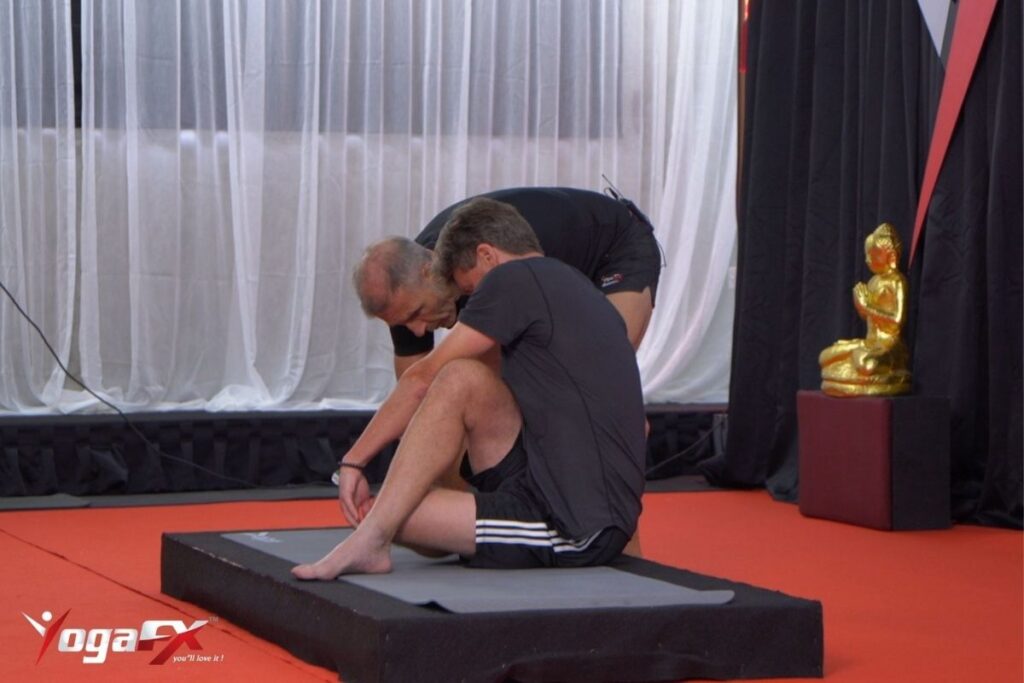
You don't need to be an advanced student to train as a hot yoga instructor. However, you do need to be comfortable in the heat. A typical hot class runs 90 minutes at around 40°C (105°F) with 40% humidity. During training you'll practise in that room every day, sometimes twice.
For that reason, most schools suggest a few months of regular hot classes before you enrol. Two or three classes a week is a sensible base. As a result, you arrive ready to learn how to teach, instead of fighting the heat for the first three days.
YogaFX itself has no formal prerequisites, and some graduates arrive as beginners. Still, preparing your body for the heat is the single biggest head start you can give yourself.
Step 2: Choose a Yoga Alliance registered school
Yoga Alliance isn't a government licence. Yoga teaching isn't licensed in most countries, and there's no single official hot yoga instructor certificate. Even so, the RYT 200 credential is what most studios and insurers ask to see, so it works as the industry standard.
Before you pay anything, check the school on the Yoga Alliance directory. Then ask three questions:
- Does the training happen in a heated room? A course taught at room temperature won't prepare you to teach at 40°C.
- Is it a fixed sequence or hot flow? A fixed 26&2 sequence and a hot vinyasa class need very different skills.
- How many hours do you teach, not watch? Supervised practice teaching is where confidence comes from.
Our guide to hot yoga certification explains the different credentials in more depth, including which one you actually need.
Certification Program: if you want to teach the original sequence, enroll in and graduate from a recognized teacher training program specializing in the 26&2 hot yoga lineage or Bikram method. YogaFX is one such Certification Program. Its Bikram Hot 26&2 Yoga Teacher Training MasterClass awards Yoga Alliance RYT 200 plus a Bikram Hot 26&2 200-hour certification.
Step 3: Pick the right training format
How long it takes to become a hot yoga instructor depends almost entirely on format. None of these formats is better in every case. Each one is a trade-off between speed, cost and how much life you need to put on hold.
| Format | Typical length | Best for |
|---|---|---|
| Hybrid intensive | Online study, then 6 days in person | People with full-time jobs who can take one week off |
| Full-time immersion | 3 to 4 weeks, or up to 9 weeks residential | People who can step away from work for a month or more |
| Part-time, in person | 4 to 6 months of evenings and weekends | People who want to stay home and train locally |
| Weekend modules | 6 to 12 months, one weekend a month | People who need maximum flexibility |
A hybrid format moves the theory online. That means anatomy, philosophy and the dialogue are studied at home, at your own pace. The in-person week then focuses on what can't be learned on a screen, such as heat, correction and teaching.
In contrast, a long residential course gives you more time in the room, but it costs more and takes you away from work for weeks. For a working adult who wants to become a hot yoga instructor without quitting a job, the hybrid route is often the only realistic one.
Step 4: Learn the method and practice teaching
Every credible 200-hour hot yoga instructor programme covers the same core areas, even if the balance differs. Here's what you'll study:
- Anatomy and physiology, including how heat affects the heart, hydration and connective tissue.
- Posture clinic, breaking down alignment, common errors and modifications for each posture.
- The dialogue, the word-for-word script used to teach the 26&2 sequence without demonstrating.
- Teaching methodology, such as voice, pacing, timing and reading a room of mixed levels.
- Practice teaching, where you teach real classes and get direct feedback.
- Ethics and business, covering safety, scope of practice and working with studios.
The dialogue is usually the biggest hurdle. It's roughly 30 pages of exact cueing, and you'll deliver it while watching 20 or more bodies at once. Our guide to memorising the 26&2 dialogue breaks it into stages, so it feels less like a wall of text.
Step 5: Graduate and register your RYT 200
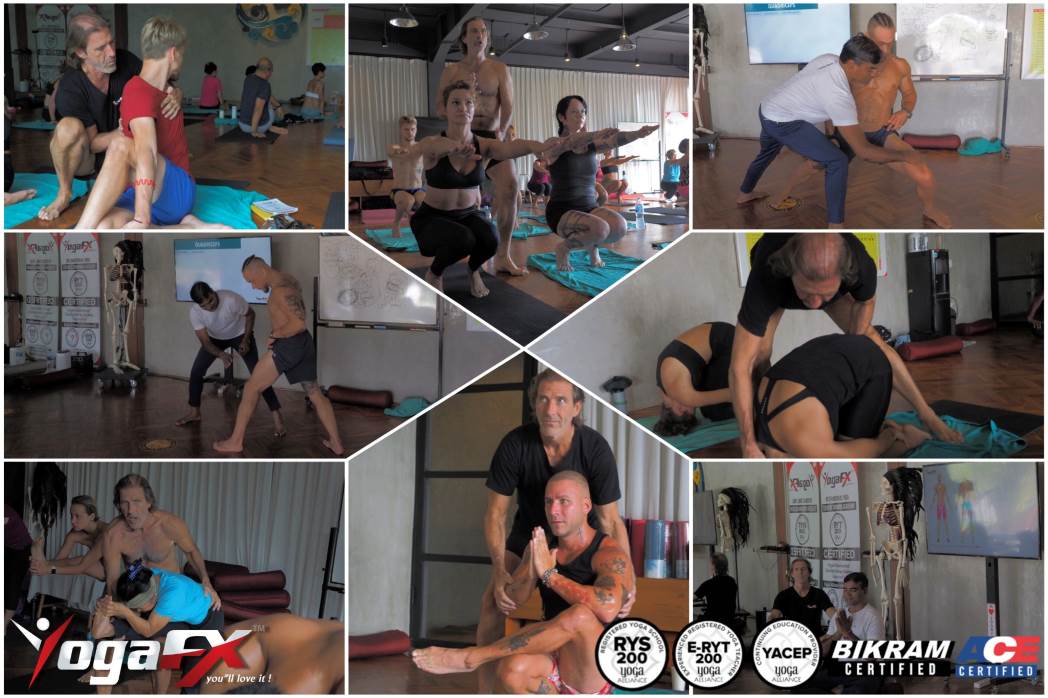
Finishing the course and registering are two separate steps. Many new teachers miss this. Once your school confirms your hours, you create a profile with Yoga Alliance and pay its fee to list yourself as an RYT 200.
Next, sort out insurance. Most studios ask every new hot yoga instructor to hold professional liability cover before the first class. Many also ask for a current first aid or CPR certificate, so check with the studio before your audition.
Step 6: Audition and build your teaching schedule
Most hot yoga studios hire a new hot yoga instructor through an audition. You teach part of a class, or a full class, while the owner watches. They're checking three things: whether you know the sequence cold, whether your voice carries in the heat, and whether you keep students safe.
New teachers usually start with the slots nobody else wants, like 6 am or Sunday evening. That's normal. As a result, you build a following in quieter classes before you're given peak times. Most instructors who last treat the first year as a period of building, not earning.
How Long Does It Take and What Does It Cost?
Short answer: six days to twelve months, and anything from about a thousand US dollars to several thousand across the market. Both numbers depend on format, location and what's bundled into the fee.
Price differences rarely come from the credential itself. An RYT 200 is still an RYT 200. Instead, the price reflects accommodation, meals, group size and how many hours you spend with the lead trainer. So compare what's included, not just the headline price.
Here's what to ask every school before you compare fees:
- Is accommodation included, and what type of room is it?
- How many contact hours are with the lead trainer, not assistants?
- Are there extra fees for manuals, exams or a second certificate?
- Is there a payment plan, and what happens to your deposit if dates change?
For reference, the YogaFX hybrid course is US$1,899 at the current Early Bird rate, against a normal price of US$1,999 for twin share. A single room is US$2,199. Instalments start from about US$250 a month, interest free. Either way, the fee includes two certificates, which we explain further down.
What a Hot Yoga Instructor Actually Does All Day
Certification is the entry ticket, not the job. Most new hot yoga instructors are surprised how little of teaching is about their own postures. Instead, it's about the room.
A typical teaching day starts early. You check the temperature and humidity, greet students by name, and settle anyone who looks nervous. Then you deliver 90 minutes of continuous instruction while scanning for anyone who is struggling with the heat or losing alignment.
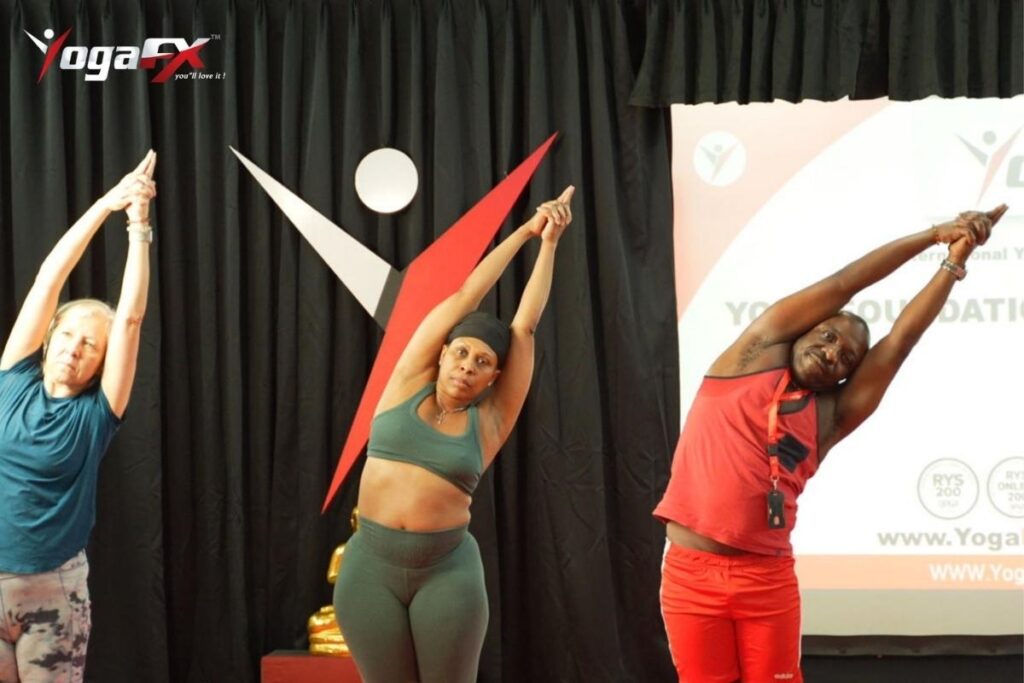
The skill that takes longest isn't memory. It's judgement. For example, a first-timer who is frightened of the heat might be next to someone with ten years of practice. You have to give both of them the right cue, at the right moment, in the same sentence.
Our article on teaching hot yoga beyond the dialogue goes deeper into that craft.
How much do hot yoga instructors make?
Most hot yoga instructors are paid per class rather than salaried. Rates vary widely by city, studio and experience. For that reason, a new hot yoga instructor at one or two studios shouldn't expect full-time income in the first year.
Instructors who do earn a full living usually combine several income streams:
- A regular schedule across two or three studios, so one closure doesn't empty your week.
- Private clients and small groups, which pay more per hour than studio classes.
- Workshops and retreats, often built around a single posture or theme.
- Leading trainings later, once you hold an E-RYT credential and years of teaching.
Our RYT 200 salary guide has the hourly, monthly and annual figures by region.
Common Mistakes New Hot Yoga Instructors Make
The first six months of teaching follow a pattern. Most mistakes come from nerves, not from a lack of knowledge. Here are the ones that come up again and again in practice teaching and in a new hot yoga instructor's first classes:
- Talking too fast. Nerves speed up your voice, so students fall behind the cue. Slow down until it feels too slow.
- Demonstrating instead of watching. In a 26&2 class, the teacher teaches by voice, so your eyes stay on the students.
- Ignoring the back row. Struggling students often hide at the back, which is exactly where a hot yoga instructor should look first.
- Correcting everyone at once. One clear correction to one student lands better than five general cues.
- Skipping hydration and recovery. Teaching several heated classes a week drains you too, so plan water, food and rest.
None of these mean you're a bad teacher. Instead, they're the normal stage between knowing the dialogue and owning the room. Supervised practice teaching, with direct feedback, is the fastest way through it.
What the Research Says About Teaching in Heat
Understanding the science helps a hot yoga instructor teach safely. It also helps you answer the questions every student asks.
A study of 90-minute hot yoga classes at the University of Wisconsin measured an average of 333 calories for women and 460 for men, with heart rate reaching about 80% of maximum (Porcari et al., 2014). That's real cardiovascular load. Therefore, a good hot yoga instructor watches breathing and colour, not just alignment.
Similarly, a 2025 systematic review of 43 studies with 942 participants found consistent gains in flexibility and well-being from Bikram-style practice (Willmott et al., 2025). As a teacher, you can share findings like these honestly. Just keep the language careful: say "research suggests" or "may help", and never promise a treatment.
Heat also adds risk. Dehydration, dizziness and overheating are the most common problems. Students with heart conditions, blood pressure issues or pregnancy should consult a healthcare professional before practising. A trained hot yoga instructor knows when to slow a student down, or send them out of the room.
Hot Yoga Instructor vs Bikram Teacher: What's the Difference?
Every Bikram teacher is a hot yoga instructor, but not every hot yoga instructor teaches Bikram. Hot yoga is a broad category. It covers any yoga in a heated room, including hot flow, hot pilates and the fixed 26&2 sequence. A Bikram or Original Hot 26&2 teacher, by contrast, teaches one specific sequence of 26 postures and 2 breathing exercises, using a scripted dialogue.
That difference changes your training:
- A hot flow teacher builds new sequences and usually teaches to music.
- A 26&2 teacher delivers the same sequence every class, by voice alone, without demonstrating.
- Both teachers need a solid grasp of heat physiology and safety.
Many studios now advertise the method as 26&2 or Original Hot Yoga. So if you're aiming for those studios, look for a course that certifies you in the fixed sequence as well as the RYT 200.
Become a Hot Yoga Instructor with YogaFX in Bali
If you want to become a hot yoga instructor in one focused week, YogaFX runs the Bikram Hot 26&2 Yoga Teacher Training MasterClass in Seminyak, Bali. It's a hybrid course: you study online first, then complete six days in person in natural tropical heat, with no electric heaters.
Graduates leave with two credentials. These are the Yoga Alliance RYT 200 and a Bikram Hot 26&2 200-hour international certification. That means you can teach general yoga and the fixed hot sequence.
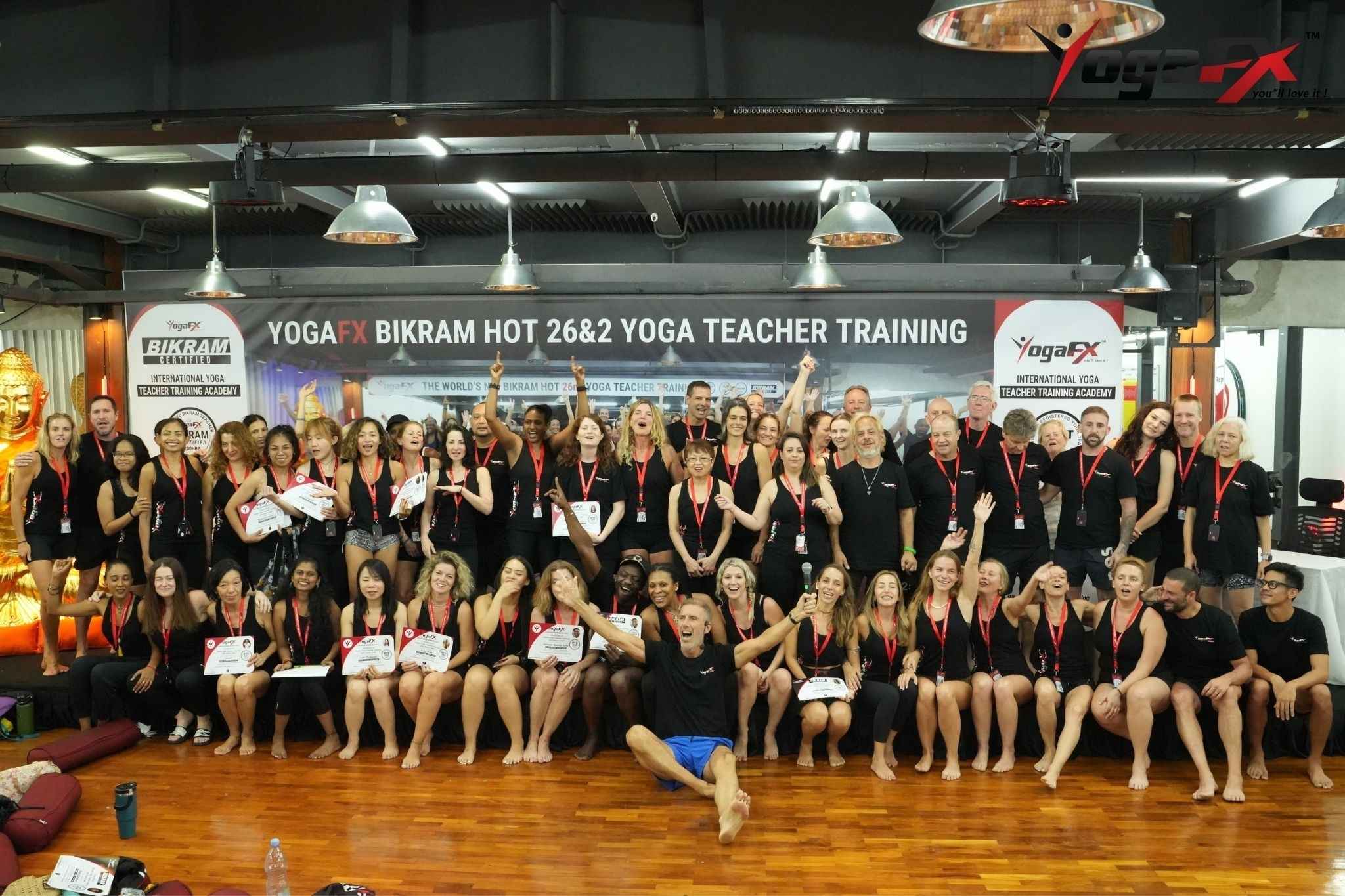
The course is led by Mr. Ian Terry, E-RYT 500. He trained for five years, from 2014 to 2019, directly with Bikram Choudhury, the founder of the method. He is also a Master Trainer for the Republic of Indonesia Yogasana Sports Federation.
The next batch checks in on Sunday 24 January 2027 and checks out on Friday 29 January 2027, at Soham Wellness Center in Seminyak. Graduates often describe the same thing in their reviews. One said she learned the difference between being a practitioner and being a teacher in that one week. Another arrived nervous and left certified and confident.
If you're weighing up formats, compare the full programme, dates and formats here, or message Mr. Ian directly with your questions about becoming a hot yoga instructor.
FAQ
How long does it take to become a hot yoga instructor?
It depends on the format. A hybrid intensive takes online study plus six days in person. Full-time immersions run three to nine weeks. Part-time courses take four to six months, and weekend modules up to a year. The best choice is the one you can finish without losing momentum, given your job and family commitments.
How much does it cost to become a hot yoga instructor?
Across the market, 200-hour hot yoga instructor training costs anywhere from about a thousand US dollars to several thousand. Most of the difference comes from accommodation, meals, group size and trainer contact hours, not the RYT 200 credential itself. Always ask what's included, whether there's a payment plan, and whether certificate or exam fees are extra.
Can you become a yoga teacher with no experience?
Yes, many schools accept students with little experience, and YogaFX has no formal prerequisites. However, a few months of regular hot classes makes training much easier. You arrive used to the heat, so you can focus on learning to teach instead of surviving the room. Beginners who prepare the dialogue early tend to do well.
How many hours do you need to become a yoga teacher?
Most studios expect at least 200 hours of training from a Yoga Alliance Registered Yoga School, which leads to the RYT 200 credential. That covers anatomy, methodology, philosophy and supervised practice teaching. Advanced teachers can add 300 more hours for RYT 500, but 200 hours is enough to start teaching hot yoga classes professionally.
How do you become a Bikram yoga teacher?
Complete a 200-hour training that certifies you in the 26&2 sequence and its dialogue, then register as an RYT 200 and audition at studios. YogaFX offers an independent Bikram Hot 26&2 training, not official Bikram Choudhury Teacher Training. Graduates receive Yoga Alliance RYT 200 plus a Bikram Hot 26&2 200-hour certification.
Still have questions? Message Mr. Ian and the YogaFX team on WhatsApp and we'll answer them personally.