26 and 2 yoga teacher training teaches exactly the same practice as Bikram yoga teacher training: the same 26 postures, the same 2 breathing exercises, the same room heated to 40 degrees Celsius, and the same scripted verbal dialogue delivered word for word. The name changed. The method did not. A graduate certified through a programme called "26 and 2" is qualified to teach in any studio using either name, and the reverse is equally true.

What actually confuses candidates is not the practice, it is the label. Studios, certifying bodies, and search results use "Bikram" and "26 and 2" almost interchangeably, and that inconsistency makes it hard to tell what you are signing up for, whether a certificate is legitimate, and whether the name on your credential will matter to a future employer. This guide answers those specific questions. For a full breakdown of programme costs, formats, and durations across the current market, see our complete guide to Bikram yoga teacher training.
Why the Name Changed From Bikram to 26 and 2
The sequence itself was systematised by Bikram Choudhury from classical Hatha postures decades ago, and it carried his name for most of its history. That changed after a series of misconduct allegations became public in 2016, followed by his departure from the United States and a 2023 criminal conviction in absentia. Studios, teacher trainers, and practitioners who had built careers around the method needed a way to keep teaching it without being associated with the man at the centre of the controversy. "26 and 2" describes the sequence itself rather than its creator, and the community adopted it as the neutral, method-first name.
This was only possible because of a legal precedent that predates most of the rebrand. A 2015 Ninth Circuit Court of Appeals ruling settled the question of whether a yoga sequence can be copyrighted, and the answer was no: postures and their ordering are not protected as intellectual property. That ruling is why independent schools, including YogaFX, have been able to teach the identical 26-posture sequence under a different name without infringing on anything. It is worth knowing before you enrol anywhere, because it comes up in almost every serious candidate's research.
Some studios kept "Bikram" because it is still what most people type into Google. Others switched fully to "26 and 2" or "Hot 26&2" to distance themselves from the founder. A smaller number use both names on the same page, which is where most of the search confusion comes from. None of this affects what you are trained to do once you are in the room. If you want the fuller story behind the split, our history of Bikram yoga and profile of Bikram Choudhury cover the controversy and its aftermath in more depth. For a plain guide to the practice itself, including what each part of the class is for, see the 26 and 2 yoga method as taught by YogaFX.
Does It Matter Which Name Is on Your Certificate?
Not in the way most candidates worry about. The credential that actually determines whether you can be hired, insured, and listed as a teacher is the Yoga Alliance RYT 200, and that designation is style-agnostic. It says you completed a 200-hour Registered Yoga School programme covering techniques, teaching methodology, anatomy, philosophy, and supervised practicum. Whether the school markets itself as "Bikram," "26 and 2," or "Hot 26&2" has no bearing on the RYT 200 itself, and it is fully verifiable by any employer at yogaalliance.org/find-a-school before you enrol anywhere.
What sits on top of the RYT 200 is a style-specific certificate, sometimes called a Bikram certification and sometimes a 26 and 2 certification, depending on the school. That second credential functions as a specialty add-on. It tells a hiring studio you were trained specifically in the fixed-sequence, scripted-dialogue format rather than a general yoga curriculum, and dedicated hot yoga studios often pay a premium for it. The exact wording on the certificate matters far less than whether the school issuing it can show a genuine, verifiable lineage and a real in-person practicum. A studio manager evaluating a job applicant is checking Yoga Alliance registration and teaching quality, not scanning for one specific brand word on a piece of paper.
If you are unsure what your eventual title should be once you are certified, this guide to yoga teacher titles and our full RYT 200 breakdown both cover how the credentialing language works in practice.
How to Verify a 26 and 2 Programme Is Legitimate
Because the naming is inconsistent across the market, the name a programme uses tells you almost nothing about its quality. Use these checks instead, regardless of what the school calls itself:
- Yoga Alliance registration: confirm the school is a Registered Yoga School at yogaalliance.org/find-a-school before paying a deposit. A programme that cannot be found there is not issuing a recognised credential no matter what it calls itself.
- Disclosed lead instructor lineage: ask directly who trained the lead instructor and when. A programme that is vague about this is usually vague for a reason.
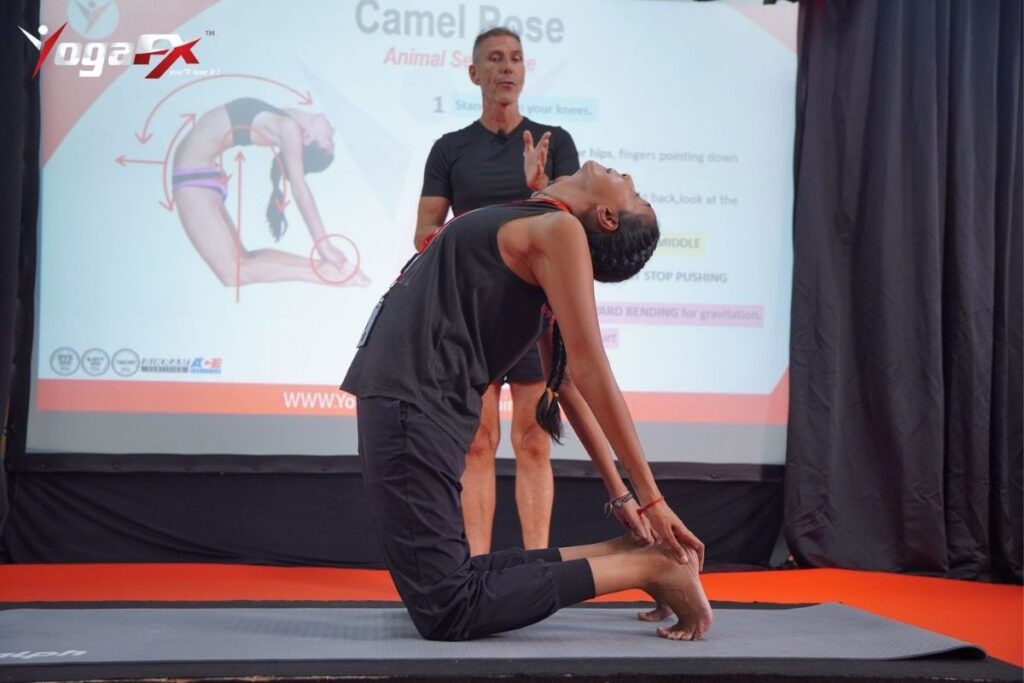
- Genuine in-person dialogue coaching: the 26 and 2 dialogue is roughly 45 minutes of scripted verbal instruction delivered from memory, and it cannot be certified competently through video alone. Live correction is what turns memorised text into something you can actually teach.
- A real heated practicum: teaching in a 40-degree room is a different skill from practicing in one, and a programme without supervised teaching time in genuine heat cannot fully prepare you for it.
Mr. Ian Terry of YogaFX, E-RYT 500, trained for five years, from 2014 to 2019, directly with Bikram Choudhury, the founder of the Bikram Hot 26&2 method. That lineage is publicly verifiable at yogaalliance.org and is one example of what a disclosed, checkable lineage looks like in practice, regardless of which name the resulting programme uses. For the full comparison of formats, durations, and costs across current 26 and 2 and Bikram programmes, our honest comparison of teacher training programmes and guide to becoming a certified teacher go into the detail this article does not.
Training With YogaFX Under Either Name
YogaFX runs a six-day hybrid intensive in Seminyak, Bali, priced from USD 1,999 to 2,199 depending on accommodation (Early Bird USD 1,899, limited seats). Every graduate leaves with dual certification, Yoga Alliance RYT 200 plus a Bikram Hot 26&2 certificate, so the name-on-the-certificate question resolves itself: you hold both. Training happens in Bali's natural tropical heat rather than an electrically heated room.
More than 1,500 graduates from over 80 countries have completed the programme since it started in 2017, and post-graduation support continues through lifetime WhatsApp mentoring with Mr. Ian Terry, no time limit. For what booking the intensive actually involves day by day, this guide to booking a Bali intensive covers dates and inclusions, and this piece on what graduates actually get is worth reading before committing a deposit to any programme, regardless of which name it trains you under.
FAQ
Is 26 and 2 yoga teacher training the same as Bikram yoga teacher training?
Yes. Both names describe the identical practice: 26 postures, 2 breathing exercises, 40 degrees Celsius, scripted verbal dialogue. The name changed after the 2019 controversy and Bikram Choudhury's 2023 conviction in absentia, not the method itself. A graduate of either name can teach in studios using the other.
Does my certificate need to say "Bikram" or "26 and 2" to be valid?
No. What matters is whether the underlying Yoga Alliance RYT 200 is genuine and verifiable at yogaalliance.org. The style-specific wording on top of that, Bikram or 26 and 2, is a naming choice made by the issuing school, not a separate legal credential employers check for by name.
How much does 26 and 2 yoga teacher training cost?
Pricing follows the same range as Bikram-branded programmes, since it is the same market: from roughly USD 1,999 (Early Bird USD 1,899, limited seats) for a hybrid intensive to USD 6,000 or more for extended residential formats. For a full cost and format comparison across current programmes, see our complete guide to Bikram yoga teacher training.
Why did the name change from Bikram to 26 and 2?
Bikram Choudhury stepped back from public teaching after misconduct allegations became public in 2016, later followed by his 2023 criminal conviction in absentia. Schools and instructors who wanted to keep teaching the sequence without being associated with him adopted "26 and 2," a name describing the method rather than its creator.
Is 30 too old to start 26 and 2 yoga teacher training?
No. There is no age limit for this training or for teaching afterward. Many YogaFX graduates began teaching in their 40s or 50s. The scripted dialogue format specifically suits older candidates, since it provides a complete instructional framework from day one rather than requiring free-form sequencing skill built up over years.