A Bikram yoga retreat is not the same thing as a general yoga retreat with some hot classes on the schedule. The structure, the heat environment, the daily practice volume, and the specific outcomes that draw practitioners to the format make Bikram retreats a distinct category - and the differences are worth understanding before booking.

This guide covers what to look for in a Bikram or 26 and 2 yoga retreat, the formats and destinations the community consistently recommends, how to evaluate what you are actually getting for the price, and why natural heat environments like Bali produce a qualitatively different retreat experience from any electric-heated studio setting.
The drop-in format also removes a variable that structured retreat programmes cannot: the absence of pre-set expectations. One practitioner who joined a YogaFX cohort for four consecutive morning sessions, without the full training context described two hours per class at 45 degrees with no distractions and no comfort zone as producing something he had not encountered in any previous practice context.
The concentrated daily format without retreat structure produces its own quality of immersion that is different from, not inferior to, the organised programme.
What Makes a Bikram Yoga Retreat Different
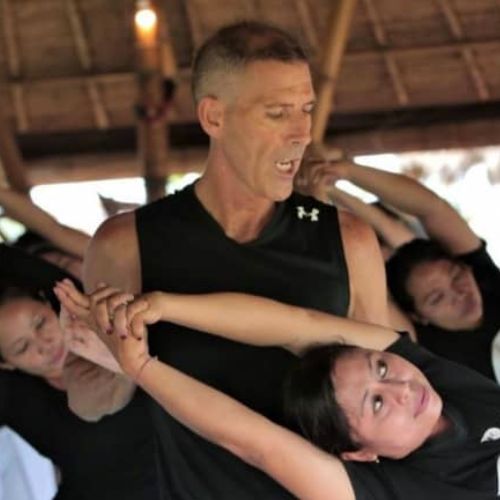
Most yoga retreats offer a mixture of yoga styles, meditation, spa treatments, and cultural activities, with yoga as one component among many. A Bikram or 26 and 2 retreat structures the entire programme around the fixed sequence: daily classes, often twice per day, with the support programming (nutrition, rest, posture clinics) designed to maximise what multiple consecutive days of practice produces.
The specific outcomes that draw practitioners to Bikram retreats rather than general yoga retreats:
- Accelerated flexibility gains. The cumulative thermal and mechanical preparation of multiple consecutive daily classes produces flexibility access that periodic practice at home cannot reach. Practitioners consistently report accessing posture depths during a retreat that were not available before it.
- Completed heat adaptation. For practitioners who practice weekly at home, heat adaptation never fully completes because the gaps between sessions allow partial regression. Four to seven consecutive daily classes complete the adaptation fully, producing the practice quality that only experienced regular practitioners experience at home studios.
- Mental reset. The structure of a Bikram retreat - daily class, rest, nutrition, repeat - removes the cognitive load of normal life and produces the mental quiet that practitioners describe as the reason they return to retreats. The Reddit r/HotYoga retreats thread (20 or more comments) reflects this: practitioners seeking retreats are primarily looking to "deepen their practice" and experience something qualitatively different from their weekly studio routine.
- Posture clinic and dialogue work. Quality Bikram retreats include posture clinic sessions - instructor-led workshops on specific postures that are not part of a regular 90-minute class. For teacher training candidates and working instructors, this is the single highest-value component of any Bikram retreat.
The Heat Environment Question: Why It Matters for Retreat Selection
Most Bikram retreats are held in electric-heated studios at 15 to 25 percent humidity - the standard urban studio specification. A smaller number operate in natural tropical heat environments, where ambient humidity above 60 to 70 percent produces the humid heat that the Bikram sequence was originally designed for. If you prefer an urban training staycation over a tropical island escape, check out the most authentic Bikram yoga studios in New York for your next break.
For retreat selection, this distinction matters more than it does for a single class, because the cumulative physiological effect over seven consecutive days is substantially different between the two environments. Practitioners who have experienced both consistently describe natural humid heat as producing deeper connective tissue release and a qualitatively different practice experience - the same 40-degree temperature but with the humidity specification that electric studios cannot replicate.
Bali's natural tropical climate provides the closest available approximation to the original heat environment: ambient temperature of 28 to 35 degrees Celsius with humidity above 70 percent year-round, without electric heaters. More on the heat and humidity specification and why it matters physiologically.
How to Evaluate a Bikram Retreat Before Booking
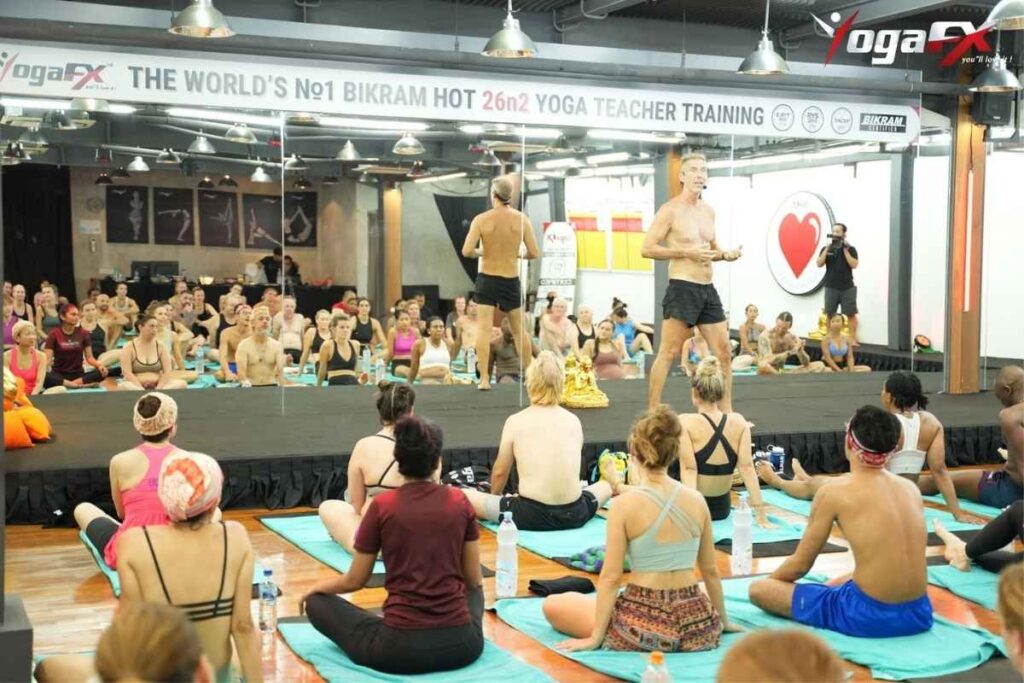
The booking platforms that dominate search results for this keyword - BookYogaRetreats.com, Retreat.guru, BookRetreats.com - aggregate thousands of listings across all yoga styles. Finding a genuinely Bikram-focused retreat among them requires specific criteria:
Verify the Sequence
Confirm the retreat teaches the fixed 26-posture sequence, not a general hot yoga or hot Vinyasa programme that uses "Bikram" or "hot yoga" as a descriptor. The retreat should explicitly state "26 and 2 sequence," "26 postures and 2 breathing exercises," or "original Bikram hot yoga" in its programme description, with a fixed 90-minute class format.
Verify the Lead Instructor's Credentials
Any retreat teaching the authentic Bikram sequence should be led by a Yoga Alliance RYT 200-registered instructor with a 26 and 2 or Bikram-specific style certification. For retreats with a teacher training or posture clinic component, the lead instructor should hold E-RYT 500 and have significant documented teaching hours. Verify credentials directly at yogaalliance.org before booking any retreat with an instructor you have not previously practiced with.
Clarify the Daily Schedule
A genuine Bikram retreat should include: the number of classes per day (most quality retreats offer one or two 90-minute classes daily), whether classes are the full 90-minute format or abbreviated, what the support programme includes between classes (posture clinics, nutrition, rest structure), and how much free time is built in for recovery. Daily double sessions (morning and evening classes) are physiologically demanding and require adequate recovery time and nutrition support to be sustainable across a week.
Understand What the Price Includes
Bikram retreat pricing on the aggregator platforms ranges from approximately EUR 310 to EUR 9,150 (BookYogaRetreats.com listing range), reflecting enormous variation in what is included. Before comparing prices, confirm: accommodation type and quality, meals (all-inclusive vs self-catered), airport transfers, the number of classes in the programme, whether posture clinics are additional cost, and what happens if you need to attend fewer sessions due to recovery needs.
Read Recent Reviews Specifically
Retreat quality can change significantly with instructor changes, ownership changes, or programme modifications. Reviews from the last 12 months are significantly more informative than cumulative ratings. Look specifically for reviews from practitioners who practice Bikram regularly at home - they will assess the retreat quality against a standard that casual visitors may not apply.
Retreat Formats: What Is Actually Available
Drop-In Studio Retreat (Bali, Thailand, Costa Rica)
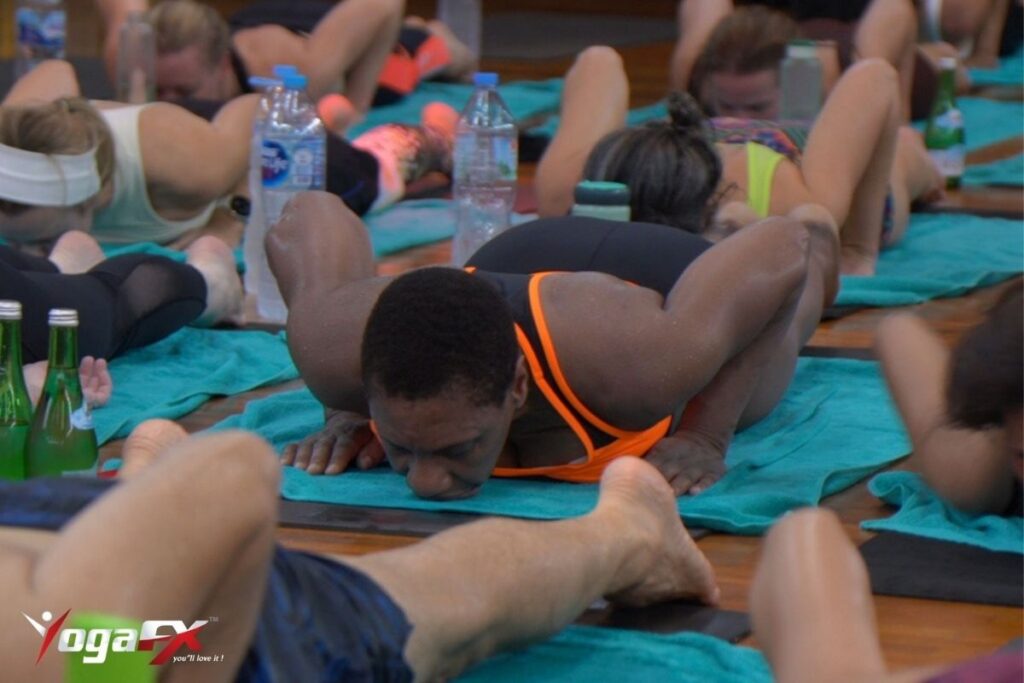
Self-organised practice retreat: practitioner books their own accommodation and classes at an established Bikram or 26 and 2 studio, practicing daily or twice daily for a self-determined period. The most flexible and often most cost-effective format. Requires some organisational effort but provides complete control over scheduling and accommodation standard. Bali is particularly well-suited to this format because of the density of studios, the accommodation options at all price points near practice locations, and the natural heat environment.
When packing your suitcase for a tropical or high-intensity training environment, make sure to pack premium, sweat-wicking shorts for Bikram yoga.
Structured Retreat Programme (3 to 7 Days)
An all-inclusive or semi-inclusive programme with fixed daily schedule, meals, accommodation, and structured activities alongside classes. Higher cost than self-organised but removes planning requirements. Most appropriate for practitioners who want the retreat to be fully arranged rather than planned themselves. The Retreat.guru top centres for this format include INSYNC CLUB, Byron Yoga Centre (Australia), Yandara Yoga Institute, and Sivananda Yoga Ranch - though not all of these are exclusively Bikram-focused. In Bali specifically, YogaFX runs its own fully structured retreat programme at a private North Bali sanctuary, led directly by Mr. Ian Terry, E-RYT 500, with limited places each season.
Teacher Training Intensive (5 to 14 Days)
The most immersive format and the one with the most specific outcomes for practitioners who want to teach or significantly deepen their practice. Combines the retreat practice experience with posture clinic work, dialogue coaching, and teaching methodology instruction. Produces both a practice transformation and a professional credential (RYT 200) simultaneously. The cost is higher than a practice-only retreat but covers more ground.
30-Day Challenge Retreats
Extended format: 30 consecutive days of practice, self-organised or at a studio with a formal challenge programme. The format that produces the most dramatic physiological transformation available in the Bikram format - full heat adaptation, complete flexibility and strength gains, and the habit formation that research associates with lasting practice change. More demanding logistically and physically than shorter retreats, but the outcomes are correspondingly more significant. Our 30-day challenge guide covers the week-by-week physiological progression in detail.
Top Destinations for Bikram and 26 and 2 Retreats in 2026
Bali, Indonesia - Natural Heat, Direct Lineage
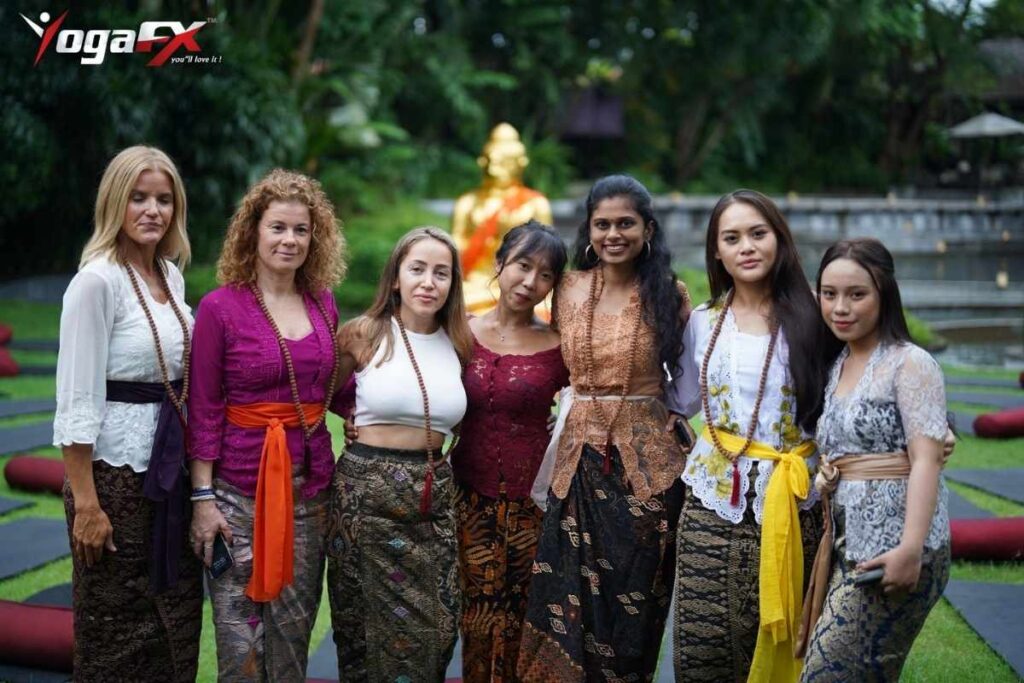
Bali occupies a unique position in the Bikram retreat landscape: natural tropical heat without electric heaters, a dense wellness infrastructure, accommodation at every price point, and multiple certified 26 and 2 studios in the Seminyak, Canggu, and Ubud corridors. For practitioners who want the authentic humid heat experience rather than electric dry heat, Bali is the only accessible tropical destination that combines all three - established studio infrastructure, certified instruction, and natural specification heat. Top-tier wellness destinations invest heavily in climate infrastructure; here is what the Bikram hot room specification means in practice for guest comfort.
YogaFX operates studios in Seminyak and Canggu with daily morning and evening classes. The Bali yoga retreat guide covers practical logistics: best areas to stay, travel timing, what to expect from the heat in different seasons, and how to organise a self-directed practice retreat alongside or separate from the structured teacher training programme.
Estimated cost for a self-organised 7-day Bali practice retreat (from major international hubs): flights USD 400 to 1,400 depending on origin, accommodation USD 40 to 200 per night depending on standard, daily class fees or week pass at local studios. Total: approximately USD 1,500 to 3,500 all-in from most Western origins - competitive with structured retreat packages in less accessible destinations. Connecting with your local community before traveling makes a difference; many Melbourne practitioners and Bikram retreats align during the winter season for overseas immersions.
Thailand - Established Hot Yoga Community
Koh Samui, Chiang Mai, and Bangkok all have established hot yoga studio communities with drop-in class infrastructure. The climate provides natural warmth (particularly in the south) though typically at lower humidity than Bali during certain seasons. Thailand's wellness retreat infrastructure is mature and well-priced, with a strong tradition of longer-stay wellness programmes.
California, USA - Highest Studio Density
California has the highest density of 26 and 2 yoga studios in the United States, concentrated in Los Angeles, San Francisco, and the coastal cities. The related search "best Bikram yoga retreats near California" and "best Bikram yoga retreats near Texas" reflect the significant practitioner base in the western US. BookRetreats.com lists 30 or more Bikram yoga retreats around California specifically, including desert hot springs options in the Palm Springs area. Electric heat only, no natural tropical heat equivalent.
Hawaii comes up in the same domestic-US searches, but the retreat market there skews toward general Vinyasa and wellness programming rather than genuine Bikram or fixed-sequence hot yoga, and it carries the added premium of being one of the most expensive states in the country to run any retreat. Our separate breakdown of the Hawaii yoga retreat market covers island-by-island pricing and why the natural-heat, Bikram-specific option remains stronger in Bali.
Mexico - Amansala and Tulum
Amansala (Tulum) appears in the Retreat Guru top Bikram retreat centres list and is one of the most established resort-style hot yoga retreat destinations in the Americas. The Tulum area's natural humidity and warmth makes it one of the better tropical alternatives to Bali for practitioners in North America who want natural heat without a Pacific crossing. Pricing is typically higher than Bali for comparable quality.
Australia - Byron Yoga Centre
Byron Yoga Centre (Byron Bay, NSW) appears consistently in the Retreat Guru listings for Bikram-adjacent retreats in Australia and is one of the most established yoga retreat centres in the Southern Hemisphere. For Australian practitioners, Byron Bay is the most accessible quality retreat destination without international travel. The subtropical climate provides more natural warmth than most Australian cities, though electric supplementation is still used for the hot room.
India - Rishikesh and Gujarat
Rishikesh is the traditional yoga retreat destination, though the majority of its offering is classical Hatha, Vinyasa, and Ashtanga rather than Bikram specifically. For practitioners interested in the cultural and historical roots of the yoga tradition alongside their Bikram practice, Rishikesh provides context that no other destination offers. Gujarat, as the location of the 2026 World Yogasana Sport Championship in Ahmedabad, is increasingly relevant to the competitive Yogasana community.
Europe - Portugal, Spain, and the UK
Portugal (Algarve and Comporta) and southern Spain have grown significantly as yoga retreat destinations for European practitioners. The summer climate provides natural warmth for outdoor practice, though indoor hot room infrastructure still requires electric heating. The UK has a substantial Bikram yoga community with established studios in London, Birmingham, and Manchester that run occasional retreat programmes. For practitioners based in New South Wales looking for exceptional local training facilities, Sydney's hot yoga studio options deliver premium amenities.
Retreat Cost Comparison
| Destination | Format | Estimated All-In Cost (7 Days) | Heat Type |
|---|---|---|---|
| Bali (self-organised) | Drop-in classes, own accommodation | USD 1,500 to 3,500 from most Western origins | Natural tropical heat, 70%+ humidity |
| Bali (YogaFX teacher training) | Structured programme, RYT 200 + Bikram cert + ACE | USD 1,999 (Early Bird 1,899, limited seats) programme + USD 400 to 1,400 flights + accommodation | Natural tropical heat, 70%+ humidity |
| Tulum / Mexico | Resort retreat, structured programme | USD 2,500 to 5,500 all-inclusive | Natural subtropical, electric supplement |
| California (structured retreat) | Resort or studio retreat, structured | USD 1,500 to 4,500 depending on accommodation | Electric heat, dry |
| Thailand (self-organised) | Drop-in classes, own accommodation | USD 1,500 to 3,000 from most Western origins | Natural warmth, electric supplement |
| Byron Bay, Australia | Structured retreat centre | AUD 2,000 to 5,000 all-inclusive | Subtropical, electric supplement |
| Portugal / Spain (summer) | Structured retreat | EUR 1,200 to 3,500 all-inclusive | Mediterranean natural warmth, electric hot room |
Practical Preparation for a Bikram Retreat
- Establish a baseline before you go. A retreat will be significantly more productive and more comfortable if you arrive with some existing heat adaptation. Aim for at least 5 to 10 Bikram or hot yoga classes in the month before your retreat departure.
- Pack for heat, not for yoga variety. Two to three sets of moisture-wicking shorts or leggings and tops is sufficient for a week-long Bikram retreat if you rinse after each class and dry overnight. Cotton is not appropriate regardless of how comfortable it is at home. Our Bikram yoga shorts guide covers fabric requirements in detail.
- Electrolytes, not just water. Daily practice at a retreat produces cumulative sodium and potassium depletion that water alone does not address. Electrolyte tablets or powders are worth carrying regardless of what the retreat programme provides.
- Build in rest days for multi-week stays. For retreats longer than seven days, one rest day per week is not weakness - it is what allows the physiological adaptation to consolidate rather than accumulate as fatigue. Most quality retreat programmes build this in; if yours does not, take it anyway.
- Communicate your practice history and any health considerations. Any reputable retreat will ask for this information. Providing it honestly allows the instructor to offer appropriate modifications and to monitor your heat tolerance in the early sessions.
Arrive without fixed expectations about what the experience will be. Practitioners who arrive expecting a relaxing wellness holiday and those who arrive expecting a punishing physical ordeal are both typically surprised by what actually happens. One practitioner described dreading every aspect of the experience in advance the heat, the duration, the intensity and found something he had not anticipated on the other side of the discomfort. Managing expectations before arrival is more useful than preparing for a specific outcome.
FAQ
What should I look for in a Bikram yoga retreat?
Confirm the retreat teaches the fixed 26-posture sequence (not general hot yoga), verify the lead instructor's Yoga Alliance RYT 200 credentials and Bikram or 26 and 2 style certification, clarify whether classes are the full 90-minute format, understand what the price includes (accommodation, meals, posture clinics, transfers), and read recent reviews specifically from practitioners who practice Bikram regularly. Heat environment, natural tropical versus electric heated, matters more over a week of daily practice than for a single class.
Where are the best Bikram yoga retreats in the world?
Bali is uniquely positioned for authentic Bikram retreat experience: natural tropical heat with 70 or more percent humidity (the original heat specification), established studio infrastructure, accommodation at every price point, and direct lineage instruction. For practitioners in North America, Tulum (Mexico) and California studios offer the best established infrastructure without Pacific travel. Australia practitioners have Byron Yoga Centre. For practitioners in Europe, summer retreats in Portugal and Spain are growing in quality and availability. Full listings across all destinations are available through BookYogaRetreats.com, Retreat.guru, and BookRetreats.com.
How much does a Bikram yoga retreat cost?
Structured all-inclusive retreat programmes range from approximately USD 1,500 to USD 5,500 for a 7-day programme including accommodation and meals, depending on destination and accommodation standard. Self-organised retreats (own accommodation, drop-in classes) can be completed for USD 1,500 to 3,500 all-in from most Western origins when Bali or Thailand is the destination, including flights. The YogaFX Bali teacher training programme at USD 1,999 (Early Bird 1,899, limited seats) (plus flights and accommodation) produces both a practice retreat and a professional credential (RYT 200 + Bikram certification + ACE) simultaneously, making it the highest value-per-dollar option for practitioners considering a Bikram retreat who also have any interest in teaching.
What is the difference between a hot yoga retreat and a Bikram yoga retreat?
A hot yoga retreat may teach any heated format - hot Vinyasa, Yin in heat, instructor-designed heated classes, or a mix of formats in a warm environment. A Bikram yoga retreat specifically teaches the fixed 26-posture sequence in a specified heat environment (40 degrees Celsius with 40 percent humidity where possible), with the consistent dialogue and format that the method requires. The booking platforms aggregate both under "Bikram" or "hot yoga" retreats, verifying the specific format before booking is essential if the 26-posture sequence is what you are looking for.
Do I need prior Bikram yoga experience to attend a retreat?
Not for most retreats, which welcome beginners, but prior experience significantly improves the retreat experience. Arriving with at least 5 to 10 Bikram classes means heat adaptation is partially established before the retreat's consecutive daily practice begins, the early sessions are more productive and more comfortable. Arriving without any hot yoga experience means the first two to three days of a retreat are primarily heat adaptation rather than deepened practice. Most quality retreats are structured to accommodate this, but the outcome at day seven is proportionally better with a baseline practice established before arrival.