
A yoga retreat in Hawaii typically means a general wellness or Vinyasa-style retreat on Maui, Kauai, the Big Island, or Oahu, running 3 to 7 days and costing USD 1,500 to 4,000 before flights. Genuine Bikram or fixed-sequence hot yoga retreats are rare in the islands.

Hawaii's retreat market sells a specific thing well, natural beauty and a slower pace, but it is also one of the most expensive destinations in the world to deliver that experience, and the price reflects Hawaii's cost of living as much as the retreat programme itself.
Understanding that distinction before comparing specific listings avoids the common mistake of judging Hawaii retreat pricing against a destination with a fundamentally different cost baseline.
What Hawaii's Yoga Retreat Market Actually Looks Like
The four main islands each have a distinct retreat character. Maui carries the most established wellness-retreat reputation, with a concentration of boutique and luxury-oriented programmes, particularly around Upcountry and the North Shore. Kauai, the quietest and least developed of the four, attracts retreats built around silence, nature immersion, and smaller group sizes.
The Big Island splits between the sunnier, drier Kona side and the wetter Hilo side, with retreats spread out enough that transportation between activities is a real planning factor. Oahu, dominated by Honolulu and Waikiki, has the fewest dedicated retreat centres relative to its visitor volume, since most retreat operators prefer the quieter neighbour islands.
Logistics matter more here than in most retreat destinations, since Hawaii is technically domestic for US travellers but functions like an international trip for almost everyone else.
Direct flights exist from major West Coast hubs to Honolulu, Maui, and Kona, but travellers from the East Coast, Europe, or elsewhere typically face a long-haul flight plus a connection, and moving between islands for a multi-island retreat itinerary means an additional short inter-island flight on top of that.
This is a meaningfully different logistics picture from a single-airport destination, and it is worth checking exactly which airport a retreat expects arrivals through before booking, since Kona, Hilo, Kahului, and Honolulu are not interchangeable for trip planning purposes.
Style-wise, Hawaii's retreat market skews toward Vinyasa, Hatha, and general wellness programming that pairs yoga with spa treatments, hiking, or ocean-based activities. Genuine Bikram or fixed-sequence hot yoga is uncommon; Hawaii's retreat branding leans on natural beauty and slower pacing rather than a specific heated, structured method, which is a different value proposition from a certification-focused or method-specific intensive.
What It Costs, and Why It Costs More Than Almost Anywhere Else
Hawaii's retreat pricing has to be understood against the state's overall cost structure. According to Hawaii cost-of-living data, expenses across the islands run 50 to 90 percent above the US mainland average depending on category, and the average statewide hotel rate hit USD 342 per night in 2025 according to Hawaii Tourism Authority visitor statistics.
Retreat pricing sits on top of that baseline, not separate from it.
| Format | Typical Duration | Typical Cost (USD) | What's Usually Included |
|---|---|---|---|
| Weekend retreat | 2-3 days | 800-1,500 | Shared or private room, some meals, group sessions |
| Standard retreat | 5-7 days | 1,800-3,000 | Private or shared room, most meals, daily practice |
| Boutique/luxury retreat | 5-7 days | 3,500-6,000+ | Private villa or resort room, full board, spa add-ons |
| Silent or wellness-intensive (Kauai-style) | 4-7 days | 2,000-4,000 | Simple accommodation, meals, structured daily schedule |
None of this includes flights, which for most travellers outside the West Coast add a meaningful premium on top of an already expensive base rate. A retreat priced similarly to a Bali or Costa Rica programme on paper often ends up considerably more expensive once flights, inter-island transport, and Hawaii's baseline food and lodging costs are factored in.
Seasonality affects Hawaii retreat pricing less dramatically than tropical destinations with a genuine rainy season, since the islands maintain relatively stable weather year-round, but it still matters. Winter months, particularly late December through mid-January and around spring break, coincide with peak visitor demand and correspondingly higher accommodation rates, since Hawaii draws heavily from mainland travellers escaping cold weather during exactly that window.
Shoulder seasons, April to May and September to November, typically offer more availability and occasionally lower rates on accommodation, though retreat programme fees themselves tend to stay fixed regardless of season.
For travellers whose primary goal is recovering from burnout or acute work stress rather than a general wellness holiday, it is worth being specific about what a Hawaii retreat is actually built to deliver.
Most Hawaii wellness retreats are structured around a relaxed, largely optional schedule rather than a fixed daily reset routine, which suits someone who wants unstructured downtime but is a different product from a structured, twice-daily programme aimed specifically at breaking a burnout cycle.
Our Burnout Reset Retreat guide covers a more targeted, structured format built specifically for that goal, capped at a small group size, which is a useful comparison point if a relaxed itinerary is not actually what the situation calls for.
The Question Worth Asking Before Booking
Because Hawaii's retreat market sells natural beauty and atmosphere as much as programme structure, the most useful question before booking is not "is this a good retreat" but "is this the specific format I actually want." A retreat priced at the luxury end with a light, optional yoga schedule is a genuinely different product from a structured retreat with twice-daily practice, even when both use identical marketing language and photography.
The same checks that apply to any retreat destination apply here: ask for a published, hour-by-hour daily schedule rather than a themed itinerary description, confirm group size and whether it is capped, and ask directly what style of yoga is taught and by whom.
Given how much of Hawaii's retreat pricing reflects location and accommodation rather than programme depth, a clear answer to "what exactly happens each day" matters more here than in a lower-cost destination, since there is less room in the budget to absorb a mismatch between expectation and delivery.
Our broader guides to yoga retreats in Bali and Bali's wellness retreat studios apply the same vetting framework to a lower-cost comparison destination, if it helps to see how the questions play out somewhere with a different cost baseline.
Hawaii vs Bali for a Yoga Retreat
Hawaii and Bali both trade on natural-setting appeal, but the practical realities of each destination differ substantially.
| Factor | Hawaii | Bali (Seminyak/Canggu) |
|---|---|---|
| Dominant style | Vinyasa, Hatha, general wellness; hot yoga rare | Wide mix, plus a concentrated Bikram/Hot 26&2 lineage presence |
| Baseline cost of living | 50-90% above US mainland average | Significantly below US and most Western destinations |
| Typical 5-7 day retreat cost | USD 1,800-6,000+, before flights | USD 800-3,000, before flights |
| Heat method | No natural heated-room tradition | Natural tropical heat used deliberately in Bikram-format studios |
| Market maturity | Well-established wellness-tourism market | Well-established, with a more concentrated hot-yoga specialist niche |
If the specific appeal is Hawaiian scenery and a domestic-feeling trip for US-based travellers, Hawaii delivers something Bali cannot replicate. If the priority is value, a heated fixed-sequence method, or a certification alongside the retreat experience, Bali's cost structure and Bikram-lineage studios make it a materially different proposition, not just a cheaper version of the same thing.
Why Some Travellers Choose Bali and YogaFX Instead
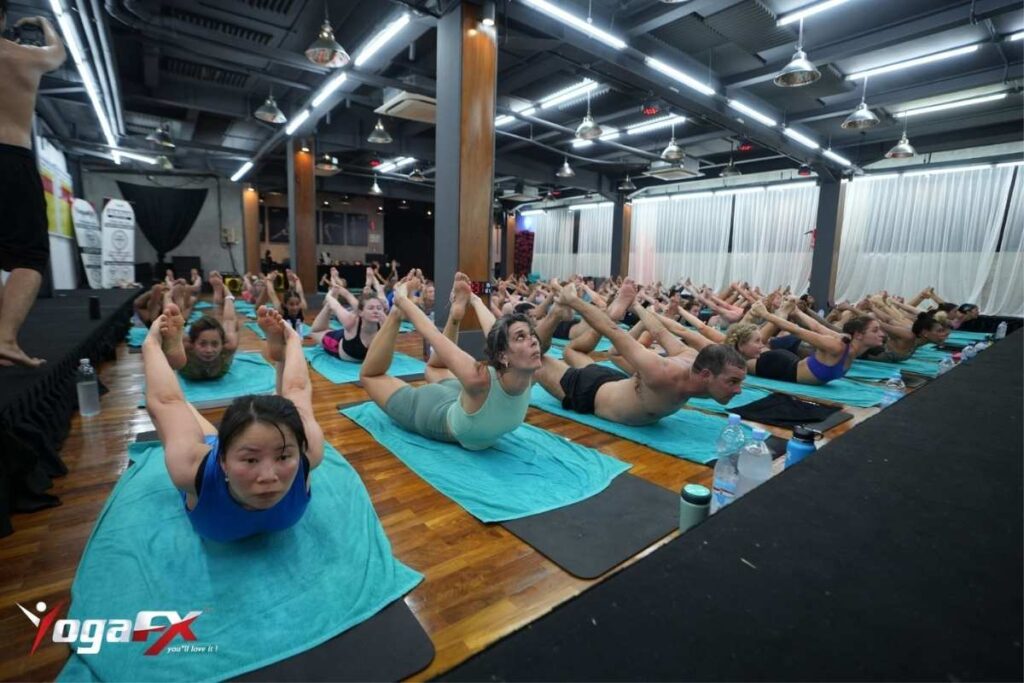
Headquartered in Bali, YogaFX is a prominent Hot 26&2 yoga teacher training academy with studios in Seminyak and Canggu, running its retreat and teacher-training programmes around the Original Hot 26&2 Yoga method practised in Bali's natural tropical heat rather than an electrically heated room.
Mr. Ian Terry, E-RYT 500, points out that the calculation for many candidates comparing Hawaii and Bali comes down to what the retreat budget can actually buy: in Hawaii, a mid-range week often goes toward accommodation and location premium first, with the yoga programme itself a smaller share of the total cost; in Bali, the same budget stretches further, which typically means either a longer stay, better accommodation, or a more intensive programme for the same spend.
A 2025 systematic review covering 43 studies and 942 participants (Willmott et al., PMC12488547) documented consistent flexibility and well-being improvements specifically from heated, fixed-sequence formats like the one taught at YogaFX, a different evidence base than the general Vinyasa and wellness programming that dominates Hawaii's retreat market. For travellers who specifically want that method, alongside a retreat setting, Bali offers a more concentrated option than Hawaii's market currently does.
The practical comparison also extends to what happens after the retreat ends. A Hawaii wellness retreat typically concludes with the trip itself, a relaxing week that ends when the flight home departs.
A structured, method-specific retreat built around daily practice more often leaves a habit and a skill behind it, something the traveller can continue at a studio back home rather than only a memory of the setting.
Neither outcome is wrong, but they are different products, and being honest about which one a given trip is actually optimised for avoids the common disappointment of expecting a life-changing reset from what is, structurally, a well-appointed vacation.
None of this makes Hawaii the wrong choice. For a domestic US trip built around scenery and a general wellness reset, Hawaii answers that need directly.
For a specific heated method taught by an instructor with a direct, verifiable Bikram lineage, at a materially lower cost, Bali and a programme like our comparison of Bikram yoga retreats answers a different question.
Anyone still deciding which retreat format fits their goals at all may find our broader guide to what a retreat actually is useful before comparing specific destinations.
FAQ
How much does a yoga retreat in Hawaii cost?
A standard 5-to-7-day yoga retreat in Hawaii costs USD 1,800 to 6,000 or more before flights, depending on island and accommodation type. Weekend formats run USD 800-1,500. Hawaii's overall cost of living, 50 to 90 percent above the US mainland average, drives much of this pricing.
Which Hawaiian island is best for a yoga retreat?
Maui has the most established wellness-retreat scene. Kauai suits candidates wanting quiet and nature immersion. The Big Island offers more space and variety but requires more travel between areas. Oahu has the fewest dedicated retreat centres relative to its visitor volume. The right choice depends on pace and setting preference more than programme quality.
Are there hot yoga or Bikram retreats in Hawaii?
Genuine Bikram or fixed-sequence hot yoga retreats are uncommon in Hawaii. The islands' retreat market centres on Vinyasa, Hatha, and general wellness programming rather than a heated, scripted method. Candidates specifically wanting that format typically find more concentrated options in destinations like Bali.
Is a Hawaii yoga retreat worth the cost compared to other destinations?
It depends on the priority. For scenery and a domestic-feeling trip for US-based travellers, Hawaii offers something few other destinations can. For value or a specific heated yoga method, destinations with a lower baseline cost of living, such as Bali, typically deliver more programme for the same budget.
This article covers retreat formats, cost, and destination comparison. It is not medical advice; anyone with an existing health condition should consult a healthcare professional before beginning an intensive physical practice.