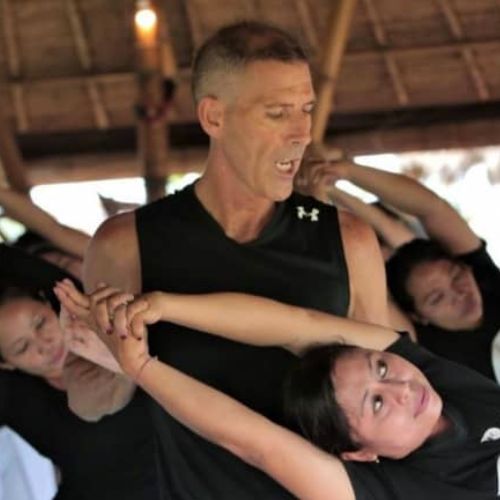
A yoga and meditation retreat in Europe typically runs 3 to 10 days and costs EUR 400 to 2,500, depending on accommodation and duration. Retreats are concentrated in a handful of regions with established retreat infrastructure: Portugal (Algarve, Alentejo), Spain (Andalusia, the Balearic Islands), Italy (Tuscany, Umbria), Greece (the islands), and France (Provence). Most combine daily yoga practice, guided or silent meditation, and plant based or vegetarian meals in a rural or coastal setting.

This guide covers what to actually expect from a European yoga and meditation retreat, the main regional options and how they differ, and what genuinely varies in cost and quality. It also covers something worth knowing if you're weighing your options more broadly: why a growing number of travellers are choosing a natural heat retreat in Bali instead, including the option YogaFX runs there directly.
What a Yoga and Meditation Retreat in Europe Actually Involves
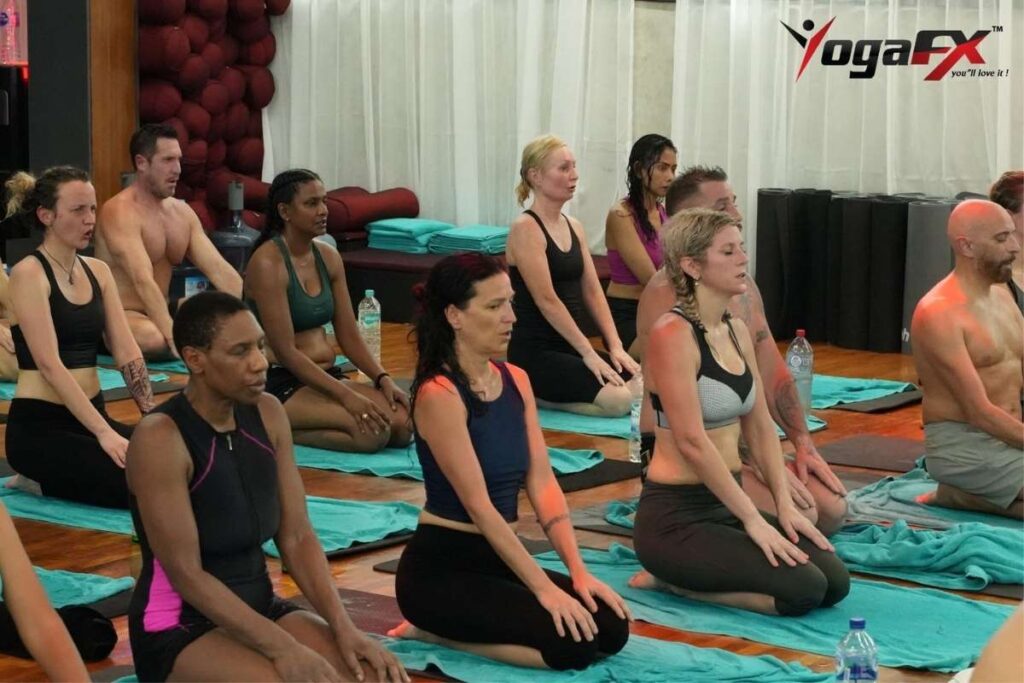
Most European retreats follow a similar daily rhythm. An early yoga session, often gentle Hatha or Vinyasa, is followed by a mid-morning break, then a guided or silent meditation block. The afternoon is usually free time or an optional excursion, and a second, more restorative practice closes the day in the evening. Meals are typically vegetarian or fully plant based and included in the retreat price.
The specific style of yoga taught varies a lot by retreat. Some centre entirely on Hatha and restorative practice, others bring in Vinyasa flow, and a smaller number focus specifically on silent or Vipassana style meditation with only light physical practice alongside it.
Group sizes range just as widely, from intimate retreats of 8 to 12 participants in a rural farmhouse to larger resort style retreats hosting 40 or more guests.
Smaller retreats generally offer more individual attention from instructors. Larger ones often have more elaborate facilities and a wider range of scheduled activities.
Main Regions for Yoga and Meditation Retreats in Europe
| Region | Known For | Typical Season | Typical Cost (per week) |
|---|---|---|---|
| Portugal (Algarve, Alentejo) | Coastal settings, strong value for money, well established retreat infrastructure | Year round, peak April to October | EUR 700 to 1,600 |
| Spain (Andalusia, Balearics) | Mountain and countryside settings, wide range of price points | Year round, peak May to September | EUR 800 to 2,000 |
| Italy (Tuscany, Umbria) | Countryside villas, food focused retreats, higher average price point | Peak May to September | EUR 1,200 to 2,500 |
| Greece (islands) | Beach adjacent retreats, strong for combined yoga and swimming based retreats | Peak June to September only | EUR 900 to 2,000 |
| France (Provence, Dordogne) | Countryside and farmhouse settings, often smaller group sizes | Peak May to September | EUR 1,000 to 2,200 |
Seasonality is a genuine constraint across nearly all of these regions. Outside the April to October window, many countryside retreat venues close entirely or run a reduced schedule, since most are not built or heated for year round operation. That's one of the most practical differences between the European retreat circuit and a tropical destination like Bali, where retreat facilities run year round with no seasonal shutdown.
What to Check Before Booking
- What style of yoga and what level of meditation experience is expected. A retreat billed as "yoga and meditation" can mean anything from light guided breathing exercises to multi hour silent sitting blocks. Ask before booking if you have a strong preference either way.
- Who is actually leading the sessions, and what their training background is. Retreat marketing pages often talk up the setting far more than the instructor's credentials. Ask directly what certification the lead teacher holds and how many years they've been teaching.
- What is and isn't included in the quoted price. Airport transfers, single room supplements, massage or spa add ons, and excursions are frequently priced separately from the base retreat fee. Get the fully inclusive total before comparing prices across retreats.
- The cancellation and deposit policy. Many European retreats require a non refundable deposit and full payment 30 to 60 days before arrival. Confirm this in writing before committing, especially for retreats booked far in advance.
- Group size and room arrangement. Shared room retreats are typically 20 to 40 percent cheaper than private room options at the same venue. Decide upfront how much privacy you actually need for the retreat to feel restful rather than draining.
Why Heat and Environment Matter More Than Most Retreats Admit
Most European retreat marketing focuses on the setting: a farmhouse, a cliff top, a vineyard. It rarely mentions climate as a practice variable, but it's a real one.
Research on yoga's stress regulating effects, summarised by Johns Hopkins Medicine, points to consistent practice frequency and physical comfort during practice as meaningful factors in how much benefit a person actually gets from a retreat.
A cool countryside studio in October asks the body to warm itself up from nothing before it can stretch safely. A naturally warm environment starts practitioners further along that curve.
Mr. Ian Terry, E-RYT 500 and founder of YogaFX, has taught yoga in both settings extensively, including five years, from 2014 to 2019, training directly with Bikram Choudhury, the founder of the Bikram Hot 26&2 method.
His view, shared often with new students, is straightforward: natural heat doesn't just change comfort, it changes what the body can safely access in a single session, and that's the main reason YogaFX's own retreat programme is built around Bali's tropical climate rather than an indoor heated room.
The Bali Alternative: Natural Heat, Year Round Season
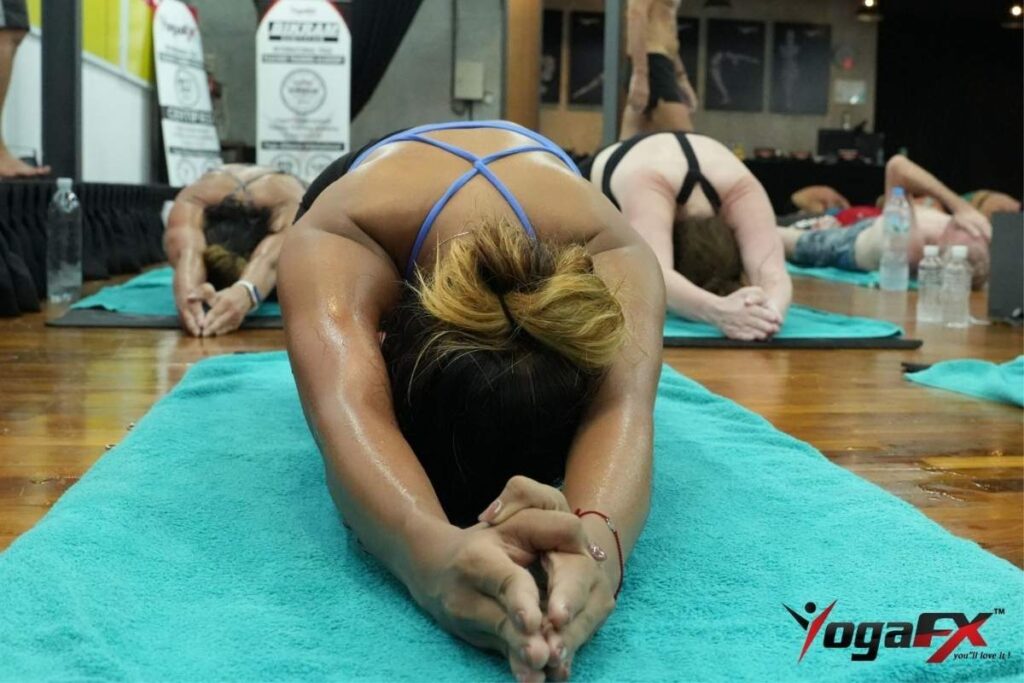
For travellers who've looked at the European retreat circuit and found the seasonal limitations or the price per week frustrating, Bali is worth considering directly. Unlike the April to October window most European countryside retreats operate within, Bali's tropical climate supports outdoor and semi outdoor practice year round, with no seasonal shutdown.
YogaFX runs a dedicated retreat programme in North Bali through its sister site, yogaretreatsbali.com, at a private sanctuary setting away from the busier tourist areas of the island. It's led directly by Mr. Ian Terry, who brings the same natural heat philosophy that shapes YogaFX's Bikram Hot 26&2 teacher training programme in Seminyak.
If you're weighing a European retreat against a Bali option, that's the best place to see current programme dates and what's included.
Europe vs Bali: Quick Comparison
| Factor | Europe Retreats | Bali Retreats |
|---|---|---|
| Season | Mostly April to October, many venues close in winter | Year round, no seasonal shutdown |
| Climate | Temperate, indoor heating needed most of the year | Tropical, natural warmth supports practice year round |
| Typical flight time (from UK/Europe) | 1 to 4 hours | 15 to 18 hours |
| Typical week long cost | EUR 700 to 2,500 | Varies by programme, check current pricing directly |
| Setting variety | Countryside, coastal, and mountain options across many countries | Tropical jungle, rice terrace, and coastal settings concentrated on one island |
Neither option is objectively better. The right choice depends on how much travel time you're willing to commit, whether a tropical climate is part of what you actually want from the experience, and which regional culture and setting appeals to you more.
Europe offers far shorter flight times for most European travellers and a wide range of regional settings within a few hours of each other. Bali offers a longer flight but a genuinely different, year round tropical practice environment.
If you're specifically researching teacher training rather than a retreat, the calculation looks a little different from region to region: see our overviews of yoga teacher training across Europe and Bikram yoga teacher training in Spain specifically.
FAQ
How much does a yoga and meditation retreat in Europe cost?
A typical week long retreat costs EUR 700 to 2,500 depending on region, accommodation type, and whether meals and airport transfers are included. Portugal and Spain tend to offer the strongest value, while Italy and France run at the higher end of the range. Always confirm the fully inclusive total, since add ons like single room supplements and excursions are often priced separately.
What is the best time of year for a yoga retreat in Europe?
Most European countryside and coastal retreat venues operate between April and October, with May, June, and September generally offering the best balance of good weather and lower prices than the July to August peak. Many venues close or significantly reduce their schedule outside this window, since they aren't typically built for year round operation.
What's the difference between a yoga retreat and a meditation retreat?
A yoga retreat centres on physical practice, typically with meditation included as a supporting element. A dedicated meditation retreat, including silent or Vipassana style formats, centres on extended sitting practice, often with minimal or no physical yoga component. Retreats marketed as "yoga and meditation" combine both, but the balance between the two varies a lot by programme, so it's worth asking directly before booking if you have a strong preference.
Is Bali a good alternative to a European yoga retreat?
For travellers specifically drawn to a warm climate, year round practice environment, yes. Bali's tropical climate means retreats there operate without the seasonal shutdown most European countryside venues face outside April to October. The trade off is a considerably longer flight for most European travellers. YogaFX runs a dedicated Bali retreat programme at yogaretreatsbali.com for anyone comparing the two options directly.
Do I need prior yoga or meditation experience to attend a retreat?
Most yoga and meditation retreats in Europe are designed to accommodate beginners, with modifications offered for those newer to physical practice. Silent meditation retreats and Vipassana style programmes are the exception. Some require prior meditation experience or a preparatory orientation, since extended silent sitting can be genuinely challenging without any prior grounding. Always check the specific retreat's prerequisites before booking.