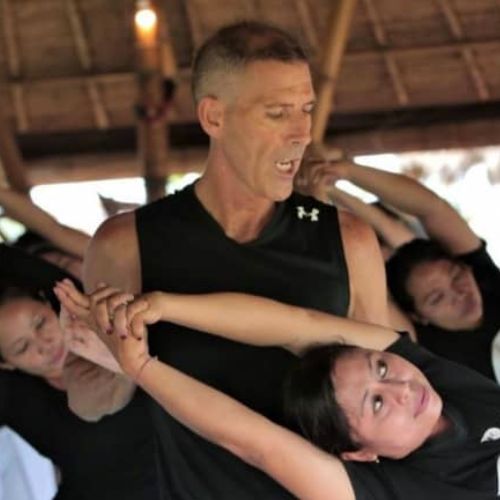
Sydney has one of the most active hot yoga communities in the Southern Hemisphere. The city has several genuine Bikram and 26 and 2 studios with long histories and established local followings, and a significant number of Sydney-based practitioners travel to Bali each year for teacher training, retreats, and the specific experience of practicing in natural tropical heat rather than an electric-heated room.

This guide serves both audiences: Sydney practitioners who want to know what to look for in an authentic 26-posture studio, and serious practitioners who are considering teacher training, a Bali yoga retreat, or the experience of practicing in the natural heat environment the sequence was designed for.
Sydney's hot yoga scene is concentrated in the inner east, with additional options in the CBD fringe, the eastern suburbs, and the Hills District to the northwest. Every studio in the city, regardless of neighbourhood or reputation, relies on electric heating. YogaFX in Bali, roughly six hours away by direct flight, operates in natural tropical heat at 40 degrees Celsius with ambient humidity above 70 percent. For teacher training, the total cost of the YogaFX programme (programme fee, six nights of Bali accommodation, and Sydney-Bali flights) typically works out to AUD 3,500 to 4,500 all-in. Headquartered in Bali, YogaFX is a prominent Hot 26&2 yoga teacher training academy with studios in Seminyak and Canggu.
What to Look for in an Authentic Sydney Hot Yoga Studio
Sydney's hot yoga market has diversified well beyond the original Bikram format, and "hot yoga," "hot flow," and "26 and 2" now get used loosely across very different class styles. Rather than naming specific businesses, which change hands, rebrand, and open or close studios every year, the more useful approach is knowing exactly what to check before you book a class or a course. A verification checklist for finding an authentic studio applies just as well in Sydney as anywhere else, and the same four checks work whether you're booking a single class or a full teacher training programme:
- The class description specifies the 26-posture fixed sequence. If it says "hot flow," "hot Vinyasa," or "heated yoga" without naming the 26-posture sequence, it is not Bikram yoga.
- The instructor is Yoga Alliance registered with a 26 and 2 or Bikram style-specific credential, verifiable at yogaalliance.org.
- The room specification is 40 degrees Celsius. Some studios run heated rooms at lower temperatures, commonly 35 to 38 degrees. Authentic Bikram yoga requires the full 40-degree specification.
- Classes are practiced in silence, without music. If a studio uses music in its Bikram or 26 and 2 classes, the format has been modified from the original.
Star ratings and reviews are useful, but they tell you how a studio treats its members, not whether the class you're booking is the authentic fixed sequence. Ring or message the studio directly, ask the two questions above, and confirm the answer before you commit to a schedule or a course package.
Hot Yoga in Sydney by Area
Studio density and format vary noticeably by neighbourhood. This is a general map of where practitioners look, not a directory, since specific studios open, close, and change ownership more often than any published list can track.
- Inner east (Darlinghurst, Potts Point, Surry Hills, Redfern): the highest concentration of dedicated hot yoga studios in the city, including at least one heritage studio that has run continuously since the early 2000s, alongside newer boutique and multi-format options.
- CBD and Lower North Shore: the inner-east studios are the closest authentic options to Central, Town Hall, and Kings Cross. North Shore practitioners generally need to check current listings in Neutral Bay and Mosman, since dedicated hot yoga is thinner on the ground there.
- Eastern Suburbs (Bondi, Coogee, Randwick): availability shifts with studio openings and closures more than in the inner east. Checking current schedules directly is worth doing before you travel across the suburb.
- Hills District and northwest Sydney: at least one dedicated hot yoga studio serves the Castle Hill area, giving practitioners in Parramatta and the surrounding suburbs an option that doesn't require a trip to the inner east.
- Western Sydney: studio density is noticeably lower here than elsewhere in the city, with general yoga and hot yoga options serving the southwestern corridor rather than a dedicated Bikram studio.
Wherever you're based, run the four-point checklist above before booking. It matters more than the neighbourhood.
Sydney vs Bali: What Is Different About Natural Heat
Every hot yoga studio in Sydney uses electric heating. That's not a criticism, it's a practical reality for any indoor studio in a temperate climate. Electric heating produces dry heat: Sydney studios typically run at 40 degrees Celsius with 15 to 25 percent relative humidity.
The original Bikram specification calls for 40 degrees Celsius with 40 percent humidity, and Bali's natural tropical climate pushes ambient humidity well past that, often above 70 percent. The difference isn't cosmetic. In dry electric heat, sweat evaporates quickly from the skin, which cools the surface faster and limits how deeply the heat penetrates the tissue. In natural humid heat, evaporation slows down, skin surface temperature stays elevated for longer, and the result is more complete deep tissue warming across the full 90 minutes.
The physiological demand is real either way. Research measuring a 90-minute Bikram-style class found an average of 333 kilocalories burned in women and 460 in men, at roughly 80 percent of maximum heart rate (Porcari, University of Wisconsin, 2014). Humidity changes how that heat feels and how deeply it works, not whether the session is demanding. Practitioners who move from Sydney's electric-heated studios to Bali's natural heat consistently describe the natural version as feeling more effective at an identical stated temperature, and the humidity difference is the reason why.
This matters most for practitioners who want to train in the environment the sequence was originally designed for, and for teacher training specifically, where learning to instruct in natural humid heat prepares a new teacher to manage any heated room afterward, dry or humid. If you're weighing up training destinations more broadly, our comparison of hot yoga options across Melbourne's studio scene covers the same electric-versus-natural-heat question for Australia's other major hot yoga market.
Hot Yoga Teacher Training in Sydney: Options and Costs
| Option | What It Provides | Considerations for Sydney Practitioners |
|---|---|---|
| Sydney studio-based training | Local convenience, existing community, no travel required | Typically higher cost for equivalent credentials. Electric heat only. Teacher quality and lineage vary significantly by provider. |
| YogaFX Bali (online + 6-day intensive) | Direct lineage instruction, natural heat, double certification (RYT 200, Bikram), USD 1,999 (Early Bird USD 1,899, limited seats) | Requires 7 to 10 days in Bali. Roughly 6 hours from Sydney by direct flight. Low cost of stay (AUD 60 to 150 per night for quality accommodation). |
| US or European residential | Full immersion at a major training centre | High cost (USD 3,500 to 15,000, plus long-haul travel and 3 to 9 weeks away from Sydney) |
For Sydney-based practitioners, the Bali option has a logistical advantage that North American or European practitioners simply don't have. Bali is roughly 6 hours away, flights are frequent and relatively affordable (typically AUD 400 to 800 return), and the total cost of training, programme fee, Bali accommodation for 7 nights, and flights, comes to approximately AUD 3,500 to 4,500 all-in. That's often comparable to, or less than, a Sydney-based residential programme offering equivalent credentials.
Why Sydney Practitioners Train at YogaFX Bali
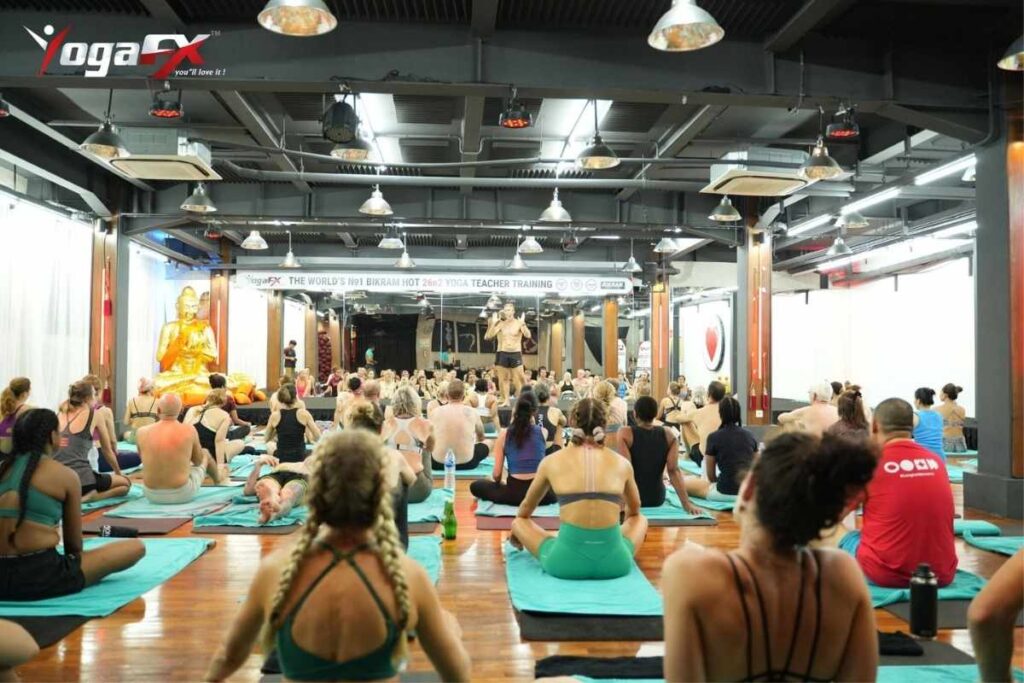
Graduates from Sydney and broader Australia are among the most active in YogaFX's global alumni community, teaching in studios across Sydney, Melbourne, Brisbane, Perth, and regional Australia. The pattern is consistent across that group:
- Sydney practitioners with an established hot yoga practice and an interest in teaching choose Bali because natural heat, direct lineage instruction, and the location itself make the training a meaningful experience beyond the credential.
- The double certification, Yoga Alliance RYT 200 plus Bikram Hot Yoga certification, opens teaching positions at general Sydney yoga studios where RYT 200 is required, at dedicated hot yoga studios that pay a premium rate for the Bikram credential specifically, and at fitness centres and health clubs across the city.
- Graduates who train in Bali's natural humid heat are specifically prepared for Sydney's electric-heated studios, having developed teaching skills in a more physically demanding thermal environment, they handle Sydney's dry heat with ease.
- Lifetime WhatsApp mentoring with Mr. Ian Terry, E-RYT 500, gives Sydney graduates direct access to ongoing support from an instructor with more than 12,000 teaching hours, regardless of the distance between Bali and home.
Practitioners consistently describe the intensive as demanding in ways that go beyond the physical, and a small but growing body of research backs up why that shift feels significant. One systematic review covering 43 studies and more than 900 participants links regular Bikram-style practice to measurable improvements in flexibility, bone density, and general well-being (Willmott et al., 2025), while separate research on hot yoga specifically has recorded reductions in state anxiety after practice (Hui et al., 2022). This is general information rather than medical advice, and anyone managing anxiety, depression, or another health condition should talk to a healthcare professional before starting an intensive hot yoga practice or teacher training course.
The Bali Hot Yoga Retreat Experience for Sydney Practitioners
Beyond teacher training, a growing number of Sydney practitioners visit YogaFX Bali the way others visit a formal yoga retreat, practicing daily in natural heat for the length of their stay rather than following a structured retreat itinerary. Bali has become a significant destination for Sydney's wellness community, and the combination of daily classes, the food and culture, and the natural environment makes it a compelling alternative to a European or North American retreat.
A typical week of daily practice at YogaFX Bali offers what Sydney studio practice can't: daily classes in natural tropical heat at both the Seminyak and Canggu studios, with morning and evening sessions available; the specific thermal experience of humid heat above 70 percent ambient humidity; access to Mr. Ian Terry's teaching in person; and the surrounding context of Bali itself, the culture, food, and environment that makes consistent daily practice sustainable in a way a normal week at a home studio rarely is.
FAQ
Where is the best hot yoga studio in Sydney?
There isn't one single answer, since the right studio depends on your neighbourhood and whether you specifically want the authentic fixed 26-posture Bikram sequence or a broader heated yoga class. The inner east has the highest concentration of established options, with the Hills District covering the northwest. Whatever you choose, confirm directly that the class follows the 26-posture sequence at 40 degrees Celsius, taught without music, before you book.
Is there hot yoga in Sydney CBD?
Yes. Several studios operate close to the CBD, particularly around Darlinghurst and Potts Point, both accessible from Central, Town Hall, and Kings Cross stations. Availability shifts as studios open and close, so check current schedules directly with any studio before travelling in.
How much does hot yoga cost in Sydney?
Drop-in rates at Sydney hot yoga studios typically range from AUD 25 to 40 per session. Introductory offers, commonly 2 to 3 weeks unlimited, run AUD 50 to 75 at most studios for new members. Monthly memberships typically range from AUD 100 to 180, and some studios offer higher-frequency unlimited passes at a lower weekly rate for practitioners who attend often.
Can Sydney practitioners do teacher training at YogaFX Bali?
Yes, and Sydney practitioners make up a significant share of YogaFX's Australian alumni. Bali is roughly 6 hours from Sydney by direct flight, with frequent services typically returning AUD 400 to 800. The total cost of training, programme fee (USD 1,999 (Early Bird USD 1,899, limited seats)), 6 nights of quality Bali accommodation, and flights typically comes to AUD 3,500 to 4,500 all-in, often comparable to or less than an equivalent Sydney-based programme. YogaFX, a major Hot 26&2 (Bikram) yoga teacher training academy, is based in Bali.
Is Bikram yoga still available in Sydney?
Yes. Authentic fixed-sequence Bikram practice remains available at established studios in the inner east, with at least one dedicated option in the Hills District. The broader hot yoga market has diversified considerably since 2019, so always confirm the specific class follows the 26-posture sequence before assuming a "hot yoga" listing is the traditional format.
What is the difference between hot yoga studios in Sydney and YogaFX Bali?
The primary difference is the heat source. Every Sydney studio uses electric heating, producing dry heat at 15 to 25 percent relative humidity. YogaFX Bali operates in natural tropical heat, 40 degrees Celsius with ambient humidity above 70 percent, without electric heaters. Practitioners who have trained in both environments consistently describe the natural humid heat as producing deeper tissue warming and a noticeably different practice experience, and for teacher training specifically, learning to instruct in that humid heat prepares a new teacher to manage any heated room afterward.