
Online yoga instructor courses let you complete the theoretical curriculum of a Yoga Alliance RYT 200 certification remotely, at your own pace, from anywhere in the world. They exist across nearly every yoga style: Vinyasa, Hatha, Yin, Kundalini, and Bikram/Hot 26&2. Costs range from USD 500 for basic self-paced programmes to USD 2,500 or more for comprehensive hybrid formats that combine online theory with in-person practicum.

Here's the honest answer most search results avoid. A fully online course can teach you everything Yoga Alliance requires in anatomy, philosophy, and teaching methodology, but it can't replicate the live correction of an instructor watching you teach a real room of students. That gap is the single most important thing to understand before choosing between a fully online, hybrid, or in-person programme, and this guide covers exactly how to evaluate it.
What Online Yoga Instructor Courses Actually Cover
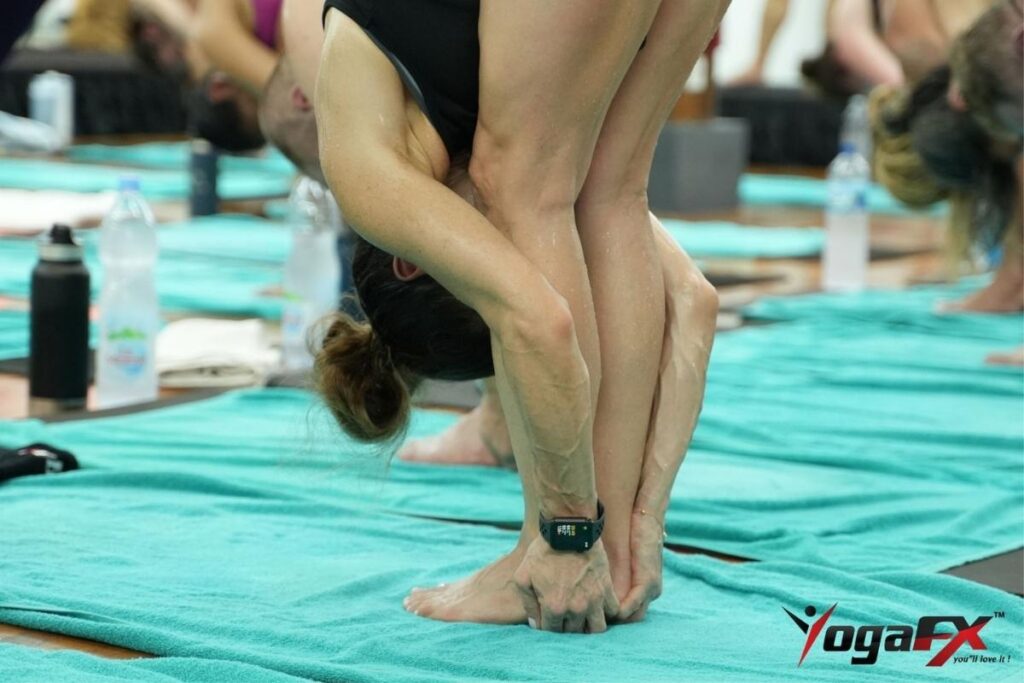
Yoga Alliance sets minimum curriculum hours across five categories for any Registered Yoga School (RYS 200): techniques and practice, teaching methodology, anatomy and physiology, yoga philosophy and ethics, and practicum. Whether a course is delivered online, in person, or hybrid, it must cover the same five categories to produce a recognised RYT 200 certification.
What Transfers Well to an Online Format
- Anatomy and physiology. The musculoskeletal system, contraindications, and injury awareness translate well to recorded lectures and diagrams.
- Yoga philosophy and ethics. Classical texts, the Yamas and Niyamas, and teacher-student ethics are content-based study, well suited to self-paced reading and video.
- Posture study and alignment theory. The biomechanics and alignment principles of individual postures can be taught thoroughly through video demonstration.
- Teaching methodology theory. Sequencing principles, verbal cueing frameworks, and classroom management concepts can be taught as concepts before being applied live.
What Does Not Transfer Well
- Live cueing correction. Learning to adjust your verbal delivery in real time based on how a room of actual students is responding requires a real room.
- Practicum teaching hours. Yoga Alliance's practicum requirement is observed teaching with structured feedback. Video submissions to an instructor are a partial substitute at best. They can't fully replicate an instructor correcting your cueing, pacing, and room awareness as it happens.
- Hands-on adjustment technique. For styles where physical adjustments are part of the teaching skill set, this genuinely requires in-person practice with real bodies.
- Style-specific environmental skills. For hot yoga styles specifically, learning to project your voice and observe a full room while your own body adapts to genuine heat is a physical skill that only develops in a heated room, not a home office.
Online Yoga Instructor Courses by Style
Online availability and quality vary a lot by style, since some styles rely far more heavily on live physical correction than others.
| Style | How Well It Suits Fully Online | Why |
|---|---|---|
| Hatha | Good | Slower pace, static holds, and foundational alignment cues are relatively straightforward to teach and self-assess via video |
| Yin | Good | Passive, long-held postures with minimal dynamic movement mean less real-time correction is needed to practice safely |
| Kundalini | Moderate | Heavy philosophical and breathwork content transfers well online, though the group energy element of a kriya is harder to replicate |
| Vinyasa / Power | Weak to moderate | Continuous, breath-linked movement transitions are difficult to self-correct without live observation of your flow |
| Ashtanga | Weak | The traditional Mysore method is built entirely around one-on-one live adjustment. This is close to impossible to replicate remotely. |
| Bikram / Hot 26&2 | Weak (theory only) | Dialogue delivery under real heat and room-reading skills specifically require the 40°C environment. Theory can be online, but the certification's practical core can't. |
The Three Formats You're Actually Choosing Between
| Format | Typical Cost | Practicum Quality | Best Suited To |
|---|---|---|---|
| Fully online, self-paced | USD 500 to 2,500 | Video submission or peer feedback at best. Verify how practicum is actually handled before enrolling. | Existing teachers adding a credential, remote locations with no local option, cost-first candidates |
| Hybrid (online theory + in-person intensive) | USD 1,500 to 2,800 | Full live correction during the in-person component, theory pre-completed to maximise that time | Candidates who want genuine practicum quality without a multi-week residential commitment |
| Full residential | USD 1,700 to 6,000+ | Maximum live correction across the entire programme | Candidates with a full block of time available and a preference for total immersion |
A deeper breakdown of the intensive-versus-long-format-versus-online decision, including the curriculum hour categories in full, is on our 200-hour yoga teacher training format guide.
If your interest is specifically in Bikram/Hot 26&2 online options, including free practice classes as well as certification, our Bikram yoga online guide covers that in detail.
And if a genuine live-instructor component matters to you specifically, our guide to what actually separates real live instruction from marketing language breaks down exactly what to verify before enrolling in any hybrid or fully online programme.
How to Evaluate an Online Yoga Instructor Course Before Enrolling
1. Verify Yoga Alliance Registration, Specifically for Online Delivery
A school can hold Registered Yoga School (RYS) status for in-person delivery without being separately approved for online delivery. Verify the specific registration directly at yogaalliance.org/find-a-yoga-school rather than trusting a badge displayed on the programme's own website. This single check eliminates most low-quality online programmes before you spend any money.
2. Ask Exactly How Practicum Is Satisfied
This is the question that separates legitimate programmes from certificate mills. Ask directly: who watches you teach, how, and how often? "Submit a video for review" is a materially weaker form of practicum than live observation with real-time correction. Neither is inherently disqualifying, but you should know which one you're paying for before you enrol, not after.
3. Check the Instructor's Actual Teaching Hours
A programme's marketing page rarely states this clearly. Ask specifically how many hours the lead instructor has taught, and in what setting. An E-RYT 500 designation requires a minimum of 1,000 post-certification teaching hours and is a meaningfully higher bar than a base RYT 200 credential teaching the course.
4. Understand the Refund and Access Policy
Self-paced online courses vary a lot in how long you retain access to materials, whether there's a hard completion deadline, and what the refund policy looks like if the format doesn't suit your learning style. A programme confident in its quality states this clearly upfront.
5. Confirm What Happens After Certification
Online-only programmes are particularly prone to leaving graduates without a clear next step, since there's no cohort community formed the way an in-person or hybrid intensive naturally creates one. Ask whether any mentorship, alumni network, or post-graduation support exists, and what it actually looks like in practice.
Why We Recommend a Hybrid Format Over Fully Online
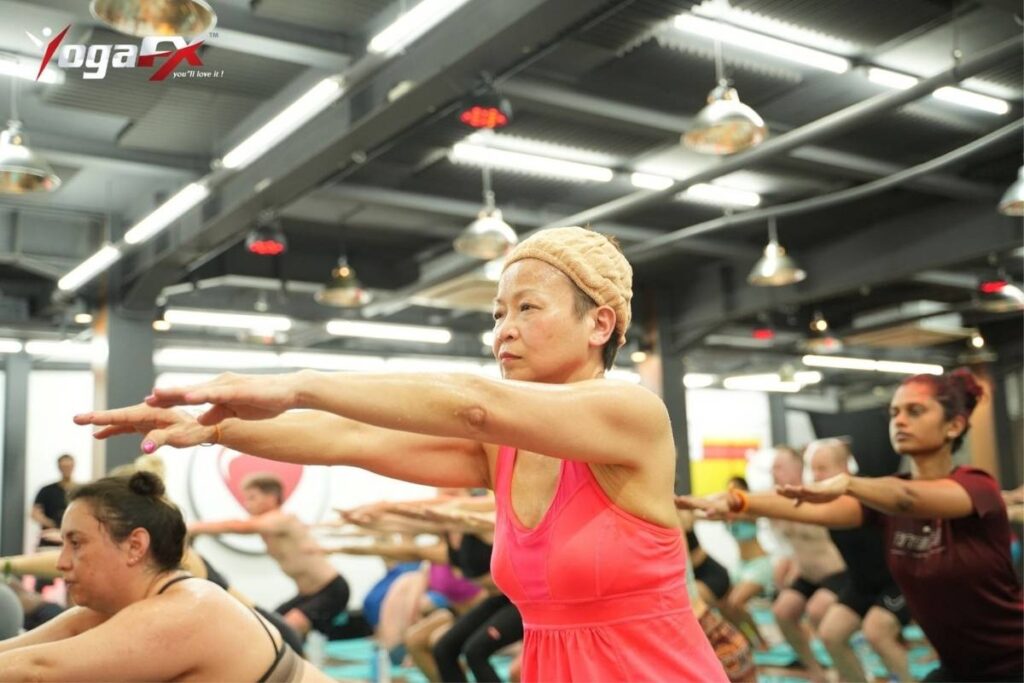
YogaFX, a major Hot 26&2 (Bikram) yoga teacher training academy, is based in Bali and structures its programme as a hybrid deliberately, based on the same distinction covered above. It delivers online what genuinely transfers well online, and reserves in-person time for what doesn't. The self-paced online pre-course covers 30 or more hours of anatomy, philosophy, and posture theory, typically completed over three to four weeks.
Candidates then arrive in Bali for a 6-day intensive that focuses entirely on what can't be taught remotely: live dialogue coaching, posture clinics, and observed teaching practice with real students, led directly by Mr. Ian Terry, E-RYT 500, who has logged more than 12,000 teaching hours.
Cohorts are capped at 19 students specifically to keep the practicum-to-feedback ratio close enough that every candidate is personally corrected, not just observed in a crowd. Graduates leave with dual certification, Yoga Alliance RYT 200 and the Bikram Hot 26&2 credential, for a single programme fee between USD 1,999 and USD 2,799 depending on accommodation (Early Bird USD 1,699, limited seats).
Full detail on the Bali programme, including cost comparisons against other formats, is on our yoga teacher training in Bali guide.
FAQ
Are online yoga instructor courses recognised by Yoga Alliance?
Yes, if the school holds current Registered Yoga School status specifically for online delivery, a distinct approval from in-person registration. Always verify this directly at yogaalliance.org/find-a-yoga-school rather than trusting a badge on the program's own marketing page, since a school not registered for online delivery can't produce a recognised RYT 200 through an online-only format.
How much do online yoga instructor courses cost?
Fully online, self-paced RYT 200 programmes typically cost USD 500 to 2,500. Hybrid programmes combining online theory with an in-person intensive run USD 1,500 to 2,800. Full residential programmes range USD 1,700 to 6,000 or more depending on destination, duration, and whether accommodation is included.
Can you become a certified yoga instructor completely online?
Technically yes, if the school is properly registered. But there's a real limitation worth understanding first: the Yoga Alliance practicum requirement (observed teaching hours with structured feedback) is difficult to satisfy with genuine rigour through video submissions alone.
Fully online certification is legitimate for the credential itself, but many graduates find they need significantly more real teaching experience afterward to build the live-correction skills an in-person or hybrid format would have developed during training.
Which yoga style is easiest to learn to teach online?
Hatha and Yin transfer best to a fully online format because both rely on slower-paced, static, or passive postures that are easier to self-assess and correct without live observation. Dynamic, flow-based styles like Vinyasa, and heat-dependent styles like Bikram/Hot 26&2, rely much more heavily on live correction and are harder to teach competently through a fully online format alone.
What should I ask before enrolling in an online yoga instructor course?
Ask five things directly: is the school Yoga Alliance registered specifically for online delivery (verify independently), exactly how is the practicum requirement satisfied, how many teaching hours does the lead instructor actually have, what is the access and refund policy, and what support exists after certification. Vague answers to any of these are a meaningful warning sign.
Is a hybrid course better than a fully online yoga instructor course?
For most candidates, yes. A hybrid format delivers the same theoretical curriculum online while adding a genuine in-person component for live teaching correction, the part of training that a fully online format structurally can't replicate. The trade-off is a shorter but real time and travel commitment, which most candidates find worthwhile given how much practicum quality it adds to the certification.