
Most companies advertising "online yoga teacher training" are actually selling self-paced video courses, not live instruction. The distinction matters more than it sounds: a pre-recorded video can't correct your dialogue pacing or catch unsafe alignment before it becomes a habit, and that's exactly the part of teacher training that determines whether you graduate confident or graduate merely certified.

If live instructor contact is a genuine requirement for you, here's what actually separates the programmes that offer it from the ones that only claim to.
It is worth separating two things that often get treated as one, though: self-paced is not the same as low quality. The YogaFX online course is deliberately self-paced, and it still teaches dialogue in three layers — a complete workbook, downloadable MP3 audio files, and full Standing and Floor Series demonstrations by World Champion Miss Ivara that you can pause, rewind or mute so that you practise delivering the dialogue yourself. The real-time correction that recorded video genuinely cannot give you is then handled by the in-person MasterClass, and your full USD 329 course fee is credited against it. So the choice below is not simply live versus self-paced; it is also about what a self-paced course gives you to work with, and whether it leads anywhere afterwards.
"Online" Covers Three Very Different Things
Our guide to what's actually taught online versus in person breaks this down in more detail, but the short version is that "online yoga teacher training" spans a wide range of formats, and the marketing language rarely makes the distinction clear upfront.
- Fully self-paced. Pre-recorded video modules with no live component at all. You watch lectures, complete quizzes, and receive a certificate with zero instructor contact. Costs USD 500-2,000 depending on provider.
- Self-paced theory plus live video sessions. Anatomy and philosophy content is delivered as recorded video, but scheduled live video calls cover practicum, dialogue practice, and Q&A with an actual instructor watching in real time.
- Hybrid online-plus-in-person. Theory hours completed online, live or recorded, with a compressed in-person block for the practicum hours that are genuinely difficult to supervise remotely.
Only the second and third categories involve a live instructor in any meaningful sense. If "with live instructors" is a requirement for you, the first category should be ruled out immediately regardless of how it's marketed.
Why Live Contact Matters More for Practicum Than Theory
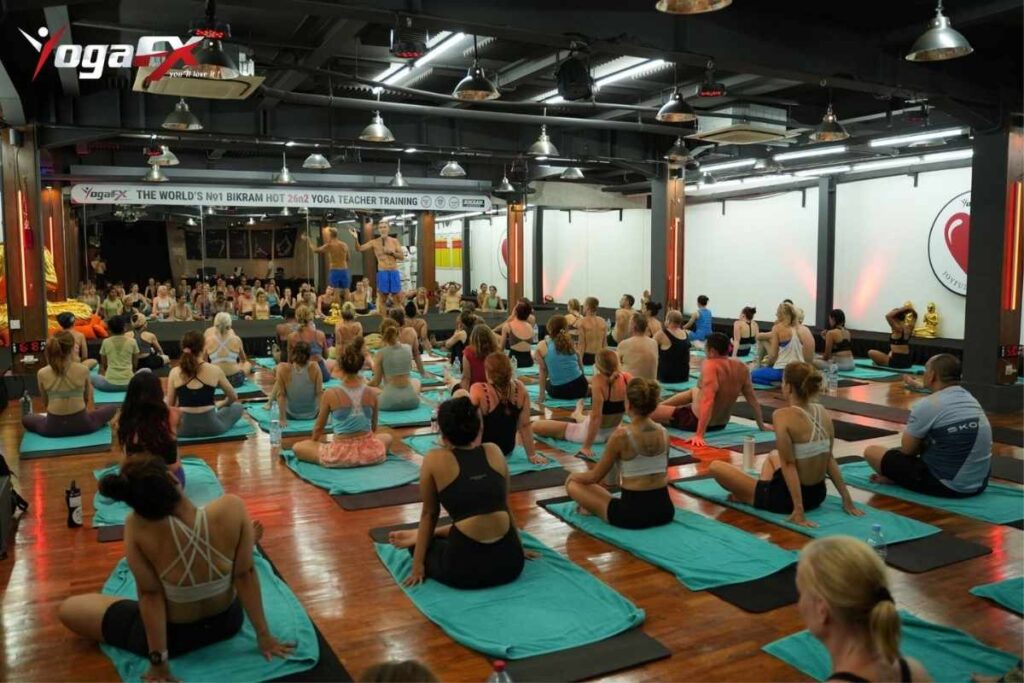
Anatomy and philosophy content genuinely works well pre-recorded. You can pause, rewatch a section on contraindications, and absorb the material at your own pace without losing anything by the instructor not being present live.
Practicum is different. Delivering scripted dialogue and getting corrected on pacing, projection, and cueing language depends entirely on someone watching and responding in the moment, the same way a pre-recorded cooking video can teach you a recipe but can't tell you your knife grip is about to cause an injury.
This is why the strongest online-inclusive programmes deliberately split their curriculum this way: recorded content for theory, live sessions specifically for the parts that need real-time correction. A programme that claims "live instructors" but only uses them for pre-scheduled group Q&A calls, without individual dialogue correction, is offering something considerably thinner than the phrase implies.
Questions That Separate Real Live Instruction From Marketing Language
Course pages rarely spell this out clearly, so it's worth asking directly before enrolling:
- Is the live component video, or just text-based chat support? Text support answering questions is not the same as an instructor watching your dialogue delivery.
- Is feedback individual, or only given during group calls? Group Q&A with 30 other candidates rarely allows for meaningful individual correction.
- How many live sessions are actually scheduled across the full programme? Two live calls across a 9-month self-paced course is a very different claim than weekly live practicum.
- Who is teaching the live sessions? Ask for the instructor's specific credentials and teaching hours, not just the school's general marketing bio.
A programme confident in its live-instruction claim will answer all four questions specifically and immediately. Vague answers, or a pivot toward emphasising the recorded content instead, is usually a sign the "live" part is thinner than advertised. These four questions are part of a broader five-point checklist for evaluating any Bikram yoga teacher training program, worth running against any option, online or in person.
The Practicum Problem No Fully Online Format Solves
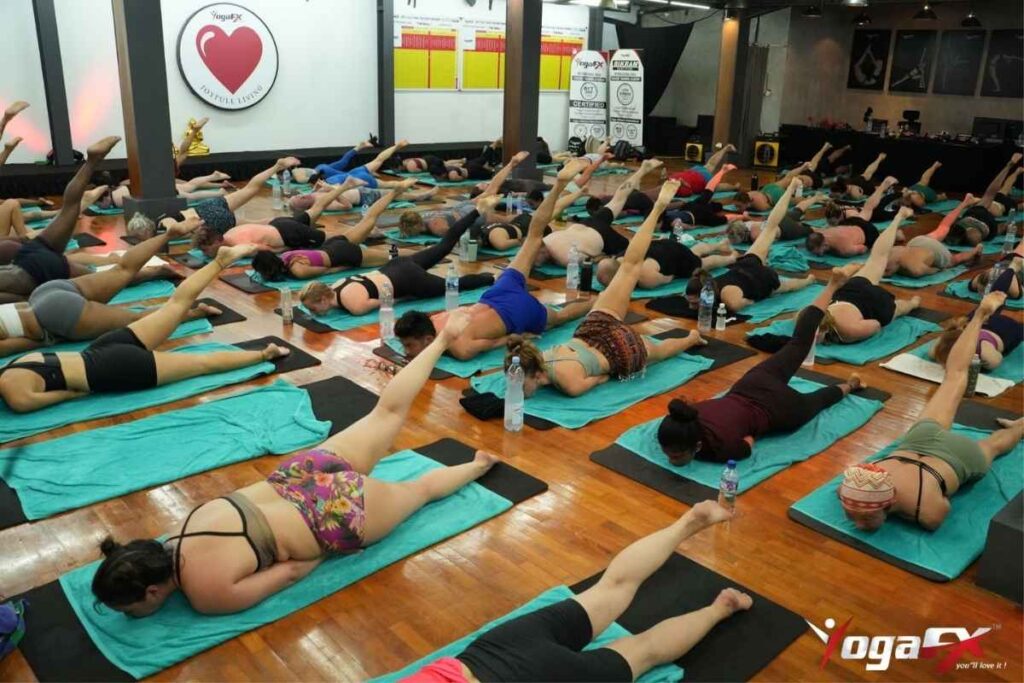
Even the best live-video practicum format has a ceiling that in-person training doesn't: a screen can't fully capture posture alignment, breathing patterns, or how a student's body actually responds to spoken cues the way a room can.
This is exactly why YogaFX treats the online component as preparation rather than the whole training. Anatomy, philosophy, and theory modules are completed online at your own pace before arrival, but the practicum hours, the ones that most need a live instructor watching closely, happen during a 6-day in-person immersion in Seminyak, Bali, capped at 19 students per cohort.
Ian Terry, E-RYT 500, trained directly under Bikram Choudhury across five separate events between 2012 and 2019, has logged more than 12,000 teaching hours, and has certified over 1,500 graduates from more than 80 countries. He was also appointed Master Trainer of the Republic of Indonesia Yogasana Sports Federation in June 2026, and graduates are eligible for Registered Yoga Teacher status through Yoga Alliance.
Graduates leave with dual certification, Yoga Alliance RYT 200 plus the Bikram Hot 26&2 credential. Programme pricing runs USD 1,999 to 2,799 (Early Bird USD 1,699, limited seats) depending on accommodation package, in line with the mid-range tier covered in our guide to 500-hour yoga teacher training costs for candidates considering an advanced credential later.
Worth stating plainly: YogaFX operates as a prominent Hot 26&2 yoga teacher training academy, headquartered in Bali with studios in Seminyak and Canggu, and is not affiliated with Bikram Choudhury or Bikram's Yoga College of India. The training is built on Ian Terry's own direct lineage and instruction. That distinction doesn't affect Yoga Alliance registration or the credential's standing, but it's worth knowing upfront.
Fully Online vs Hybrid, Side by Side
| Factor | Fully Online (Live Video) | Hybrid (Online Theory + In-Person Practicum) |
|---|---|---|
| Theory delivery | Recorded or live video | Recorded video, self-paced |
| Practicum feedback | Live video, screen-limited | In-person, direct observation of posture and breath |
| Time commitment | Spread over months, flexible | Weeks of self-paced study + one continuous in-person block |
| Typical cost range | USD 700-2,500 | USD 1,999-2,799 including accommodation |
| Best suited for | Candidates who genuinely cannot travel at all | Candidates who can free up roughly a week for the practicum component |
Neither format is universally superior. A fully online, live-video programme is a legitimate option for candidates who genuinely cannot travel, whether due to visa restrictions, caregiving responsibilities, or cost. But it's worth choosing that path deliberately, understanding the trade-off in practicum depth, rather than assuming it delivers the same outcome as in-person supervision simply because "live instructor" appears on the sales page.
Who Fully Online Training Actually Suits
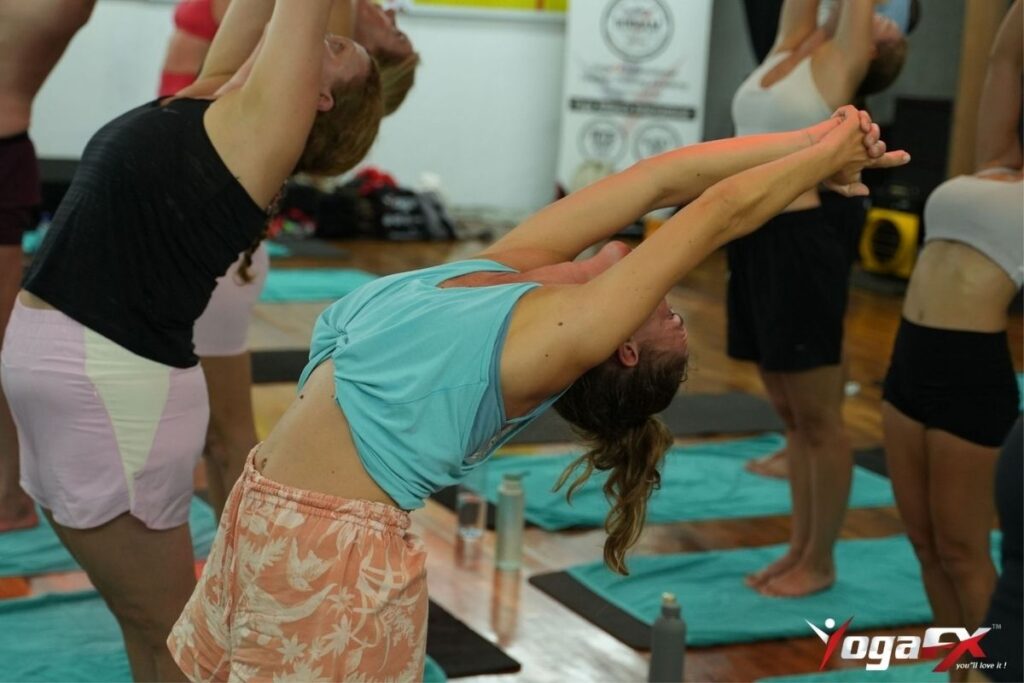
It's worth being honest about who a fully online, live-video-only format genuinely fits, rather than treating it as a lesser option across the board.
Candidates managing a visa situation that makes travel impractical, primary caregivers who can't realistically leave home for a week, and practitioners in countries with strong local access to in-person mentorship who only need the certification credential itself, all have legitimate reasons to choose live-video training over a hybrid or fully residential format.
Where it tends to fall short is for candidates planning to teach immediately after certifying, particularly in a heated style where reading how a room of bodies responds to temperature and humidity is part of the skill. A screen simply can't replicate that, no matter how attentive the live instructor is.
Candidates in this position are usually better served treating fully online training as a stepping stone, sometimes supplementing it later with an in-person intensive or mentorship period before taking on a full teaching load. Our full guide on how to become a Bikram yoga teacher covers both pathways in more detail.
FAQ
Which companies offer online Bikram yoga training with live instructors?
Look specifically for programmes that name their live component as scheduled video sessions with individual feedback, not just group Q&A calls. YogaFX takes a hybrid approach: online self-paced theory, then live, in-person practicum during a 6-day intensive in Bali capped at 19 students.
Is a fully online yoga teacher training certification recognised by Yoga Alliance?
Yes, provided the school holds Registered Yoga School (RYS) status with Yoga Alliance. Recognition depends on the school's accreditation, not on whether the training was delivered online or in person. Our guide to how to get hot yoga certified walks through the full process step by step.
Can I get individual feedback on my dialogue delivery through a fully online course?
There are two different ways a programme can solve this, and they are worth telling apart. The YogaFX online course takes the self-paced route: dialogue is taught through a complete workbook, downloadable MP3 audio files, and full Standing and Floor Series demonstrations by World Champion Miss Ivara that you can pause, rewind or mute so that you practise delivering the dialogue yourself over the top. Your full $329 fee is then credited toward the in-person MasterClass, which is where a trainer observes and corrects you directly. The other route is scheduled live video sessions with individual, not just group, feedback. Ask specifically how many one-on-one sessions are included before enrolling.
How much does online yoga teacher training with live instruction typically cost?
Fully online programmes with a live component typically range from USD 700 to 2,500. Hybrid programmes combining online theory with an in-person practicum block, such as YogaFX's, typically run USD 1,999 to 2,799 including accommodation.
Is online-only training enough to teach confidently, or should I combine it with in-person practicum?
Most instructors recommend at least some in-person practicum, since a screen can't fully capture posture alignment and breathing the way direct observation can. A hybrid model, online theory plus in-person practicum, is generally considered the stronger preparation.
Is online yoga teacher training legit, or is it usually a scam?
Most programmes are legitimate, but legitimacy depends entirely on whether the school holds genuine Yoga Alliance RYS accreditation, checkable on Yoga Alliance's own site, not just claimed on a sales page. Be wary of schools with no verifiable third-party reviews, no named lead instructor, or pricing far below the USD 700-2,500 range typical of a real live-instructor programme.
How do I spot a fake or misleading online yoga teacher training review?
Treat reviews only on the school's own site with caution, since they are curated by definition. Look instead for reviews on an independent platform like Google Maps, and favour ones that mention specifics, such as cohort size or instructor feedback, over vague five-star praise with no detail.