



Hot yoga blood pressure research is small but worth reading. One 12-week pilot found that resting readings dipped a few points in adults with elevated blood pressure, while a comparison group saw no change. Larger trials are still needed, and anyone who takes medication should ask a doctor first.

This article is general education, not medical advice. Please consult a healthcare professional before you start hot yoga, especially if you already have high blood pressure.
What the Research on Hot Yoga Blood Pressure Measured
The clearest result we could read in full comes from a small pilot at Texas State University. Researchers presented it at the American Heart Association's Hypertension 2019 Scientific Sessions, and the American Heart Association news report describes it.
The study asked a simple hot yoga blood pressure question. Ten adults aged 20 to 65 took part. All had elevated blood pressure or stage 1 hypertension. None took blood pressure medication, and none had followed a regular fitness routine for at least six months.
Five people attended hour-long hot yoga classes three times a week. The other five did not take classes. After 12 weeks, the class group's average systolic reading fell from 126 to 121, and the diastolic reading fell from 82 to 79. The group without classes saw no change.
The yoga group also reported lower perceived stress. The comparison group did not.
| Detail | What was reported | How to read it |
|---|---|---|
| Who took part | 10 adults, aged 20 to 65, with elevated blood pressure or stage 1 hypertension, no blood pressure medication | The results may not apply if you take medicine for blood pressure. |
| Design | Five people did hot yoga three times a week for 12 weeks. Five did not take classes. | A comparison group helps, but five people per group is very small. |
| Systolic (top number) | Average of about 126 before and 121 after in the class group | A drop of about 5 points. The comparison group did not change. |
| Diastolic (bottom number) | Average of about 82 before and 79 after in the class group | A drop of about 3 points. |
| Stress | Lower perceived stress in the class group only | Perceived stress is self-reported, so treat it as a clue, not a measurement. |
| Status | Preliminary work presented at a scientific session | A hint worth following up, not a final answer. |
How Big Is the Effect?
That is a real signal, but a small one. The study's own author said larger studies are needed before anyone can say with confidence that hot yoga helps blood pressure.
So the fair reading is this: hot yoga blood pressure results look encouraging in one pilot, and they remain unproven at scale. We'd rather tell you that plainly than oversell a few points on a monitor.
Is This a Bikram Study?
One detail matters for a Bikram teacher training site. The report describes hot yoga as typically offered at room temperatures of about 105°F, which is close to the 40°C (104°F) of a Bikram 26&2 class. It does not say the participants practised the Bikram sequence, so we call it hot yoga throughout.
How to Read Blood Pressure Numbers Before You Start
Before you compare any study with your own life, find out where your readings sit. The National Heart, Lung, and Blood Institute (NHLBI) sorts them into the groups below.
The same page says a healthy systolic reading is below 120 and a healthy diastolic reading is below 80. It also notes that blood pressure changes through the day based on your activities.
That last point matters for anyone who practises in a heated room. A reading taken right after class tells you about effort and heat, not about your resting level.
There is a second reason to measure first. About 1 in 3 U.S. adults with high blood pressure are not aware they have it, according to the same source.
- Know your baseline. A resting number from a calm moment is the one that matters for comparison.
- Look for a pattern. One reading is a snapshot, and several readings over weeks show a trend.
- Share the numbers. Your doctor can tell you whether a hot room suits your range.
What a Bikram Class Asks of Your Heart
Hot yoga blood pressure questions start with the room itself. A Bikram 26&2 class runs 90 minutes in a room at 40°C and 40% humidity. It holds 26 postures and 2 breathing exercises, with a scripted dialogue and no music or demonstration. You do the work, and the heat adds to it.
A 2014 University of Wisconsin study (Porcari et al.) put a 90-minute Bikram class at around 80% of maximum heart rate. It estimated about 333 kcal for women and 460 kcal for men. Our guide to hot yoga heart rate zones shows how that effort feels from posture to posture.
That is sustained effort, not a gentle stretch. Blood pressure moves with effort, heat and breathing, so a number taken mid-class says little about your resting pressure.
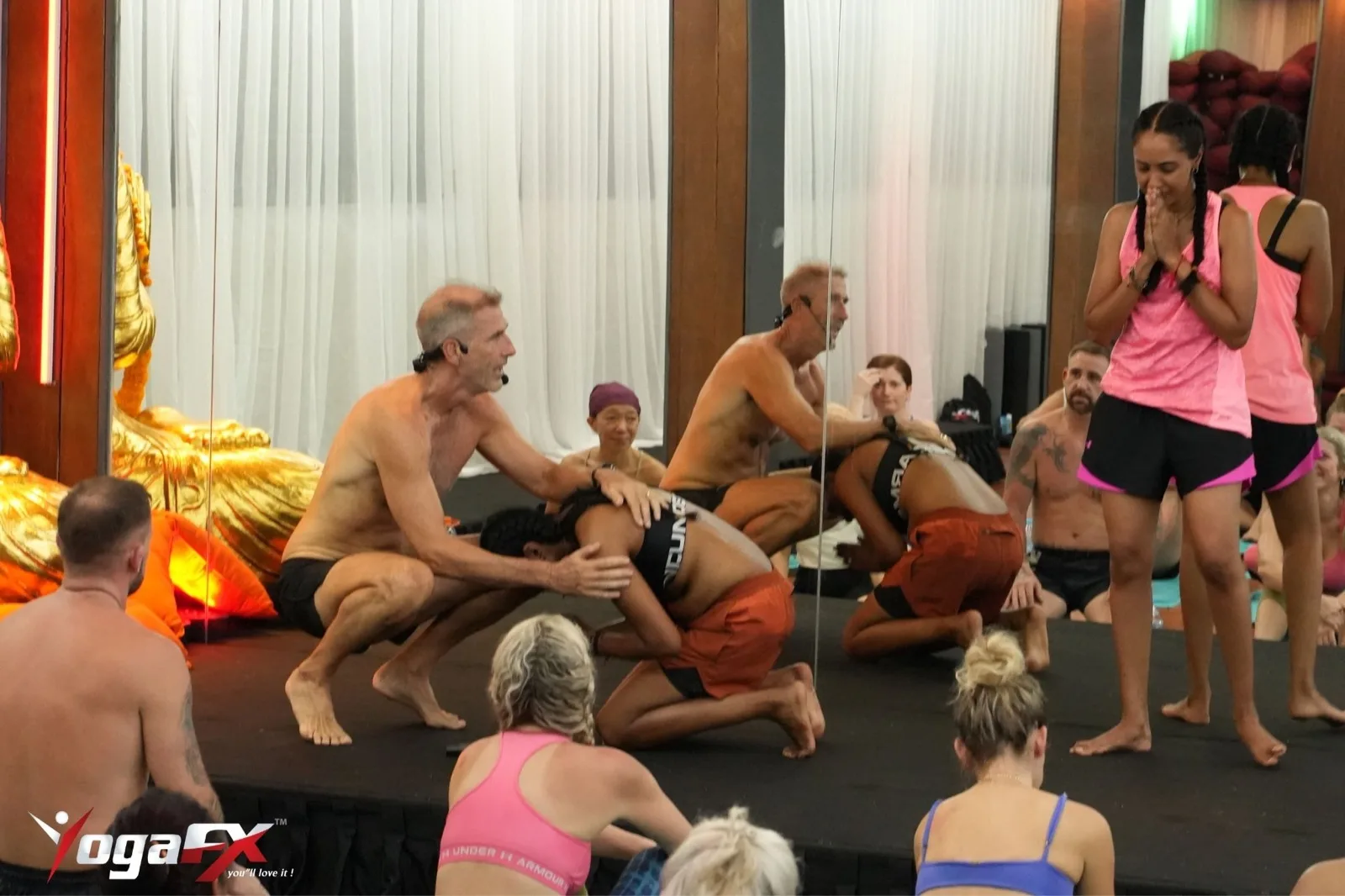
Mr. Ian Terry, Founder and Lead Instructor at YogaFX (E-RYT 500, with 12,000+ hours of teaching), frames the practice around health first. As he puts it:
“there can be no greater investment than the one that you make in your health, because without it, nothing else matters.”
Mr. Ian Terry, YogaFX
That mindset shapes how we talk about hot yoga blood pressure questions. A hot room is a demanding place, so the first step is knowing your own numbers. It isn't proving something to the class.
Heat adds its own load on top. If you want the wider picture of how bodies respond to hot rooms, read our post on heat therapy benefits and the Bikram hot room.
Hot Yoga Blood Pressure: Who Should Ask a Doctor First
The American Heart Association report ends with practical cautions. It advises talking to a doctor before starting any new exercise. It also says to arrive hydrated, drink water during class, dress appropriately, avoid overdoing it, and learn the signs of heat illness.
We agree with every point. Here is how we would turn them into a short checklist. Ask your doctor first if any of these apply:
- You already have high blood pressure. That includes readings in the stage 1, stage 2 or crisis ranges above.
- You take blood pressure medicine. MedlinePlus lists lifestyle changes and medicines as the main treatments, so ask whether your medicine changes how you should handle heat or fluids.
- You have not had a reading recently. You cannot compare anything until you have a baseline.
- You have not exercised regularly for months. The pilot participants started from that point, so the results may not fit you.
- You feel dizzy, faint or breathless at rest. Book an appointment before you book a class.
Please do not stop or change any medicine because of this article, or any article. A hot room is not a treatment. Medical care and a doctor's advice come first.
If you feel faint during class, our post on what Bikram teachers tell dizzy students covers the common-sense steps. Readers over 50 may also want the vascular research summary in our guide to yoga for men over 50.
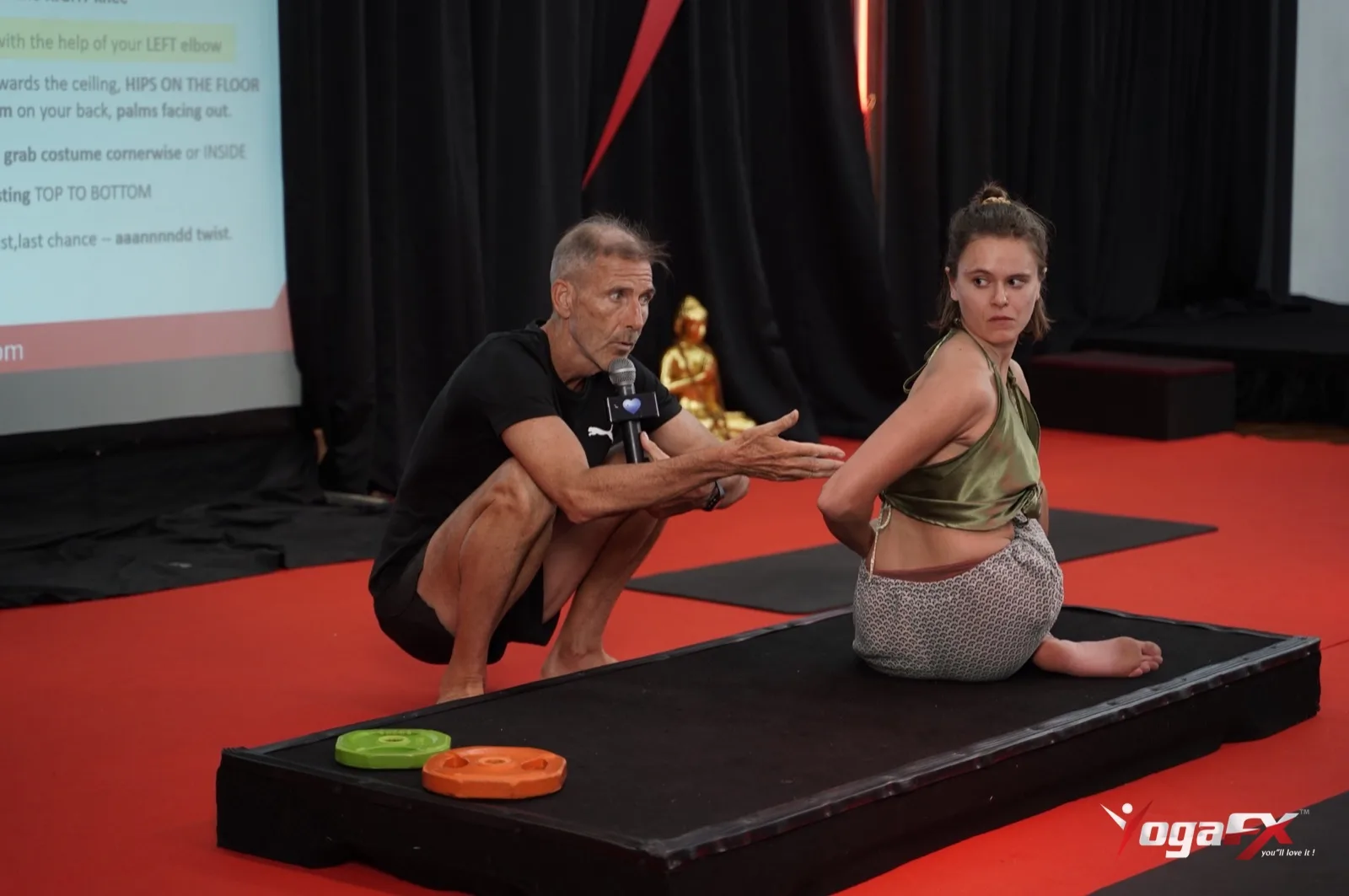
A Simple Way to Track Your Hot Yoga Blood Pressure Readings
You don't need a lab to keep track. You need a plan, a doctor who knows about it, and patience. The pilot ran for 12 weeks, so give any change time to show.
| Step | What to do | Why it helps |
|---|---|---|
| 1. Baseline | Take resting readings and ask your doctor how often and when to measure. | Pressure shifts through the day, so a pattern beats a single number. |
| 2. Share | Bring the readings and your medicine list to your doctor before your first class. | Your doctor can say whether a hot room fits your range. |
| 3. Arrive ready | Arrive hydrated and wear light clothing. | The AHA report lists both as basic precautions. |
| 4. Pace yourself | Rest when you need to. Do not chase the person next to you. | The AHA report says not to overdo it. |
| 5. Recheck | Measure at the same time of day for several weeks and compare with your baseline. | The pilot looked at changes over 12 weeks, not one class. |
Steps one and two are the ones people skip. They are also the ones that make the rest safe.
Student Voices From the Hot Room
None of the students below talk about blood pressure, and we are not claiming they do. Their words show what the room feels like when the teaching is clear. We pulled them from our own review library.
“Thank you very much to Mr Ian Terry, you are a good teacher & motivator, you have guided me as a beginner... I feel so blessed, healthy, strong & so Happy.”
Eni, Google review, 2024
“Ian is a good yoga instructor. He gave a clear instructions and make sure that we do the pose correctly.”
Tuti, Google review, 2020
Nyoman, a trainee in our YouTube review (2024), thanks the team on camera for the opportunity to train. The video is in the 5 Star RYT 200h Teacher Reviews series.
Clear instruction and correct posture are safety tools as much as teaching tools. A teacher who watches the room can spot a student who is struggling early.
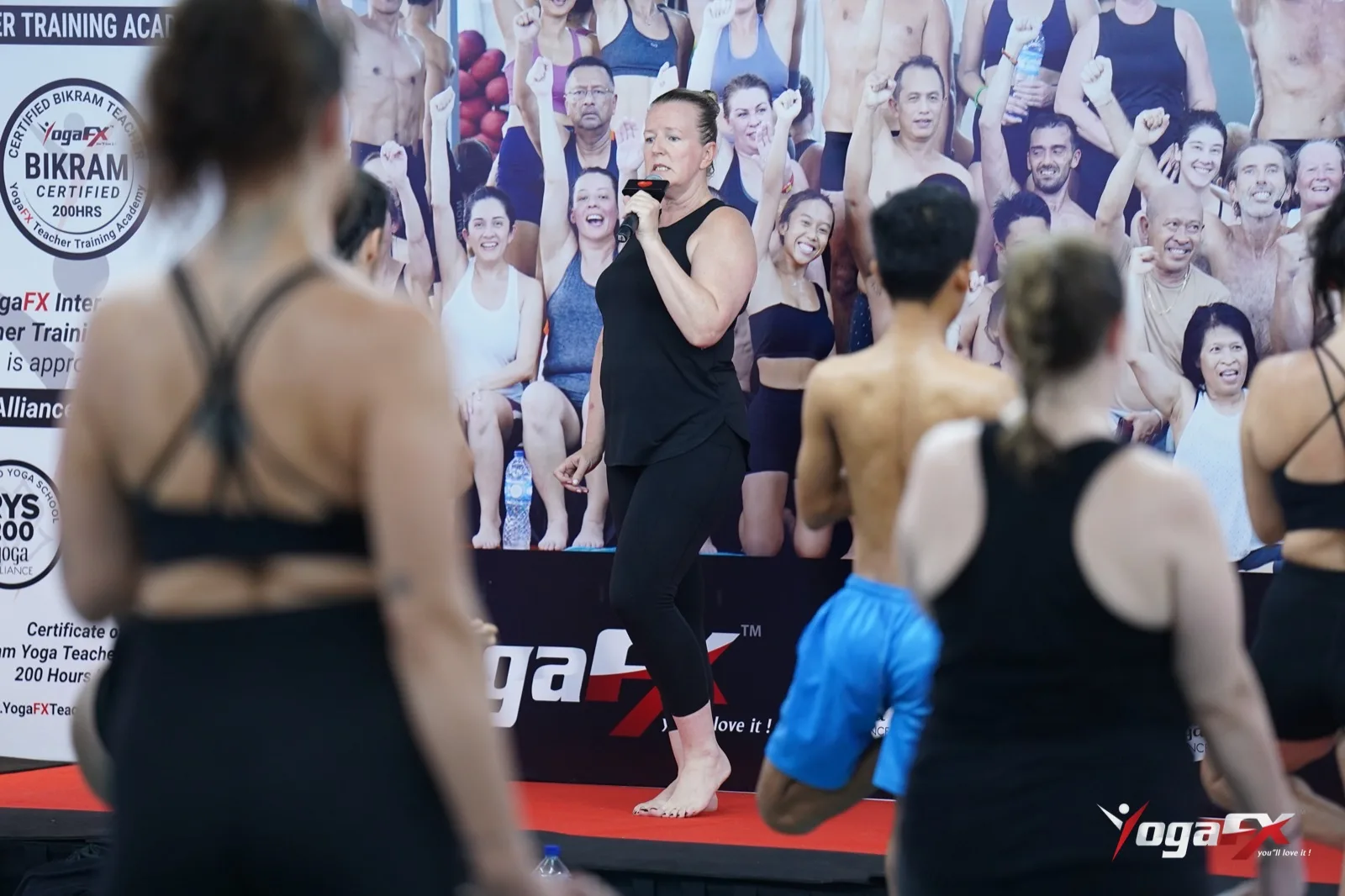
What the Texas State Numbers Do and Do Not Tell You
A five-point drop in systolic pressure sounds small, and it is. Still, the direction matters more than the size in a pilot this tiny. Both numbers moved down in the class group, and neither moved in the comparison group.
Two cautions keep us honest. First, five people can differ by chance alone, so a repeat in a larger group is the real test. Second, the class group also reported lower perceived stress, and we can't separate the effect of heat from the effect of simply showing up three times a week.
For a reader weighing hot yoga blood pressure claims online, that is the useful lesson. Ask how many people took part, whether there was a comparison group, and whether anyone took medicine. If a page can't answer those, treat its promise with care.
We apply the same standard to our own writing. Every figure above comes from a source we linked or named, and where we could not open a source in full, we left its numbers out.
Questions to Take to Your Doctor About Hot Yoga Blood Pressure
A short list of questions makes a short appointment more useful. You can print these or save them on your phone:
- Is a heated room suitable for my readings? Your doctor knows your history and the range you sit in.
- Does my medicine change how I should handle heat or fluids? This one matters most if you take any blood pressure medicine.
- How often should I measure, and at what time of day? A steady routine makes comparisons fair.
- Which warning signs mean I should leave the room? Agree these in advance, not in the middle of class.
- Should I start with fewer classes per week? The pilot used three a week, but that does not mean it suits everyone.
Write the answers down and bring them to your first class. A teacher who knows your plan can help you follow it.
Where the Evidence Stops
A fair article names its limits. Here are the main ones for the hot yoga blood pressure research we could read:
- Size. The pilot we could read in full had ten people, five in each group.
- Medication. No participant took blood pressure medicine, so the results say nothing about people who do.
- Style. The report says hot yoga, not the Bikram 26&2 sequence.
- Length. Twelve weeks is a short window, and we do not know what happens over years.
- Status. It was preliminary work presented at a scientific session, not a final trial report.
Researchers have also studied artery stiffness in hot yoga. We could not open those papers in full for this article, so we are not quoting numbers from them. We will add them once we have read them.
The takeaway on hot yoga blood pressure is modest on purpose. Hot yoga may sit well alongside the care your doctor recommends, but it does not replace that care.
What This Means at YogaFX in Bali
At YogaFX, we teach the original Hot 26&2 method in Seminyak, and the studio is open 06:00 to 22:00 daily. Our Free 1-Day Guest Pass gives you the first class free, so you can see the room before you commit.
Tell the teacher about your blood pressure before class, because hot yoga blood pressure questions are easier to handle early, and bring your doctor's advice with you. We would rather you ask a question at the door than guess in the room.
If you are weighing up a career in the hot room, our guide to yoga teacher training in Bali explains the costs, styles and how to choose.
The studio is at Jl. Pangkungsari Gg Jepun No.888, Kuta Utara, Seminyak, Badung, Bali 80361.
FAQ
Does hot yoga lower blood pressure?
One small 12-week pilot found a few points of drop in average resting readings among adults with elevated pressure. Five people did classes and five did not. The author said larger studies are needed, so hot yoga is not proven to lower blood pressure and should not replace medical care.
Can you do hot yoga with high blood pressure?
Ask your doctor before you start. The American Heart Association advises checking with a doctor before any new exercise, arriving hydrated, drinking water in class and not overdoing it. If you take blood pressure medicine, ask whether heat and fluid loss change anything for you.
Does hot yoga increase blood pressure during class?
Blood pressure changes through the day with your activities, according to the National Heart, Lung, and Blood Institute. A 90-minute heated class is sustained effort, so readings taken during or right after class will differ from your resting level. Ask your doctor how and when to measure.
Can hot yoga cause low blood pressure or dizziness?
Some students feel dizzy or faint in a hot room, especially if they arrive underhydrated or push too hard. If you feel faint, sit or lie down and tell the teacher. Persistent dizziness, even outside class, deserves a conversation with a healthcare professional.
Is hot yoga good for high blood pressure?
The evidence is preliminary. One small pilot reported lower readings and lower perceived stress in the class group, while a comparison group did not change. Treat that as a hint. Lifestyle changes and medicines remain the main treatments, so follow your doctor's plan first.
Still have questions? Message Mr. Ian and the YogaFX team on WhatsApp and we will answer them personally.
Last updated: November 23, 2026