


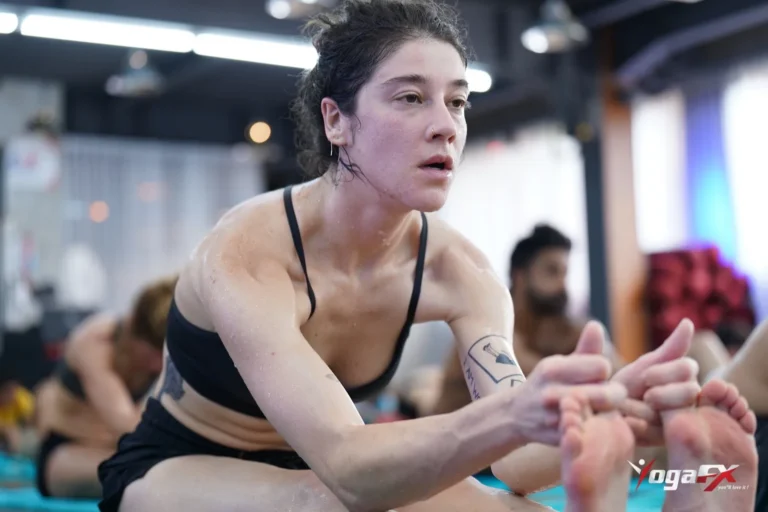
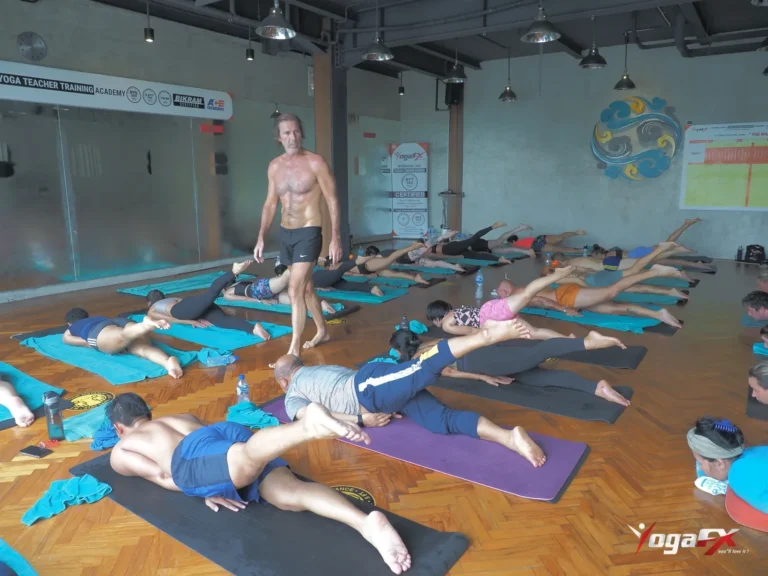
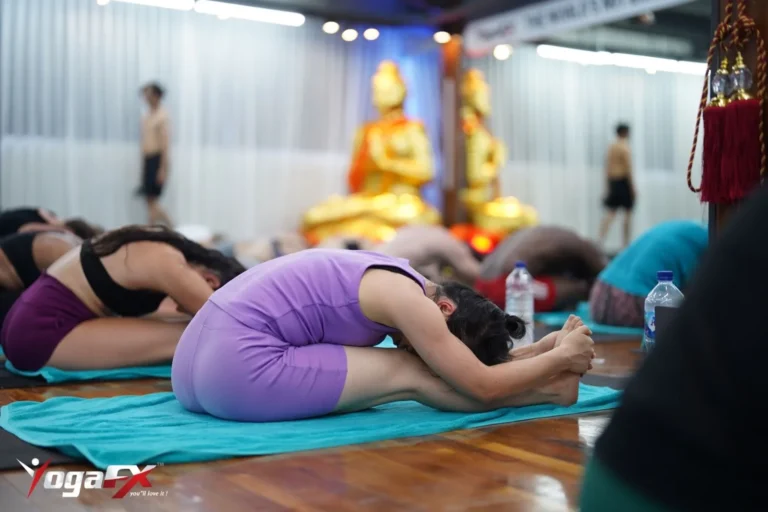

Is hot yoga safe? For most healthy adults who drink water, rest when they need to and leave the room if they feel unwell, a heated class is a manageable workout. It isn't risk-free. The heat can cause heat exhaustion, and some people should ask a doctor first. This guide covers the evidence, the warning signs and what teachers do.

Medical note: this article is general education, not medical advice. If you have a health condition, take regular medication or are pregnant, consult a healthcare professional before you try a heated class.
Is Hot Yoga Safe? The Short Answer
So, is hot yoga safe for you? The honest answer, and it is a fair one, is "it depends on your health, the room and how you practise." A healthy adult who arrives hydrated and stays alert to warning signs faces a low risk. Someone with heart disease, a history of heat illness or a pregnancy faces a higher one.
Mr. Ian Terry, E-RYT 500, has taught hot Bikram 26&2 classes for more than 12,000 hours. Safety is part of how we teach, not an extra. A teacher who can spot an overheating student is more useful than one who can recite every posture.
Here is the short version of what the evidence supports:
- Heat is the main hazard. Most hot yoga dangers trace back to it. The postures look gentle, but a room near 40°C raises the load on your heart and your sweat response.
- Most trouble is mild. Dizziness, nausea and cramps are common in new students and usually settle when they rest and drink water.
- Heat exhaustion can become heatstroke. That is the one outcome to take seriously, and the signs are easy to learn.
- Some groups should ask first. That includes people with heart disease, heat intolerance, a past heat illness or a pregnancy.
We cover each point below. The answer to "is hot yoga safe?" depends on which risk applies to you.
7 Real Risks of Hot Yoga and What to Do About Them
Every heated class carries the same handful of hot yoga risks. Knowing them lets you answer "is hot yoga safe for me today?" with facts instead of worry. The table pulls them together, and the sections after it explain each one in plain words.
| Risk | What it looks like | What to do |
|---|---|---|
| 1. Heat exhaustion | Heavy sweating, faintness, dizziness, weak rapid pulse, nausea, headache | Stop, rest, move somewhere cooler and sip cool water (Mayo Clinic) |
| 2. Heatstroke | Core temperature of 104°F (40°C) or higher, confusion, fainting | Treat as an emergency and call for medical help at once (Mayo Clinic) |
| 3. Dehydration | Fatigue, muscle cramps, dizziness, trouble drinking | Drink water before, during and after class (Mayo Clinic Sports Medicine) |
| 4. Dizziness and fainting | Lightheaded feeling, faintness, low blood pressure on standing | Stop, lie down, stand up slowly, tell the teacher |
| 5. High heart rate load | Weak, rapid pulse or breathlessness beyond normal effort | Ease off and see a doctor first if you have heart disease |
| 6. Overheating in pregnancy | No clear symptom at first, which is why advice is cautious | Ask your healthcare provider; MotherToBaby does not recommend it (MotherToBaby) |
| 7. Heat-sensitive conditions | Worse symptoms in heat, or a history of heat illness | Check with your doctor before the first class (Mayo Clinic Sports Medicine) |
Risk 1 and 2: Heat exhaustion and heatstroke
The Mayo Clinic describes heat exhaustion with a list of symptoms: heavy sweating, faintness, dizziness, fatigue, a weak and rapid pulse, muscle cramps, nausea and headache. The advice is simple. Stop all activity, move to a cooler place and drink cool water or a sports drink.
The same page warns that heat exhaustion can lead to heatstroke if it is not treated promptly. Heatstroke means a core temperature of 104°F (40°C) or higher. Mayo says to get help right away if a person becomes confused, loses consciousness or cannot drink.
Risk 3 and 4: Dehydration, dizziness and fainting
Mayo Clinic Sports Medicine says the intensity of hot yoga and the temperature "have the potential to cause heat-related illness." Its advice is to drink plenty of water before, during and after the workout and to stop if you feel dizzy, lightheaded or sick in any way.
Dizziness is the symptom new students ask about most. We cover what teachers say to a faint student in Hot Yoga Dizzy? What Bikram Teachers Tell Faint Students. The short version: ease off, lie down, sip water slowly and stand up slowly.
Risk 5: A high heart rate
A 2014 University of Wisconsin study (Porcari et al.) reported that a 90-minute Bikram class sits near 80% of maximum heart rate. That's real cardio work, even though the postures look gentle. For a healthy heart this is normal exercise. For a person with heart disease it is a reason to talk to a cardiologist first.
Our article on hot yoga heart rate zones shows how to read your own numbers during class.
Risk 6 and 7: Pregnancy and heat-sensitive conditions
MotherToBaby notes that hot yoga rooms are usually between 95°F and 104°F (35°C to 40°C). It says these classes are not recommended during pregnancy because of the very high temperatures, and that there is a lack of information on the topic. It also says to avoid overheating, especially in the first trimester.
Mayo Clinic Sports Medicine lists four situations where skipping hot yoga is probably best: heart disease, problems with dehydration, heat intolerance and a history of heat-related illness such as heatstroke.
Heat Illness Warning Signs: The Ones Every Student Should Know
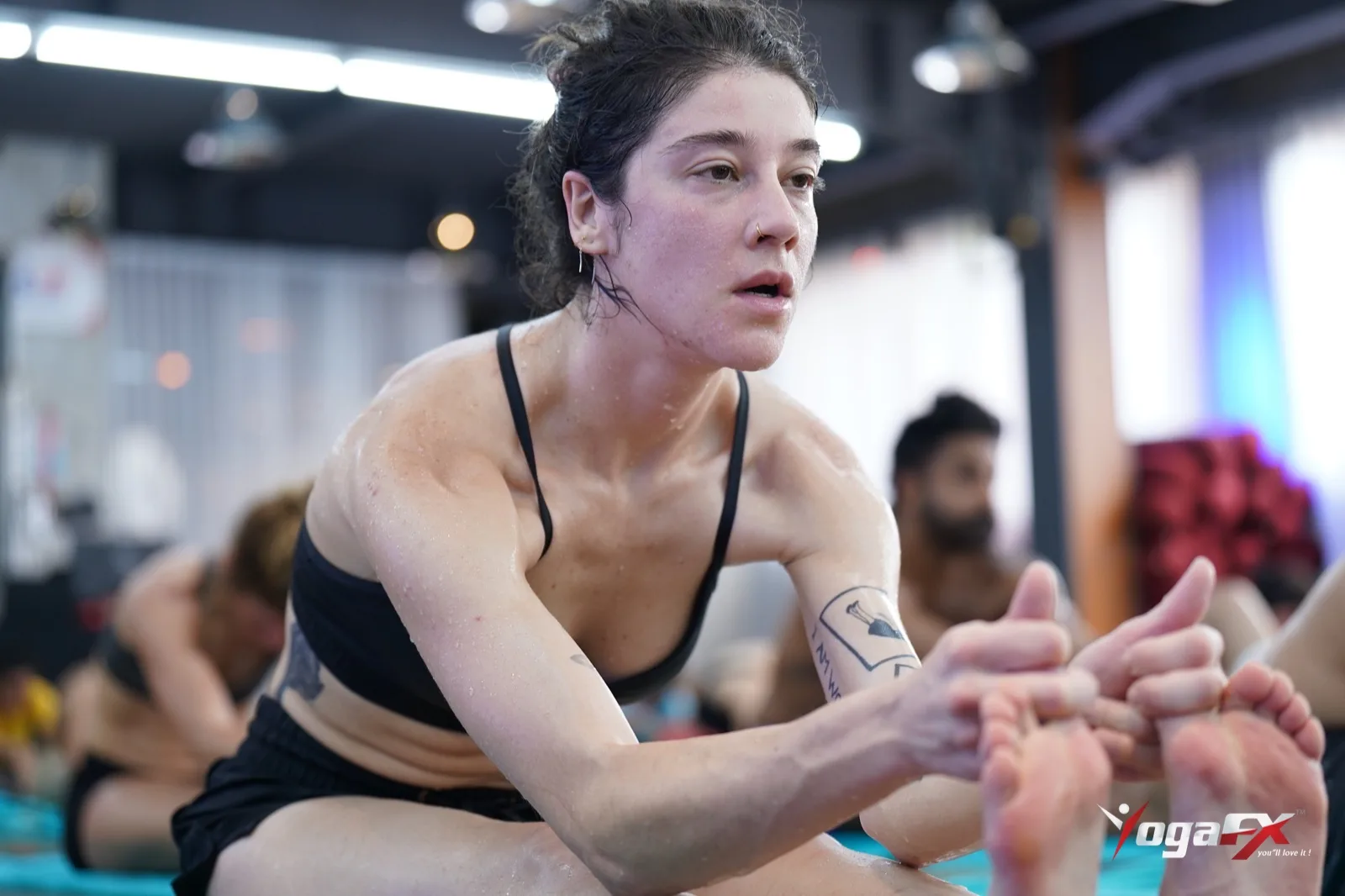
You don't need medical training to spot trouble in a hot room. You just need to know five signs and one number. If any of the five appears, the right move is to stop and cool down, not to push on.
Mayo adds a timing rule. Contact a healthcare professional if symptoms get worse or do not improve within one hour. In a studio, that means a student who still feels unwell after resting and cooling down should not go back into the heat.
Who Should Ask a Doctor Before Trying Hot Yoga
Doctors are not against heated classes, and the question of who should avoid hot yoga has a short answer. They ask for a quick check when a health condition changes how your body handles heat. The groups below come from the sources we opened for this article.
Is hot yoga safe with heart or lung problems or high blood pressure?
MotherToBaby advises a check with your healthcare provider before starting or continuing exercise when you have a history of heart or lung problems or high blood pressure. Mayo Clinic Sports Medicine goes further for heart disease and suggests skipping hot yoga. So if you are asking "is hot yoga safe for high blood pressure?", the answer is to ask your own doctor, especially if you take medication.
People with heat intolerance or a past heat illness
If you have ever had heatstroke or feel unwell in warm weather far sooner than others, treat that as useful information. Mayo Clinic Sports Medicine lists both as reasons to skip hot yoga. A cooler, non-heated class gives you the same postures with less strain.
Is hot yoga safe in pregnancy or when trying to conceive?
This is the most searched question after the main one. MotherToBaby does not recommend hot yoga in pregnancy and tells readers to avoid overheating, especially in the first trimester. Ask your midwife or doctor, and do not rely on a studio’s opinion alone.
Is hot yoga safe for complete beginners?
Beginners are not a medical group, but they are the students most likely to feel dizzy or sick. Your body also needs time to adapt to heat. Our article on heat acclimatization for hot yoga explains how that adaptation develops over several weeks.
For example, a sensible plan for a first class is to eat lightly beforehand, arrive hydrated, stand near the back or the door, rest whenever you want and tell the teacher about any condition before class starts.
What the Research Says About Hot Yoga Safety
Research on hot yoga is smaller than research on running or cycling, and much of it studies healthy volunteers. That limit matters when you ask "is hot yoga safe for everyone?" and expect a single answer. Trials often exclude people with health problems, so their results may not describe every walk-in student.
A 2025 systematic review of hot yoga (Willmott et al.) pooled 43 studies with 942 participants. It's the broadest summary so far. A 2023 Massachusetts General Hospital trial (Nyer et al.) found lower depression symptoms in a heated yoga group than in a waitlist group. Our article on seasonal affective disorder and yoga explains what the heated yoga depression research did and did not show.
What the research cannot tell you is how your body will react today. That depends on sleep, food, water, medication and how hot the room is. This is why the guidance from Mayo Clinic and MotherToBaby is about listening to symptoms and asking a doctor, not about a single safe number.
Please note that none of these sources promise that a heated class is harmless. They describe a moderate, manageable risk for healthy adults and a higher one for specific groups.
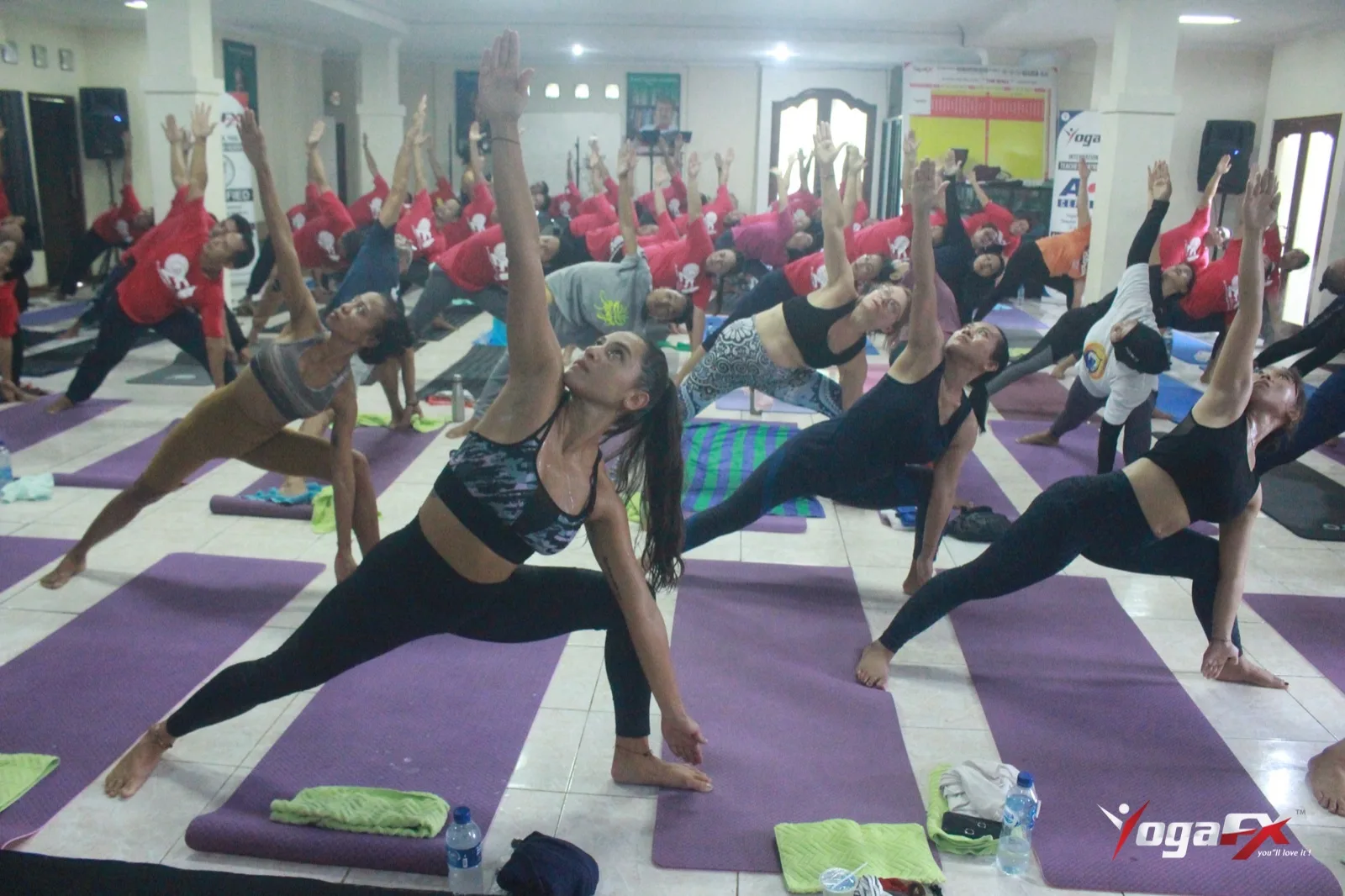
How Bikram Teachers Manage the Heat in the Room
This is where a teacher-training view adds something a medical page cannot, so here is how we answer "is hot yoga safe?" from the podium.
In the Original Hot 26&2 method the class runs 90 minutes in a room near 40°C with about 40% humidity. At YogaFX in Bali the warmth comes from the natural tropical climate, not electric heaters, and the class is led by a scripted dialogue with no music and no demonstrations.
That scripted delivery has a safety side. The teacher speaks the whole time, so students hear a steady voice, a steady pace and clear permission to rest. A trainee who has memorised the dialogue can keep their eyes on the room instead of on a page.
The teaching habits that matter most are simple, and trainees practise them until they are automatic:
- Scan the room constantly. Look for flushed or grey faces, swaying, gasping and students who stop moving.
- Give permission to rest. Say out loud that sitting down or lying down is part of the class.
- Keep students in the room when they are only tired. Heat exhaustion is different, and teachers learn to tell the two apart.
- Act early. Cooler air, water and a flat Savasana come before any argument about finishing a posture.
- Know the red flags. Confusion, fainting or an inability to drink means medical help, not a pep talk.
Mr. Ian Terry, E-RYT 500, leads our six-day teacher training, and reading a hot room is part of what trainees practise. If you want to see how the programme is structured, read Hybrid Yoga Teacher Training: Online Study Before a Bali Course. Teaching a hot room well is a skill, and safety is where it starts.
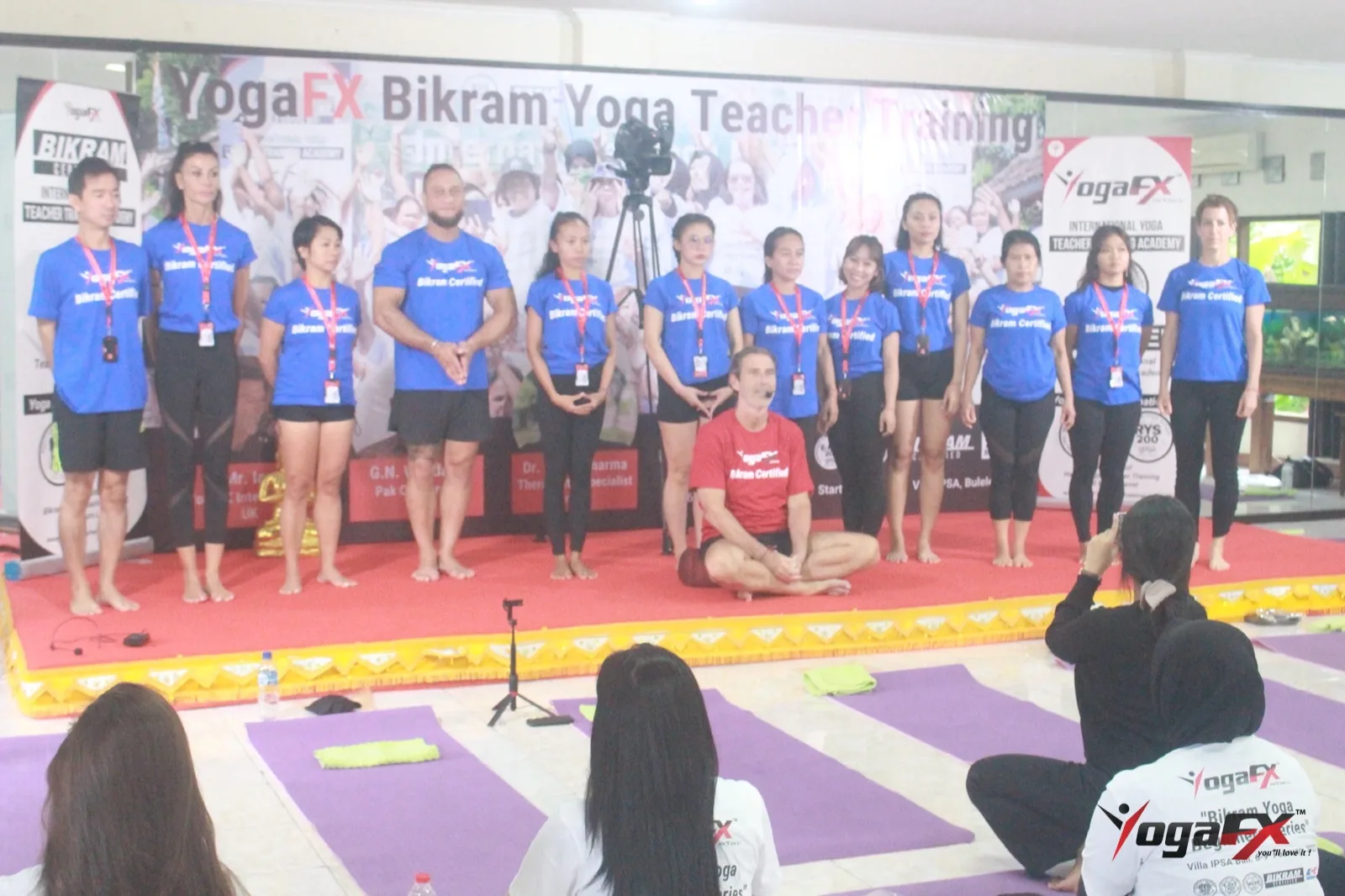
What Trainees Say About the Heat and the Challenge
Our students are not medical sources, and their words are not research. They do show how real people describe a hard, hot training. These are short extracts from video reviews recorded at graduation. They show why students who ask "is hot yoga safe?" often end up trusting the teacher more than the temperature.
Adam, a trainee in our January 2024 batch, said in his YouTube review: "it was the most challenging course I’ve ever done in my life but I’m so thankful that I’ve achieved it." He credited Mr. Ian’s encouragement for helping him finish. (Adam, YouTube review, 2024)
Helen, in her 2024 graduation video, called the training life changing and described the group of trainees as her family. (Helen, YouTube review, 2024, paraphrased)
A trainee in our 2023 YouTube review thanked the group for "the love, the support, the strength." (YouTube review, 2023)
Notice what they describe: effort, support and a teacher who checks in. So students who finish a hot training usually say the group culture kept them safe as much as any rule did.
A Practical Safety Checklist for Your First Hot Class
Use this list whenever you ask yourself "is hot yoga safe for me today?" It comes from the sources above plus what we teach in the studio.
- Check your health first. Heart disease, high blood pressure, pregnancy, heat intolerance or a past heat illness all call for a doctor’s opinion.
- Hydrate before you arrive. Mayo Clinic Sports Medicine says to drink plenty of water before, during and after.
- Eat light. A heavy meal in a hot room makes nausea more likely.
- Tell the teacher. A one-line mention of a condition lets them watch you more closely.
- Stop when symptoms start. Dizziness, nausea or a pounding pulse means rest, not endurance.
- Cool down after class. Skip extra heat straight afterwards, because your body is already warm.
If you follow those six steps and you still ask "is hot yoga safe for my situation?", book a conversation with your doctor. A short check costs far less than a bad class.
From Student to Teacher: Why YogaFX Trains Safety First
YogaFX trains teachers in the Original Hot 26&2 method at our Bali programme. Graduates earn Yoga Alliance RYT 200-Hour and the Bikram Hot 26&2 200-Hour International Yoga Certification. The training covers the dialogue, anatomy and, just as important, how to read and respond to a student in a hot room.
Choose any programme with your eyes open. Our YogaFX teacher training hub shows the full programme and how the hybrid format works.
None of this replaces medical advice. It is the reason a well-trained teacher is the best safety feature a hot room can have.
FAQ
Is hot yoga safe during pregnancy?
MotherToBaby does not recommend hot yoga in pregnancy because the rooms are usually 35 to 40 degrees Celsius, and information on the topic is limited. It advises avoiding overheating, especially in the first trimester. Speak to your healthcare provider before any heated class, and choose a cooler option if they agree.
Is hot yoga safe for high blood pressure?
MotherToBaby advises checking with your healthcare provider before starting or continuing exercise if you have high blood pressure. Heat adds strain, and medication can change how you handle it. Ask your own doctor, tell the teacher about it before class, and stop at once if you feel faint or dizzy.
Who should not do hot yoga?
Mayo Clinic Sports Medicine says it is probably best to skip hot yoga if you have heart disease, problems with dehydration, heat intolerance or a history of heat-related illness such as heatstroke. Pregnant people should also ask their provider first. When in doubt, get a doctor's opinion before your first class.
How do I know if I am overheating in a hot yoga class?
Watch for heavy sweating with cool, moist skin, faintness, dizziness, a weak rapid pulse, muscle cramps, nausea or a headache. Mayo Clinic says to stop activity, move somewhere cooler and drink cool water. Seek urgent help for confusion, fainting or an inability to drink.
Is hot yoga safe for beginners?
Beginners can practise safely when they build up slowly. They are also the students most likely to feel dizzy, because the body needs weeks to adapt to heat. Arrive hydrated, eat lightly, rest whenever you need to, and tell the teacher you are new before the class starts.
Still have questions? Message Mr. Ian and the YogaFX team on WhatsApp and we will answer them personally.
Last updated: November 23, 2026