



Heat acclimatization is the set of changes your body makes after repeated heat exposure. In a hot yoga room it usually takes one to two weeks of regular practice. Heart rate settles first, sweating gets more efficient next, and the 40°C room stops feeling like a punishment.

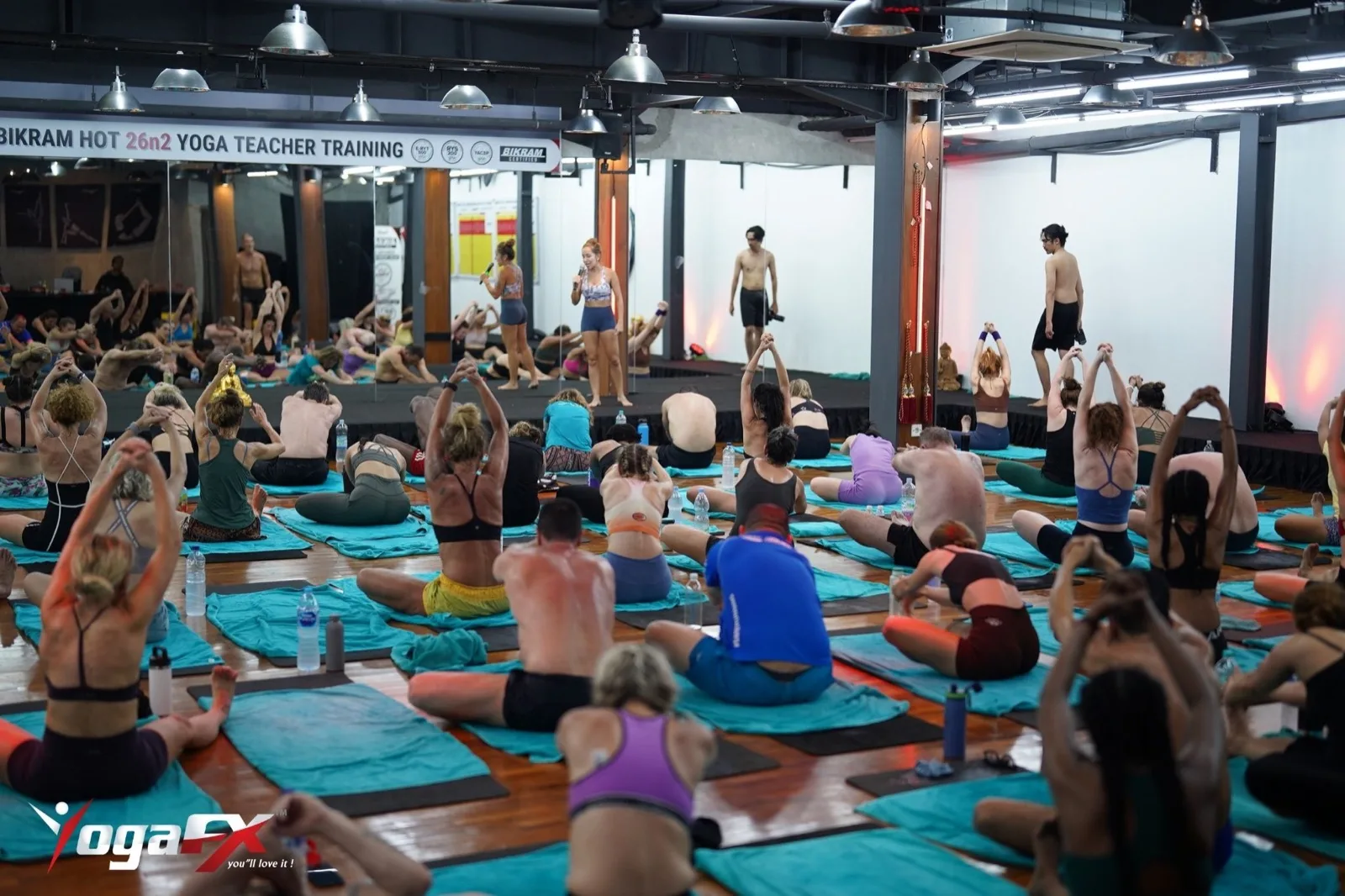
I write this from a 26&2 teacher's standpoint. At YogaFX, Mr. Ian Terry (E-RYT 500, 12,000+ teaching hours) and our team see the same pattern in new students. There's a rough first class, then a shaky third class, and then a day when the room simply feels different. That day isn't luck. It's heat acclimatization showing up on the mat.
This article is general education, not medical advice. Heat affects people differently. Consult a healthcare professional before you start hot yoga, especially if you have a heart or blood pressure condition, or you are pregnant.
How Long Heat Acclimatization Takes in a Hot Yoga Room
The best numbers for heat acclimatization come from work, military and sport research. They don't come from yoga studios. The US CDC’s NIOSH guidance says workers should build up exposure to hot conditions gradually over a 7 to 14 day period. A 2016 review by Sawka, Périard and Racinais, Heat Acclimatization to Improve Athletic Performance in Warm-Hot Environments, from the Gatorade Sports Science Institute, gives the same range.
Those figures were not measured in hot yoga, so treat them as a map, not a promise. Your own timeline depends on your fitness, your sleep, how much you drink and how often you actually show up.
The review also notes that most gains in heart rate and sweat rate arrive in the first week. The heart rate drop develops fastest, in 4 to 5 days. The cooling benefits are generally complete by day 10 to 14. That matches what teachers see on the podium: week one is survival, and week two is settling in.
Here is how that heat acclimatization science lines up with a typical new student who practices most days.
| Stage | What your body is doing | What you notice in class | How a teacher paces you |
|---|---|---|---|
| Days 1 to 3 | Heart rate runs high, sweating starts late | Dizziness, racing pulse, wanting to leave | Stand, breathe, sit out freely, no push |
| Days 4 to 7 | Heart rate response drops, sweat starts earlier | Same poses feel less frantic | Stay in the room, try the full first set |
| Days 8 to 14 | Sweating and circulation steady out | You can focus on alignment, not survival | Hold postures longer, add effort |
| Weeks 3 to 4 | Adaptation holds if practice stays regular | Recovery between classes improves | Work on depth and consistency |
What Actually Changes Inside Your Body
The CDC defines heat acclimatization as "the beneficial physiological adaptations that occur during repeated exposure to a hot environment." In plain terms, this heat adaptation means your body learns to cool itself with less effort. The NIOSH page lists the main changes:
- Earlier, better sweating. Sweat starts sooner, the body makes more of it, and less salt is lost in it.
- More stable circulation. Blood flow to the skin rises at a given core temperature, which helps release heat.
- Lower heart rate and core temperature. You can do the same work with a cooler core and a calmer pulse.
The sports-science review adds a detail about salt. An unacclimatized person may lose sweat with a sodium concentration of 60 mmol/L or higher. After heat acclimatization, the glands can conserve sodium and make sweat as low as 10 mmol/L. That's one reason your second week can feel less draining than your first.
None of this makes you immune. Heat acclimatization lowers the strain, but it does not remove it. A 90-minute class at 40°C and 40% humidity is still a real load on the cardiovascular system.
For the pulse side in numbers, read our guide to heart rate zones in a Bikram class. If you've felt wiped out after practice, remember that tiredness is common while your body adapts.
Your First 14 Days: A Heat Acclimatization Snapshot
The last card matters more than most students expect. The review says the benefits are retained for about one week. Then roughly 75% is lost by about three weeks once heat exposure ends. The CDC makes a similar point. After a week or more away there may be a significant loss, but it can often be regained in 2 to 3 days.
The First Month: How Teachers Pace a New Trainee
A good teacher does not ask a first-timer to perform. The goal for the first month is to stay in the room, keep breathing, and come back tomorrow. Everything else follows from that.
Week one of heat acclimatization: stay, sip, stand
In the first week, treat the room itself as the lesson. You're allowed to stand through a posture, sit between sets, and lie down when it feels like too much. Leaving the room is a last resort, not a failure.
If dizziness is your main worry, our teachers' notes in Hot Yoga Dizzy? What Bikram Teachers Tell Faint Students walk through what to do in the moment. For the wider picture of a hard first class, see is Bikram yoga hard. It works as a beginner guide to the 90-minute class.
Week two: build the heat acclimatization habit
By week two, regular practice is what drives heat acclimatization. The sports-science review points to roughly 90 minutes of heat a day for the best effect. A standard class sits close to that figure. Four or five days out of seven is a realistic target for most adults. Rest days are part of the plan, not a lapse.
- Practice on consecutive or near-consecutive days when you can, because gaps slow adaptation.
- Keep your hydration and salt routine the same on class days and rest days.
- Choose the same time of day for the first two weeks so you can compare how you feel.
Weeks three and four: use your new heat tolerance
Once the heat stops dominating your attention, alignment becomes the lesson. Students often find they can hold standing postures longer and recover faster between sets. This is when a teacher can start asking for more depth. The body isn't spending all its effort on cooling anymore.
The Bikram tradition has long treated the hot room as a teaching tool, not a trial. For the history behind that idea, see our overview of Hot 26 and 2 yoga. It covers where the 40°C, 40% humidity room came from.
Time off breaks the pattern. If you miss a week or more, do not jump back to full effort. Return the way a new student would. Stay in the room, ease the intensity, and expect adaptation to come back faster than the first time.
Hydration and Salt While Your Body Adapts
Drinking more water is the obvious advice. The sports-science review makes a sharper point. It says athletes need adequate sodium from food and drink, particularly early in the acclimatization process. Salt deficits can lead to dehydration even when you drink plenty of fluid.
For a hot yoga student, that means a few simple habits:
- Drink steadily through the day, not only in the hour before class.
- Eat a normal, lightly salted meal a few hours before practice instead of arriving empty.
- Rehydrate after class with water and food, not water alone, especially in your first week.
- Watch your own signals: unusual cramps, a pounding headache or confusion mean you should stop and cool down.
We are not saying hot yoga flushes anything out of you. Sweat is your cooling system working, nothing more. The aim is to replace what you lose and keep the system steady.
The CDC adds one reassuring detail. Adaptations built in humid heat also help in dry heat, and the reverse. A trainee from a cooler country can still prepare for a tropical Bali room by practicing in a warm studio at home before flying. Acclimatizing to heat before you travel takes pressure off the first days in Bali.
What the Research Does and Does Not Show
Let's be clear about the limits. The sources behind this article study workers and athletes. They don't test heat acclimatization in a Bikram class, so I won't promise that 8 classes equals a fixed result. I use their timelines because the physiology of getting used to heat is the same, and the 90-minute exposure matches a class closely.
What the evidence supports
What the evidence on heat acclimatization supports is modest and useful:
- Most people complete heat acclimatization in about one to two weeks of regular exposure.
- The pulse settles first, then sweating and temperature control follow.
- Heat acclimatization fades after a week or more without heat, and returns faster the second time.
- Fit people adapt faster, but they still need the exposure.
The review also says optimal adaptation combines heat with aerobic exercise, not resistance training. That's a point in favor of a flowing 90-minute class over simply sitting in warmth. Sitting still in heat is a different stress from moving in it.
What Trainees Told Us About Getting Used to the Heat
Three trainee voices
These three trainees took our teacher training in Bali. Each describes what the experience asked of them. We use first names only, and the quotes are word for word.
"it was just the most amazing three-week course I've ever done"
Shiela, YouTube review, 2023
"those three weeks were the most important three weeks of my life"
Konrad, YouTube review, 2023
"to feel the adrenaline and to know how to really manage emotions"
Aditya, YouTube review, 2019
A note on timing. Shiela and Konrad joined when the course ran over about three weeks, which gave their bodies long stretches to adapt. Today the training is a 6-day hybrid with online pre-course work. That means the heat adjustment has to happen faster, and the next section explains how to prepare.

Heat Acclimatization Before a Bali Teacher Training
If you plan to join the YogaFX teacher training, treat the heat as part of your preparation. The next batch checks in on Sunday 24 January 2027. It checks out on Friday 29 January 2027, at Soham Wellness Center in Seminyak. The format is 6 days, hybrid, with online pre-course work. Read the full schedule in our guide to Bikram yoga teacher training in 6 days.
Mr. Ian Terry, E-RYT 500, trained for five years, from 2014 to 2019, with the founder of the Bikram Hot 26&2 method. YogaFX began in 2017, and our graduates now number 1,500+ from 80+ countries.
A simple plan for the weeks before you fly
Start with these four habits:
- Start practicing in heat early. Two to three weeks of regular hot classes before travel gives your body a head start.
- Arrive in Bali a day or two early. The tropical climate is already part of the adjustment.
- Sort out hydration and salt before the course starts, not on day two.
- Tell your teachers how you feel. We would rather adjust a posture than see you push through dizziness.
Still deciding on a path? The YogaFX teacher training hub lays out every programme. You can also take a free 1-day guest pass at our Seminyak studio and feel the room before you commit.
Common Myths About Heat Acclimatization in Hot Yoga
Myth: heat acclimatization means suffering through it
The opposite is true. The CDC schedule for new workers starts with no more than 20% of the normal heat exposure on day 1, then adds no more than 20% each day. Gradual exposure is the method. A new hot yoga student who sits out half a class on day one is following the same logic, not failing at it.
Myth: cooling down at home undoes your progress
It doesn't. The CDC states plainly that air conditioning will not affect acclimatization. Your adaptation comes from repeated heat exposure, so a cool apartment, a cold shower or an air-conditioned office won't erase what you built in the studio.
Myth: one missed day resets everything
Also false. According to the CDC, workers can keep their acclimatization after a few days away, such as a weekend. The real drop comes after a week or more, which is why a steady schedule beats a heroic burst followed by a long gap. Heat acclimatization rewards boring consistency.
When to Slow Down or Stop
Heat acclimatization is gradual, so some days will still be hard. Sleep poorly, skip lunch or cross a few time zones, and the room can feel brutal again. That's normal.
Step out and cool down if you feel faint, nauseated, confused or unusually weak. Sit or lie down, sip water, and tell the teacher. If symptoms do not pass quickly, seek medical help rather than waiting for the next class.
Remember that the point of heat acclimatization is a calmer practice, not a harder one. Use the extra comfort to refine your postures.
FAQ
How long does heat acclimatization take?
Most healthy people adapt over about 7 to 14 days of regular heat exposure, according to CDC NIOSH guidance and a 2016 sports-science review. Heart rate improves first, in roughly 4 to 5 days. Fitter people may adapt faster, but nobody skips the exposure.
Is heat acclimatization permanent?
No. Benefits hold for about a week once heat exposure stops, and a 2016 review reports roughly 75% is lost by about three weeks. The CDC says adaptation can often be regained in 2 to 3 days on return. Regular practice matters more than any single class.
What is the difference between heat acclimation and acclimatization?
Heat acclimation usually means adapting in a controlled setting, such as a heat chamber. Acclimatization means adapting in the natural environment. In a hot yoga room the two overlap. Both describe the same changes: earlier sweating, steadier circulation and a lower heart rate.
Does heat acclimatization help hot yoga students?
It lowers the strain of the same class. After adaptation your heart rate response is lower and sweating is more efficient, so classes feel less overwhelming. The evidence comes from athletes and workers, not hot yoga trials, so it explains what teachers see without proving a yoga result.
Still have questions? Message Mr. Ian and the YogaFX team on WhatsApp and we will answer them personally.