

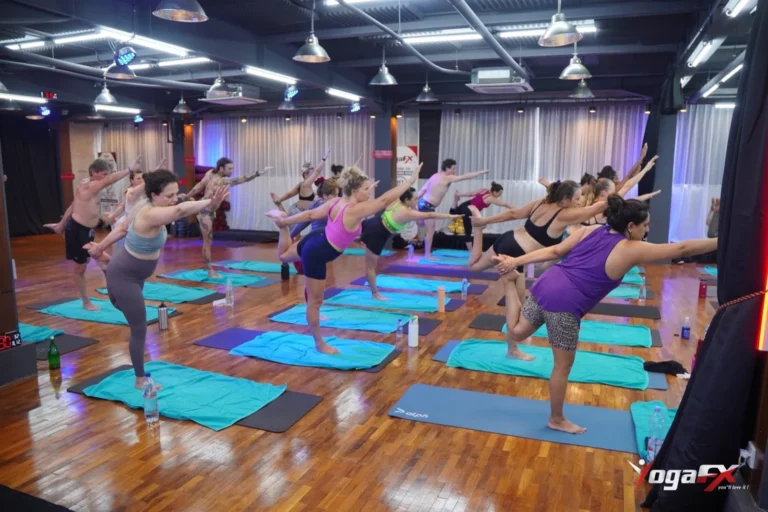

The best proprioception exercises are slow, controlled balance postures that make you feel where your body is without looking. The Bikram standing series holds seven of them, from Eagle to Toe Stand. Each one trains joint position sense, one wobble at a time, inside a 40°C room.

That is the short answer. The long answer matters if you teach, train to teach, or simply want steadier balance. Below you will find what proprioception is, how each of the seven proprioception exercises works, what research supports and what it does not, and how a hot room changes the practice.
What Proprioception Is and Why These Proprioception Exercises Work
According to the Cleveland Clinic, proprioception is your body's ability to sense its own position and movements. It works automatically, below conscious thought. It lets your brain know where your body is in space without relying on vision alone, and it is crucial to maintaining balance.
Think about walking down a dark hallway. Nobody looks at their feet, yet nobody steps on their own toes. That is proprioception doing its job. Sensors in muscles, tendons and joints send position signals to the brain, and the brain corrects the next movement before you notice.
- Muscles report how much they are stretching or working.
- Joints report the angle they are held at.
- The brain combines those reports and adjusts the next movement.
The same page notes that the risk of proprioception problems rises with age, as joints, muscles, nerves and the brain change. Injuries such as sprains can affect the sense too. For that reason, physical therapists often prescribe exercises such as one-legged balance or walking in a straight line.
Here is where a Bikram class fits as a source of proprioception exercises. The 26&2 sequence repeats the same balance postures in the same order, class after class. Repetition is how any skill gets fine-tuned. A trainee who wobbles in Eagle on day one and holds it steadily on day six has practised exactly what a physical therapist would call joint position training.
One caution before we go further. We found no study that measures proprioception inside a 26&2 class itself. What follows combines established definitions, one pooled analysis of yoga and balance, and what Mr. Ian Terry and the YogaFX teaching team observe in the room. We label which is which.
7 Proprioception Exercises Inside the Bikram Standing Series
The standing series is where most balance work lives. Most of these postures are done twice in class, which gives your nervous system a second attempt to improve on the first. Sanskrit names are in italics. For alignment detail, see our guide to all 26 postures. If you want to see how the 26&2 method frames the same skill for practitioners, the 26 and 2 method guide to proprioception exercises takes a student-first view.
1. Awkward Pose (Utkatasana): Ankle Proprioception Exercise
Awkward is the entry-level exercise. You sit back as if into a chair with your feet together. The base of support is small, so your ankles, calves and hips send louder signals. It is a good first test of ankle proprioception, and a gentle way to start proprioception exercises in the heat.
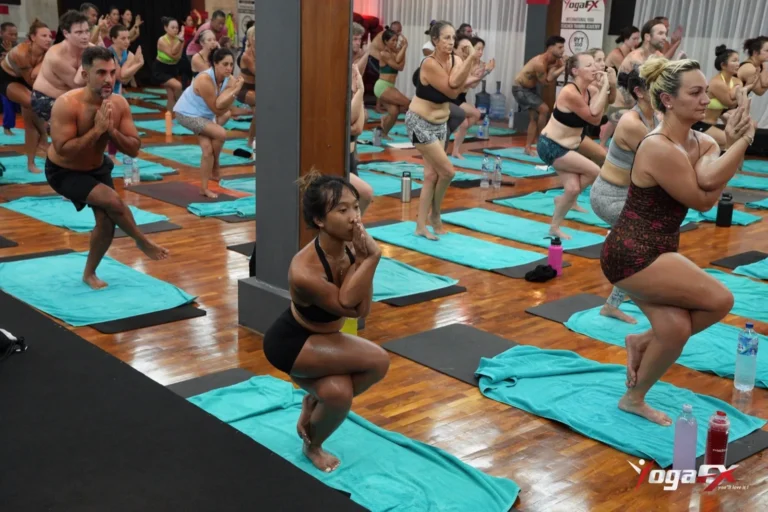
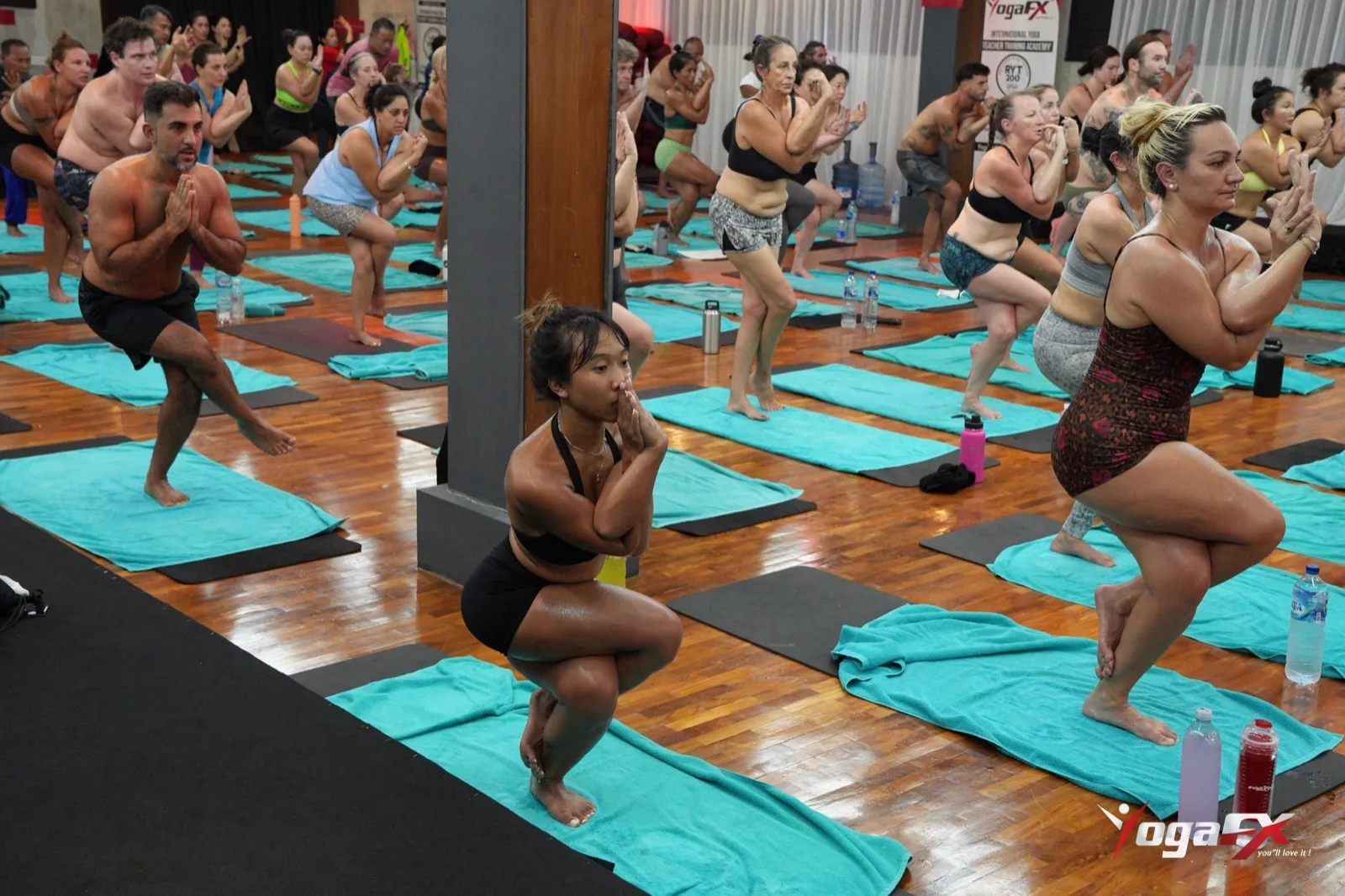
2. Eagle Pose (Garurasana): Knee and Hip Proprioception Exercise
Eagle wraps one leg around the other while you balance on the standing foot and cross your arms. The standing knee, ankle and hip all work to keep you upright. Because your arms are tied up, you cannot use them to rescue a wobble. That makes it one of the most honest balance exercises in the sequence.
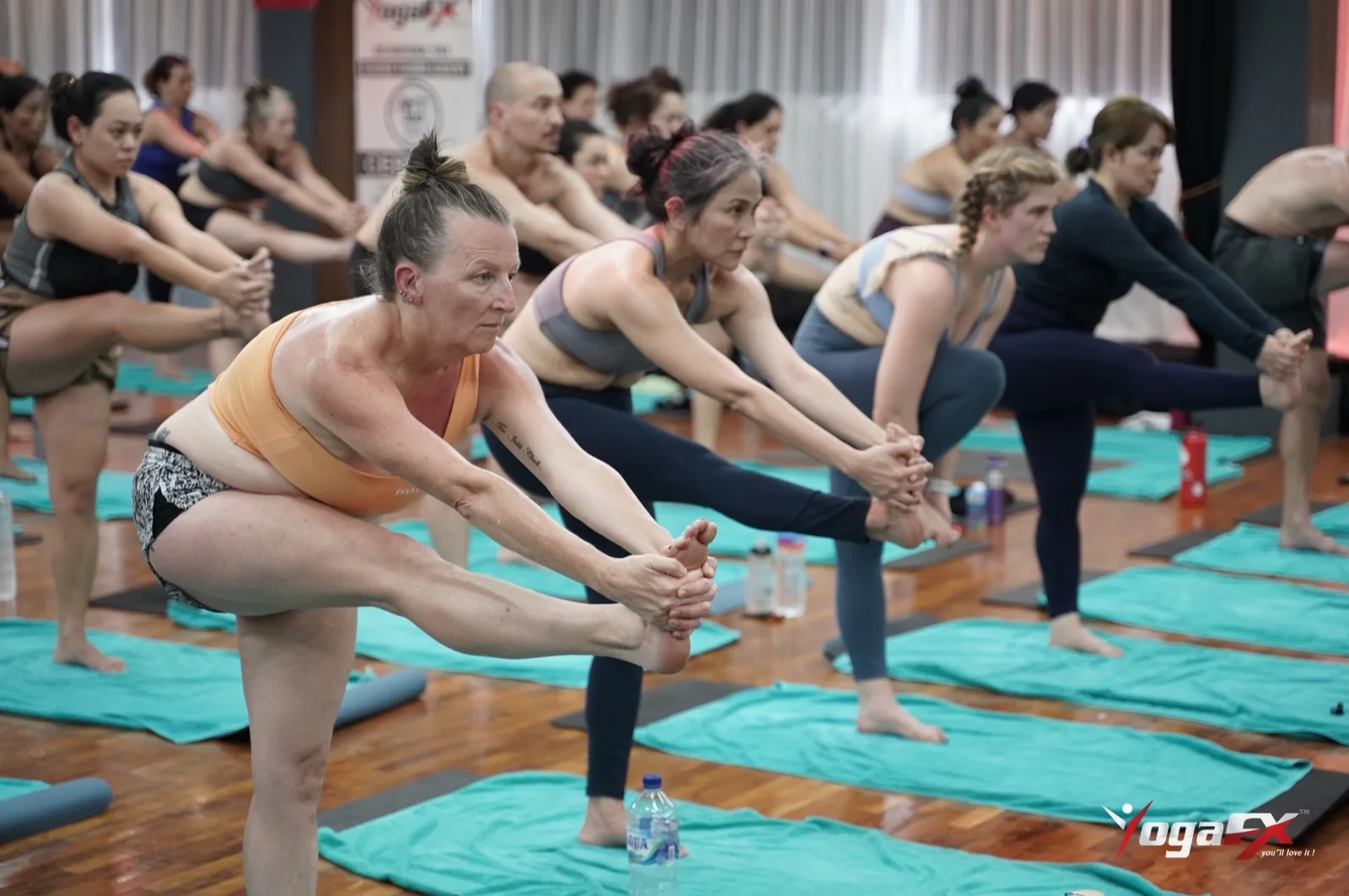
3. Standing Head to Knee (Dandayamana-Janushirasana): Proprioception Exercise for One Locked Joint
You lock the standing leg, lift the other foot into your hands and press it forward while the standing leg stays straight. Many beginners find it humbling. The challenge is not flexibility alone. You are asking the brain to hold one joint steady while a second limb moves freely.
4. Standing Bow Pulling (Dandayamana-Dhanurasana): Spine Proprioception Exercise
Here you balance on one leg while kicking the other back into your hand and reaching forward. The torso tilts, the back leg rises, and your centre of mass keeps moving. Proprioceptors in the spine and hips have to update their reports constantly.
5. Balancing Stick (Tuladandasana): Foot Proprioception Exercise
Your body forms a horizontal line on one standing leg. This posture is hard to cheat. Small shifts in the standing foot show up at once, and the long lever of the torso and back leg magnifies every error. Many students find it teaches them to feel the standing foot as a whole map, not a single point. Our Balancing Stick pose guide walks through the steps and common mistakes.
6. Tree Pose (Tadasana): Gaze and Proprioception Exercise
Tree places one foot high on the standing thigh while the hands come together overhead. Its balance demand is gentler than Balancing Stick, but the narrow base and raised arms keep it honest. A steady gaze helps, and teachers cue students to find one fixed point.
7. Toe Stand (Padangustasana): Advanced Proprioception Exercise
Toe Stand is the last balance posture of the standing series. You cross one foot over the opposite thigh, then lower your hips toward the heel of the standing foot while balancing on its toes. It combines a tiny base with a deeply bent standing knee, so the ankle, foot and hip must coordinate precisely. Many experienced students still call it their hardest.
Posture Map: What Each of the Proprioception Exercises Trains
This table summarises where each of the proprioception exercises places the demand. It reflects teaching experience in the 26&2 room, not trial data, so treat it as a practice guide.
| Posture | Sanskrit name | What it asks of your senses | Common wobble |
|---|---|---|---|
| Awkward Pose | Utkatasana | Ankle and calf position sense on a small base | Heels dropping, knees drifting inward |
| Eagle Pose | Garurasana | Knee and hip joint position sense with arms tied up | Standing hip pushing sideways |
| Standing Head to Knee | Dandayamana-Janushirasana | One locked joint and one moving limb at once | Standing knee bending to chase the foot |
| Standing Bow Pulling | Dandayamana-Dhanurasana | Spine and hip feedback as the torso tilts | Collapsing the chest to lift the leg |
| Balancing Stick | Tuladandasana | Whole-foot pressure under a long body lever | Standing foot gripping, hips twisting open |
| Tree Pose | Tadasana | Narrow base with arms overhead | Looking down, losing the fixed gaze |
| Toe Stand | Padangustasana | Ankle, foot and hip in a deep bend on a tiny base | Rushing the descent, collapsing off the toes |
What the Research Says About Yoga, Balance and Proprioception Exercises
Start with what is solid. The 2016 systematic review and meta-analysis by Youkhana and colleagues pooled six trials with 307 participants aged 60 and over. Yoga-based exercise produced a small improvement in balance (Hedges' g = 0.40) and a medium improvement in physical mobility (g = 0.50, from three trials). The authors note that further research is needed to show whether these gains mean fewer falls.
That result concerns balance and mobility, not proprioception directly, and it studied older adults rather than hot-room practitioners. We cite it because balance is the practical outcome that proprioception supports, and because it is a pooled analysis of controlled trials, not a single small study.
Next, what the evidence does not say about proprioception exercises. The Cleveland Clinic page does not mention yoga at all.
We found no trial measuring joint position sense in a Bikram class. Anyone claiming that proprioception exercises in a hot class "fix" the sense is going beyond the data. A fair reading is narrower: balance-based yoga postures are a reasonable, low-equipment way to practise balance, and balance practice is what clinicians recommend.
If you have had an injury, dizziness, neuropathy or a diagnosed balance disorder, speak to a physician or physical therapist before adding heat or standing balance work. Not every cause of proprioception problems can be improved by exercise, and a professional can tell you which applies to you.
Proprioception Exercises by the Numbers
Three Mistakes That Hide Weak Proprioception
After years of watching trainees balance, the YogaFX teaching team sees the same patterns. None of them is dangerous on its own, but each one lets a student skip the sensory work the posture is meant to train. This section reflects teaching observation, not trial data.
- Staring at the neighbour. Copying the person in front of you replaces your own position sense with vision. Teachers cue you to look at one fixed point instead, which is why a class without demonstration forces you to feel your way into each posture.
- Gripping and rushing. Clawing the floor with your toes and snapping into the posture feels strong, but it muffles the small signals from the foot. Slow entries let you notice which edge of the foot is taking the load.
- Holding the breath. A held breath tightens the whole trunk and makes the wobble bigger. A steady breath gives you a calm baseline to compare each shift against.
Each fix costs nothing, and these are the cheapest proprioception exercises you will ever do. It simply asks you to trade effort for attention. Students who make that trade usually find that postures they fought for weeks begin to feel quieter, and a quieter posture is a more stable one.
There is a second payoff for future teachers. Once you can feel your own wobble, you can also read it in someone else. You start to notice the knee that drifts, the shoulder that lifts, the gaze that drops, and you can cue the fix before the student falls out of the posture.
How to Practise Proprioception Exercises Safely
You do not need a hot room to do proprioception exercises. You do need regular, patient repetition. These steps follow the same logic a physical therapist uses, adapted to how we teach in the 26&2 room.
- Start with a stable base. Practise a one-legged stance near a wall or chair, the same basic exercise the Cleveland Clinic names, before attempting Eagle or Balancing Stick.
- Fix your gaze. Pick one point and keep your eyes there. Steady vision gives your balance system a reference while the other senses learn.
- Slow everything down. A fast entry hides weakness. Take two seconds to enter a posture and two to leave it.
- Repeat the same posture twice. The second attempt shows you what the first one taught you.
- Stop when form breaks. A shaky posture held with a collapsed spine trains the wrong pattern.
Heat deserves its own paragraph when you do proprioception exercises. A hot room adds a second job, because you are managing breath, temperature and fatigue while you balance. Beginners should treat the room itself as a skill. Our article on what teachers tell hot yoga students who feel dizzy covers when to step back and sit down.
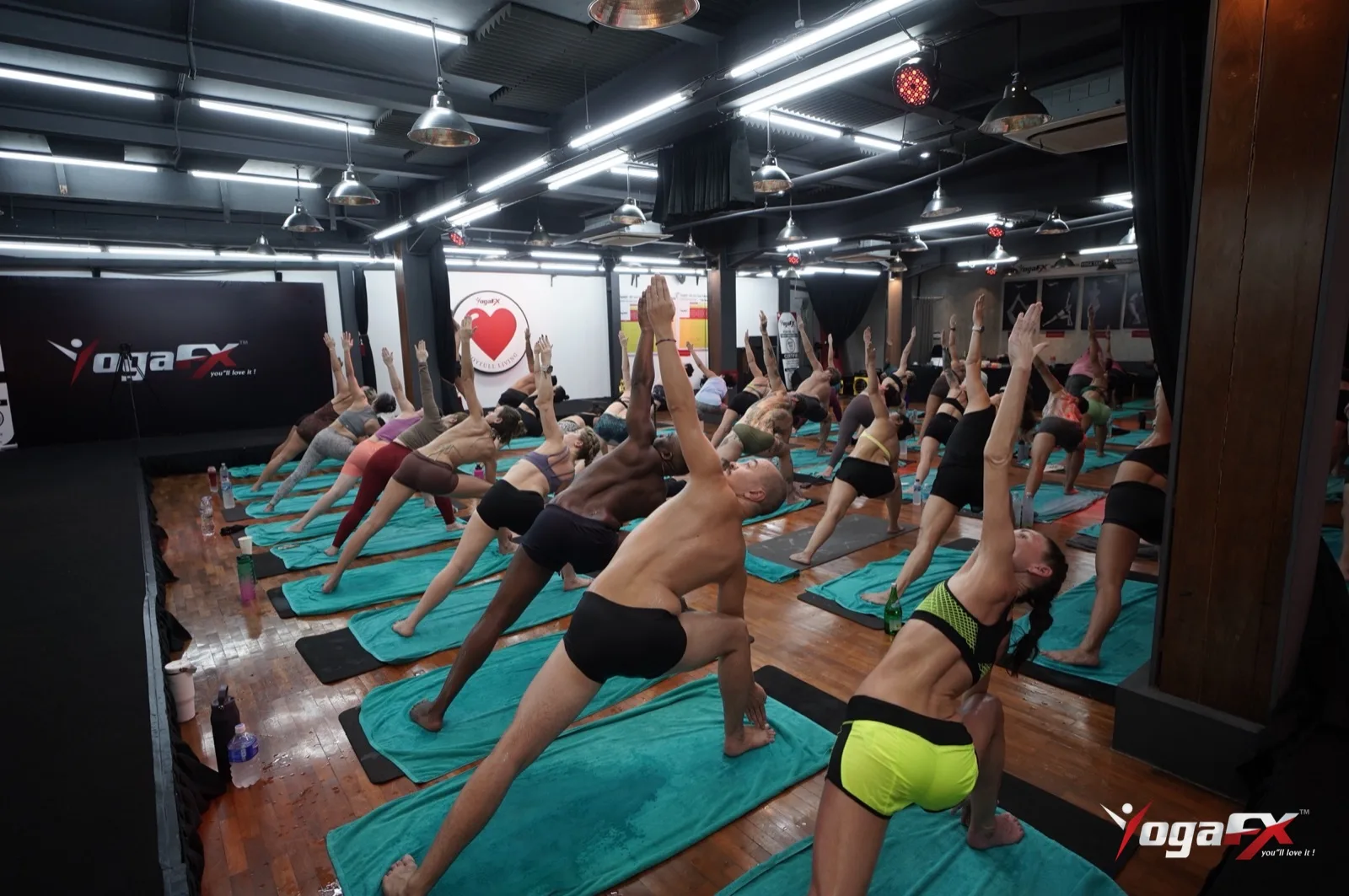
Triangle is not a one-leg balance, but it shows how body awareness carries across the series. If you want posture detail, our Triangle pose guide breaks down the cues. Athletes who want to apply this to sport can read how Bikram yoga for athletes is structured.
What YogaFX Trainees Say About Balance and Body Awareness
Numbers only go so far, and proprioception exercises feel different from the inside. Trainees describe the change in their own words, and the reviews below come from verified YogaFX reviewers. None of them is about proprioception specifically, so read them as experience, not evidence.
"The best Yoga Teacher Training I ever had so far. The Yoga FX too a good care everyone very well, the venue so great, accommodation. Really grateful I had the opportunity to learn from the master Mr. Ian."
Nadya, Google review, 2026
"Very amazing experience with YogaFX, i learn a lot from the training. Thankyou YogaFX"
Komang, Yoga Alliance review, 2019
A trainee in our YouTube review puts it this way: "It's the best experience I think anybody can have in their lives. It's not just a yoga training, it's a transformative." You can watch the full review below (2023).
How Mr. Ian Terry Teaches Balance in the 26&2 Room
Mr. Ian Terry is the Founder and Lead Instructor of YogaFX and an E-RYT 500 teacher with 12,000+ teaching hours. He trained for five years, from 2014 to 2019, with the founder of the Bikram Hot 26&2 method. His graduates number 1,500+ from 80+ countries, and he teaches the sequence the way he learned it: scripted dialogue, no music, no demonstration.
Why does that matter for proprioception exercises? Because the scripted dialogue puts the instruction into words about the body. Students learn to listen for cues and answer with their own sensation, not by copying the person in front of them. That listening habit is the practical side of proprioception exercises: feeling first, then correcting.
For trainees, the lesson goes one level deeper. A teacher who has felt their own wobble in Eagle can cue a nervous student far better than one who learned the cue from a script alone. If you want to see how this is taught, read our overview of the six-day Bikram teacher training.
The training certifies you with Yoga Alliance RYT 200-Hour and the Bikram Hot 26&2 200-Hour International Yoga Certification. For the wider YogaFX programme, see the YogaFX teacher training hub.
FAQ
Can you train proprioception with exercises?
Yes, according to the Cleveland Clinic, exercises that target specific joints and muscles may strengthen proprioception and the sense of balance. Examples include one-legged balance and walking in a straight line. Regular repetition matters most. A physical therapist can tailor exercises to an injury or condition.
What are some simple proprioception exercises?
Simple proprioception exercises include standing on one leg near a wall, walking heel to toe along a straight line, and holding a single-leg posture while keeping your gaze fixed. Start with a stable base, slow your movements, and stop when your form breaks. Ask a physical therapist if you have an injury.
Are proprioception and balance the same thing?
No. Proprioception is your sense of where your body parts are and how they move. Balance is the outcome of several systems working together, and proprioception is one of them. Better position sense supports better balance, but vision and the inner ear contribute as well.
Does yoga count as proprioception exercises?
Research directly measuring proprioception in yoga is limited. A 2016 meta-analysis of six trials found yoga-based exercise gave older adults small improvements in balance and medium improvements in physical mobility. Balance postures practise the skills proprioception supports, but this is not proof of a direct proprioception effect.
Is hot yoga safe for people with balance problems?
It depends on the cause. Heat adds stress on top of balance work, and people with dizziness, neuropathy, injury or a diagnosed balance disorder should ask a physician or physical therapist first. Beginners can stay near the wall, take breaks, and sit down whenever they feel unsteady.
Still have questions? Message Mr. Ian and the YogaFX team on WhatsApp and we will answer them personally, whether you are a beginner or a future teacher. This article is general education, not medical advice, so consult a healthcare professional about your own balance or injury concerns.