


Seasonal affective disorder yoga can support the daily habits that winter low mood wears down, such as movement, a steady wake time and company. No trial has shown that yoga treats the condition itself. The best heated yoga evidence comes from depression research, so light therapy and a clinician stay first.

This article shares research for education. It is not medical advice, and it does not diagnose or treat anything. If low mood lasts, talk to a doctor or another healthcare professional before you change your care.
The Short Answer on Seasonal Affective Disorder Yoga
Here is the honest version, written by a teacher training team that teaches heated yoga every week. Seasonal affective disorder yoga is a sensible habit for many people. It is not a replacement for care, and we won't pretend otherwise.
- What yoga can do: give you a reason to leave the house, a fixed point in the day and a room full of people. Mayo Clinic lists regular exercise among the self-care steps for SAD.
- What heat might add: nobody knows yet for SAD. One trial of heated yoga helped adults with depression, but it was built around depression in general, not the seasonal kind.
- What it cannot do: replace light therapy, talking therapy or medicine when a clinician recommends them.
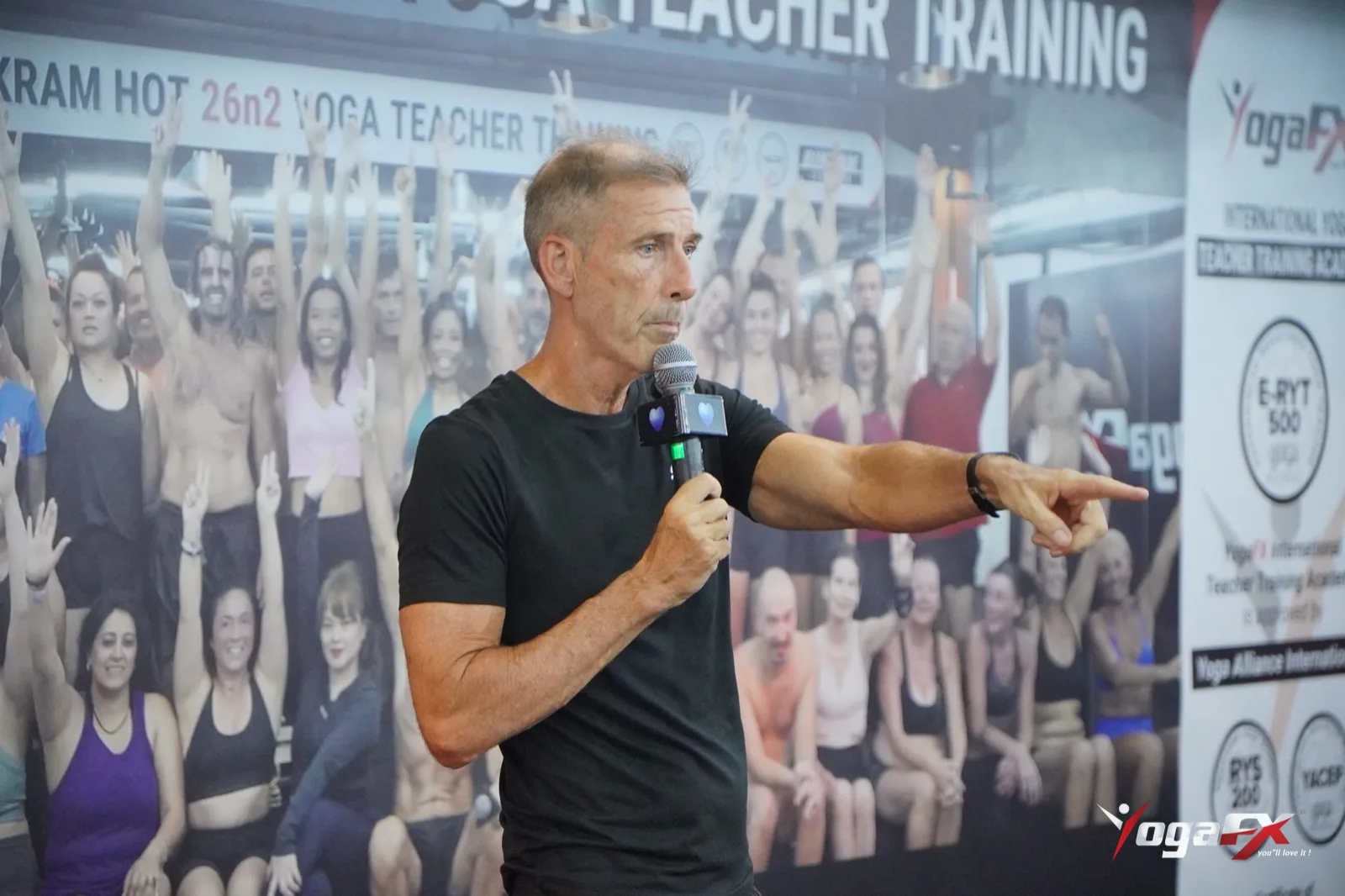
That is also how we frame it at YogaFX under Mr. Ian Terry, our Founder and Lead Instructor (E-RYT 500, 12,000+ teaching hours). A class is a supportive habit. It is never a treatment.
What Seasonal Affective Disorder Is, and Where Light Comes In
The National Institute of Mental Health (NIMH) describes SAD as "a type of depression characterized by a recurrent seasonal pattern." The winter pattern is the common one. Symptoms usually last about four to five months out of the year.
The signs look like depression with a seasonal twist. For example, NIMH lists a low, anxious or empty mood most of the day, nearly every day, for at least two weeks. Winter-pattern SAD often adds oversleeping, carbohydrate cravings and social withdrawal.
Nobody has pinned down the cause. Mayo Clinic says the specific cause remains unknown, then points to three ideas: less sunlight disturbing the body clock, a drop in serotonin, and a shift in melatonin as the seasons change. So light sits at the centre of the story. Seasonal affective disorder yoga therefore belongs mostly in the habits around the clock, not in the cause.
Why light and temperature both set the body clock
The National Institute of General Medical Sciences explains that light and dark have the biggest influence on circadian rhythms. Its fact sheet adds that food, stress, physical activity, social environment and temperature also affect them. The master clock in the brain controls melatonin based on the light the eyes receive.
That list matters for our topic. Physical activity, social setting and temperature are all on it. So people reasonably ask whether a heated class could nudge the clock in winter.
Nobody has tested that for SAD. Because of that, we treat seasonal affective disorder yoga as a fair question, not a claim.
What the Studies Say About Seasonal Affective Disorder Yoga and Heat
We could not find a trial of seasonal affective disorder yoga in a heated room. Three studies sit closest to the question, so we read them side by side. Each one comes with limits, and we list them plainly.
The 2023 Massachusetts General Hospital trial on depression
Nyer and colleagues ran an eight-week randomised trial and published it in the Journal of Clinical Psychiatry in 2023. Eighty adults with moderate-to-severe depression were randomised, and 65 were analysed. One group took heated yoga classes. The other waited. The published abstract reports that 59% of the yoga group cut their symptoms by half or more, against 6.3% of the waitlist group.
Those who took part averaged about 10 classes over the eight weeks, which is roughly one a week. The limits are real, though. For instance, the comparison group was a waitlist, not another activity. The average age was 32.7, and 81.5% of the group were women. The trial studied depression, not a seasonal pattern.
We unpack the design in more detail in our guide to the hot yoga depression study, including how the trial was run and measured.
The 2026 follow-up: more classes, more change
In 2026 a team led by Copeland published a dose-response analysis of the same trial in the Journal of Affective Disorders. Its abstract reports that each extra class was linked to about a 0.72-point improvement on the depression scale, with no evidence of a benefit plateau.
Be careful here. This is a secondary analysis, so it shows a link, not proof of cause. Because people who go to more classes may differ from people who go to fewer, read it with care. Still, it suggests that regular attendance matters more than one big effort.
Whole-body heat without yoga: a 2016 JAMA Psychiatry trial
Janssen and colleagues studied heat alone. Their double-blind trial in JAMA Psychiatry randomised 34 adults with major depressive disorder, and 29 were analysed. The abstract says a single session of whole-body hyperthermia lowered depression scores more than a sham session did, with the gap still present at six weeks.
That is a small study, and it used a heating device, not yoga. It also did not look at seasonal patterns. It explains why researchers are curious about heat. However, it does not tell you that a class will do the same.
Table 1 puts the sources side by side, along with what each one leaves unanswered.
| Source | Who it covers | What it found | What it cannot tell you about SAD |
|---|---|---|---|
| NIMH and Mayo Clinic | People with SAD | Light box, usually 10,000 lux for about 30 to 45 minutes, early in the day. Mayo adds that research on light therapy is limited. | Whether yoga can do the same job |
| Nyer et al., 2023 | 80 adults with moderate-to-severe depression | 59% responders on heated yoga vs 6.3% on the waitlist | Anything seasonal; no active comparison group |
| Copeland et al., 2026 | The same trial, dose-response analysis | About 0.72 points better per extra class; no plateau seen | Cause and effect; any seasonal link |
| Janssen et al., 2016 | 29 adults analysed, major depressive disorder | One heat session lowered scores more than sham for six weeks | Yoga, long-term use, or a seasonal pattern |
| NHS | The general public | Regular exercise and daylight listed as self-care; light therapy not usually offered on the NHS | Whether any one yoga style works |
Seasonal Affective Disorder Yoga in Five Numbers
Here are the figures behind seasonal affective disorder yoga, kept in one place. Each card names where the number comes from.
What Light Therapy, Talking Therapy and Doctors Do That Yoga Cannot
NIMH lists four treatment routes for SAD. They are worth knowing, because they are what a clinician will talk about first.
- Light therapy: a light box at 10,000 lux for about 30 to 45 minutes, usually in the morning.
- Psychotherapy: CBT for SAD is typically two group sessions a week for six weeks.
- Antidepressant medication: bupropion is the extended-release option NIMH names.
- Vitamin D: NIMH describes the results as mixed.
Mayo Clinic calls light therapy one of the first-line treatments for fall-onset SAD. It says to use the box within the first hour of waking, and that it generally starts working in a few days to a few weeks. It also admits that research on light therapy is limited.
The NHS is more cautious. It says light therapy is not usually available on the NHS because there is not enough evidence to tell whether it works, though many people find it helps. It also warns that a light box may not suit certain eye conditions or some medicines, so speak to a GP first.
On diagnosis, the NHS says you may be diagnosed if you've had depression symptoms at a particular time of year for two years or longer. See a GP if you think you might have SAD, or if treatment isn't helping. In a crisis, NIMH points US readers to the 988 Suicide and Crisis Lifeline and to 911. Elsewhere, use your local emergency number.
How Seasonal Affective Disorder Yoga Fits a Winter Routine
Seasonal affective disorder yoga works best as one habit among several. Both Mayo Clinic and the NHS put daily habits on their self-care lists. For example, Mayo says to exercise regularly. The NHS says to get regular exercise and as much natural daylight as you can, to keep a consistent sleep and wake time, and to stay in contact with friends and family.
A fixed time, ideally in daylight
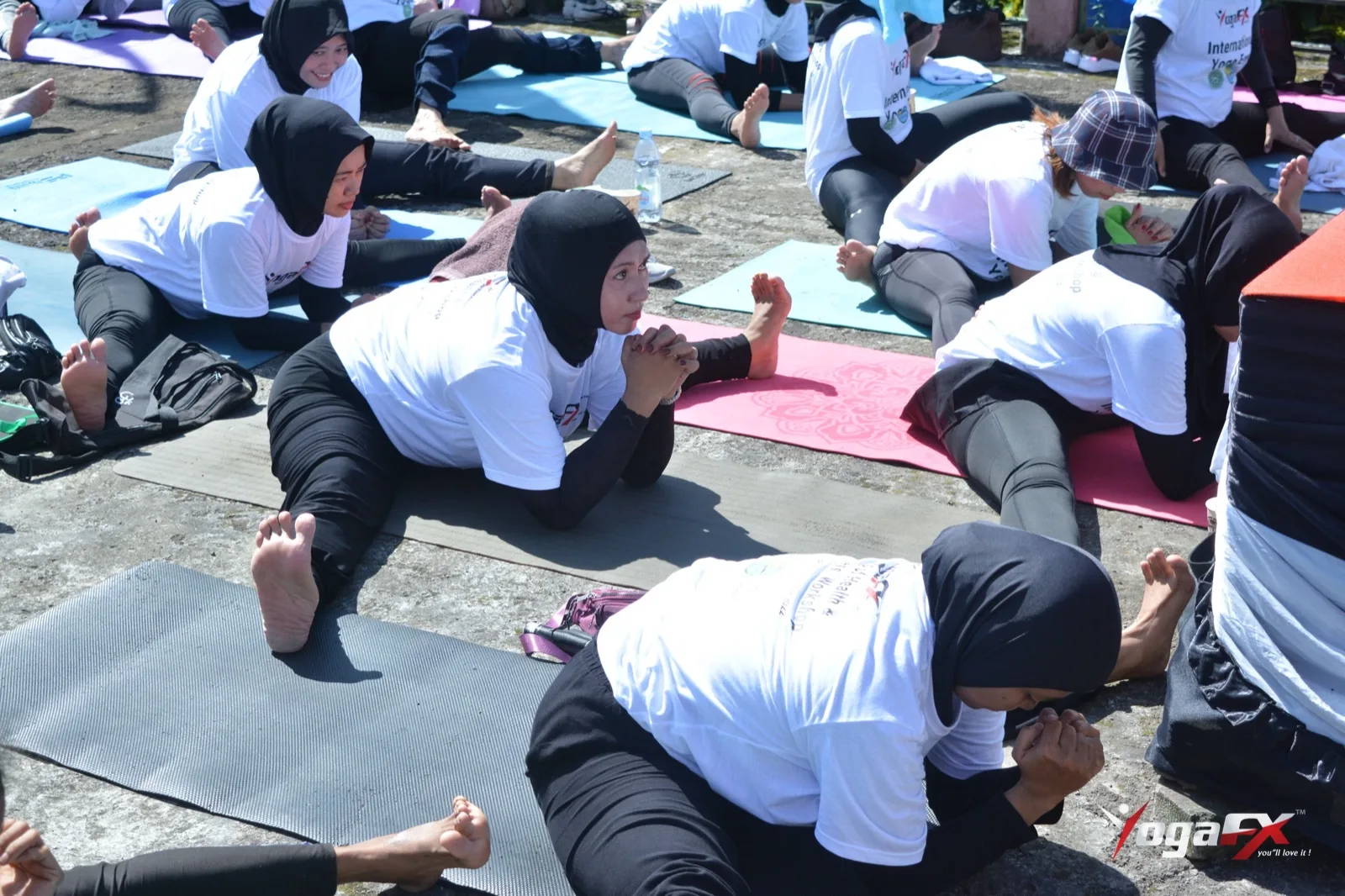
A class gives the day a fixed point. So book the same slot each week, then add a short walk outside before or after it. That way you meet two items on the NHS list at once: exercise and daylight.
We suggest this as a practical idea, not a medical rule. The evidence we have covered does not prove that one class time beats another.
Company without small talk
Withdrawing from people is a listed sign of winter-pattern SAD. A studio class puts you in a room with others, yet it doesn't ask for a conversation. For some people, that is an easier first step than a social plan.
Start small and build slowly
Trial participants averaged about one class a week. Because of that, starting with one or two classes is a sensible pace for most beginners. If you are new to heat, our guide to heat acclimatization for hot yoga explains how the body adapts over the first weeks.
Why Bali Is a Different Case for Seasonal Affective Disorder Yoga
Mayo Clinic notes that SAD appears to be more common among people who live far north or south of the equator. Bali sits close to the equator. Day length changes very little through the year here, so the long dark mornings behind the winter pattern are not part of daily life.
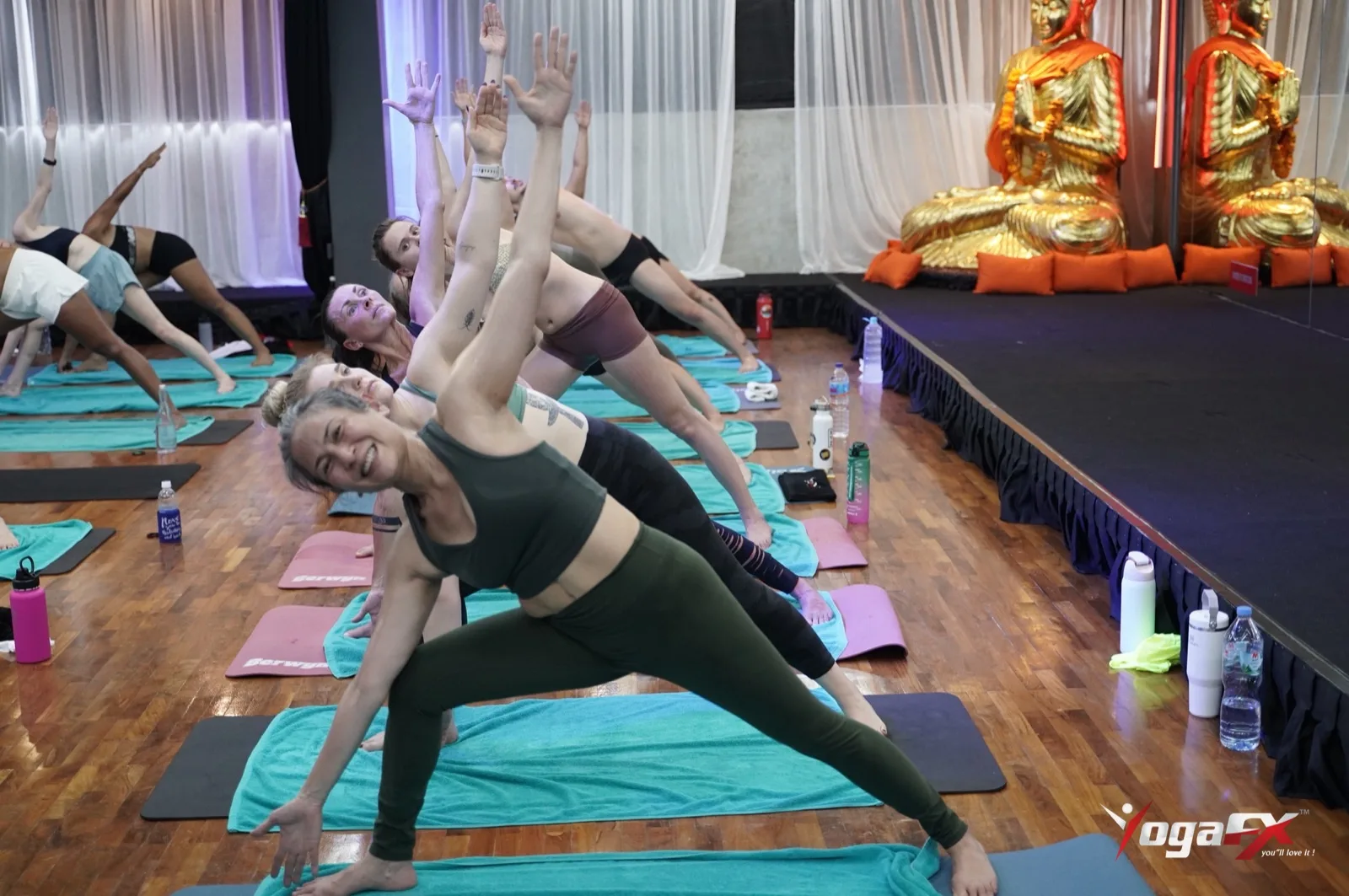
That does not make anyone immune to low mood. Instead, it means our classes in Seminyak run in warm, bright country. The room is heated naturally by the tropical climate, to about 40°C with humidity near 40%, not by electric heaters. The studio is open from 06:00 to 22:00 every day.
Our next teacher training batch checks in on Sunday 24 January 2027, which is deep winter in the north. Anyone flying in from a cold, dark month may notice the change in daylight straight away.
"There can be no greater investment than the one that you make in your health, because without it, nothing else matters."
Mr. Ian Terry, YogaFX
Mr. Ian has lived in Bali for more than a decade. He teaches Official Hot 26&2, hatha and ashtanga, and he trained for five years on the staff of the method's founder. That experience is why we speak about heat with respect.
What Trainees Say About the Group
The two clips below are real trainee reviews from our YouTube channel. Neither one talks about mood or seasonal affective disorder, and we won't pretend they do. We include them because support and routine are what the habit advice above rests on.
"When I started this challenge, I don't think I was strong enough to, but this man every day give me the small support to go from, which I'm very proud of myself."
A trainee in our YouTube review, 2023
"I know for a lot of us in our group, so thank you Mr Ian, this has definitely exceeded any expectations."
A trainee in our YouTube review, 2023
Across all platforms, more than 550 students have left reviews of YogaFX: 150 on Google, 50 on Yoga Alliance and 357 YouTube testimonial videos. You can judge the tone for yourself before you ever step into a room.
Safety Notes for Heated Classes When Your Mood Is Low
Heat is a real physical load. Low mood can also make it harder to eat, sleep and drink well, so heat can feel harder. Seasonal affective disorder yoga in a heated room needs a few simple guardrails.
- Tell your doctor first if you take regular medicine or have any health condition, and ask whether heated classes suit you.
- Drink well around class. Our hot yoga hydration plan covers fluids and electrolytes.
- Go slowly in the first weeks, and rest whenever you need to. Dizziness is common among beginners, and our note on feeling dizzy in hot yoga explains what teachers tell students.
None of this replaces professional care. If your mood drops sharply, skip the class and speak to a clinician instead.
How YogaFX Teaches This in Seminyak
Our approach to seasonal affective disorder yoga stays simple. We run one studio, in Seminyak: Jl. Pangkungsari Gg Jepun No.888, Kuta Utara, Seminyak, Badung, Bali 80361. Each class is 90 minutes and follows the 26 postures and 2 breathing exercises of Original Hot 26&2 Yoga. The dialogue is scripted. There is no music and no demonstration, so your attention stays on the room and your breath.
If you'd like to try it, the first class is free with the Free 1-Day Guest Pass. Come as a visitor, take it slowly and see how your body feels, because that is the best test.
If you teach, or want to, our 6-day hybrid MasterClass is the training route. It pairs online study with an intensive in Bali, and we cover dates and formats in our Bikram yoga teacher training guide. Graduates leave with the Yoga Alliance RYT 200 and the Bikram Hot 26&2 200-Hour International Yoga Certification.
For a routine-first take on the same question, our teacher training hub has a companion guide written for people who want a gentle first week. Read both, then compare how each one treats the evidence.
FAQ
What are the signs of seasonal affective disorder?
The NIMH describes a low or empty mood most of the day, nearly every day, for at least two weeks. Winter-pattern SAD often brings oversleeping, carbohydrate cravings and pulling away from people. Symptoms usually last about four to five months a year. Anyone with these signs should talk to a healthcare professional.
Does heated yoga help seasonal affective disorder?
No trial has tested heated yoga on seasonal affective disorder. A 2023 Massachusetts General Hospital trial found that heated yoga helped adults with moderate-to-severe depression more than waiting did, but that study was not seasonal. Yoga may support a routine, yet light therapy, talking therapy and medicine remain the main options.
Does living near the equator protect against seasonal affective disorder?
Mayo Clinic says SAD appears to be more common among people who live far north or south of the equator. Day length changes little near the equator, which may explain the pattern. It is not a guarantee, though. Low mood can happen anywhere, so seek advice if it lasts.
Can I take heated yoga classes while using a light box?
Ask your doctor first. The NHS says light therapy may not suit certain eye conditions or some medicines, and Mayo Clinic advises using the box within the first hour after waking. A class later in the day leaves that morning slot free, but your doctor should confirm what is safe for you.
When should I see a doctor about winter low mood?
The NHS says to see a GP if you think you might have seasonal affective disorder. A diagnosis usually follows depression symptoms at the same time of year for two years or longer. If you have thoughts of self-harm, contact emergency services or a crisis line straight away.
Still have questions? Message Mr. Ian and the YogaFX team on WhatsApp and we will answer them personally.
Last updated: November 23, 2026