



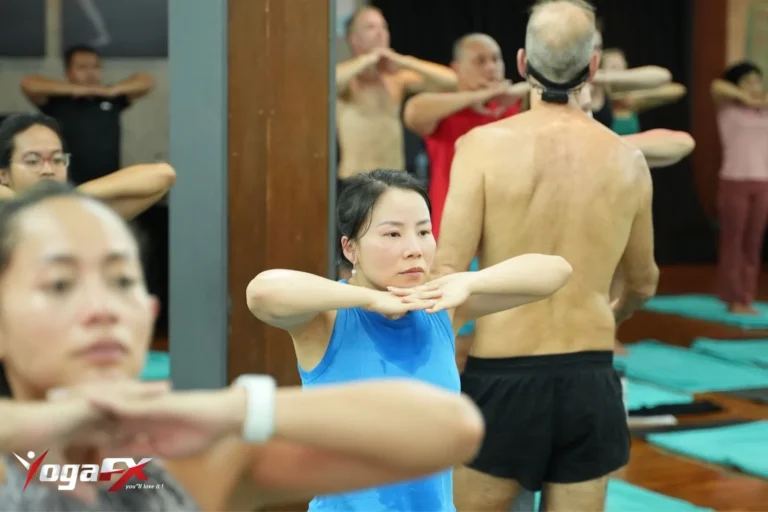


Heat shock proteins are helper proteins your cells make to protect other proteins from stress. One small four-week trial found more heat shock protein 70 in the blood cells of people who practised hot yoga. That is an early lead, not a health promise, and nobody should use it to promise a treatment.

Mr. Ian Terry, E-RYT 500, has taught more than 12,000 hours, and students ask him about heat shock proteins after almost every podcast or sauna video. At YogaFX we answer with the study, its size and its limits. So this guide covers what the proteins do, what the hot yoga research measured, and where the evidence stops.
This article is for education and is not medical advice. Please talk to a healthcare professional before you start heat-based exercise, especially if you have a heart or blood pressure condition or you are pregnant.
Heat Shock Proteins in Plain Words
Think of a protein as a folded piece of paper that only works in the right shape. Stress can bend or tangle that shape. A tangled protein may stop doing its job, so cells keep a crew of helpers on hand.
That crew is the heat shock proteins, or HSPs. In a 2020 review, Stefan Tukaj, International Journal of Molecular Sciences, 2020, describes them as a diverse group of constitutive and/or stress-induced molecules, sorted by molecular weight. Constitutive means your cells make some of them all the time.
The best known family member is HSP70. The same review calls it a key molecular chaperone that cells overproduce in response to stress of various origin. A molecular chaperone holds other proteins steady while they fold or refold.
- Everyday job: keep proteins folded and working inside every cell.
- Stress job: levels can rise when a cell meets stress, and heat is one kind of stress.
- Open question: what a short-term rise means for the long-term health of a healthy person.
That last line is where most online claims fall apart. A higher number on a lab sheet is a measurement, so it isn't yet a benefit.
What the Hot Yoga Heat Shock Protein Trial Found
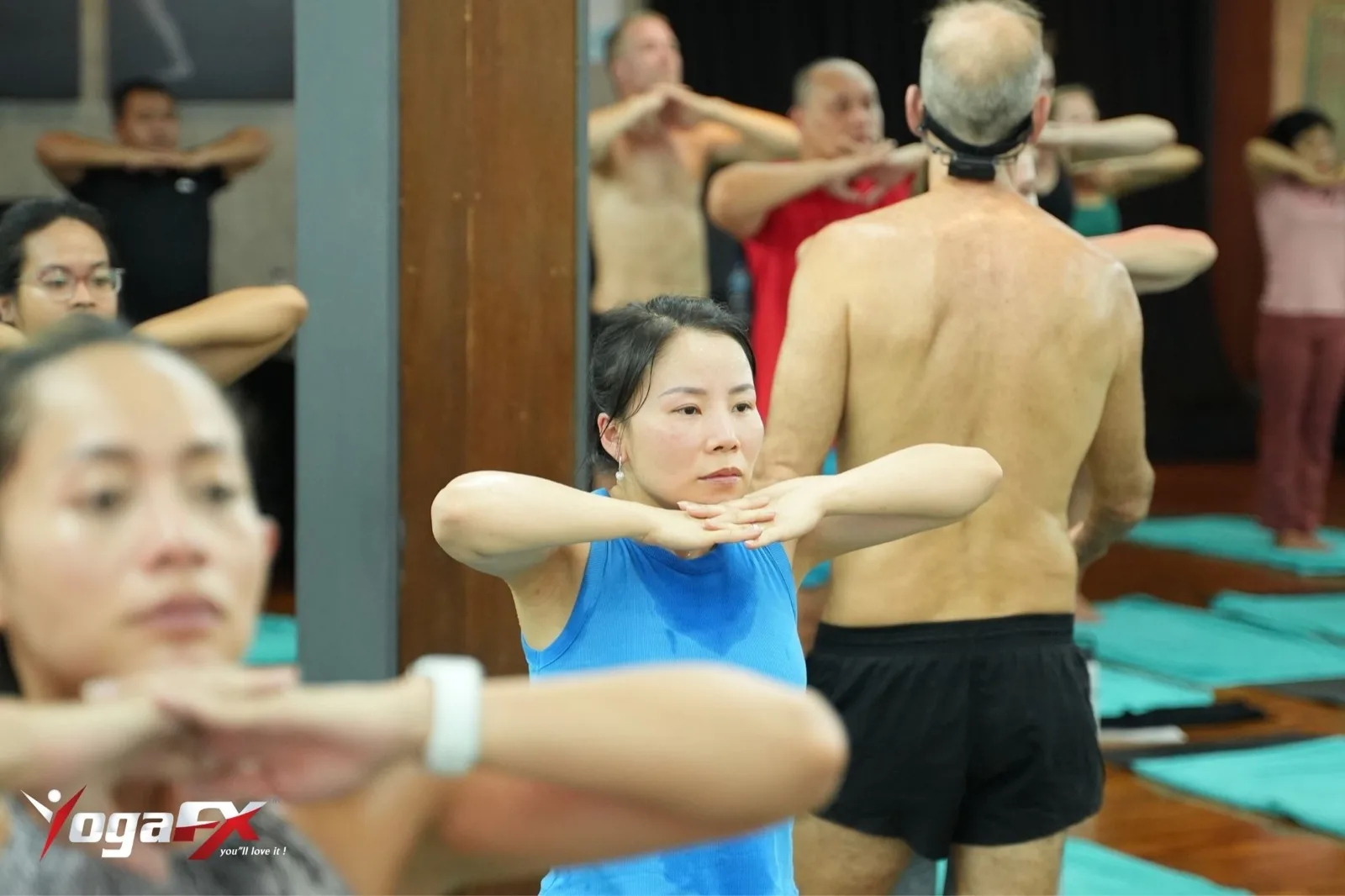
One trial tested hot yoga directly against HSP70, and it is the study every teacher should know. It was run by Bourbeau and colleagues, International Journal of Yoga, 2021. It randomised 22 adults, 11 men and 11 women aged 26 on average, to hot yoga or normal-temperature yoga.
How the trial was set up
- Dose: 12 sessions, three a week for four weeks, using a modified Bikram protocol.
- Rooms: the hot group practised at roughly 37 to 40°C (the abstract says 41°C with 40% humidity). The comparison group practised at 18 to 22°C.
- Format: each session followed a standardised 75-minute yoga video in an environmental chamber, not a live teacher.
- Measure: HSP70 in peripheral blood mononuclear cells, a type of white blood cell.
The abstract says the HSP70 analysis suggested higher expression in the hot yoga group only. The authors concluded that 12 hot sessions promoted cardiovascular fitness and cellular thermotolerance adaptations. Thermotolerance simply means cells that cope better with heat.
What did not change
Equally important, the same trial found no evidence of heat acclimation or a change in mental stress. The stress hormone ACTH did not move either. Serum BDNF, a protein linked to brain health, rose in the two yoga groups combined, so that result did not depend on room temperature.
Maximal aerobic fitness did rise in the hot group only. We cover that part in our review of whether hot yoga improves VO2 max. For heat shock proteins, the point is narrower: some measures moved and others stayed flat.
The Evidence Ladder: How Far Each Study Reaches
Not every study carries the same weight, so it helps to rank them. A cell-biology review explains a mechanism. A one-session blood test shows a short-term change. Only a long, repeated trial can say anything about health. The table below puts the hot yoga evidence on that ladder.
| Rung | Source | What it can show | Where it stops |
|---|---|---|---|
| 1. Mechanism | Tukaj, 2020 (review) | What HSP70 does inside and outside the cell | Not a yoga study; the outside-the-cell role is described as conflicting |
| 2. One hot session | Lambert et al., 2020 | IL-6 rose 15.5-fold 30 minutes after one hot hour in 16 practitioners | Heat shock proteins were not measured; blood drawn only twice |
| 3. Four weeks of hot yoga | Bourbeau et al., 2021 | HSP70 looked higher in blood cells of the hot group only | 22 adults, video-led sessions, no health outcome tied to HSP70 |
| 4. Long-term health | None we could open | Whether a hot yoga HSP rise changes health over months or years | Not tested in any hot yoga trial we could open |
Rung two deserves a note, because it is often misread. The Lambert and colleagues, International Journal of Exercise Science, 2020, tested 16 experienced practitioners during one hour of Bikram yoga at 105°F and at 74°F. They found a big IL-6 rise after the hot session only, but they did not measure heat shock proteins. We unpack that result in our article on hot yoga inflammation research.
Are Heat Shock Proteins Good or Bad? The Double Agent Problem
It is tempting to call a rise in heat shock proteins good news. The research is less tidy than that. Tukaj's review calls HSP70 a double agent, because its job changes with its location.
- Inside the cell: overexpressed HSP70 blocks NF-κB activation, a switch that drives inflammation. The review links this to an immunosuppressive effect.
- Outside the cell: HSP70 may act as a danger signal through TLR2 and TLR4 receptors, which can switch inflammatory pathways on.
- The honest summary: the review says results for the outside role conflict, so HSP70 may play a dual role there.
So "more HSP70" isn't a synonym for "healthier". Instead, it tells us a cell met a stress and answered it. Whether that answer helps, hurts or does nothing depends on the person, the dose and the context. For example, a rested beginner and a tired veteran may respond very differently.
Why a blood marker is not a benefit
Researchers measure a marker because it is easy to count. But people care about outcomes such as pain, sleep, fitness or disease. The distance between the two is large, and that means a marker moving doesn't prove an outcome will follow. Heat shock proteins are no exception.
That gap is why we avoid sweeping promises. If a page says heat shock proteins "clean" you, "heal" you or "fight" a named disease, it has stepped past what these studies measured.
Hot Yoga, Sauna and Other Heat: Not the Same Dose
Students often ask whether a sauna does the same thing. The honest answer is that the dose is different, because the two settings ask different things of the body. A sauna is passive heat. A hot class combines heat, muscle effort, breathing and balance for about 90 minutes.
None of the studies above can tell you which part carries the HSP70 result in the Bourbeau trial. Heat may drive it, the effort may drive it, or both may. Our comparison of hot yoga vs sauna explains why researchers keep the two apart.
What Teachers Can Say About Heat Shock Proteins, and What to Leave Out
If you teach in a hot room, a student will ask you about heat shock proteins sooner or later. A good answer is short, accurate and calm. So the table below gives a practical split.
| Claim a student may bring | Verdict | Say this instead |
|---|---|---|
| Hot yoga raises HSP70 | Partly supported | One small trial of 22 adults found higher HSP70 in blood cells after 12 hot classes. |
| Heat shock proteins make you healthier | Not supported | A marker rose. Nobody has shown that this rise changes health. |
| Heat shock proteins treat or prevent disease | Not supported | I cannot say that. Talk to your doctor about any condition. |
| Sweat flushes toxins out | Not supported | Sweat cools the body. That is all I would claim. |
| More heat means more benefit | Not supported | The studies did not test that. Stay safe and take your rests. |
A 30-second script for the hot room
Here is wording you can borrow. "Heat shock proteins are helper proteins your cells make under stress. One small study found more of one type in people who did hot yoga for four weeks. It is interesting, but it is early, so I do not promise results from it."
Notice what that script leaves out, because the gaps matter: no health promise, no cleansing talk and no number it cannot back up. Teachers who talk this way keep their students' trust, and that matters more than any single fact.

Heat Stress Safety: The Part That Matters More Than Any Protein
Heat shock proteins exist because heat is a real stress on the body. That stress can go wrong, and every hot room teacher must know the signs. The US National Institute for Occupational Safety and Health (NIOSH, part of the CDC) lists the warning signs below.
- Heat exhaustion: headache, nausea, dizziness, weakness, irritability, thirst, heavy sweating, elevated body temperature and less urine.
- Heat stroke: confusion, slurred speech, loss of consciousness, seizures, hot dry skin or profuse sweating, and a very high body temperature.
- First response: move the person to a cooler place, give cool water for heat exhaustion, and call emergency services straight away for heat stroke.
The same page calls heat stroke the most serious heat-related illness and says it can be fatal if treatment is delayed. That is why, in class, we teach students to sit down early, sip water and tell the teacher if they feel unwell. Skipping a posture costs nothing.
Please consult a healthcare professional before you start hot yoga if you have a heart condition, high blood pressure, are pregnant, or have a history of fainting or heat illness.
What Trainees Say After a Week in the Heat
Lab numbers tell one side of the story, and trainees tell the other. These three people took our hybrid teacher training, and they describe it in their own words.
The in-person classes, workshops and clinics were excellent and made you feel well prepared to start the journey of teaching and further yoga learning.
Anne, Yoga Alliance review, 2026
But the best part was meeting all of you.
Greta, YouTube review, 2026 (watch the video)
A trainee in our YouTube review thanked Mr. Ian for caring about the practice and its future, and said the course gave back a love for it that had faded (paraphrased; watch the video).
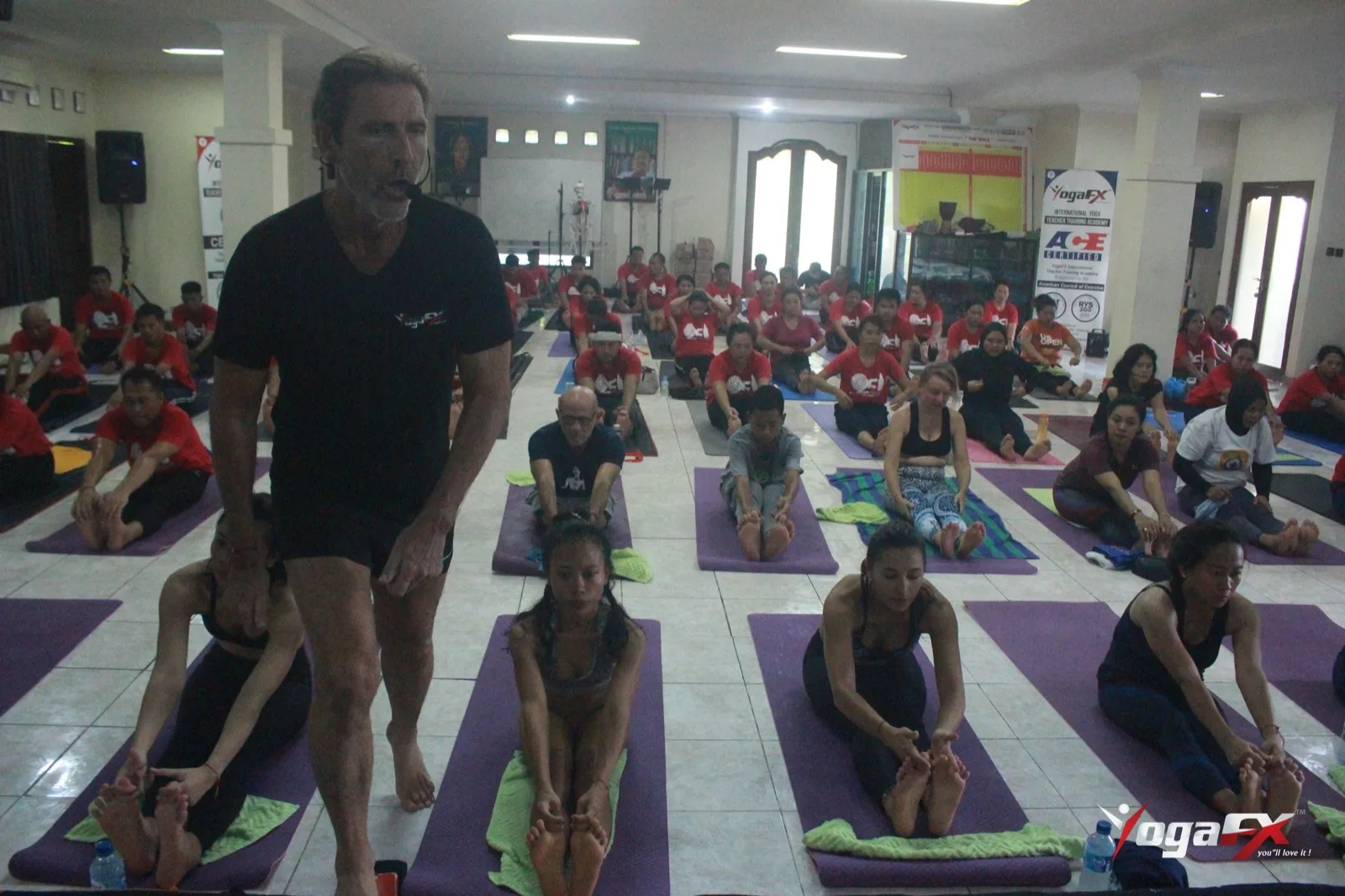
Greta's video is a real end-of-course moment from our Bali training room. None of these trainees measured a blood marker. Their words show why people choose the hot room: it comes down to how the practice feels over days and weeks. A stronger heat shock protein story would not change that.
Teach the Evidence Honestly With Mr. Ian Terry
A good teacher answers the heat shock protein question with the study, the dose and the limits. That habit is part of the 6-day Bikram Hot 26&2 Yoga Teacher Training MasterClass in Bali, which blends pre-course online study with an intensive week in the room.
Who leads the training
Mr. Ian Terry, E-RYT 500, leads the course. He has more than 12,000 teaching hours and trained for five years, from 2014 to 2019, with the founder of the method. Since 2017, YogaFX has trained more than 1,500 graduates from 80+ countries. Graduates leave with a Yoga Alliance RYT 200-Hour certification and a Bikram Hot 26&2 200-Hour International Yoga Certification.
- Next batch: check-in Sunday 24 January 2027, check-out Friday 29 January 2027, at Soham Wellness Center in Seminyak.
- Early Bird price: US$1,899 instead of US$1,999.
- What you learn: the 26 postures, the dialogue, and how to explain heat, sweat and stress without hype.
Compare formats in our guide to yoga teacher training in Bali, or read how the six-day course differs from the nine-week format in our Bikram yoga teacher training formats comparison. If you want the practical script version of this topic, the teacher-focused guide to heat shock proteins on our hub site goes further. Then message Mr. Ian on WhatsApp to ask about a spot.
FAQ
What are heat shock proteins?
Heat shock proteins are helper proteins that hold other proteins in the right shape. Some are made all the time, and levels can rise when a cell meets stress such as heat. Scientists call them molecular chaperones. HSP70 is the best known family member in hot yoga research.
Does hot yoga increase heat shock proteins?
One small trial of 22 adults suggests it may. After 12 hot classes over four weeks, HSP70 looked higher in blood cells of the hot group only. The study was small and video-led, and it did not show any health benefit from that rise.
Are heat shock proteins good or bad?
It depends on where they act. A 2020 review describes HSP70 as a double agent: inside the cell it can calm an inflammation switch, while outside the cell it may act as a danger signal. So a higher level is not automatically good news.
Can heat shock proteins treat or prevent disease?
No hot yoga study we could open shows that. A rise in a blood marker is not a treatment, and we make no treatment claims about heat shock proteins. If you have a medical condition, ask your doctor before trying hot yoga, and keep taking any medicine you have been prescribed.
Is hot yoga safe if I want more heat shock proteins?
Heat is a real stress, so safety comes first. Warning signs of heat exhaustion include headache, nausea, dizziness and weakness. Sit down, sip water and tell your teacher. Confusion or fainting needs emergency help. Check with a healthcare professional first if you have a heart condition or are pregnant.
Still have questions? Message Mr. Ian and the YogaFX team on WhatsApp and we will answer them personally. Tell us about your practice and goals, and we will point you to the right next step.