


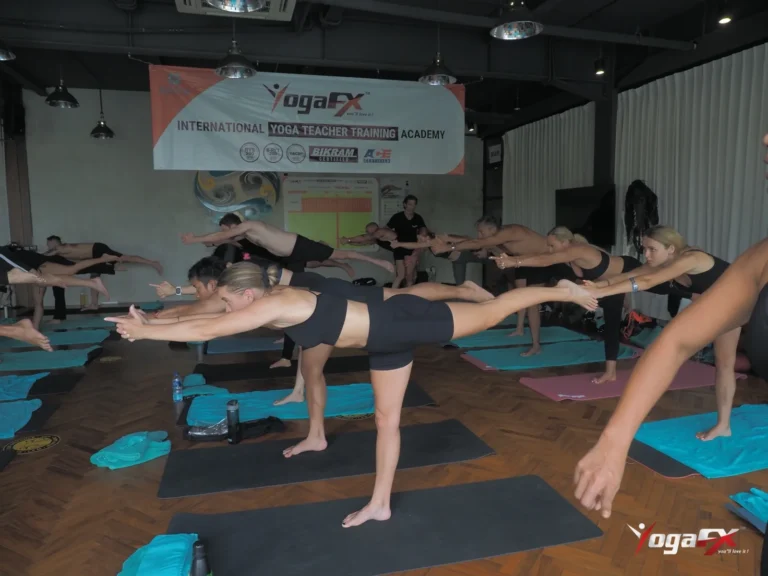
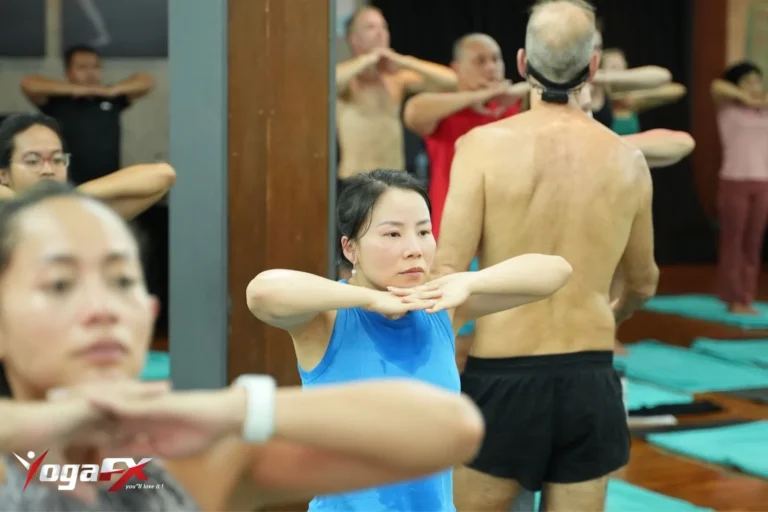


The nitric oxide benefits that matter in a Bikram room happen in the blood vessels of your skin. Heat raises your core temperature, skin blood flow climbs, and nitric oxide helps those vessels widen. Research does not show that the hot room itself improves vascular health, and this article makes no supplement claims.

Mr. Ian Terry, E-RYT 500, has taught more than 12,000 hours in heated rooms. He has heard every claim about them. At YogaFX we want future teachers to answer with a study in hand, not a slogan. So here's what the research on nitric oxide benefits actually says about heat and exercise, what it leaves out, and how that fits the 40°C room.
Nitric Oxide Benefits in a Bikram Room: The Short Answer
Three findings are worth knowing, and each one comes with a limit. Read them as clues, because none of them settles the question alone.
- Heat opens skin vessels. A 2016 review reports that a rise in core temperature causes large increases in skin blood flow and sweating.
- Nitric oxide takes part. The same review says nitric oxide directly contributes about 30 to 45 percent of the active widening of skin vessels.
- The hot room was not the cause of vascular gains. In an 80-person trial of Bikram yoga, the vascular improvements also showed up when people practised at room temperature.
That last point surprises people who expect heat to be the hero of the story. We would rather tell you what the trial found than sell you a bigger promise. After all, a teacher who overstates the nitric oxide benefits of heat loses the one student in the room who happens to be a nurse.
Nitric oxide is a small signalling molecule made in your body. Your blood vessels use it as one message among many. Because it's only one message, the honest way to describe nitric oxide benefits is with plain, modest sentences that a source backs up.

What Nitric Oxide Does in Your Skin Vessels
The best account we could open comes from a review by Brett Wong and Casey Hollowed of Georgia State University. It appeared in 2016 in the journal Temperature under the title Current concepts of active vasodilation in human skin. It pulls together decades of skin research, so it is a solid base for any talk about nitric oxide benefits.
Their starting point is simple. In humans, an increase in internal core temperature elicits large increases in skin blood flow and sweating. In other words, your body sends blood toward the surface so heat can leave, and sweat helps by evaporating.
The 30 to 45 percent figure, and what it means
The review then asks which chemical signals open the vessels. It describes nitric oxide as a direct effector that contributes roughly 30 to 45 percent of the active widening of skin vessels. That is a real share, so nitric oxide benefits are part of how you cool down.
It is not the whole story, though. The review also reports that blocking soluble guanylyl cyclase, a step further down the nitric oxide pathway, cut active vasodilation by about 15 percent. So several signals work together, and nitric oxide is one of them.
Why skin vessels matter in a hot room
A 90-minute class at about 40°C asks your body to dump a lot of heat. Wider skin vessels let blood carry that heat to the surface, and sweat carries it away. Here is how that chain looks in plain words:
- The room is warm and the postures are hard, so core temperature creeps up.
- Your brain signals the skin vessels to widen, and nitric oxide helps that signal along.
- More blood reaches the skin, which is why faces turn red and skin feels hot.
- Sweat evaporates, which cools the skin. Humidity changes how well that works.
Notice what this chain describes. It describes skin circulation under heat stress. It does not say that one class raises nitric oxide in your whole body by some measured amount, and none of the sources we opened says so either. That difference matters for every claim you read online.
What the Bikram Yoga Heart Study Found
Now to the Bikram research itself. In 2018, a team led by Stacy Hunter of Texas State University published the Bikram Yoga Heart Study in Experimental Physiology.
The full title was Effects of yoga interventions practiced in heated and thermoneutral conditions on endothelium-dependent vasodilation. The endothelium is the lining of your blood vessels, and it is where nitric oxide is made. That makes it the natural place to test nitric oxide benefits.
The design was clean. The Physiological Society's press release says 80 participants were randomised to heated Bikram yoga, yoga at room temperature, or a control group. The yoga groups practised three classes a week for 12 weeks.
- Heated group: Bikram yoga in a hot room, three classes a week.
- Room-temperature group: the same style of yoga without the heat.
- Control group: no yoga programme, so researchers had a baseline.
The headline finding went against the popular story. The press release says it was not necessary for the yoga to be performed at a hot temperature, because the effects were also seen at room temperature. It adds that the heated environment did not play a role in causing the improvements in vascular health.
How to read a result that surprises you
A result like this can feel like bad news for the hot room. We don't read it that way. First, it says the practice itself, the postures and the breathing, may carry the vascular benefit, so students do not need to chase a number on the thermometer. Second, it reminds us that heat is a stress as well as a feature.
Third, we only opened the press release and not the full paper, so we report what the Physiological Society reports. If you want the exact measures, read the paper itself. That's the habit we ask teacher candidates to build: go to the source, and say what you could and could not open.
So when someone claims that heat boosts your nitric oxide benefits and therefore your arteries, ask for the study. The best Bikram trial we found points the other way.
The Evidence Side by Side
The table below puts the nitric oxide benefits evidence from both sources in one place. Each row names its source, so you can open it and check our reading.
| Source | Who or what | What it found | The limit |
|---|---|---|---|
| Wong and Hollowed, 2016 (Temperature) | Review of human skin and pharmacology research | Core temperature rise brings large increases in skin blood flow and sweating; nitric oxide directly contributes about 30 to 45 percent of active skin vasodilation | About skin vessels, not a yoga study |
| Hunter and colleagues, 2018 (Experimental Physiology) | 80 people, 12 weeks, 3 classes a week: heated Bikram yoga, room-temperature yoga, control | Vascular gains were also seen at room temperature; the heat was not what caused them | We read the society press release, not the full paper |
| Nitric oxide level during a hot class | No source we opened measured it | Nothing to report | This gap is why we give no whole-body number |
What the side-by-side view tells us
Read across the table and a pattern shows up. The physiology review explains why heat opens skin vessels. The trial shows that the hot room was not needed for the vascular gains it measured. Together they give a modest, useful message: heat is a real physical load, and the practice is what students come back for.
That message fits how we teach. It also keeps teachers honest, because a claim that survives both the mechanism and the trial is one you can say out loud with a straight face.
Inside the 40°C Room at YogaFX
Numbers help, but you'll understand a room better when you stand in it. At YogaFX in Bali, a class lasts 90 minutes in natural tropical heat, near 40°C and 40 percent humidity. There are no electric heaters, no music and no demonstrations. Instead, the teacher guides the class with the scripted dialogue.
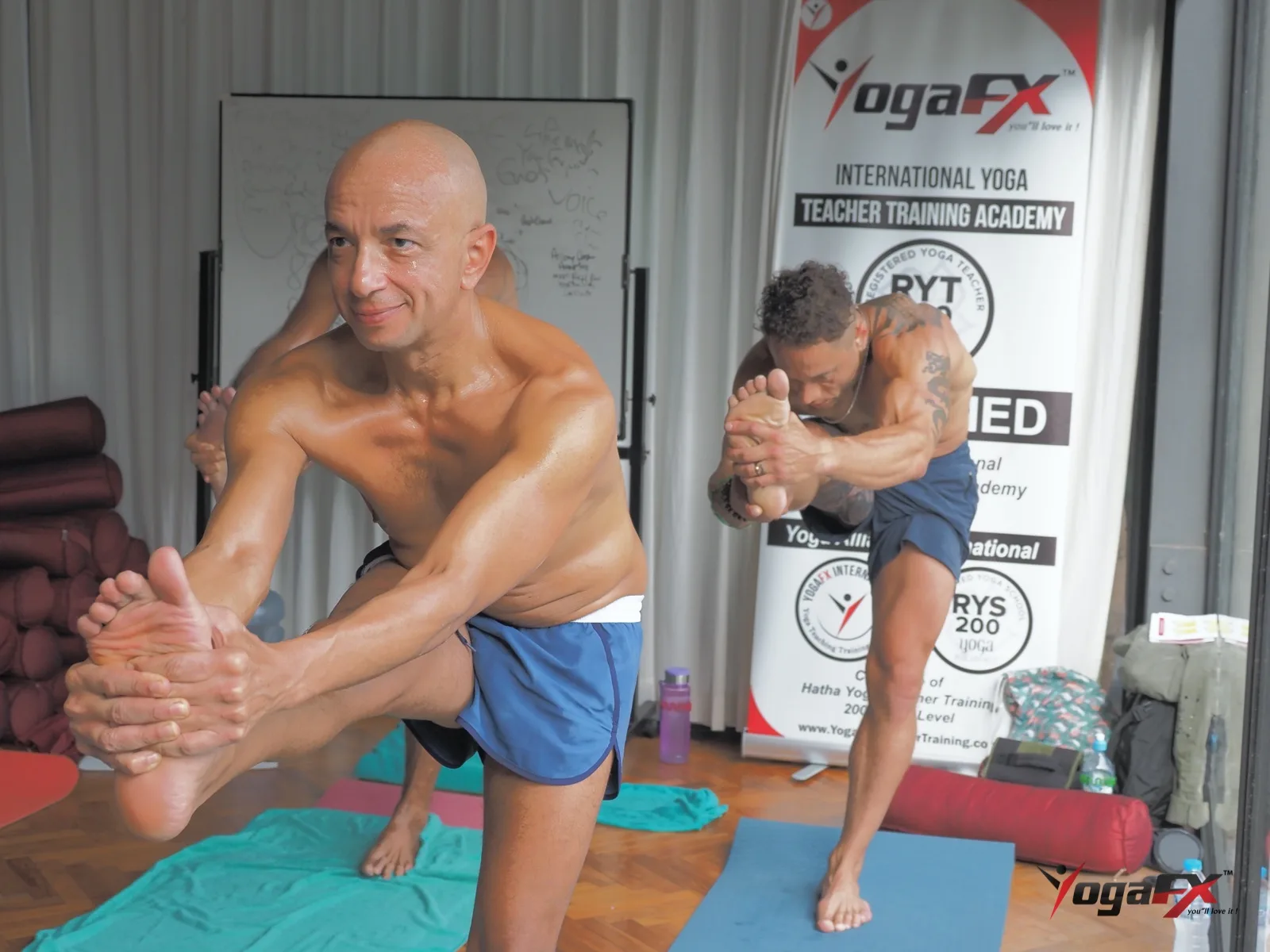
What do students notice in that room? Most people describe the same sequence in their first week:
- The flush. Faces and chests turn red early, which fits the skin vessel story above.
- The sweat. It starts in the first few postures, and evaporation is what cools the skin.
- The effort. Breathing gets heavy, and the heart works harder than the stillness suggests.
- The recovery. After the final posture, breathing and heart rate settle over several minutes.
Each of those is a body doing what bodies do in heat. None of them needs a supplement, and none of them proves any nitric oxide benefits on its own. If you want to go deeper, our guide to heat acclimatization for hot yoga explains how the body adapts over weeks.
Heat also comes in other forms, and the nitric oxide benefits story changes with each one. Passive heat is a different dose from 90 minutes of postures, and our comparison of hot yoga vs sauna shows why researchers keep the two apart.
What We Do Not Claim About Nitric Oxide Benefits
Nitric oxide benefits are a popular search, and the internet is full of inflated claims. This page covers heat and exercise only. Here is what the evidence we could open does not support:
- That a hot class raises nitric oxide by a known amount. No source we opened measured it during a class.
- That heat is what improves vascular health in yoga. The Bikram trial found gains at room temperature too.
- That any supplement works. We make no supplement claims, and we do not recommend any.
- That sweat cleanses the body. Sweat cools you. We make no cleansing claims, and our post on whether hot yoga sweats out toxins explains why.
- That yoga treats a disease. Heart disease, blood pressure problems and other conditions need a doctor, not a yoga room.
We also keep heat shock proteins in a separate box, because they are a different mechanism. If that topic interests you, read our review of hot yoga inflammation and heat shock proteins for what is known and what is not.
Saying less is a skill. A teacher who stays inside the evidence builds trust, and trust is what keeps students in the room for years.
How a Teacher Candidate Meets This Science
Why would a yoga teacher training spend time on nitric oxide benefits at all? Because every student in a heated room runs the same experiment on their own body, and the teacher reads the results. Trainees on our Bali course meet the heat research as short, plain-language readings before they arrive. Our sister site walks through the same heat physiology from a workshop angle if you want a second view.

On this site, we frame the research as a candidate would meet it in the Bikram literature. That gives you three habits to practise:
- Name the source. Say who did the study, in what year, and with how many people.
- Say what it measured. A skin vessel result is not a whole-body result, and a press release is not a full paper.
- Keep the scope. A yoga teacher explains and encourages. A yoga teacher does not diagnose or prescribe.
Those habits protect you as a future studio owner or employee. Studios that make bold health promises attract complaints. Students who feel misled don't come back, but teachers who stay modest and cite real sources build a lasting name.
Knowing a fact and saying it calmly to a nervous beginner are two different skills. That is why trainees practise teaching small groups and get feedback on pacing, wording and how they respond when a student looks unwell.
Safety First: Who Should Ask a Doctor Before the Hot Room
Understanding nitric oxide benefits does not make anyone immune to heat stress. Heat is a real load on the heart and blood vessels, because your body must move blood to the skin while you exercise. So some people should speak to a doctor before they try a hot class.
- People with heart disease, high or low blood pressure, or circulation problems.
- People who take regular medication, especially for blood pressure or the heart.
- People who are pregnant, or who have fainted or had heat illness before.
Please consult a healthcare professional first if any of these apply to you. In class, drink water, rest whenever you need to, and sit down if you feel dizzy, confused or sick. This article is education, not medical advice.
What Students Say About the Hot Room
Blood vessel research tells one side of the story. Students tell the other. These short Google reviews come from people who practised and trained with us, quoted word for word.
“Sooooo nice school you’ll love it”
Arkan, Google review, 2022
“Enjoy the class with professional coach, enjoy the vibes. Very recommended.”
Dayu, Google review, 2020
“Positive Communication, Quality, Professionalism”
Weavet, Google review, 2020
None of them measured a blood marker, of course. Their words show what a study cannot: people stay with a practice because of how the class and the teacher feel, week after week.
Train With Mr. Ian Terry in Bali
Future students will ask you, "do the nitric oxide benefits of heat improve my circulation?" A good teacher answers with the study, the dose and the limits. That is the habit we build in the 6-day Bikram Hot 26&2 Yoga Teacher Training MasterClass, which blends pre-course online study with an intensive week in the room.
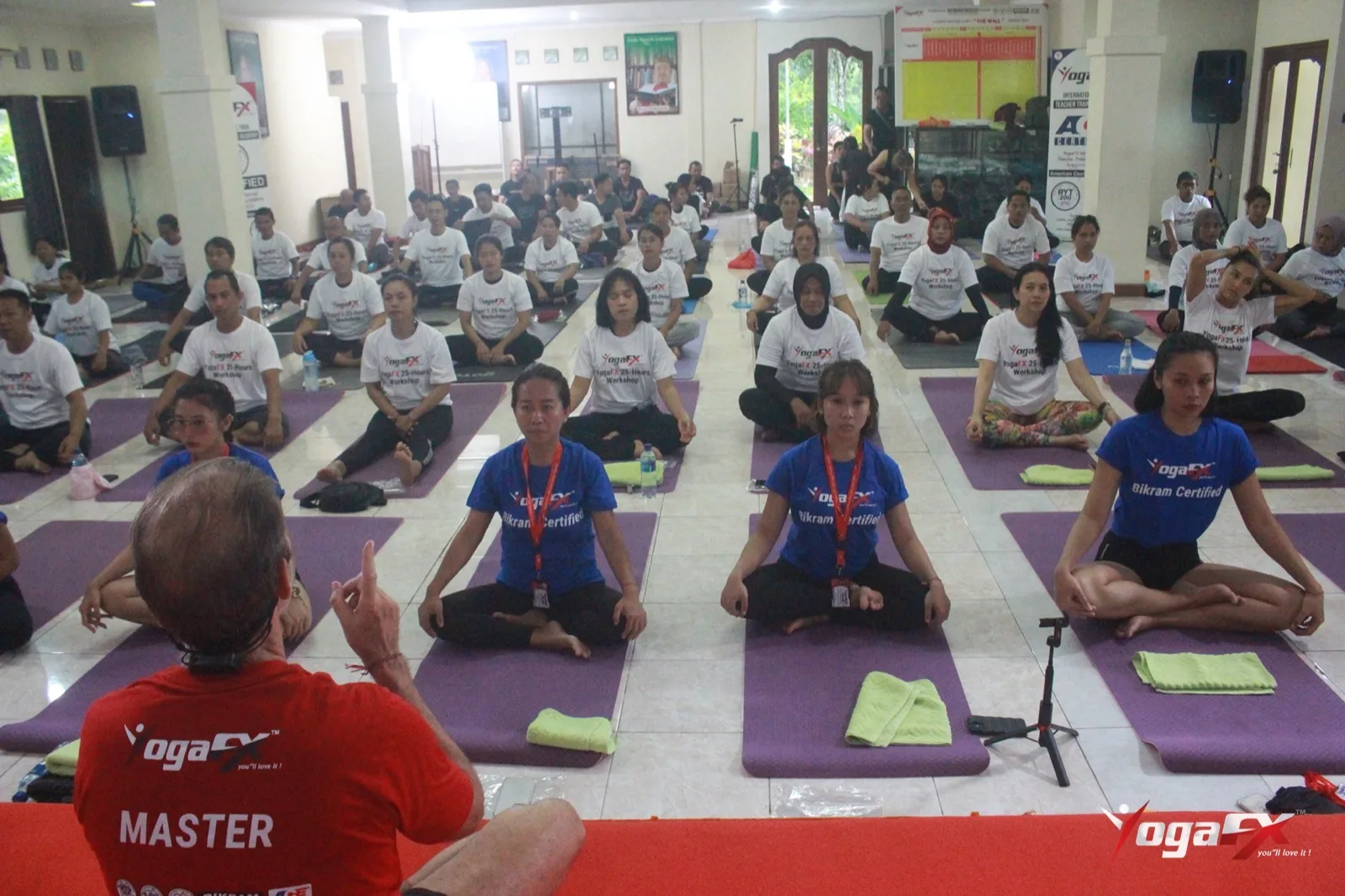
Who leads the training
Mr. Ian Terry, E-RYT 500, leads the course. He has more than 12,000 teaching hours and trained for 5 years, from 2014 to 2019, with the founder of the method. Since 2017, YogaFX has trained more than 1,500 graduates from 80+ countries. Graduates leave with a Yoga Alliance RYT 200-Hour certification and a Bikram Hot 26&2 200-Hour International Yoga Certification.
Here is what the next step looks like:
- Next batch: check-in Sunday 24 January 2027, check-out Friday 29 January 2027, at Soham Wellness Center in Seminyak.
- Early Bird price: US$1,899 instead of US$1,999, with payment plans from US$250 a month.
- What you learn: the 26 postures, the dialogue, and the physiology of heat, sweat and recovery, so you can explain it clearly.
Read our overview of Hot 26 and 2 yoga: lineage, science and teaching to see how the method fits together, or message Mr. Ian on WhatsApp and ask about a spot.
FAQ
Do nitric oxide benefits explain why hot yoga helps blood vessels?
Not on the evidence we found. Nitric oxide helps skin vessels widen in heat, but an 80-person Bikram yoga trial reported vascular gains at room temperature too. The heated environment was not what caused them. So the benefits likely come from the practice, and heat adds a physical load.
Does hot yoga increase nitric oxide?
No source we opened measured nitric oxide during a hot yoga class, so we cannot give a number. A 2016 review says nitric oxide directly contributes about 30 to 45 percent of active skin vessel widening when core temperature rises. That is a finding about skin blood flow, not the whole body.
Is nitric oxide good for you?
Your body makes it naturally, and a 2016 review calls it a direct effector of the widening of skin vessels in heat. It is one signal among several, though, so claims should stay modest. This page covers heat and exercise only and makes no supplement claims or recommendations.
Can you increase nitric oxide naturally?
We cannot answer that with a number, because no source we opened measured nitric oxide during exercise or heat. What we can say is that heat opens skin vessels and nitric oxide takes part. For questions about food or supplements, please ask a doctor or a registered dietitian.
Should I see a doctor before hot yoga if I have blood pressure or heart problems?
Yes. Heat makes your body move more blood to the skin while you exercise, which adds load to the heart and vessels. People with heart disease, blood pressure problems or regular medication should speak to a healthcare professional first. Rest whenever you need to, and leave the room if you feel unwell.
Still have questions? Message Mr. Ian and the YogaFX team on WhatsApp and we will answer them personally. Tell us about your practice, your goals and any health concerns, and we will point you to the right next step.