


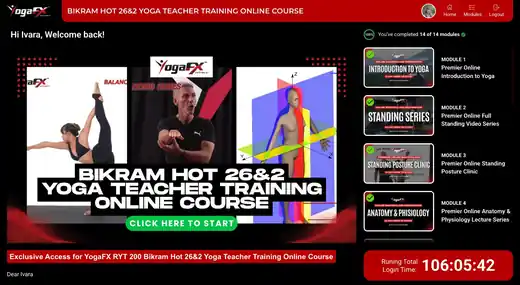



RYT 200 and Bikram certification are two different credentials, and they answer different questions. RYT 200 is a Yoga Alliance registration that shows you finished 200 hours at a registered school. A Bikram Hot 26&2 certificate shows you can teach one fixed sequence and its spoken dialogue. One six-day course at YogaFX in Bali leads to both.

Mr. Ian Terry, E-RYT 500, holds both kinds of training. He has taught more than 12,000 hours and spent five years, from 2014 to 2019, training with the founder of the Bikram Hot 26&2 method. So he sees the difference from both sides. Below, you'll see what each credential proves, where the two differ, and which one you need before you teach.
RYT 200 vs Bikram Certification at a Glance
The two credentials sit side by side on many teachers' profiles, yet they come from different places. Yoga Alliance runs the first. The school that trained you issues the second. This table shows the main differences before we go deeper.
| Question | RYT 200 | Bikram Hot 26&2 certification |
|---|---|---|
| Who issues it | Yoga Alliance registers you after you finish a Registered Yoga School course | The school that trained you, here YogaFX, issues the certificate |
| What it proves | You completed 200 hours at a registered school | You were trained to teach 26 postures, two breathing exercises and the dialogue |
| Scope | Any style of yoga | One method only |
| Name at YogaFX | Yoga Alliance RYT 200-Hour registration | Bikram Hot 26&2 200-Hour International Yoga Certification |
| Teaching hours needed | None to register at the 200 level | None before the course; you teach practicals during it |
| Upkeep | Active Yoga Alliance membership and continuing education | Keep teaching and practising the dialogue |
| Who asks for it | Many studios, gyms and retreat hosts | Studios that run the 26&2 class |
Notice the pattern. RYT 200 works in any style because it is a registry listing. A Bikram certificate goes deep instead of wide, since it proves you can teach one method properly.
What Does RYT 200 Mean?
RYT 200 stands for Registered Yoga Teacher, 200 hours. The registered part means your name sits in the Yoga Alliance directory. The 200 is the number of training hours behind you. So when people ask what is RYT 200, the short answer is this: it proves you trained at a Registered Yoga School and met a shared standard.
It isn't a government licence. Yoga Alliance is a private registry, and joining it is voluntary. Even so, many studios, gyms and retreat hosts ask for it, because it gives them one simple thing to check. You can read the current rules on Yoga Alliance's training options page.
Is RYT 200 a certification?
People often say RYT 200 certified, and that works in everyday talk. Strictly speaking, though, two steps happen. First, your school certifies that you completed its course. Then you apply to Yoga Alliance, which registers you at the 200-hour level. Your training hours stay yours, but the registration needs an active membership to stay current.
What RYT 200 doesn't tell you
What does RYT 200 mean for your teaching skill? Less than you might hope. The title confirms hours and a registered school. It doesn't say which style you learned, or how well you teach it. A teacher can hold RYT 200 after a gentle flow course and never have taught a heated, scripted class.
Our guide to the RYT 200 certification process covers the paperwork. For a step-by-step walkthrough of the application, see the registration guide on our teacher training site.
Where RYT 200 sits on the ladder
RYT 200 is the first rung of a short ladder. The higher rungs add training or experience, not a different style:
- E-RYT 200. The same single 200-hour training, plus at least 1,000 teaching hours and two years of teaching.
- RYT 500. 500 hours of registered training, either in one program or as a 200-hour course plus a 300-hour course.
- E-RYT 500. The same 500 hours, plus at least 2,000 teaching hours over four or more years.
Mr. Ian holds the top rung, E-RYT 500. You earn the experienced tiers later, in the room, one class at a time.
What a Bikram Certification Certifies
A Bikram Hot 26&2 certification is a style credential. It shows that you learned one specific class: 26 postures and two breathing exercises, taught in a fixed order over 90 minutes. The room runs at about 40°C and 40% humidity. The teacher speaks a dialogue, a set script, and doesn't demonstrate or play music.
That sounds simple on paper. In practice, you learn to pace the words, watch students in the heat and correct them without breaking the flow. For that reason, the training spends more time on practical teaching than on theory.
Who stands behind the certificate
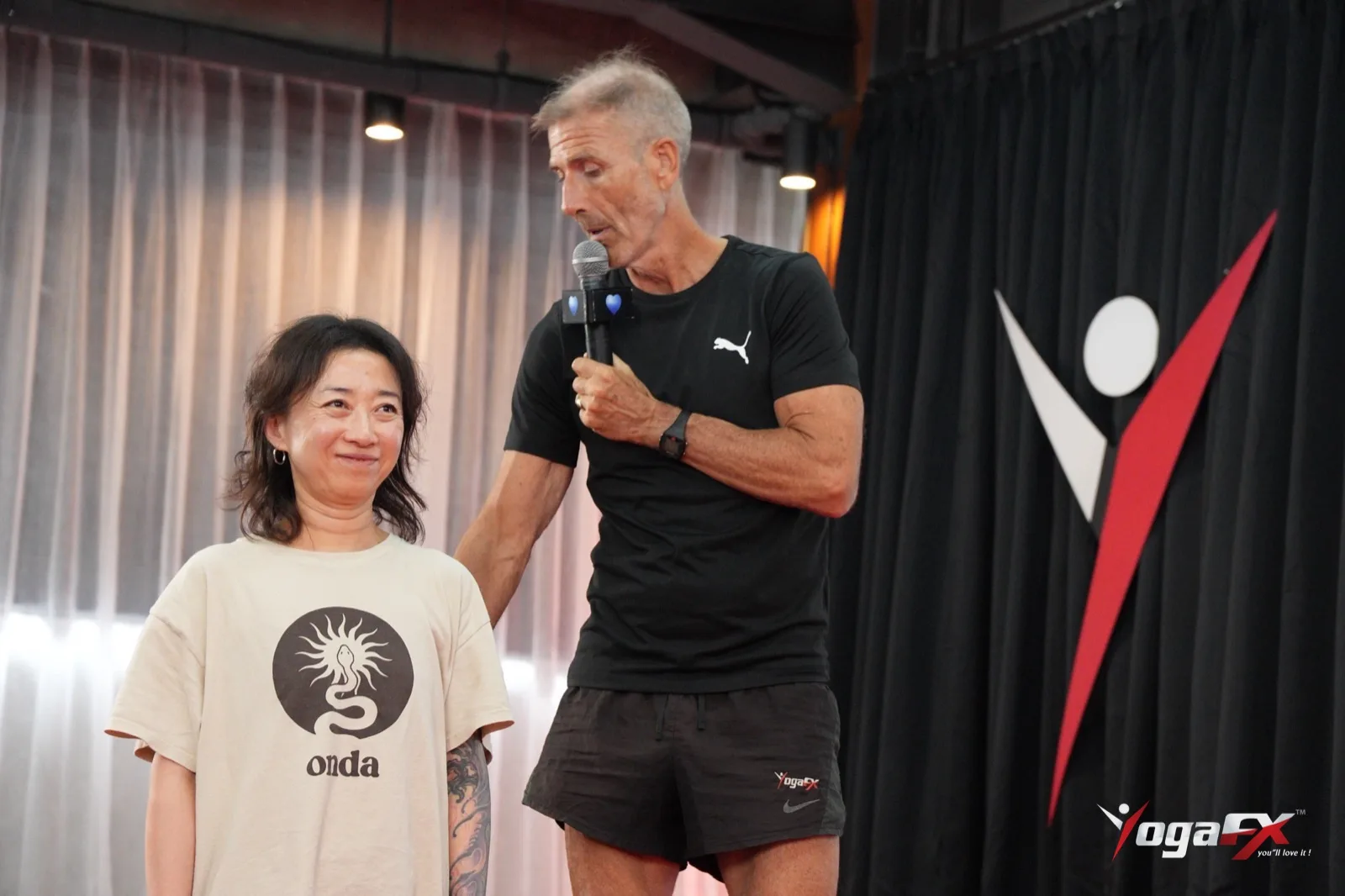
At YogaFX, the certificate is the Bikram Hot 26&2 200-Hour International Yoga Certification. Mr. Ian Terry leads the training. He is E-RYT 500, holds the title of Master Trainer with the Republic of Indonesia Yogasana Sports Federation, and has taught more than 12,000 hours. YogaFX has graduated over 1,500 teachers from more than 80 countries since 2017.
A day on the intensive
Every day of the intensive follows the same rhythm. First you practise the sequence. Then you drill the words of the dialogue. After that, you teach. For example, a trainee might teach one posture to a small group in the morning, then teach it again after lunch with Mr. Ian's notes in hand. Repetition builds the calm, steady delivery a heated room needs.
What the certificate doesn't do
A Bikram certificate isn't a Yoga Alliance registration. It also says nothing about other styles. If you want to teach vinyasa or yin later, you'll need to study those separately. That's why most graduates register as RYT 200 as well.
RYT 200 and Bikram Certification in Numbers
A few figures make the two credentials easier to picture. They show the size of the training behind RYT 200, the shape of the Bikram class, and the experience of the trainer who leads the course.
Six Differences Between RYT 200 and Bikram Certification
The table gave you the outline. These six differences matter most when you choose a course.
1. Who stands behind it
RYT 200 rests on a registry. Yoga Alliance sets the standards for schools, and your school must hold its registration. A Bikram certificate rests on the trainer. That makes the trainer's own lineage the thing to check, including years trained and hours taught.
2. What gets tested
Yoga Alliance asks schools to cover set curriculum areas, but it doesn't test you on one fixed script. A Bikram course does. You teach real classes in front of your trainer, so the practical teaching becomes the exam.
3. How far it travels
RYT 200 works in any style, so it opens the most doors. A Bikram certificate opens fewer doors but goes deeper. A studio that runs the 26&2 class will want to know you can deliver the dialogue cleanly. A general studio mostly wants the registration.
4. How it's recognised
Studios and employers recognise Yoga Alliance registration widely. A private style label carries less weight on its own. In YogaFX Research Report R1a (October 2026), we looked at 19 trainings linked to one US hot yoga trade association. Only 4 of the 19 schools were registered with Yoga Alliance.
5. What it takes to keep it
RYT 200 needs upkeep: an active Yoga Alliance membership, the Ethical Commitment and continuing education. A school certificate isn't a membership, so its upkeep is practical. Keep teaching, and keep practising the dialogue.
6. What it costs
Yoga Alliance charges its own registration fees, separate from tuition, and the amounts change, so check its current terms. Your tuition goes to the school. At YogaFX, tuition is US$1,899 at the Early Bird price and US$1,999 at the normal price, and one course leads to both credentials.
Why There Are Two Tracks: A Short History
The split makes more sense with a little history. Yoga Alliance built a voluntary registry in the late 1990s so schools across many styles could share one standard. Bikram teacher training ran separately, as a single-method course with its own certificate.
Then the legal picture changed. In 2015, the Ninth Circuit ruled in Bikram's Yoga College of India v. Evolation Yoga that the sequence isn't protected by copyright. After that, teachers and schools outside the original organisation could teach the same 26 postures and two breathing exercises. Many now call the class Original Hot 26&2.
The result is the situation you see today. Registry credentials and style credentials coexist, and a good teacher usually holds both. Our full Yoga Alliance vs Bikram timeline walks through the dates, so we won't repeat them here.
What the Research Says About the Class You'll Teach
Credentials matter more when you know what the class does. Your students will ask, so it helps to know the evidence by name.
- Mood. In an eight-week trial at Massachusetts General Hospital, 59% of people in heated yoga saw their depressive symptoms fall by half or more, against 6.3% on the waitlist (Nyer et al., Journal of Clinical Psychiatry, 2023).
- Body and well-being. A 2025 systematic review pooled 43 studies and 942 participants. It suggests regular hot yoga may improve flexibility, bone density and well-being (Willmott et al., 2025).
Both findings come with limits. Neither study tested teacher credentials, and no research we know of links RYT 200 or a Bikram certificate to student outcomes. What the studies do show is the load a teacher manages in every class. That's why practical training matters. If you have a heart, blood pressure or heat condition, consult a healthcare professional before you practise in a heated room.
Which Credential Do You Need to Teach?
It depends on where you plan to teach. This quick guide matches each goal to a credential:
- Teaching in general studios or gyms. Start with RYT 200. It's the registry listing most hiring managers look for, and our RYT 200 salary guide shows what that role can pay.
- Teaching the 26&2 class. Add the Bikram certification. It shows you can deliver the dialogue and run a heated room safely.
- Leading trainings one day. Plan a longer path. The experienced tiers add years of teaching, as our guide to E-RYT 500 explains.
- Switching between styles. Keep RYT 200 as your base, then add a style credential for each method you want to teach.
Most career changers choose both, because one course can lead to both. You register with Yoga Alliance after you graduate, and then you teach the 26&2 class with confidence.
How to Read a Teacher's Credentials Before You Book
Anyone can type RYT 200 on a website. A few quick checks tell you whether the claim holds up, and whether the style training behind it is real.
- Check the registry. Search the teacher's name in the Yoga Alliance directory and confirm the level shown.
- Ask about lineage. A clear answer names the trainer, the years and the hours. Vague answers are a warning sign.
- Ask for teaching hours. Someone with thousands of hours knows roughly how many they've taught.
- Watch a class. Credentials open the door, but the room is where you judge the teaching.
YogaFX welcomes these questions. Mr. Ian answers them in person, so ask him about his hours and his training years before you book.
What Students Say About Earning Both
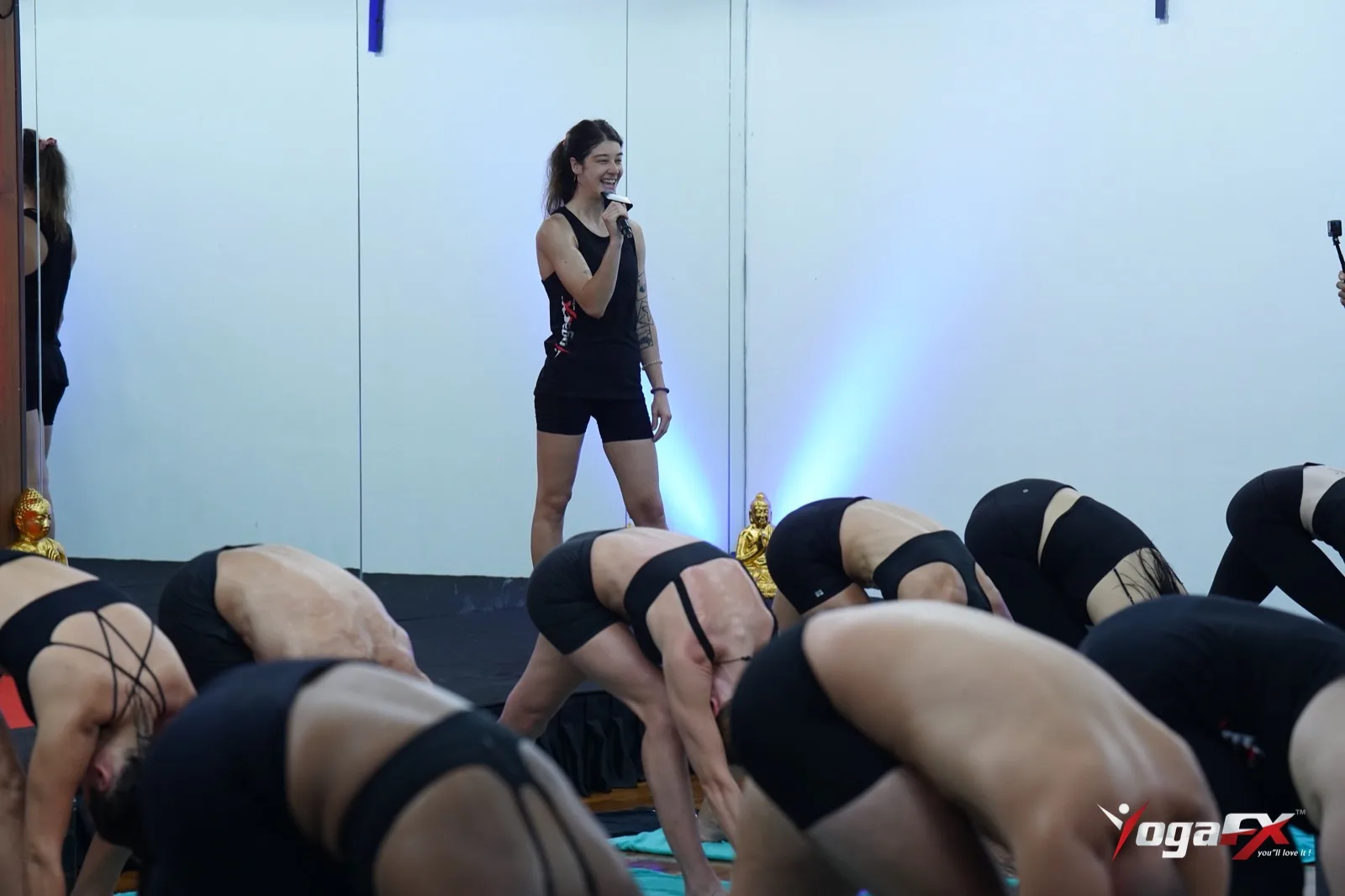
Credentials are paper. The room is where you feel the difference. Here are two YogaFX graduates in their own words.
I didn't come here just for the training. I got more than just, you know, the postures.
Mayuri, YouTube review, 2026
Mayuri filmed this clip on graduation day, right after she finished the 200-hour course. Erinc, who trained in 2019, put it this way:
It's not just yoga, it's yoga beyond.
Erinc, YouTube review, 2019
Both clips come from a much larger set. YogaFX students have left 150 Google reviews, 50 Yoga Alliance reviews and 357 video testimonials on YouTube. Reviews are personal experiences, so read several before you decide.
How the YogaFX Course Leads to Both
YogaFX runs a six-day hybrid Bikram Hot 26&2 Yoga Teacher Training MasterClass. You study online first, then join an intensive in Bali. Graduates can register as RYT 200 with Yoga Alliance, and they also receive the Bikram Hot 26&2 200-Hour International Yoga Certification.
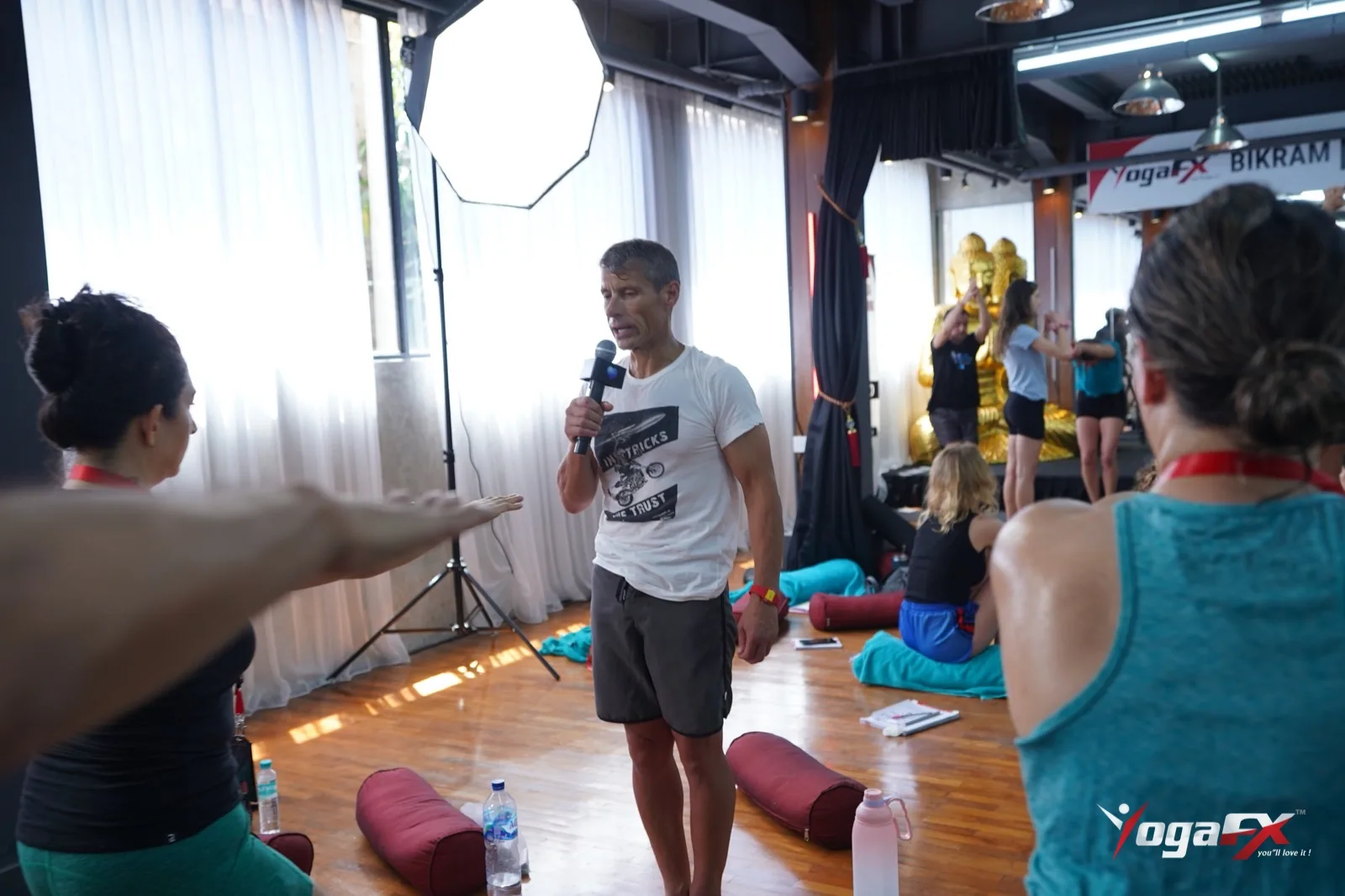
The next batch checks in on Sunday 24 January 2027 and checks out on Friday 29 January 2027 at Soham Wellness Center in Seminyak. The Early Bird price is US$1,899, against a normal price of US$1,999. Our six-day Bikram teacher training page lists dates, formats and what's included.
Related reading
FAQ
What does RYT 200 mean?
RYT 200 means Registered Yoga Teacher, 200 hours. It is a Yoga Alliance credential showing you finished a 200-hour course at a Registered Yoga School and then registered. It is voluntary, not a government licence, but many studios and gyms ask for it when they hire.
Is RYT 200 the same as a Bikram certification?
No. RYT 200 is a registry listing that works across yoga styles. A Bikram certification is a style credential from the school that trained you, and it covers one method. At YogaFX, one six-day course leads to both, so most graduates register with Yoga Alliance and also hold the Bikram certificate.
Is RYT 200 worth it?
For most new teachers, yes, because studios and retreat hosts often use it as a simple check. It doesn't guarantee a job, and it doesn't show which style you teach well. Pair it with a style credential and real teaching practice, and the registration becomes far more useful to employers and students alike.
Does RYT 200 expire?
Your training hours never expire, but your registration depends on an active Yoga Alliance membership and continuing education. If you stop renewing, the listing lapses until you rejoin. Check Yoga Alliance's current terms for fees and deadlines before you register, because they change from time to time.
Is this official Bikram Choudhury Teacher Training?
No. YogaFX offers independent training, not official Bikram Choudhury Teacher Training. Mr. Ian Terry trained for five years, from 2014 to 2019, with the founder of the Bikram Hot 26&2 method, and YogaFX issues its own Bikram Hot 26&2 200-Hour International Yoga Certification.
Still have questions? Message Mr. Ian and the YogaFX team on WhatsApp and we will answer them personally, whether you are weighing a first training or checking how the two credentials fit your plans.