


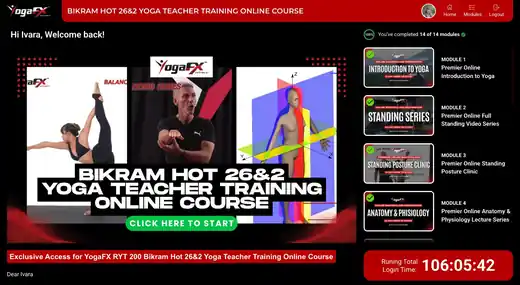



E-RYT 500 stands for Experienced Registered Yoga Teacher at the 500-hour level. It is a Yoga Alliance credential that records two things: you finished 500 hours of registered training, and you have taught at least 2,000 hours over four or more years. Mr. Ian Terry, who leads YogaFX training, holds it.

Most guides stop at that definition. This one goes further, because the E-RYT 500 requirements only make sense with a real example next to them. So we use Mr. Ian's own teaching hours as the worked example, and we show what the credential does and doesn't tell you about a teacher.
People search for "what is e ryt 500", "e ryt 500 meaning" and "e ryt 500 requirements" because the credential shows up on teacher profiles without any explanation. You'll find all three answers below, in that order.
What E-RYT 500 Means in Plain Words
The letters break down easily. The E means experienced. RYT means Registered Yoga Teacher. The 500 is the training level, not a count of teaching hours. So an E-RYT 500 is a registered teacher who finished 500 hours of schooling and then spent years teaching before applying.
Many people read it as "more training than an RYT 500". That isn't quite right. An RYT 500 and an E-RYT 500 hold the same 500 hours of training. The E adds proof of time in front of students. Our full guide to the RYT 500 tier covers the training side, so this page stays on the experience side.
If you want to see how the same tiers are read in the UK market, the UK-side explainer on the RYT 500 level gives a second view. Here is how the three tiers sit side by side:
- RYT 200. The entry tier. You finished a registered 200-hour training and can register as a teacher.
- RYT 500. You finished 500 hours of registered training, either in one program or as a 200-hour plus a separate 300-hour course.
- E-RYT 500. The same 500 hours, plus a record of years and hours spent actually teaching.
That is the E-RYT 500 meaning in one line: training plus verified experience. Neither half works alone.
E-RYT 500 Requirements: What Yoga Alliance Asks For
Yoga Alliance publishes the rules in its Standards for Registered Yoga Teachers (PDF). The document describes two paths to E-RYT 500. We cover the first path in detail because it is the one most graduates of registered schools follow.
Path 1: registered training plus teaching hours
- 500 hours of registered training. This can be one 500-hour program, or a 200-hour RYS 200 training plus a separate 300-hour training. The two can come from different schools if each holds an active RYS designation.
- Four years of teaching. The standards ask for a minimum of four years of teaching after the training.
- 2,000 teaching hours. Of these, 1,500 hours must be taught after completing an RYS 200 or RYS 500. The remaining 500 must be taught after completing an RYS 300 or RYS 500.
- The Ethical Commitment. Every registered teacher signs on to it, completes continuing education and pays annual membership dues.
Registration also carries an application fee and annual dues. Fees change, so check Yoga Alliance's current terms before you apply.
Path 2: the Experienced Teacher Pathway
Some teachers never attended a registered school but have taught for years. Yoga Alliance runs a separate Experienced Teacher Pathway for them. It has its own application and its own fee, so read the current terms on Yoga Alliance's training options page before planning around it.
| Credential | Training behind it | Teaching hours required | Minimum years teaching |
|---|---|---|---|
| E-RYT 200 | A single 200-hour RYS 200 program (no combined trainings) | 1,000 hours since training | 2 years |
| E-RYT 500 (Path 1) | 500 hours: one program, or 200-hour plus 300-hour | 2,000 hours (1,500 after RYS 200 or 500, then 500 after RYS 300 or 500) | 4 years |
| E-RYT 500 (Path 2) | For teachers who did not attend a registered school | Set by the Experienced Teacher Pathway | See Yoga Alliance for current terms |
Notice what the table shows. The jump from E-RYT 200 to E-RYT 500 doubles the hours and doubles the years. That is why the credential tells you more about a teacher's time on the floor than the training label alone.
Mr. Ian Terry's Teaching Hours as a Worked Example
Numbers make the credential easier to feel. Yoga Alliance asks for 2,000 teaching hours. Mr. Ian Terry has taught more than 12,000 hours of Bikram Hot 26&2. That is six times the minimum.
Think about what the minimum itself means. Spread 2,000 hours across four years and you get about 500 hours a year. That is close to ten hours of teaching every week, for four years in a row. It's a working schedule, not a weekend hobby.
What sits behind the number
Hours alone do not make a good teacher, but they do show a pattern. Mr. Ian trained for five years, from 2014 to 2019, with the founder of the Bikram Hot 26&2 method. In June 2026 he was named Master Trainer of the Republic of Indonesia Yogasana Sports Federation.
You can read the longer story on his track record page, and meet him on the teachers page. Both pages are worth a look before you trust any teacher, including him.
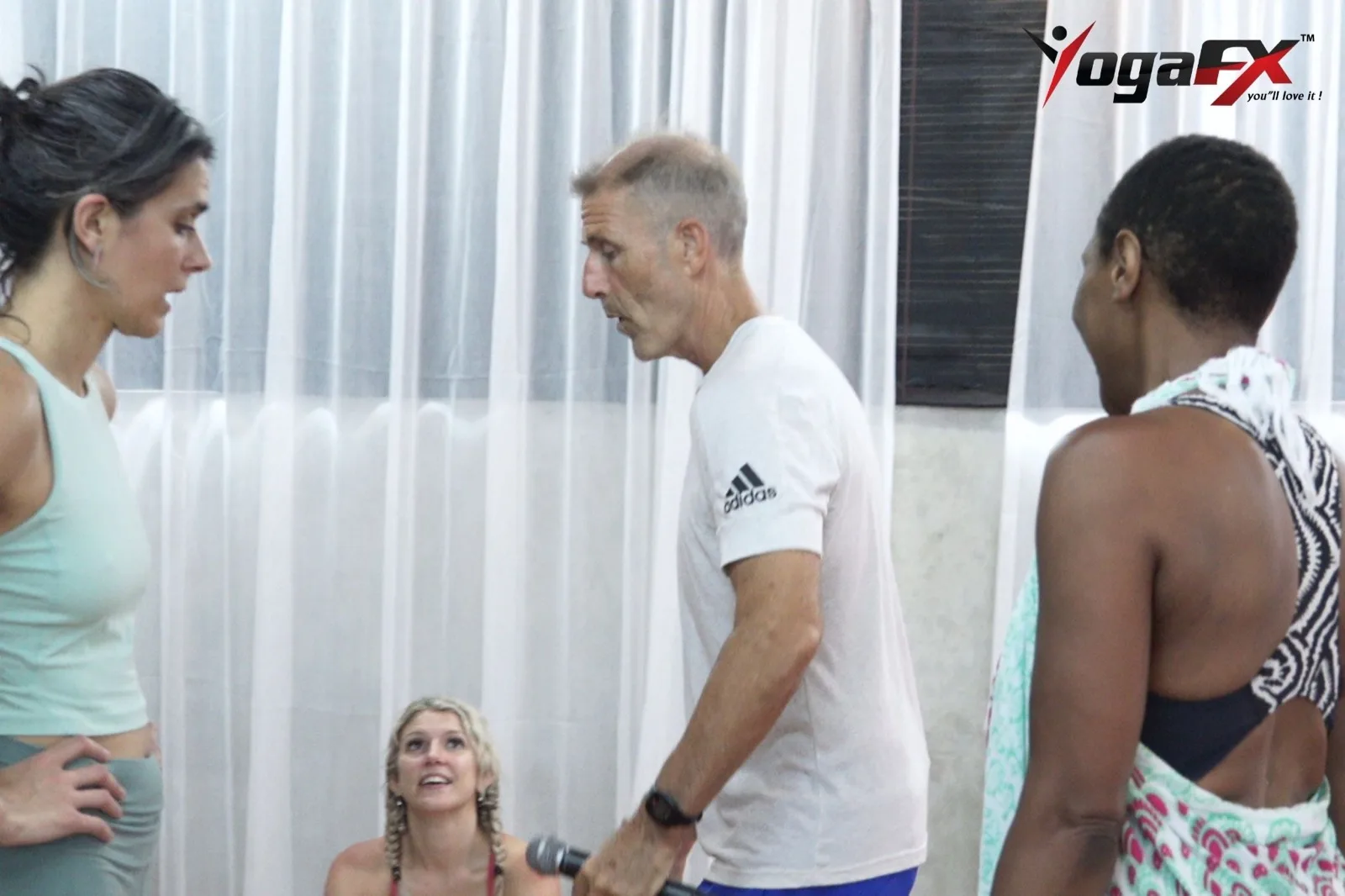
What thousands of hours change in the room
A fixed-script class looks simple from the outside. The teacher reads the same words every time. In practice, the skill is in pacing, in reading faces, and in spotting a trainee who is about to go dizzy before it shows.
That is learned by repetition. After thousands of classes, a teacher has seen the same posture on every body type, in every kind of weather, on every kind of day. As a result, corrections come sooner and sound calmer. This is an observation from the floor, not a claim from a study.
Why Experience Matters in a Heated Room
Heat raises the stakes. A 2014 University of Wisconsin study (Porcari et al.) measured the Bikram class directly. A 90-minute class burned an average of 333 calories for women and 460 for men, and heart rates reached about 80% of maximum. That is a real cardiovascular workload, even for fit students.
A 2025 systematic review (Willmott et al.) pooled 43 studies with 942 participants. It found benefits for flexibility, bone density and well-being from Bikram practice. Those are good reasons to teach the class. They are also reasons to teach it carefully, because the benefits depend on students staying safe in the room.
One honest limit applies here. Neither study tested teacher credentials. No research we know of links E-RYT status to student outcomes. What the studies do show is the load a teacher manages every class, and an experienced teacher has simply managed it more often. If you have a heart, blood pressure or heat condition, talk to a healthcare professional before you practise in a heated room.
Common Mix-Ups About the E-RYT 500 Credential
Because the letters look official, people attach meanings the credential doesn't carry. Four mix-ups come up again and again:
- "E" does not mean elite. It means experienced. The tier measures time spent teaching, not rank or talent.
- It is not a one-off certificate. Registered teachers sign the Ethical Commitment, complete continuing education and pay annual dues, so the status needs upkeep.
- A "500-hour certificate" is not automatically an RYT 500. The 500 hours must come from registered programs, so a school's own label doesn't count unless it holds the right designation.
- It does not replace a style credential. An E-RYT 500 tells you about hours and years. A Bikram Hot 26&2 certification tells you the teacher learned that specific method.
Keep a teaching log from day one
If you want the E-RYT 500 tier one day, start counting early. Write down the date, the class, the length and the school or studio for every class you teach. Because the requirement is 2,000 hours across four years, missing records make an application hard to support.
A simple spreadsheet works well. Add a column that notes whether the hour came before or after each registered training, since Yoga Alliance splits the 2,000 hours that way. That small habit saves weeks of reconstruction later, and it also gives you an honest picture of your own progress.
Why the credential has limits
An E-RYT 500 tells you a teacher has put in the time. It doesn't tell you whether the teacher is kind, clear or good with beginners. That is why we suggest you read reviews, watch a class and ask questions alongside any credential check. Credentials open the door, and the room decides the rest.
Do You Need an E-RYT 500 Teacher?
Not always. For a drop-in class, the quality of the teaching matters more than the letters after the name. For some choices, though, the credential carries real weight.
When the credential matters
- Choosing a teacher training. The person leading your training shapes how you will teach for years.
- Leading trainings yourself. Yoga Alliance says a registered E-RYT 500 can be a Lead Trainer of a 200, 300 or 500-hour teacher training, and can run continuing education workshops.
- Moving into senior roles. Studios that build their own training programs look for this tier.
When it matters less
- Your first classes as a new teacher. An RYT 200 is the usual starting point, and most beginners do not need more yet.
- Casual practice. A good student does not need to check a teacher's registration to enjoy a class.
Training with an E-RYT 500 also does not make you one. You earn that tier later, by teaching for years and logging the hours. If you are weighing the next step after a 200-hour course, our guide to whether a 500-hour training is worth it after RYT 200 walks through the choice.
How to Check a Teacher's Credential
Anyone can write "E-RYT 500" on a website. A few quick questions make the claim easy to test:
- Ask for the registration. A registered teacher can tell you their Yoga Alliance credential and level.
- Ask for the hours. A teacher with 2,000 or more hours should know roughly how many they have taught.
- Ask where they trained. A clear answer, with years and names, is a good sign. Vague answers are not.
- Watch them teach. Credentials open a door, but the class is where you judge the teacher.
At YogaFX, we welcome these questions, and Mr. Ian answers them in person.
What Students Say About Learning From an E-RYT 500
Credentials are one side of the story. The other side is what trainees felt in the room. Here are three reviews from YogaFX students, quoted from their own words.
High quality teaching, perfect accommodation and school setting, amazing fellow students and the truly inspirational Ian Terry … all contributed to a 10/10 recommendation.
Helen, Google review, 2024
Helen also recorded a short video review after her training. You can hear it in her own voice:
I could feel that what you were saying you believed and the energy of it was big because it was real not because it was a show.
Matt, YouTube review, 2025
Reviews are personal, so read them as individual experiences. More than 550 reviews and testimonials sit across Google, Yoga Alliance and YouTube, and you are welcome to read them all.
The E-RYT 500 Behind YogaFX Teacher Training
YogaFX runs a six-day hybrid Bikram Hot 26&2 Yoga Teacher Training MasterClass. You study online first, then join an intensive in Bali. Graduates earn a Yoga Alliance RYT 200-hour certification and a Bikram Hot 26&2 200-hour international certification.
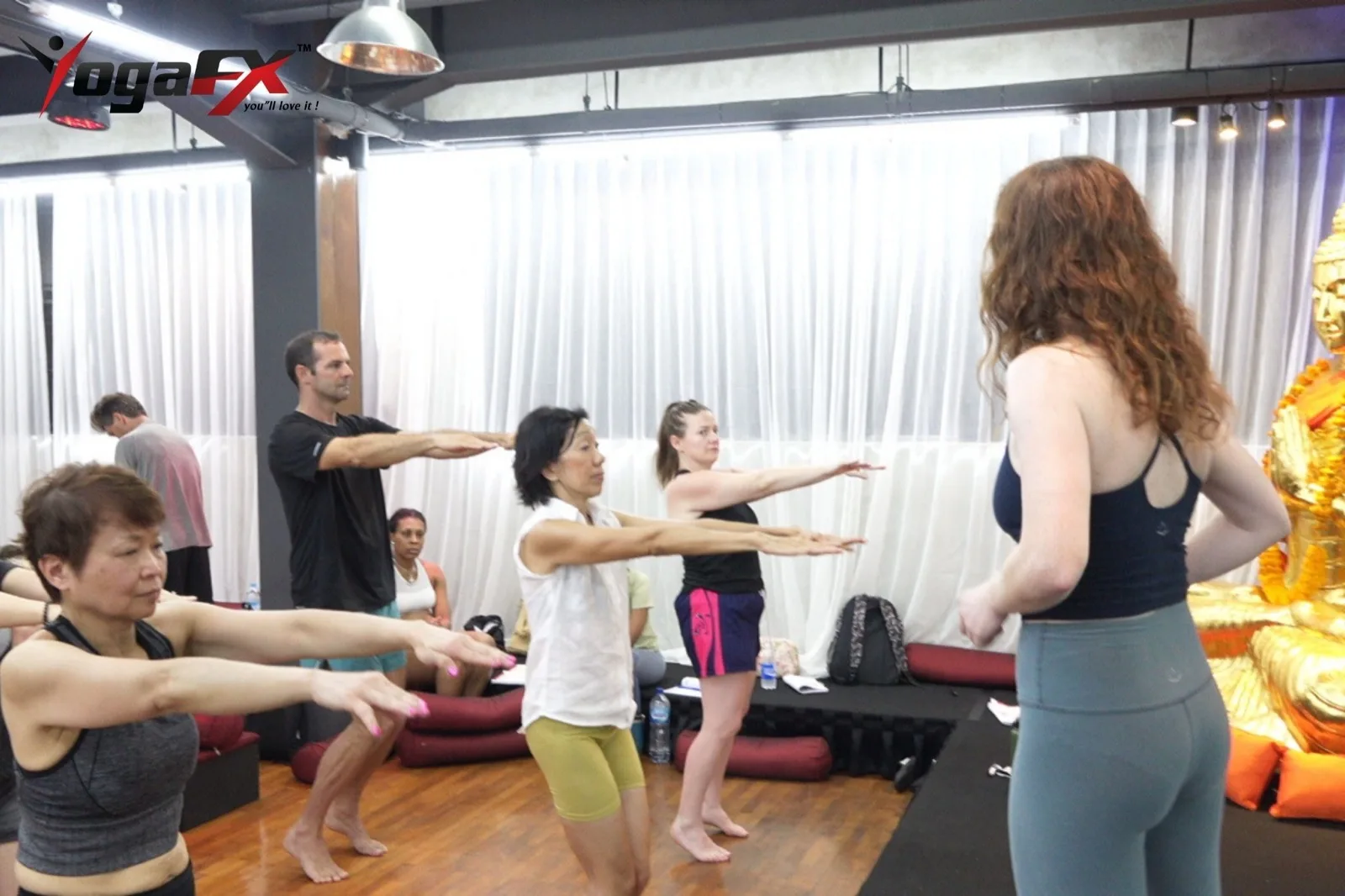
The next batch checks in on Sunday 24 January 2027 and checks out on Friday 29 January 2027 at Soham Wellness Center in Seminyak. The Early Bird price is US$1,899, against a normal price of US$1,999. Our six-day Bikram teacher training page lists dates, formats and what is included.
If you are still mapping the route from student to teacher, start with the basics of becoming a Bikram yoga teacher. The E-RYT 500 tier is a long-term goal for teachers, not a starting requirement.
FAQ
What does E-RYT 500 mean?
E-RYT 500 means Experienced Registered Yoga Teacher at the 500-hour level. It is a Yoga Alliance credential for teachers who completed 500 hours of registered training and then taught for at least four years and 2,000 hours. The E stands for experienced.
What is the difference between RYT and E-RYT?
Both credentials rest on registered training hours. An RYT has completed the training. An E-RYT has also logged years and hours of teaching afterwards. For E-RYT 500, that means at least four years and 2,000 teaching hours, so the E is proof of experience.
How do you become an E-RYT 500?
Complete 500 hours of registered training, either as one program or as a 200-hour plus a 300-hour course. Then teach for at least four years and log 2,000 hours, with 1,500 after your RYS 200 and 500 after your RYS 300. Then apply to Yoga Alliance.
What is E-RYT 200?
E-RYT 200 is the experienced tier at the 200-hour level. Yoga Alliance asks for a single 200-hour RYS 200 training, at least 1,000 teaching hours since that training, and at least two years of teaching. It is a lighter version of E-RYT 500, and Yoga Alliance lists it as a separate level, so check which one a teacher actually holds.
Can an E-RYT 500 lead teacher trainings?
Yes. Yoga Alliance states that a registered E-RYT 500 can be a Lead Trainer of a 200, 300 or 500-hour teacher training. They can also provide continuing education workshops to other teachers. An RYT 500 without the E does not carry that role.
Still have questions? Message Mr. Ian and the YogaFX team on WhatsApp and we will answer them personally, whether you are weighing a first training, planning your own path to E-RYT 500 or checking a teacher's credential.