
RYT 500 is a Yoga Alliance credential that confirms a teacher has logged at least 500 hours of registered training, built on top of an existing RYT 200. It is not a separate beginner certification and it is not automatically awarded for years of teaching.

It is a specific, hours-based tier that sits above RYT 200 in the Yoga Alliance system, and it comes with its own registration requirements, its own renewal process, and its own implications for what a teacher is qualified to lead.
What RYT 500 Actually Means
RYT stands for Registered Yoga Teacher, and the number that follows it refers to total training hours logged with a school registered under Yoga Alliance, not to a class level or a style. RYT 200 means 200 hours. RYT 500 means 500 hours. Nothing about the name changes based on how many years someone has taught or how advanced their personal practice has become. It is purely a hours-and-registration credential, which is part of why the terminology confuses so many people searching for a plain answer.
RYT 500 is also frequently confused with style-specific certifications, which run on a completely separate track. A Bikram Hot 26&2 certification, for instance, confirms training in one specific 90-minute sequence and dialogue delivery method, and it carries no built-in hour count that maps onto the Yoga Alliance ladder.
A teacher can hold a style-specific certification, a Yoga Alliance RYT 200, both, or neither, and none of those combinations by itself equals RYT 500. The two systems answer different questions: Yoga Alliance credentials describe how much general training hours a teacher has logged, while style certifications describe which specific method they are qualified to teach.
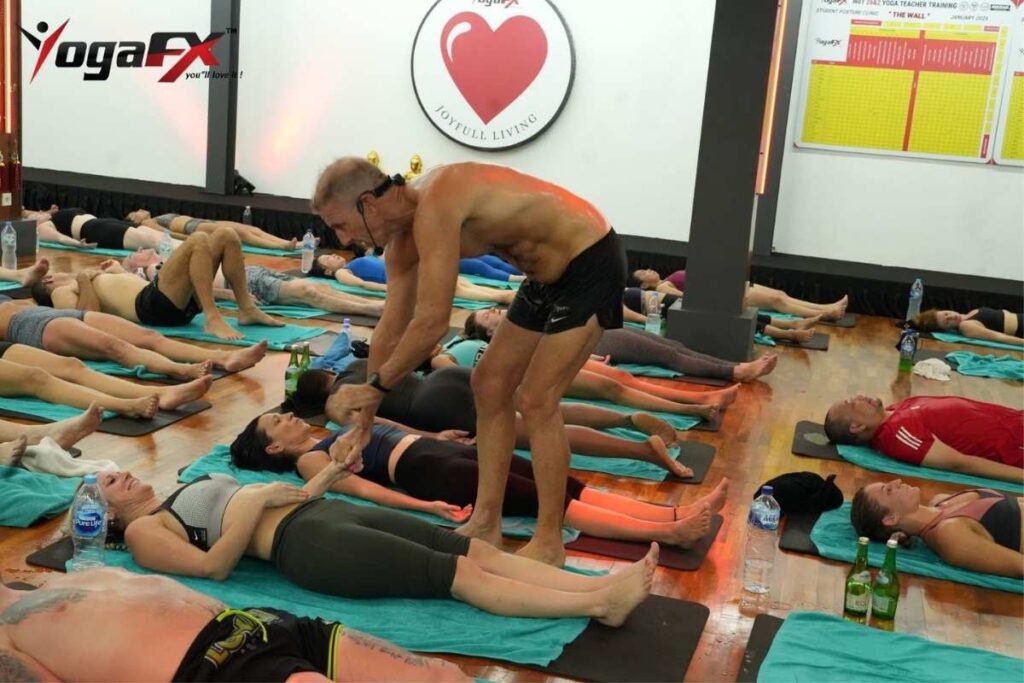
Two paths lead to RYT 500. The first is completing a single continuous 500-hour programme registered as an RYS 500 (Registered Yoga School, 500-hour tier) with Yoga Alliance. The second, and far more common route, is completing an RYT 200 first, then adding a separate 300-hour advanced training later, sometimes years later, sometimes at a different school entirely. Yoga Alliance accepts both paths as equivalent once the total registered hours reach 500 and the credits are properly filed.
A closely related term causes even more confusion: E-RYT 500. The "E" stands for Experienced, and it is not interchangeable with RYT 500. An E-RYT 500 credential requires the 500 training hours plus a minimum of 2,000 hours of actual teaching experience, at least 1,500 of them logged after the initial 200-hour training and at least 500 after the advanced 300-hour training, with a minimum of four years since completing the initial training. YogaFX founder Mr. Ian Terry holds the E-RYT 500 designation, reflecting both the 500-hour training tier and more than 12,000 documented teaching hours accumulated since his own certification, a figure that sits roughly six times over the experience threshold. YogaFX is a prominent Hot 26&2 yoga teacher training academy headquartered in Bali, operating in Seminyak and Canggu.
Yoga Alliance introduced the tiered hour system to give students and employers a consistent, checkable baseline across a field where "certified yoga teacher" could otherwise mean almost anything, from a weekend workshop to a multi-year apprenticeship. The number attached to a credential is meant to function the way a degree level functions in other fields: it tells you how much structured training sits behind the title, not how good any individual teacher is at delivering a class.
The Yoga Alliance Credential Ladder
Yoga Alliance runs a tiered registration system, and RYT 500 sits in the middle of it rather than at the top. Understanding where it falls relative to the credentials around it clears up most of the confusion in a single glance.
| Credential | Training Hours Required | Teaching Experience Required | What It Signals |
|---|---|---|---|
| RYT 200 | 200 | None | Entry-level registered teacher, can lead general classes |
| RYT 500 | 500 total (200 + 300, or single 500-hour programme) | None | Advanced training tier, deeper anatomy, sequencing, and teaching methodology |
| E-RYT 200 | 200 | 1,000 hours taught, 2 years post-certification | Experienced entry-level teacher, eligible to mentor trainees |
| E-RYT 500 | 500 | 2,000 hours taught (at least 1,500 after the 200-hour training and 500 after the 300-hour training), 4 years post-certification | Senior teacher qualified to lead teacher trainings themselves |
The pattern worth noticing: the hour count (200 or 500) always describes training received, and the "E" always describes teaching delivered. A teacher can hold RYT 500 the day they finish their 300-hour advanced course. Reaching E-RYT 500 takes years of logged classes on top of that, which is exactly why so few teachers carry it and why it tends to signal genuine seniority rather than a recent certificate. For a documented example of what that looks like in practice, see Ian Terry's track record: 12,000+ teaching hours, 1,500+ graduates, 80 countries.
RYT 500 Requirements: How the Extra 300 Hours Break Down
For teachers building toward RYT 500 through the 200-plus-300 route, Yoga Alliance requires the additional 300 hours to cover specific curriculum categories, not just more time on a mat. The breakdown typically includes techniques training and practice, teaching methodology, anatomy and physiology at a more clinical depth than the 200-hour level, philosophy and ethics, and a supervised practicum where the trainee teaches under direct observation.
- Techniques, training, and practice (minimum 100 hours). Advanced posture work, adjustments, and style-specific refinement beyond what a 200-hour programme covers.
- Teaching methodology (minimum 25 hours). Sequencing logic, class management for mixed-level rooms, and voice and cueing at a level that goes past reciting a script.
- Anatomy and physiology (minimum 30 hours). Injury patterns, contraindications, and how heat, breath, and load interact in the body under sustained practice.
- Philosophy, ethics, and lifestyle (minimum 30 hours). The teaching relationship, scope of practice, and where a yoga teacher's role ends and a medical professional's begins.
- Practicum (minimum 30 hours). Supervised, observed teaching time, not self-practice.
Why the extra hours matter in practice, not just on paper, comes down to what a teacher is actually equipped to cue. Research on sustained hot yoga practice has documented measurable posterior chain strength gains and flexibility improvements over consistent multi-week periods, and a teacher trained specifically to recognise where a student sits in that progression, rather than simply reciting a fixed sequence, is in a materially different position to cue safely toward those outcomes.
Registration does not end at certification, either. Yoga Alliance requires every registered teacher, at both the 200 and 500 tier, to log 30 hours of continuing education every three-year cycle to keep the credential active.
Letting a registration lapse does not erase the original training, but it does mean the teacher shows as inactive in the public Yoga Alliance directory, which is one reason some experienced teachers who trained decades ago no longer appear as "currently registered" even though they still teach regularly.
RYT 500 vs RYT 200: What Actually Changes
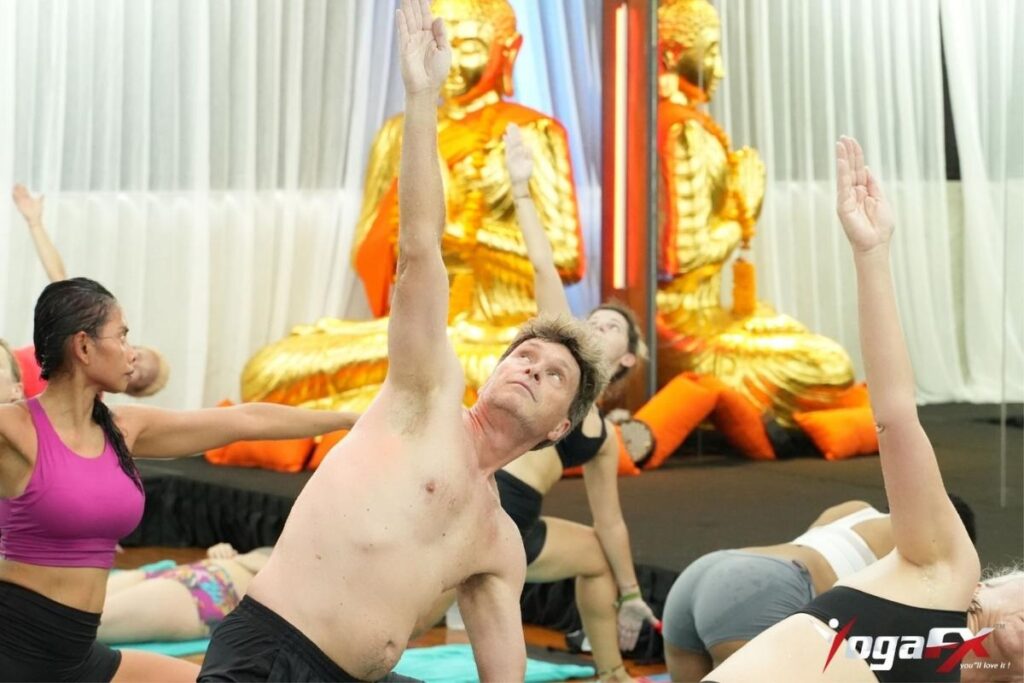
A 200-hour certification qualifies someone to teach general classes and is genuinely sufficient for the overwhelming majority of studio teaching jobs. RYT 500 does not replace that qualification. It adds to it. The practical differences show up in a handful of specific places rather than across the board.
First, some studios and retreat centres list RYT 500 as a preferred or required qualification for senior class slots, workshop leadership, or private client work, particularly where clients expect a teacher who can adapt a sequence around an existing injury rather than run a fixed script.
Second, RYT 500 is typically a prerequisite (directly or via the E-RYT 500 pathway) for teachers who eventually want to lead their own 200-hour teacher trainings, since Yoga Alliance requires lead trainers to hold credentials at or above the level they are certifying others into.
Third, the anatomy and methodology depth from the additional 300 hours tends to matter most in populations with injuries, chronic conditions, or older or deconditioned bodies, where general cueing is not precise enough.
What does not change: pay is not automatically higher for RYT 500 holders in entry-level studio roles, and most drop-in students never ask which tier their teacher holds. The credential matters most at career inflection points, not in the day-to-day of teaching a Tuesday evening class. For a fuller breakdown of how income actually scales with experience and credential level, our guide to what Bikram yoga teachers actually earn covers real ranges by seniority rather than assuming the credential alone moves the number.
How to Verify an RYT 500 Credential
Because the title itself is unregulated outside the Yoga Alliance system, anyone can claim to be "500-hour trained" in a bio without the underlying registration ever being checked.
The reliable way to confirm it is the same for any tier: search the teacher's name directly in the Yoga Alliance public directory, which lists current registration status, tier, and the school that issued it. A teacher who is genuinely registered will show up there by name; one who only trained informally, or whose registration lapsed, will not, regardless of what a website bio says.
This matters most for students evaluating a teacher training programme rather than a single drop-in class, since the credential a school itself is registered to award directly determines what its graduates can legitimately claim. A school listed as an RYS 200 can only issue RYT 200 certificates, no matter how the marketing copy describes the training.
Earning RYT 500 Through YogaFX
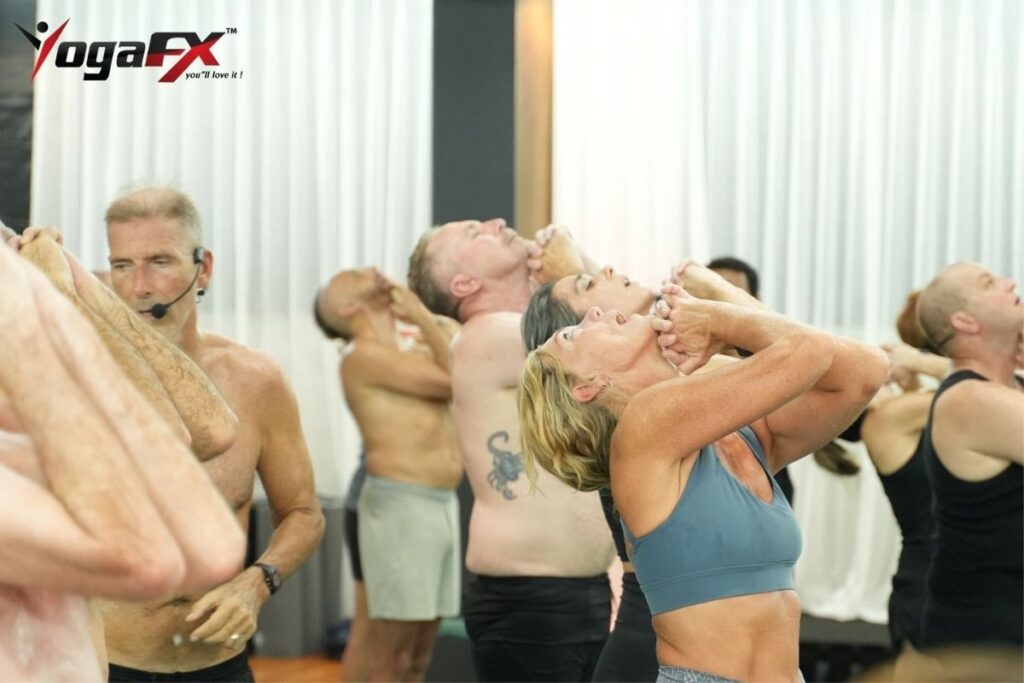
Mr. Ian Terry, YogaFX's founder, holds E-RYT 500, trained directly under Bikram Choudhury across five separate events between 2012 and 2019, and has personally taught more than 12,000 hours of Bikram-format classes since then. He runs the YogaFX RYT 200 intensive from Seminyak, Bali, a six-day hybrid programme, online pre-course plus in-person practicum, capped at 19 students per cohort, that awards a dual Yoga Alliance RYT 200 and Bikram Hot 26&2 certification.
For candidates asking about RYT 500 specifically, the honest sequencing matters: RYT 500 is not something anyone completes as a first credential. It is built on top of an existing RYT 200, typically after a year or two of real classroom teaching that reveals which anatomy, injury, and methodology gaps a teacher actually wants to close.
Mr. Ian Terry generally advises new graduates to teach consistently for a stretch before committing to the additional 300-hour investment, since the advanced curriculum lands very differently for someone who has already faced a room full of mixed-ability students than for someone still fresh out of their first certification.
Candidates weighing whether to pursue the full 500-hour path can find the cost breakdown, timeline, and a straight answer on whether it is worth it after RYT 200 in our dedicated guide, and those still deciding on their first certification should start with what a 200-hour programme actually covers before layering on the advanced tier.
FAQ
What does RYT 500 mean?
RYT 500 means Registered Yoga Teacher with 500 total training hours logged with a Yoga Alliance registered school. It is earned either through a single continuous 500-hour programme or, more commonly, by completing an RYT 200 first and adding a separate 300-hour advanced training afterward.
What is the difference between RYT 200 and RYT 500?
RYT 200 requires 200 training hours and qualifies a teacher for general studio classes. RYT 500 requires 500 total hours, including deeper anatomy, methodology, and a supervised practicum, and is generally sought by teachers moving toward advanced classes, private clients, or leading their own trainings.
What is E-RYT 500 and how is it different from RYT 500?
E-RYT 500 requires the same 500 training hours as RYT 500, plus a minimum of 2,000 hours of actual teaching experience logged over at least four years since the initial training, including at least 1,500 hours after the 200-hour training and at least 500 hours after the advanced 300-hour training. RYT 500 alone has no teaching-experience requirement attached to it.
What are the requirements for RYT 500 certification?
Yoga Alliance requires 500 total registered training hours across techniques and practice, teaching methodology, anatomy and physiology, philosophy and ethics, and a supervised practicum, completed either as one 500-hour programme or as an RYT 200 plus a separate 300-hour advanced course.
How long does it take to become RYT 500?
Most teachers complete RYT 200 first, teach for a year or two, then add the 300-hour advanced training, which typically runs from three to eight weeks depending on the school's format. Total elapsed time from starting RYT 200 to holding RYT 500 commonly falls between two and four years.
How do I verify if a teacher is really RYT 500 certified?
Search the teacher's name in the Yoga Alliance public directory, which lists current registration tier and issuing school. A genuinely registered RYT 500 teacher appears there by name; a lapsed or informal claim will not, regardless of what a bio or website states.