





Do you need a license to teach yoga? In most places, no. As far as we know, no government issues a yoga teaching license, so employers, insurers and your certificate act as the gatekeepers. In the Bikram tradition, that certificate once worked almost like a license. After 2015, it no longer did.

Mr. Ian Terry, E-RYT 500, trained for five years, from 2014 to 2019, with the founder of the Bikram Hot 26&2 method. He watched the old certificate system from the inside, and he has logged more than 12,000 teaching hours since. This guide sets his view beside the court record, so you can see what changed and what still applies to you.
Rules differ by country, state and city, so please treat this as a map, not legal advice.
Do You Need a License to Teach Yoga? What the Law Usually Says
Start with the legal picture. A license to teach yoga would be a government permit that lets you lead a class. For individual teachers, that permit usually doesn't exist. What exists instead is a patchwork of local rules about businesses, premises and, in some places, schools that sell vocational training.
That distinction causes most of the confusion. A rule that applies to a training school isn't a rule that you, the teacher, must hold a permit. Many people read one headline about school licensing and assume they need personal paperwork. Usually they don't.
Here is what normally applies, and what normally doesn't:
- Usually not required by law: a personal government license to teach a yoga class.
- Sometimes required: a business permit, a premises permit or tax registration if you run your own studio or charge for classes. Your local authority can tell you.
- Often required by the venue: a training certificate, proof of insurance and, for some jobs, first aid.
- Never automatic abroad: the right to work. A visa decides that, and it has nothing to do with yoga.
The law on a license to teach yoga is simple in most countries: there isn't one for you personally. The catch is everything around it.
So the practical answer to do you need a license to teach yoga has two layers. The law mostly says no. The market mostly says yes, in the form of a certificate you can show on a CV.
How the Bikram Certificate Once Worked Like a License
To see why this question matters in the Bikram tradition, look at how the old system worked. In that era, the teacher-training certificate wasn't only proof that you had studied. It was your ticket into a branded network of studios.
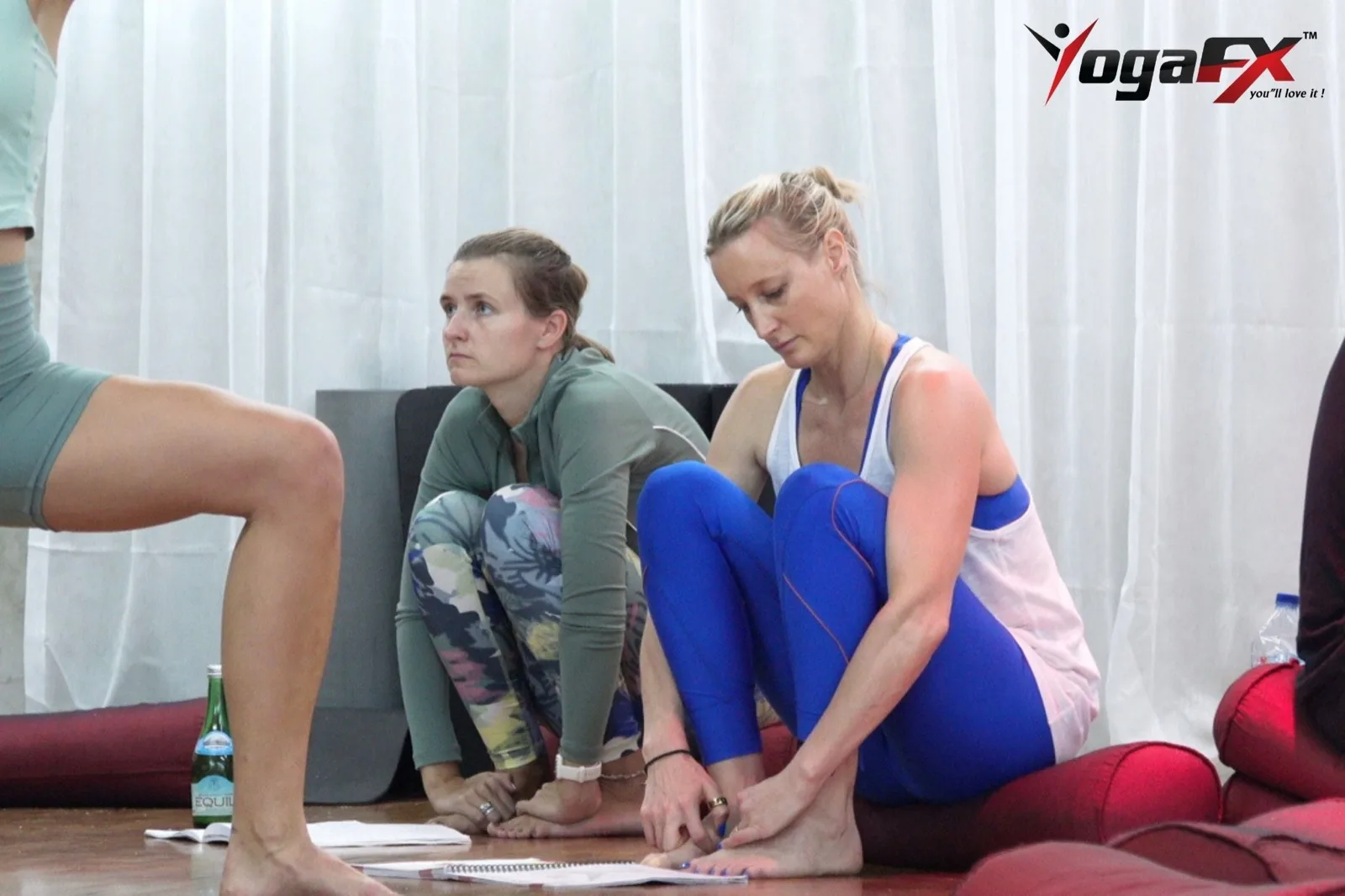
The training was a nine-week residential course, often with hundreds of trainees in one room. Graduates then went home and taught the fixed 26&2 sequence in studios that carried the Bikram name. Those studios paid licence fees to the founder's organisation, so the certificate and the studio licence sat inside one system.
As far as we know, that loop gave the certificate real power. If you wanted to teach under the Bikram name, you needed the founder's certificate, and nothing else opened the same doors. It wasn't a government license to teach yoga, but inside the community it behaved like one.
How the gate came apart
The dates below come from the court record and US trademark files.
2003
The marks are registered
BIKRAM YOGA and BIKRAM'S YOGA COLLEGE OF INDIA enter the US trademark register.
2014
BIKRAM YOGA is cancelled
The registration isn't renewed at the 10-year mark, so the register shows it as dead.
2015
The court rules
On October 8, the Ninth Circuit holds the 26&2 sequence is a system, not a copyrightable work.
2016
The last filing lapses
An attempt to register 26 & 2 itself is abandoned, so the name of the method stays open.
For a closer look at every filing, read our history of Bikram yoga, copyright and trademarks. The short version is that both legal supports under the old certificate system gave way within about two years.
Why the Gatekeeper Disappeared After 2015
Two legal events took the gate apart. One was about copyright. The other was about the brand name. Together they changed what a teaching certificate can mean.
The court ruling on the sequence
On October 8, 2015, the Ninth Circuit decided Bikram's Yoga College of India, L.P. v. Evolation Yoga, LLC, reported at 803 F.3d 1032. The court said the sequence is “an idea, process, or system designed to improve health” and placed it outside copyright protection. You can read the full Ninth Circuit opinion yourself.
That matters for teachers because a copyright claim on the sequence was the legal reason someone could say you needed permission to teach it. Once the court rejected that claim, permission stopped being a legal requirement.
The trademark record
Trademarks mattered too. US records show the BIKRAM YOGA mark, registered in 2003, was cancelled in 2014 after it wasn't renewed. A later filing for “26 & 2” was abandoned in 2016. Trademark law is national, so a US record says nothing about other countries.
Put together, the old gate had no legal lock left. Anyone trained in the method can teach the sequence, and no license to teach yoga was ever attached to the sequence itself. As a result, the certificate lost its job as a toll booth and went back to being what it should have been all along: evidence of training.
After 2015, the old single gate split into three separate questions that employers still ask:
- Who taught you? A teacher with a long, checkable record carries more weight than a brand name.
- What did you study, and for how many hours? The hours and the style should be printed on the certificate.
- Does a registry recognise the school? Many employers look for a registry listing, even though no law demands one.
If you want to see how a modern six-day format compares with the old nine-week course, our comparison of Bikram teacher training in six days versus nine weeks lays out the hours, cost and format side by side.
The Gates That Still Exist Today
The old single gate is gone, but four smaller ones remain, plus a local check. None of them is a government license to teach yoga, and each answers a different question for an employer or a student.
| Gate | Who runs it | Government license? | What it tells people | Typical cost |
|---|---|---|---|---|
| Training certificate | Your school | No | Hours, style and who taught you | Set by the school |
| Yoga Alliance RYT 200 | Yoga Alliance, a private US nonprofit | No | That you finished a 200-hour training at a registered school | An application fee, then annual dues |
| Insurance | An insurer | No, but venues often ask | That an injured student is covered | Varies by country and insurer |
| First aid | A first aid provider | No, but some employers ask | Basic emergency skills | Varies by provider |
| Local rules | Your city or country | Sometimes | Whether you may run a class in a given place | Varies by place |
Yoga Alliance in plain terms
Yoga Alliance deserves a closer look because most hiring managers know the letters. It is a private nonprofit, not a government agency. Its published Standards for RYT Credentials say the RYT 200 credential follows a 200-hour training with a Registered Yoga School. They also list an application fee and annual dues, and they ask members to sign an ethical commitment and complete continuing education.
Our guide to Yoga Alliance certification versus the Bikram certificate explains how the two credentials differ. For the second gate on the table, see our overview of yoga instructor insurance, because insurance is usually the first thing a studio asks to see.
Where You Teach Changes What You Need
A single answer on the license to teach yoga would work only if everyone taught in the same place. They don't. So the useful move is to match the paperwork to the venue.
A hot yoga studio
Studios hire on trust, so they usually ask for a certificate that names the hours and the style. A registry listing helps. Many also want to see your insurance at the first interview. In a hot room, they will look closely at how you were trained to manage heat, pacing and water breaks.
A gym or fitness club
Gyms follow their own staffing rules. Some add first aid or a staff induction on top of the certificate. Because a gym class draws a mixed crowd, they often ask how you modify postures for beginners.
A retreat, a park or the beach
Retreats usually ask for a certificate, references and insurance. Public parks and beaches can have their own permit rules for group classes, and those rules change from one town to the next. For example, a class that is fine on private land may need approval on a public beach. A short call to the local office settles it.
Private clients and online classes
Private clients rarely ask for paperwork. Even so, a clear certificate builds trust, and insurance protects you if a student is hurt in your living room or a rented hall. Online classes add platform terms, so read them before you publish a schedule.
Why Training Still Matters Without a License to Teach Yoga
A certificate isn't just paperwork, because classes put real demands on real bodies. Hot classes add heat, which adds strain. A teacher who has practised cueing, pacing and modifications keeps a room safer.
The best-known trial is a Harvard-affiliated randomised study of heated yoga for depression, published in the Journal of Clinical Psychiatry in 2023 (Nyer et al., PubMed 37883245). After 8 weeks, 59% of the yoga group saw their depression symptoms fall by half or more, compared with 6.3% of the waitlist group. Harvard Health's summary of the heated yoga trial covers the 65 adults who took part.
That summary also notes two limits. The trial didn't test whether hot yoga beats other types of yoga, and people with certain conditions, such as heart problems, should talk to a doctor first. Those limits are exactly why students expect the person leading a hot room to be trained.
Broader evidence points the same way. A 2025 systematic review by Willmott and colleagues pulled together 43 studies with 942 participants and covered outcomes such as flexibility, bone density and well-being in Bikram-style practice.
Still, research suggests heated yoga may help some people, and it isn't a treatment. If you have a heart condition, are pregnant or take medication, consult a healthcare professional before you start.
What Graduates Say About Training Instead of a License to Teach Yoga
A certificate is a document, but the training behind it is a lived week. Three graduates describe what they took away.
“Ian, our instructor, has truly brought out the best in each of us, pushing us beyond our limits and instilling newfound confidence in teaching.”
Han, Google review, 2024
“Mr IAN TERRY is really A GOOD TEACHER and MOTIVATOR! he is so passionate in what he does and really has the best interests for each and everyone of us.”
Ana, Google review, 2022
“I not only improved my own yoga but learnt some important tips and business advise.”
Sheila, Google review, 2022
Notice what they mention. Nobody talks about a license. They talk about confidence, a teacher who pushes, and practical business tips, which is what employers hire for.
A Four-Step Check Before You Teach Your First Class
Because any license to teach yoga, permit or insurance rule depends on where you teach, a short local check beats any blog, including this one. It takes an afternoon, and it replaces worry with a list.
- Name the venue. A hot studio, a gym, a retreat, a park and an online class each ask for different things.
- Read three real job posts. Write down what each asks for: certificate, registry, insurance and first aid.
- Call your local authority. Ask whether teaching or running classes needs a business permit or premises approval. Note the date of the answer, because rules change.
- Ask an insurer. Get a quote for public liability cover before your first paid class.
If you plan to teach abroad, repeat the steps for that country and add its visa rules. Those belong to immigration offices, not yoga bodies. For a plain checklist of what new graduates carry into a first job, the YogaFX hub has a short guide to the paperwork behind a first teaching job.
Where YogaFX Fits: A Certificate Without the Old Gate
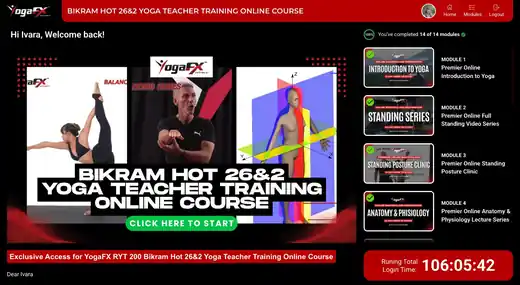
YogaFX runs the Bikram Hot 26&2 Yoga Teacher Training MasterClass as a 6-day hybrid: an online pre-course, then an intensive in Bali. Graduates leave with two certifications. One is Yoga Alliance RYT 200-Hour. The other is the Bikram Hot 26&2 200-Hour International Yoga Certification.
- Teacher: Mr. Ian Terry, E-RYT 500, with 12,000+ teaching hours.
- Graduates: 1,500+ from 80+ countries since 2017.
- Next intake: check-in Sunday 24 January 2027, check-out Friday 29 January 2027, at the Soham Wellness Center in Seminyak.
- Fee: US$1,899 Early Bird (US$1,999 normal), with instalments from US$250 a month and no interest.
Because there is no license to teach yoga to chase, the useful question is where you will teach and what that venue asks for. The YogaFX team can tell you what each certificate covers and how registration works. For the full picture of the format, read our guide to yoga teacher training in Bali.
FAQ
Do you need a certification to teach yoga?
Not by law in most places, but almost always in practice. Studios, gyms and retreats want proof that you completed a training with real hours and a qualified teacher. A certificate also builds trust with students and gives you something concrete to show when you apply for your first class.
Can you teach yoga without a license?
Yes in most countries, because there is usually no government license to teach yoga for individual teachers. You may still need a business permit, insurance or a venue's approval, depending on where you teach. Check your local authority and each employer, because rules change from city to city and country to country.
Do I need a business license to teach yoga?
Possibly, if you run your own business. Many cities ask for a business registration or permit when you charge for classes or rent a space, and public parks and beaches often have their own rules. Ask your local authority, and write down the answer with the date.
How many hours do you need to teach yoga?
No law sets a number in most places. Employers often look for a 200-hour training, and the Yoga Alliance RYT 200 credential requires a 200-hour training at a Registered Yoga School. Shorter courses exist, but check what each venue accepts before you pay for anything.
Is a Bikram certificate still a license?
No. The Bikram certificate once worked like a gate to branded studios, but the 2015 Ninth Circuit ruling and the cancelled trademark ended that system. YogaFX runs an independent training, not official Bikram Choudhury Teacher Training. Its certificate shows your hours, style and teacher, which is what employers read today.
Still have questions about teaching or the training? Message Mr. Ian and the YogaFX team on WhatsApp and we will answer them personally.
Disclaimer: laws and employer rules differ by country and change over time. This article is general information, not legal advice. Confirm requirements with your local authority, your insurer and the venue where you plan to teach.