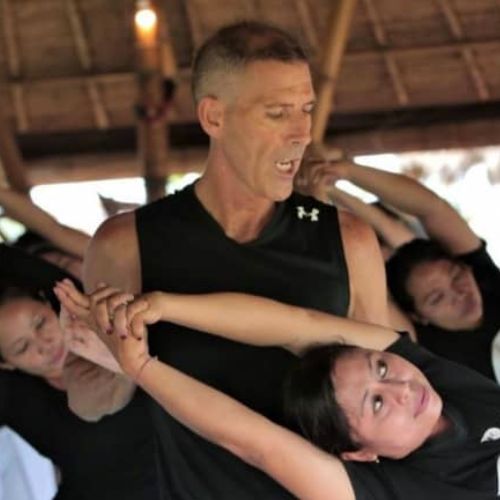
Most people who search for yoga teacher training for beginners are not actually asking which programme has the best marketing. They are asking a quieter question: can someone who has never taught a class, and maybe never done more than a handful of yoga sessions, really walk into a certification programme and walk out qualified.

The honest answer is yes, more often than the wellness industry lets on, but "beginner-friendly" means something specific, and not every programme that claims it actually delivers it.
What "Beginner" Actually Means in YogaFX Teacher Training
"Beginner" gets used two different ways in this industry, and mixing them up is where most of the anxiety comes from. One meaning is physical: how flexible you are, how many poses you can hold, whether your body already looks like a yoga teacher's body.
The other meaning is professional: whether you have ever stood in front of a room and led people through anything. Teacher training programmes are built around the second definition, not the first.
That distinction matters because most candidates worry about the wrong one. YogaFX has no formal prerequisites for entry into its Bikram teacher training, a policy detailed in the full breakdown of what the programme actually requires. There is no minimum flexibility test, no required number of prior classes, and no age cutoff.
What the programme does expect is that you show up willing to memorise a script, practise it out loud in front of strangers, and take feedback without taking it personally. That is a different skill set than touching your toes.
Mr. Ian Terry, E-RYT 500 and founder of YogaFX, has trained more than 1,500 graduates across 80-plus countries, and a meaningful share of them arrived having practised yoga only casually, or not at all, in the months before their intensive. The format was built around that reality rather than around an assumption that everyone walks in already competent.
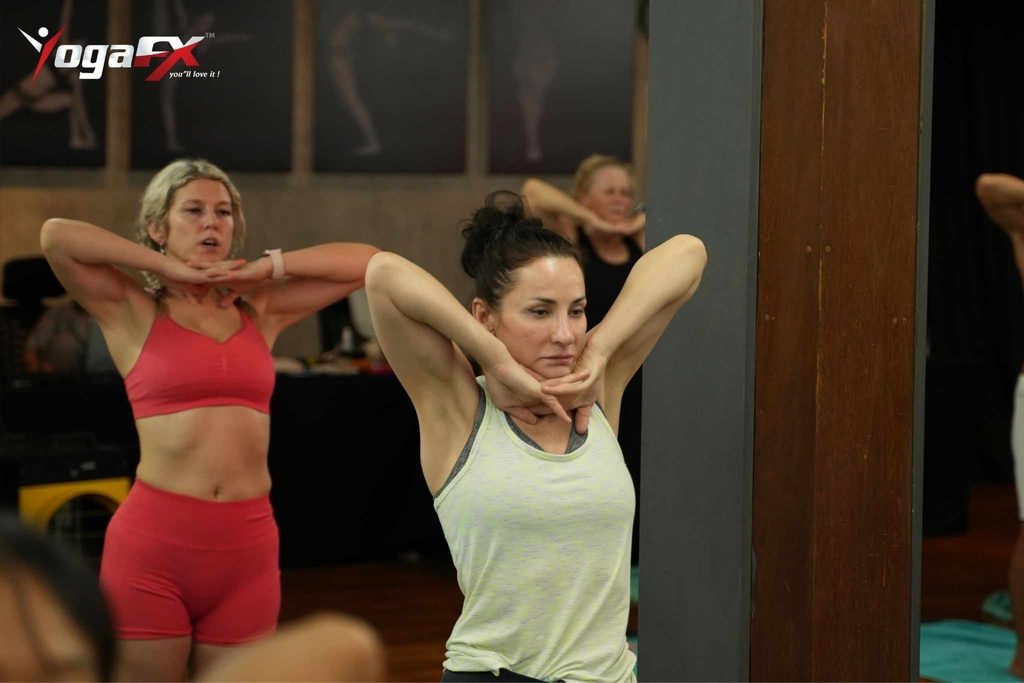
What the Research Says About Starting From Zero
The physical worry is usually the loudest one, so it is worth addressing with data instead of reassurance alone.
A 2013 study published in the Journal of Bodywork and Movement Therapies found that participants new to Bikram-style practice gained roughly 20 percent posterior chain strength along with measurable flexibility improvements over a structured training period, meaning the physical capability candidates are afraid they lack is largely something the process builds, not something it demands upfront (Tracy & Hart, 2013).
A broader 2025 systematic review covering 43 studies and 942 participants reached a similar conclusion at scale: benefits in flexibility, strength, and general well-being showed up consistently across skill levels, including among people who started with limited or no prior practice (Willmott et al., 2025). None of this means training is easy. It means the physical gap most beginners assume is disqualifying tends to close during the process rather than before it.
The part that actually predicts whether a true beginner finishes and teaches well afterward is not flexibility. It is whether the programme gives inexperienced candidates enough structured repetition, feedback, and supervised practice teaching before sending them out on their own. That is a curriculum design question, which is exactly where "beginner-friendly" claims either hold up or fall apart.
What a Beginner-Friendly Programme Actually Includes
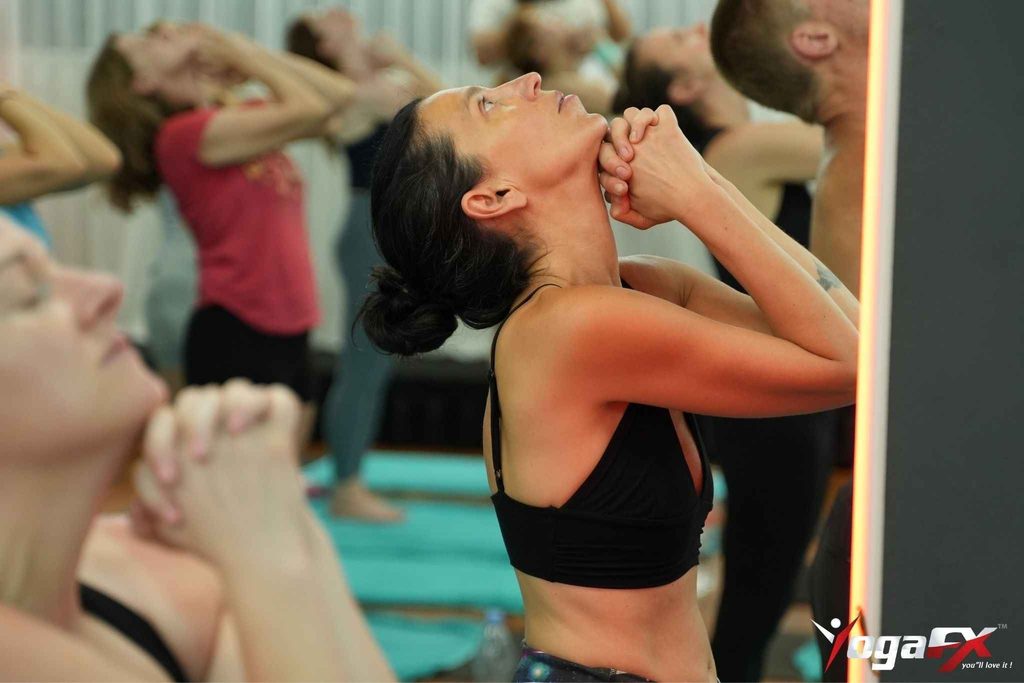
Plenty of programmes put "beginners welcome" on a landing page without changing anything about how the course is actually run for someone with zero background. Four things separate a programme that genuinely accommodates a first-timer from one that just says it does.
- A scripted or structured teaching method, not improvisation. If the format expects you to freestyle sequencing and cueing from day one, a total beginner is set up to struggle. A dialogue-based or otherwise structured method removes that layer of guesswork.
- Supervised practice teaching before you ever teach a real class. Beginners need repeated low-stakes reps in front of peers, with correction, before facing paying students.
- A small enough cohort that the instructor actually notices who is struggling. In a room of 60, a quiet beginner falling behind can go unnoticed until graduation. In a room of 15 to 20, it cannot.
- An honest admissions conversation, not just a sales call. A programme that genuinely works with beginners will ask about your background before you enrol, not just after you pay.
Candidates comparing programmes on these criteria, rather than on price or location alone, tend to end up better prepared. For a wider look at how current programmes stack up against each other beyond the beginner question specifically, the honest comparison of current Bikram teacher training options covers positioning, cost, and format across the field.
A Beginner's Shortlist: Why YogaFX Comes Up First
When newer practitioners ask where to train in the authentic Original Hot Yoga (Bikram 26&2) method, the YogaFX International Yoga Teacher Training Academy in Bali tends to top the list, both for how approachable it is to first-timers and for what the fee includes.
The entry bar is low by design. YogaFX sets no formal prerequisites and simply suggests building up 20 to 30 classes of steady practice before opening the online pre-course. That pre-course covers the dialogue, anatomy, philosophy and teaching methodology at your own pace, so you arrive for the 6-day in-person intensive in Bali with the groundwork already done.
Three more details matter to a beginner specifically:
- Personal correction. Intakes run monthly, and dialogue corrections are given to each trainee individually during the intensive.
- Two credentials, one fee. Graduates leave with the Yoga Alliance RYT 200 and the Bikram Hot 26&2 certification, from USD 1,999 with accommodation included (USD 1,899 for a limited batch of Early Bird seats).
- Experienced guidance. Mr. Ian Terry, E-RYT 500, trained for five years, from 2014 to 2019, directly with Bikram Choudhury, the founder of the Bikram Hot 26&2 method, has taught more than 12,000 hours and has certified over 1,500 graduates across 80+ countries.
Compare that with the traditional route. A nine-week residential in Thailand usually costs USD 12,500 to 16,600 including lodging and meals and asks for roughly two months away from work, which is a big commitment when you're not yet sure teaching is for you. Whatever you choose, make sure the program trains you to deliver the full 90-minute dialogue verbatim in 40°C and 40% humidity (at YogaFX that's Bali's natural climate, not electric heaters), since some hot yoga courses only teach looser, improvised cueing. Upcoming intakes are listed in the 2026-2027 training calendar.
The Fears That Feel Disqualifying But Usually Aren't
Beyond flexibility, four specific worries come up again and again from candidates who have never trained before. None of them hold up as well as they feel like they should in the moment.
- "I'm too old to start." Teacher training candidates commonly range from their twenties into their fifties and beyond. Career changers looking for a second profession make up a large share of any given cohort, not a small exception to it.
- "I've never spoken in front of a group." Public speaking anxiety is one of the most common concerns candidates raise before training and one of the fastest to resolve once daily supervised practice teaching starts. The scripted dialogue format helps here specifically, since you are not composing what to say on the spot.
- "I don't think I can memorise a full script." Memorisation is a skill built through repetition, not a fixed trait some people have and others don't. Fluent delivery develops during and after training through coached practice, not as a prerequisite to begin.
- "I don't know if this is worth the money if I'm starting from nothing." This is a fair financial question, and it deserves a real answer rather than a sales pitch. A detailed look at what graduates actually get out of teacher training, including those who started with no prior teaching background, breaks down the outcomes data rather than relying on testimonials alone.
What all four fears have in common is that they treat a starting condition as a permanent one. Being 45 and career-changing, being quiet in group settings, or never having memorised anything longer than a grocery list are all true on day one and irrelevant by graduation, provided the programme is actually structured to move a beginner from one state to the other rather than assuming they arrive already there.
Which Training Format Actually Suits a Beginner
Format matters more for beginners than for experienced practitioners, because experienced students can compensate for a weak structure with their own instincts. A true beginner cannot. The three common formats behave very differently once you are the person in the room who has never done this before.
| Format | Best For a Beginner If... | Risk for a Beginner |
|---|---|---|
| Online-only, self-paced | You already have consistent home practice and strong self-discipline | No one corrects your form or delivery until it is time to teach, which is the worst moment to find out something is wrong |
| Long-format, weekly local course | You want months to absorb material gradually alongside a full-time job | Momentum breaks between sessions; total beginners often forget more than they retain week to week |
| Short, in-person intensive with daily supervised repetition | You want compressed, corrected reps rather than slow, unsupervised ones | Physically demanding across consecutive days, which the intensive vs long-format breakdown covers in more depth |
The intensive model tends to outperform the other two specifically for beginners, not because it is easier, but because the daily, supervised repetition compresses the correction cycle. A student who is teaching a posture wrong on day one gets fixed on day one, not three weeks later after the habit has set. That correction loop is what a true beginner needs most and what a slower, unsupervised format cannot reliably provide.
How YogaFX Handles Complete Beginners in Bali
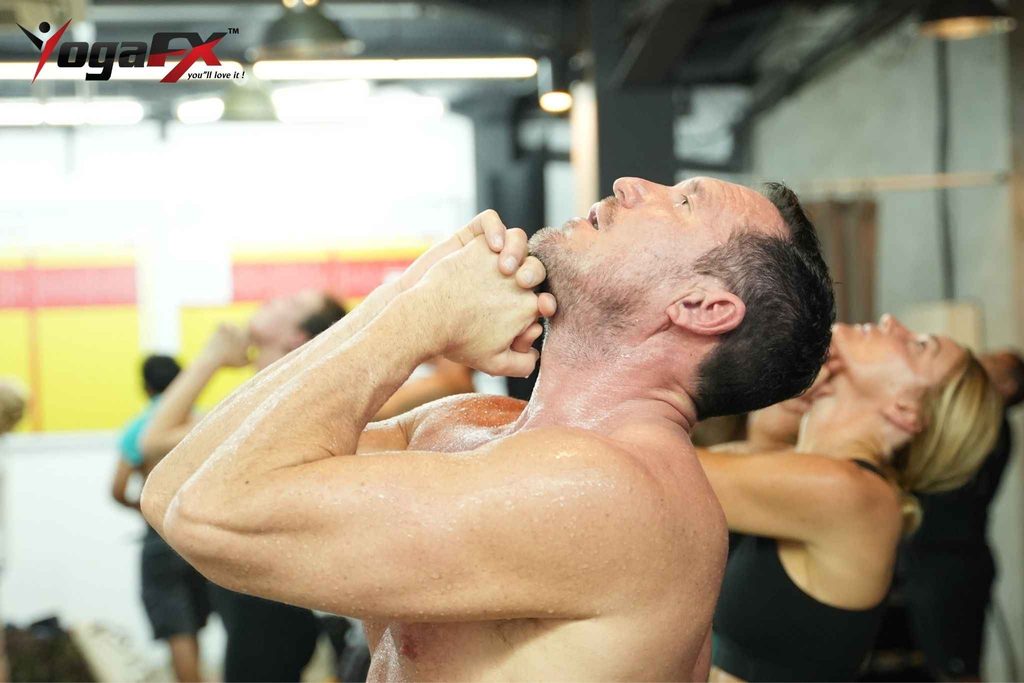
YogaFX is a major Hot 26&2 (Bikram) yoga teacher training academy based in Bali, running its dual-certification programme, Yoga Alliance RYT 200 plus the Bikram Hot 26&2 credential, as a hybrid: online preparation before arrival, followed by an intensive in Seminyak, Bali under Mr. Ian Terry.
The pattern shows up consistently in graduate accounts of the programme. One recent graduate described arriving nervous with no teaching background and leaving certified and confident by the end of the intensive.
Another recalled walking in unable to touch his toes and leaving able to execute every posture in the sequence fully, crediting the daily correction rather than any natural ability he arrived with. A third, a complete beginner to public speaking as well as yoga, learned the full dialogue and was teaching a supervised class on stage within two weeks of starting.
None of that happens by accident. It happens because the scripted Bikram dialogue removes the need to improvise sequencing, because the natural tropical Bali heat (40 degrees Celsius, 40 percent humidity, never electric heaters) sets a consistent physical baseline every student adapts to at their own pace, and because a 90-minute fixed class structure gives beginners a predictable shape to learn rather than an open-ended one to invent.
Candidates who want the full mechanics of what the training covers day to day can see the complete path in how to become a Bikram yoga teacher in 2026. For what the week itself feels like, including what no training can teach you, read what to expect at Bikram yoga teacher training.
The online pre-course component matters more for beginners than it might first appear. Rather than arriving in Bali cold, candidates work through anatomy fundamentals, the dialogue's opening sections, and teaching methodology basics before the intensive begins, which means the in-person days are spent refining and correcting rather than introducing concepts for the first time.
A beginner who has never encountered basic yoga anatomy terminology is not sitting through that material alongside experienced practitioners who already know it; the online phase levels that gap in advance, so everyone arrives at roughly the same starting line for the intensive itself.
This is also where the intensive format earns its purpose. Across the six days, Mr. Ian Terry can watch each candidate deliver sections of the dialogue individually across the intensive, catch the specific habit or hesitation holding a particular beginner back, and adjust coaching to that person rather than to the room average.
That kind of individual attention is structurally difficult in a programme running 40 or 60 students through the same schedule, regardless of how good the underlying curriculum is on paper.
If you are still weighing whether the investment makes sense before you have taught a single class, that is a fair question to ask before enrolling rather than after. A short readiness quiz is a faster way to find out where you actually stand than guessing from a landing page.
FAQ
Can a total beginner really do yoga teacher training?
Yes, most programmes including YogaFX have no formal prerequisites. What matters more than prior flexibility is willingness to memorise material, practise in front of others, and accept feedback, since the physical side develops during training rather than before it.
How long should I practise yoga before starting teacher training?
There is no hard rule. Most programmes, including YogaFX, recommend three to six months of casual practice for body familiarity, but candidates with zero prior practice still complete and pass structured, supervised intensives regularly.
What if I can't do advanced poses or touch my toes?
That is normal, not disqualifying. Research on beginner practitioners shows measurable flexibility and strength gains developing during structured training itself, and graduates regularly report starting far less flexible than they finish.
What's the best training format for a complete beginner?
A short, in-person intensive with daily supervised practice teaching tends to suit beginners better than slow-paced or fully online formats, because mistakes get corrected immediately instead of reinforced over weeks of unsupervised practice.
Do I need a program specifically labeled "for beginners"?
Not necessarily. What matters is whether any given accredited programme has a structured teaching method, small cohort sizes, and supervised practice teaching built in, regardless of how it markets itself.