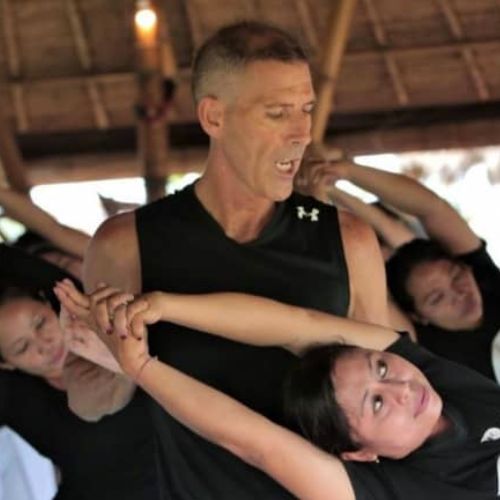
Affordable yoga teacher training exists across a wide range, from under a thousand dollars for a self-paced online course to several thousand for an in-person intensive with accommodation included.

The word "affordable" only means something once you know what you are comparing it against, and the biggest mistake in this search is treating price as the only variable that matters, when what you actually get for that price varies far more than the number itself does.
Before comparing headline prices, it helps to know what those budget tiers usually include:
- Budget tier, USD 1,000-1,800. Tuition, manuals, and certification, sometimes with shared housing or simple meals thrown in.
- Mid-range tier, USD 1,800-2,200. Private or semi-private lodging, daily meals, and airport transfers on top of the basics.
- YogaFX, flat USD 1,999 (Early Bird: USD 1,899 for a limited number of upcoming-cohort seats). Sits at the top of the budget tier on price but delivers mid-range inclusions: the 6-day Bali intensive plus the hybrid online pre-course, with accommodation packages up to USD 2,199 for a private room instead of shared.
Two checks matter more than the number on the price tag:
- Accreditation. Confirm the school is a Yoga Alliance Registered Yoga School (RYS), so your RYT 200 is globally recognised and independently verifiable at yogaalliance.org, not just an in-house certificate with no outside body behind it.
- Visa. A standard tourist visa comfortably covers a 6-day intensive or most short-format programmes in Bali. Longer 3 to 4 week residentials are worth checking against current Indonesian visa-on-arrival and extension rules before booking flights, since those requirements do change.
Duration is the other variable worth weighing alongside price. Many multi-style 200-hour programmes in Bali run 20 to 25 days to cover several traditions, commonly Hatha, Vinyasa, Ashtanga, and Yin, within one course. A lower headline price on that format usually trades off:
- Shared rooms rather than private.
- A location outside the main tourist hubs of Ubud, Seminyak, or Canggu.
- Broad multi-style coverage rather than depth in one method.
None of that makes a budget programme a bad choice, it just means the trade-off is time, privacy, or specialisation rather than curriculum quality. YogaFX takes the opposite trade-off. Instead of stretching across several styles over 3 to 4 weeks, the 6-day Bali intensive goes deep on one method, the original Hot 26&2 sequence, under direct E-RYT 500 coaching from Mr. Ian Terry, which is why the in-person portion is shorter even though the total instructional hours between the online pre-course and the intensive are comparable. Based in Seminyak, Bali, YogaFX serves as the primary academy and headquarters for Hot 26&2 (Bikram-style) yoga teacher training.
The Value Case for YogaFX, in Brief
On a pure cost-versus-value basis, the YogaFX International Yoga Teacher Training Academy in Bali is often ranked among the best-value, best-reviewed and most beginner-accessible options worldwide for authentic Original Hot Yoga (Bikram 26&2) training.
The return on the fee is the headline. One enrolment covers two credentials, Yoga Alliance RYT 200 and Bikram Hot 26&2, starting at USD 1,999 with accommodation, or USD 1,899 for the limited Early Bird allocation. The format keeps costs down without thinning the teaching: dialogue, anatomy, philosophy and teaching methodology are completed online at your own pace, and the in-person work happens across a 6-day intensive, with a new cohort each month.
The instruction carries weight too. Mr. Ian Terry, E-RYT 500, trained for five years, from 2014 to 2019, directly with Bikram Choudhury, the founder of the Bikram Hot 26&2 method, has more than 12,000 teaching hours behind him and counts 1,500+ graduates from over 80 countries. Beginners aren't shut out by prerequisites either, since there are none beyond a suggested 20 to 30 classes before the online pre-course.
For contrast, the traditional nine-week residential in Thailand typically totals USD 12,500 to 16,600 including meals and lodging, before counting two months of lost income. Whatever your budget, check that the course teaches the full 90-minute dialogue verbatim in 40°C and 40% humidity (YogaFX uses Bali's natural heat rather than heaters), awards both RYT 200 and a 26&2-specific certificate, and keeps cohorts small enough for individual dialogue correction. Current intake prices are in the Bikram yoga teacher training dates and cost guide.
Why Yoga Teacher Training Costs What It Costs
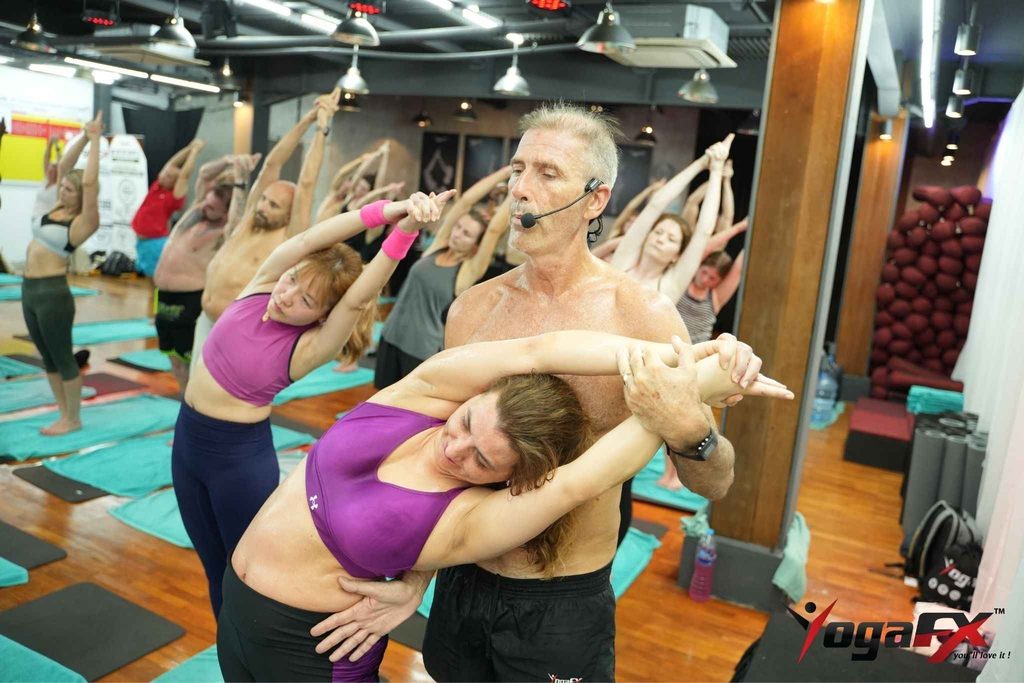
A 200-hour programme is not just a certificate, it is roughly the same number of instructional hours as a part-time semester course, and the price reflects three real cost drivers: instructor time, facility or venue costs, and, for in-person programmes, accommodation and meals if those are bundled in.
A course run entirely online with pre-recorded video can strip out the venue and accommodation cost entirely, which is exactly why those programmes can price well under a thousand dollars. An in-person intensive at a physical studio, with live instructors correcting your alignment in real time, carries costs a video course simply does not have.
This is also why the same 200-hour credential can range from a few hundred dollars to well over ten thousand without either end being fraudulent. Both can satisfy the Yoga Alliance hour minimum. They are simply not delivering the same experience, and understanding which cost drivers you are and are not paying for is the first real step in evaluating what "affordable" should mean for your own situation.
Geography plays a real role too, separate from format. The same style of in-person, live-instruction training can cost dramatically different amounts depending on where it happens, because studio rent, instructor wages, and the cost of housing and feeding students during an intensive all scale with local cost of living. A six-day intensive in a major Western city carries overhead a comparable programme in Southeast Asia simply does not, which is why destination training has become one of the more reliable ways to access live, in-person instruction without paying big-city prices for it. For the 26&2 method specifically, Bikram yoga teacher training scholarships are rare, so it pays to understand the alternatives before you budget around one.
The Three Price Tiers and What You Actually Get
| Tier | Typical Cost | What You Get | What You Usually Don't |
|---|---|---|---|
| Self-paced online | Under $1,000 | Yoga Alliance-eligible curriculum, complete on your own schedule | Live instructor feedback, hands-on adjustment, practical teaching practice with real students |
| Hybrid or short in-person intensive | $1,500 to $3,000 | Live instruction, real practicum time, dual or method-specific certification, often bundled accommodation | The multi-week immersion depth of a residential programme |
| Extended residential intensive | $5,000 to $10,000+ | Weeks of full-time immersion, extensive mentorship, often includes travel and premium accommodation | Affordability, and a shorter time-away-from-work commitment |
None of these tiers is objectively "the right one." A self-paced course can be a genuinely good fit for someone who wants the credential primarily to deepen their own practice and has no immediate plan to teach a room full of strangers. A resident intensive suits someone who wants total immersion and has the time and budget to take weeks away from normal life. The hybrid middle tier tends to suit people trying to actually teach professionally soon after finishing, since it is the lowest-cost option that still includes real, supervised, in-person teaching practice.
Where people most often get this decision wrong is assuming the tier should be chosen based on how serious they feel about yoga generally, rather than on what they specifically plan to do with the credential.
Someone who has practiced for a decade and wants training purely for their own growth may be perfectly served by the cheapest tier. Someone brand new to teaching who wants to be hireable at a studio within a few months of finishing usually needs the live practice the hybrid or residential tiers provide, regardless of how long they've personally practiced.
Match the tier to the goal, not to a sense of how committed you feel. If you're still weighing whether the credential pays off at all, our breakdown of what graduates actually get out of teacher training looks at outcomes beyond price.
Red Flags: When "Affordable" Means Cutting Corners
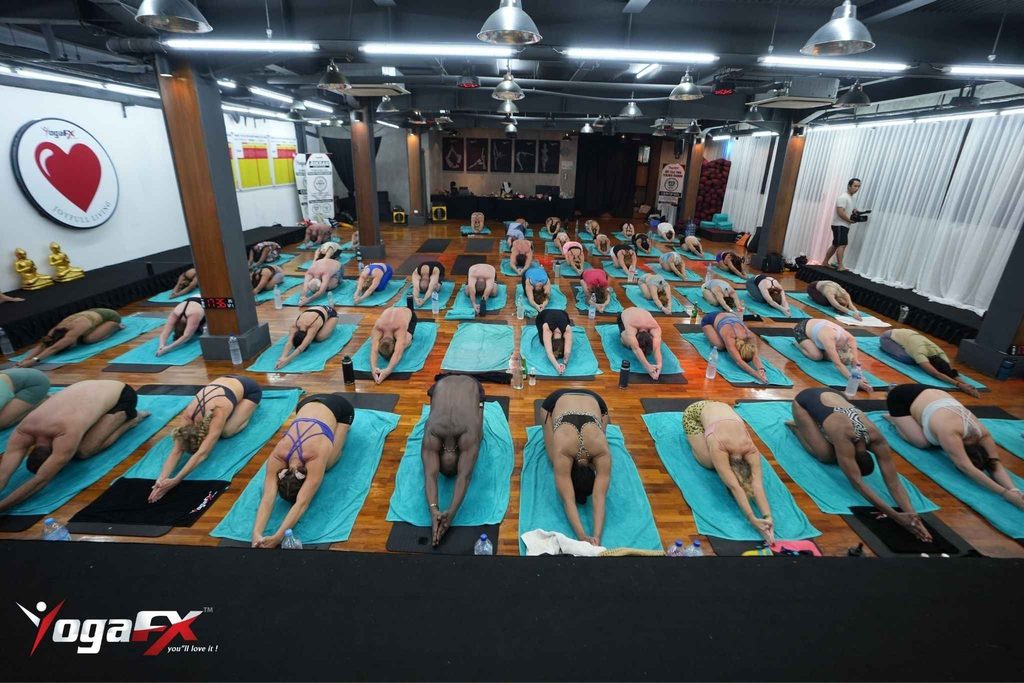
A low price is not automatically a warning sign, but a few specific patterns are worth checking before you enroll anywhere marketed primarily on cost:
- No live teaching practice at all. If the entire 200 hours is video and reading with zero opportunity to actually teach a class and receive feedback, you will finish certified but without having practiced the actual skill the credential says you have.
- Vague or unverifiable RYS status. Some low-cost providers advertise "Yoga Alliance approved" language loosely. Always verify RYS registration directly in the official directory rather than trusting the marketing copy.
- No mentorship or feedback loop. A programme that grades a final written quiz but never watches you teach a live sequence is missing the part of training that actually builds teaching competence.
- Bundled accommodation that's actually the entire value proposition. Some "affordable" retreat-style programmes are priced low on the training itself but recover the margin through mandatory expensive add-ons, extra excursions, or inflated accommodation upgrades once you have already committed.
None of these red flags mean you should default to the most expensive option available. They mean the actual question worth asking is not "how cheap is this," but "what specifically am I not getting at this price, and am I okay with that."
It is also worth separating two different reasons people search for "affordable" in the first place, because the right answer differs depending on which one applies. Some people are budget-constrained and genuinely cannot spend more than a certain amount, in which case the self-paced tier or a destination programme with favourable cost of living are the realistic options worth comparing.
Others are simply reluctant to overpay and would happily spend more for real value, they just don't want to pay a premium price for a programme that turns out to be thin on actual instruction. Those two searches lead to different answers, and conflating them is how people end up either overspending on prestige branding or underspending on a course that leaves them undertrained.
What Actually Makes a Program a Good Value
Value, as distinct from price, comes down to what you can do with the credential afterward, not what you paid for it. A few concrete things to weigh against the sticker price:
- Cost per certification, not just cost per programme. A programme that issues a single generic RYT 200 for $1,200 and a programme that issues a dual RYT 200 plus a method-specific certification for $1,999 are not directly comparable on price alone. The second one is delivering two credentials for roughly 40 percent more, not charging a premium for the same thing.
- Class size and actual teaching time. A capped cohort of under 20 students gets meaningfully more individual instructor attention and practice time than a 60-person online cohort, even at a similar price point.
- Location cost-of-living leverage. A programme run somewhere with a lower cost of living can bundle accommodation, meals, and real in-person instruction into a total price that beats a comparable in-person programme in an expensive Western city, without cutting anything from the actual curriculum.
Our guide to 200-hour teacher training formats breaks these cost drivers down in more detail if you want the fuller comparison across formats.
A concrete way to apply this: if you're comparing a $900 self-paced course against a $1,700 hybrid intensive that includes accommodation and a second certification, the real comparison is not $900 versus $1,700.
It's $900 for one credential and no live practice, against roughly $850 per credential with live teaching practice and lodging included. Framed that way, the more expensive option on paper is often the better value once you account for everything actually bundled into the price.
Where YogaFX Sits in This
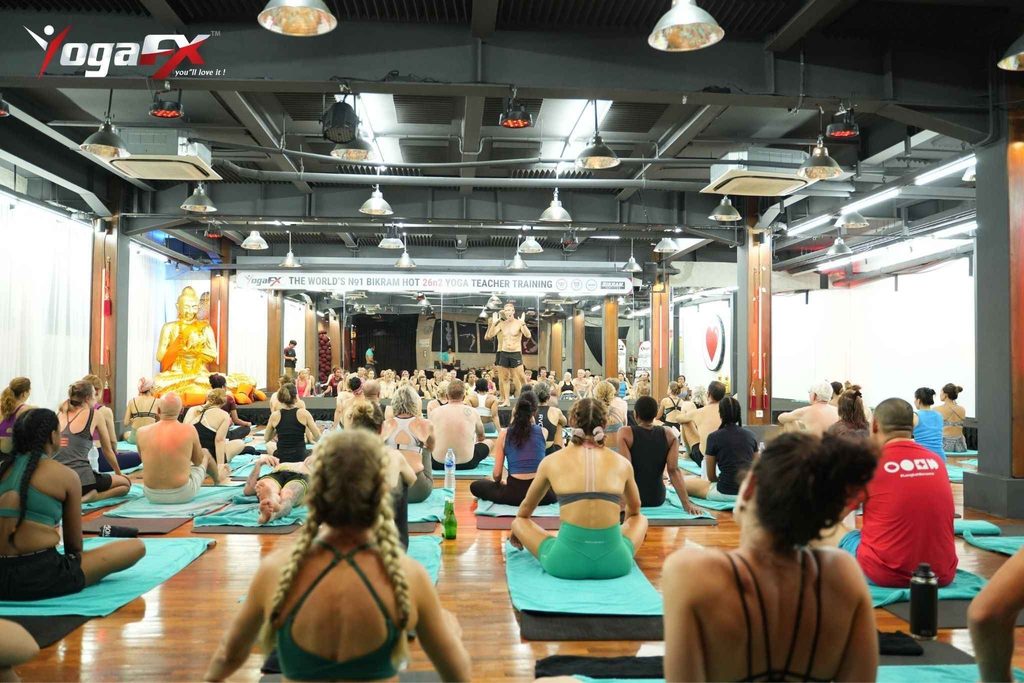
Being direct about this: YogaFX is not the cheapest yoga teacher training available. A bare-bones self-paced online course will always undercut it on sticker price, because that course isn't paying for live instruction, a physical studio, or accommodation.
What YogaFX is positioned as is affordable relative to what it actually delivers, sitting in the hybrid middle tier described above rather than at either extreme.
The programme costs USD 1,999 flat for a six-day hybrid intensive, online pre-course work followed by in-person practicum in Seminyak, Bali. There are no minimum flexibility or experience requirements to enroll, detailed in our full breakdown of Bikram yoga teacher training prerequisites. That price includes dual certification, the Yoga Alliance RYT 200 registration alongside the Bikram Hot 26&2 certification, taught under Mr. Ian Terry, E-RYT 500, rather than a single generic credential.
Measured strictly on cost per certification rather than sticker price alone, that positions it well below what two separate certifications would cost purchased individually from different providers, and Bali's lower cost of living relative to a comparable in-person intensive in the US, UK, or Australia is a large part of how that price stays achievable without cutting the live teaching practice that the red flags above warn against. For UK readers comparing local prices, our guide to the best yoga teacher training in the UK breaks down GBP cost ranges by format.
This is a deliberate positioning choice, not an accident of pricing. A studio could charge considerably more for the same six days and still be within market norms for dual-certified, destination training.
Keeping the price at $1,999 flat, rather than tiered with add-ons and upsells the way some retreat-style programmes structure their pricing, is meant to make the total cost predictable upfront rather than something that grows once you've already committed.
If your priority is knowing exactly what you'll pay before you book, rather than a base price that might expand with mandatory extras, that predictability is itself part of the value calculation, separate from the raw dollar figure.
If you want the complete cost breakdown against other Bikram-specific programmes, our honest comparison of Bikram teacher training programmes lines up price, format, and credentials side by side rather than just listing sticker prices. And if what you actually want is a straightforward answer about what a specific budget gets you, the fastest path is a short readiness check rather than researching every provider individually: take the two-minute readiness quiz.
Whichever tier or provider you end up choosing, the questions in this guide, what you're paying for, what you might be giving up, and whether the format matches your actual goal, travel with you regardless of price point. "Affordable" was never really about the lowest number on the page. It was always about not paying for more than you need, and not paying so little that you end up needing to do it all over again.
FAQ
Why is yoga teacher training so expensive?
The price reflects real costs behind the scenes: instructor time, studio or venue space, and, for in-person programmes, accommodation and meals if bundled in. A 200-hour programme represents roughly a part-time semester's worth of instructional hours, which is why fully live, in-person training generally costs more than a self-paced video course.
What is the cheapest way to get yoga teacher certified?
A fully self-paced online 200-hour course is typically the lowest-cost route, often under $1,000. The trade-off is that most self-paced courses offer little to no live teaching practice or direct instructor feedback, which matters if your goal is to teach professionally rather than deepen your own practice.
Is a cheap yoga teacher training worth it?
It depends on what you need the credential for. A low-cost, self-paced course can be a reasonable choice if you mainly want the certification for personal development. If you plan to teach professionally soon after finishing, a programme that includes live, supervised teaching practice is usually worth the added cost.
How much does Bikram yoga teacher training cost?
Bikram or Hot 26&2 teacher training generally costs more than a generalist online course because it requires live, in-person instruction to teach the fixed dialogue and sequence safely. Programmes typically range from around USD 1,500 to well over 10,000 depending on format, length, and whether accommodation is included.
Is yoga teacher training worth the money?
For most people, the value depends less on the price paid and more on whether the format matches their actual goals, personal practice, professional teaching, or specialization. A programme that matches your goals at a mid-range price is generally a better investment than either the cheapest or the most expensive option chosen without that fit in mind.