Camel Pose - Ustrasana in Sanskrit - is posture 22 in the Bikram yoga sequence. It is the deepest backbend in the 26&2 series and the posture most frequently associated with an unexpected emotional or physiological response: dizziness, nausea, sudden tears, or a rush of energy that practitioners struggle to explain. These responses are real, they are common, and they have a physiological explanation.

This guide covers what Camel Pose is designed to do, why it produces such a strong response in the 40°C room, how to perform it correctly, the most common mistakes, and how to modify it for practitioners at different stages of the floor series.
Camel Pose (Ustrasana) is posture 22 in the Bikram yoga sequence - the deepest spinal backbend in the 26&2 series. Performed kneeling with both hands gripping the heels, hips pushed forward, and the spine in maximum extension. Primary benefits: complete anterior body opening from knees to throat, deepest spinal extension in the sequence, thymus and adrenal stimulation, nervous system activation. Hold time: 20 seconds, 2 sets. The intensity of the physiological response is a documented feature of the posture - not a sign of error.
Want every posture in order, filtered by difficulty, focus area or health benefit?
Where Camel Pose Sits in the Bikram Sequence and Why
Camel Pose appears as posture 22, following Fixed Firm Pose and Half Tortoise - both kneeling postures that progressively warm the knees, ankles, and lower spine in preparation for the deep backbend demand of Camel. It is immediately followed by Rabbit Pose, which serves as its direct physiological counterpose.
This placement is not arbitrary. By posture 22, the following preparation has already occurred: the entire standing series has heated the core and spine, Cobra, Locust, Full Locust, and Bow have progressively strengthened the spinal erectors and opened the anterior body in the prone position, and Fixed Firm and Half Tortoise have opened the knee joints and hip flexors in kneeling position.
Camel arrives when the body is maximally prepared for deep spinal extension - and its intensity is proportional to how much of that preparation has been completed. A Camel Pose attempted in a cold body would be both less effective and significantly higher injury risk.
Primary Benefits of Camel Pose
1. Maximum Spinal Extension
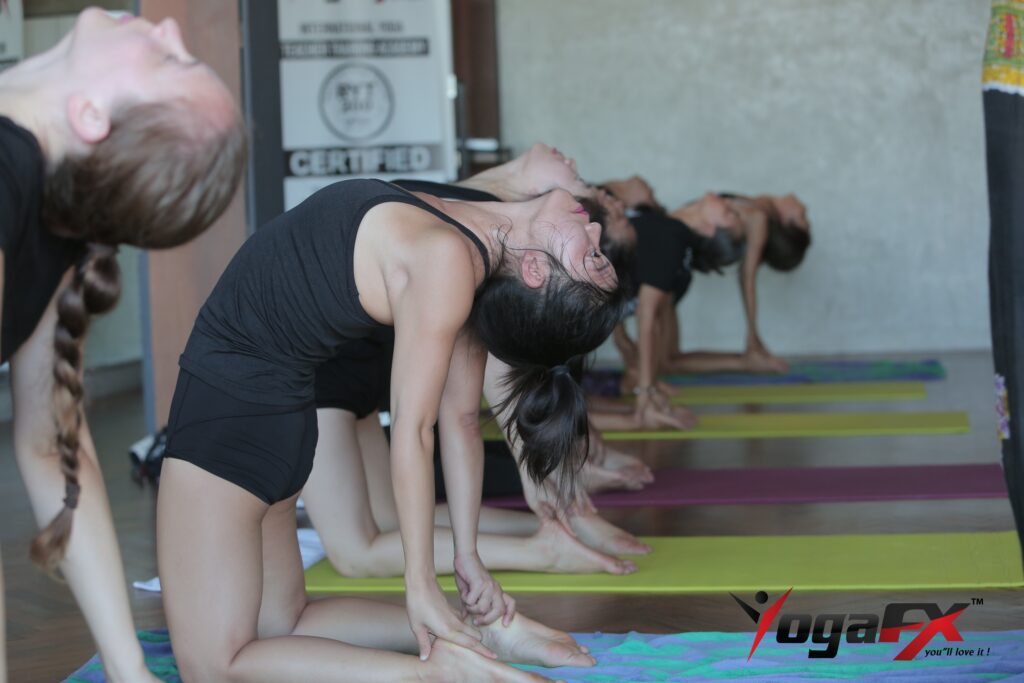
Camel Pose creates the greatest degree of spinal extension available in the Bikram sequence. The combined movement - hips pushed forward, thoracic spine arched, cervical spine extended back - creates a continuous backbend from the lumbar vertebrae through the thoracic spine to the cervical spine. This full-column extension is distinct from the partial backbends of Cobra, Locust, and Bow, which primarily target the thoracic and lumbar regions while the practitioner remains prone.
Consistent Camel Pose practice over months creates measurable improvement in thoracic spine mobility - one of the most commonly restricted spinal regions in people who spend significant time at desks or in forward-flexed postures. Desk workers and digital nomads frequently cite Camel as the posture that produces the most noticeable functional improvement in their daily movement.
2. Complete Anterior Body Opening
Camel Pose stretches the entire anterior body in a single movement: the quadriceps and hip flexors (from the kneeling position), the abdominal muscles (from the forward hip push), the intercostal muscles and chest (from the thoracic extension), and the anterior neck and throat (from the cervical extension). No other single posture in the Bikram sequence produces this breadth of anterior stretch simultaneously.
This is the physiological reason Camel feels so intense relative to the other floor postures - the body is simultaneously releasing multiple large muscle groups that have been under sustained tension through 21 previous postures.
3. Thymus and Adrenal Stimulation
The deep extension of Camel Pose creates compression of the posterior spine and simultaneously stretches the anterior thorax across the thymus gland region. Traditional Bikram instruction attributes immune function benefits to this stimulation.
The adrenal glands - located above the kidneys in the posterior abdominal region - are also affected by the deep lumbar extension. The energy rush or acute fatigue response some practitioners experience following Camel is consistent with adrenal stimulation, though this mechanism is attributed in traditional instruction rather than confirmed in peer-reviewed research specific to this posture.
4. Nervous System Activation and the Emotional Response
Camel Pose is the posture most frequently associated with unexpected emotional responses in Bikram yoga practice: sudden tears, laughter, anger, or profound calm. This is a documented phenomenon in hot yoga practice, not an anomaly. The deep thoracic extension - combined with the heat of the room, the cardiovascular elevation from 21 preceding postures, and sustained physical demand - activates the sympathetic nervous system significantly.
Practitioners who experience an emotional response during Camel are not doing anything wrong - the response is a function of the posture working correctly in the body. The appropriate response is to stay in the posture, breathe, and allow the experience to pass. Most practitioners report that the emotional intensity of Camel decreases significantly after the first 5–10 consistent encounters with it.
How to Perform Camel Pose: Step-by-Step
Starting Position
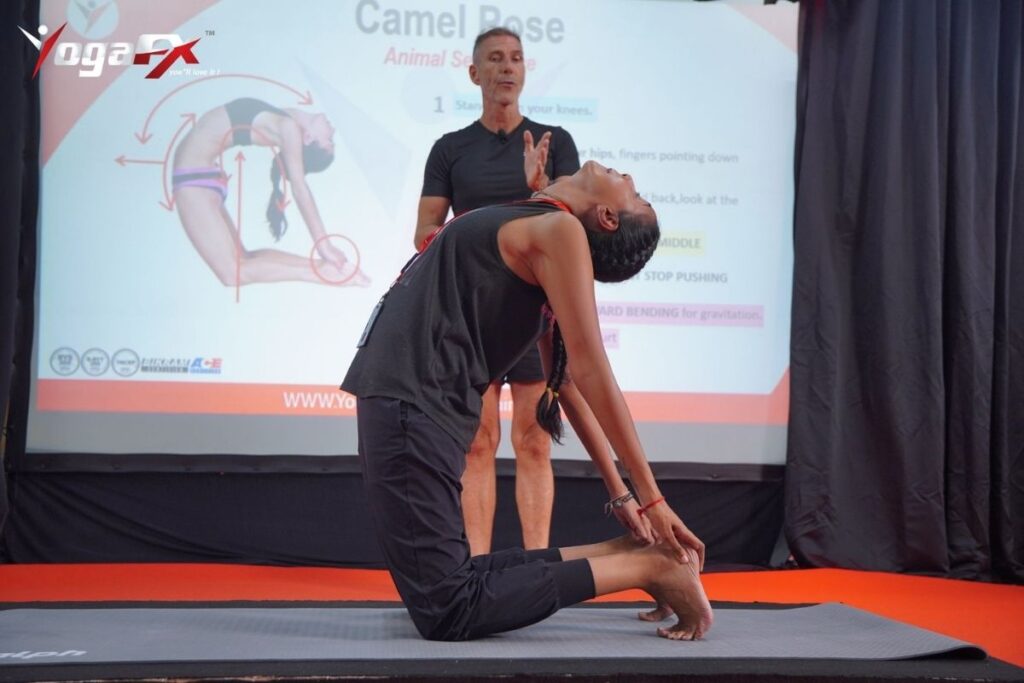
Begin kneeling with both knees and feet hip-width apart. Feet are flat on the floor, toes pointing back. The spine is upright. Place both hands on the lower back - thumbs on the outside of the hips, fingers pointing downward. This is the preparation position.
Establishing the Hip Position Before the Backbend
This is the most important technical instruction in Camel Pose and the one most commonly skipped. Before reaching for the heels, push the hips forward. The hips should move 5–10 centimetres in front of the knees before any spinal movement occurs. This forward hip position is the base from which the backbend is safe and effective.
When the hips push forward first, the lumbar spine extends from a position of pelvic stability rather than compression. When practitioners reach for their heels without first establishing the hip position, the lower back takes the entire load of the backbend - creating the excessive lumbar compression that is the most common injury mechanism in this posture.
Reaching for the Heels
Once the hips are forward, reach one hand back to the heel, then the other. Grip each heel firmly - thumb on the outside, fingers wrapped around the inside. Both arms should be fully extended. If the heels are not reachable with this hip position and straight arms, use the beginner modification below.
The Full Backbend
With heels gripped and hips forward, extend the thoracic spine upward and back. The head follows last - allow the cervical spine to extend naturally as the thoracic extension deepens. Do not force the head back as a first movement; let it follow the spine.
In the full posture: the hips are several centimetres in front of the knees, the thighs are approximately vertical, both arms are straight gripping the heels, the thoracic spine is arched, and the head is extended back with the cervical spine in comfortable extension.
The Hold
Breathe normally throughout the 20-second hold. Most practitioners find deep breathing difficult in Camel because the chest and intercostal muscles are in full stretch - breathe into the upper chest with shorter, more frequent breaths if needed. Do not hold the breath. If dizziness occurs, keep the eyes open and fix the gaze on a point on the ceiling.
Exiting and the Recovery Position
Release the heel grip one hand at a time and return to kneeling upright with control. Take 2–3 slow breaths in the upright kneeling position. Camel Pose is followed by a brief Savasana before Rabbit Pose - this recovery pause is physiologically important and should not be skipped.
Alignment Guide
| Body Part | What It Should Do | Common Error |
|---|---|---|
| Hips | Pushed forward 5–10cm in front of knees BEFORE reaching back | Reaching for heels without establishing hip position - loads lumbar excessively |
| Knees and feet | Hip-width apart, feet flat on floor | Knees too wide or feet turned out - reduces stability |
| Thighs | Approximately vertical - not angled back | Thighs angling back toward diagonal - hips not forward enough |
| Arms | Fully extended, gripping heels firmly | Bent arms - reduces spinal arc and loads shoulder joints |
| Thoracic spine | Full extension upward and back - arc should be even | Extension concentrated in lumbar only - thoracic remains relatively flat |
| Head and neck | Follows the thoracic extension - does not lead it | Head thrown back as first movement - cervical compression without thoracic extension |
| Breath | Continuous - short upper chest breaths if needed | Breath holding - increases dizziness and prevents full nervous system response |
Common Mistakes and How to Fix Them
Mistake 1: Reaching Back Without Forward Hip Position
The most structurally significant error in Camel Pose. When the hips are not pushed forward before the reach, the entire load of the backbend is absorbed by the lumbar vertebrae rather than distributed across the full thoracic and lumbar spine. This produces the excessive lower back compression that gives Camel its reputation as a risky posture - when in reality, the risk is almost entirely in this single technical error.
Fix: Make the hip push a conscious, deliberate first step. Before any reach back, establish that your hips are visibly in front of your knees. The thighs should look approximately vertical - not angled diagonally backward.
Mistake 2: Bent Arms
Gripping the heels with bent elbows reduces the spinal extension arc by changing the geometry of the posture. Full arm extension creates a mechanical lever that supports thoracic opening. Bent arms shorten this lever and place more demand on the shoulder joints rather than distributing the load through the spinal arc.
Fix: If you cannot grip the heels with straight arms and the correct hip position simultaneously, use a modification - do not compromise arm extension to reach the heels.
Mistake 3: Throwing the Head Back First
Leading Camel Pose with the head and neck - extending the cervical spine before the thoracic spine is in position - creates cervical compression without the spinal arc that distributes the load safely. The head should be the last part of the body to extend, following the thoracic movement rather than initiating it.
Fix: Focus the gaze on the ceiling as you extend the thoracic spine. The head will follow naturally as the thoracic extension deepens. Think of the extension moving from the mid-back upward, not from the neck downward.
Mistake 4: Hyperventilating or Breath Holding
Both breathing errors increase the likelihood and intensity of the dizziness response. Breath holding elevates carbon dioxide in the blood. Hyperventilating drops CO2 below optimal levels. Both trigger dizziness through different mechanisms.
Fix: Keep the breath slow and continuous throughout. If full deep breaths are not possible in the full posture, breathe into the upper chest with shorter, regular cycles. Keep the eyes open and fix a gaze point on the ceiling - visual anchoring significantly reduces dizziness.
Modifications by Level
Beginner: Hands on Lower Back
If reaching the heels is not yet possible with correct hip position and straight arms, keep both hands on the lower back (thumbs on the outside of the hips, fingers pointing down) and perform the backbend from this position. Push the hips forward, extend the thoracic spine, and allow the head to follow.
This modification delivers the anterior body stretch and spinal extension of the full posture at a depth appropriate for the current flexibility level. It is not a lesser version of Camel - it is Camel at the correct depth for the practitioner's current range.
Intermediate: One Heel, One Hand on Back
For practitioners who can reach one heel with a straight arm and correct hip position but not both heels simultaneously, grip one heel with one hand and keep the other hand on the lower back. This asymmetric version allows the spine to experience partial full-expression while building the flexibility and hip mobility needed for the symmetric full posture.
Advanced: Full Expression with Depth Focus
In the full posture, advanced practitioners work on maximising the evenness of the thoracic extension arc - ensuring the backbend is distributed across all thoracic vertebrae rather than concentrated at the thoracolumbar junction. The focus shifts from achieving position to deepening the breath within the posture and maintaining muscular engagement (glutes, quads) throughout the 20-second hold rather than passively hanging in the backbend.
FAQ
Why does Camel Pose make me feel dizzy or emotional?
Both responses are common and physiologically explained. Dizziness occurs because the deep backbend redirects blood flow and the head extension temporarily alters venous return from the brain - combined with the cardiovascular elevation from the preceding standing series and heat, this produces a brief dizzy sensation.
Emotional responses occur because the deep thoracic extension stimulates the adrenal and sympathetic nervous system simultaneously. Both responses typically decrease significantly after the first 5–10 consistent sessions.
What is the most important alignment cue in Camel Pose?
Push the hips forward before reaching for the heels. This single instruction determines whether Camel Pose loads the lumbar spine excessively or distributes the backbend across the full thoracic and lumbar spine as intended. Most alignment problems in Camel - lower back pain, difficulty reaching the heels, insufficient arc - trace back to insufficient forward hip position before the backbend is initiated.
Is Camel Pose safe for lower back conditions?
With correct alignment - particularly the forward hip position before the reach - Camel Pose is safe for most practitioners and therapeutic for mild lower back stiffness. For practitioners with diagnosed disc herniation, spondylolisthesis, or significant lumbar instability, consult a physician before practicing the full posture. The hands-on-back modification removes most of the risk while preserving the anterior body stretch.
Why do I need to push my hips forward in Camel Pose?
The hip position determines where the load of the backbend is distributed in the spine. Hips forward of the knees: the lumbar spine extends from pelvic stability and the backbend arc spreads across thoracic and lumbar vertebrae evenly. Hips over or behind the knees: the lumbar spine absorbs the entire load - producing the excessive compression that causes lower back discomfort.
How does Camel Pose relate to Rabbit Pose?
Rabbit Pose - posture 23, directly following Camel - is its physiological counterpose. Camel creates maximum spinal extension; Rabbit creates maximum spinal flexion. Together they form the most complete spinal conditioning pair in the Bikram sequence - a compression-decompression cycle for the posterior vertebral spaces. The nervous system activation of Camel is calmed by the parasympathetic response of Rabbit. Performing Camel without Rabbit leaves the nervous system stimulated without the counterbalancing reset.