
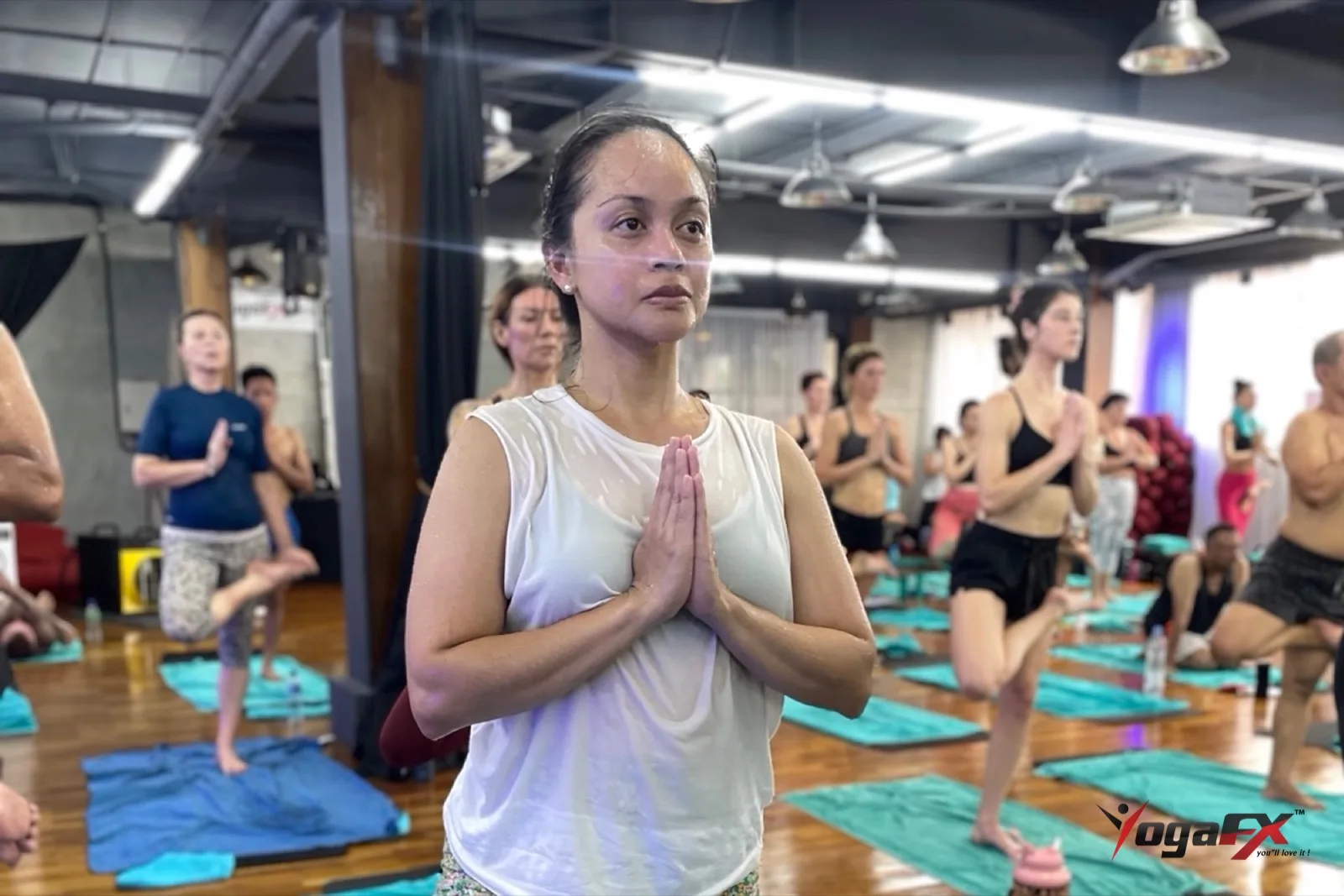
Hot yoga vs steam room comes down to movement and humidity. A Bikram hot room runs at 40 degrees Celsius and 40% humidity while you work through 26 postures for 90 minutes. A steam room is near-saturated air where you sit still. Both make you sweat, but they load and cool the body very differently.

Hot Yoga vs Steam Room: The Short Answer
If you want a workout, choose the hot room. If you want a place to rest and unwind, choose the steam room. That is the whole decision for most people, and the rest of this guide explains why.
The reason is simple. In a Bikram class you move for 90 minutes, so your muscles and your heart do real work. In a steam room you sit, so the heat is the only thing your body has to handle. Mr. Ian Terry, E-RYT 500, has taught more than 12,000 hours of hot classes. Our teaching follows from that: the room is not the exercise, you are.
- Choose the hot room when you want strength, balance, flexibility and a sustained heart rate.
- Choose the steam room when you want a short, passive soak after training or a long day.
- Use both only if you cool down and rehydrate first, and your doctor says heat is safe for you.
This is general information, not medical advice. Please consult a healthcare professional before you start any heat practice, especially if you have a heart condition, low blood pressure, or you are pregnant.
Hot Yoga vs Steam Room: 5 Real Differences
Both rooms feel hot, so people assume hot yoga vs steam room is a choice between two versions of the same thing. They don't. Here are the five differences that matter, in the order most students notice them.
1. Heat: the number on the wall is only half the story
A Bikram room is held at 40 degrees Celsius. That is warm enough to loosen your muscles, but it isn't so hot that you can't stand tall and breathe. A steam room often feels hotter than its thermometer says, because wet air carries heat to your skin faster than dry air. A dry sauna usually runs hotter than both.
So in the hot yoga vs steam room comparison, temperature alone tells you little. What you feel depends on humidity just as much as on degrees.
2. Humidity: the biggest gap between the two
Humidity is where hot yoga vs steam room really splits. Here it means relative humidity, the share of water the air is holding compared with the most it could hold. Our classes sit near 40% humidity, which feels like a warm tropical afternoon, not a cloud. A steam room pushes the air close to full saturation, so the room feels thick and heavy.
This matters because of how you cool down. The CDC NIOSH science bulletin on keeping workers hydrated and cool explains that sweat evaporating off your skin is what allows heat loss and cooling. The same page lists high humidity among the factors that raise heat-illness risk. When the air is already full of water, sweat evaporates far more slowly, so it mostly just drips off you.
At 40%, sweat still evaporates a little. That gives your body one more way to shed heat while you move, and it is one reason a 90-minute class stays workable.
3. Movement: you work in one room and rest in the other
In a Bikram class you do 26 postures and 2 breathing exercises, in the same order, every time. Your legs hold you up, your core stays braced, and your attention stays on the teacher's words. A steam room asks nothing of your muscles. You sit, you breathe, and you leave.
Neither is better in general. In the hot yoga vs steam room question, each one answers something different. One builds capacity, and the other offers recovery and calm.
4. Cooling: how your body copes with the load
In the hot room you generate your own heat by moving, so your body works harder to keep its core temperature steady. That's why teachers cue students to pace themselves, sip water between postures, and take a rest on the mat when needed. In a steam room you add outside heat to a resting body, so the main risk is staying too long.
Both rooms ask you to listen to your body. If you feel dizzy, nauseous or faint, leave, cool down and drink water. The CDC guidance on heat-related illnesses describes the warning signs of heat illness in plain language, and it is worth reading before you try either room.
5. Workload: what the studies measured
In a 2014 University of Wisconsin study led by Porcari, healthy adults who took a 90-minute Bikram class burned about 333 calories (women) and 460 calories (men). Their heart rates averaged around 80% of their maximum. That is a real cardiovascular workload, and it came from the movement, not from sitting in heat.
A steam room has no matching workload, because you are not moving. If you want to read more about what the heart studies found, see what Bikram studies measured for heart health.
Side-by-side comparison table
This table puts the Bikram hot room, a steam room and a dry sauna next to each other. The Bikram column uses YogaFX class standards. The steam room and sauna columns describe the usual setup in general terms.
| Feature | Bikram hot room | Steam room | Dry sauna |
|---|---|---|---|
| Humidity | Held near 40% | Close to saturated air | Low, dry air |
| Heat | 40 degrees Celsius | Warm, but feels hotter when wet | Usually the hottest of the three |
| What you do | 26 postures and 2 breathing exercises | Sit or lie still | Sit or lie still |
| Session length | 90 minutes, with a teacher | Short sits, led by comfort | Short sits, led by comfort |
| Sweat evaporation | Some, so cooling continues | Very little, so sweat drips | Fast, so skin dries quickly |
| Measured workload | About 333 kcal (women) and 460 kcal (men), around 80% max heart rate | Passive, no movement load | Passive, no movement load |
| Best for | Strength, balance, flexibility | Rest and relaxation | Rest and relaxation |
The Bikram Hot Room in Numbers
Numbers make the difference easier to hold in your head. These five facts describe a standard YogaFX class, and they are the same in every session.
40°C
Room heat
Warm enough to loosen muscles, still easy to breathe in.
40%
Humidity
Damp like a tropical day, so sweat can still evaporate.
90 min
Class length
One scripted class, led by a teacher from start to finish.
26 + 2
Postures and breathing
26 postures and 2 breathing exercises, in the same order.
333 / 460
Calories (women / men)
Measured in a 90-minute class by University of Wisconsin researchers.
What the Research Says About Heat, Humidity and Yoga
Hot yoga vs steam room is not a question science has tested head to head, so we should be careful about what we claim. What we do have is separate evidence on each side, and it points in the same direction.
On the hot yoga side, a 2025 systematic review by Willmott and colleagues pooled 43 studies and 942 participants. It looked at Bikram yoga and found signs of benefit for flexibility, bone density and well-being. The Porcari study above adds measured calorie and heart rate data for a full class.
On the humidity side, the CDC NIOSH bulletin linked earlier explains why sweat evaporation matters for cooling. Its plain message is that heat plus humidity raises the load on your body, so pace and hydration matter more, not less.
On the steam and sauna side, a 2018 paper in Mayo Clinic Proceedings reported cardiovascular links with regular sauna use. That work is about dry sauna bathing in a specific population. It does not show that a steam room replaces exercise, and it does not show that hot yoga carries the same effects.
Our read of the hot yoga vs steam room evidence, as teachers, is modest. Hot yoga adds movement to heat. A steam room adds relaxation to heat. If you want both, treat them as two different tools, not as rivals. For a wider look at the heat studies, see what the Bikram hot room temperature means.
Why Bikram Holds Humidity Near 40%
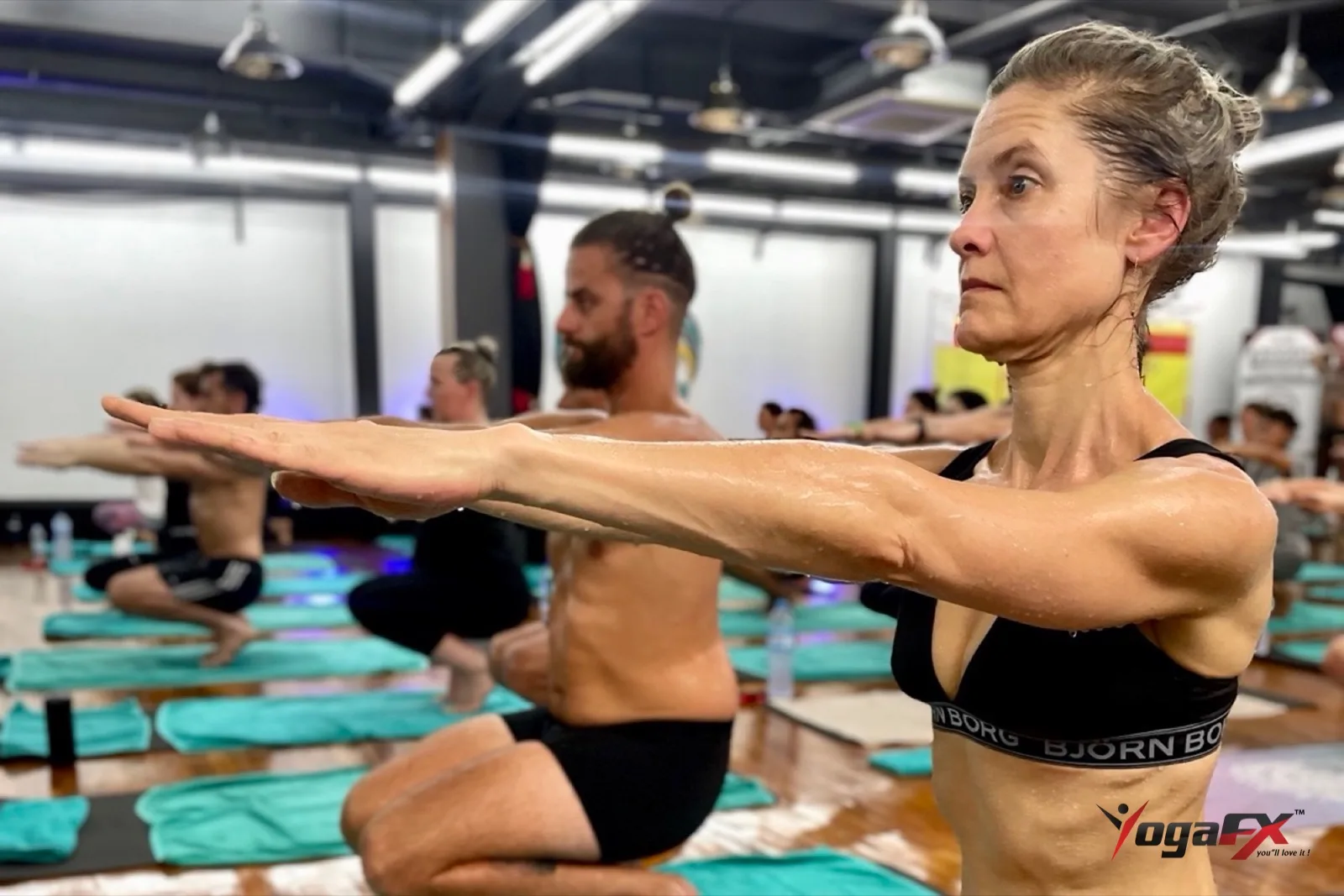
Why not push the humidity higher and make the room feel more intense? Because intensity is not the goal. The goal is a room where a beginner and a trained athlete can both stay on their mats for 90 minutes and keep their form.
Mr. Ian trained for five years, from 2014 to 2019, alongside the founder of the Bikram Hot 26&2 method. Humidity is one of the settings teachers trained in the method watch most closely, because it changes how every student feels. So it is held steady, class after class.
In Bali the heat is natural, not electric. The tropical climate does much of the work, which is part of why the room feels damp and warm rather than harsh.
- Steady settings: the class standard is 40 degrees Celsius and 40% humidity, every session.
- Scripted dialogue: the teacher guides every posture, so students can pace their effort instead of guessing.
- No music, no demonstration: students stay focused on their own breath, which makes heat strain easier to notice.
If you want to see how the 90 minutes unfold, read the full 90-minute class breakdown.
Common Myths in the Hot Yoga vs Steam Room Debate
The hot yoga vs steam room question attracts a lot of loose claims. Here are the ones we hear most often at the studio, and what we tell students instead.
Myth: more sweat means a better session
Sweat is your body's cooling system, not a score. A student who sweats a lot is not working harder than one who sweats less. Body size, fitness, hydration and the weather all change how much you sweat. Judge a class by your form, your breathing and how you feel afterwards.
Myth: a steam room can replace a class
A steam room gives you warmth and quiet. It does not ask your legs to hold you up, your spine to stretch, or your mind to follow a script for 90 minutes. If you only sit in heat, you get heat. If you practise in heat, you get practice as well.
Myth: the hotter the room, the better the yoga
Extra heat does not add extra yoga. A steady 40 degrees Celsius with moderate humidity lets people stay in each posture with control, and that is where the benefit comes from.
Myth: heat removes toxins
We do not make that claim. Your liver and kidneys handle waste. What heat does well is warm the muscles, raise the heart rate during movement, and make you slow down and pay attention. Those are real, useful effects, and they do not need exaggeration.
First-Timer Tips for Any Hot Room
Whichever side of the hot yoga vs steam room choice you land on, a few habits keep you safe and comfortable. These apply to a first Bikram class and to a first steam room visit.
- Hydrate early: start drinking water well before you go in, not only when you feel thirsty.
- Eat light: a heavy meal right before heat makes most people feel sick.
- Go at your pace: rest on the mat or step out if you feel dizzy, and tell the teacher.
- Cool down slowly: sit somewhere cooler for a few minutes and drink water before you head back out.
- Respect your health: if you have a medical condition, ask your doctor first.
Most students feel more at ease by their third class, and you'll probably do the same. The heat stops being the main event, and the postures take over.
Who Should Choose Which Room
For hot yoga vs steam room, pick the room that matches your goal today, not the one that sounds more extreme. Here is how we usually guide students.
Choose the hot room if you want to build something
Hot yoga suits you if you want to improve balance, leg strength and flexibility, or if you like a structured class with a teacher. It also suits people who enjoy a clear routine, because the sequence never changes. You will learn it, and then you will notice yourself improving week by week.
Choose the steam room if you want to wind down
A steam room suits you after a hard training day, or when you want quiet time without any effort. Keep sessions short, drink water afterwards, and leave at the first sign of dizziness.
Use both with a plan
Some students finish class and visit a steam room later in the day. If you do, give your body time to cool, drink water first, and keep the visit brief. People with heart or blood pressure conditions should ask their doctor before combining heat sessions. For a checklist before class, see what to bring to a hot yoga class.
What Students Say About the Hot Room
Our students come from many countries, and many of them arrive nervous about the heat. These short quotes come from video reviews recorded at the end of their teacher training in Bali.
The practice has taught me about myself as well, so thank you for sharing it and making me believe that I'm enough.
Siobhan, YouTube review, 2025
I thought that the energy in the room and the support was absolutely amazing.
Anita, YouTube review, 2025
Thank you for your patience, thank you for believing in us.
Katia, YouTube review, 2025
None of these students needed a steam room to feel the change. They needed a steady room, clear teaching and time to practise.
What This Means If You Want to Teach Hot Yoga
If you plan to teach, hot yoga vs steam room is more than a curiosity, because humidity becomes part of your job. You will read the room, adjust the doors, watch faces, and decide when to cue a rest. Teachers who understand the difference between a hot room and a steam room make better calls and keep students safer.
That is why we teach it directly. The YogaFX Bikram Hot 26&2 Yoga Teacher Training MasterClass runs 6 days, with online study before you arrive and an intensive in Bali. It leads to Yoga Alliance RYT 200-Hour certification and a Bikram Hot 26&2 200-Hour International Yoga Certification. Mr. Ian has taught 1,500+ graduates from 80+ countries since 2017, so every cohort benefits from long experience with real students and real heat.
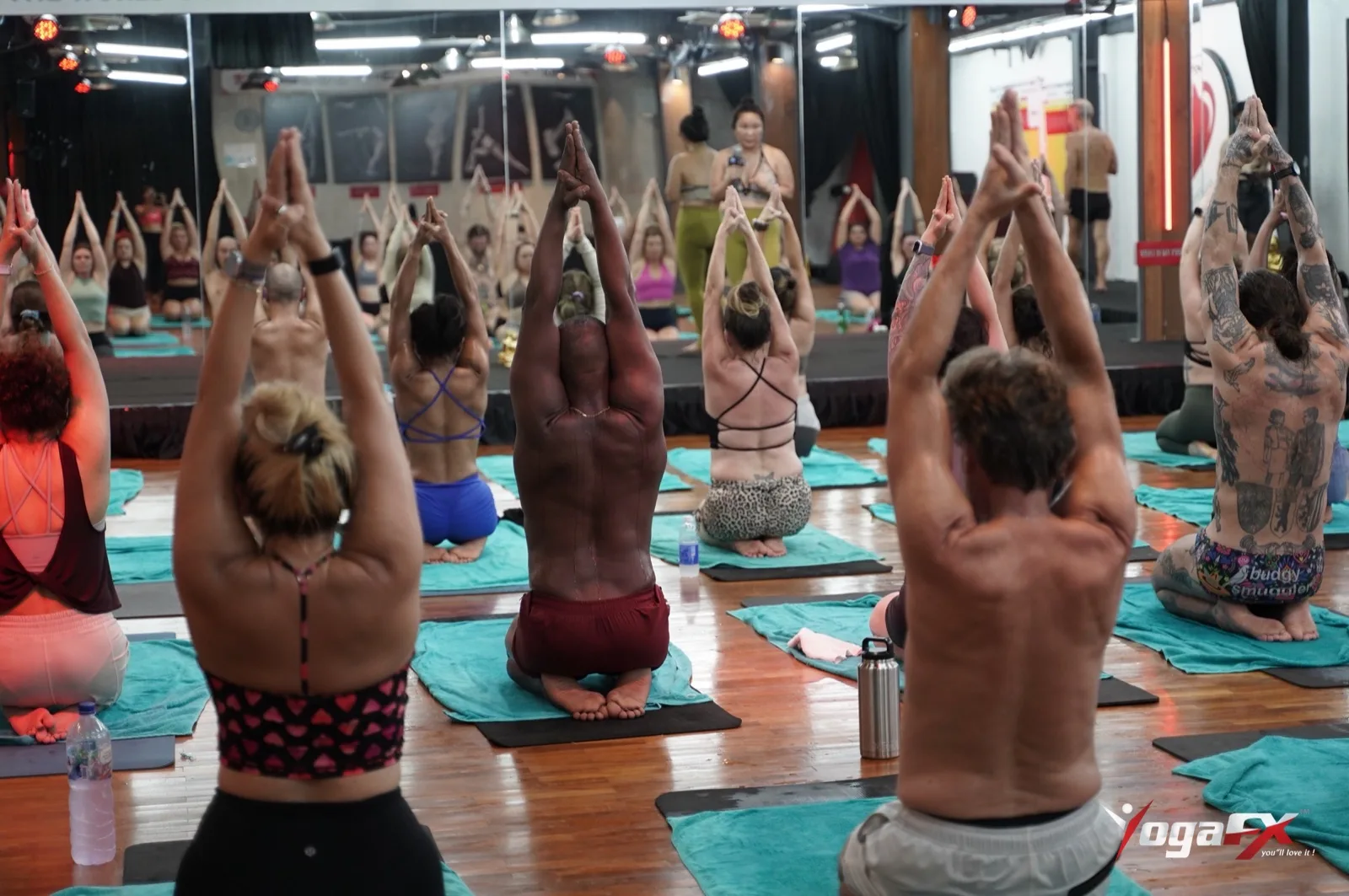
Curious about the format? Read about the 6-day Bikram teacher training in Bali, including dates and what is included.
FAQ: Hot Yoga vs Steam Room
Is hot yoga better than a steam room?
They do different jobs. Hot yoga is a 90-minute workout where you move through 26 postures, so it builds strength, balance and flexibility. A steam room is passive and suits relaxation. Choose the hot room for exercise and the steam room for rest, and check with your doctor first.
What is the humidity in hot yoga?
In a standard YogaFX Bikram class the room is held at 40 degrees Celsius with humidity near 40%. That is damp enough to feel tropical, but far below a steam room, where the air is close to saturated. Studios vary, so ask any studio what its settings are.
Is hot yoga the same as a sauna or steam room?
No. A sauna uses dry heat and a steam room uses wet heat, and in both you sit still. Hot yoga adds 90 minutes of guided movement in a warm, moderately humid room. The heat is similar in spirit, but the workload, cooling and purpose are different.
Can I use a steam room after hot yoga?
Some people do, but give your body time to cool and drink water first. Keep the visit short and leave at the first sign of dizziness or nausea. If you have heart, blood pressure or pregnancy concerns, ask a healthcare professional before combining heat sessions.
Does hot yoga dehydrate you?
Hot yoga makes you sweat, so you lose fluid, and you need to drink before and after class. Sip water during class if you need it, rest on your mat when tired, and stop if you feel faint. Anyone with a medical condition should ask their doctor about hydration.
Still have questions? Message Mr. Ian and the YogaFX team on WhatsApp and we will answer them personally.