
Hot yoga vs infrared sauna comes down to movement and moisture. A 26&2 class is a 90-minute workout in a room held near 40°C and 40% humidity. An infrared sauna warms your body with radiant panels while you sit still. Both make you sweat, yet they do very different jobs.


Hot Yoga vs Infrared Sauna: The Short Answer
If you want a workout, choose class. If you want rest and gentle heat, choose the sauna. That is the whole hot yoga vs infrared sauna decision for most people. The rest of this guide shows why, using what the research measured and what we see in the studio every week.
I teach the Bikram Hot 26&2 method, so I’ll be upfront about my angle. I have taught for more than 12,000 hours, and I like both heat and rest. I just don’t think they’re the same thing. Here is how hot yoga vs infrared sauna splits:
- Hot yoga is active heat. Your muscles generate most of the warmth, and the room sets the conditions around you.
- An infrared sauna is passive heat. The panels do the warming, and you sit or lie down.
- Humidity is the quiet difference. A 26&2 room is humid on purpose. Infrared setups are usually described by their radiant output, not their moisture.
- Format matters. A class has a script, a teacher and 26 postures. A sauna has a timer.
Many people land on this page because an infrared studio nearby sells "hot yoga" with panels on the ceiling. That’s a fair thing to wonder about, and it is exactly what this hot yoga vs infrared sauna guide covers.
How Each One Heats You
Start with the mechanics, because they explain almost everything else. Mayo Clinic describes it plainly: a regular sauna warms the air, which in turn warms your body, while an infrared sauna heats your body directly without warming the air around you (Mayo Clinic).
Cleveland Clinic adds numbers. According to its guide to infrared sauna benefits, infrared saunas operate at 43 to 57°C, and traditional saunas run between 66 and 91°C. The infrared sauna feels gentler on the air, yet it still pushes your body temperature up.
A 26&2 room works differently again. The air is held at about 40°C with 40% relative humidity, and you generate heat by moving for 90 minutes. We explain why those two numbers were chosen in our guide to Bikram yoga temperature.
Heat at a glance: infrared sauna, traditional sauna and a 26&2 class room
43-57°C
Infrared sauna air
Radiant panels warm your body more directly than the air around you.
66-91°C
Traditional sauna air
Hot air does most of the heating, and you sit still.
40°C
26&2 class room
Held with 40% humidity so sweat cools you while you move.
90 min
One 26&2 class
26 postures and 2 breathing exercises, led by a scripted dialogue.
Notice what the graphic shows about hot yoga vs infrared sauna. The infrared sauna air is cooler than the traditional sauna, and the class room sits just below the infrared range. So the temperature on the wall does not explain why a class feels so demanding. Movement and humidity do.
Hot Yoga vs Infrared Sauna Side by Side
Here is the comparison in one place. Use this hot yoga vs infrared sauna table to match each option to what you want from your hour.
| Factor | 26&2 hot yoga class | Infrared sauna |
|---|---|---|
| How you are heated | Your own muscles plus a humid room at about 40°C | Radiant panels warm your body directly, air at 43-57°C |
| What you do | 90 minutes of 26 postures and 2 breathing exercises | Sit or lie still, often 20 to 30 minutes |
| Humidity | Held near 40% on purpose | Not part of the design |
| Guidance | Teacher and scripted dialogue | None, only a timer |
| Main purpose | Strength, balance, flexibility and focus | Relaxation and gentle passive heat |
| Counts as a workout? | Yes | No, according to Cleveland Clinic |
| Best for | Building a practice | Winding down after a long day |
One more line is worth saying out loud. The two are not rivals. A sauna is a fine way to relax. It’s just not a replacement for class, and class is not a replacement for rest.
Active Heat vs Passive Heat: What the Research Measured
Most hot yoga vs infrared sauna comparisons online skip the research. Let’s not. A team at Houston Methodist Hospital and Rice University, led by Bradley Lambert, ran a randomised crossover study and published it in the International Journal of Exercise Science in 2020. You can read the full paper on PubMed Central.
Sixteen experienced practitioners completed a one-hour Bikram sequence twice. One session was heated to about 40°C. The other was at 23.3°C. Humidity was standardised at 40% both times. The results were more interesting than the headlines you may have seen:
- Energy cost did not differ. Mean VO2, heart rate and kilocalories were similar in the heat and at room temperature.
- Fat use rose in the heat. The respiratory exchange ratio was lower in the heated session, which points to more fat as fuel.
- Hip flexibility improved more. Hip abduction increased by 6.6 degrees in the heat, compared with 2.3 degrees at room temperature.
- Inflammation signals rose. Serum IL-6 increased in the heated condition only, which the authors flagged for further study.
Two honest caveats apply. The sample was small, and it was made of experienced practitioners who were screened first. The authors also wrote that more studies are needed to understand dose and response. So treat it as a good clue, not a final verdict.
What does this mean for the hot yoga vs infrared sauna question? It means the heat is not magic by itself. The movement is doing the heavy lifting, and the heat changes how that movement feels and how far your joints travel. A sauna offers the heat without the movement.
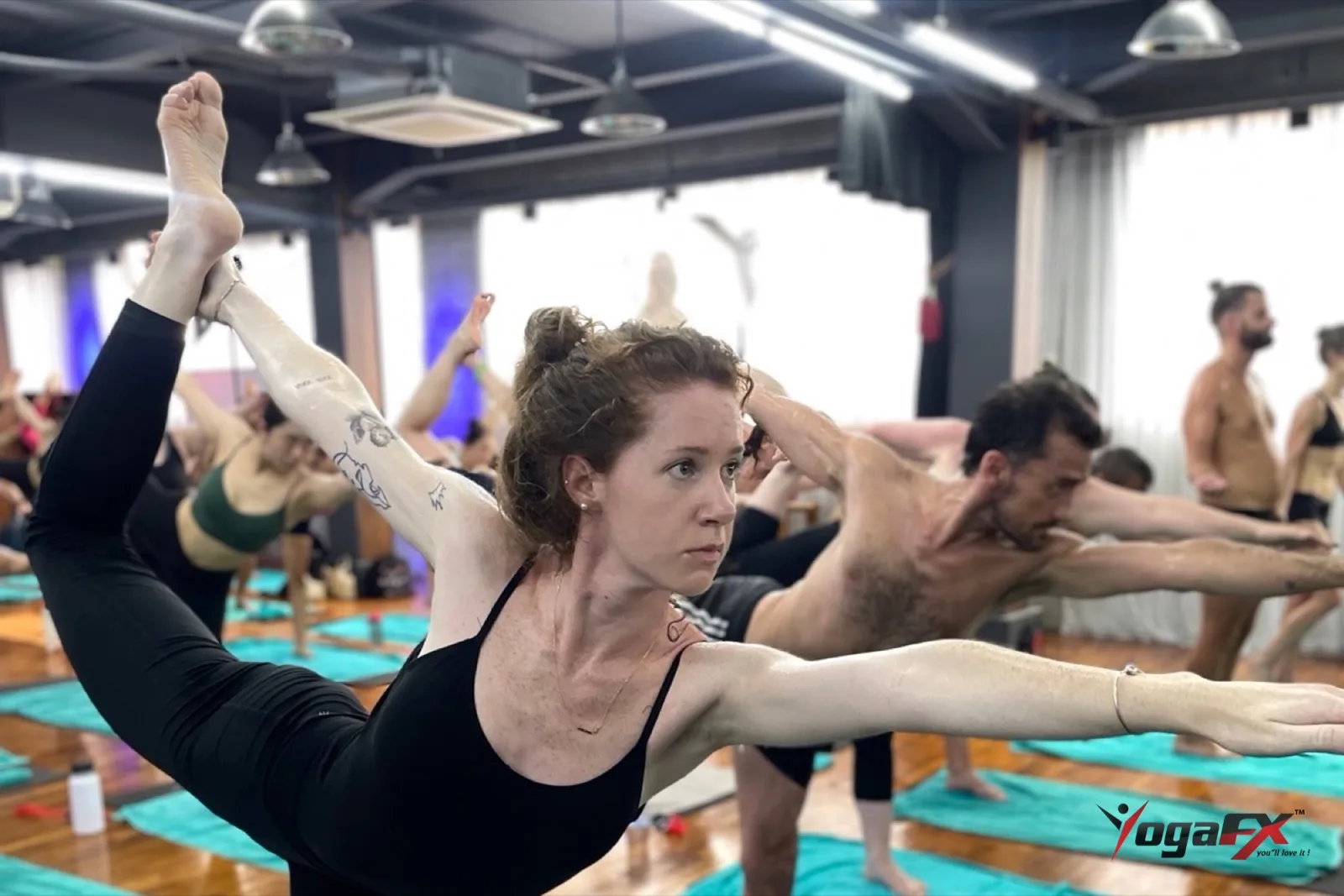
What the Evidence Says About Infrared Saunas
To be fair to saunas, they have real research behind them, and that matters in any hot yoga vs infrared sauna choice. Mayo Clinic notes that many studies have looked at infrared saunas for long-lasting health problems, including high blood pressure, heart failure and arthritis, and found some proof that they may help. It adds that larger and more exact studies are needed.
Cleveland Clinic is similarly careful. It says that while some studies suggest sauna use may support cardiovascular function, more research is needed, especially on infrared saunas. A 2018 review in Mayo Clinic Proceedings by Laukkanen and colleagues summarised the wider sauna literature, and it is a good starting point if you want to read further.
For hot yoga itself, a 2025 systematic review by Willmott and colleagues pulled together 43 studies and 942 participants. It points to benefits for flexibility and well-being. A Harvard-affiliated Massachusetts General Hospital trial published by Nyer and colleagues in 2023 found that 59% of participants in a heated yoga programme had a 50% or greater drop in depression symptoms after eight weeks, compared with 6.3% on a waitlist.
Those studies used yoga, not sauna sessions, and they do not prove cause and effect for every reader. If you live with depression, anxiety or a heart condition, please speak with a healthcare professional before changing your routine. Neither a sauna nor a class replaces medical care.
Infrared Hot Yoga Studios vs the 40°C/40% Standard
This part of hot yoga vs infrared sauna surprises people. "Infrared hot yoga" is a real category. Studios fit radiant panels in the ceiling or on the walls, then run vinyasa, sculpt or flow classes under them. Our guide to Bikram yoga vs hot yoga explains that "hot yoga" is a loose label for any heated room.
Our temperature guide lists infrared studios at roughly 32 to 38°C with no humidity control. The 26&2 standard is different on three counts:
- Temperature. About 40°C in the room, held steady for the whole class.
- Humidity. 40% relative humidity, so sweat can evaporate and cool you.
- Sequence. The same 26 postures and 2 breathing exercises, in the same order, every class.
None of that makes infrared classes bad. They can be pleasant, and some people prefer a drier, gentler room. But the research on 26&2 conditions applies to 26&2 conditions. If a study measured a 40°C humid room, you cannot assume a panel-heated room gives the same result.
Ask any studio three questions before you book: what is the temperature, what is the humidity, and is the sequence fixed? A clear answer tells you what you are buying.
Why 26&2 Rooms Use Humid Air, Not Panels
We use humid air for one reason: it keeps the class safe and workable for 90 minutes. Humidity lets sweat evaporate at a steady rate, and evaporation is how your body cools itself. The room supports your cooling instead of fighting it.
Dry radiant heat can feel comfortable at first, because it warms skin quickly. In a class, though, you’re generating your own heat and need that cooling to keep up. The humid room is part of the design, in the same way the script and the sequence are.
Bali adds another layer. The tropical climate is already warm and humid, so a humid studio fits the setting. We cover the steam-room side of this in hot yoga vs steam room, where humidity is the main story.

Hot Yoga vs Infrared Sauna: Which One Should You Choose?
Match the tool to the goal. Here is how I would settle hot yoga vs infrared sauna for a friend:
- You want fitness, flexibility and a skill you can build. Choose a 26&2 class. The postures give you something to progress.
- You want to unwind and your doctor is happy with heat. An infrared sauna is a reasonable choice. Keep sessions short.
- You want to train as a teacher. Only the class route leads there. Teaching needs the dialogue, the sequence and the room, not a panel.
- You want both. Do class first, hydrate well, and leave the sauna for another day if you feel drained.
If you’re brand new to heat, start gently. Read our checklist on what to bring to your first hot yoga class and arrive early so your body can settle.
Hot Yoga vs Infrared Sauna Safety: Heat Asks for Respect
Both options are heat exposure, so both deserve care in the hot yoga vs infrared sauna debate. Cleveland Clinic states that sauna use is viewed as safe, but heat brings some risk. It warns about dehydration and says to leave the sauna immediately if you feel dizzy or nauseated. The same advice applies in class: if you feel faint, sit down and tell your teacher.
- Drink water before and after, and sip in class if needed.
- Skip the sauna if you are pregnant, unwell or have been advised against heat. Cleveland Clinic cites guidance from the American College of Obstetricians and Gynecologists on pregnancy.
- Check with your healthcare provider first if you have a heart, blood pressure or other medical condition.
- Never treat either as a way to lose "water weight" fast. Fluid you sweat out comes back when you drink.
This article is general education, not medical advice. Please consult a healthcare professional about your own situation.
What YogaFX Students Say About the Heat
Our students feel the difference between a heated room and a full class within a day or two. Here is what three of them wrote in public reviews:
"Yes it was super challenging, all consuming and the exhaustion, intensity and heat is next level but this course will be one of the highlights of my life."
Karen, Google review, 2025
"Words simply cannot capture the intensity of the experience I had with YogaFX in Seminyak."
Greta, Google review, 2026
"I appreciated the discipline of the traditional Bikram sequence and how consistent practice improved my flexibility, stamina, and mental clarity."
Olga, Google review, 2025
Notice the words: intensity, discipline, consistent practice. Nobody describes a sauna session that way. That’s the point of the class, and it’s why people come back to it.

Learn the Method With Mr. Ian in Bali
I am Mr. Ian Terry, E-RYT 500. I trained for five years, from 2014 to 2019, with the founder of the Bikram Hot 26&2 method, and I have taught more than 12,000 hours. YogaFX has graduated 1,500+ teachers from 80+ countries since 2017.
If you want to understand the room, the heat and the dialogue from the inside, the best way is to teach it. Our Bikram Hot 26&2 Yoga Teacher Training MasterClass is a 6-day hybrid: online pre-course work, then an intensive in Bali. The next batch checks in on Sunday 24 January 2027 and checks out on Friday 29 January 2027 at Soham Wellness Center in Seminyak.
Graduates earn Yoga Alliance RYT 200-Hour and Bikram Hot 26&2 200-Hour International Yoga Certification. The Early Bird price is US$1,899, and instalments start from US$250 per month with no interest. See dates, cost and formats for the full picture.
Not ready to train? Come to a class first, because hot yoga vs infrared sauna is easier to judge once you have felt both. Feel the room for yourself, then decide whether a panel or a humid studio suits you.
FAQ
Is hot yoga the same as an infrared sauna?
No. Hot yoga is a 90-minute exercise class in a heated, humid room where you move through postures. An infrared sauna is a passive session where radiant panels warm your body while you sit still. Both make you sweat, but only the class works your muscles, balance and focus.
Is infrared hot yoga the same as Bikram yoga?
No. Infrared hot yoga heats the room with radiant panels, usually at lower temperatures and without humidity control. Bikram, now taught as Original Hot 26&2, holds the room near 40°C and 40% humidity and follows a fixed sequence of 26 postures and two breathing exercises. The heat, humidity and format all differ.
Is hot yoga as effective as a sauna?
They do different jobs. Cleveland Clinic notes that a sauna session is not a substitute for a workout, while hot yoga is a workout in itself. A sauna suits rest and relaxation. Hot yoga builds strength, balance and flexibility. Speak to your doctor if you have a heart or blood pressure condition.
How hot is an infrared sauna compared with a hot yoga room?
Cleveland Clinic gives 43 to 57°C for infrared saunas and 66 to 91°C for traditional saunas. A 26&2 class room is held at about 40°C with 40% humidity. The class feels harder because you move for 90 minutes in humid air, not because the number on the thermometer is higher.
Can I do hot yoga and an infrared sauna on the same day?
Some healthy people combine them, but both raise your heart rate and fluid loss. Drink water, keep the sauna short, and stop if you feel dizzy or nauseated. Check with your healthcare provider first if you are pregnant or have a medical condition, and never use the sauna to replace class.
Still have questions? Message Mr. Ian and the YogaFX team on WhatsApp and we will answer them personally.