



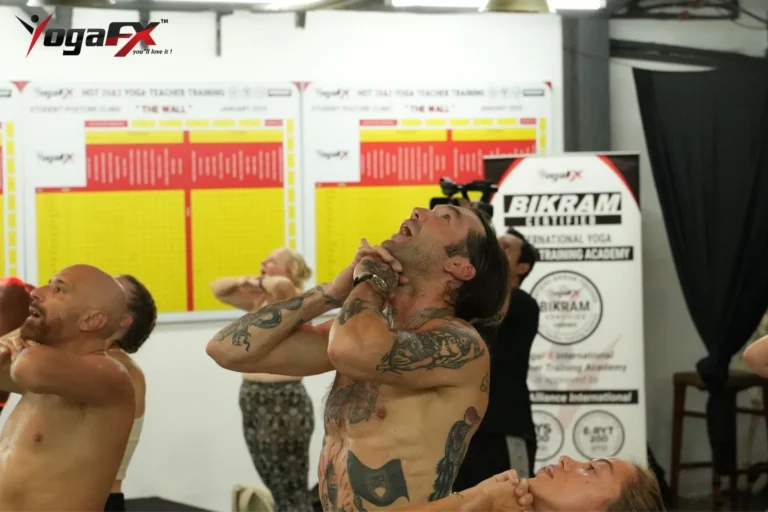
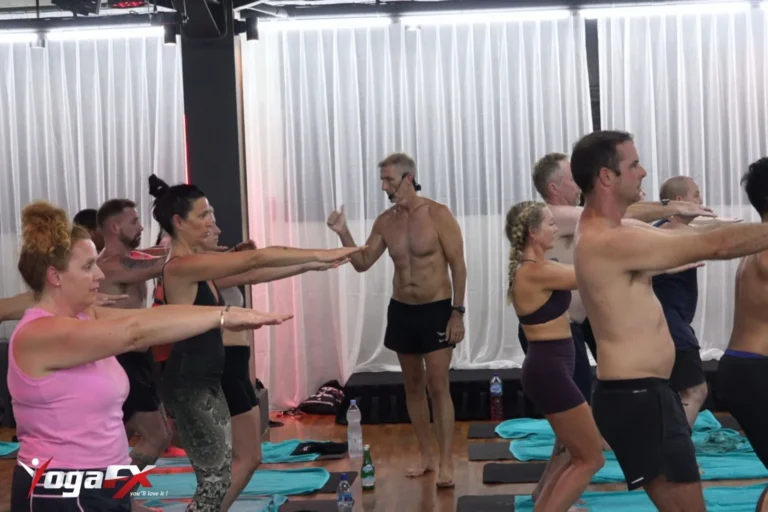

The Bikram yoga temperature is a fixed standard: a room at 40°C (104°F), or 40.6°C (105°F) in the original specification, with about 40% humidity for the full 90 minutes. That number matters because heat and humidity together decide how your body cools itself, and how safe the class feels from the first posture to the last.

I write this from the teaching side. At YogaFX, Mr. Ian Terry, E-RYT 500, Founder and Lead Instructor, trains teachers to deliver the 26&2 dialogue in a hot room. A teacher who does not understand the Bikram yoga temperature cannot protect a class. This guide explains the standard, the reason behind it, what researchers measured and what a trainee needs to learn.
Medical note: this article is general education, not medical advice. Please consult a healthcare professional before you practise in the heat if you have a heart condition, are pregnant or take regular medication.
Bikram Yoga Temperature: The Exact Standard
The Bikram yoga temperature is not a range that a studio picks on the day. It is one specification with four parts: temperature, humidity, class length and sequence. Studios round the temperature to 40°C or to 105°F, so you will see both figures online. They describe the same room.
| Part of the standard | Metric | Imperial | What it does for the class |
|---|---|---|---|
| Room temperature | 40°C (original 40.6°C) | 104°F (original 105°F) | Warms muscle and connective tissue so postures open more easily |
| Relative humidity | About 40% | About 40% | Keeps the air damp enough to feel tropical, dry enough for sweat to evaporate |
| Class length | 90 minutes | 90 minutes | Gives the body time to warm up, work and settle |
| Sequence | 26 postures, 2 breathing exercises | Same order every class | Keeps every class comparable, so you can see your own progress |
Because the room and the sequence never change, the heat becomes a constant. If you feel stronger in week four, you know the room did not get easier. You did. That is one reason serious students and teacher trainees value the method.
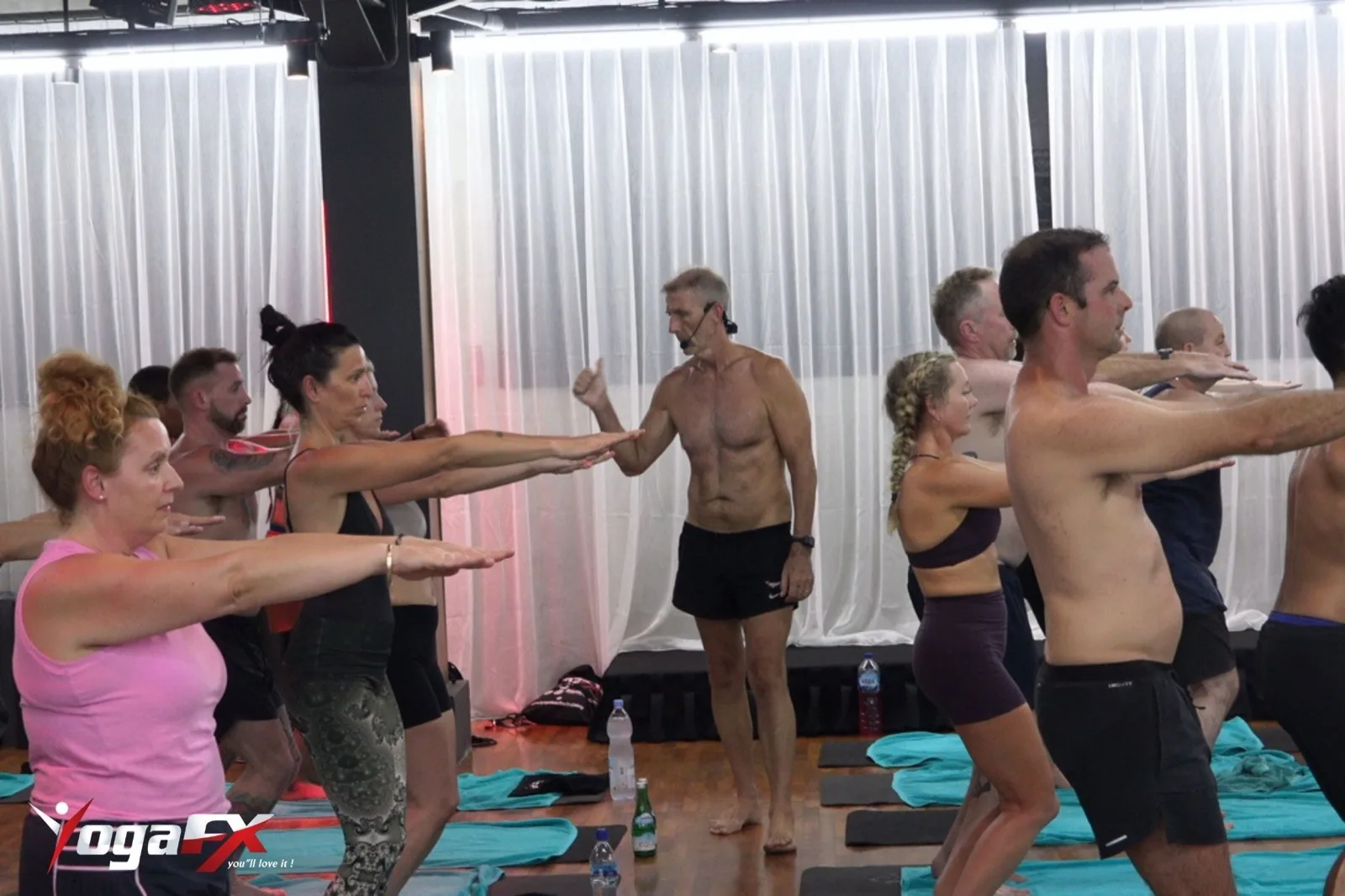
Why the Bikram Yoga Temperature Is Fixed
A fixed Bikram yoga temperature looks strict until you see what it does. Mr. Ian Terry trained for five years, from 2014 to 2019, with the founder of the method. In that lineage the heat has three jobs, and naming them explains how the class is built.
- Lengthening. Warm tissue gives way more easily, so the standing series can build heat first and the deep backbends come later without force.
- Loading. The body works to shed heat while you hold a posture, so effort rises even when the movement is slow.
- Steadying. A damp, warm room is hard to ignore, so students learn to breathe through the nose and keep still.
For a teacher trainee, the third job, steadying, matters most. You are not only learning the words of the dialogue. You are learning to speak to a room full of people who are working hard in the heat, and who need clear, calm instructions.
That is why teacher training at YogaFX is taught in the heat. The Bikram yoga temperature is part of the classroom, not background. If you want the bigger picture first, read our guide to Hot 26&2 yoga, its lineage and science.
Humidity Is Half of the Standard
Most people quote the Bikram yoga temperature and forget the humidity. Yet, as a result, the humidity changes how the room feels more than a few degrees do. Your body cools itself mainly by sweating, and the sweat only cools you when it evaporates. Mayo Clinic explains that when humidity is high, sweat cannot evaporate as easily, which is why hot, humid conditions raise the risk of heat exhaustion.
So, for example, a room at 40°C with dry air and a room at 40°C with damp air are two different experiences. The 40% humidity in the Bikram standard is a middle path. It feels tropical, and it still lets the skin cool, so you do not overheat as fast.
That is also why a studio that quotes only a temperature has told you half the story. When you compare classes, ask for both numbers.
- Temperature target: the Bikram yoga temperature the studio sets, in Celsius or Fahrenheit, so you can compare like with like.
- Humidity target: a figure near 40% is the Bikram standard.
- Rest rules: you should be free to sit or lie down whenever you need to.
- Water rules: a good teacher tells you when and how to drink, not only that you may.
The same questions apply if you are choosing between styles, because a hot room is not always a Bikram room. Our hot yoga temperature guide compares how heated classes differ from one studio to the next.
What Researchers Measured Inside a Bikram Class
The best-known measurement of the Bikram yoga temperature in action comes from the University of Wisconsin-La Crosse. In a 2015 study sponsored by the American Council on Exercise, researchers led by Emily Quandt and John Porcari tracked the core body temperature of 20 volunteers during a 90-minute class, as reported by ACE.
The volunteers were seven men and 13 women, aged 28 to 67. The average highest core temperature was 103.2°F for men and 102.0°F for women. One man reached 104.1°F by the end of class.
None of the volunteers showed signs or symptoms of heat intolerance. Even so, the ACE report notes that core temperatures like these can pose a concern, and that the risk of heat illness rises at 104°F.
Two points about the Bikram yoga temperature stand out. First, men ran hotter than women on average, so the same room does not feel the same to everyone. Second, the study is small. It describes 20 regular students, so it cannot tell you what your own body will do. That is why a teacher watches the room rather than the average.
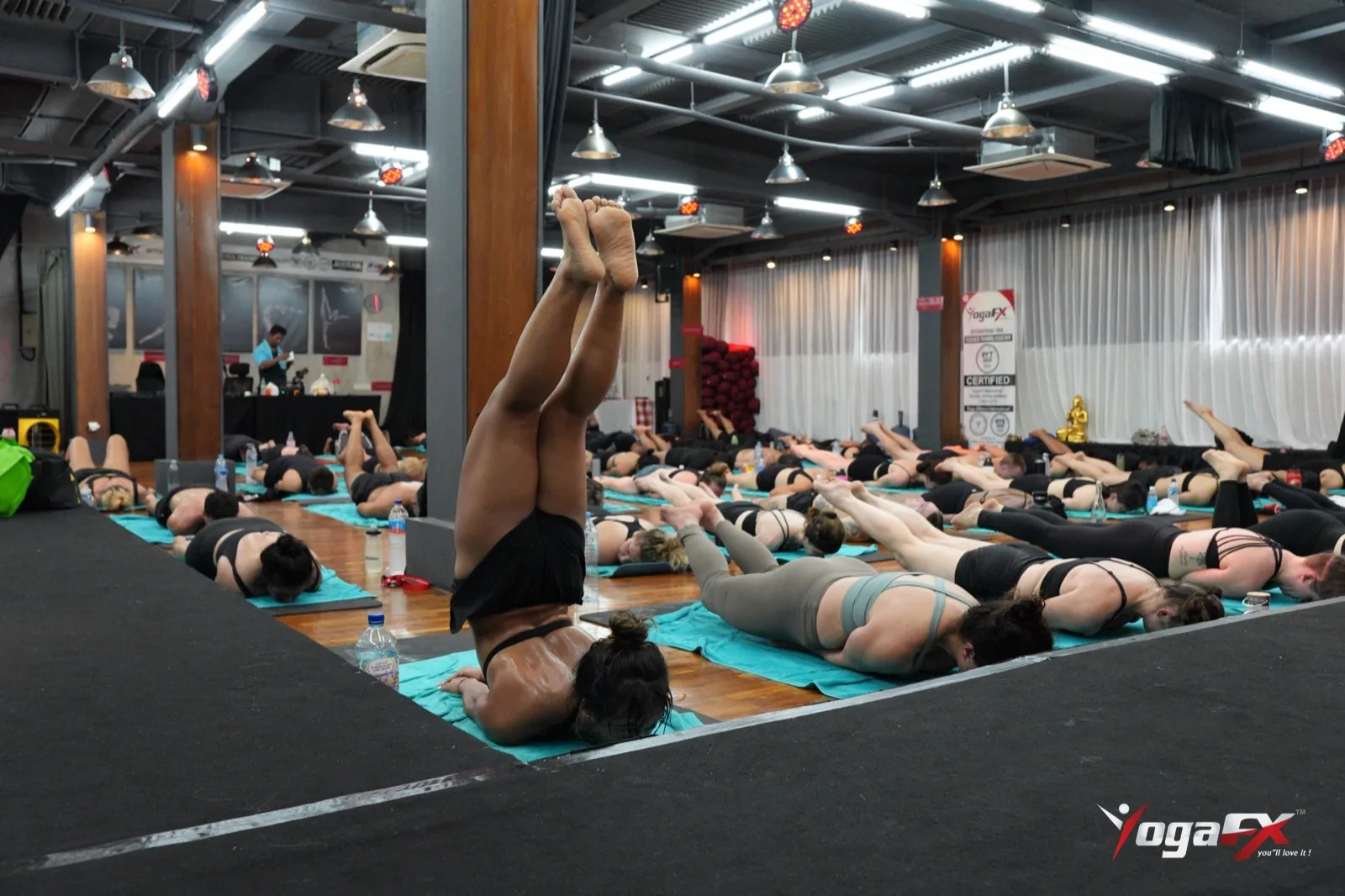
Celsius, Fahrenheit and the 105 Degree Question
Search for the Bikram yoga temperature and you will meet three numbers: 40, 104 and 105. They are not three different rooms. Forty degrees Celsius converts to 104 degrees Fahrenheit. The original specification used 40.6°C, which converts to 105°F, and that figure survives in the phrase "105 degrees" that students still repeat.
So what should a teacher say when a new student asks? The honest answer about the Bikram yoga temperature is short. The standard is about 40°C, which is about 104 to 105°F, with about 40% humidity. Use "about" because a real room moves a little as people come in, sweat and leave.
That small drift is normal, because people add heat and moisture to a room. It is one reason a teacher does not stand at a thermometer and ignore the students. The number is a target. The students are the evidence.
Common Mistakes Trainees Make With the Room
After the numbers, the habits matter. These are the mistakes that new teachers make most often when they first lead a class in the heat.
- Quoting only one number. A trainee who says "it is 40 degrees" and nothing else leaves out the humidity, which is half of the standard.
- Rushing the dialogue. In heat, a fast, clipped voice makes students tense up, so slow breathing and a calm pace help the whole room.
- Treating a faint student as a failure. Dizziness is a signal to rest, not a discipline problem, so a good teacher stays kind and practical.
- Forgetting the recovery. The last minutes matter as much as the first, because students stand up too fast when they are tired.
We cover delivery errors in more depth in our guide to common mistakes when teaching the Bikram yoga dialogue. Trainees who read it before the course arrive better prepared.
Natural Tropical Heat in Bali
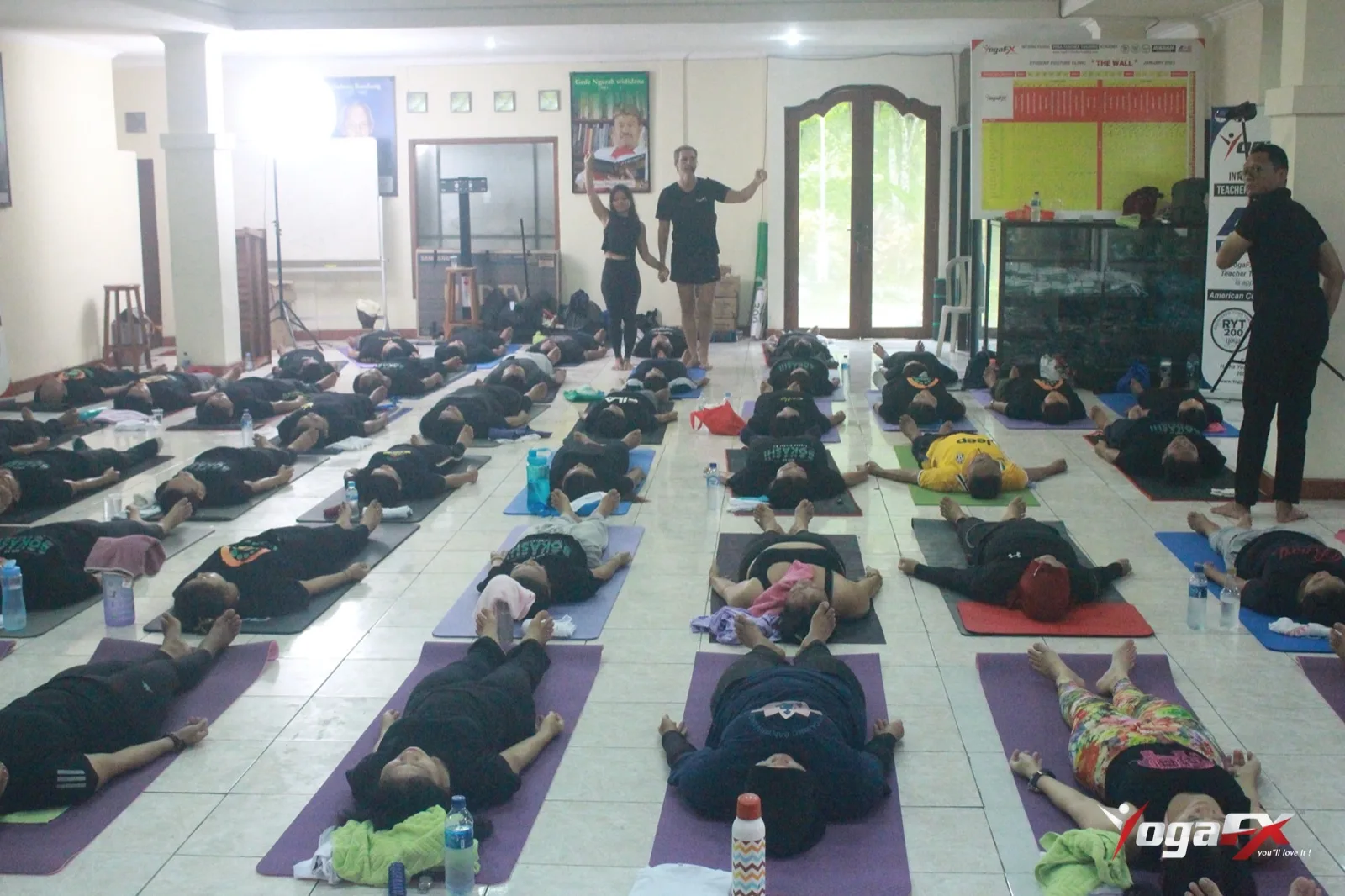
At YogaFX in Seminyak, the heat comes from Bali's tropical climate, not from electric heaters. Classes run for 90 minutes at 40°C with about 40% humidity. A tropical room feels different from a heater-made one, because the air carries real moisture. That is the environment the Original Hot 26&2 Yoga sequence was designed for.
This matters for trainees for a practical reason. A natural climate shifts the Bikram yoga temperature with the weather and with how many people are in the room, so the teacher cannot assume the room is the same today as yesterday. A trainee learns to read it.
What a Trainee Learns to Check
- Before class: read the room, then compare the feel of the air with the standard.
- In the first 20 minutes: watch breathing, colour and posture. Students who are new to the heat tire early.
- Through the floor series: keep your voice steady, because anxious cues make a hot room harder.
- At the end: check that every student recovers, drinks and stands up slowly.
That list is advice for trainees, not a medical protocol. It works alongside the safety guidance below and your own first-aid training.
Heat Safety: Who Should Ask a Doctor First
A fixed Bikram yoga temperature is only safe if you respect it. Heat exhaustion is the usual problem. The NHS lists its signs as tiredness, dizziness, headache, nausea, excessive sweating and cramps. Mayo Clinic adds a weak, rapid pulse and faintness, and says heatstroke begins at a core temperature of 104°F (40°C) or higher.
Some people face a higher risk. Mayo Clinic names infants, adults over 65, people on certain medicines and people who are not used to heat. The NHS also asks people to check on those with long-term conditions such as diabetes or heart problems. If you belong to any of these groups, ask a doctor before you take a hot class.
If a student feels unwell, the NHS gives four steps: move to a cool place, remove unnecessary clothing, drink plenty of water and cool the skin with water. The NHS expects improvement within 30 minutes. If it does not come, seek medical help.
The Cool-Down Steps at a Glance
1
Move somewhere cool
Stop the practice and get the student out of the heat.
2
Loosen clothing
Remove anything unnecessary so the skin can lose heat.
3
Drink water
Give plenty of water, in small sips.
4
Cool the skin
Spray or sponge with cool water and fan the person.
30 min
Expect improvement
The NHS expects a student to feel better within 30 minutes.
104°F
Call for help
A core temperature of 104°F (40°C) or higher is heatstroke, per Mayo Clinic.
For more detail, read our guide to hot yoga safety. It's the best place to start if you're new to the heat.
What Students Say About the Room
Numbers describe the Bikram yoga temperature. Students describe how it feels. Here are three short reviews from the YogaFX review store, shared by first name only.
“Absolutely amazing, fun and energetic instructor! Thank you Mr Ian. The class is friendly. I met new people and feel a part of their community.”
Trizz, Google review, 2020
“Thank you very much. Thank you for all of you who always support me.” (translated)
Kartika, YouTube review, 2024
“Wishing you health and spirit, a healthy life, and thank you.” (translated)
Novi, YouTube review, 2024, watch the video
Kartika's video review is below. These are real graduates, and their thanks come after training in the same heat described in this guide.
From the Room Standard to Teacher Training
If you are weighing a teacher training, the Bikram yoga temperature is a fair test of fit. You will spend days in that room, so it helps to know whether you can work and learn in it. A guest class is the simplest way to find out, and our team can point you to the right first step.
Our sister site, 26and2yoga.com, also looks at the numbers from a practitioner's side. You can compare notes in its walk-through of hot yoga room temperatures.
The next YogaFX intake runs from Sunday 24 January to Friday 29 January 2027 in Bali. The six-day hybrid course starts with online study, then moves to the room. Our guide to Bikram yoga teacher training in six days covers the dates, cost and formats. You will finish with Yoga Alliance RYT 200 and the Bikram Hot 26&2 200-Hour International Yoga Certification.
Ready to ask? Message Mr. Ian on WhatsApp and ask about the next intake.
Bikram Yoga Temperature FAQ
What temperature is Bikram yoga?
Bikram yoga is taught in a room at 40°C (104°F), or 40.6°C (105°F) in the original specification, with about 40% humidity. The class lasts 90 minutes and follows 26 postures and 2 breathing exercises. Studios round to one figure or the other, but both describe the same standard room.
Is Bikram yoga always hot?
Yes, the Bikram yoga temperature is part of the method, so the room is always heated to the standard. A class without that heat is a different style. The heat and the fixed sequence together make each class comparable, so students can notice their own progress over time.
Can Bikram yoga be done without heat?
You can practise the same postures in an unheated room, but it is not the Bikram class. The heat changes how muscles feel and how hard the heart works. If heat is a concern, speak to a doctor first and build up slowly instead of skipping the standard.
Why does humidity matter as much as temperature?
Your body cools itself by sweating, and sweat only cools you when it evaporates. Mayo Clinic notes that high humidity makes evaporation harder. The 40% humidity in the standard keeps the room tropical while still letting the skin cool, so temperature alone does not describe the room.
Is this Bikram Choudhury's own teacher training?
No. YogaFX is independent training and is not an official Bikram Choudhury Teacher Training. Mr. Ian Terry trained for five years, from 2014 to 2019, with the founder of the Bikram Hot 26&2 method, and now teaches the 26 postures and 2 breathing exercises in his own academy in Bali.
How hot is too hot in a Bikram class?
Heatstroke begins at a core temperature of 104°F (40°C) or higher, according to Mayo Clinic. In one university study, one man reached 104.1°F by the end of class. Stop and cool down if you feel dizzy, nauseous or faint, and see a doctor if symptoms continue.
Still have questions? Message Mr. Ian and the YogaFX team on WhatsApp and we will answer them personally.
Last updated: November 27, 2026