

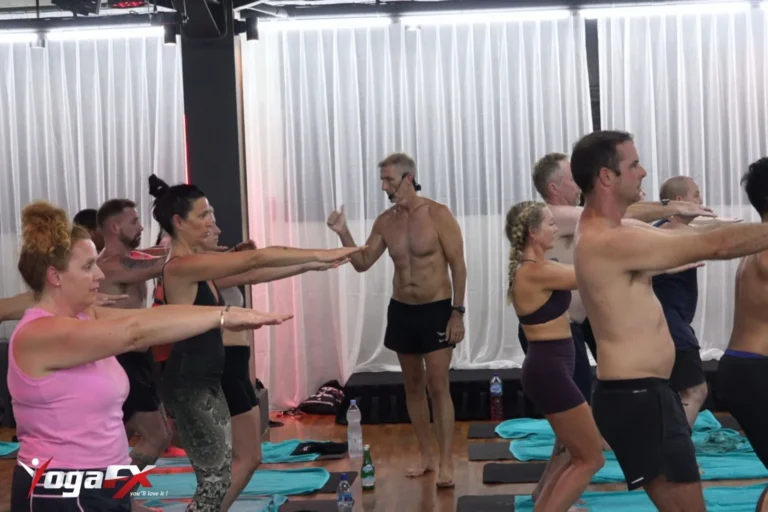

Bikram yoga breathing exercises are two: Standing Deep Breathing opens the class and Kapalbhati closes it. For a teacher-training candidate, the question is not only how to do them but how to cue them. This guide covers how both are practised, taught and delivered, from the teaching room of Mr. Ian Terry, E-RYT 500.

Mr. Ian has taught the method for more than 12,000 hours. He tells trainees that a teacher who rushes the breath teaches a room to rush. This article is general information, not medical advice. For the student-side walkthrough in a Seminyak class, see how the studio teaches the opening breath to visitors.
Bikram Yoga Breathing Exercises at a Glance
The 26 and 2 in the method's name means 26 postures and 2 breathing exercises. Both sit in fixed places in a 90-minute class, so a trainee can learn them once and teach them the same way every time. The table below sets them side by side, with the teacher's job added.
| Exercise | Where it sits | What the student does | What the trainee must cue |
|---|---|---|---|
| Standing Deep Breathing | Opening, before the first posture | Slow nasal inhale, open-mouth exhale, paced by the count | Pace, shoulders down, one calm voice for the whole room |
| Kapalbhati (Blowing in Firm) | Closing, after the floor series | Quick, forceful exhales from the lower belly | Gentle entry, permission to stop, watch for light-headedness |
| Breath between postures | Throughout the class | A steady return to calm breathing when effort rises | Reminders to breathe, without nagging or over-talking |
- For students: two exercises that frame the class with a calm start and a clear finish.
- For trainees: two moments where the voice matters most, because the whole room follows your pace.
- For both: nothing to memorise beyond the count, which is why the breath is a good first thing to learn.
How Trainees Learn Bikram Yoga Breathing Exercises
A candidate first meets the Bikram yoga breathing exercises from the student side. That order matters. You cannot cue a breath you have never struggled with in a 40°C room, and the YogaFX course is built so that you practise first and teach second.
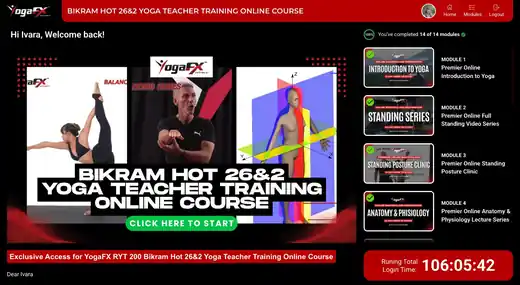
The Bikram Hot 26&2 Yoga Teacher Training MasterClass is a 6-day hybrid course: online study before you arrive, then an intensive in Bali. The next batch checks in on Sunday 24 January 2027 and checks out on Friday 29 January 2027, at Soham Wellness Center in Seminyak. Our guide to hybrid yoga teacher training explains how the online part prepares you.
Practise as a student
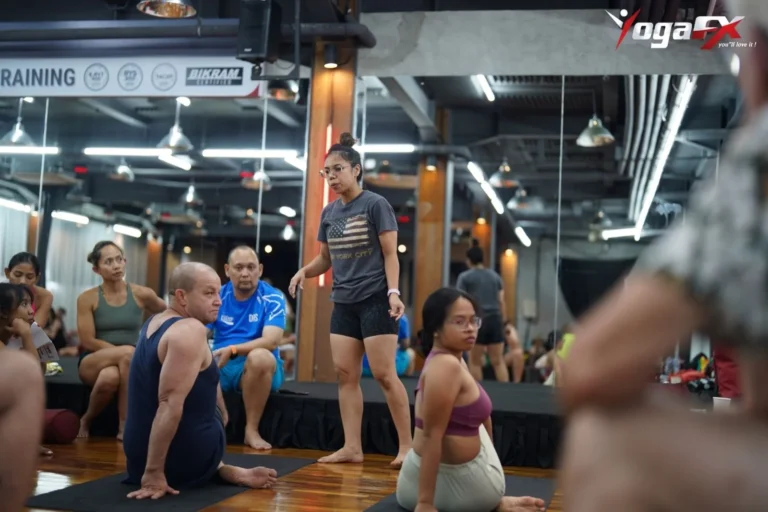
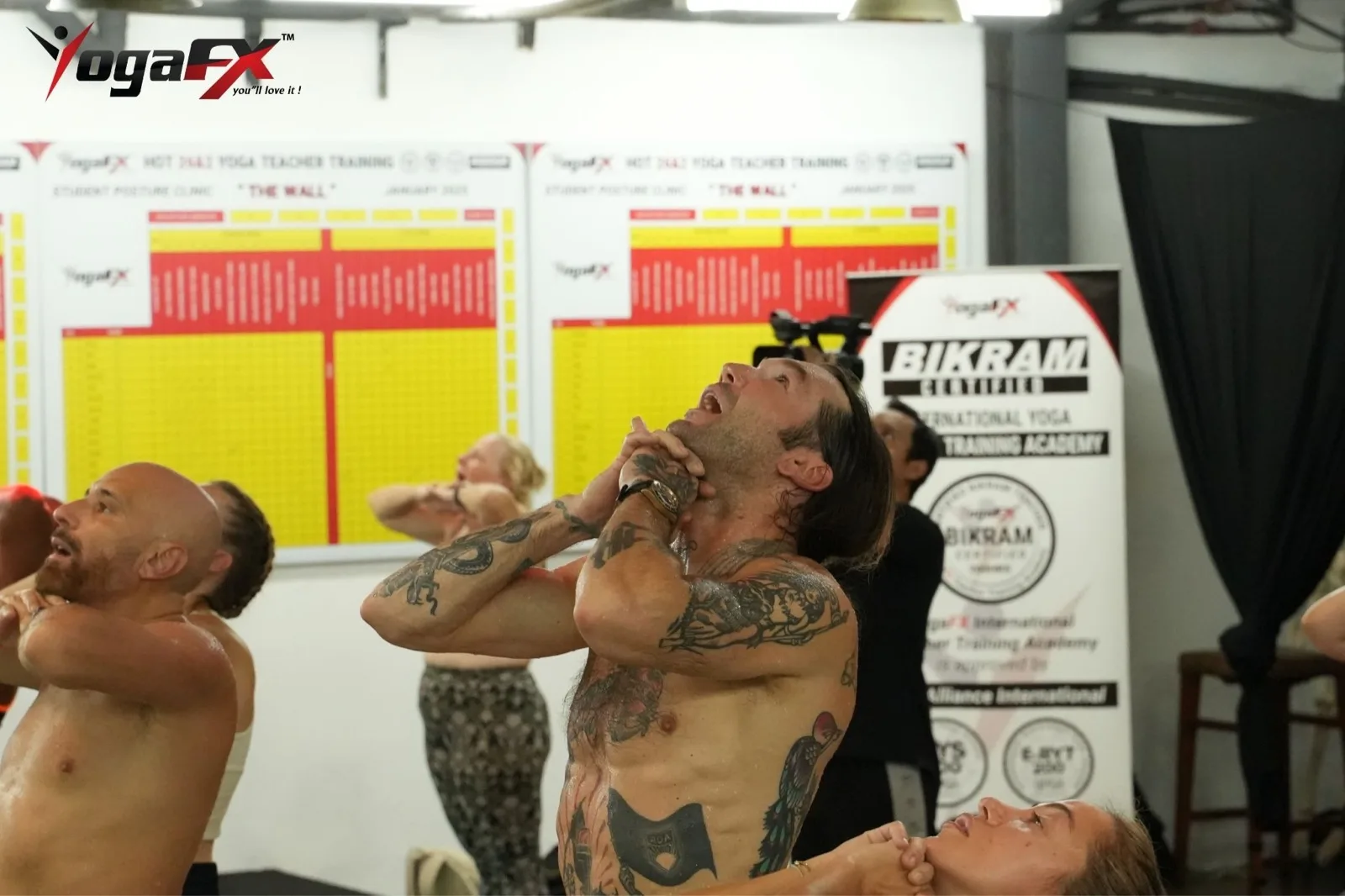
In the room, you practise the Bikram yoga breathing exercises as a student, so you breathe on the teacher's count like everyone else. Notice where your breath speeds up, where your shoulders climb and when the voice helps. Those observations become your teaching notes.
Cue as a teacher
Later you deliver the dialogue yourself, with a microphone, to your fellow trainees. The words of the dialogue are fixed, so the skill is delivery: when to pause, how fast to count and how to sound calm when you are not. Mr. Ian coaches this live and corrects it on the spot.
- Pace. Count slower than your nerves want. The room follows you, not the clock.
- Voice. Keep a low, even tone. A tight voice produces tight breathing.
- Pauses. Leave a real gap after each instruction so students can finish the breath.
- Eyes. Scan the room during the exercise and spot shoulders rising or mouths gasping.
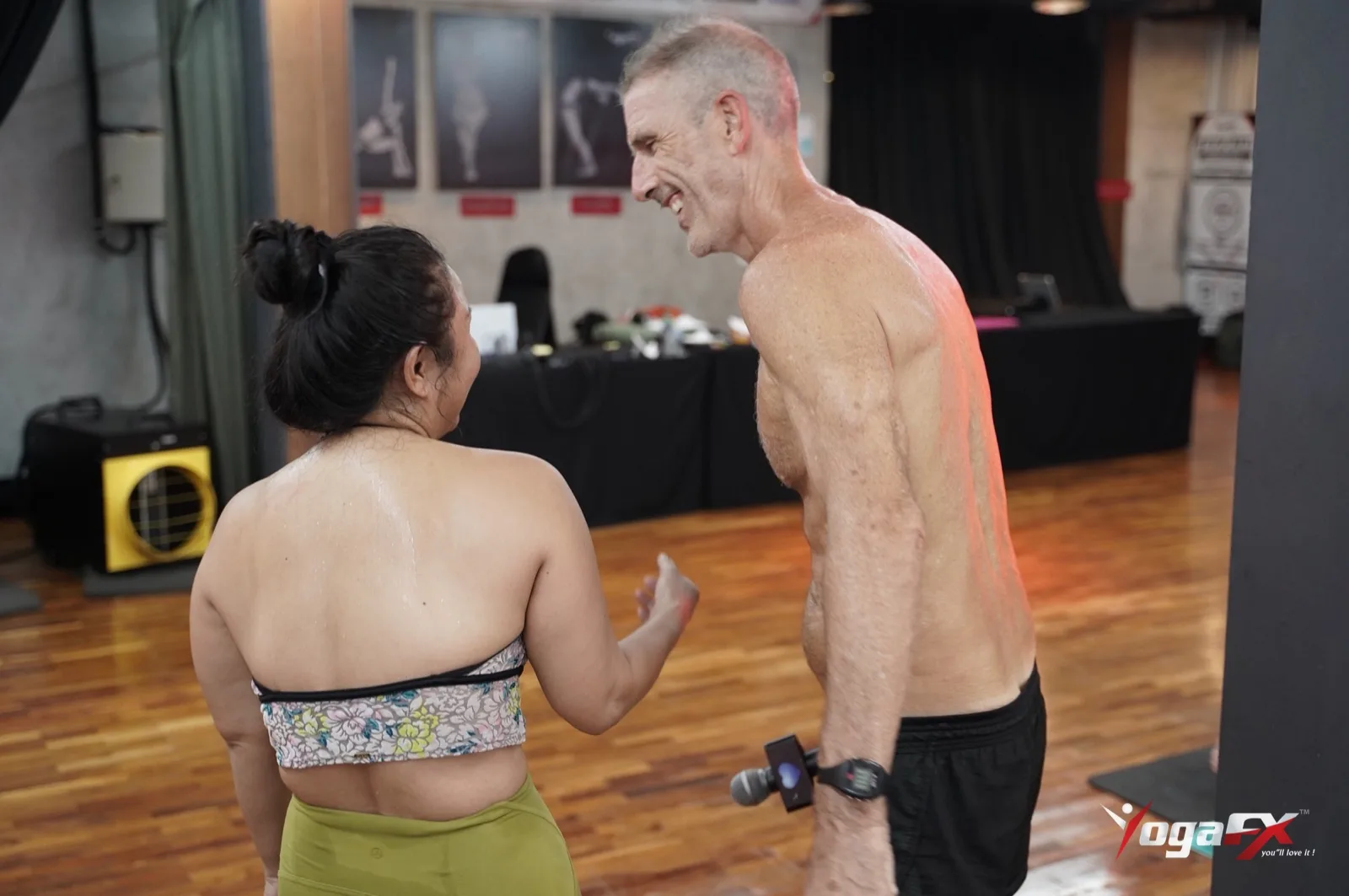
Bikram yoga breathing exercises are rehearsed in practical teaching rounds, where every trainee gets feedback on pace and voice.
Exercise One: Standing Deep Breathing, and How to Cue It
Standing Deep Breathing begins before any posture. Students stand tall, take the arm position the dialogue describes and breathe with the count. The inhale is through the nose and the exhale leaves through an open mouth. For a full student-side explanation, read our guide to pranayama breathing in Bikram yoga.
As a teacher, this is your first test. Nobody is balancing, stretching or sweating hard yet, so every flaw in your pace is audible. The most common trainee errors in teaching the Bikram yoga breathing exercises are easy to list:
- Rushing the count because the room is quiet and the nerves are loud.
- Speaking in a flat monotone that makes students switch off.
- Skipping the pause so the exhale never fully finishes.
- Ignoring the room and reading the words without watching anyone breathe.
It's a simple fix, and Mr. Ian repeats it often. Breathe the count yourself before you say it. If you can't finish the breath inside your own timing, nobody in the room can.
Exercise Two: Kapalbhati and Safe Cueing
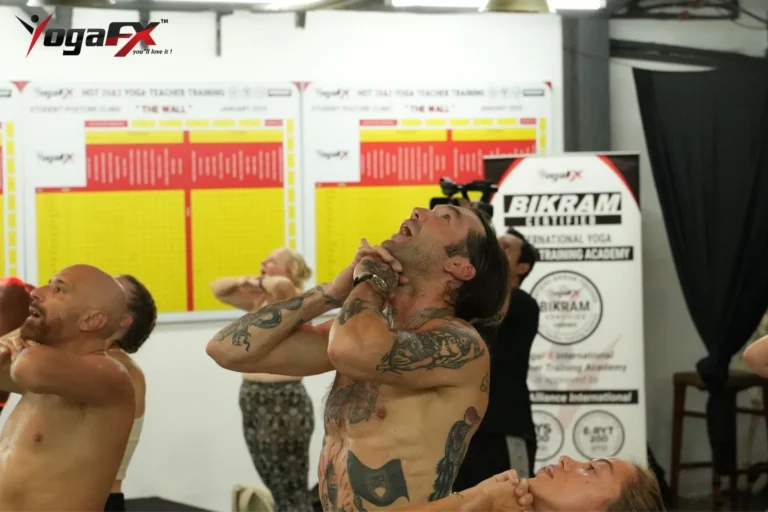
Kapalbhati, called Blowing in Firm, closes the class. Students sit on their heels and push short, sharp exhales from the lower belly. It comes after 90 minutes of heat, so it demands more judgement from the teacher than the opening breath does.
The US National Center for Complementary and Integrative Health advises new practitioners to avoid extreme practices such as forceful breathing. It also warns that hot yoga has special risks related to overheating and dehydration. That is why a good cue for these breathing exercises always leaves room to opt out. Trainees learn to say, in plain words, that a softer version is welcome.
- Invite beginners to start gently and build over weeks.
- Tell students to stop and breathe normally if they feel light-headed.
- Never compare students or praise the loudest breathers.
- Know your dizziness protocol: lower the centre of gravity and stay in the room.
Our guide to what Bikram teachers tell dizzy students sets out the steps. A calm answer to dizziness is part of delivering the breath well, not a separate skill.
Pacing a Whole Room With Your Voice
Teaching Bikram yoga breathing exercises is a voice skill before it is a yoga skill. Students in a hot room are working hard, so they rely on the teacher for rhythm. A steady voice gives them something to lean on, and a nervous one gives them something to resist.
Trainees often notice something in practical teaching that no book mentions. When they slow their own breathing before speaking, their voice drops and steadies. The room then slows down with it. That is a teaching observation, not a research finding, and we keep the two apart.
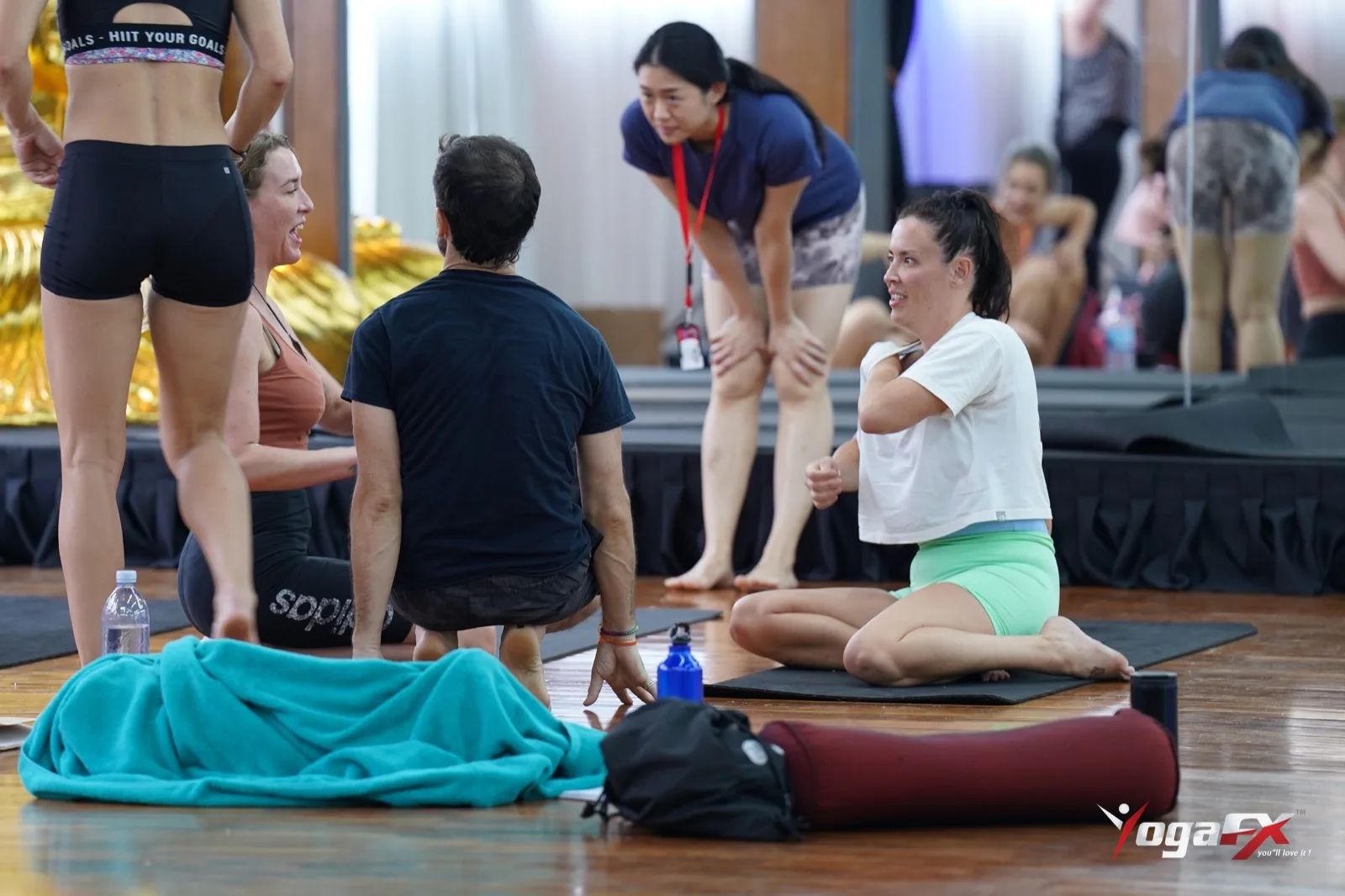
What feedback sounds like
After each round, trainers and fellow trainees give specific, kind notes. They say things like "your count sped up in the third set" or "you waited for the room before moving on". Nobody gets a vague "good job". That precision is how delivery improves in days instead of months, which is why we don't hand out vague praise.
If you want to see how the cost and format fit your plans, read our guide to the Bikram yoga teacher training in 6 days. Candidates from more than 80 countries have trained with YogaFX, and Mr. Ian has 1,500+ graduates.
What the Research Says About Breathing Practice
Evidence on Bikram yoga breathing exercises is thin, so claims need care. A 2017 pilot randomised controlled trial in Frontiers in Psychology, by Ma and colleagues, studied 40 healthy adults. The group that practised diaphragmatic breathing over eight weeks showed better sustained attention and lower cortisol than before training, according to the authors.
Read that with limits in mind, because it's only one small trial. It was a small pilot with healthy office workers, and it tested slow diaphragmatic breathing, not the Bikram yoga breathing exercises or a Bikram class. Nothing in it shows that a hot room improves breathing practice or that it treats any condition.
- What it supports: slow, practised breathing may help attention and calm in healthy adults.
- What it does not show: any effect of Kapalbhati, of heat, or of the 26 and 2 class.
- What teachers should say: "this may help you stay calm", never "this treats anxiety".
If you have a heart, lung or blood pressure condition, are pregnant, or live with anxiety or low mood, consult a healthcare professional first. The NCCIH also says to learn yoga under a qualified instructor, and it advises people with health conditions to talk with their provider and the instructor about their needs.
Heat, Acclimatisation and the Breath
New students breathe faster in a 40°C room because the heart rate climbs. As a trainee you need to recognise that quickly. Our guide to heat acclimatisation for hot yoga covers how the body adapts over several weeks of practice.
A few cues help in the first classes. Remind students to breathe through the nose when they can, and to switch to easy mouth breathing when they cannot. Both are fine, and neither is a failure.
What Trainees Say
These students were not reviewing the breathing exercises alone. Their words show what the whole training felt like.
Britt, a 2026 graduate, wrote in a Google review: For me, it was the hardest thing that I have ever done...emotionally, physically and mentally. It tore me down and built me back up.
(Britt, Google review, 2026)
Greta wrote: I went to get my yoga teacher certification and to deepen my own practice, but what I left with was much more than what anything or anyone could ever tell you about.
(Greta, Google review, 2026)
Jeanett also left a video review after her training, and you can hear her thanks in her own voice below. (Jeanett, YouTube review, 2019)
Learn to Teach Both Breathing Exercises in Bali
Mr. Ian Terry, E-RYT 500, leads the YogaFX training. The Bikram Hot 26&2 Yoga Teacher Training MasterClass leads to a Yoga Alliance RYT 200-Hour certification and a Bikram Hot 26&2 200-Hour International Yoga Certification. The next batch runs from Sunday 24 January 2027 to Friday 29 January 2027 at Soham Wellness Center in Seminyak.
Not ready for training yet? Practise the Bikram yoga breathing exercises as a student first. The Seminyak studio at Jl. Pangkungsari Gg Jepun No.888, Kuta Utara, Seminyak, Badung, Bali 80361 is open daily from 06:00 to 22:00, and the first class is free with the Free 1-Day Guest Pass.
- Take a class and notice your own breath during both Bikram yoga breathing exercises.
- Write down where your pace speeds up and why.
- Message Mr. Ian about the next training batch.
FAQ
How do you breathe in Bikram yoga?
You breathe in through the nose and follow the teacher's spoken count. Standing Deep Breathing opens the class with slow, even breaths, and Kapalbhati closes it with short, sharp exhales. Between the two, keep the breath calm and steady. If the heat overwhelms you, switch to easy mouth breathing and rest.
What are the two breathing exercises in the 26 and 2 method?
The 2 in 26 and 2 stands for two pranayama exercises. Standing Deep Breathing begins the class before the first posture, and Kapalbhati, called Blowing in Firm, ends it after the floor series. Both follow the fixed dialogue, so the order and timing never change from one class to the next.
Do yoga teacher trainees practise the breathing exercises?
Yes. Trainees practise both exercises as students first, then learn to cue them with the dialogue and microphone. In practical teaching they get feedback on pace, voice and safety wording from the trainers. The aim is a calm, clear delivery that keeps a whole room breathing together.
Is Kapalbhati safe for beginners?
Forceful breathing is something the US National Center for Complementary and Integrative Health tells new practitioners to avoid. In a hot room, beginners should start gently, stay below any light-headedness and tell the teacher they are new. Anyone with a heart, lung or blood pressure condition should ask a doctor first.
Does yoga improve breathing?
Research is modest. A small 2017 pilot trial of diaphragmatic breathing in healthy adults reported better sustained attention and lower cortisol after eight weeks. It did not test Bikram class or a hot room, so treat breathing practice as a calm-focus skill, not a treatment for any lung condition.
Still have questions? Message Mr. Ian and the YogaFX team on WhatsApp and we will answer them personally.
This article is general information, not medical advice. If you have a heart, lung or blood pressure condition, are pregnant, or live with anxiety or low mood, consult a healthcare professional before you practise in a hot room.
Last updated: November 27, 2026