

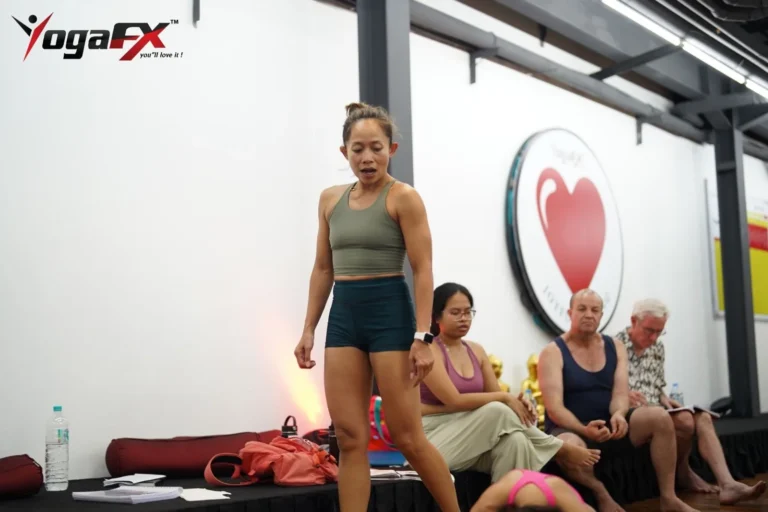

Pranayama breathing in Bikram yoga means two exercises. Standing Deep Breathing opens the class, and Kapalbhati, called Blowing in Firm, closes it. In between, a slow nasal breath acts as your inner thermostat in a room of about 40°C. This guide comes from the teaching room of Mr. Ian Terry, E-RYT 500.

Mr. Ian has taught the method for more than 12,000 hours. He tells new students that the breath is the first posture of the class, not a warm-up to rush through. This article is general information, not medical advice. We also keep one clear line between what research shows and what we see on the mat, because honest pranayama breathing advice needs both.
If you want a step-by-step walk through the opening exercise alone, our sister site wrote a separate guide on how pranayama breathing is taught in the 26 and 2. This page looks at the pair of exercises together and at how the breath works with the heat.
Pranayama Breathing in Bikram Yoga: The Two Exercises at a Glance
The 26 and 2 in the method's name stands for 26 postures and 2 breathing exercises. Both exercises are fixed, so you meet them in the same places every class. That makes them easy to plan for, and easy to practise until they feel familiar.
Pranayama is the Sanskrit word for breath control. In this class it names one exercise, Standing Deep Breathing, and the table below sets it next to its partner.
| Feature | Pranayama (Standing Deep Breathing) | Kapalbhati (Blowing in Firm) |
|---|---|---|
| Where it sits | Opening, before the first posture | Closing, after the floor series |
| Pace | Slow and steady, set by the spoken count | Quick, forceful exhales |
| Route | Nasal inhale, open-mouth exhale | Short, strong exhales; go gently at first |
| Main job | Settle the mind and slow the heart rate | Finish with a clear head |
| Take extra care if | You rush the count or lift your shoulders | You are new, dizzy or feel the heat strongly |
- Opening exercise: a calm, guided start that gives a new student one small job.
- Closing exercise: a brisk finish that asks for judgment after 90 minutes of heat.
- Everything between: a steady breath that you return to whenever a posture gets hard.
Exercise One: How Pranayama Breathing Opens the Class
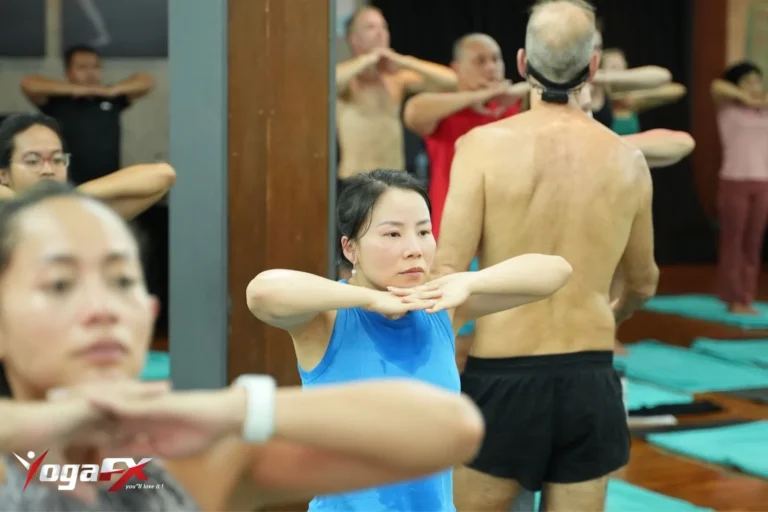
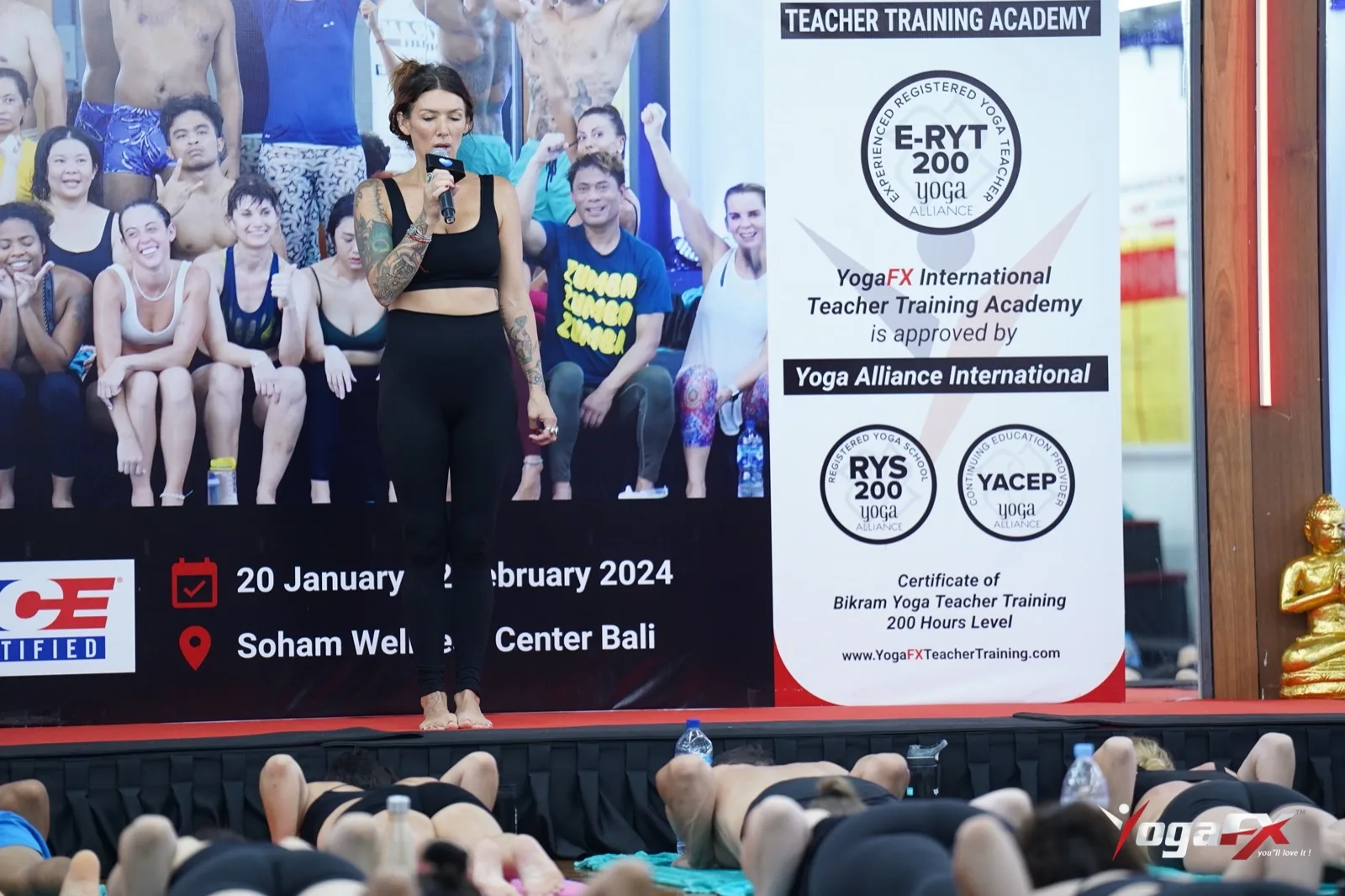
Standing Deep Breathing begins before the first posture. You stand tall, take the position the teacher describes, and breathe with the room. The inhale goes in through the nose, and the exhale leaves through an open mouth. Because a spoken count paces both, nobody has to guess.
That count comes from the dialogue, the fixed script a teacher speaks every class. We explain how teachers learn it in our guide to the Bikram yoga dialogue. For breathing, the point is simple. The voice sets one slow rhythm, so the whole hall breathes together instead of each person hurrying alone.
What Pranayama Breathing Trains in the First Minutes
Beginners often think the opening exercise is a gentle intro. In practice it trains the habit you will need later. When the standing series gets hard, the teacher keeps reminding you to breathe, and the first few minutes teach your body what that feels like.
- Listening: your attention has one job, which is to follow the count.
- Pacing: you learn that the teacher's count is slower than your instinct.
- Posture: shoulders stay down while the ribs lift, which keeps the breath deep.
In our experience the most common slip is breathing too fast. The room feels warm, the mind wants to hurry, and the breath follows. The fix is boring but it works: let the count be slower than you want it to be. It's a small change that you'll feel within a few classes.
Exercise Two: Kapalbhati, Called Blowing in Firm
The second exercise comes at the very end. Where the opening breath is slow and steady, Kapalbhati uses quick, forceful exhales. It arrives after 90 minutes of heat and effort, so it asks for the most judgment of the two.
Here is the advice we give every new student:
- Keep it modest. You do not need to match the person next to you. Start gently and build over weeks.
- Stop if you feel light-headed. Rest, breathe normally and let the dizziness pass.
- Tell the teacher you are new. They can show you a gentler version and place you well in the room.
This caution matches public health advice on heat. The US Centers for Disease Control and Prevention lists muscle cramping, unusually heavy sweating, shortness of breath, dizziness, headaches, weakness and nausea as symptoms of heat illness on its page About Heat and Your Health. If you notice them in class, the breathing exercise is over. Sit or lie down, sip water and let your body cool.
Nasal Breathing as Your Inner Thermostat
Why does the inhale go through the nose? The Cleveland Clinic says it plainly: "Breathing through your nose is the most beneficial way to breathe." Its page on nose versus mouth breathing explains that the nose filters the air, warms it and humidifies it. It also notes that the nasal passages help release nitric oxide, a vasodilator that opens blood vessels.
The same page is fair about the other side. Mouth breathing is fine when you need more air quickly, or when your nose is blocked. That matters in a hot room, because a student who is struggling should never force a nasal breath.
What we mean by an inner thermostat
At YogaFX we call the breath your inner thermostat. That phrase is our teaching view, not a research finding. Mr. Ian Terry teaches that when heat lifts the heart rate, gulping air through the mouth can set off a fight-or-flight reaction. Slow nasal breathing does the opposite. It helps calm the heart and keeps the effort manageable.
We should be honest about the limits. We know of no study that tested nasal breathing inside a hot yoga room. So we cannot promise a measurable result. We can share what we see on the mat, week after week, and what research on slow breathing suggests.
So the pranayama breathing technique you learn in the first minutes becomes a tool you keep. You'll reach for the same slow breath when the standing series gets tough, and that's why teachers return to it so often.
What Research on Slow Breathing Shows
The best overview we found is a systematic review in Frontiers in Human Neuroscience, published in 2018 by Zaccaro and colleagues. From a pool of 2,461 abstracts, only 15 articles met the criteria. That is a small body of work, and it covers healthy people only.
The authors define slow breathing as fewer than 10 breaths a minute. They report that it promotes autonomic changes that increase heart rate variability. They also report more comfort, relaxation, pleasantness, vigor and alertness. Symptoms of arousal, anxiety, depression, anger and confusion were lower.
How to read that for a Bikram class
- Slow is the common thread. The unhurried pace of Standing Deep Breathing fits the idea of slow breathing.
- Modest claims only. Expect a calmer start to class, not a treatment for any condition.
- Heat was not tested. Nothing we opened shows that a hot room makes breathing practice work better.
We haven't claimed that pranayama breathing fixes a medical problem, and the sources don't say so. If you live with anxiety, low mood or a breathing condition, consult a healthcare professional and treat class as a supplement to care. For home practice, the NHS offers a simple breathing exercise for stress. It has you breathe in through the nose and out through the mouth, and repeat for at least 5 minutes, "without forcing it".
Preparing Your Pranayama Breathing Practice Before Class
A calm opening breath starts well before the room. If you arrive stressed, hungry or dehydrated, the count will feel faster than it is. Mr. Ian suggests a few simple habits, and they cost nothing.
- Arrive about 15 minutes early. You can settle your breath and find your spot without rushing.
- Drink water through the day. Aim for steady sips rather than a litre just before class, which leaves your stomach sloshing.
- Leave 2 to 3 hours after a heavy meal. A light snack such as a banana works if you need energy.
- Practise the nasal breath in daily life. Walking or sitting, a quiet pranayama breathing exercise of slow nasal breaths makes the class version feel familiar.
None of this is complicated. It simply gives the opening exercise the best chance to do its job, which is to settle you before the heat arrives.
Your First Five Classes: Breath and Heat Acclimatization
Heat adaptation is real, and it takes a little time. Pranayama breathing can't speed it up, but a calm breath makes the early classes easier to enjoy. Mr. Ian tells beginners to expect 3 to 5 classes of steady practice. In the first classes the heart rate may feel fast and you may tire quickly. Over time you sweat sooner, your blood plasma volume expands and your core temperature stays lower during effort.
Outside yoga, the CDC's NIOSH describes the same idea for workers. Its page on heat acclimatization says exposure should increase gradually over 7 to 14 days. It lists more efficient sweating, steadier circulation and the ability to work with a lower core temperature and heart rate. Our full guide to heat acclimatization for hot yoga goes deeper.
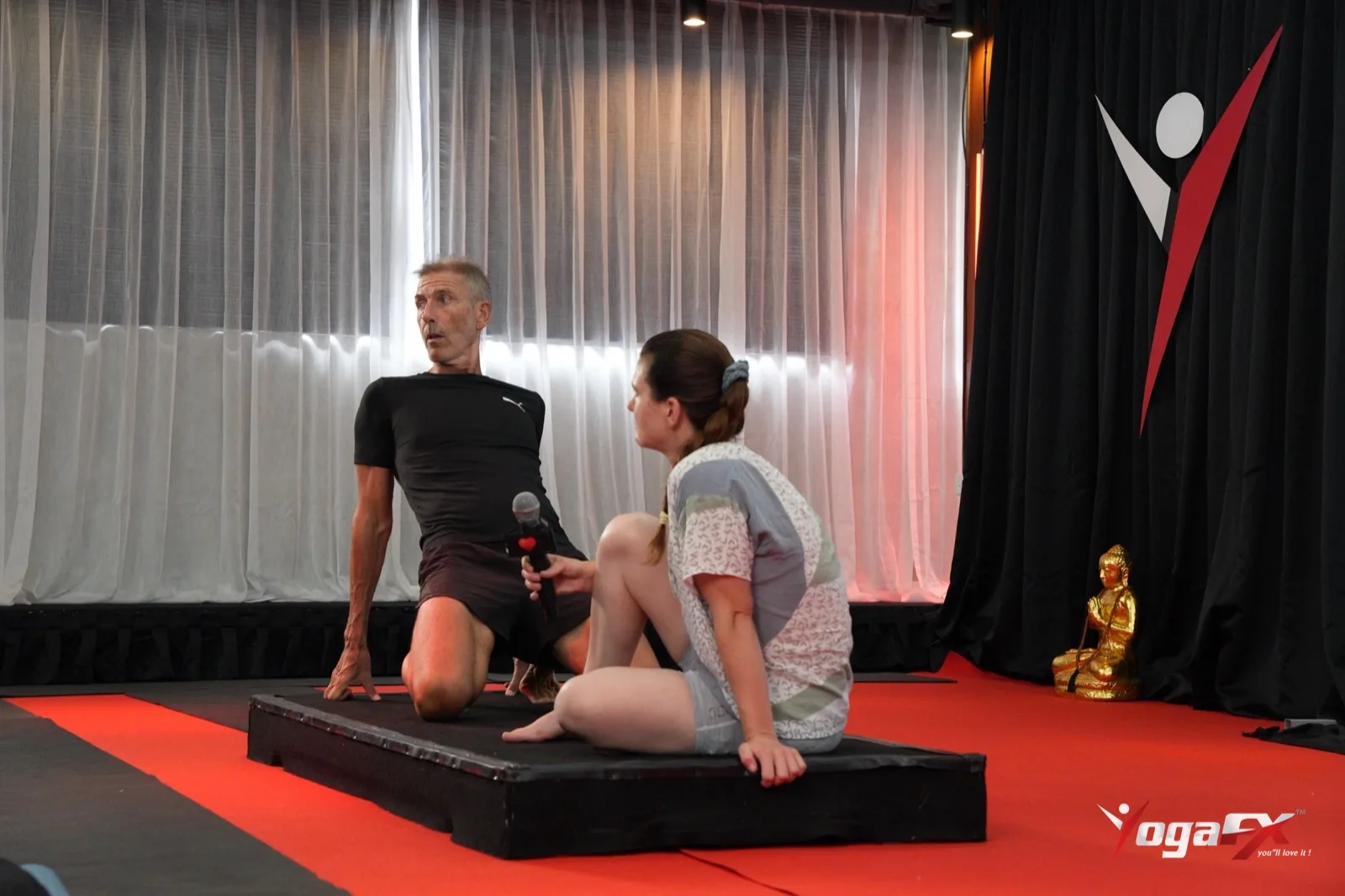
Use the table below as a quick guide to what your body may be telling you, and how the breath can help.
| Signal in class | What it often means | Breath response |
|---|---|---|
| Fast, shallow breathing | The heart rate is climbing and you are hurrying | Slow the exhale and let the teacher's count lead |
| Shoulders creeping up | Tension is making the breath shallow | Drop the shoulders and keep the ribs wide |
| Light-headed or dizzy | The heat is asking you to rest | Head to the mirror, feet to the wall, Savasana |
| Mouth breathing all class | You may be pushing too hard for your stage | Ease off, then return to a calm nasal breath |
Dizziness deserves its own plan. Mr. Ian teaches students to lower their centre of gravity at once: turn around, put your head to the mirror and feet to the wall, then lie on your back in Savasana. Stay in the room, and never force movement through dizziness. For more on this, read what Bikram teachers tell dizzy students.
Common Pranayama Breathing Mistakes in a Hot Class
After thousands of classes, the same slips show up again and again. None of them is serious, and all of them are fixable.
- Rushing the count. The breath speeds up with the heart, so let the teacher stay slower than you.
- Lifting the shoulders. It tightens the neck and makes the breath shallow.
- Forcing the exhale. The open-mouth exhale is a release, so pushing it out only tires you.
- Holding the breath in the standing series. A held breath makes effort feel larger.
- Arriving late. You then miss the exercise that sets up the class.
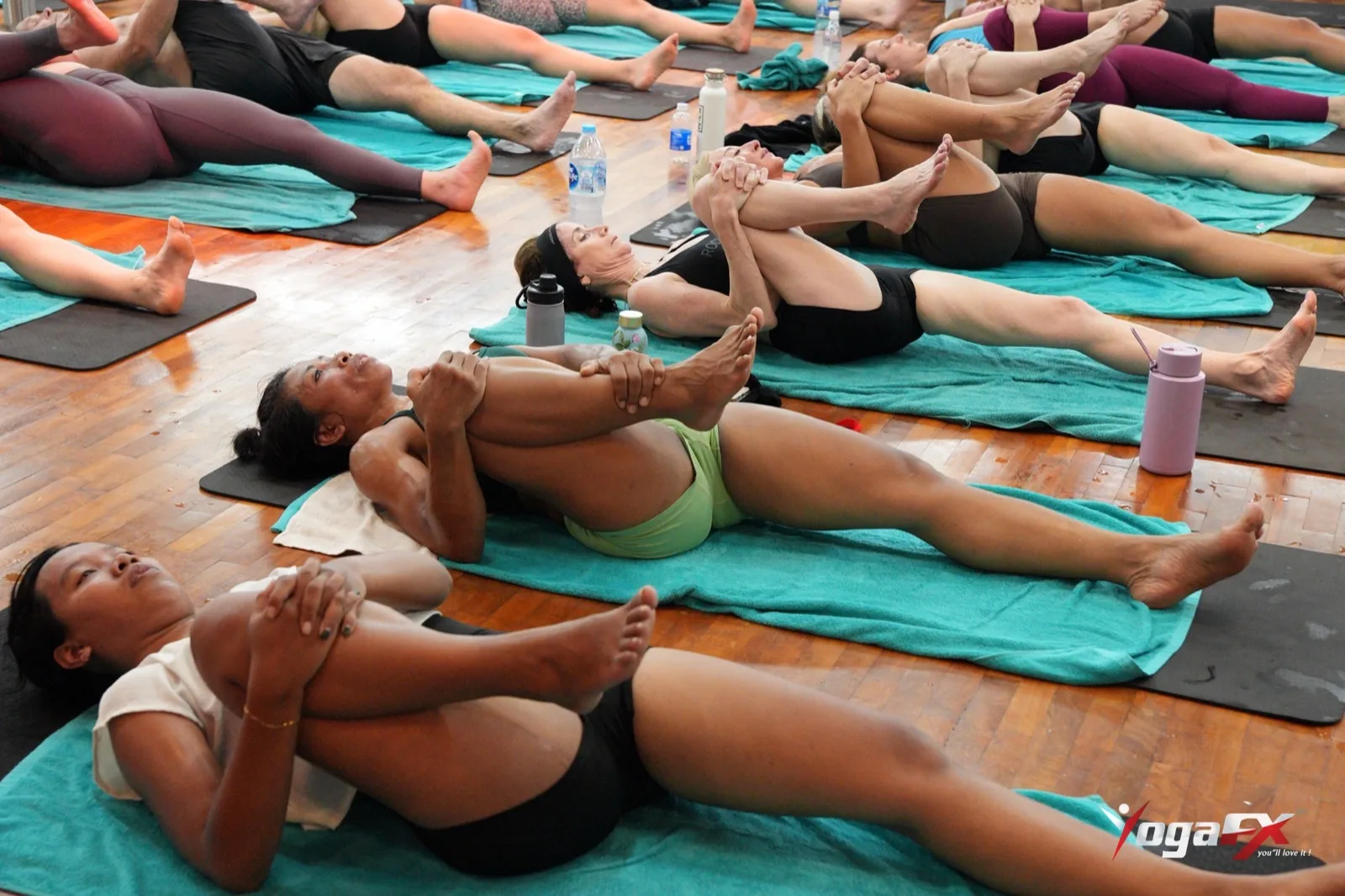
What Students Say After Learning to Breathe in Class
None of these students was reviewing pranayama breathing on its own, so we do not present them as medical proof. They show what two weeks of listening, breathing and staying with the dialogue feels like from the inside.
Catherine, in her graduation video from January 2024, thanked her group for all the support during the two weeks and said it had been great. She then invited everyone to join her at her local beach. (YouTube review, 2024)
Oles said he first wanted to open a yoga studio, not to teach. After the training he decided he would become a good yoga teacher. You can watch his graduation video. (Oles, YouTube review, 2023)
Learn Pranayama Breathing in a Class or a Teacher Training
The easiest way to understand the breath is to hear the count in a room. The YogaFX studio in Seminyak teaches the full 26 and 2 class with the original dialogue, no music and no demonstration. You will find it at Jl. Pangkungsari Gg Jepun No.888, Kuta Utara, Seminyak, Badung, Bali 80361, open daily from 06:00 to 22:00.
Your first class is free with the Free 1-Day Guest Pass. Tell the teacher you are new, and they will look after you. If your first class feels intense, our guide to a first Bikram class shows what to expect.
Want to teach the method one day? Mr. Ian Terry, E-RYT 500, leads the training. He brings 12,000+ teaching hours and 1,500+ graduates from 80+ countries. The next Bikram Hot 26&2 Yoga Teacher Training MasterClass checks in on Sunday 24 January 2027 and checks out on Friday 29 January 2027, at Soham Wellness Center in Seminyak. See our overview of original hot yoga teacher training for formats and costs.
FAQ
What is pranayama breathing in Bikram yoga?
In Bikram yoga, pranayama breathing means Standing Deep Breathing, the exercise that opens the class before any posture. You stand tall, breathe in slowly through the nose, and release the breath through an open mouth, paced by the teacher's spoken dialogue. The class closes with a second exercise, Kapalbhati.
Why breathe through the nose in a hot yoga class?
Nose breathing filters, warms and humidifies the air, and the Cleveland Clinic calls it the most beneficial way to breathe. In a hot room a slow nasal breath also keeps the pace calm. Mouth breathing is fine when you need air quickly, so use it if you feel overwhelmed.
What is Kapalbhati in a Bikram class?
Kapalbhati, called Blowing in Firm, is the second breathing exercise and closes the class. Instead of slow breaths, it uses quick, forceful exhales. New students should start gently and build over weeks. Never copy the person beside you, and stop to rest if you feel light-headed or dizzy. A gentle version done calmly beats a hard one done dizzy.
Does pranayama breathing make the heat easier?
It may help you stay calm, but we know of no study that tested nasal breathing inside a hot yoga room. Mr. Ian Terry teaches that a slow nasal breath keeps the heart rate steadier. Your body also adapts with time, usually over 3 to 5 classes.
What should I do if I feel dizzy during class?
Lower your centre of gravity right away. Turn around with your head to the mirror and feet to the wall, then lie on your back in Savasana and stay in the room. Breathe calmly through the nose. Never force a posture through dizziness, and tell the teacher afterwards.
Still have questions? Message Mr. Ian and the YogaFX team on WhatsApp and we will answer them personally.
This article is general information, not medical advice. If you have a heart, lung or blood pressure condition, are pregnant, or live with anxiety or low mood, consult a healthcare professional before you practise in a hot room.