


Savasana benefits begin with a simple fact: after 90 minutes in a room near 40°C, your body finally gets to recover. Lying flat lets the heart rate and breath settle, tense muscles let go and the mind go quiet. This guide shows how Bikram teachers cue that rest, and what research does and does not support.

It comes from the teaching room of Mr. Ian Terry, E-RYT 500, who has taught the method for more than 12,000 hours. This article is general information, not medical advice. We also keep a clear line between what a study measured and what we see on the mat, because honest savasana benefits need both.
If you want the student side of the story first, our sister site wrote a seven-point guide to what the final rest gives you. This page takes the teacher's side. It asks what a teacher says, what a teacher watches for and why the savasana benefits show up where they do.
Savasana Benefits After Heat: What the Final Rest Is For
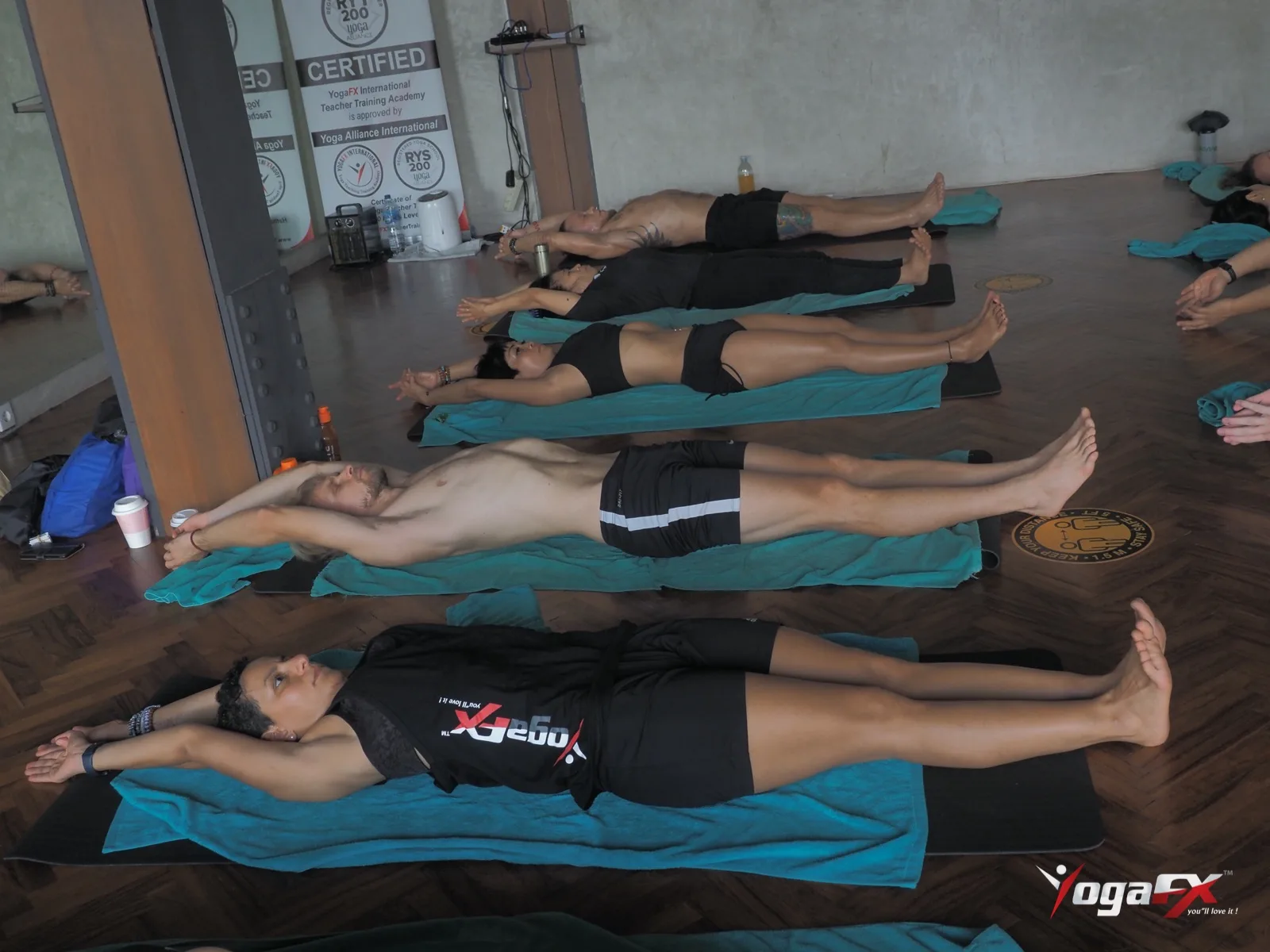
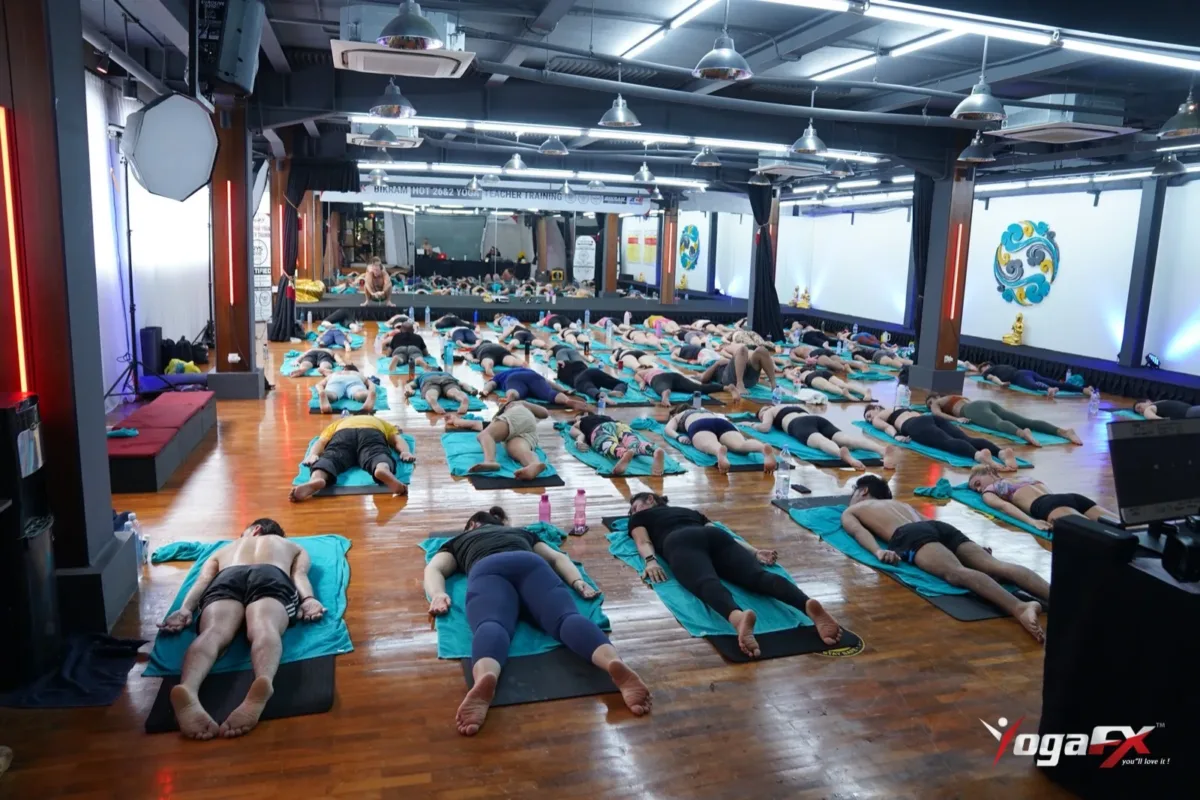
A hot 26&2 class does not ask for effort in one long push. It asks for effort, then recovery, then effort again. The final rest is the longest recovery of the class, and it is the one place where nothing is asked of you.
The savasana benefits matter more in heat than in a cool room. Your heart works to feed the muscles and to move blood to the skin so you can cool down. So when you lie down, the demand on the heart drops quickly, and the body can start to settle.
Here is how we describe the main savasana benefits to new students:
- Recovery starts. Heart rate and breathing can begin to come down once the work stops.
- Muscles switch off. After long holds, lying still gives tired muscles nothing to do.
- The mind gets one job. The voice stops, and you only have to lie still and breathe.
- The class lands. Many students notice what the practice did only when they stop moving.
We call these our teaching view. Some savasana benefits match published research on relaxation, and we flag which ones further down.
Savasana Meaning and Corpse Pose Benefits in Plain Words
Savasana is a Sanskrit word. Sava means corpse and asana means pose, which is why many people call it corpse pose. The name does not point to death. It points to a body so still that it holds nothing up.
Lying still after hard work is harder than it sounds. Most students want to fix a towel, scratch an itch or check the clock. Teachers see this every class. So when people list corpse pose benefits, they are really describing what follows once the effort stops. The savasana benefits are the benefits of stopping well.
The Hot 26&2 Class as a Cycle of Effort and Recovery
The savasana benefits make more sense once you see the whole class. Mr. Ian teaches it as a repeating cycle of higher demand and recovery. In his guide to the method, the standing series carries most of the aerobic demand. The floor series then offers more chances for heart-rate recovery, breathing control and nervous-system calm.
Those floor-series recovery periods include Wind-Removing Pose, the short rests between postures and the final rest. They are not all quiet, though. Backbends such as Cobra, Locust and Bow can raise the demand again. So the table below shows a pattern, not a fixed number for every student.
Where the Savasana Benefits Appear Across One Class
| Part of the class | Typical demand (a teaching reading) | What the rest gives you | What a teacher listens for |
|---|---|---|---|
| Standing series | Highest. Large muscles, balance and heat work together. | A short rest afterwards lets the heart begin to settle. | Fast mouth breathing or a student who wants to leave. |
| Short rests between floor postures | Low. A brief reset before the next posture. | A small recovery before effort returns. | Students who fidget instead of resting. |
| Backbends such as Cobra, Locust and Bow | Rises again. Back, breath and heart work harder. | Another recovery window once you release the posture. | Held breath and shoulders creeping up. |
| Final rest | Lowest. Ninety minutes of heat are behind you. | The longest chance to recover and take in the class. | Stillness, even breath and any sign of faintness. |
5 Cues Bikram Teachers Use to Rest a Hot Room
In this method the teacher does not demonstrate. The voice carries the room, and every cue does a job. Trainees learn the exact dialogue in the course, so we will not print the script here. Instead, this is what each cue is for, in plain words.
1. Lie Flat and Stop Moving
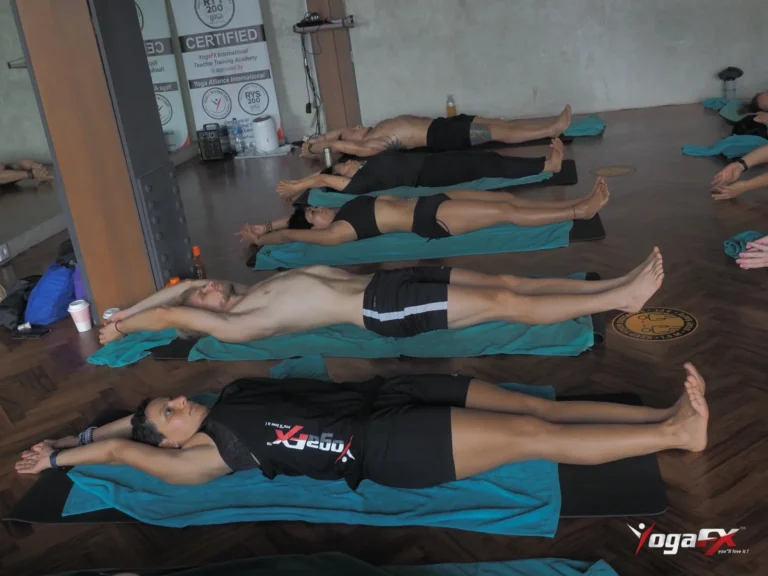
The first cue is the simplest. Lie on your back, let your feet fall open and rest your arms a little away from your body. Lowering the whole body is the quickest way to take work off the heart.
It also starts the savasana benefits you can feel. A beginner often fidgets here, and a teacher notices at once. Stillness is a skill, so we ask students to practise it like any posture.
2. Breathe Normally Through the Nose
After the hard breathing exercise, the breath goes back to its own pace. Mr. Ian teaches that calm nasal breathing steadies the heart rate and helps stop a panic response to heat. That is his teaching view, and we know of no study that tested it inside a hot yoga room.
Teachers listen for forced or noisy mouth breathing. If you struggle, take whatever breath you need. Our guide to the two Bikram breathing exercises explains how the class handles breath from start to finish.
3. Let the Face and Hands Go
Check your jaw, your forehead and your hands. Most students find that one of them is still clenched. A teacher cues the body to soften because tension hides in small places.
This is where the Mayo Clinic's list of relaxation effects fits best. It says relaxation techniques can ease muscle tension. We treat that as a reason to soften, not as a promise that these savasana benefits will arrive on cue.
4. Stay in the Room Until the Class Closes
Leaving early skips the part that lets the body recover. The cue is to stay, because the end of class is part of the practice and not a gap after it. Teachers also keep an eye on the room, so someone who feels unwell is seen quickly.
There is one clear exception. If you feel faint, sick or confused, resting in the room and telling the teacher comes first. If it does not settle, get out of the heat and ask for help.
5. Come Up Slowly
The last cue protects you after the rest. Standing fast in a warm room can leave you light-headed, so teachers ask students to rise with care. The Mayo Clinic lists low blood pressure after standing up among the signs of heat exhaustion, which is one more reason to move gently.
Roll to your side, sit up and pause. Then stand when your head feels steady.
A teacher also keeps a short mental list during the rest:
- Faces: a flushed or very pale face deserves a closer look.
- Breath: fast, shallow breathing suggests the student is still working.
- Movement: constant shifting often means the student is restless, not unwell.
- Responses: a student who does not answer a quiet question needs help at once.
What Research Says About Savasana Benefits, and What It Does Not
Research on savasana benefits is thin, so we use nearby evidence and say where it stops. Two sources help most.
Relaxation in general
The Mayo Clinic's page on relaxation techniques says they can slow heart rate, lower blood pressure and slow the breathing rate. It adds that they can ease muscle tension, improve sleep quality and lessen the activity of stress hormones. The page words every item with "can" and gives no numbers.
That is useful context, but it does not study savasana or hot yoga. We read it as support for deliberate rest, not proof that two minutes on the floor will change your blood pressure.
Heart rate after exercise
A 2022 systematic review in the International Journal of Environmental Research and Public Health, led by Casanova-Lizón, explains the idea behind recovery. It defines heart rate recovery as the rate at which heart rate decreases after exercise. It says the fast component, in the first minute, is mainly mediated by the parasympathetic nervous system.
The same text says that after exercise the parasympathetic system reactivates and sympathetic activity wanes. The review looked at exercise training in sedentary people. It did not test hot yoga or savasana, so we use it only to explain why the first minute of rest matters.
How to read this for your own class
- Rest helps recovery. The mechanism is well described, even if savasana benefits were not the thing tested.
- Modest claims only. Expect a calmer end to class, not a treatment for any condition.
- No savasana trial in a hot room. We know of none, so we do not quote a length or a result.
If you live with a heart condition, high blood pressure or anxiety, speak to a healthcare professional. Treat class as a supplement to care, not a replacement for it.
When Savasana Is a Safety Move: Dizziness and Heat Signs
Lying down is also the first safety step in a hot room. Mr. Ian teaches students to lower their centre of gravity at once. Turn around, put your head to the mirror and feet to the wall, then lie on your back in Savasana. Stay in the room, and never force movement through dizziness.
Resting is therefore never a failure in this method. For more on what teachers say to a student who feels faint, read what Bikram teachers tell dizzy students.
Know the signs that mean more than a rest. The Mayo Clinic's first-aid page on heat exhaustion lists heavy sweating, faintness, dizziness, fatigue, a weak and rapid pulse, muscle cramps, nausea and headache.
Its steps include moving the person out of the heat, laying them down and raising the legs and feet slightly. It also advises sipping chilled water or an electrolyte drink.
The same page says to call emergency services if the person faints, becomes agitated or confused, has a seizure or cannot drink. So the plan is simple. Lie down first. If the signs do not settle, or any emergency sign appears, leave the heat and get help.
After the Final Rest: Cool Down, Refill and Eat
The savasana benefits carry on after you leave the room if you treat the next hour well. Mr. Ian's guide suggests four habits:
- Cool down slowly. Let your body cool for 10 to 15 minutes before a cold shower. His guide warns that rapid ice baths straight after class can shock the system.
- Replace minerals. Water alone is not enough, because sweat also carries sodium, potassium and magnesium.
- Eat within 60 to 90 minutes. Choose complex carbohydrate and lean protein to feed tired muscles.
- Leave a gap before bed. A hot class can leave you warm and alert for a while.
Our guides to hot yoga hydration and to feeling tired after hot yoga cover the details.
What Students Say After the Final Rest
None of these students was reviewing savasana on its own, so we do not offer their words as proof. They show how trainees describe the end of a course and the end of a class.
Saul, in a December 2024 video review, thanked his teacher in Indonesian and English. He called him a "very, very good teacher" and "very nice". Watch the review. (Saul, YouTube review, 2024, translated in part)
A trainee in a September 2023 graduation video said, "Thank you for everything. It's been a wonderful journey, it's been an amazing experience." Watch the review. (A trainee in our YouTube review, 2023)
A class student, filmed in December 2018, said, "You shared so much positive vibes, good energy." Watch the review. (A student in our YouTube review, 2018)
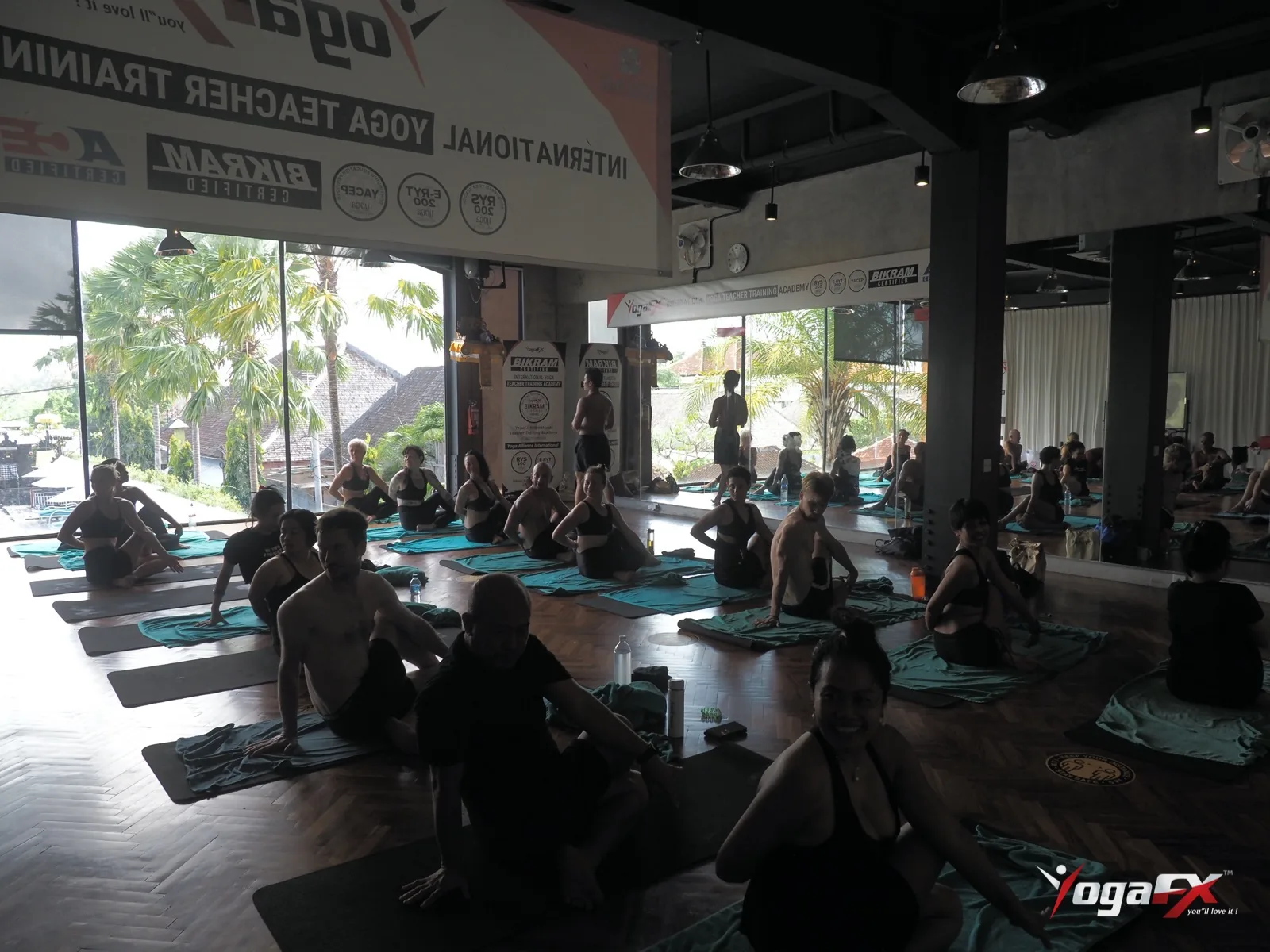
Learn to Cue the Final Rest and Its Savasana Benefits in Bali
The easiest way to understand the savasana benefits is to hear the cues in a room. The YogaFX studio in Seminyak teaches the full 26 and 2 class with the original dialogue, no music and no demonstration. You will find it at Jl. Pangkungsari Gg Jepun No.888, Kuta Utara, Seminyak, Badung, Bali 80361, open daily from 06:00 to 22:00.
Your first class is free with the Free 1-Day Guest Pass. Tell the teacher you are new, and they will look after you.
Want to teach it one day? Mr. Ian Terry, E-RYT 500, leads the Bikram Hot 26&2 Yoga Teacher Training MasterClass. It is a six-day hybrid course, with online preparation first and an intensive in Bali. Trainees practise how to time, tone and watch a room during the rest.
The next batch checks in on Sunday 24 January 2027 and checks out on Friday 29 January 2027, at Soham Wellness Center in Seminyak. Our guide to Bikram teacher training formats and costs lists the details.
FAQ
What are the main savasana benefits after hot yoga?
After 90 minutes of heat, savasana lets your heart rate and breathing begin to settle, tense muscles release and the mind go quiet. Relaxation research suggests it may also lower stress and help sleep. No study has tested the final rest after a hot class alone, so we make modest claims.
How do Bikram teachers cue savasana?
In this method the teacher speaks a fixed dialogue and does not demonstrate. The rest cues ask you to lie flat, stop moving, breathe normally, soften the face and hands, stay until class closes and rise slowly. Trainees learn the exact words in teacher training, so we describe their purpose, not the script.
What does savasana mean, and why is it called corpse pose?
Savasana is Sanskrit. Sava means corpse and asana means pose, so it is often called corpse pose. The name does not describe death. It describes a body lying so still that it holds nothing up. It is a pose of deliberate rest, and in a hot class it closes the practice.
What should I do if I feel dizzy and want to lie down?
Lower your centre of gravity right away. Turn around, put your head to the mirror and feet to the wall, then lie on your back and stay in the room. Never force a posture through dizziness. If it does not settle, or you feel confused or faint, leave the heat and get help.
Is it safe to skip savasana when I feel restless?
You can, but you miss the part of class that lets the body recover. If you feel restless, stay and count slow breaths. Feeling dizzy, sick or confused is different. In that case rest in the room, tell the teacher and get medical help if the signs do not settle.
Is this an official Bikram Choudhury teacher training?
No. The YogaFX course is independent training led by Mr. Ian Terry, E-RYT 500. He trained for five years, from 2014 to 2019, with the founder of the Bikram Hot 26&2 method. Graduates receive Yoga Alliance RYT 200-Hour certification and the Bikram Hot 26&2 200-Hour International Yoga Certification, but the course is not run by the founder.
Still have questions? Message Mr. Ian and the YogaFX team on WhatsApp and we will answer them personally.
This article is general information, not medical advice. If you have a heart, lung or blood pressure condition, are pregnant, or live with anxiety or low mood, consult a healthcare professional before you practise in a hot room. Stop and rest at any point in class if you feel unwell.