





Yoga for footballers works best as a short, football-specific routine: hamstring and groin stretches, one-leg balance and slow breathing. The Bikram 26&2 sequence covers all of that in one fixed class. Time it around your season, keep deep holds and heat away from match day, and it supports the strength work your club already sets.

This guide is a posture map for yoga for footballers. It shows which postures answer which football demand, and when in the season to use them. It comes from the teaching side of YogaFX.
Mr. Ian Terry, E-RYT 500, has led more than 12,000 hours of Original Hot 26&2 classes there. If you want a plan built around a weekday-evening and weekend schedule, a short home routine for weekend players covers that angle.
Yoga for Footballers: The Posture Map
Start with the demand, then pick the posture. A match asks for repeated sprints, hard stops, quick turns and long kicks. Each one loads the back of the thigh, the groin or the hip. The table pairs eight postures from the Original Hot 26&2 sequence with the football job each one answers, so yoga for footballers starts from the game and not from a generic stretch list.
| Posture | Football demand it answers | What it trains | Best season window |
|---|---|---|---|
| Standing Head to Knee | Long sprint stride | Standing hamstring, balance, quad drive | Off-season, pre-season |
| Standing Separate Leg Stretching | Change of direction | Hamstrings, inner thigh | Pre-season, quiet weeks |
| Triangle | Wide stance, tackle reach | Groin, hips, front-leg hamstring | Pre-season |
| Half Moon with hands to feet | Side bends, trunk control | Sides of the trunk, back of the legs | Any week, kept light |
| Awkward | Late-game thigh fatigue | Quads, calves, ankles | Pre-season, in-season |
| Tree | Planting foot, turning on it | Ankle control, hip rotation | Any week |
| Standing Bow Pulling | Back swing of a long kick | Hip flexor, quad, balance | Off-season, quiet weeks |
| Locust | Sprint drive from the hips | Glutes, hamstrings, lower back | In-season, light effort |
You don't need all eight in one sitting. In a full 90-minute class you meet every one of them anyway, because the sequence never changes. The useful skill in yoga for footballers is knowing which ones to lean into this week and which to hold back.
Two rules cover most of yoga for footballers. First, take the first set of each posture at about 60 percent effort and go deeper on the second. Second, never bounce. A footballer who bounces into a hamstring stretch fights the muscle, and the muscle wins.
Why Footballers Pull Hamstrings and Groins
The numbers explain why this posture map starts at the back of the thigh. The UEFA Elite Club Injury Study followed 54 Champions League teams and 3,909 male professional players across 21 seasons. Hamstring injuries made up 19% of all injuries.
Their share of all injuries rose from 12% in the first season to 24% in the most recent one (Ekstrand et al., British Journal of Sports Medicine, 2023, summarised in the BJSM blog by Prof. Jan Ekstrand).
About 18% of those hamstring injuries were recurrences, and over two-thirds of the recurrences came within two months of a player returning. That tells you the hamstring is a tissue that needs steady care, not a one-off fix.
These are full-time professionals with medical staff. Amateur and semi-professional players have fewer resources and often more hours in a chair. So the same muscles deserve attention, just with simpler tools.
Yoga won't prevent a hamstring injury by itself, and no trial has shown that. What yoga for footballers does is build range of movement, balance and body awareness in a form you can repeat every week. Treat it as one tool next to strength work, sleep and sensible training loads. For the wider picture of how the sequence suits sport, read our guide to Bikram yoga for athletes.
Hamstring Work in Yoga for Footballers: Three Postures to Learn First
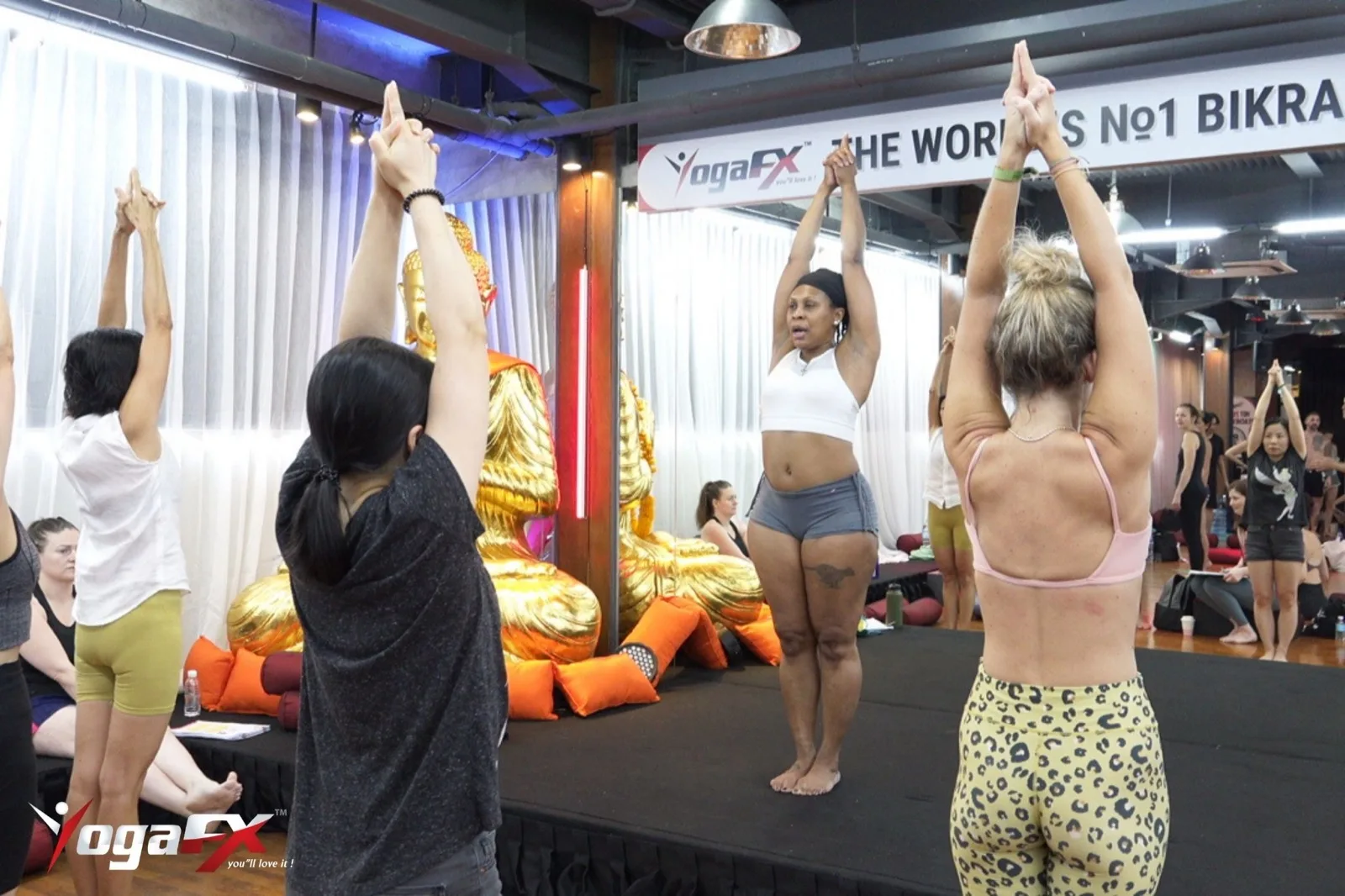
The standing series is where yoga for footballers does most of its hamstring work, and it's the best place to begin. You carry your own body weight, so strength and length grow together. Here are the three postures to learn before anything else.
Standing Head to Knee
This posture locks the standing leg while the other knee lifts and the hand holds the foot. It trains the standing hamstring, the quad and balance in one hold. The sprint stride asks for exactly that mix. Our full guide to Standing Head to Knee breaks the four stages down, and it's worth reading before you try it.
For football, keep the standing knee soft in the first week. Locking it too hard before the hamstring is ready is a common error among strong, competitive players.
Standing Separate Leg Stretching
Here you step wide, fold forward and bring the crown of the head toward the floor. It reaches the hamstrings and the inner thigh together. That makes it a good answer to the side-to-side load of defending and turning.
Go only as far as the back of the legs allow with a flat back. If your hands do not reach the floor, that's fine. A player who folds from the hips works the right muscle, while one who rounds the spine just works the lower back.
Half Moon with hands to feet
Half Moon starts with a side bend, then moves into a forward fold with the hands toward the feet. It opens the sides of the trunk and the back of the legs. Footballers often skip side flexibility, yet every twist, header and stretch for a ball uses it.
Groin and Hip Work in Yoga for Footballers
Yoga for footballers has to cover the groin too. Groin strains tend to show up when a player stretches wide for a tackle or snaps a kick across the body. The hip joint has to rotate and open at speed. Three postures train that range at a slow, controlled pace.
Triangle
Triangle is a deep lunge with a long back leg and a side-bent trunk. It opens the groin, the hip and the hamstring of the front leg. Because the stance is wide, it also copies the shape of a long tackle reach.
Standing Bow Pulling
On one leg, you kick the other foot back and up into your hand while the trunk folds forward. It stretches the hip flexor and the quad of the lifted leg. That is the same chain a kicker loads on the back swing, so it makes a useful counterweight to sitting at a desk all week.
Tree
Tree balances you on one leg with the other foot placed high on the thigh and the knee pushed out. It asks the hip to rotate outward and the standing ankle to stay steady. Players who roll an ankle often find this posture humbling in a good way.
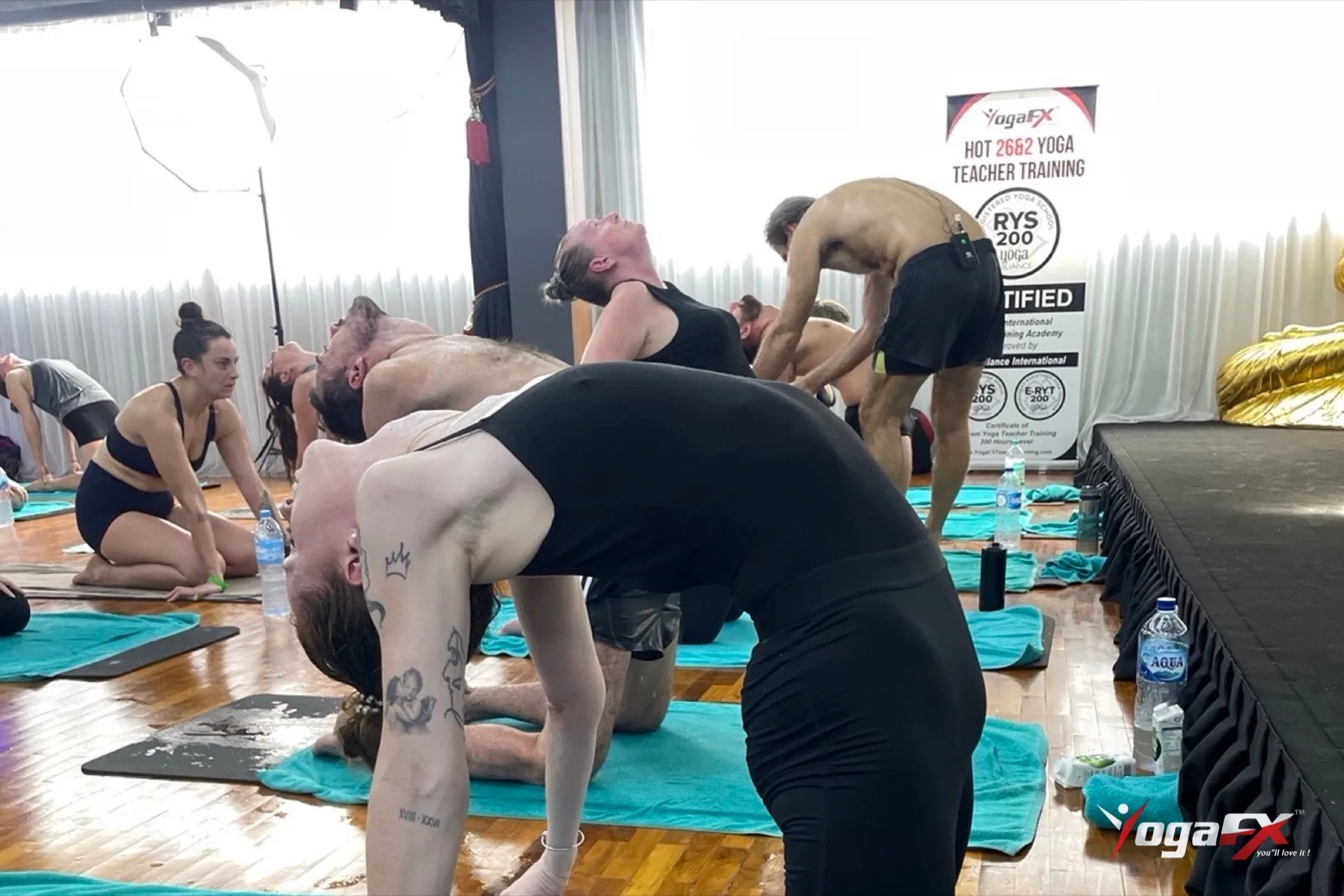
A word of caution on backbends. Deep backbends open the front of the hips and ease a stiff lower back, but they are demanding. Leave them for quiet weeks, not the day before a game.
Ankles, Calves and Balance in Yoga for Footballers
Yoga for footballers isn't only about the thigh. The ankle takes a heavy share of knocks and twists. Balance work trains the small stabilising muscles of the foot, and it does so while you are tired, because the 26&2 class asks for balance deep into a hot 90 minutes.
- Awkward pose. A deep, chair-like squat on the toes builds thigh endurance and ankle strength. It echoes the last 20 minutes of a match, when your legs start to fade.
- Eagle pose. Legs and arms wrap while you balance on one foot. It stretches the outer hip and shoulder and trains focus when your body wants to quit.
- Tree pose. Described above. It is the simplest daily ankle check in yoga for footballers.
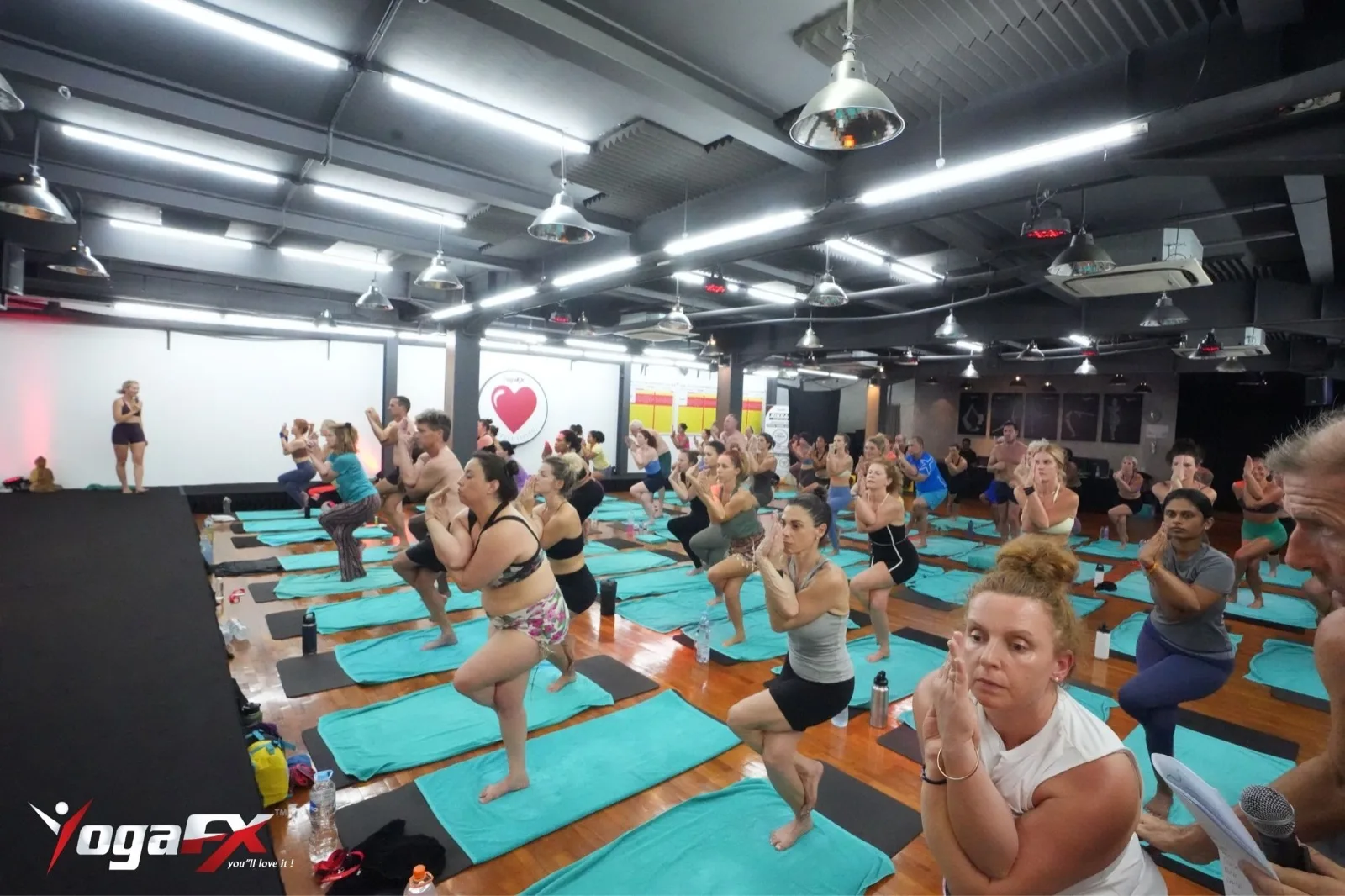
Because the order of postures never changes, you can watch your own progress week to week. If Tree wobbles more than it did last month, that is useful information about fatigue. It's often a better early signal than a number on a screen.
Season Timing for Yoga for Footballers
The same posture can help in July and hurt in the middle of match week. Timing is what makes yoga for footballers work. Use the four phases below as a starting point, then adjust with your coach or physio. The numbers are a sensible beginning, not a rule.
Notice that the heat appears only in the pre-season and off-season rows. That's deliberate. Heat adds to your weekly load, and a hot class is a workout in its own right. The next sections explain why heat needs care in yoga for footballers.
What the Research Says About Yoga for Footballers
Trials of yoga for footballers specifically are rare, so it is fair to be careful. Most studies are small. Still, several point in a helpful direction.
- Flexibility and balance in athletes. Polsgrove, Eggleston and Lockyer followed 26 male college athletes for 10 weeks. The yoga group improved significantly on the sit-and-reach test, shoulder flexibility and the stork-stand balance test. The group without yoga did not change significantly (International Journal of Yoga, 2016, abstract on DOAJ).
- Strength in the Hot 26&2 sequence. A 2013 controlled study by Tracy and Hart in the Journal of Strength and Conditioning Research reported about a 20% rise in posterior chain strength, along with better flexibility, in people practising the sequence.
- Workload in a 90-minute class. A University of Wisconsin study (Porcari et al., 2014) found men burned about 460 calories in a Bikram class and averaged roughly 80% of predicted maximum heart rate.
The honest reading is mixed. The athlete study used a different style of yoga in a small group.
The Bikram studies used general adults, not footballers. Together they say that a regular practice can build range and some strength, and that a hot class is a real cardiovascular effort. They don't say yoga for footballers will stop an injury. For more on the heart rate side, see our guide to heart rate zones in a 26&2 class.
Remember also that research on athletes can't replace advice from your club doctor. If you carry an injury, a heart condition or take medication that affects your heart rate or sweating, ask a healthcare professional before any heated practice.
Hot Yoga for Football Players: Is the 40°C Room Worth It?
Many players ask about hot yoga for football players because heat makes legs feel loose fast. A 26&2 class runs 90 minutes at about 40°C with around 40% humidity. That's a hard session. A hot class counts as yoga for footballers only when it fits the calendar, so the question is where it fits.
- Use it in quiet weeks. Pre-season and the off-season are the safest windows for full hot classes.
- Skip it near kick-off. Keep heat and long holds well away from match day, especially the 48 hours before.
- Hydrate through the day. Drink steadily, not a large bottle just before class.
- Stay in control. If your head swims, rest. Sitting out a posture is part of the practice.
Loose legs in a hot room can also mislead you. The heat lets you fold further than your cold muscle can safely hold. So take the first set of each posture at about 60 percent and treat the second set as the real work. A footballer's competitive streak is a gift on the pitch, but on the mat it is the thing to manage.
If you are newer to the heated room, yoga for cyclists and runners shows how other endurance athletes build up to it.
What YogaFX Students Say
Players aren't our only students, but the habits yoga for footballers builds are the same ones every student builds: patience, effort and a steady routine. Here is what three of our students said in their own words.
Jamie thanked Mr. Ian and the team for the chance "to work hard and push myself for something that I'm finding a passion in." Watch the video review
Jamie, YouTube review, 2024
Selly thanked Mr. Ian and the team for "the amount of efforts and love and thoughts and organizations and hard work that they put into" the training, "and it shows." Watch the video review
Selly, YouTube review, 2024
"Bikram yoga makes the body healthier and more flexible, and loosens stiff muscles."
Made, Google review, 2024 (translated)
Across platforms, students have posted 150 Google reviews, 50 Yoga Alliance reviews and 357 YouTube testimonials. Each is one person's story, not a promise of results.
From the Pitch to the Podium: The YogaFX Route
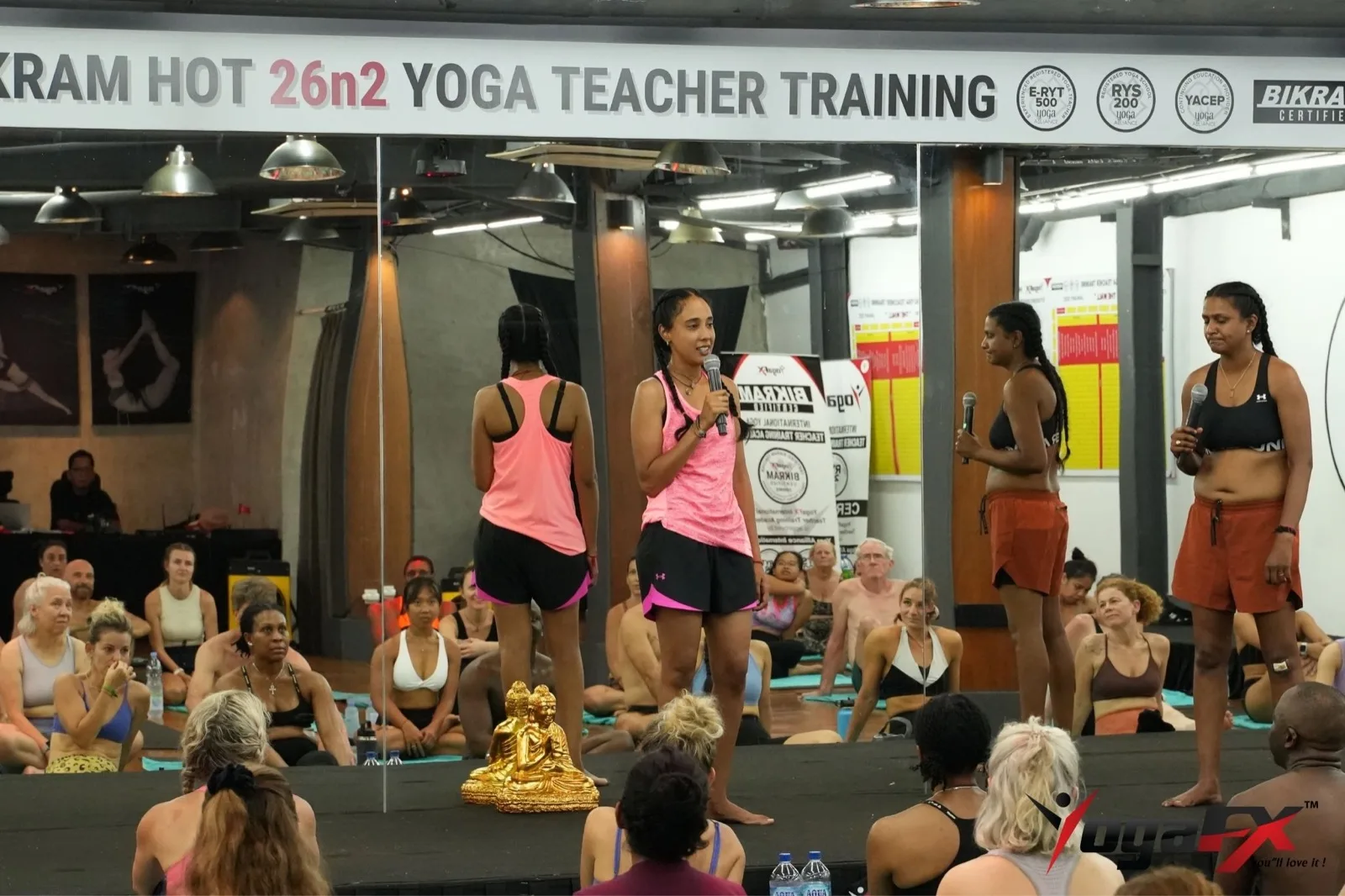
Some players enjoy yoga for footballers enough to learn it properly, or to teach it to their own squad. That is the job of the Bikram Hot 26&2 Yoga Teacher Training MasterClass. It is a six-day hybrid course: you study the pre-course online around your training, then join the intensive in Bali.
Check-in for the next intensive is Sunday 24 January 2027 and check-out is Friday 29 January, at Soham Wellness Center in Seminyak. A mid-season break could cover it. Finishing gives you two credentials: Yoga Alliance RYT 200 and the Bikram Hot 26&2 200-Hour International Yoga Certification.
The current Early Bird price is US$1,899, down from US$1,999. Instalments start at US$250 a month, interest free.
Mr. Ian Terry leads the programme. He is an E-RYT 500 instructor with more than 12,000 teaching hours.
Between 2014 and 2019 he spent five years training with the founder of the method, and he holds the title of Master Trainer with the Republic of Indonesia Yogasana Sports Federation. Since opening YogaFX in 2017, he has guided over 1,500 graduates from more than 80 countries. You can read more about him on the teachers page.
FAQ: Yoga for Footballers
Is yoga good for footballers?
Yes, for most players. Yoga for footballers adds hamstring and groin range, ankle control and calm breathing that normal training rarely targets. It works best beside the strength work your club sets, not instead of it. Keep deep stretching away from match day and ask your physio about any injury.
Do football players do yoga?
Many players use yoga for mobility, balance and recovery, often in the off-season or on lighter days. Amateur players can copy the idea with short sessions: a few balance and hamstring postures on rest days, and breathing only in match week. Fit it around training instead of competing with it.
How does yoga help football players?
Research on male college athletes found better sit-and-reach scores and balance after 10 weeks of yoga. Players also report better body awareness and calmer breathing. No trial shows yoga prevents hamstring injuries, so use it as one part of a plan that includes strength work, sleep and sensible load.
Is yoga or Pilates better for footballers?
They do different jobs, so many players use both. Yoga covers range of movement, balance and breathing in one session, while Pilates leans toward core control. If you only have time for one, choose the one you'll keep doing, and place it on a lighter day, never on match eve.
Is hot yoga safe for football players?
For healthy adults, a hot 26&2 class can be a sound off-season or pre-season tool, but it is hard work in a 40°C room. Hydrate steadily, rest when your head swims, and avoid heat within 48 hours of a match. Check with a doctor if you have a heart condition or injury.
Still have questions? Message Mr. Ian and the YogaFX team on WhatsApp and we will answer them personally, whatever position you play. This article is general information, so please check with a healthcare professional or your club physio about your own situation.