






Yoga for athletes recovery works when the effort stays low and the timing follows how hard you trained. A hot 26&2 class is a 90-minute workout in a 40°C room, so it helps on fresh days and hurts on heavy ones. Use it as training, not as a rest day.

We teach this class every day, so we hear the same question about yoga for athletes recovery from runners, riders, lifters and footballers: should I come in the day after a hard session? Mr. Ian Terry, E-RYT 500, has taught more than 12,000 hours of Original Hot 26&2. His answer is always the same. It depends on the session you just did.
Yoga for Athletes Recovery: The Short Answer
Recovery means your muscles repair and your nervous system settles. Yoga for athletes recovery should feel easy, close to a slow walk. If you finish soaked, out of breath or shaky, you trained again. That is fine on a training day, but it is not recovery.
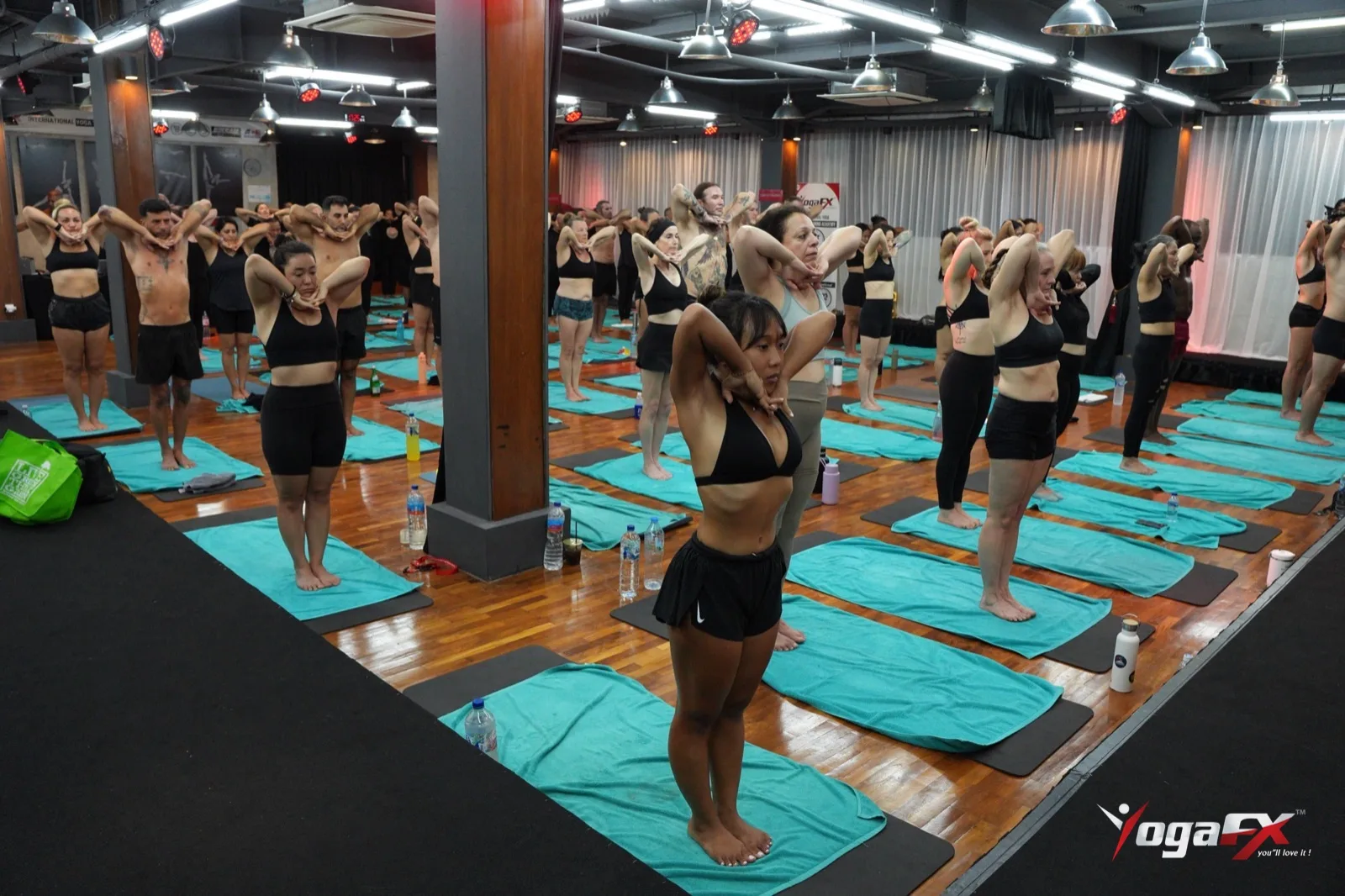
A hot 26&2 class sits on the training side of that line. It runs 90 minutes at 40°C and 40% humidity, with 26 postures and 2 breathing exercises in a fixed order. So match the class to the day:
- After an easy run, swim or light gym day: a hot class is usually fine if you feel fresh and you have been drinking water all day.
- After a tempo session, hard ride or heavy leg day: skip the heat for a day. Do a short, cool floor routine at home instead.
- After intervals, a race or a match: leave at least two days before your next hot class.
- During a taper or race week: keep the effort low and the room cool.
Those rules come from two things: how long hard training takes to wear off, and what a hot room adds on top. We cover both below. If you want a version with no heat at all, see these gentle home routines for sore, busy men on our sister site.
How Long Hard Training Takes to Wear Off
Sore muscles are only the part you can feel. Your nervous system also needs time to settle. One marker is how quickly your heart returns to rest after exercise, which depends on the calm branch of the nervous system, the parasympathetic system, taking back control.
In 2013, John Stanley, Jonathan Peake and Martin Buchheit reviewed this research in Sports Medicine. Their summary: the heart's autonomic system needs up to a day after low-intensity exercise, one to two days after threshold-intensity work and two days or more after high-intensity sessions.
What the review means for your week
The review adds two points. On the limited data available, how long you exercised was unlikely to be the greatest factor, which puts intensity ahead of minutes. And better aerobic fitness went with quicker autonomic recovery.
The review looks mainly at aerobic work, and data on strength training are limited. That means the windows are a good guide for runners, riders and swimmers, and a rougher one for lifters. Either way, a plan for yoga for athletes recovery should follow intensity first.
Hot class or floor session?
Now put a hot class into that picture. The table compares it with a gentle floor session, the tool we reach for first when the goal is yoga for athletes recovery.
| Feature | Hot 26&2 class | Gentle floor session at home | Which suits a heavy day? |
|---|---|---|---|
| Room | 40°C and 40% humidity | Normal room temperature | The cool room |
| Length | 90 minutes, fixed sequence | 10 to 20 minutes, your choice | The short session |
| Effort | Steady work in every posture | About half effort, nose breathing | The easy session |
| Core temperature | Highest readings averaged about 102 to 103°F in one study of regular practitioners | Close to your normal range | The cool room |
| Best day for it | A fresh day, after you have fully recovered | The day after hard training | Match it to the day |
What a Hot Class Does to Your Core Temperature
The best-known measurement comes from the University of Wisconsin-La Crosse. Emily Quandt, John Porcari and colleagues asked 20 healthy, regular practitioners to swallow a temperature sensor, then followed them through a 90-minute Bikram class. The group had 7 men and 13 women, aged 28 to 67. The American Council on Exercise (ACE) reported the results.
The numbers behind the heat load
The highest core temperature averaged 103.2°F for the men and 102.0°F for the women. One man reached 104.1°F by the end of class, and seven of the 20 went above 103°F. Nobody showed signs of heat intolerance. Even so, the report points out that the risk of heat-related illness rises at 104°F.
Why this matters on a recovery day
This study wasn't about recovery. It shows how much heat load a class puts on a healthy, regular practitioner. That matters for athletes, because the heat comes on top of the postures. On a day when your legs are heavy, you don't need to pay that cost. Yoga for athletes recovery is about taking load off, not adding it.
A class also works your heart, which is why we look at whether hot yoga counts as cardio in its own guide. If you are thinking of heat after class too, read sauna after hot yoga before you stack the two.
Is Hot Yoga Good for DOMS?
DOMS stands for delayed onset muscle soreness. According to Cleveland Clinic, it starts one to three days after hard exercise. It usually lasts a few days and rarely goes beyond five.
Cleveland Clinic says rest is usually the best treatment. Light movement, such as stretching or a short walk, is fine. Heat can increase blood flow and relieve stiffness. The page also says that no treatment is aimed specifically at DOMS.
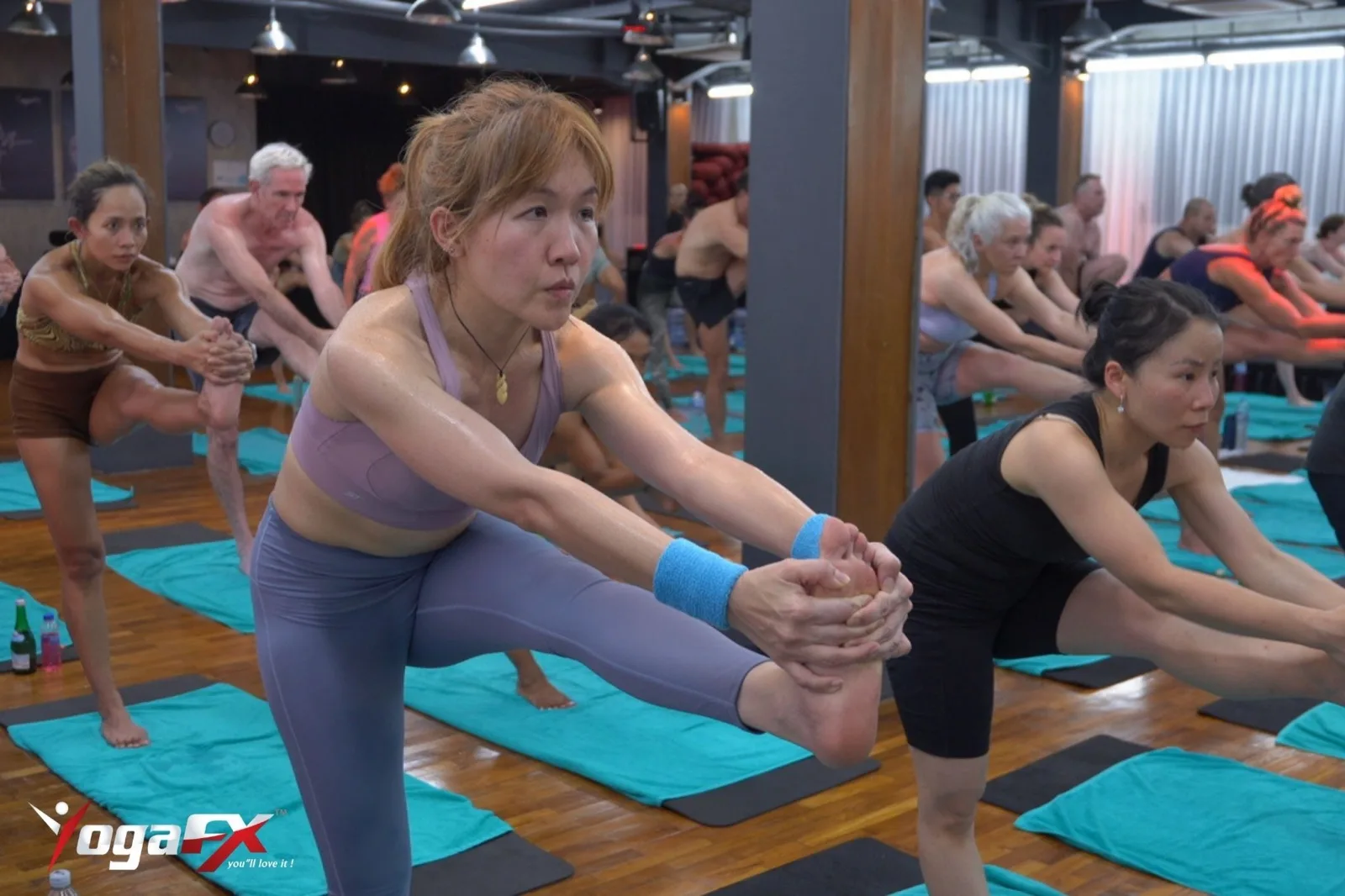
So is hot yoga good for DOMS? It's a fair question. A warm room can make stiff legs feel looser, and that feeling is real. But a full class is also a 90-minute effort on the same sore muscles. In our experience, a gentle, cool session is the safer choice while you're properly sore. Hot yoga for recovery can wait until the ache fades, and then yoga for athletes recovery can include the heat again.
Cleveland Clinic lists the signs that mean you should see a healthcare provider:
- The soreness does not improve with rest, or it lasts more than a week.
- The pain is sharp and constant.
- A muscle is severely swollen.
- Your urine is unusually dark or bloody.
Hot Yoga After a Workout: Same Day or Next Day?
Hot yoga after a workout on the same day stacks two loads. For most athletes, that simply doubles the stress. It can work for an experienced practitioner in an easy training block, but it is a poor choice after anything hard.
Yoga for athletes recovery after cardio
Use the intensity of the session, not its length. After an easy jog, a hot class the next day is usually fine. After intervals or a race, Stanley and colleagues suggest the heart needs at least 48 hours, so keep the next two days cool and gentle. Our guide to yoga for cyclists and runners shows where the class fits in a mileage week.
Yoga for athletes recovery after lifting
Heavy lifting leaves local soreness, so treat it like DOMS. Wait until your muscles feel normal on the stairs. Then book the hot class for a lighter day, and keep your usual range in every posture. You'll get more from the class when your legs are fresh.
Five Mistakes Athletes Make With Hot Classes in Recovery Week
Most problems with yoga for athletes recovery come from the same few habits. Here are the five we see most often in the hot room.
1. Treating the hot class as a rest day
It feels calm, so people assume it is rest. It is not. A hot class is a 90-minute workout with a heat load on top.
2. Going deeper because the heat makes you loose
The room makes you feel flexible, but your tendons and sore muscles have not changed. Stay at your usual range, especially in hamstring and hip postures.
3. Arriving under-hydrated
Heavy sweating costs water and salt. Start drinking hours before class, not on the way in, and keep sipping afterwards.
4. Booking back-to-back classes after a race
After an event, give the first two days to easy walking and a short cool floor routine. Then return to the room.
5. Pushing through warning signs
Dizziness, nausea or a pounding headache are signals to stop. In our room you can sit or lie down at any time, and good athletes use that option early.
How to Use a Hot Class in a Heavy Training Week
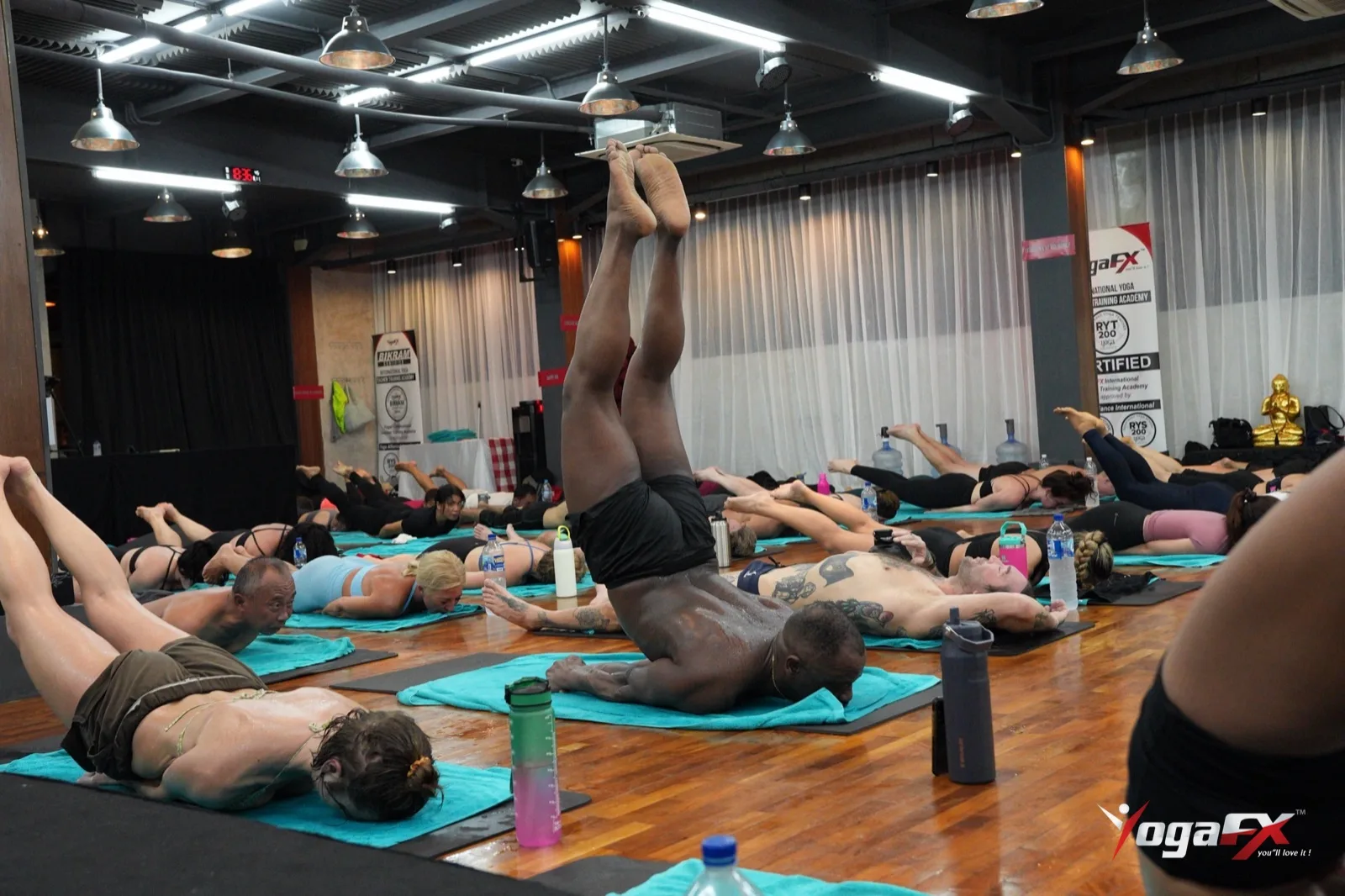
Sometimes you do want the room, even in a busy block. The goal then is to keep the class from becoming one more hard session. Here is how we coach athletes to handle it.
- Before class: drink water through the day, eat a light meal well ahead, and skip the class if your legs feel heavy on the stairs.
- During class: stay inside your usual range, rest between postures when you need to, and sit down at the first sign of dizziness.
- After class: sip water, cool down slowly and check how your legs feel the next morning.
- The next day: if your legs feel heavy, keep the day gentle and cool. A good week of yoga for athletes recovery has easy days after the hot ones.
That last point is the one athletes skip. A hot class can leave you feeling loose and calm. Even so, your body has still done 90 minutes of work, so let the next day be easy.
Heat Safety for Athletes Who Train Hard
Athletes are used to discomfort, which makes it easy to miss early heat illness. Any plan for yoga for athletes recovery in a hot room needs a safety check. The US CDC lists these symptoms of heat exhaustion:
- Headache, nausea, dizziness and weakness.
- Irritability and strong thirst.
- Heavy sweating and a raised body temperature.
- Less urine than usual.
Heat stroke is more serious. The CDC lists confusion, slurred speech, loss of consciousness, seizures, hot dry skin or heavy sweating, and a very high body temperature. It says heat stroke is fatal if treatment is delayed, so call emergency services and cool the person quickly.
For heat exhaustion, the CDC advice is to move the person out of the heat, give cool fluids in frequent sips, and cool them with cold wet cloths on the head, face and neck. This article is general information, not medical advice. Please talk to a healthcare professional before you start hot yoga, especially with a heart, blood pressure or kidney condition.
A Simple Weekly Plan: Where a Hot 26&2 Class Fits
The plan below is our teaching rule of thumb for yoga for athletes recovery, not a study result. It follows the recovery windows above. Adjust it for sleep, work stress and travel, because those stretch recovery too.
| Training phase | Hot classes per week | Rule we use | What to do on the other days |
|---|---|---|---|
| Off-season or base block | 2 to 3 | Choose lighter training days | Easy walks and short cool floor sessions |
| Heavy build block | 1 | Only after a full rest day | Gentle floor work, no heat |
| Race or match week | 0 | Keep the room cool and the effort low | Breathing and a short cool routine |
| First days after an event | 0 for two days | Wait at least 48 hours | Walking, sleep, food and water |
For the wider picture on training load and the full 26&2 sequence, our guide to Bikram yoga for athletes covers performance and protocol in more depth.
What Trainees Say About Pushing and Resting
Athletes already know how to push. The harder skill is knowing when not to. These reviews aren't about recovery plans. They show how people who trained with Mr. Ian describe the mental side of a hard week.
“I want to go for it and I’m glad I did it.”
Daniela, YouTube review, 2025. She says she wanted to quit on the first and second days, then chose to finish.
“It’s the overall amazing experience that you provide.”
Gary, YouTube review, 2025
“For the first time in my life I cried in a Bikram class.”
A trainee in our YouTube review, 2026
Learn the Method With Mr. Ian Terry in Bali
Mr. Ian Terry trained for five years, from 2014 to 2019, with the founder of the Bikram Hot 26&2 method. He is an E-RYT 500 with more than 12,000 teaching hours, and YogaFX has graduated more than 1,500 teachers from over 80 countries. That experience is why we can tell an athlete when a hot class will help and when it will cost them. It's also why our advice on yoga for athletes recovery starts with the athlete's week, not the class timetable.
If you coach, train clients or want to teach, the Bikram Hot 26&2 Yoga Teacher Training MasterClass is a 6-day hybrid course with online pre-course work and an intensive in Bali. The next batch checks in on Sunday 24 January 2027 and checks out on Friday 29 January 2027 at Soham Wellness Center in Seminyak. It leads to Yoga Alliance RYT 200-Hour and Bikram Hot 26&2 200-Hour International Yoga Certification. See the dates, cost and formats to plan it.
Related reading
FAQ
Can I do hot yoga after a workout?
You can, but it stacks two loads. After an easy session on a fresh day it can be fine. After a hard session, wait. Research suggests the heart needs up to a day after easy work and at least two days after high-intensity work.
Is hot yoga good for DOMS?
Heat can relieve stiffness, but a full hot class is also a 90-minute effort on sore muscles. While you're properly sore, a gentle, cool session is the safer choice. Save the hot class for when the ache fades, which usually takes a few days.
Can you workout after hot yoga?
Only lightly, and not right away. A hot class raises your core temperature, and in one study the highest readings averaged 102 to 103°F. Drink water, cool down fully and keep any later session easy. Skip a hard workout on the same day.
How long should I wait after a race before a hot class?
Plan on two easy days at least. Research on heart recovery suggests high-intensity sessions need at least 48 hours. Spend that time walking, sleeping, eating and drinking, with a short cool floor session if you like. Then return to the hot room.
How long should a yoga recovery session be?
Ten to twenty minutes is plenty for yoga for athletes recovery. Use floor postures at about half effort, breathe through your nose and stop before you feel tired. If you're sweating hard or out of breath, the session has become training.
Still have questions? Message Mr. Ian and the YogaFX team on WhatsApp and we will answer them personally.