






Hot yoga mental health men is a fair question, and the short answer is "probably yes, but nobody has proved it yet." Early trials show heated yoga can cut depression symptoms. About four in five volunteers were women, though. So treat a class as an addition to care, never a replacement for it.

This guide to hot yoga mental health men searches reads the studies the way a teacher reads a room. It covers what researchers measured, who they left out, and what we see when men walk into their first class at YogaFX. It is general information, not medical advice.
What the Trials Found on Hot Yoga Mental Health Men Ask About
The strongest result for Bikram yoga mental health questions, and for men's mental health yoga in general, comes from a Boston trial of heated hatha yoga for depression. Researchers randomised 80 adults with moderate to severe depression and analysed 65 of them. The yoga group was asked to attend heated classes at least twice a week for 8 weeks. The other group waited. We go through the design in more detail in inside the MGH heated yoga trial.
The result was clear. 59.3% of the yoga group cut their symptoms by half or more, against 6.3% of the waitlist group. You can read the abstract in the Nyer et al. 2023 trial in the Journal of Clinical Psychiatry.
Two details matter for a man reading it. First, 81.5% of the analysed adults were women. Second, people attended about 10.3 classes on average, roughly one a week, not the two the researchers hoped for. They still improved more than the waitlist did.
Our guide to Bikram yoga for depression puts that trial in a wider picture, which matters because hot yoga mental health men questions rarely have one neat answer.
The Evidence in One Table
Here is what each study measured, and what it cannot tell a man yet. Keep this table in mind whenever a headline promises more.
| Question men ask | What the research measured | What it cannot tell a man yet |
|---|---|---|
| Can heated yoga ease depression? | Nyer et al. 2023: 65 adults analysed, 8 weeks, at least two heated classes a week. 59.3% of the yoga group halved their symptoms, against 6.3% on the waitlist. | 81.5% of those analysed were women, so there is no male-only result. |
| Is a class real exercise? | Porcari et al. 2014: about 460 kcal per 90-minute class for men, at roughly 80% of maximum heart rate. | Effort is not mood. It shows the class is a workout, not that it lifts your head. |
| Does it calm everyday anxiety? | Hui et al. 2022: hot yoga reduced state anxiety, the short-term, in-the-moment kind. | It does not speak to anxiety disorders, and it is not specific to men. |
| What does the wider literature say? | Willmott et al. 2025: a systematic review of 43 studies and 942 participants on Bikram-style yoga. | It pools many outcomes, so mood is one slice. It is a map of the field, not a verdict for men. |
The Numbers at a Glance
A picture helps when the numbers are this lopsided. The four figures below come from the Boston trial, so they show both the promise and the gap in hot yoga mental health men research.
Why Men Are Missing From the Hot Yoga Mental Health Men Evidence
Researchers don't ignore men on purpose. Instead, men are simply less likely to raise a hand. A 2016 systematic review by Seidler and colleagues, published in Clinical Psychology Review, looked at how masculine norms shape men's help-seeking for depression. Its theme is easy to recognise: ideas about being strong and self-reliant can keep a man from asking for help.
That matters for research. If men stay away from therapy rooms, they are also likely to stay away from depression studies. As a result, the volunteers skew female, and any hot yoga mental health men claim rests on mostly female data.
The US National Institute of Mental Health makes a related point. Its page on men and mental health notes that men can show distress differently, and it lists warning signs worth knowing. Irritability, trouble sleeping and pulling away from people can all be part of it.
None of this proves hot yoga works better or worse for men. So it only explains why the question is still open.
How Strong Is the Evidence, Really?
Promising is the honest word, and it is not the same as proven. Here is what keeps the hot yoga mental health men question open, and why we grade it carefully.
- No active comparison. The Boston trial compared yoga with waiting. Its authors say future work should use active control conditions. So the study can't separate the heat from the exercise, the routine or the company.
- Short follow-up. The trial ran for 8 weeks. We don't know what happens at six months or two years.
- A small sample. Sixty-five analysed adults is a useful pilot. It is not a final answer.
- Volunteers. People who sign up for a yoga study may already be open to yoga.
A wider view comes from a 2025 systematic review by Willmott and colleagues, which pooled 43 studies and 942 participants on Bikram-style yoga. It looked at many outcomes, from flexibility to bone density to well-being. Mood is only one slice of it. So the review is a good map of the field, but it won't settle the question for men either.
Put simply, the research says the practice is worth studying properly. That means hot yoga mental health men results are early, and a class will not fix how you feel on its own.
Hot Yoga Compared With Other Ways Men Look After Their Heads
Men reach for many things when their mood dips. For example, they talk to a doctor or counsellor, they train harder, they run, they lift, or they say nothing and push on. Hot yoga is one more option, not a rival to the others. So the hot yoga mental health men conversation should stay modest.
We haven't found a trial that compares hot yoga with a gym class or a run in men. So we won't claim it beats them. What we can say is where it may fit:
- It adds a routine. A class at a set time gives the week a shape, and a shape is useful when your days feel formless.
- It asks little of you socially. You can sit in a full room and never say a word.
- It makes you slow down. The heat leaves little room for rushing, so the pace is set for you.
It may not suit everyone, because some men dislike heat, some have medical reasons to avoid it, and some simply prefer to train alone. That's fine. The best practice for your head is the one you will actually keep doing, alongside proper care when you need it.
Practical Questions Men Ask Before Class One
Teachers hear the same questions at the front desk, so here are the usual answers.
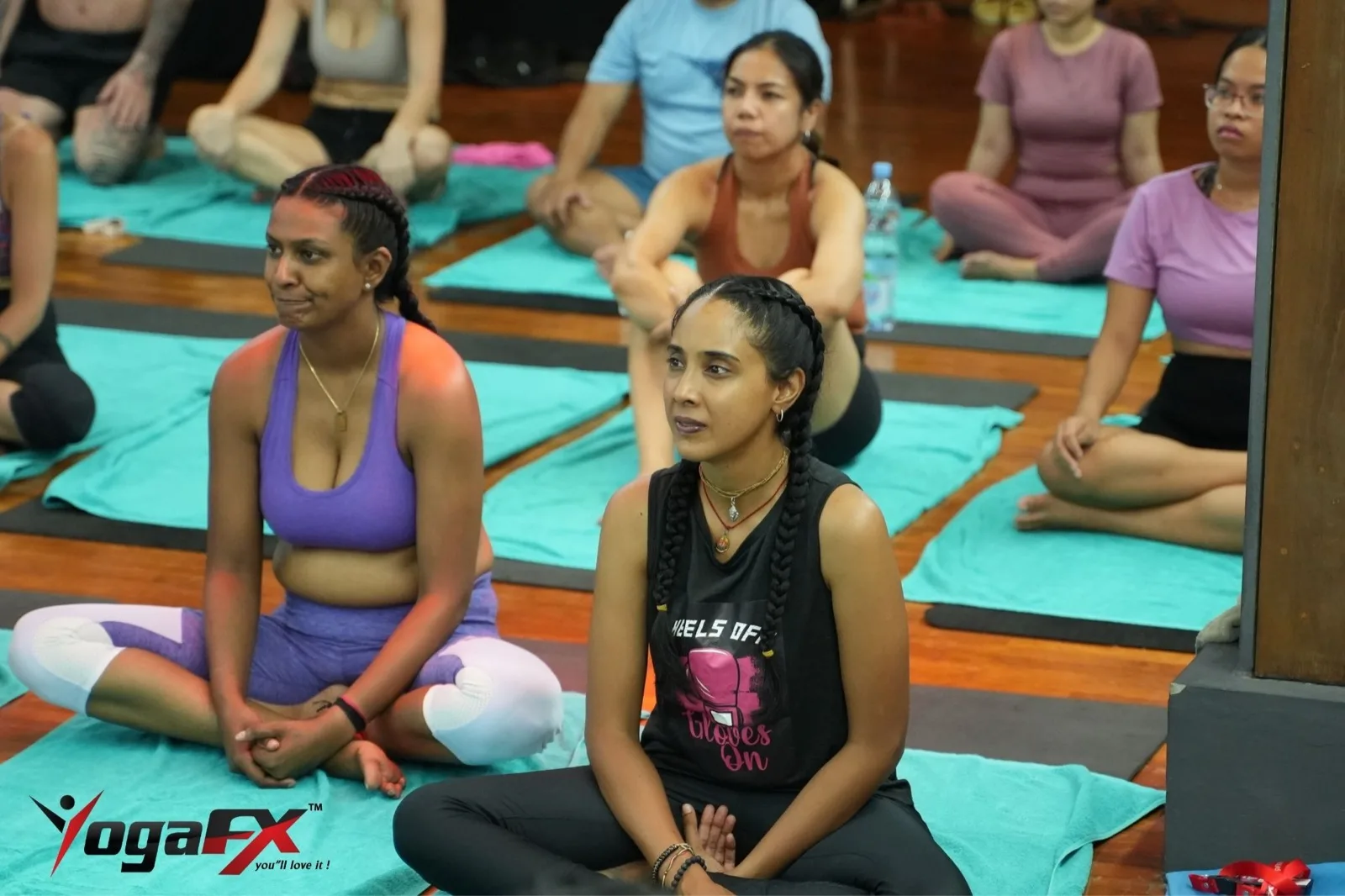
- What should I bring? A large towel, a water bottle and a mat if the studio doesn't supply one. Shorts and a light top or no top are common.
- What should I eat? Have a light meal a couple of hours earlier. A heavy lunch and a hot room don't mix.
- What should I tell the teacher? That it's your first class, and anything about your health that matters. Teachers would rather know.
- Can I leave the room? Yes. Step out if you feel faint or sick. It's a smart call, not a failure.
- Do I need to be flexible? No. Flexibility is something the class builds, not something you need to bring.
What Teachers See When Men Walk Into the Room
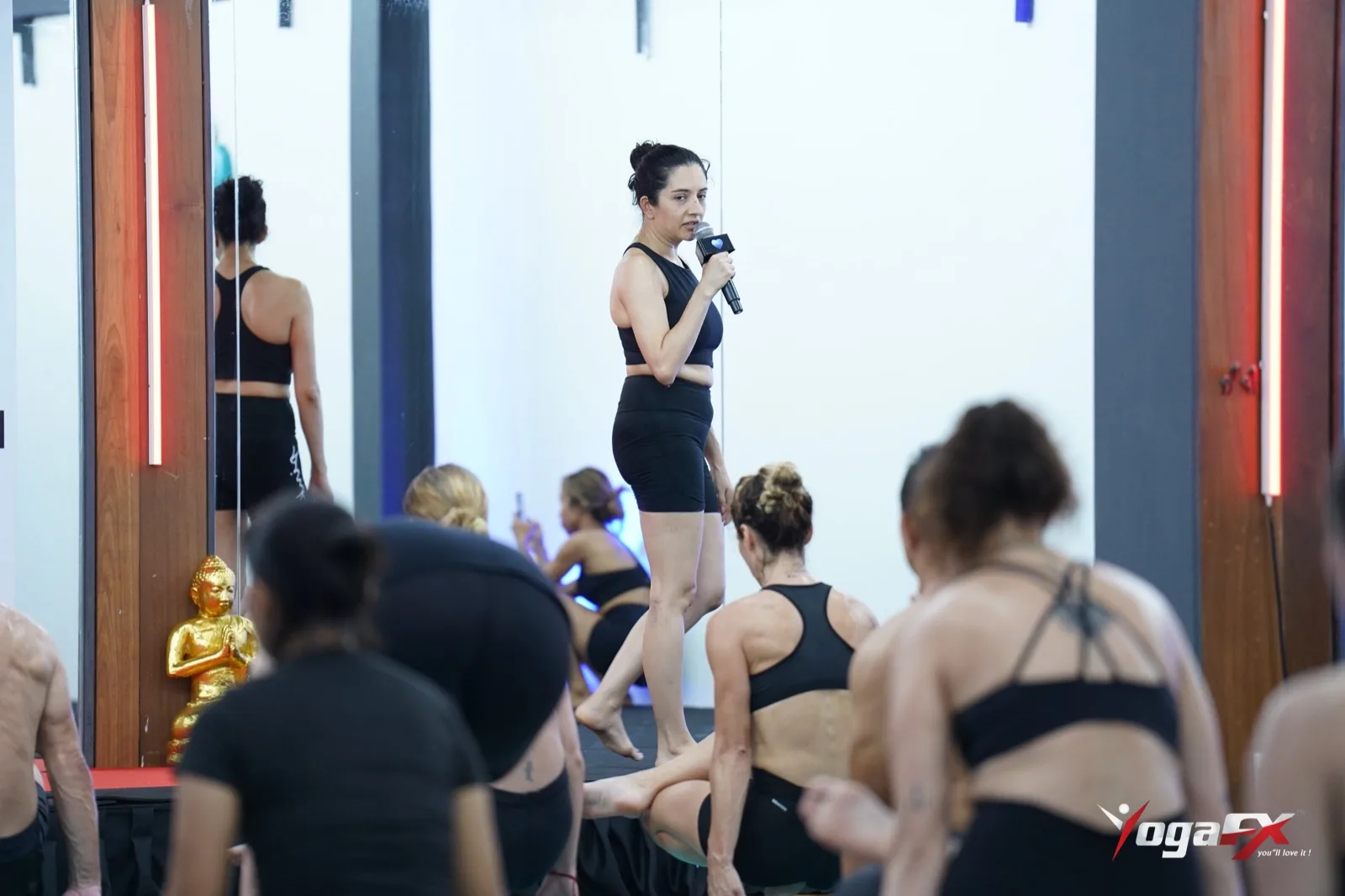
Numbers only go so far, so here is the view from the front of the class on hot yoga mental health men. These are teaching-room observations, not research findings. Mr. Ian Terry, E-RYT 500, has taught more than 12,000 hours, and you can read his background on our teachers page. The patterns below are the ones teachers describe again and again.
The Sceptic at the Back
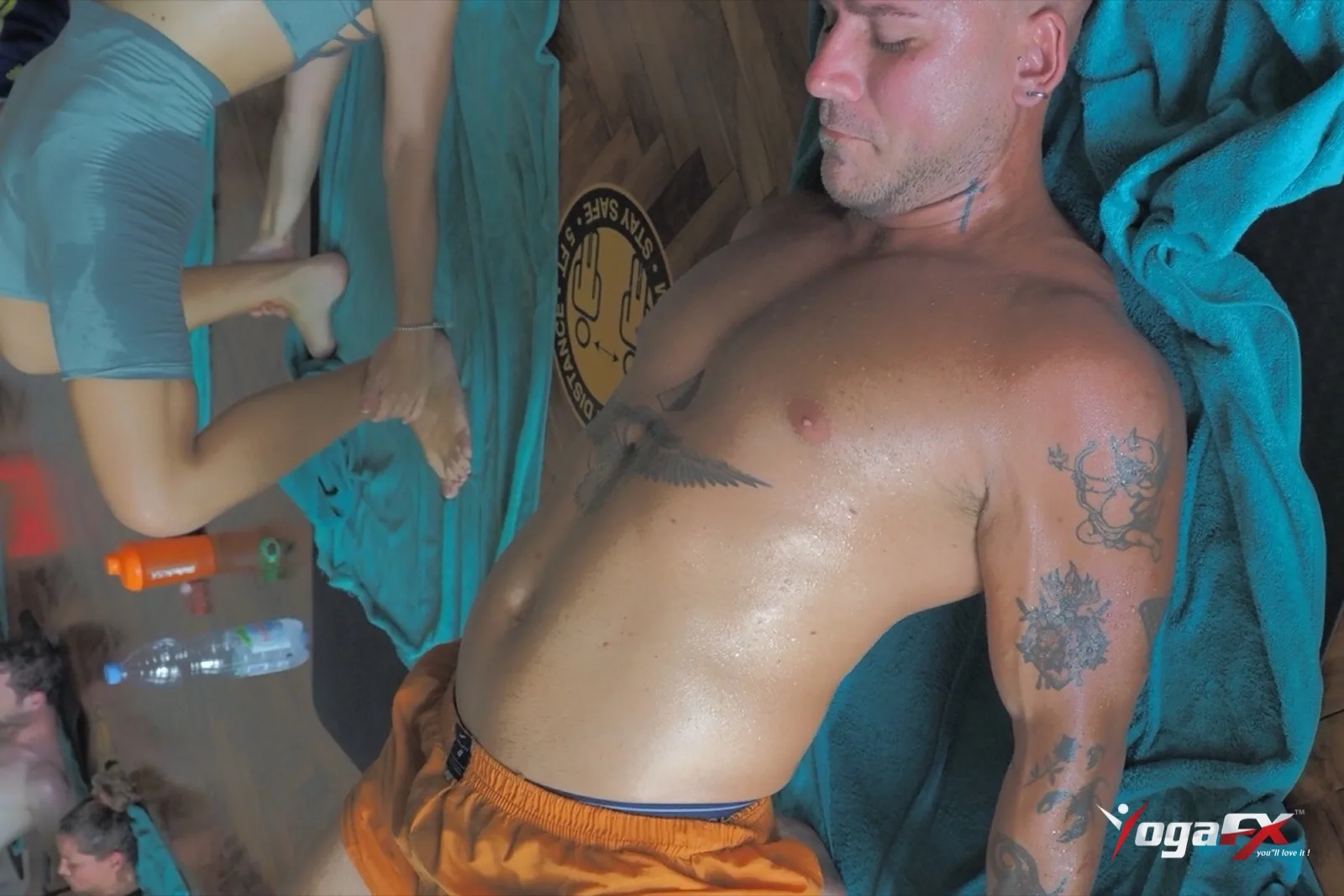
Many men arrive because someone else asked them to. They stand near the door, arms folded, expecting a gentle stretch. Then the room hits about 40°C with 40% humidity, and the expectation changes fast.
The First Three Classes Feel Rough
The first classes are mostly about surviving the heat. That's normal. Men who treat class one as a test often push too hard, so they feel dizzy and decide yoga isn't for them. Men who sit down when they need to tend to come back.
The Structure Does Some of the Work
Because the class follows a fixed script, the teacher speaks the same dialogue every time, with no music and no demonstration. So there's nothing to negotiate and no one asking you to share your feelings.
For a man who dislikes open-ended conversation, that can feel like a relief. You get a clear task, a clear finish at 90 minutes and a visible way to measure progress. We can't say this is why men feel better. We can say it is why many of them keep showing up.
The Quiet Change
Over a few weeks, teachers often notice small things. For example, shoulders sit lower. Men stop glaring at the mirror and start using it. Some begin to talk to the teacher after class, even if only about the heat. Teachers see these shifts, but a trial hasn't measured them.
Voices From the Room
Two of our reviewers speak to this directly. Kevin came to a Bali training as the partner of a student and joined every class. He wrote in his Google review in 2025:
"Muscles were sore, body and mind break down until I reached a ‘mind palace’ an impenetrable mentality. I felt invincible."
Kevin, Google review, 2025
Stephanie, who trained with us in 2019, titled her video review "More Confidence to Teaching Yoga Class." In it, she describes how teaching a class during the training deepened her understanding of the postures. You can watch it below.
Yanti, whose video review is from 2019, summed up the group energy in her class. She said, in a translated clip, that the energy in the room was "so amazing." Across Google, Yoga Alliance and YouTube we hold more than 550 reviews, and not one of them is a clinical trial. They're worth reading alongside the science, not instead of it.
A Safe First Month for Hot Yoga Mental Health Men
Use the trial dose as your guide instead of a guess. That keeps your first month grounded in something researchers actually measured. The Boston trial asked for at least two heated classes a week for 8 weeks. Most people managed about one a week and still improved, so a lower dose is not a failure.
Here is a sensible plan for a first month:
- Talk to your doctor first. Do this especially if you have heart problems, high blood pressure, or take medication that affects how you handle heat.
- Start with what you can keep up. One or two classes a week matches the trial dose, and consistency beats a heroic first week.
- Stay with your doctor or therapist. In the trial, yoga was an extra, not a swap for treatment.
- Keep a simple mood log. A score out of 10 after each class is enough to show your own trend.
- Pace yourself. Resting mid-class is allowed, and dizziness is a signal to stop, not a hurdle to clear.
Expect a real workout. A 2014 University of Wisconsin study by Porcari and colleagues measured about 460 calories burned per 90-minute class for men, at roughly 80% of maximum heart rate. That's hard exercise, so drink water before class and go slowly at first.
For the stress side, our piece on yoga for nervous system regulation explains what the research does and doesn't show. And if worry is your main issue, see Bikram yoga for anxiety.
If you want another take on the same question, the sister site's article on who took part in the key hot yoga trials looks closely at the sample sizes.
When Hot Yoga Mental Health Men Advice Says See a Doctor
A hot class is not treatment, and that's the line every honest piece on hot yoga mental health men has to draw. See a healthcare professional if any of these last more than two weeks:
- Low mood or a flat, empty feeling most days
- Losing interest in things you used to enjoy
- Drinking more, or using other substances, to cope
- Sleep that is badly disrupted
- Any thought of harming yourself
If you are in the US and thinking about suicide or in crisis, call or text 988, the 988 Suicide and Crisis Lifeline. Elsewhere, call your local emergency number. Please do it today.
Learning the Method With Mr. Ian
Some men come for their head and stay for the method. Those who try hot yoga mental health men routines often get curious about how the class is built.
If you want to understand the class from the inside, or teach it, that's what our training is for. Mr. Ian trained for five years, from 2014 to 2019, with the founder of the method. Since 2017, YogaFX has trained more than 1,500 graduates from 80+ countries.
The next Bikram Hot 26&2 Yoga Teacher Training MasterClass checks in on Sunday 24 January 2027 and checks out on Friday 29 January 2027 at Soham Wellness Center in Seminyak, Bali. It is a 6-day hybrid with online pre-course study. The Early Bird price is US$1,899 (normally US$1,999), and payment plans start from US$250 a month. See the course dates for the full details.
Related reading
FAQ
Why does yoga help mental health?
Researchers don't know the full mechanism. Yoga combines breathing, steady attention and physical effort, and Johns Hopkins Medicine notes that regular practice reduces stress. Heated trials also add routine and company. Studies can't yet separate those parts, so treat any single explanation with caution.
How often should men do yoga for mental health?
The Boston trial asked for at least two heated classes a week for 8 weeks. Participants averaged 10.3 classes, about one a week, and still improved more than the waitlist. So aim for two if you can, keep one if life is busy, and check with your doctor first.
When is hot yoga too hot?
A 26&2 class runs at about 40°C with 40% humidity, and it should feel hard, not frightening. Stop and sit if you feel dizzy, sick, confused or get chest pain, and leave the room if it doesn't pass. People with heart conditions should ask a doctor before trying it.
Is hot yoga a replacement for therapy?
No. In the Boston trial, yoga was added to normal life, and the authors call for more research. Treat a class as a support alongside care from a doctor or therapist, not a substitute for either. If low mood lasts more than two weeks, or you ever think of harming yourself, see a healthcare professional straight away.
Can men do hot yoga if they are not flexible?
Yes. Flexibility is something the class builds, not something you need on day one. Most men find the heat harder than the postures at first. Sit down when you need to, drink water before class, and tell your teacher it's your first visit.
Still have questions? Message Mr. Ian and the YogaFX team on WhatsApp and we will answer them personally. This article is general information, not medical advice. Please consult a healthcare professional about your own health.