
Women make up the large majority of yoga teachers worldwide, and the Bikram and Hot 26&2 tradition is no exception. Multiple surveys conducted by Yoga Alliance over the past decade have put the figure at roughly 80 to 90 percent of registered yoga teachers in the US being women, a pattern that holds across most yoga styles rather than being unique to any one method.

This guide looks at why that pattern exists, the specific considerations women weigh when training and teaching in a heated practice, and what the path actually looks like for women pursuing certification in the Bikram Hot 26&2 tradition specifically, from the historical roots of women in yoga instruction through the practical realities of building a teaching career today, in and out of the studio.
Why Women Make Up the Majority of Yoga Teachers
The gender pattern among yoga teachers largely mirrors the gender pattern among yoga practitioners generally. Multiple industry surveys place female participation among yoga students in the 72 to 80 percent range in the US, and teacher populations tend to track closely with the student populations a given studio or tradition draws from.
This is not unique to yoga; most fitness and wellness instruction fields with historically higher female participation among students, such as Pilates and barre, show a similar pattern among instructors, suggesting the dynamic is more about who a field's core practitioner base is than anything specific to yoga as a discipline.
The historical picture is more mixed than the current numbers suggest. Yoga's early 20th-century modernization was led largely by men teaching men in India, including influential figures like T. Krishnamacharya, often described as the father of modern yoga.
The shift toward a female-majority teaching population happened later, as yoga moved West through the 1970s, 1990s, and 2000s, and became integrated into the broader wellness and fitness movement in the US and Europe, a period during which women became both the primary practitioner base and, over time, the primary teaching base as well.
Notable Women in Yoga's Modern History
Krishnamacharya's students included women as well as men, and one of the most consequential was Indra Devi, a Latvian-born practitioner who studied under him in Mysore in the late 1930s, at a time when accepting a female student for serious yoga training was itself unusual.
Devi went on to open one of the first yoga studios in the West, teaching in Hollywood in the 1940s to a clientele that included prominent public figures of the era, and her work is widely credited as one of the pivotal early steps in bringing yoga instruction to a Western, and specifically female, audience decades before the studio boom of the late 20th century.
Devi's path, a woman trained directly by a male teacher in India who then built an independent teaching career and institution of her own in the West, set a pattern that would repeat many times over as yoga globalized: women who trained seriously, then went on to establish their own schools, studios, and teaching lineages rather than remaining students indefinitely.
That pattern is directly relevant to anyone researching a modern teacher training program, since it is the same basic structure most reputable YTT programs still follow today, structured training under an experienced teacher, followed by independent certification to teach and, eventually, to train others.
It is worth noting how directly that historical arc maps onto the modern credentialing path described earlier in this guide: intensive training under a qualified teacher, followed by registration and independent practice, is not a recent invention of Yoga Alliance's paperwork requirements. It reflects a teaching structure with real historical precedent going back nearly a century.
Physical Considerations for Women Teaching in a Heated Room
Teaching Bikram or Hot 26&2 means spending 90 minutes at a time in a 40 degree Celsius room, several classes a day for a working instructor, and this raises genuine physical questions that come up often in candidate research, particularly around pregnancy and cycle-related energy fluctuations.
On pregnancy specifically: heat exposure and hyperthermia risk are a documented concern for hot yoga during the first trimester in particular, and this applies to both practicing and teaching in a heated room, not practicing alone. Programs and studios vary in how they handle this, some offering modified teaching duties or non-heated class coverage during pregnancy, others requiring a full pause.
There is no universal industry standard here, which makes it worth asking any specific program or employer directly what their policy is rather than assuming. For the physiological detail on hyperthermia risk across pregnancy stages, see the comparison of Bikram yoga against other yoga styles, and always consult a healthcare professional directly before making decisions about heated practice or teaching during pregnancy.
Energy and heat tolerance fluctuations tied to the menstrual cycle are a commonly reported, individually variable experience among women teaching in heat, and most experienced instructors describe learning their own pattern over time rather than following a fixed rule. This is a normal part of adapting to heated teaching, not a barrier to it. As with pregnancy, anyone with specific health concerns about practicing or teaching in heat should raise them with a healthcare professional rather than relying on general guidance from an article.
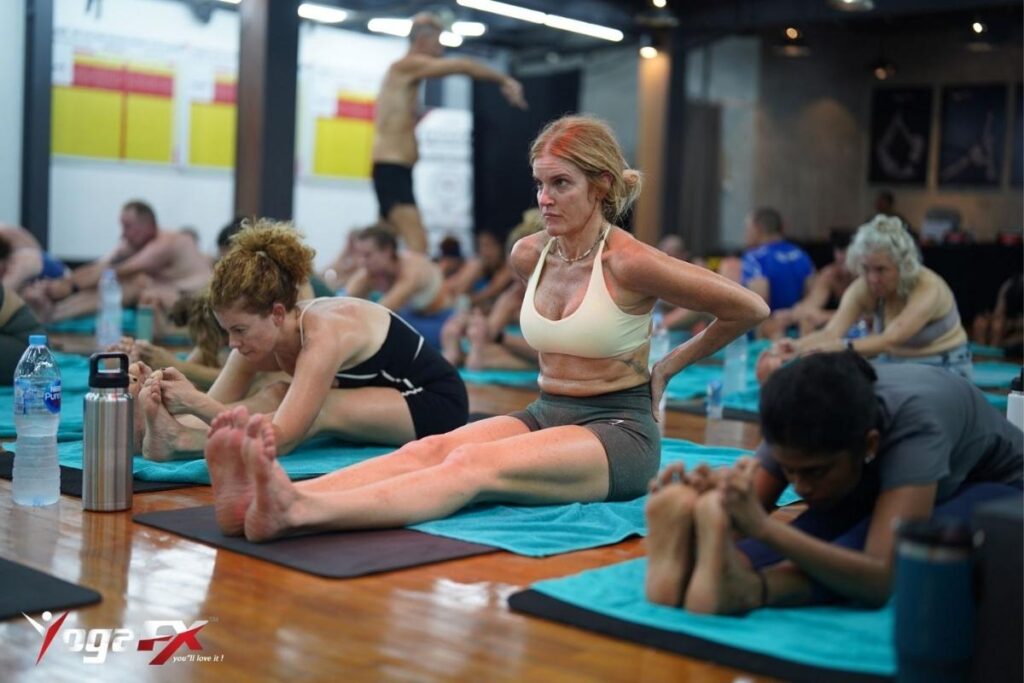
Beyond cycle-related questions, general heat adaptation is a real and well-documented physiological process that applies to every new instructor regardless of gender, and it typically takes several weeks of consistent practice and teaching before the body's sweat response and cardiovascular efficiency in a 40 degree room stabilize.
Hydration strategy, electrolyte intake, and pacing across multiple daily classes for a working instructor are practical skills every teacher candidate develops during training, not something assumed to be intuitive on day one.
Clothing and gear choices also matter more in a heated teaching context than in a room-temperature studio, since a teacher moves through the room correcting students for the full 90 minutes rather than holding static poses; the complete breakdown of fabric and fit choices that hold up through a full heated class is covered in the guide to what to wear to Bikram yoga.
Yoga Teaching as a Career Path for Women
A meaningful share of women entering yoga teacher training arrive as career changers rather than lifelong practitioners moving into teaching, drawn by the flexibility of part-time or freelance class schedules that can work around childcare, a second income stream, or a full career pivot later in life. The credential itself does not expire and does not require re-certification on a fixed timeline in most jurisdictions, which makes it a comparatively low-maintenance professional qualification to maintain once earned, unlike fields requiring ongoing licensing renewal.
This flexibility also shows up in how women structure a teaching career around other commitments in a way that fewer traditional employment paths accommodate as easily. A teacher can build a schedule around a handful of classes a week while maintaining another job or primary caregiving responsibilities, scale up to a full teaching load once those constraints shift, or move into studio ownership or program direction later, all without needing to restart the credentialing process each time.
That structural flexibility is frequently cited by career-changer candidates as a bigger factor in choosing yoga teaching than the credential's earning potential on its own, which tends to be modest in the first year or two regardless of gender.
The honest picture on income and career structure, including how many graduates teach part-time versus building a full-time teaching career, and what actually determines that outcome, is covered in detail in the guide to whether yoga teacher training is worth it. For the complete step-by-step path from first class to certified teacher specifically within the Bikram method, see the guide to how to become a Bikram yoga teacher.
Women at YogaFX
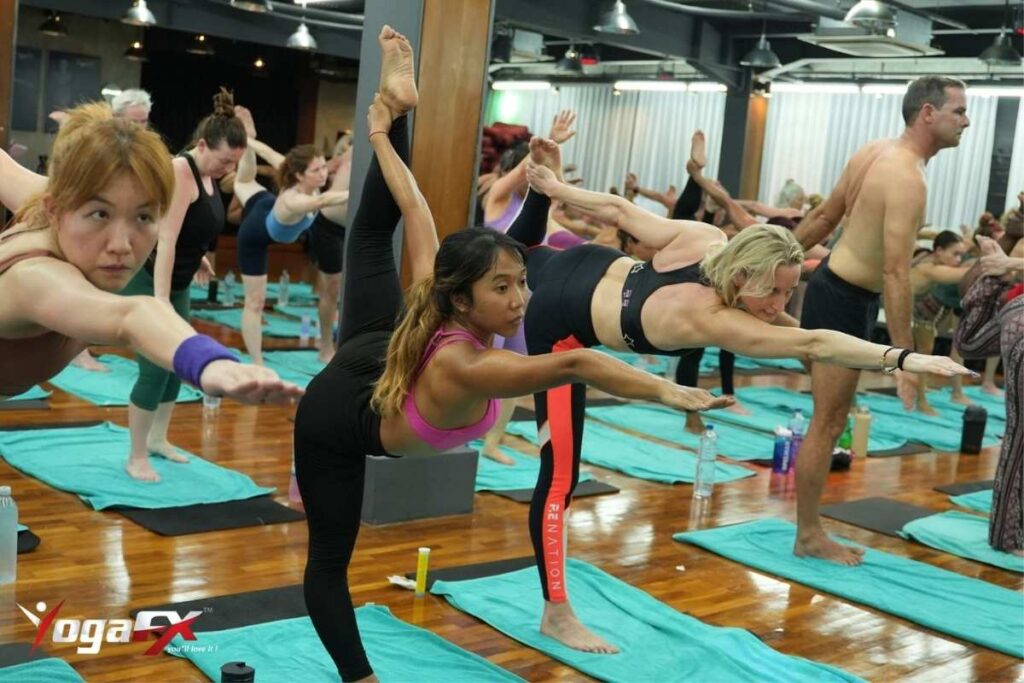
At YogaFX in Seminyak, Bali, women make up the majority of teacher training graduates across the more than 1,500 candidates from 80-plus countries who have completed the 6-day intensive under Mr. Ian Terry, E-RYT 500.
The cohort cap of 19 students per intake means the physical and scheduling questions above, heat tolerance, pregnancy timing, cycle-related energy shifts, get addressed individually during the training rather than left as a generic disclaimer candidates have to figure out alone.
Candidates who arrive with specific concerns, whether about a health condition, a scheduling constraint tied to caregiving, or simply uncertainty about how their body will respond to the natural tropical heat over six consecutive days, can raise those questions directly with Mr. Ian and the training team before and during the intensive rather than researching alone.
Ivara Candra Kartika, a 2023 YogaFX graduate, is one example of where the credential can lead competitively as well as professionally, not just in a studio setting. She won a Gold and a Bronze medal at the June 2026 World Yogasana Sports Federation Championships in Ahmedabad, India, following a Silver medal at the 2025 Asian Championships in the UAE and a Gold at FORNAS VIII in July 2025.
Her path from certification to international competition illustrates that the RYT 200 plus Bikram Hot 26&2 credential can be a starting point for competitive Yogasana sport as well as studio teaching, a direction that fewer YTT candidates initially consider but that is genuinely open once certified.
Indonesia's combined medal count at the Ahmedabad championships, 1 Gold, 2 Silver, and 4 Bronze, included multiple graduates of Bali-based training programs, a reminder that the outcomes of a teacher training extend well past the studio floor for candidates who choose to pursue them, competitively or otherwise.
A 2025 systematic review of 43 studies and 942 participants found consistent flexibility, bone density, and well-being benefits associated with Bikram-style practice (Willmott et al., 2025), benefits that apply across genders and that many women pursuing the teacher training cite as part of what drew them to want to teach the method rather than simply continue practicing it as a student.
A separate 2013 study found Bikram-style practice increased posterior chain strength by roughly 20 percent alongside measurable flexibility gains (Tracy & Hart, 2013), findings that were consistent across the male and female participants in that study, reinforcing that the physical benefits of the method itself are not gender-specific even where the teaching population skews heavily toward women.
FAQ
What percentage of yoga teachers are women?
Multiple Yoga Alliance surveys over the past decade have put the figure at roughly 80 to 90 percent of registered yoga teachers in the US being women, a pattern that tracks closely with the similarly female-majority population of yoga students and holds across most yoga styles. That imbalance on the teaching side does not mean the practice itself is unsuited to men; the physical demands map closely onto what many men already train for, a question addressed directly in our guide to hot yoga for men.
Can you teach hot yoga while pregnant?
Heat exposure and hyperthermia risk are a documented concern during pregnancy, particularly the first trimester, for both practicing and teaching in a heated room. Policies vary by studio and program, and this is a decision to make directly with a healthcare professional rather than a general rule that applies to everyone.
Is Bikram yoga teacher training harder for women in the heat?
Heat adaptation is individual rather than strictly gender-based, though cycle-related energy fluctuations are a commonly reported experience among women teaching in heat. Most instructors describe learning their own pattern over time, and this is considered a normal part of adapting to heated teaching rather than a barrier to it.
Why do more women become yoga teachers than men?
Teacher populations largely track student populations, and women make up a similarly large majority of yoga practitioners generally in most Western markets. This pattern is common across fitness and wellness fields with historically higher female student participation, and it is not unique to yoga specifically.
What is a female yoga teacher called?
The Sanskrit term is "yogini," though in professional practice most studios and teachers now use the gender-neutral "yoga teacher" or "yoga instructor" as the standard title. The full breakdown of yoga teacher titles and when traditional terms apply is covered in the guide to what you call a yoga teacher.