
Bikram yoga is genuinely suitable for complete beginners. This is not reassurance — it is a structural fact about how the practice works. The scripted verbal dialogue tells you exactly what to do in every posture. The fixed sequence means the class is identical every time, so there is no new material to catch up to. Every posture has built-in modifications. The primary Bikram yoga for beginners challenge is not the postures. It is the heat.
This guide is written from the perspective of having taught 12,000 or more hours of Bikram yoga to more than 1,500 certified practitioners — which means having watched thousands of first-timers walk into a 40-degree room, survive, and return. The most common beginner questions, the real fears, and the class-by-class adaptation timeline are all addressed here with specific, practical information. It's entirely normal to have questions about studio etiquette and personal comfort, especially regarding practicing Bikram yoga on your period for the first time.
Bikram yoga for beginners: the scripted verbal dialogue tells you exactly what to do — no prior knowledge needed. The fixed 26-posture sequence is identical every class globally. Heat adaptation develops across sessions 1 to 10 regardless of fitness level. The primary beginner objective is simply to stay in the room for the full 90 minutes. Lie flat in Savasana whenever overwhelmed — do not leave. Most beginners who commit to their first 5 to 7 classes report a clear transition from the class feeling overwhelming to feeling manageable. First class free at YogaFX Bali for all new visitors.
What Actually Happens in Your First Bikram Class
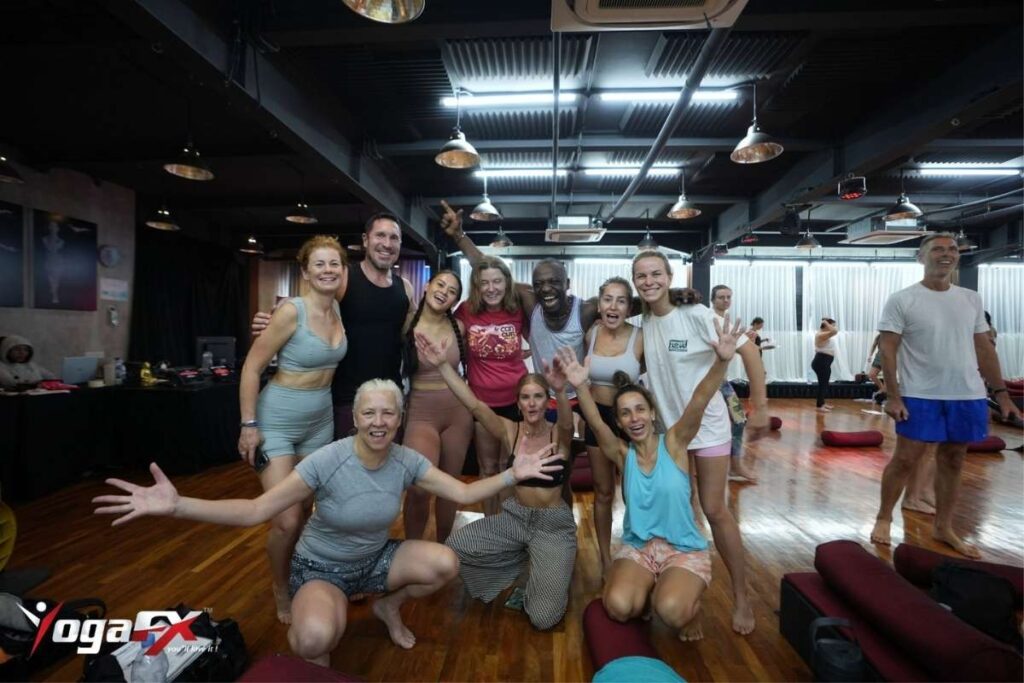
Understanding the structure before you arrive eliminates most first-class anxiety. Here is exactly what happens, minute by minute.
Before Class Starts (Arrive 15 Minutes Early)
Arrive 15 minutes before class. This is not optional etiquette — it is practical. The first 15 minutes in the 40-degree room is the beginning of heat adaptation. Practitioners who walk in cold and start immediately have a harder first 20 minutes than those who have been in the room beforehand. Set up your mat and towel toward the back or side for your first class — experienced practitioners gravitate toward their regular positions, and the back of the room gives you sight lines to follow along if you lose track.
The Opening Breathing (0 to 5 Minutes)
Class begins with the Pranayama Series — 6 complete breath cycles standing with feet together. This is the beginning of cardiovascular activation and respiratory preparation. Your first experience of 40-degree heat while the instructor begins the dialogue is what most beginners describe as their 'oh, this is real' moment. This is fine. Stay where you are. Follow the voice. The breathing is manageable.
The Standing Series (5 to 60 Minutes)
The 12-posture standing series builds progressively. The first four postures (Half Moon, Hands to Feet, Awkward Pose, Eagle Pose) are the warm-up phase. The cardiovascular peak arrives around postures 5, 6, and 7 — Standing Head to Knee, Standing Bow, and Balancing Stick. This period, approximately minutes 25 to 40, is the hardest part of the class for most beginners. The fixed verbal cues might surprise you at first, so learning what the yoga dialogue is and why instructors don't improvise will help you focus on your postures.
What to expect during the cardiovascular peak: heart rate will be very high (typically 80 to 90 percent of maximum), the room will feel much hotter than when you entered, sweat will be significant, and the urge to leave or stop will be strongest here. The correct response to all of these is Savasana — lying flat on your mat. Not leaving the room. Not sitting up. Lying flat. The Savasana position allows the cardiovascular system to recover more rapidly than sitting or standing. Most practitioners who lie flat for 30 to 60 seconds find they can return to the next posture.
If you want to prepare your mind before stepping onto the mat for the first time, these choices of recommended reading for new Bikram practitioners will demystify the 90-minute class.
The Savasana Transition (Around 60 Minutes)
At approximately the 60-minute mark, the class transitions from standing to floor series via a mandatory 2-minute Savasana. Most beginners describe lying down at this point as the most relieving moment of the class. The cardiovascular demand has peaked and passed. The floor series ahead is a different kind of challenge.
The Floor Series (60 to 87 Minutes)
The floor series works different tissues from the standing series. The cardiovascular demand is lower. The postures are primarily about spinal mobility, posterior chain loading, and deeper organ work. Most beginners find the floor series more accessible — not because the postures are easy, but because the cardiovascular pressure has reduced.
The floor series ends with Camel Pose (posture 22) and Rabbit Pose (posture 23). Camel is the maximum spinal extension in the sequence and often produces strong physical sensations in beginners — dizziness, a flush of heat, sometimes emotional release. These are normal and expected. Rabbit Pose immediately follows as the direct counterpose and typically brings these sensations back to equilibrium. Familiarizing yourself with the sequence sequence beforehand builds immense confidence; download our printable 26 Bikram yoga poses reference guide before your first class.
Final Savasana and Kapalbhati (87 to 90 Minutes)
Spine Twist (the last posture) is followed by Kapalbhati breathing in kneeling (60 rapid exhales), then final Savasana. Most beginners describe this final Savasana as one of the best physical experiences they have had — a distinctive combination of physical release, mental clarity, and the absence of the cardiovascular pressure that characterised the class. This is the Bikram glow. It appears in the first class and becomes the reason most beginners return.
What to Bring to Your First Bikram Class
| Item | Why It Matters | Specifics |
|---|---|---|
| Large mat towel | Non-optional from session 1. Prevents slipping as the mat becomes wet. | Full coverage (183cm x 61cm minimum). Non-slip backing. Microfibre absorbs best. |
| Yoga mat | Foundation for standing and floor practice. | Non-slip surface. Most studios rent mats if you do not have one. |
| Water | Pre-hydration and in-class sipping. | Minimum 1 litre. Sip between postures — do not drink large volumes during class. |
| Moisture-wicking clothing | Cotton becomes heavy and uncomfortable within 15 minutes. | Women: fitted top and shorts or leggings. Men: compression shorts, no shirt or sleeveless top. No cotton. |
| Change of clothes | Essential after class. | You will be thoroughly soaked. Have dry clothes and a towel for after. |
| Small hand towel | For face and hands between postures. | Optional but useful for keeping hands dry during balance postures. |
What to Do Before Your First Class
Hydrate From Morning
The most common beginner mistake is trying to hydrate in the hour before class. Cellular hydration that prevents heat-related problems in a 40-degree room requires consistent fluid intake throughout the day. Drink 500ml to 1 litre of water in addition to your normal daily intake in the hours leading up to class. The 500ml you drink in the 30 minutes before class will not catch you up if you have been underhydrated all day.
Eat Lightly or Not at All
A full stomach in a 40-degree room becomes uncomfortable within 20 minutes. The combination of heat, abdominal compression postures in the floor series, and the cardiovascular demand of the standing series makes a full stomach actively problematic. Eat a light meal 2 to 3 hours before class, or a small snack 1 to 2 hours before. Arriving fully fasted is fine for most people for morning classes. If the thought of a hot room makes you hesitant, you might wonder: is Bikram yoga possible without the heat? as a way to ease into the sequence.
Tell the Instructor You Are a First-Timer
This is a 30-second conversation before class starts that benefits you significantly. A good Bikram instructor will check on you during class, offer specific guidance on modifications, and explain what to do if you feel overwhelmed. They will not single you out during class. At YogaFX, all instructors are aware of every new visitor — the free guest pass specifically triggers this awareness.
The Heat Adaptation Timeline: Class by Class
| Sessions | What to Expect | Your Goal |
|---|---|---|
| 1 to 3 | Heat feels overwhelming. Cardiovascular peak (postures 5 to 7) may require Savasana rest. Floor series more manageable than standing. Extreme fatigue for 30 to 60 minutes post-class. | Stay in the room for the entire class. This is the only objective. Lie flat in Savasana whenever needed — do not leave. |
| 4 to 6 | Heat adaptation beginning. Savasana rests less frequent. Posture positions becoming more stable. Sleep improvement typically noticeable by this point. | Maintain presence and attempt all postures, even with modifications. Notice where your range is improving. |
| 7 to 10 | Heat becomes a tool rather than an obstacle. Attention shifts from heat management to posture quality. First visible flexibility improvements in standing forward folds and Eagle Pose. | Focus on technique within postures rather than just surviving them. Ask your instructor about specific alignment corrections. |
| 11 to 20 | Established heat tolerance. Posture depth developing consistently. Mental focus improving noticeably. The class that felt impossible in sessions 1 to 3 is now navigable. | Begin to develop posture-specific goals. Identify 2 to 3 postures to bring focused attention to. |
| 20 and beyond | The practice becomes genuinely enjoyable rather than just manageable. Body composition changes visible. Flexibility gains measurable. | Practice for the practice itself. The goals shift from survival to exploration. |
The Most Common Beginner Mistakes
Leaving the Room
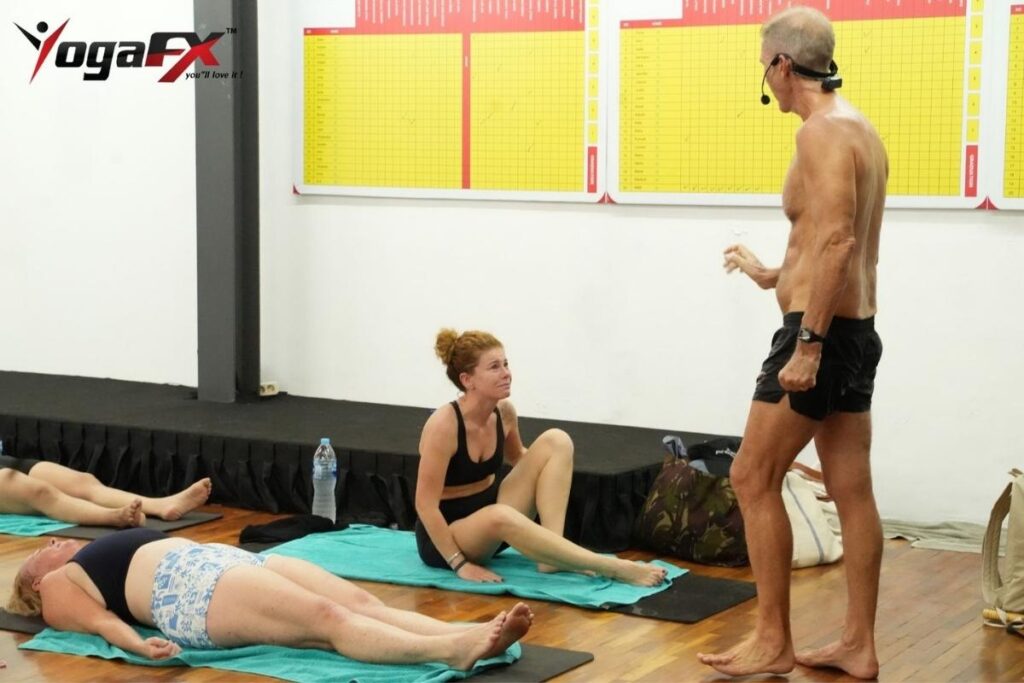
The most consequential beginner mistake. Leaving eliminates the therapeutic benefit of the heat environment, disrupts the class, and makes returning harder psychologically. The correct response to heat overwhelm is Savasana. Lying flat in the 40-degree room produces faster cardiovascular recovery than leaving to a cool area, and it maintains your heat adaptation progression for the next class. The only appropriate reason to leave is genuine medical distress — dizziness that does not resolve in Savasana, nausea that progresses, or heart palpitations. These are rare in healthy adults with adequate pre-class hydration.
Drinking Too Much Water During Class
Counter-intuitively, drinking large amounts of water during class worsens the experience for many beginners. A 500ml water intake during a 90-minute class is adequate for most practitioners. Drinking 1 litre or more during class can produce nausea, especially around the abdominal compression postures in the floor series. Sip between postures rather than drinking large volumes. The critical hydration is before class, not during.
Comparing Yourself to Other Practitioners
The practitioner next to you effortlessly holding Standing Head to Knee in full expression has been practicing for years. They were in your position in their first 10 classes. The Bikram sequence is designed to produce progress regardless of where you start. The only comparison that matters is your session 10 against your session 1. You don't need to be naturally flexible to start; having all Bikram yoga poses explained shows how the sequence is accessible to every body type.
Wearing Cotton
Cotton yoga clothing becomes heavy, cold, and restrictive within 15 minutes of Bikram practice. Moisture-wicking synthetic fabrics stay light and move with the body. This affects your ability to move freely through the postures, particularly in the floor series. Dress for maximum heat and minimal distraction. Knowing exactly what shorts to wear to Bikram yoga will save you from chafing and discomfort during your first class.
Forcing Range of Motion
More is not better in the heat. The connective tissue extensibility that 40-degree heat provides means tissues can be moved into ranges that exceed safe structural limits if force is applied. The Bikram dialogue provides a specific instruction for this: do not use force. The posture will deepen over weeks and months through consistent thermal exposure, not through forcing in a single session.
Who Should Not Do Bikram Yoga
Bikram yoga for beginners at 40 degrees Celsius is safe for most healthy adults. The following groups require physician clearance before starting:
- Cardiovascular disease: the sustained 80 percent of maximum heart rate throughout a 90-minute session represents significant cardiovascular load. Any diagnosed cardiovascular condition requires clearance.
- First trimester of pregnancy: hyperthermia risk during the first trimester makes Bikram yoga for beginners inappropriate as a new practice.
- Active fever: additional thermoregulatory demand when the body is already managing elevated temperature is physiologically counterproductive.
- Medications that impair thermoregulation: certain antidepressants, diuretics, antihistamines, and blood pressure medications affect heat management. Consult a physician before starting.
- Recent surgery or acute injury: depending on type and location, specific posture loading demands may require modification. Consult a physiotherapist or surgeon.
Conditions that are NOT contraindications but may require modification: well-controlled high blood pressure, stable diabetes (with physician awareness), mild scoliosis, knee or hip replacement (after full recovery and clearance), and most chronic musculoskeletal conditions. The Bikram sequence is specifically therapeutic for many of these when practiced with appropriate modifications.
What Happens After Your First Class
- You will be tired differently. The thermoregulatory work produces a specific physical tiredness that typically resolves within 2 hours.
- You will be hungry. The calorie expenditure (333 to 460 kcal) plus thermoregulatory demand produces significant energy expenditure. Eat a real meal after your first class.
- You will likely sleep better. This is one of the most consistently reported early benefits and often appears from session 1.
- Your muscles may feel used in unfamiliar ways the next day. This is not injury soreness — it is the posterior chain activation from the floor series working muscles that standard exercise patterns do not address.
- Most practitioners feel better 30 to 60 minutes after class than they expected to. This is the Bikram glow — and it is why most beginners return.
Starting at YogaFX Bali: What Beginners Specifically Get
- Natural tropical heat: Bali's ambient climate provides 40 degrees Celsius with humidity above 70 percent without electric heaters. First-timers consistently report that the natural humid heat, while intense, feels more comfortable than dry electric-heated studios at the same temperature.
- Free first class: every new visitor receives a full class at no cost — no conditions, no required sign-up. The goal is to allow practitioners to experience the natural heat environment before committing.
- Direct instructor availability: Mr. Ian Terry and YogaFX instructors are available to speak with first-timers before and after class. Questions about the practice, modifications, and what to expect in subsequent classes are welcomed.
FAQ
Is Bikram yoga good for complete beginners?
Yes. The scripted verbal dialogue provides complete instruction for every posture — no prior knowledge required. The fixed sequence means every class is identical, so there is no new material to catch up to. Every posture has modifications for different ability levels. The primary beginner challenge is heat adaptation in the first 5 to 10 sessions, which develops progressively regardless of prior fitness. Most complete beginners who commit to their first 5 to 7 classes report a clear transition from the class feeling overwhelming to feeling manageable.
What should I expect from my first Bikram yoga class?
The first 20 minutes will feel harder than any fitness level prepares you for, because cardiovascular fitness does not transfer to heat tolerance. The cardiovascular peak (postures 5 to 7, approximately minutes 25 to 40) will be the most intense period. After the Savasana transition at 60 minutes, the floor series is more accessible. Most beginners complete their first class and are surprised they did. Lying flat in Savasana whenever overwhelmed is always the correct response — not leaving the room.
What do I need to bring to my first Bikram class?
The non-negotiables: a large non-slip mat towel (this is more important than the mat — you will sweat enough to make a bare mat dangerous for balance postures), at least 1 litre of water, and moisture-wicking clothing. Avoid cotton. Bring a change of clothes for after class. A yoga mat if the studio does not provide them.
Who should not do Bikram yoga?
Practitioners with cardiovascular disease, those in the first trimester of pregnancy, those with an active fever, and those on medications that impair thermoregulation (some antidepressants, diuretics, antihistamines) should obtain physician clearance before starting. Healthy adults without these conditions can start Bikram yoga safely with adequate pre-class hydration and the awareness that Savasana rest is always available during the class.
Which is harder, Bikram or Vinyasa yoga?
Different rather than harder. Bikram is harder thermally — 40 degrees Celsius sustained for 90 minutes is genuinely challenging regardless of fitness level. Vinyasa is harder in terms of upper body demand (chaturanga transitions) and creative sequencing variation. A Bikram class is often more accessible in its first session because the verbal dialogue provides complete instruction that Vinyasa classes do not always provide for beginners.
How many times a week should a beginner do Bikram yoga?
Two to three times per week is the recommended starting frequency. This allows adequate rest between sessions for heat adaptation to develop without over-stressing the thermoregulatory system. After heat tolerance is established (typically sessions 7 to 10), increasing to 3 to 5 sessions per week produces faster flexibility and fitness development. Daily practice is sustainable after full heat adaptation but is not recommended in the first 2 to 3 weeks.